
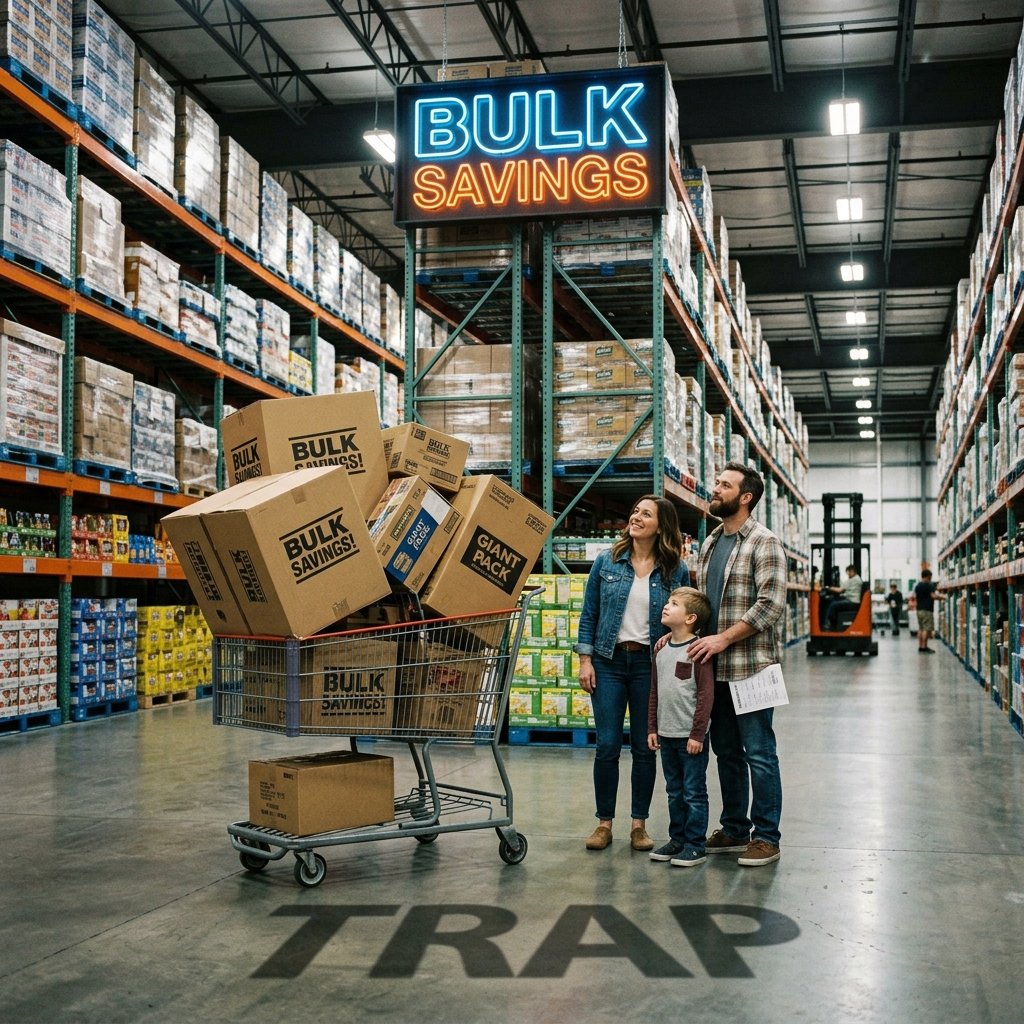

Welcome to the Warehouse Jungle
We have all been there. You walk into Costco for a single rotisserie chicken and a gallon of milk, and somehow you walk out $250 poorer with a 48-pack of toilet paper, a kayak, and a jar of artichoke hearts the size of a toddler’s head. For large families, Costco is a sanctuary of savings. But for small families—couples, solo dwellers, or parents with one little one—the warehouse can quickly become a ‘Costco Trap.’ The allure of a low unit price often blinds us to the reality of waste, storage constraints, and the ‘bulk bias’ that encourages overconsumption. As ‘The Ultimate Frugal Hacker,’ I am here to tell you that you can absolutely make a membership work for a small household, but you have to play the game with a different set of rules. We are going to dive deep into the math, the psychology, and the specific items that are either goldmines or budget-killers. Our goal? To maximize every cent of that $60 or $120 annual membership fee while keeping your pantry lean and your bank account fat.
The Psychology of the Bulk Buy

Why do we feel so good spending $400 at once? It is called the ‘Stockpiling High.’ Retailers like Costco use specific psychological triggers to make you spend more. The ‘Treasure Hunt’ atmosphere—where items are moved frequently—forces you to walk every aisle, increasing the chance of impulse buys. For a small family, these impulses are deadly because the quantities are so large. If you buy a ‘deal’ on a snack you do not usually eat, you are stuck with 40 servings of it.
The Unit Price Illusion
Just because the unit price is lower does not mean the total cost is worth it. If you buy a massive tub of spinach for $5.00 but throw away half of it because it turned into green slime, your effective price per ounce just doubled. You have to account for the ‘Waste Tax.’ For a small family, the waste tax is the primary reason Costco memberships fail to provide ROI. We need to focus on items with an infinite or long shelf life to avoid this trap.
Rule of the Hacker: If you cannot consume it within 30 days and it is perishable, it is not a deal; it is a donation to the landfill.
The ‘Never Buy’ List for Small Families

Let us get real about what you should leave on the shelf. These are the items that almost always result in waste for a household of one to three people.
- Fresh Produce: Unless you are hosting a massive brunch, that 5-pound bag of oranges or the giant container of spring mix will likely spoil before you finish it.
- Condiments and Spices: Did you know spices lose their potency after 6 months? Unless you are running a commercial kitchen, a 2-pound jar of cinnamon is overkill. The same goes for giant mayo tubs—they often go rancid before the bottom is reached.
- Bulk Bread and Pastries: The muffins are delicious, but they come in packs of 12. For two people, that is a recipe for stale bread or unwanted weight gain.
- Niche Ingredients: That gallon of avocado oil might seem like a steal at $25, but oils can go rancid. If you only use it once a week, buy a smaller bottle elsewhere.
| Item Type | The Trap | The Frugal Alternative |
|---|---|---|
| Fresh Berries | Spoil in 3 days | Buy frozen in bulk |
| Giant Cereal Boxes | Goes stale before finish | Buy standard size with coupons |
| Bulk Cooking Oil | Rancidity issues | Small glass bottles for freshness |
The ‘Always Buy’ Goldmines

Now for the wins! These are the items where the membership pays for itself. These products have long shelf lives or high consumption rates regardless of family size.
Pantry Staples and Household Goods
Items like toilet paper, paper towels, and trash bags do not expire. If you have the storage space, these are $100+ annual savings. Similarly, dry pasta, canned beans, and rice are incredible values. For a small family, a 25-pound bag of rice might last a year, but at $0.50 per pound vs. $1.50 at a grocery store, the savings add up to $25 on just one item.
The Kirkland Signature Edge
The real secret weapon is the Kirkland brand. In many cases, these are the exact same products as brand names but at a 30-50% discount. Their olive oil is consistently rated as one of the best in the world, and their maple syrup is a fraction of the cost of supermarket versions.
| Item | Brand Name Price | Kirkland Price | Annual Savings |
|---|---|---|---|
| Coffee Pods (100ct) | $55.00 | $34.00 | $84.00 |
| Almond Milk (6pk) | $12.00 | $8.00 | $48.00 |
| Trash Bags (200ct) | $24.00 | $16.00 | $24.00 |
The Math: Is the Membership Worth It?
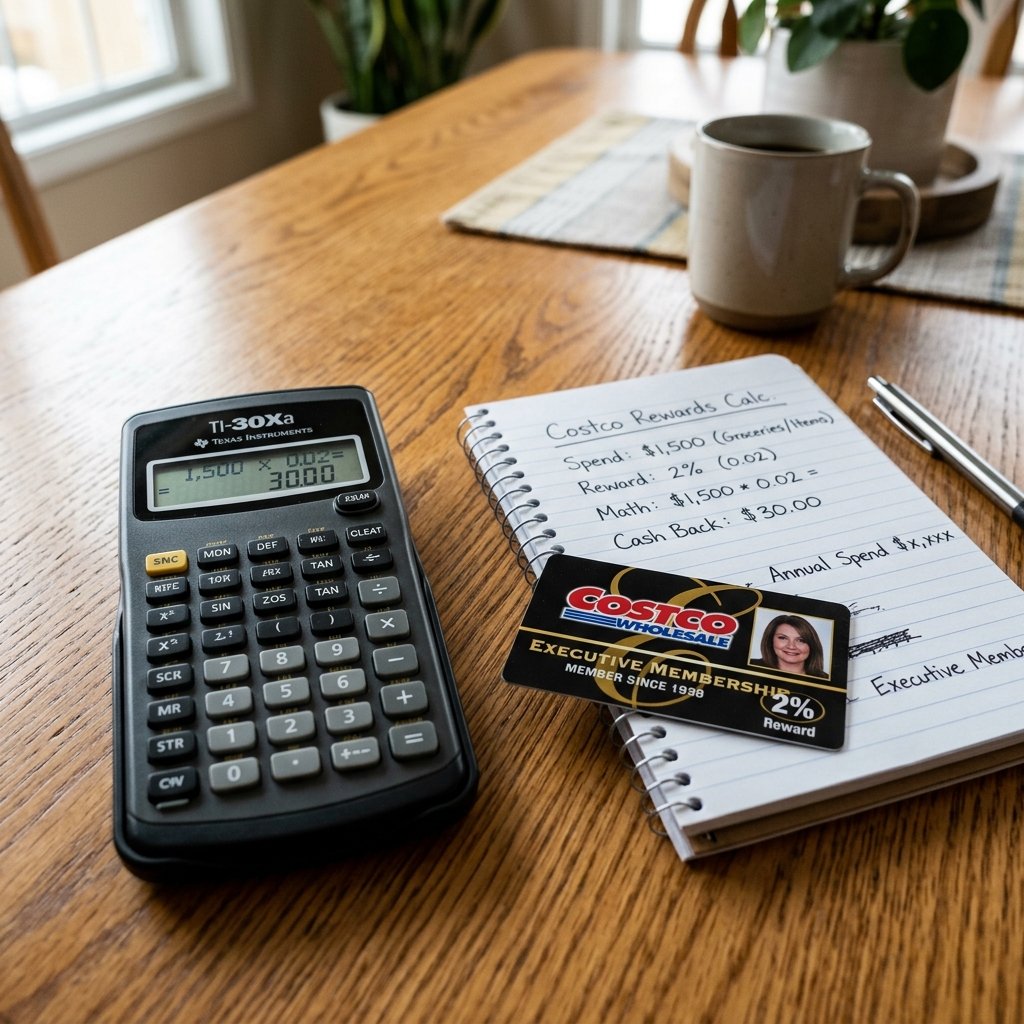
Let us break down the math for a small family. A Gold Star membership is $60/year. To break even, you need to save at least $5 per month compared to your local grocery store. For most, the gas savings alone cover this. If you fill up a 15-gallon tank twice a month and save $0.30 per gallon at the Costco pump, that is $9.00/month in savings.
The Executive Membership Hack
The Executive Membership costs $120/year but gives you 2% cash back. To make this worth the extra $60, you need to spend $3,000 a year at Costco (or $250/month). For a small family, this is the ‘Danger Zone.’ If you find yourself buying unnecessary items just to hit that 2% threshold, you are losing the game. However, if you buy big-ticket items like tires, electronics, or travel through Costco, the 2% can easily cover the entire membership fee.
Pro Tip: Use apps like Ibotta or Fetch Rewards on your Costco receipts to stack savings. Even though Costco does not take manufacturer coupons, these apps often have ‘Any Brand’ offers that apply.
Small Space Storage Strategies

The biggest hurdle for small families isn’t just the consumption—it is the storage. How do you fit a 30-pack of toilet paper in a one-bedroom apartment? You have to get creative.
- The ‘Split’ Strategy: Find a ‘Costco Buddy.’ Buy the bulk items and split the cost and the product. You get the bulk price but the manageable quantity.
- Decanting: Take items out of their massive cardboard boxes immediately. Boxes are air-thieves; they take up 20% more space than the product itself.
- The Freezer is Your Best Friend: Buy the bulk meat, but spend 20 minutes portioning it into vacuum-sealed bags. A 6-pound pack of ground beef becomes six 1-pound dinners that last 6 months.
The Meat Math
Buying meat in bulk and processing it yourself can save a small family $400/year. A whole pork loin at Costco is often $1.89/lb, while pre-cut chops at the grocery store are $4.99/lb. A simple $30 vacuum sealer pays for itself in two trips.
Non-Food Hacks: The Hidden Value

Costco is more than just food. For small families, the real ‘hacks’ are in the services. Optical, Pharmacy, and Tires are where the massive savings live.
- Over-the-Counter Meds: A bottle of 1,000 Ibuprofen tablets at Costco costs about the same as a 100-count bottle at a drugstore. Even if you throw away half after they expire in 3 years, you still saved $20.
- Gift Cards: Costco sells $100 gift cards for restaurants or streaming services for $79.99. This is an instant 20% discount on your entertainment budget.
- Rotisserie Chicken: At $4.99, it is a loss leader. For a small family, one chicken is two dinners and a pot of soup. It is the ultimate frugal meal.
Scam Warning: Avoid the ‘Roadshow’ impulse buys. Those high-end blenders or massage chairs are rarely the best price on the market; they rely on the ‘Costco Halo’ to make you think it is a deal.
Conclusion
Winning the Warehouse Game
Costco can be a small family’s greatest ally or its most subtle budget-buster. By avoiding the ‘Green Trap’ of perishable produce and focusing on high-turnover staples, Kirkland brand swaps, and strategic services like gas and pharmacy, you can easily save over $1,200/year. Remember, the goal of frugal living is not just to spend less, but to get more value for every dollar. Don’t let the giant carts and free samples distract you from your mission. Shop with a list, check your unit prices, and never be afraid to walk past a ‘deal’ that your family simply won’t use. You are now equipped to navigate the aisles like a pro. Go forth and hack those savings!
Disclaimer: I am not a financial advisor. Please conduct your own research to determine if a membership fits your specific financial situation.


Makenzie is the founder and lead writer at MoneyHackTips.com — a personal finance blog dedicated to delivering street-smart financial wisdom for real people on real budgets. With 300+ published articles covering everything from debt management to investing fundamentals, Makenzie’s mission is to make every dollar work harder. When not writing about money hacks, Makenzie is testing frugal living strategies, optimizing side hustles, and helping readers build financial freedom from scratch.