
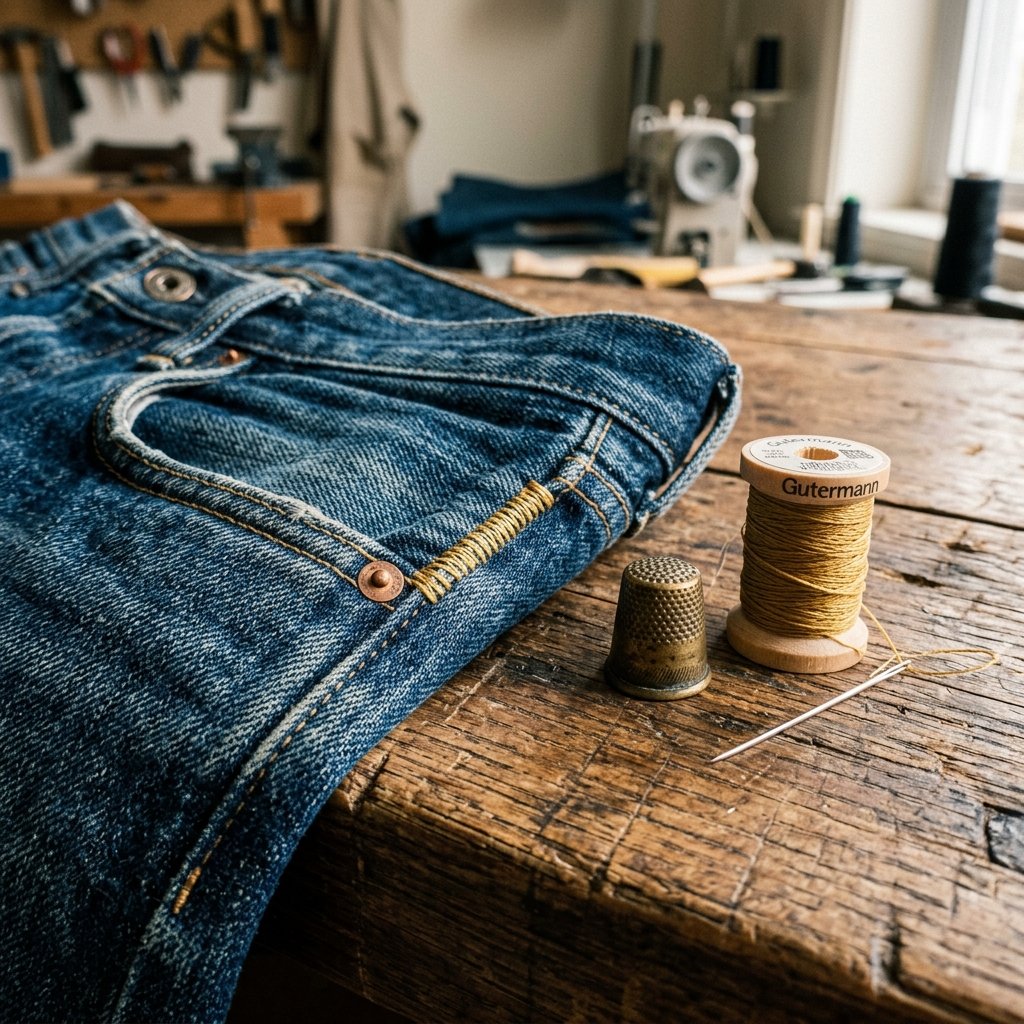

We have all been there: you reach for your keys or your smartphone, only to feel that sickening pop of a thread giving way. Suddenly, your favorite pair of broken-in, perfectly-fitted jeans has a gaping hole at the corner of the pocket. It starts small, but left unchecked, that tiny tear will migrate down the hip, eventually rendering your $100 investment unwearable. But here is the good news: you do not need a fancy industrial sewing machine or a degree in textile engineering to fix this. As a frugal DIYer, you already possess the most important tool—the willingness to get your hands a little dirty to save a lot of cash.
In this guide, I am going to teach you the ‘Grandma’s Secret’ of the tailoring world: the 5-minute reinforcement. This technique, often called a manual bar-tack, is exactly how high-end heritage brands fortify their workwear. By the time we are done, your pockets will be stronger than they were when they left the factory. Whether you are a handy dad fixing work pants or a budget-savvy student preserving your thrift store finds, this rugged, practical skill is a must-have in your mending arsenal.
The Anatomy of a Blowout: Why Pockets Fail
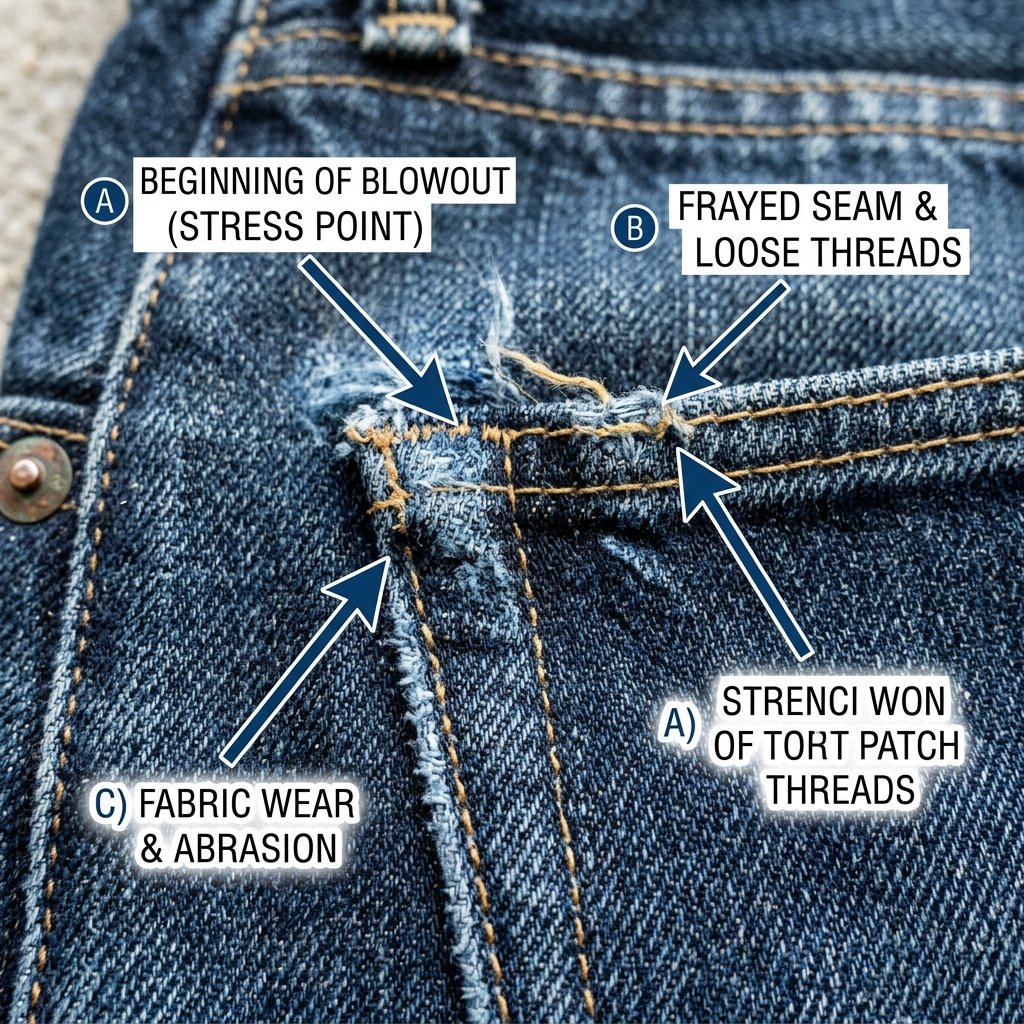
Before we pick up the needle, we need to understand the enemy. Denim is a remarkably durable fabric, but it has a weakness: stress points. The corners of your pockets are under constant tension from your hands, your phone, and the natural movement of your hips. Over time, the horizontal ‘weft’ threads of the denim snap, leaving only the vertical ‘warp’ threads to hold the weight. This is what creates that ‘shredded’ look before the final rip occurs.
Common Stress Culprits
- Everyday Carry (EDC) Gear: Heavy metal pocket knives and thick wallets act like sandpaper against the inner pocket bag.
- Fabric Thinning: Frequent washing breaks down cotton fibers, making them brittle.
- Improper Fit: Jeans that are too tight in the seat put 3x more pressure on the pocket seams during movement.
By reinforcing these areas before they fail, or catching them at the first sign of thinning, you extend the life of your garment by years. It is the ultimate low-effort, high-reward craft.
The Rugged Mender’s Arsenal: Tools You Actually Need
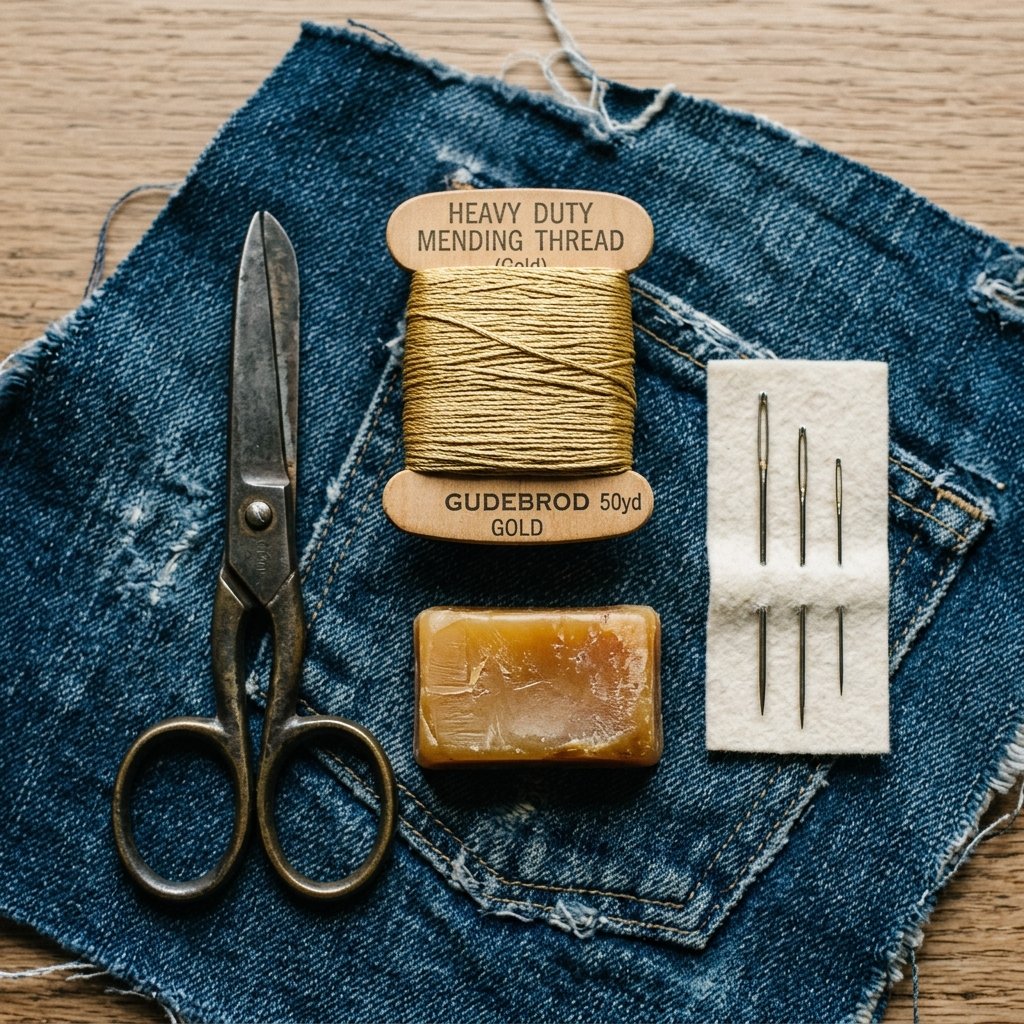
Forget the bulky sewing machines. For a truly reinforced pocket, hand-stitching is actually superior because you can control the tension and ‘feel’ the fabric density. You likely already have these items in a junk drawer, making this a $0 project if you are resourceful.
| Tool | Purpose | Budget Tip |
|---|---|---|
| Heavy-Duty Needle | Piercing through multiple layers of denim. | Look for ‘Size 100/16’ or ‘Denim’ needles. |
| Gold/Navy Thread | Matching the original factory stitching. | Use 100% Polyester or ‘Topstitching’ thread for strength. |
| Beeswax (Optional) | Coating the thread to prevent tangling. | A bit of old candle wax works perfectly! |
| Thimble | Protecting your thumb when pushing through seams. | A leather scrap or a coin can work in a pinch. |
“A stitch in time saves nine, but a reinforced corner saves the whole pair.” — The Frugal Mender’s Mantra
The 5-Minute Reinforcement: Step-by-Step Instructions

This is the core technique. We are going to create a ‘Bar Tack’—a series of closely spaced zigzag stitches that act as a structural bridge over the stress point.
The Process
- Thread the Needle: Cut about 18 inches of thread. Double it over and tie a sturdy knot at the end. This gives you 2x the strength per pass.
- The Anchor: Start from the inside of the jeans. Poke your needle through about 1/4 inch below the tear or the corner of the pocket.
- The Bridge: Make a horizontal stitch across the stress point, about 1/2 inch wide. Repeat this 3 times so you have a thick ‘bridge’ of thread.
- The Wrap (The Secret Sauce): Now, instead of going through the denim, wrap your thread around that bridge you just built. This is called a ‘whip stitch’. Space them tightly together.
- The Finish: Once the bridge is completely covered in thread, poke the needle back to the inside and tie off with a double knot.
This creates a raised, durable ‘bar’ that absorbs all the tension, protecting the fabric underneath. It takes exactly 5 minutes once you get the rhythm down.
Internal Fortification: The Secret Pocket Shield
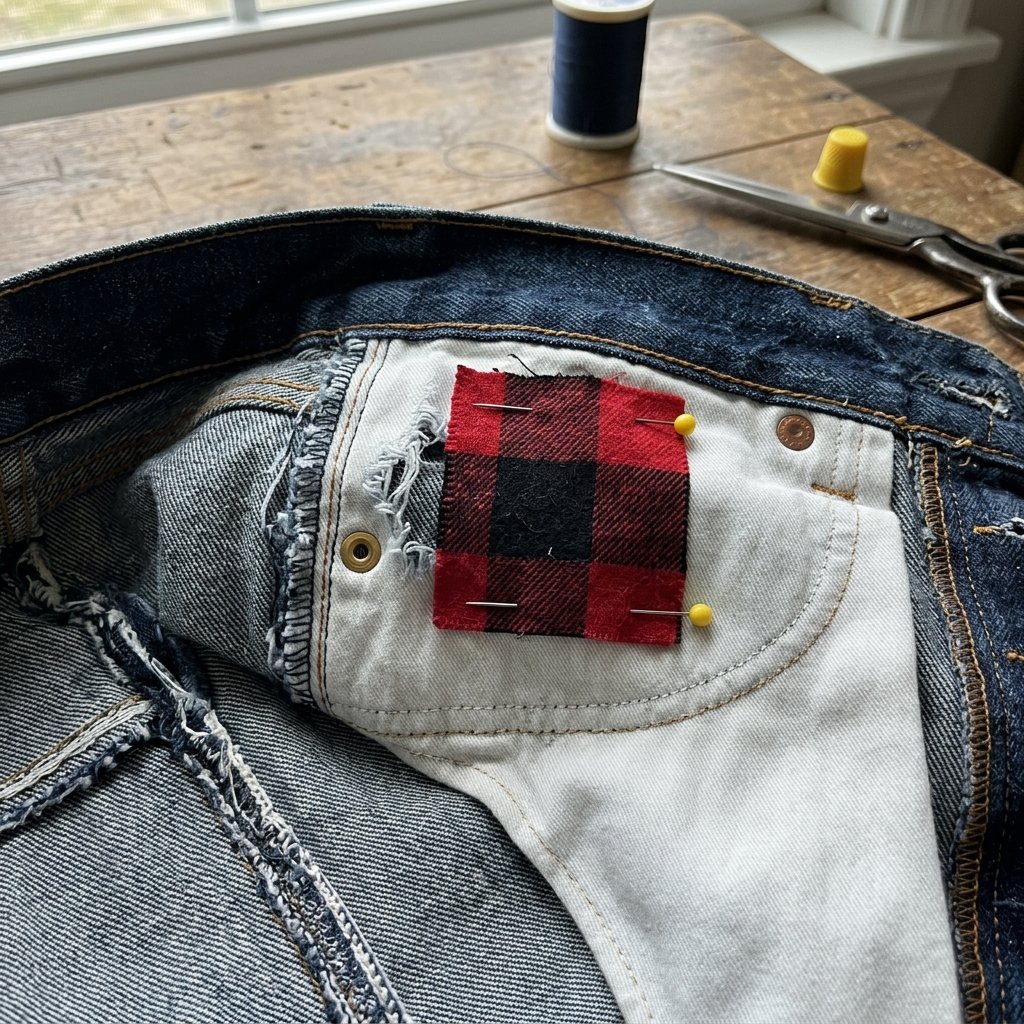
If your pocket is already starting to thin out, a simple stitch might not be enough. You need to ‘back’ the area with more material. This is where upcycling comes in. Use a scrap of old t-shirt or, better yet, a piece of canvas from a discarded tote bag.
Problem vs. Stitch Solution
| Problem Type | Best Stitch Solution | Estimated Time |
|---|---|---|
| Small Pinholes | Darning (Woven grid stitch) | 8 minutes |
| Corner Separation | Bar Tack (The 5-minute trick) | 5 minutes |
| Thinning Fabric | Sashiko (Running stitch with backing) | 12 minutes |
| Large Gaping Hole | Internal Patch + Topstitch | 15 minutes |
When applying an internal patch, always ensure the patch is at least 1 inch larger than the hole on all sides. This ensures you are sewing into ‘healthy’ denim rather than the weakened area around the rip.
The Economics of Mending: DIY vs. Buying New

Let’s talk numbers. Being frugal isn’t just about saving pennies; it’s about the long-term ROI (Return on Investment) of your wardrobe. When you spend 5 minutes fixing a pocket, you aren’t just saving a pair of pants—you are preventing a $40-$120 expense.
Cost Comparison Table
| Option | Upfront Cost | Time Investment | Total Savings |
|---|---|---|---|
| Professional Tailor | $15 – $25 | Travel + 3 days wait | $0 |
| Buying New Jeans | $60 – $120 | 1 hour shopping | -$60 to -$120 |
| DIY 5-Minute Fix | $0.05 (Thread cost) | 5 minutes | $59.95+ |
By mastering this one simple trick, you could easily save $500 over the next few years, especially if you have a family or work a job that is hard on clothes. That is money that could go toward a vacation, a home project, or your savings account.
Conclusion
In a world of ‘fast fashion’ where clothes are treated as disposable, choosing to mend is a radical act of resourcefulness. Reinforcing your denim pockets isn’t just about utility; it’s about taking pride in what you own and having the cleverness to maintain it. You’ve now learned how to identify stress points, assemble a minimalist mending kit, and execute a professional-grade bar tack in under 5 minutes.
Next time you feel that thread snap, don’t head for the mall. Head for your sewing kit. Your wallet—and your favorite pair of jeans—will thank you. Now get out there and make those pockets bulletproof!


Makenzie is the founder and lead writer at MoneyHackTips.com — a personal finance blog dedicated to delivering street-smart financial wisdom for real people on real budgets. With 300+ published articles covering everything from debt management to investing fundamentals, Makenzie’s mission is to make every dollar work harder. When not writing about money hacks, Makenzie is testing frugal living strategies, optimizing side hustles, and helping readers build financial freedom from scratch.