
The Art of the Seasonal Cash Gift
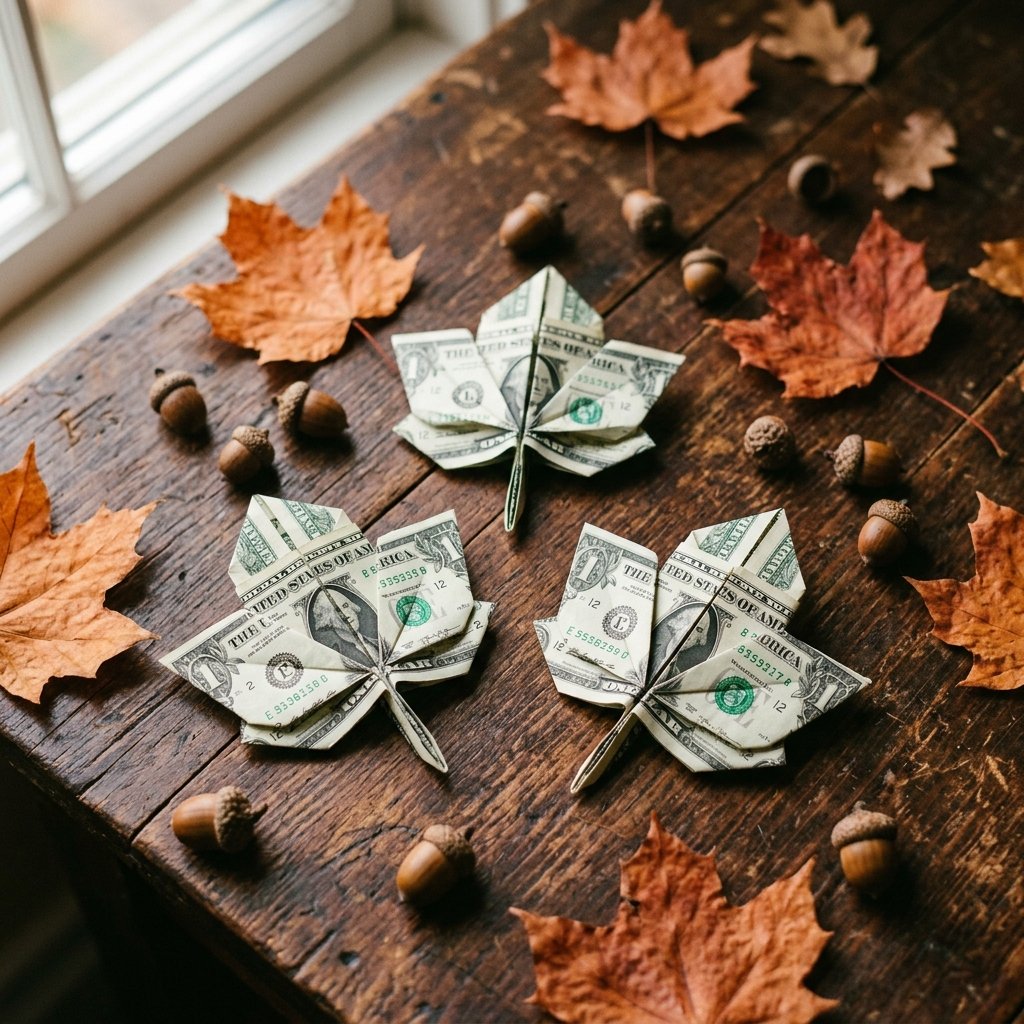
Let’s be honest: everyone loves receiving cash. Whether it’s for a birthday, a wedding, or a ‘just because’ autumnal surprise, money is the ultimate practical gift. However, sliding a twenty into a generic drugstore card can feel a bit… uninspired. As a resourceful DIYer, you know that the presentation is where the magic happens. By applying a bit of crafty expertise and precision folding, you can transform a standard denomination into a stunning piece of art: the Money Origami Maple Leaf.
This project isn’t just about giving money; it’s about the rugged elegance of hand-crafted work. We are going to take the unique, linen-cotton blend of US currency—which is far more durable than standard paper—and leverage its tensile strength to create sharp, professional-grade folds. This guide is designed for the budget-savvy gift-giver who wants to make a $10 or $50 gift look like a million bucks. Grab your bills, clear off your workbench, and let’s get into the mechanics of the perfect fall fold.
The Tactical Advantage: Why Currency Folds Differently
Understanding Your Material
Before we make our first crease, we need to talk about our medium. US banknotes are not actually paper; they are a blend of 75% cotton and 25% linen. This is a crafty expert’s dream because it means the material has ‘memory.’ Once you set a fold, it stays. Unlike cheap construction paper that cracks or flimsy tissue that loses shape, currency allows for high-precision manipulation.
The Essential Toolkit
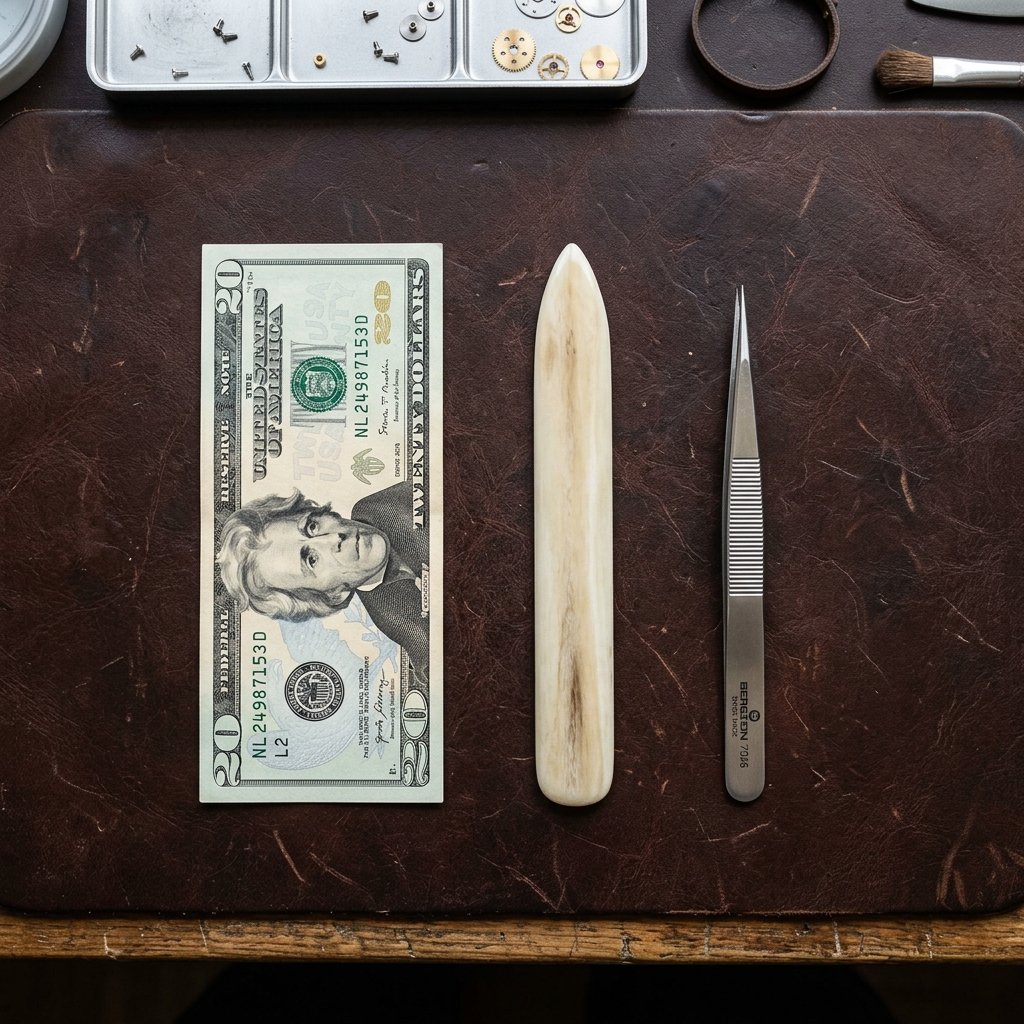
While you can do this with just your hands, a rugged and practical crafter knows that the right tools make the job easier. You don’t need to spend a fortune—look around your house for these zero-budget alternatives:
- A Bone Folder: Or the edge of a clean credit card to ensure 100% crisp creases.
- Crisp Bills: The newer the better. If your bills are wrinkled, a quick pass with a clothes iron on low heat (no steam!) will make them perfectly flat.
- Tweezers: Helpful for those tiny, intricate tucks at the leaf’s stem.
“The secret to professional origami isn’t in the hands; it’s in the pressure of the crease. A soft fold is a forgotten fold.”
The Denomination Matrix: Choosing Your Impact

Strategic Gifting
Depending on the occasion, you might want to fold a single leaf or a whole autumnal bouquet. Different bills offer different visual aesthetics due to their colors and the placement of the portraits. For example, the $10 bill offers a subtle gold hue that mimics a turning leaf perfectly.
| Bill Denomination | Visual Impact | Best Occasion |
|---|---|---|
| $1 Bill | Classic Green/Grey | Small ‘Thank You’ or Teacher Gift |
| $5 Bill | Subtle Pink/Purple Hues | Fall Birthdays |
| $10 Bill | Golden/Yellow Tones | The Most Realistic Maple Leaf |
| $20 Bill | Rich Green/Deep Contrast | Weddings or Major Milestones |
| $50/$100 Bill | High-End Prestige | Graduations or Significant Anniversaries |
When choosing your bill, look at the serial numbers and seals. These will act as the ‘veins’ of your leaf. A clever crafter aligns the folds so the most interesting parts of the engraving are visible on the front of the leaf lobes.
Step-by-Step: The Master Fold of the Maple Leaf
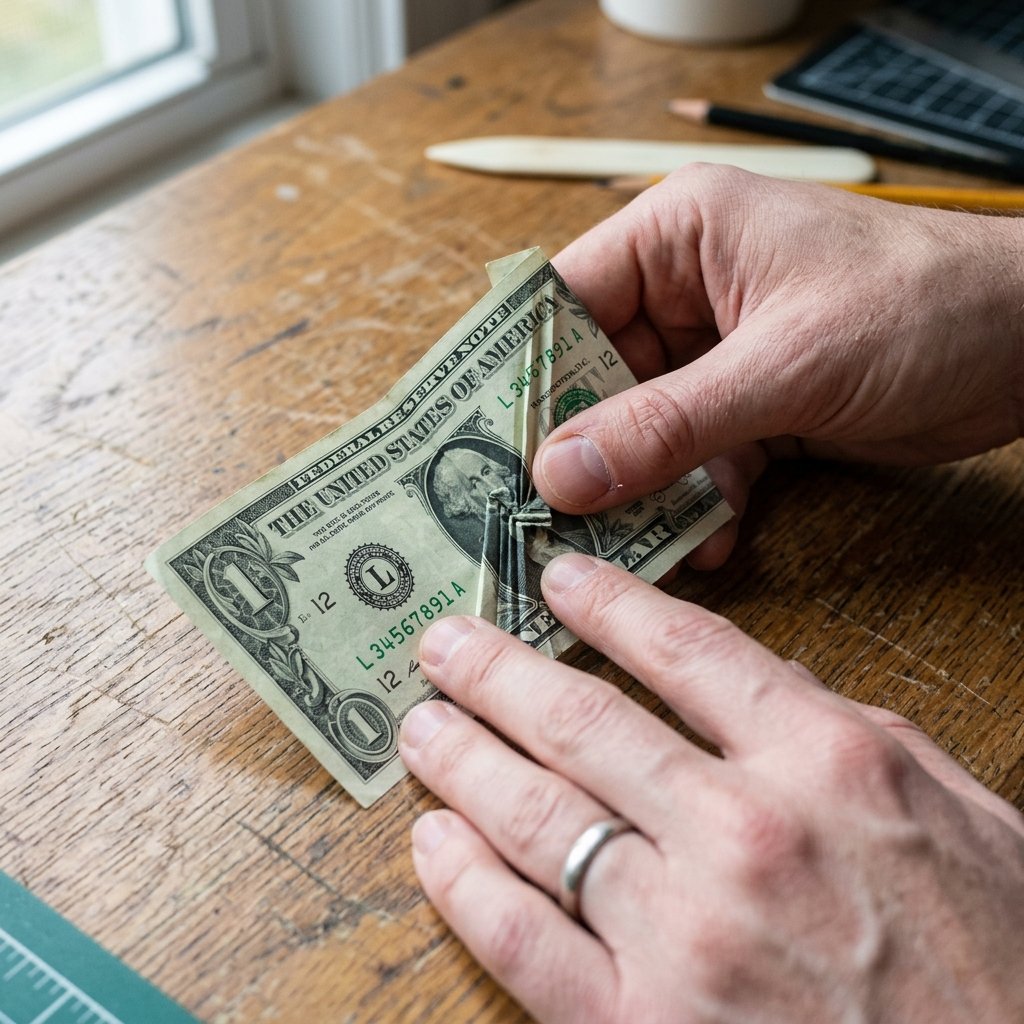
Phase 1: The Foundation (The Accordion)
- Place your bill horizontally on a flat surface. Fold the bill in half lengthwise to create a center crease, then unfold.
- Fold the top and bottom edges in to meet that center crease. This is called a gate fold.
- Now, we begin the accordion fold. Starting from one short end, fold about 1/2 inch over, then flip and fold back. Continue this until the entire bill is a tight, springy stack.
- Pro Tip: Use your bone folder or credit card to press down on the stack. You want these folds to be razor-sharp.
Phase 2: Creating the Lobes
- While the bill is still in its accordion stack, fold the entire stack in half to find the midpoint.
- Unfold the stack slightly. To create the ‘points’ of the maple leaf, you will need to fold the corners of each accordion pleat inward at a 45-degree angle. This requires patience and precision.
- Repeat this for the top three pleats on both sides. These will become the three main lobes of the maple leaf.
Phase 3: The Assembly
- Bring the two ends of the accordion together at the bottom. Secure them with a tiny piece of clear tape or a small gold paperclip to form the stem.
- Gently fan out the pleats. You will see the distinctive jagged edges of the maple leaf begin to take shape.
- Adjust the ‘veins’ (the pleats) until the leaf looks symmetrical and full.
“Precision is the difference between a crumpled bill and a work of art. Take 5 minutes longer on the folds to save 100% of the frustration later.”
Rugged & Elegant Presentation Ideas
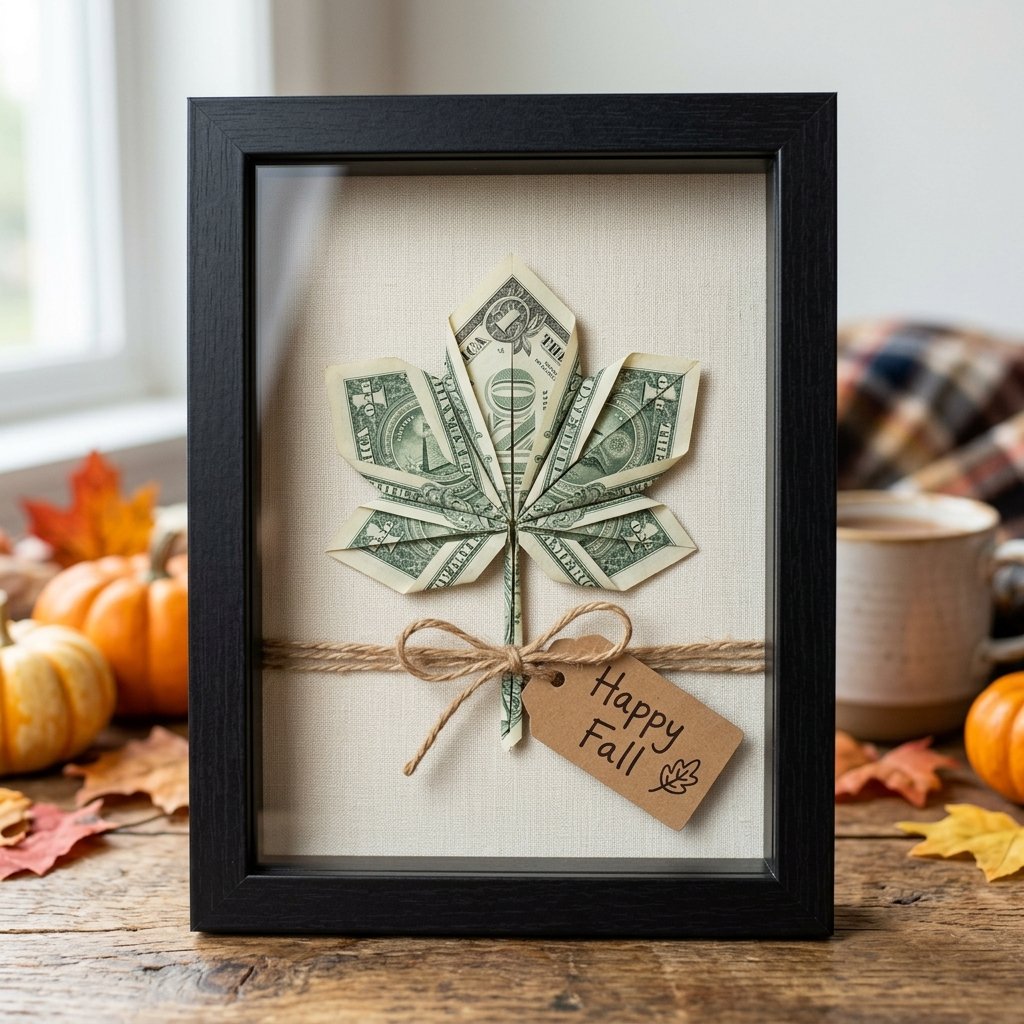
Elevating the Gift
Now that you’ve mastered the fold, don’t just hand it over. A masculine-elegant presentation shows you put thought into every detail. Here are three budget-savvy ways to present your money origami:
- The Shadow Box: Buy a small $1.25 frame from the dollar store. Remove the glass and mount the leaf on a piece of dark navy or charcoal cardstock using a small glue dot. It looks like a high-end botanical specimen.
- The Rustic Branch: Find a clean, dry twig from your backyard. Use natural twine to tie three or four money leaves to the branch. Place it in a simple glass jar for a stunning, zero-cost centerpiece.
- The Kraft Paper Card: Use recycled brown kraft paper to make a card. Attach the leaf to the front and write a simple message like ‘Falling for you’ or ‘A little something for a rainy day.’
These methods turn a simple cash gift into a thoughtful keepsake that the recipient might actually hesitate to spend!
Troubleshooting & Expert Refinements

Common Pitfalls
Even the most handy parents and frugal crafters run into issues. Here is how to fix them:
- The Leaf Won’t Stay Open: This usually means the accordion folds aren’t deep enough. Re-crease the center fold and ensure your ‘stem’ is tightly secured.
- The Bill is Too Soft: If you’re using an older, circulated bill, it might feel ‘limp.’ You can lightly spray it with spray starch and iron it to give it back its rugged structure.
- Asymmetry: If one side looks larger, check your midpoint fold. Accuracy at the beginning is crucial for the end result.
“A mistake is just a new design element. If a fold goes wrong, turn it into a ‘wind-swept’ leaf effect!”
Conclusion
The Reward of Craftsmanship
Folding a Money Origami Maple Leaf is more than just a clever gift idea; it’s a testament to your resourcefulness and attention to detail. In a world of digital transfers and gift cards, taking the time to hand-fold a piece of currency into a symbol of the season carries immense weight. You’ve taken a simple $10 or $20 bill and turned it into a memorable experience.
Remember, the first one might take you 15 minutes, but by the third leaf, you’ll be a crafty expert, churning out autumnal beauty with rugged precision. So, this fall, skip the envelope and reach for the accordion fold. Your friends, family, and wallet will thank you for the creative, budget-savvy flair. Happy folding!


Makenzie is the founder and lead writer at MoneyHackTips.com — a personal finance blog dedicated to delivering street-smart financial wisdom for real people on real budgets. With 300+ published articles covering everything from debt management to investing fundamentals, Makenzie’s mission is to make every dollar work harder. When not writing about money hacks, Makenzie is testing frugal living strategies, optimizing side hustles, and helping readers build financial freedom from scratch.