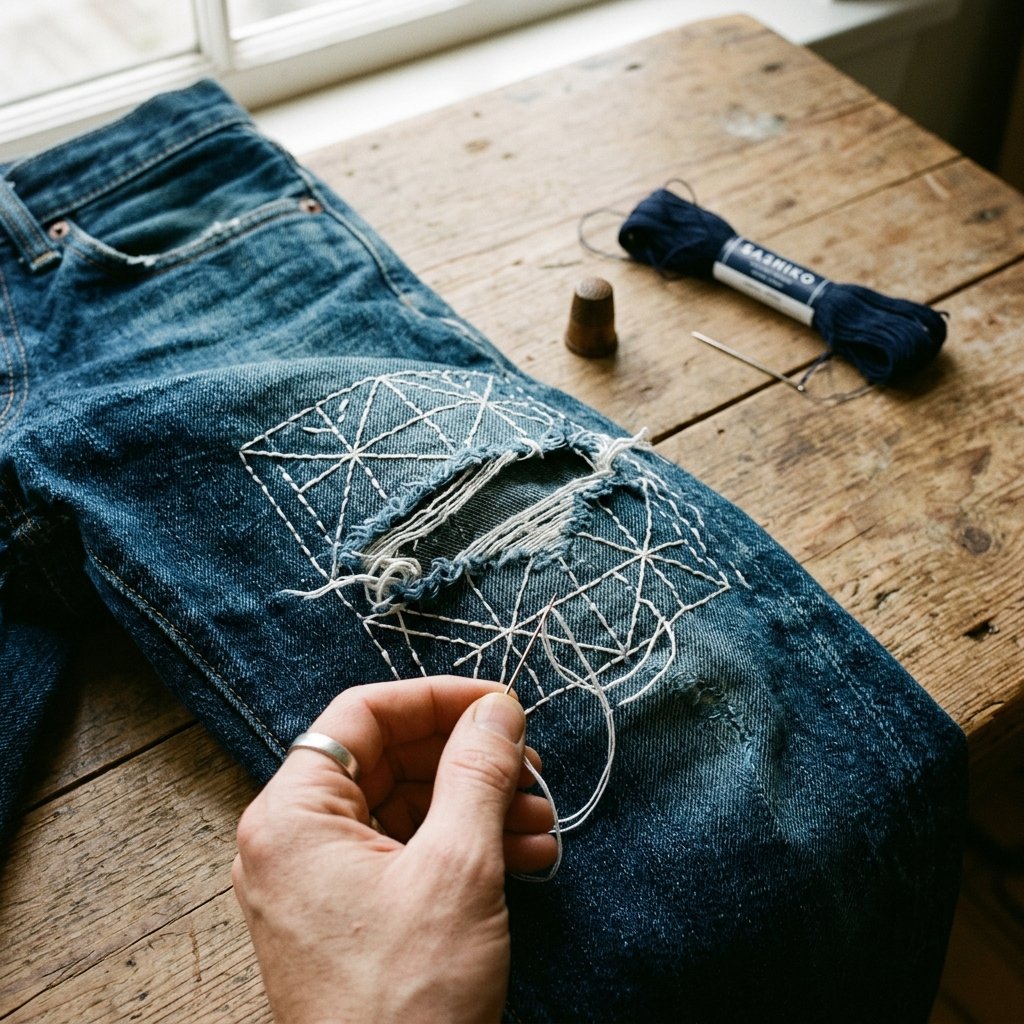

We’ve all been there: your favorite pair of broken-in denim, the ones that fit perfectly and have seen years of adventure, suddenly gives way at the knee. In the world of fast fashion, most people see a rip as the end of the road. But for the resourceful DIYer, a hole isn’t a tragedy—it’s an opportunity for a bespoke upgrade. Enter Sashiko, the centuries-old Japanese technique of functional embroidery. Originally used by farmers to reinforce workwear, Sashiko (literally “little stabs”) transforms a structural weakness into a stunning visual feature. Not only will you save $60 to $120 on a new pair of jeans, but you’ll also create a piece of wearable art that tells a story of resilience and craft.
The Sashiko Toolkit: High-End Results on a Dime

One of the best things about Sashiko is that it requires almost zero overhead. You don’t need a fancy sewing machine or a professional tailor’s studio. In fact, most of these materials are likely hiding in your junk drawer or can be found for a few dollars at a local craft shop. The goal is to keep it rugged and practical while achieving that masculine-elegant aesthetic.
| Item | Purpose | Estimated Cost |
|---|---|---|
| Sashiko Needle | Long, sharp needle for multiple stitches | $3.00 |
| Sashiko Thread | Matte, non-twisted cotton thread | $2.50 |
| Denim Scraps | The internal patch for structural support | $0.00 (Upcycled) |
| Fabric Chalk | Marking your geometric grid | $1.50 |
| Thimble | Protecting your finger during heavy denim work | $2.00 |
If you cannot find authentic Sashiko thread, embroidery floss works as a budget-savvy substitute. Simply use all six strands at once to mimic the thickness and strength of traditional Sashiko cord. For the patch, look for an old pair of jeans that are beyond repair and harvest the fabric from the back of the leg where the wear is minimal.
Anatomy of a Repair: Prepping the Blowout
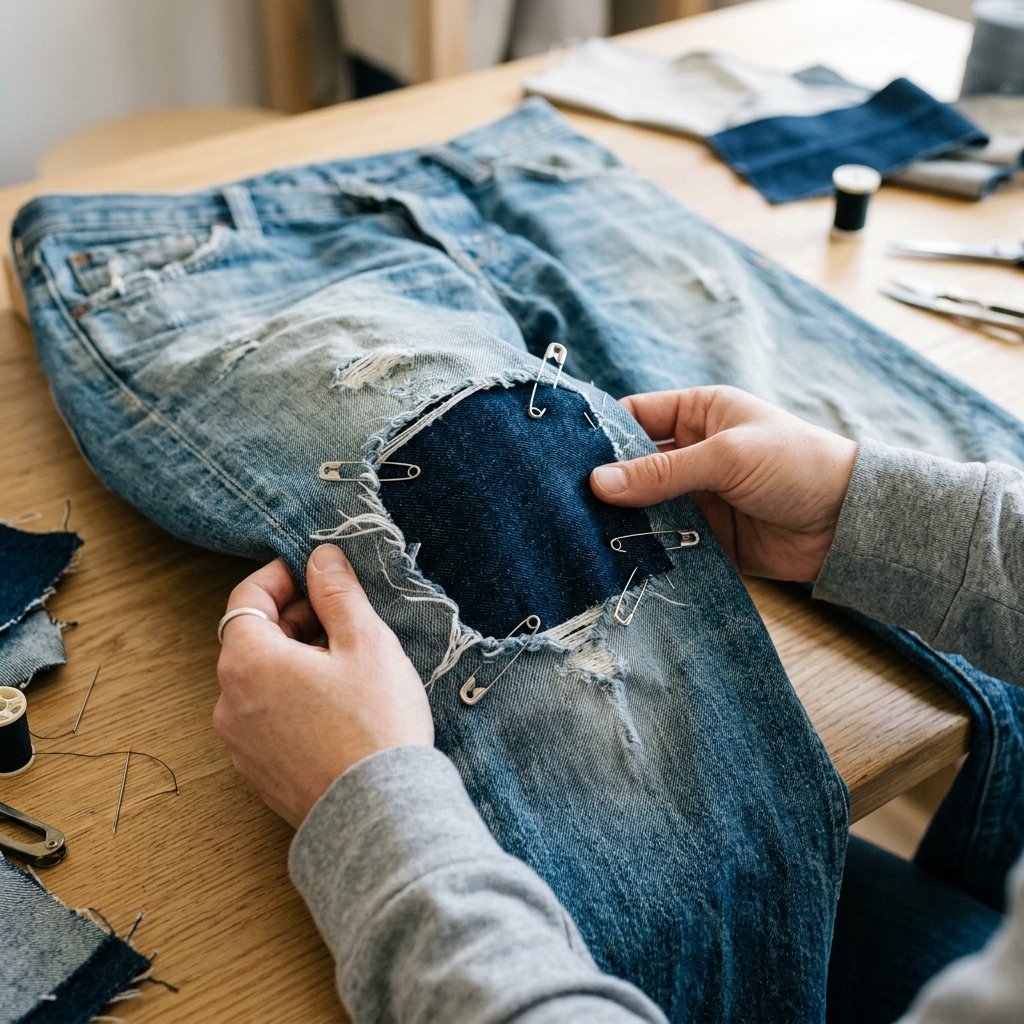
Before you start stitching, you must stabilize the area. If you simply sew over a frayed hole, the tension will eventually pull the fabric apart further. We use a technique called “Visible Mending” where the patch is placed underneath the rip, allowing the frayed edges of the original denim to sit on top like a framed piece of history.
- Trim the Fray: Use sharp scissors to remove the long, white horizontal threads that look like spiderwebs. Leave about 1/4 inch of fuzz for character.
- Size the Patch: Cut your scrap denim so it is at least 1 inch larger than the hole on all sides. This ensures you are anchoring your stitches into strong, non-worn fabric.
- Secure the Patch: Use safety pins or a simple “basting stitch” (large, temporary stitches) to hold the patch in place behind the hole.
“The secret to a patch that lasts a decade is anchoring. Never trust the fabric immediately surrounding a rip; it is tired. Reach further out into the healthy denim to find your strength.”
Mastering the ‘Unshin’ Stitching Technique
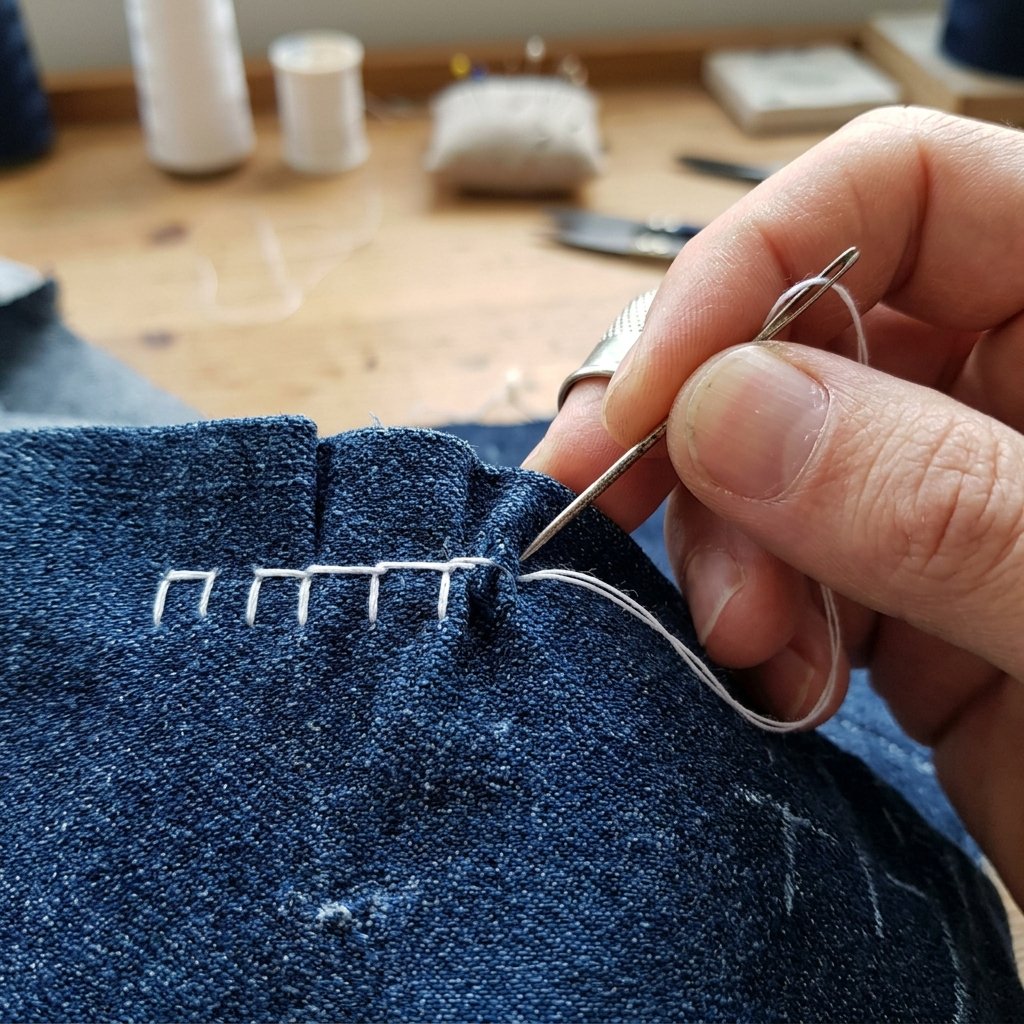
Sashiko isn’t about one stitch at a time. It’s about a rhythmic movement called Unshin. Instead of pulling the needle through the fabric for every stitch, you “pleat” the fabric onto the needle, creating multiple stitches at once. This ensures even spacing and a professional, hand-crafted look.
- The Ratio: Aim for a 3:2 ratio. Your stitch on the top should be slightly longer than the space between stitches on the bottom.
- No Knots: Traditionalists avoid knots because they can be uncomfortable against the skin. Instead, start by back-stitching three times to lock the thread.
- Corner Care: When turning a corner in a pattern, always leave a small loop of thread on the underside. This prevents the fabric from puckering when the jeans are washed and the thread shrinks.
By using this method, you can finish a knee repair in approximately 45 minutes, saving you the 3-week wait time at a professional tailor.
Geometric Patterns: From Simple Lines to Kome-Zashi
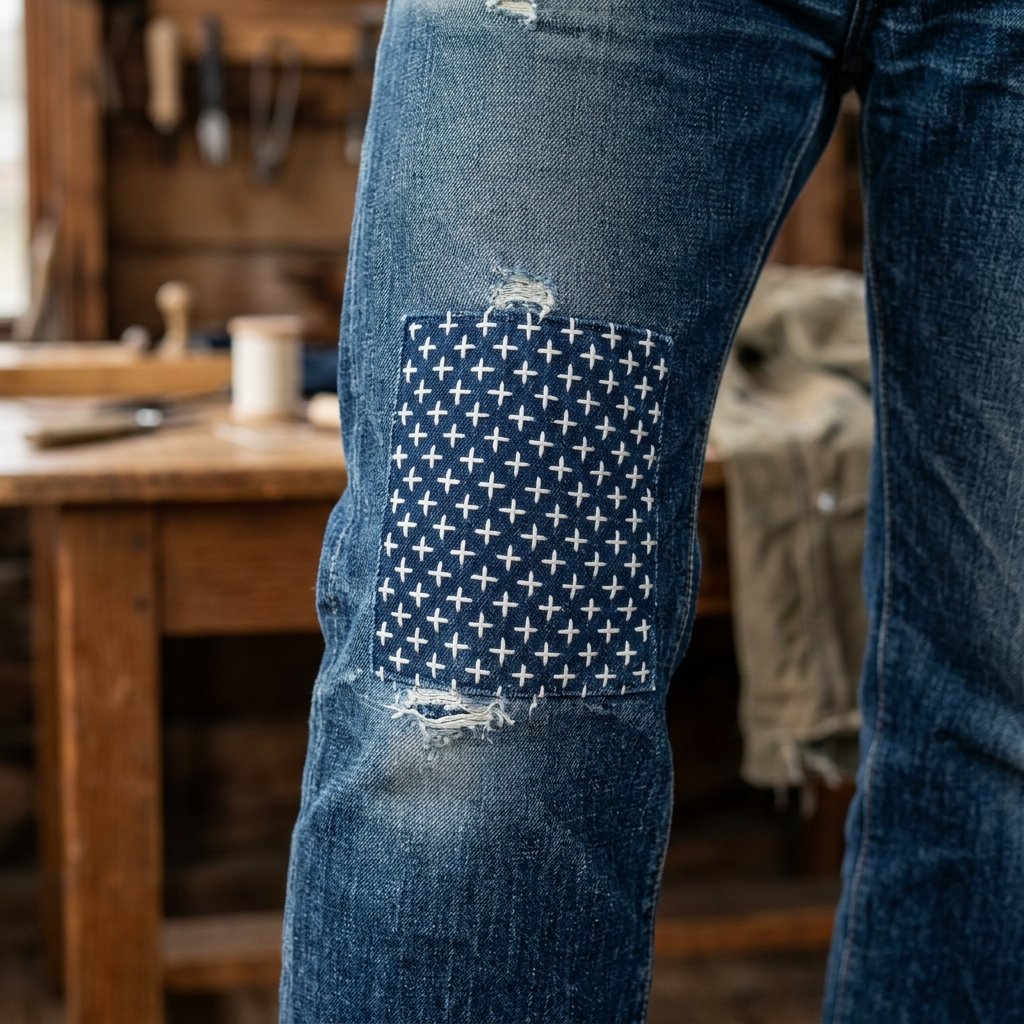
You can choose to do simple horizontal lines, which look rugged and utilitarian, or you can opt for a geometric pattern that looks like a high-end designer piece. For beginners, the Kome-Zashi (Rice Stitch) is the most budget-friendly in terms of time and effort while providing maximum reinforcement.
| Pattern Name | Difficulty | Best For |
|---|---|---|
| Running Stitch | Beginner | Small tears and quick fixes |
| Kome-Zashi (Rice) | Intermediate | High-stress knee areas |
| Asanoha (Hemp Leaf) | Advanced | Full-thigh artistic statements |
To create a grid, use your fabric chalk and a ruler to mark dots every 1/2 inch. Connect the dots with your needle to create crosses. These crosses don’t just look good; they create a multi-directional web of thread that makes the knee of your jeans stronger than it was when it was new.
Durability Hacks for the Handy Parent
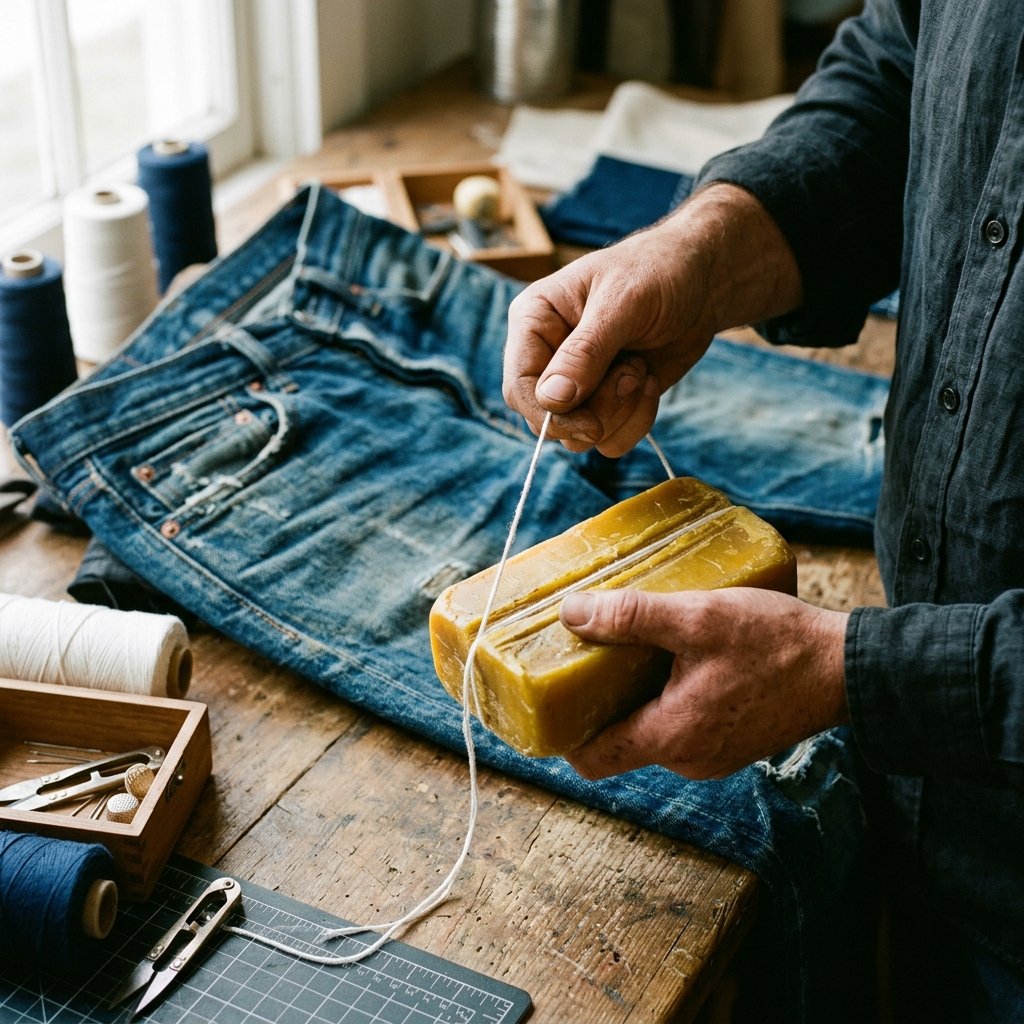
If you are mending jeans for active kids or for your own workwear, you need heavy-duty reinforcement. The knee is a high-friction zone, so your mending needs to withstand crawling, kneeling, and constant movement. Here are three pro-tips for maximum longevity:
- Double Patching: For work pants, use two layers of scrap denim behind the hole.
- Waxed Thread: Run your thread over a piece of beeswax before sewing. This lubricates the thread, making it easier to pull through thick denim, and adds a layer of water resistance to the repair.
- The Overlap: Ensure your stitches extend at least 2 inches above and below the actual hole to distribute the stress across the entire leg of the garment.
“A mended garment is a badge of honor. It shows that you value your belongings enough to maintain them, and you have the skills to make them better.”
Conclusion
Mending your own clothes is a radical act of frugal self-reliance. By spending less than $10 and an hour of your time, you’ve saved a beloved garment from the landfill and added a layer of personal history to your wardrobe. Whether you’re a busy parent patching up a toddler’s play pants or a style-conscious crafter looking for that masculine-elegant touch, Sashiko is the ultimate tool in your DIY arsenal. Wear your repairs with pride—they are the marks of a life well-lived and a craft well-mastered. Now, grab that needle and turn your ugly rips into a masterpiece!


Makenzie is the founder and lead writer at MoneyHackTips.com — a personal finance blog dedicated to delivering street-smart financial wisdom for real people on real budgets. With 300+ published articles covering everything from debt management to investing fundamentals, Makenzie’s mission is to make every dollar work harder. When not writing about money hacks, Makenzie is testing frugal living strategies, optimizing side hustles, and helping readers build financial freedom from scratch.