
The Art of the High-Value Gesture
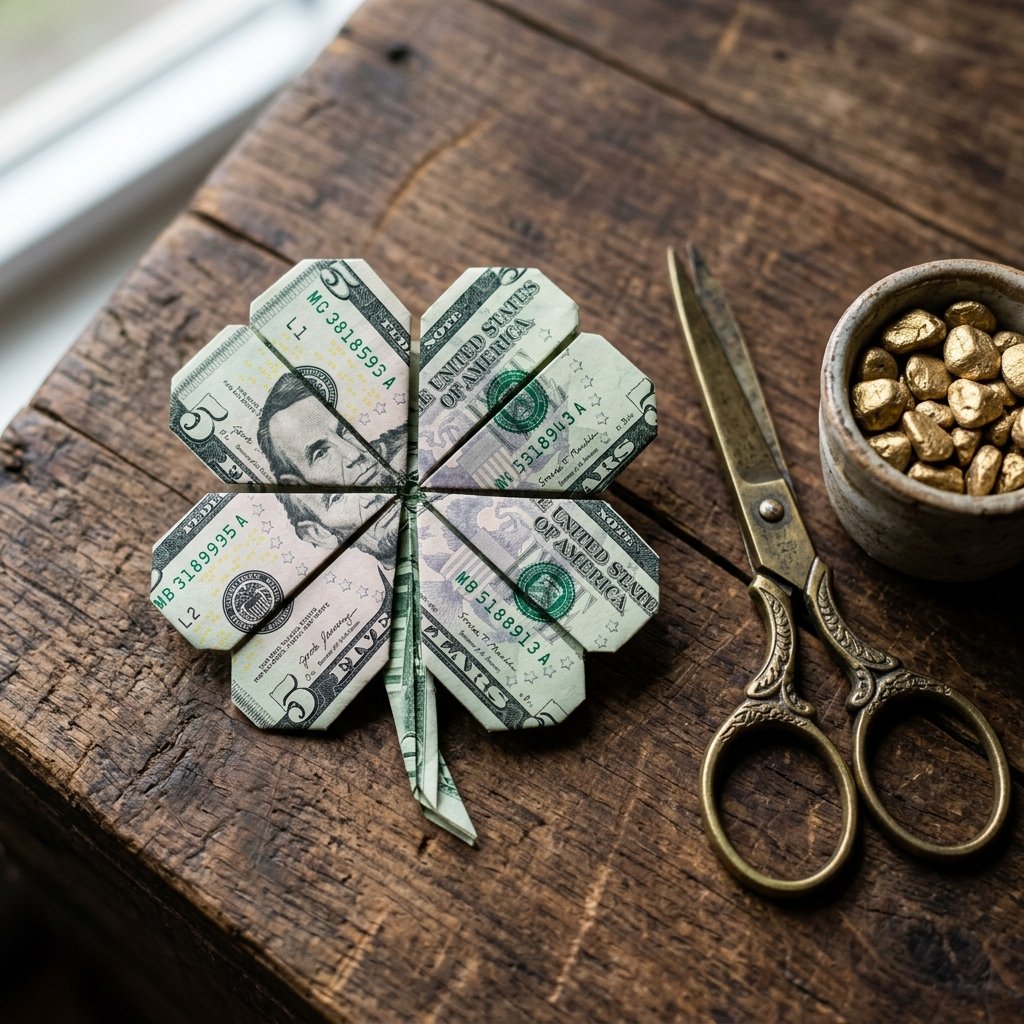
In a world of digital transfers and generic gift cards, there is something profoundly rugged and intentional about a physical gift. But let’s be honest: sometimes, the most practical gift is cold, hard cash. As frugal DIYers, we face a dilemma—how do we give money without it feeling impersonal or last-minute? The answer lies in the ancient art of origami, repurposed for the modern, budget-savvy crafter. By transforming a standard-issue banknote into a money origami shamrock, you aren’t just giving currency; you’re giving a token of luck, a conversation piece, and a testament to your resourcefulness. Whether it is for a graduation, a wedding, or a St. Patrick’s Day surprise, this guide will show you how to master the four-leaf fold with masculine elegance and surgical precision. We aren’t just folding paper; we are engineering a moment of genuine surprise for $0 in extra material costs.
The Anatomy of a Banknote: Choosing Your Canvas
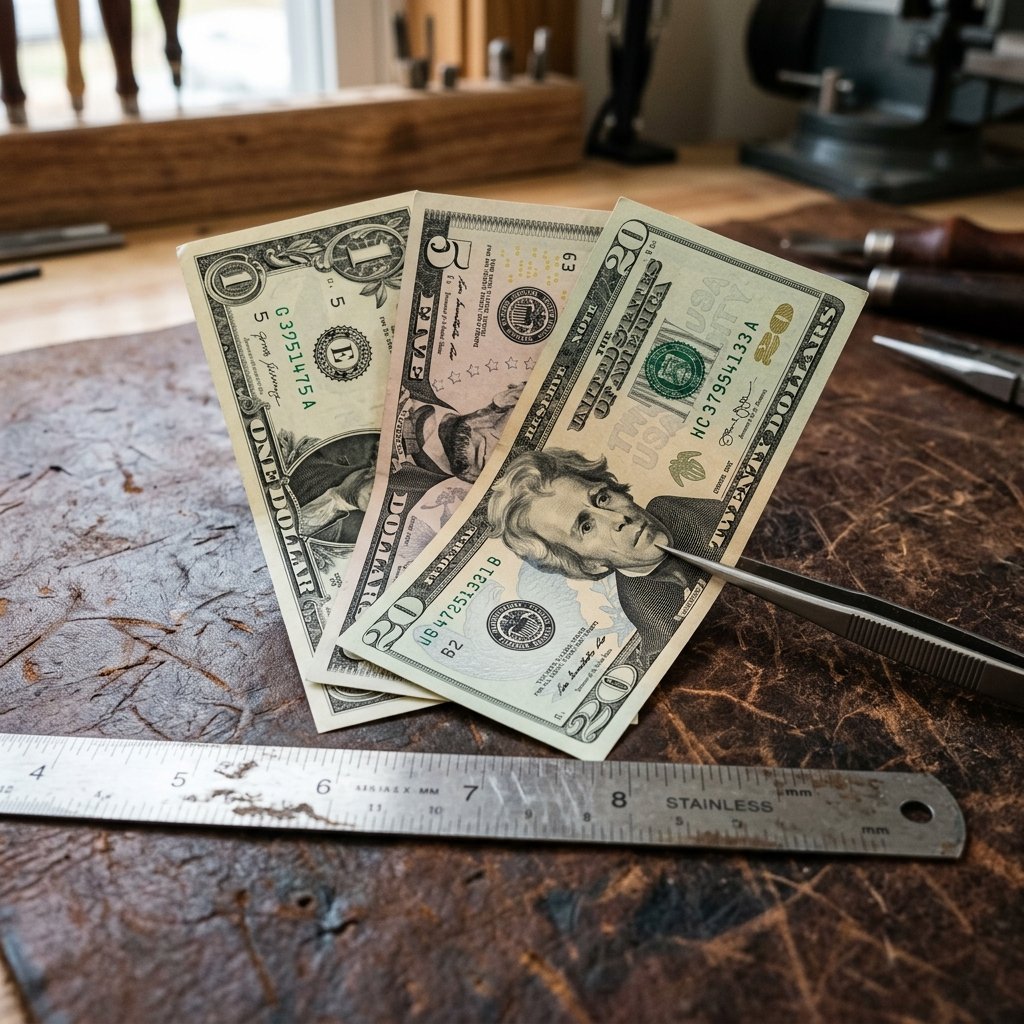
Selecting the Right Denomination
Before we begin the folding process, we must consider the medium. While any US bill has the same dimensions (6.14 inches by 2.61 inches), the visual impact of your shamrock depends heavily on the color and crispness of the bill. For a shamrock, the green hues of the $1, $5, or $20 bill are naturally appropriate. However, the ‘crispness’ factor is non-negotiable. A limp, wrinkled bill will not hold the sharp creases required for a professional-looking result.
Pro-Tip: If you only have wrinkled bills, place them under a thin cotton cloth and iron them on a low, dry setting. This ‘laundering’ (the legal kind!) will give you a stiff, workable canvas that rivals a fresh mint pressing.
| Bill Denomination | Visual Impact | Best Occasion |
|---|---|---|
| $1 Bill | Subtle & Crafty | Random Acts of Kindness |
| $2 Bill | Rare & Lucky | St. Patrick’s Day / Birthdays |
| $5 or $10 Bill | Mid-Tier Elegance | Graduation Cards |
| $20 or $50 Bill | High-End Luxury | Weddings / Major Milestones |
The 4-Step Master Fold: Engineering the Shamrock
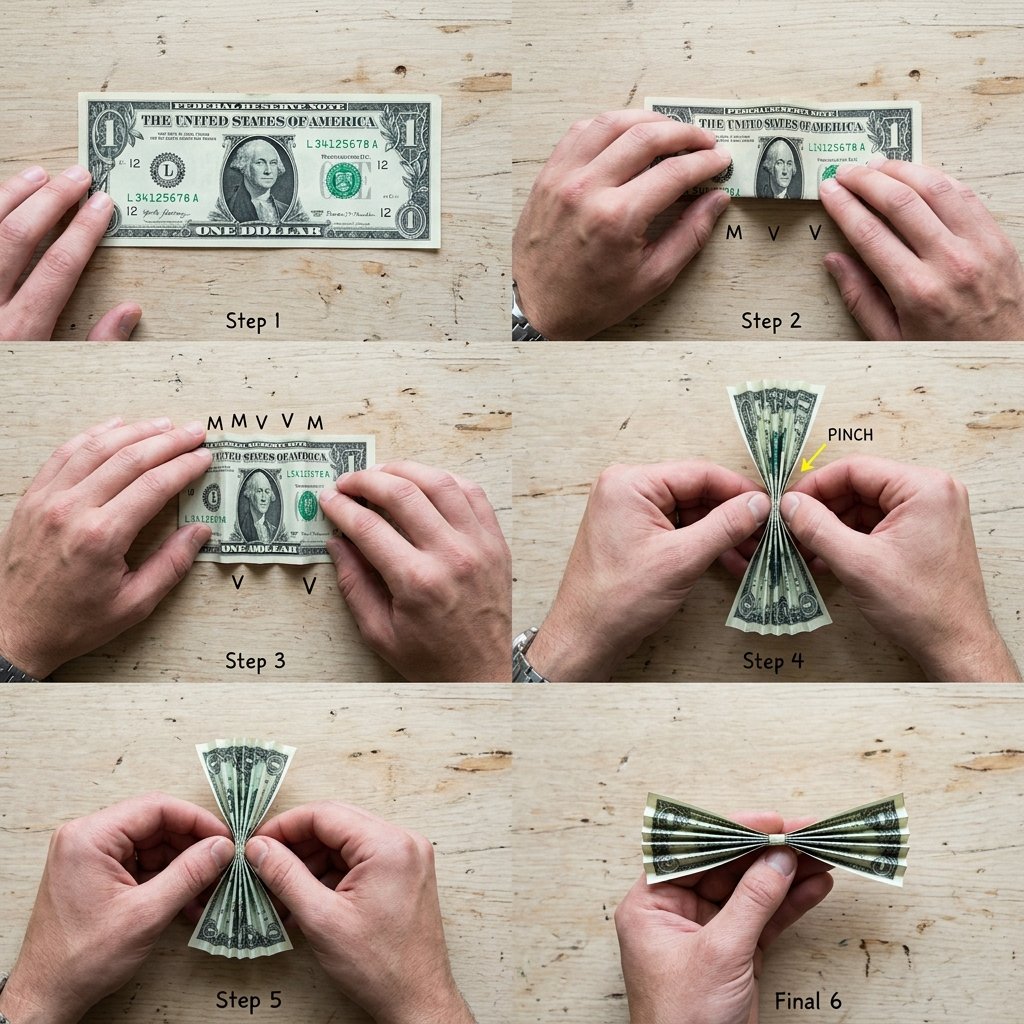
Precision Folding for the Rugged Crafter
Follow these steps with care. The key to origami isn’t just following the directions—it’s the pressure of the crease. Use your thumbnail or a bone folder to ensure every fold is sharp and permanent.
- The Accordion Foundation: Lay the bill horizontally. Fold it in half lengthwise to create a center crease, then unfold. Now, fold the top and bottom edges inward to meet that center line. This creates a long, narrow strip. Proceed to fold this strip into an accordion (fan) style, making 8 equal segments.
- The Center Lock: Once your bill is a tight accordion stack, fold the entire stack in half to find the center point. Wrap a small, thin piece of floral wire or a clear mini-rubber band around this center point. This acts as the ‘stem’ and holds the structural integrity of the clover.
- The Leaf Expansion: Carefully pull the edges of the accordion folds outward from the center. You will see four distinct quadrants forming. Use your fingers to ‘squash fold’ the ends of each accordion segment so they flare out like heart-shaped petals.
- The Final Sculpt: Gently curve the edges of each leaf to give it a 3D, organic look. If you used wire, twist the remaining ends to form a sturdy stem. If you used a rubber band, you can tuck a small piece of green cardstock through the band to act as a stem.
“The secret to a perfect shamrock is in the symmetry. If one leaf looks larger than the others, re-tension your center bind before the final expansion.”
The Budget Comparison: Store-Bought vs. DIY Origami
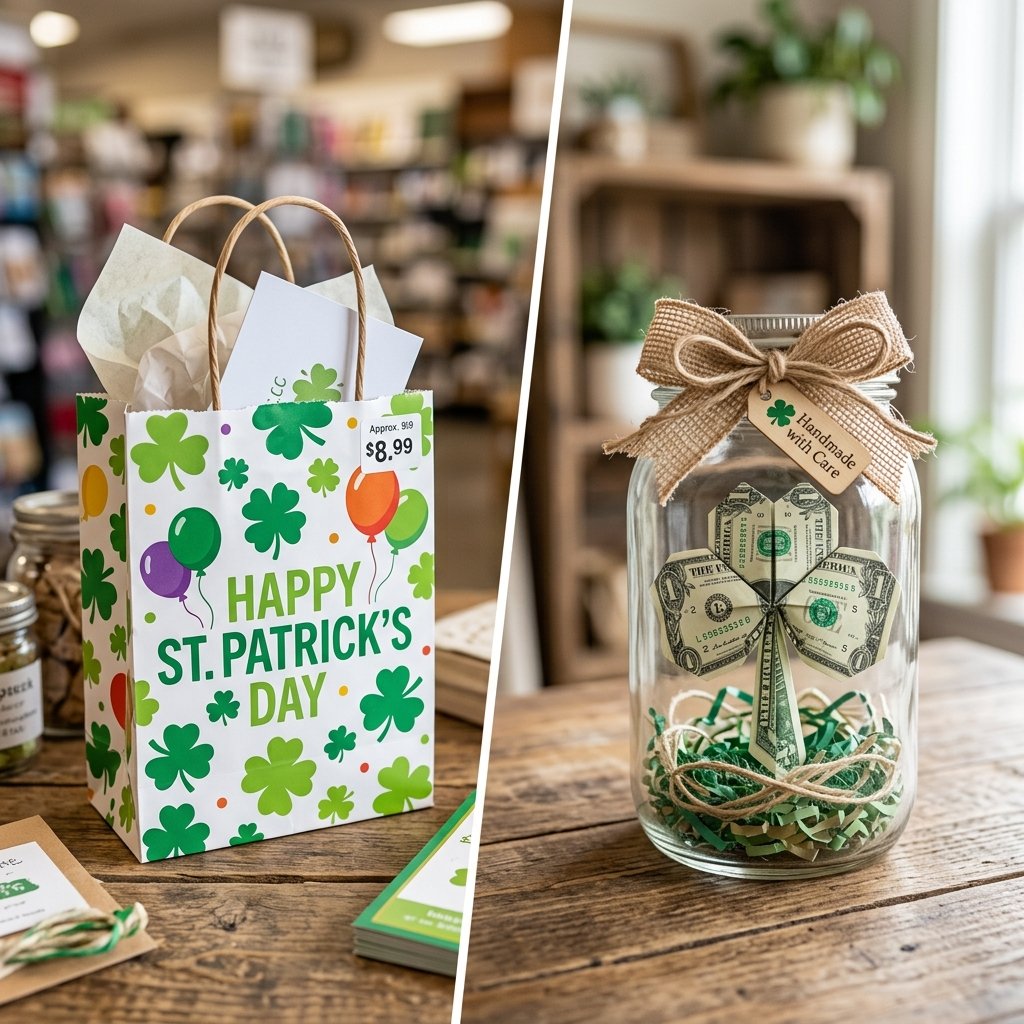
Why the DIY Route Wins Every Time
We often think that buying a fancy ‘pop-up’ card or a pre-made gift box is the only way to make a gift feel special. However, the data suggests that a handmade money origami piece provides more emotional value for a fraction of the cost. By upcycling items you already have, you keep your hard-earned money where it belongs: in the gift itself.
| Expense Item | Store-Bought Gift Set | DIY Money Origami |
|---|---|---|
| Greeting Card | $5.99 | $0.00 (Handmade) |
| Gift Wrapping/Box | $4.50 | $0.00 (Upcycled Jar) |
| Total Extra Cost | $10.49 | $0.00 |
| Total Savings | — | 100% |
By choosing to fold the money yourself, you’ve effectively increased the value of your gift by $10 without spending an extra dime. That is the definition of being a clever, budget-savvy crafter.
Presentation Mastery: The Frugal Stylist’s Secrets

Elevating the Unfolded Potential
A money shamrock sitting on a table is a curiosity; a money shamrock presented in a curated environment is a masterpiece. As a ‘Trash-to-Treasure’ guru, you should look to your recycling bin for the perfect vessel. Here are three masculine-elegant ways to present your work:
- The Shadow Box Card: Take a piece of heavy cardboard from a shipping box. Cut a rectangle and wrap it in brown butcher paper or a paper grocery bag. Affix the shamrock to the center using a tiny dab of removable adhesive or a glue dot.
- The Specimen Jar: Clean out a small glass jelly jar. Place a layer of dried moss or even green-tinted rice at the bottom. Suspend the shamrock inside using a thin thread taped to the underside of the lid. It looks like a botanical treasure.
- The Lucky Coin Pair: Tape your shamrock to the front of a lottery ticket or a ‘lucky’ chocolate gold coin. It reinforces the theme of fortune and adds a layer of playful interaction.
Safety Note: Never use permanent super glue or staples on currency. It is vital that the recipient can eventually unfold and spend the gift without tearing the bill. Stick to low-tack adhesives or mechanical binds like wire.
Conclusion
The Luck of the Hand-Crafted
Folding a money origami shamrock is more than just a clever trick; it is a way to show the recipient that they are worth your time and your talent. In a fast-paced world, taking 10 minutes to meticulously crease a bill into a symbol of luck speaks volumes. You have successfully navigated the balance between being frugal and being generous, proving that style and sentiment don’t require a massive budget—just a bit of craftiness and a crisp bill. Now go forth, fold with confidence, and share the luckiest gift ever!


Makenzie is the founder and lead writer at MoneyHackTips.com — a personal finance blog dedicated to delivering street-smart financial wisdom for real people on real budgets. With 300+ published articles covering everything from debt management to investing fundamentals, Makenzie’s mission is to make every dollar work harder. When not writing about money hacks, Makenzie is testing frugal living strategies, optimizing side hustles, and helping readers build financial freedom from scratch.