
Hey there, fellow frugal hacker! If you are reading this, you are probably standing at a crossroads with your current vehicle. Maybe it is time for an upgrade, or perhaps you have realized that living car-free (or car-lite) is the ultimate way to boost your savings rate. Whatever the reason, you are not just looking to ‘get rid’ of your car; you are looking to squeeze every possible cent of value out of it. Selling a car for cash can feel like a daunting task, especially with the horror stories of lowball offers and Craigslist scammers floating around. But do not worry—I have got your back. In this guide, we are going to walk through the exact steps to ensure you walk away with the most money in your pocket while keeping your sanity and safety intact. We are talking about a potential difference of $1,000 to $3,000 just by following a few smart strategies. Let us dive in and turn that hunk of metal into a stack of green!
The Prep: Making Your Car Market-Ready on a Dime
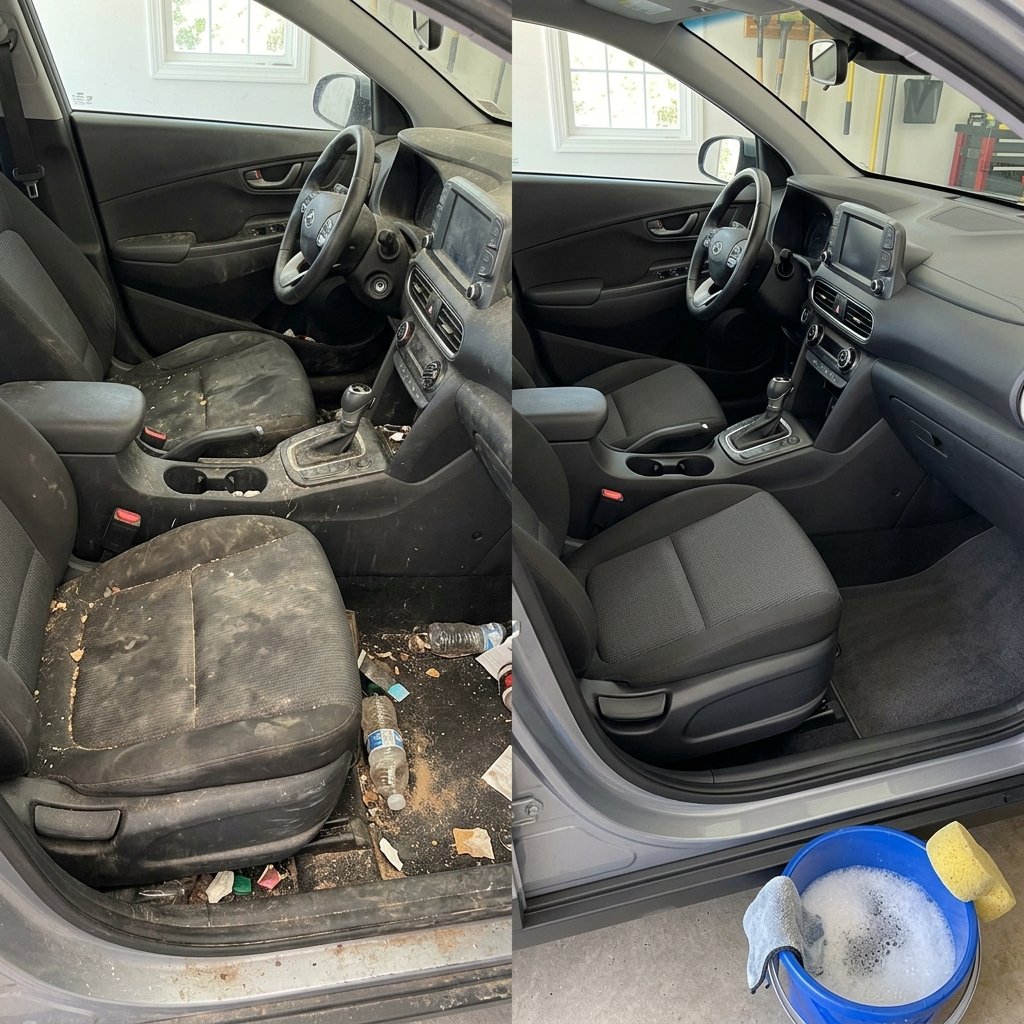
First Impressions are Worth Thousands
Before you even think about snapping a photo, you need to realize that a clean car sells for significantly more than a dirty one. But as frugal enthusiasts, we are not going to spend $200 on a professional detailing service. Instead, we are going to do it ourselves for about $15 in supplies. A deep clean signals to the buyer that the car has been well-maintained. If the interior is spotless, they will assume the engine is, too.
The DIY Detail Checklist
- Exterior Wash and Wax: Use a high-quality soap and a $5 bottle of spray wax to give it that showroom shine.
- The Interior Deep Clean: Vacuum every nook and cranny. Use a mixture of water and a drop of dish soap to wipe down surfaces.
- Window Clarity: Use newspaper and glass cleaner for a streak-free finish that makes the car look brand new.
- Deodorize: Skip the expensive ‘new car’ sprays. A small bowl of vinegar left in the car overnight will neutralize odors for pennies.
| Service | Professional Cost | DIY Frugal Cost | Total Savings |
|---|---|---|---|
| Full Interior/Exterior Detail | $250 | $15 | $235 |
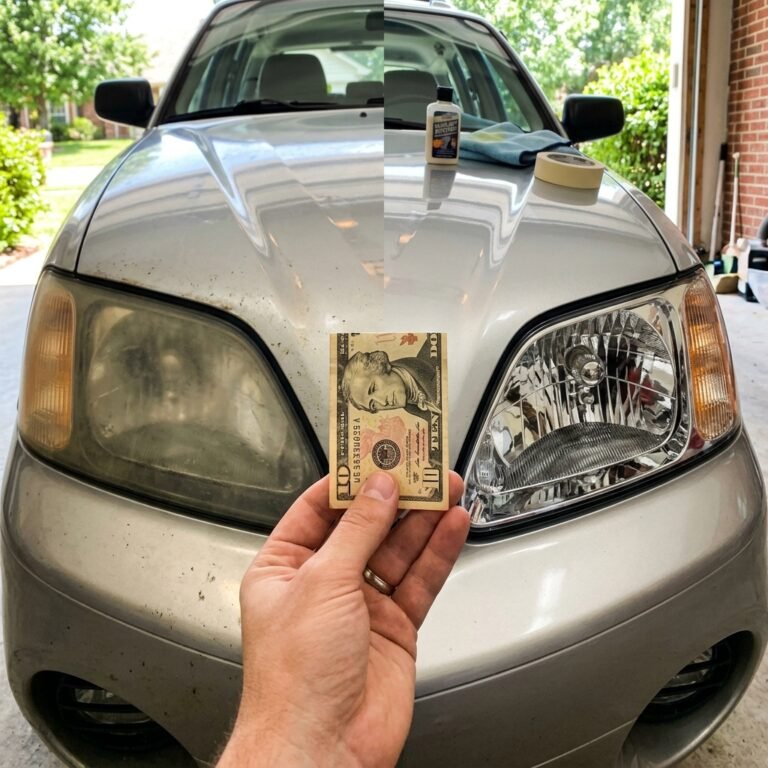
| Headlight Restoration | $75 | $10 | $65 |
| Minor Paint Touch-up | $150 | $20 | $130 |
The Pricing Strategy: The Math Behind the Money

Don’t Guess, Use Data
Pricing your car correctly is a balancing act. Price it too high, and it sits for weeks; price it too low, and you’re leaving money on the table. To find the ‘Sweet Spot,’ you need to consult the ‘Big Three’ of car valuation: Kelley Blue Book (KBB), Edmunds, and NADA Guides. However, those are just starting points. The real value is determined by what people in your specific zip code are actually paying.
Calculating Your Ask
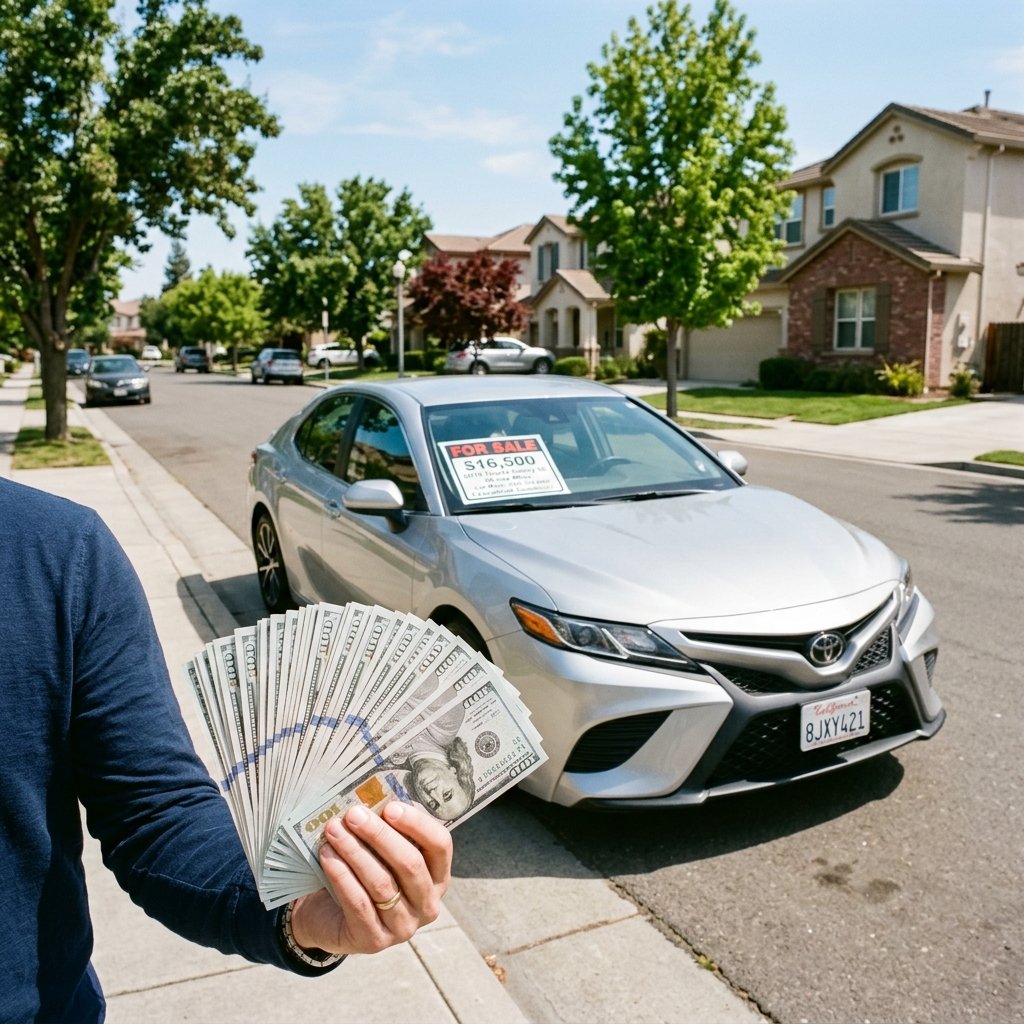
Check Facebook Marketplace and Craigslist for similar makes, models, and mileages in your area. If the average price is $8,500, and your car is in better-than-average condition, you might list it for $9,200 to leave room for negotiation. Remember, everyone wants to feel like they got a deal. If you want to end up with $8,500, you must start higher.
Rule of Thumb: Always list your car for 10-15% more than your ‘bottom line’ price to allow for the inevitable haggle.
Where to Sell: Private Sale vs. Instant Cash Offers

Choosing Your Battleground
Where you sell depends on your priority: speed or profit. If you want the absolute most money, a private sale is the only way to go. If you need the cash by tomorrow afternoon, instant cash offer sites are your best friend. Let’s look at the earning potential for each.
The Earning Potential Breakdown
| Selling Method | Effort Level | Expected Profit (Example) |
|---|---|---|
| Dealer Trade-In | Low | $10,000 |
| Instant Cash Offer (Carvana/Vroom) | Medium | $11,500 |
| Private Party Sale | High | $13,500 |
By putting in the extra effort to sell privately, you could earn an extra $3,500 compared to a dealership trade-in. That is a massive win for your savings account! If you choose the private route, Facebook Marketplace is currently the king of reach, but don’t sleep on specialized forums if you have a unique or enthusiast vehicle.
The Art of the Negotiation: Scripts for Success

Mastering the Haggle
Negotiation is where most people get nervous, but as a frugal hacker, you should view it as a game where the prize is hundreds of dollars. The key is to remain detached. If the buyer doesn’t meet your price, be prepared to walk away. Use these scripts to stay in control of the conversation.
Scripts for Common Situations
Buyer: ‘What’s the lowest you’ll take?’
You: ‘I’ve priced it very competitively based on its condition and recent maintenance. Why don’t you come take a look at it first, and we can talk about a fair price in person?’
Buyer: ‘I only have $7,000 cash today’ (on an $8,000 car).
You: ‘I appreciate the offer, but I’m firm on $8,000 for now. If I haven’t sold it in a week, I might reconsider, but at this price, I expect it to go quickly.’
Always let the buyer make the first offer after seeing the car. Silence is a powerful tool. After you state your price, stop talking. The first person to speak usually loses ground.
Safety First: Avoiding Scams and Shady Characters
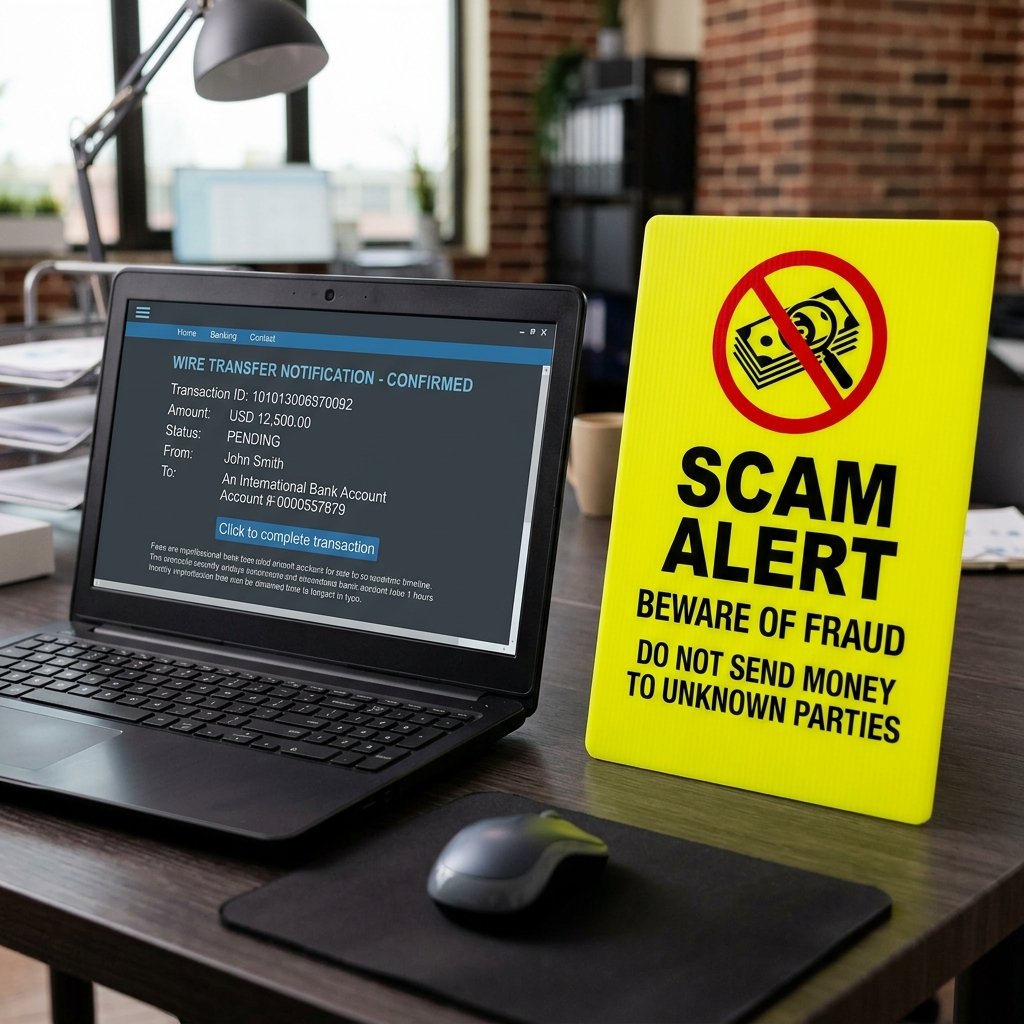
Protecting Your Asset and Yourself
When you are dealing with thousands of dollars in cash, safety is paramount. Scammers are clever, but they are also predictable. Most scams involve ‘overpayment’ or ‘shipping’ the car. If the deal sounds too good to be true, or if the buyer refuses to meet in person, it is a scam. Period.
The Ultimate Safety Checklist
- Meet in Public: Always meet at a police station ‘safe exchange zone’ or a busy grocery store parking lot.
- The Test Drive: Never let someone test drive the car alone. Check their driver’s license and take a photo of it before getting in.
- Payment Security: Accept only cash or a cashier’s check. If accepting a cashier’s check, meet the buyer at their bank to watch the teller issue the check.
Scam Warning: Never, under any circumstances, accept a personal check, a wire transfer, or a payment via an app like Zelle or Venmo for a large vehicle transaction. These can be reversed or fraudulent, leaving you without a car and without money.
The Paperwork: Sealing the Deal Legally
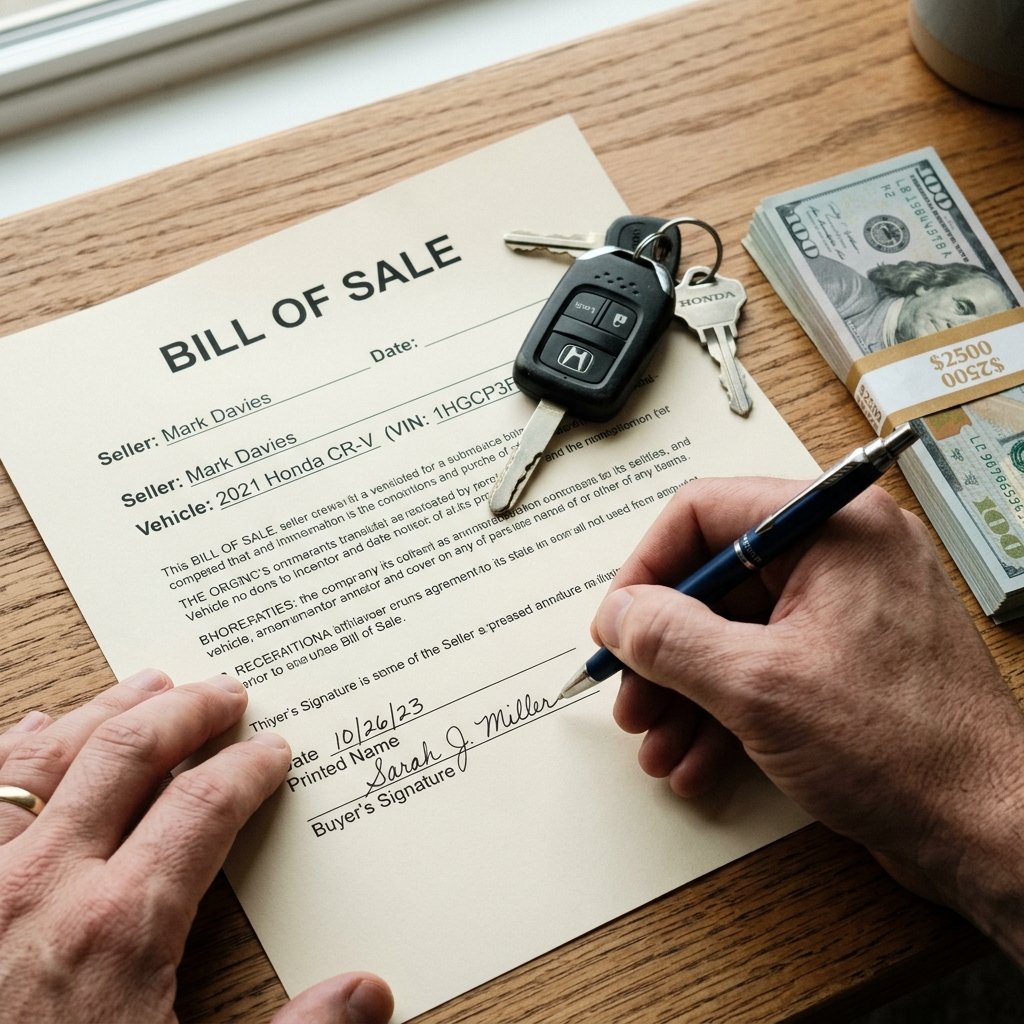
Crossing the T’s and Dotting the I’s
You have the cash, but you are not done until the state knows the car is no longer yours. Failing to handle the paperwork correctly can lead to you being held liable for tickets or accidents the new owner incurs. Every state is different, but the core requirements are usually the same.
The Final Steps
- The Title: Ensure the title is clear of liens. Sign it over to the buyer exactly as required by your DMV.
- Bill of Sale: Create a simple document that includes the VIN, sale price (e.g., $8,500), date, and ‘As-Is’ clause.
- Release of Liability: This is the most important step! File this with your DMV immediately to prove you no longer own the vehicle.
- Insurance: Cancel your insurance policy only after the sale is finalized and the plates are removed.
By handling the paperwork yourself, you avoid ‘doc fees’ that dealerships often charge, which can range from $100 to $500. That’s more money staying in your pocket!
Conclusion
Selling your car for cash is one of the most effective ways to give your finances a massive boost. By taking the time to detail it yourself, pricing it strategically, and holding your ground during negotiations, you can easily walk away with thousands more than a dealership would ever offer you. Remember, the key to a successful frugal sale is preparation and patience. Treat the process like a professional business transaction, stay safe by following the ‘cash-only’ rule, and enjoy the feeling of that thick envelope of cash in your hand. You have successfully hacked the car-selling system! Now, take that profit and put it toward your next financial goal—whether that is an emergency fund, a high-yield investment, or your next (much cheaper) set of wheels. You’ve got this!
Disclaimer: This guide is for informational purposes only. I am not a financial advisor or legal professional. Laws regarding vehicle sales vary by state and country; always consult your local DMV or a legal professional to ensure you are in compliance with local regulations.


Makenzie is the founder and lead writer at MoneyHackTips.com — a personal finance blog dedicated to delivering street-smart financial wisdom for real people on real budgets. With 300+ published articles covering everything from debt management to investing fundamentals, Makenzie’s mission is to make every dollar work harder. When not writing about money hacks, Makenzie is testing frugal living strategies, optimizing side hustles, and helping readers build financial freedom from scratch.