
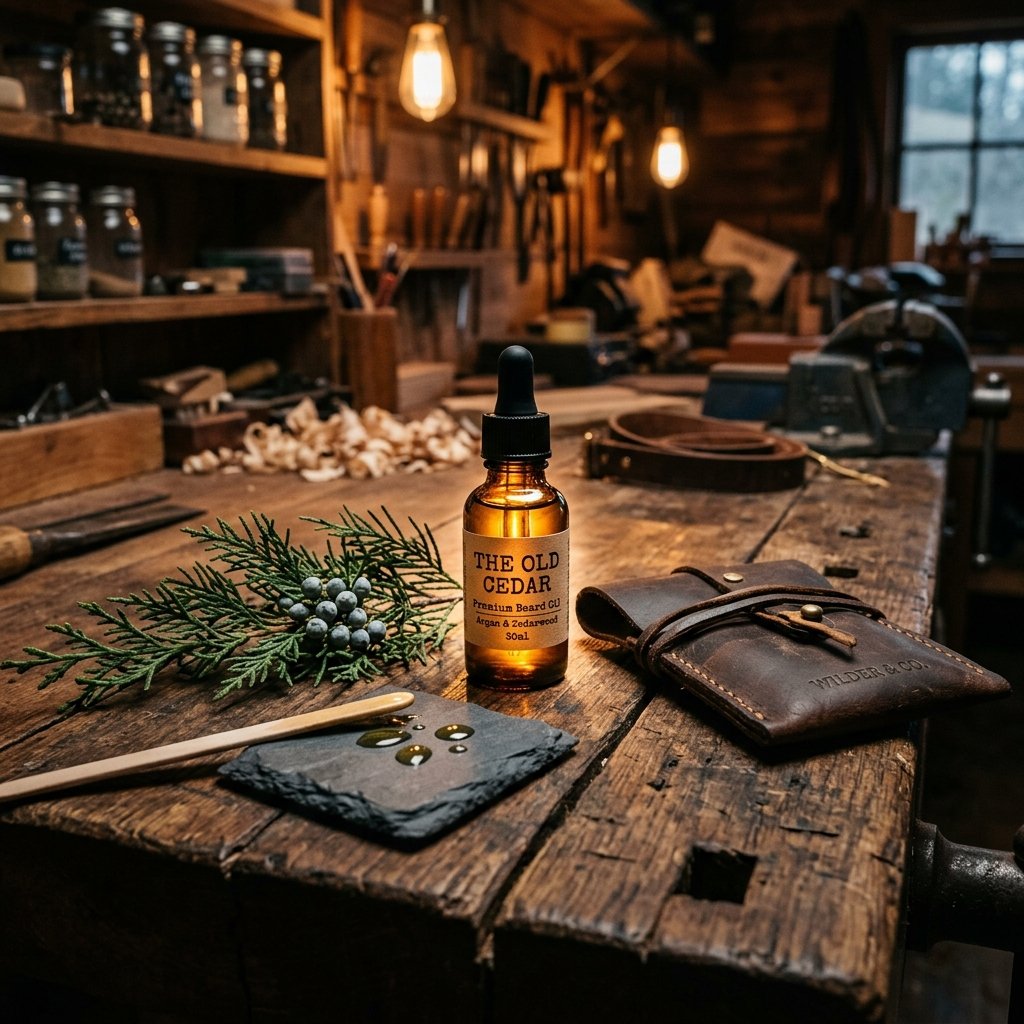

Let us have an honest conversation about the men’s grooming industry. If you have ever walked into a boutique barbershop or browsed the aisles of a high-end department store, you have likely seen those tiny, beautifully branded bottles of beard oil. They boast rugged names like ‘Lumberjack’s Soul’ or ‘Midnight Woodsman,’ and they come with a price tag that could easily fund a weekend camping trip. We are talking $25 to $40 for a mere 1 ounce of product. As frugal DIYers, resourceful crafters, and budget-savvy gift-givers, we have to call it what it is: a masterful marketing illusion.
The truth that the luxury grooming industry does not want you to know is this: beard oil is incredibly cheap, astonishingly simple, and profoundly easy to make at home. You do not need a chemistry degree or a pristine laboratory. You just need a few high-quality, natural ingredients, a glass bottle, and about 5 minutes of your time. By taking matters into your own hands, you can craft a premium, masculine elixir that softens bristles, hydrates the skin beneath, and smells like a bespoke cologne—all for literally pennies on the dollar.
Whether you are a handy individual looking to upgrade your own grooming routine without draining your wallet, or a crafty spouse planning the ultimate, thoughtful Father’s Day or groomsman gift, this guide is your blueprint. We are going to strip away the pretentious labels and get back to basics. We will explore the absolute best natural oils for facial hair, break down the exact costs, and walk you through a foolproof, 3-ingredient recipe that rivals anything you can buy off the shelf. Roll up your sleeves, clear off a space on your workbench, and let us dive into the rewarding world of DIY masculine apothecary.
The Great Grooming Swindle: Breaking Down the True Cost of Beard Oil
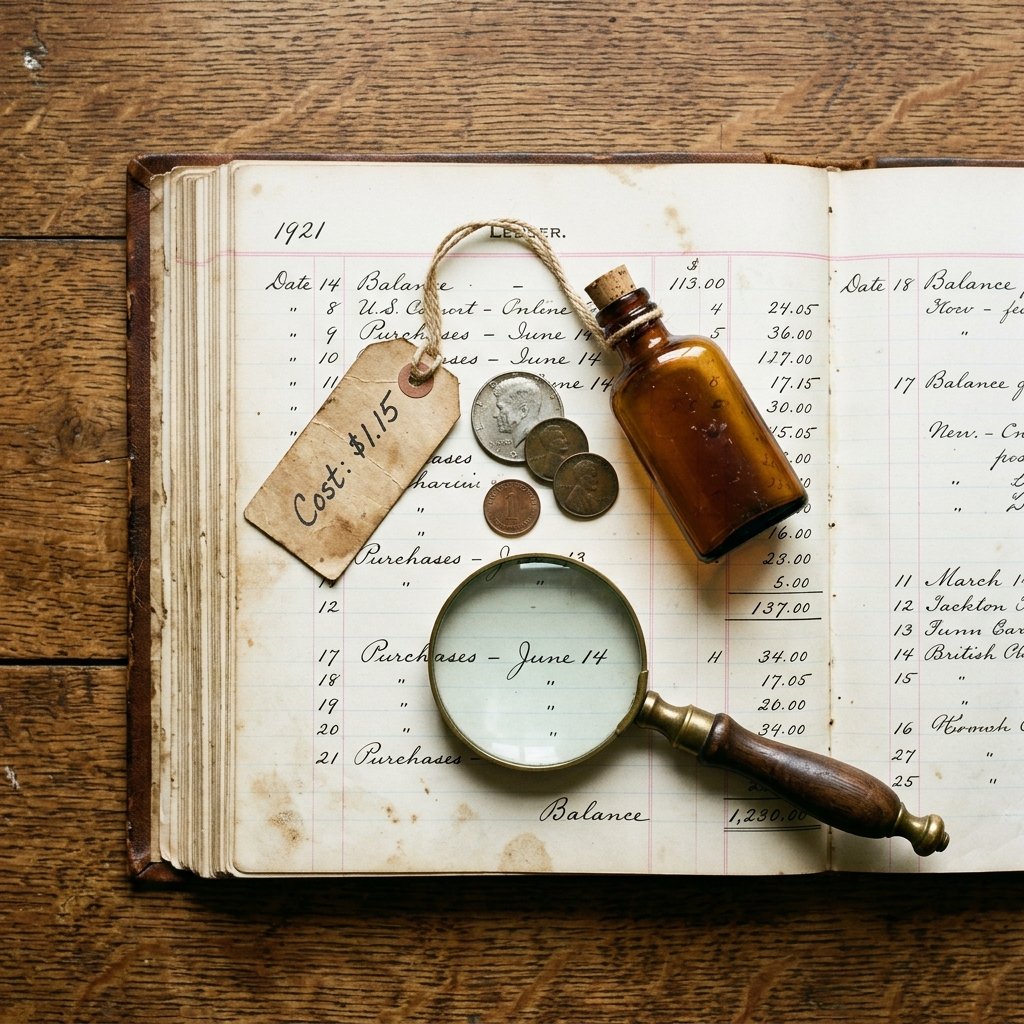
Before we start mixing, it is crucial to understand exactly why making your own beard oil is one of the most lucrative DIY swaps you can make in your household. When you purchase a commercial beard oil, you are rarely paying for the liquid inside the bottle. You are paying for the custom-printed waterproof label, the embossed cardboard box, the celebrity endorsement, the retail shelf space, and a massive corporate profit margin. The actual raw materials in a standard 1-ounce bottle often cost less than $1.50 to source, even at retail consumer prices.
Let us look at the raw economics of this rugged craft. By purchasing your carrier oils and essential oils in slightly larger quantities—say, 4 to 8 ounces at a time—you drastically reduce the cost per batch. A high-quality organic Jojoba oil might cost you $10 for a 4-ounce bottle, which yields enough base oil for four separate batches of beard oil. Compare that to buying four boutique bottles at $30 each, and the savings become impossible to ignore.
| Grooming Product Source | Average Cost (1 oz) | Quality of Ingredients | Customization Level |
|---|---|---|---|
| High-End Boutique Brand | $30.00 – $45.00 | Often contains synthetic fragrances | Zero (Pre-mixed) |
| Drugstore Mass-Market Brand | $12.00 – $18.00 | Diluted with cheap fillers (Canola/Mineral Oil) | Zero (Pre-mixed) |
| Our Frugal DIY Masterpiece | $1.15 – $1.85 | 100% Pure Organic Cold-Pressed Oils | Infinite (Tailored to your preference) |
As the table illustrates, the DIY route is not just a budget-friendly alternative; it is a vastly superior product. You control exactly what goes onto your skin or your loved one’s face. No unpronounceable chemical preservatives, no cheap mineral oil fillers that clog pores, and no overpowering synthetic fragrances that give you a headache by noon. You are making pure, unadulterated liquid gold.
The Holy Trinity of Beard Care: Our 3-Ingredient Formula
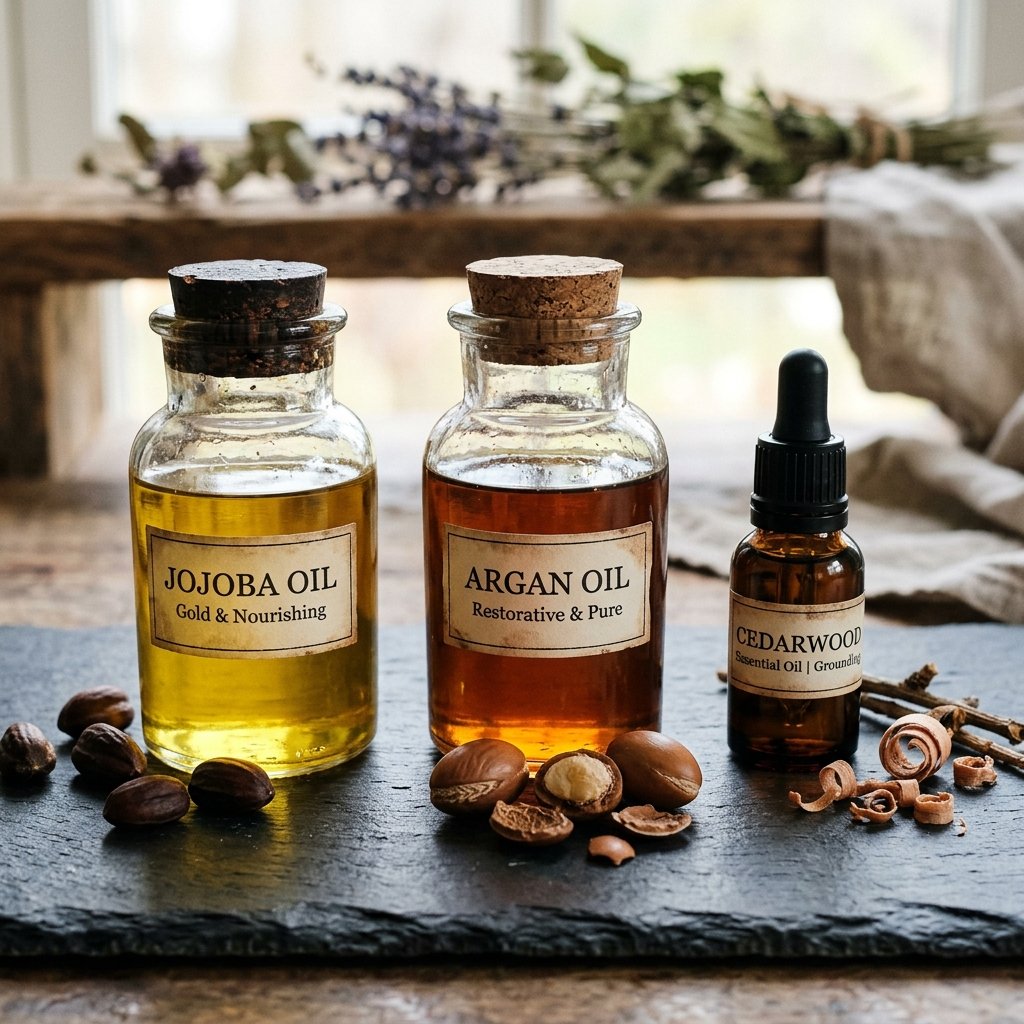
The secret to an elite beard oil lies in restraint. You do not need twenty different extracts to achieve a soft, healthy beard. In fact, overcomplicating the formula often leads to a greasy, heavy product that weighs the hair down. We are going to use a simple, masterful 3-ingredient blend: two carrier oils to do the heavy lifting of hydration and repair, and one robust essential oil for that unmistakable masculine scent.
Ingredient 1: Golden Jojoba Oil (The Mimic)
If you can only afford one ingredient, make it Jojoba oil. Pronounced ‘ho-ho-ba’, this liquid wax is extracted from the seeds of the Jojoba shrub. Why is it the undisputed king of beard care? Because its molecular structure closely mimics sebum—the natural oil produced by human skin. When applied to the face, the skin readily absorbs it without leaving a greasy, slick residue. It hydrates the often-neglected skin beneath the beard, eliminating the dreaded ‘beardruff’ (beard dandruff) and soothing the maddening itch that plagues men during the early stages of beard growth.
Ingredient 2: Argan Oil (The Liquid Gold of Morocco)
While Jojoba takes care of the skin, Argan oil takes care of the hair. Packed with Vitamin E and essential fatty acids, Argan oil is a powerhouse for softening coarse, wiry bristles. It coats the hair shaft, providing a subtle, healthy sheen and protecting the beard from environmental damage like harsh winds and UV rays. It also helps to prevent split ends, which is crucial for men trying to grow a longer, majestic lumberjack beard.
Ingredient 3: Cedarwood Essential Oil (The Rugged Aromatic)
For the scent, we are turning to Cedarwood (specifically Cedrus atlantica or Juniperus virginiana). Cedarwood offers a warm, woodsy, grounding aroma that smells like a freshly built log cabin or a traditional woodworking shop. It is inherently masculine without being overpowering like cheap cologne. Beyond its scent, Cedarwood essential oil has natural astringent and antibacterial properties, helping to keep the beard clean and the skin underneath clear of blemishes.
The Frugal Craftsman’s Mantra: Quality over quantity. Invest your budget in cold-pressed, unrefined carrier oils. The darker and richer the oil looks, the more nutrients it has retained. Cheap, clear oils have been stripped of their magic.
The Master Mixer’s Workshop: Step-by-Step Recipe & Assembly
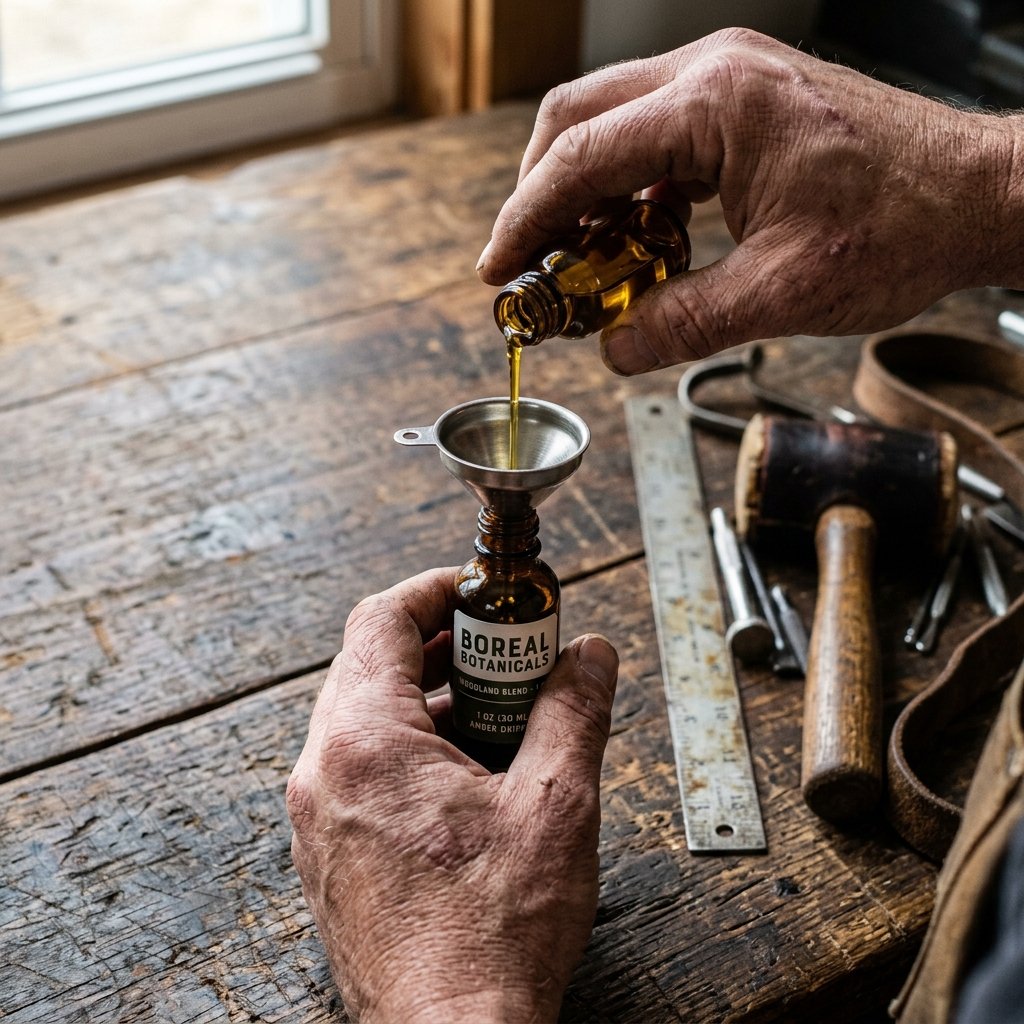
Now that we have our raw materials, it is time to step into the workshop. Making beard oil is essentially an exercise in precise measuring and careful blending. You will need a clean workspace, a small glass measuring beaker or a simple kitchen funnel, and a 1-ounce (30ml) amber glass dropper bottle. The amber glass is not just for a vintage, apothecary aesthetic; it actually protects the natural oils from UV light degradation, ensuring your batch stays fresh for up to a year.
Safety & Handling Note: Essential oils are highly concentrated plant extracts. Never apply undiluted essential oils directly to the skin, as they can cause severe irritation or chemical burns. Always dilute them within your carrier oils using the ratios provided below.
The Golden Ratio Formula
This recipe yields exactly one fluid ounce of premium beard oil, perfectly proportioned for daily use.
| Ingredient | Measurement (Volume) | Purpose in the Blend |
|---|---|---|
| Organic Jojoba Oil | 1/2 Ounce (approx. 15ml) | Skin hydration, sebum mimicry, anti-itch |
| Organic Argan Oil | 1/2 Ounce (approx. 15ml) | Hair softening, shine, split-end prevention |
| Cedarwood Essential Oil | 8 to 10 Drops | Masculine fragrance, antibacterial properties |
The Mixing Process
- Sanitize Your Equipment: Begin by washing your amber glass bottle and glass dropper with warm soapy water. Rinse thoroughly and let them air dry completely. Even a single drop of water left inside can introduce bacteria and cause the oils to go rancid prematurely.
- Pour the Base: Using a small stainless steel funnel, carefully pour the 1/2 ounce of Jojoba oil into the bottle, followed by the 1/2 ounce of Argan oil. The bottle should be filled just to the shoulder, leaving a little room at the top for the dropper and the essential oils.
- Add the Aromatic: Carefully dispense exactly 8 to 10 drops of Cedarwood essential oil directly into the bottle. If you have sensitive skin, start with 5 drops. You can always add more later, but you cannot take it out once it is in.
- Seal and Agitate: Screw the dropper cap on tightly. Roll the bottle vigorously between the palms of your hands for about 60 seconds. The warmth from your hands will slightly heat the oils, helping the essential oil molecules bind perfectly with the heavy carrier oils.
- The Curing Phase: While you can use the oil immediately, for the absolute best olfactory experience, place the bottle in a cool, dark drawer for 24 to 48 hours. This ‘curing’ time allows the woodsy notes of the cedar to fully permeate the carrier oils, resulting in a smoother, more robust scent profile.
Resourceful Customization: Scent Profiles for the Discerning Woodsman
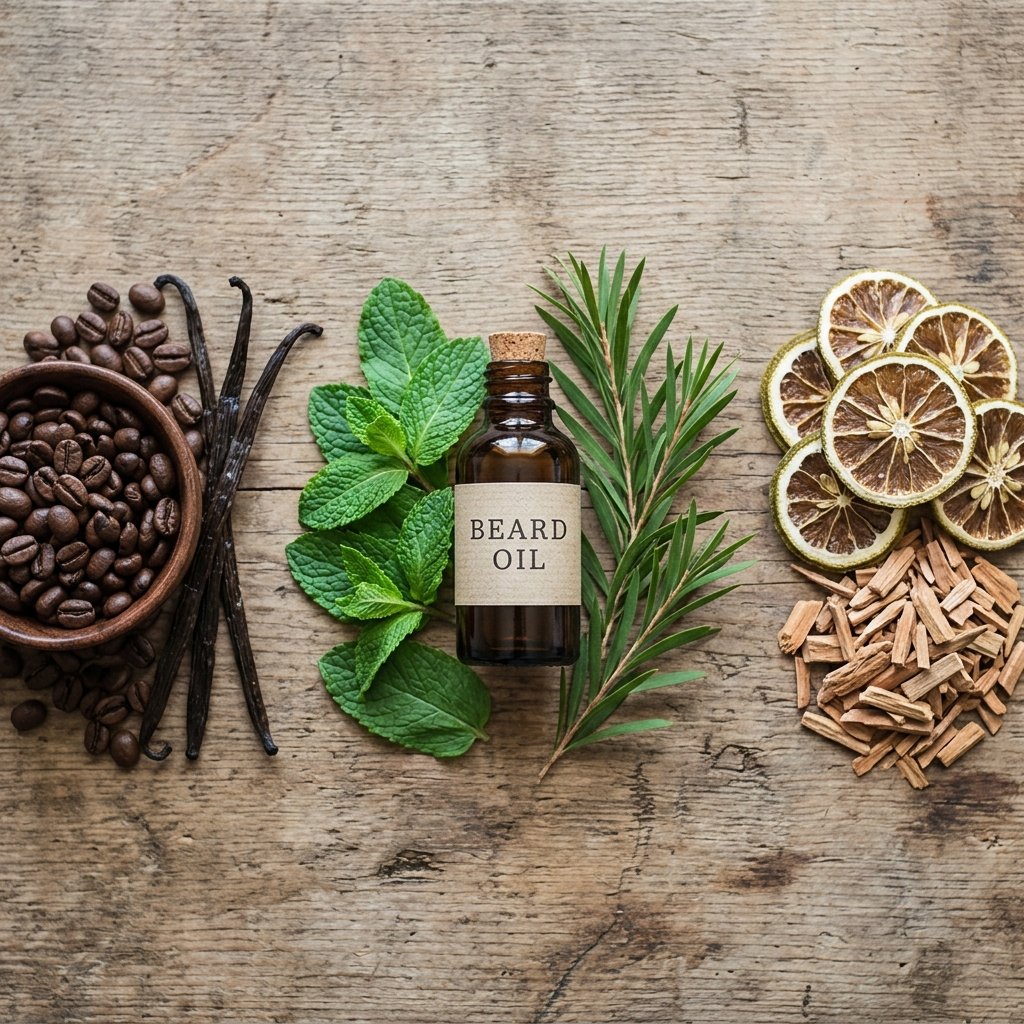
One of the greatest joys of DIY crafting is the ability to customize your creations. While the Cedarwood blend is a timeless classic, you might want to tailor the scent to match a specific personality, season, or mood. By simply swapping out the essential oils while keeping the Jojoba/Argan base exactly the same (maintaining that crucial 1-ounce total), you can create an entire wardrobe of grooming products.
Here are three resourceful, budget-friendly alternative scent profiles that maintain our strict 3-ingredient philosophy. Each of these uses the same 1 oz carrier oil base (1/2 oz Jojoba + 1/2 oz Argan), combined with a new essential oil twist:
- The Spiced Barista (Coffee & Vanilla): Add 5 drops of Coffee Bean essential oil and 4 drops of Vanilla Oleoresin. This creates a warm, rich, and slightly sweet aroma that smells exactly like a high-end espresso bar on a crisp autumn morning. It is incredibly inviting and perfect for the colder months.
- The Invigorating Mountaineer (Peppermint & Tea Tree): Add 4 drops of Peppermint essential oil and 4 drops of Tea Tree oil. This blend is highly functional. The peppermint provides a cooling, tingling sensation that wakes up the skin, while the tea tree is a powerhouse against severe beard dandruff and acne. Note: Keep this blend away from the immediate eye area!
- The Executive (Bergamot & Sandalwood): Add 5 drops of Bergamot (ensure it is Bergaptane-free to avoid sun sensitivity) and 5 drops of Sandalwood. Bergamot offers a crisp, citrusy top note (think Earl Grey tea), while Sandalwood provides a smooth, creamy, woody base. This is a highly sophisticated, masculine scent that mimics expensive designer colognes.
By purchasing a modest sampler pack of high-quality essential oils, you can experiment endlessly. Just remember the golden rule of frugal formulation: write down your recipes! There is nothing worse than creating the perfect, intoxicating scent and completely forgetting how many drops of each oil you used.
Packaging & Presentation: Masculine Elegance on a Dime
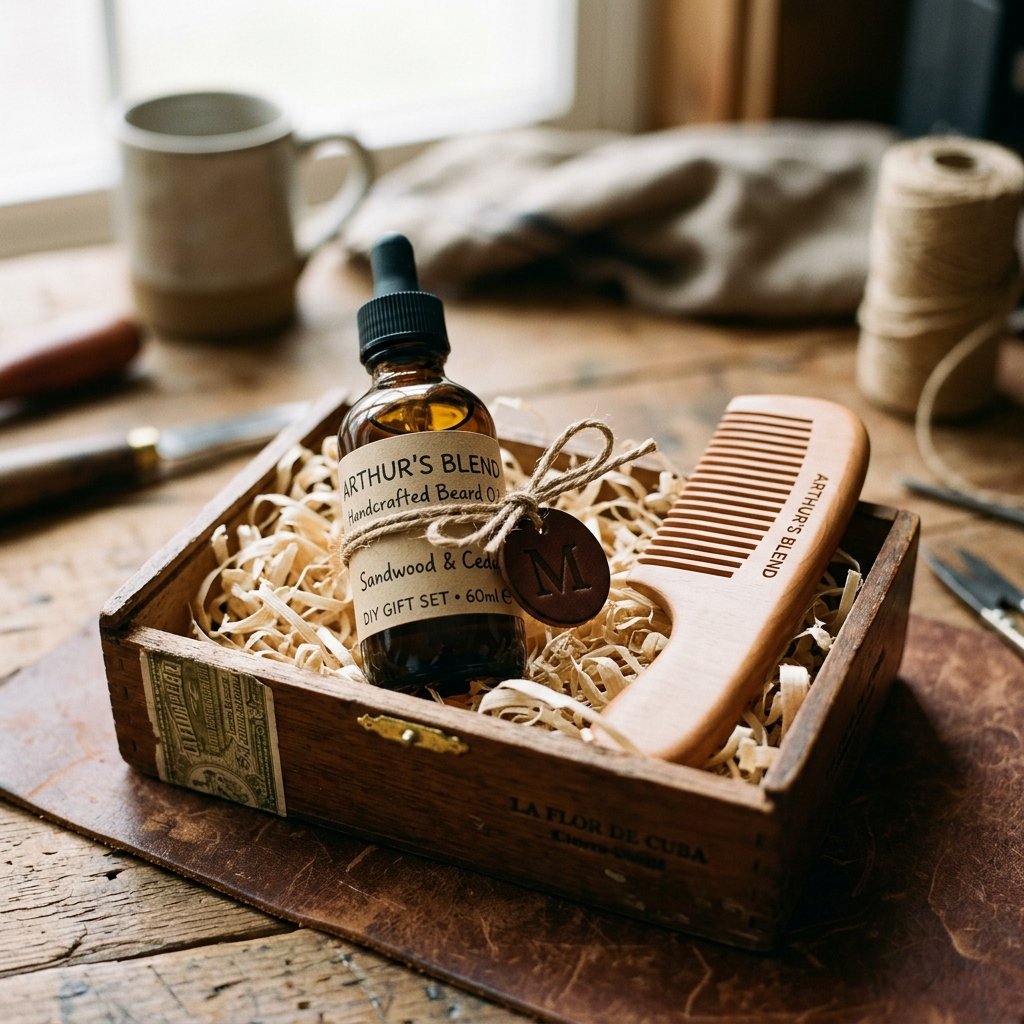
If you are making this beard oil for yourself, a piece of masking tape and a sharpie will do the trick. However, if you are crafting this as a Father’s Day gift, a birthday present for a bearded friend, or a thoughtful addition to a groomsman proposal box, the presentation is where your DIY skills can truly shine. You can make a $1.50 bottle of oil look like a $50 artisanal luxury product with just a few clever, budget-savvy touches.
The Art of the Label
Ditch the standard white printer paper. For a rugged, vintage look, purchase a small roll of kraft paper sticker labels (often found at the Dollar Tree or craft stores for a few bucks). If you have neat handwriting, use a fine-tip black waterproof pen to write the name of the blend, such as ‘Handcrafted Cedarwood Beard Oil – Small Batch’. If you want to take it a step further, you can use a vintage typewriter or a custom rubber stamp.
Leather Tags and Twine
Upcycling is the hallmark of a true frugal crafter. Do you have an old, worn-out leather belt or a damaged leather thrift-store purse? Cut a small, rectangular tag from the scrap leather. Punch a hole in the top, and use a set of cheap metal letter stamps (a great one-time investment for handy DIYers) to stamp the recipient’s initials into the leather. Tie this custom leather tag around the neck of the amber bottle using some rustic jute twine or thick waxed cotton thread.
The Cigar Box Presentation
For the ultimate gifting experience, skip the expensive gift bags. Visit your local cigar shop; many of them sell their empty wooden cigar boxes for $1 to $3 each. These boxes are beautifully crafted from Spanish cedar and feature ornate clasps and hinges. Pack the inside of the box with some natural wood excelsior (wood wool) or shredded kraft paper. Nestle your custom-labeled beard oil inside, perhaps alongside a cheap but high-quality wooden beard comb (often found online for under $5).
When he opens that wooden box, smells the rich aroma of cedarwood, and sees his initials stamped in leather, he will assume you spent a fortune at a bespoke apothecary. Only you will know that the entire masterpiece was assembled using upcycled materials and budget-savvy crafting techniques.
Conclusion
The journey from consumer to creator is one of the most rewarding transitions you can make. By refusing to pay the outrageous markups of the luxury grooming industry, you have unlocked a skill that will serve you, your wallet, and your beard for a lifetime. This simple, 3-ingredient beard oil recipe proves that you do not need to sacrifice quality to be frugal. In fact, by taking control of the ingredients, you have crafted a product that is purer, healthier, and more customized than anything sitting on a department store shelf.
Whether you are massaging this golden elixir into your own beard after a hot morning shower, or watching a loved one unwrap a thoughtfully packaged, custom-scented bottle on Father’s Day, you can take pride in the craftsmanship. You have embraced the spirit of the resourceful maker—turning raw, natural materials into functional, masculine elegance. So keep your dropper bottles clean, store your oils in a cool dark place, and never hesitate to experiment with new scents. Welcome to the rugged, budget-savvy world of DIY apothecary. Happy mixing!


Makenzie is the founder and lead writer at MoneyHackTips.com — a personal finance blog dedicated to delivering street-smart financial wisdom for real people on real budgets. With 300+ published articles covering everything from debt management to investing fundamentals, Makenzie’s mission is to make every dollar work harder. When not writing about money hacks, Makenzie is testing frugal living strategies, optimizing side hustles, and helping readers build financial freedom from scratch.