
The Concrete Renaissance: High-End Style on a Shoestring Budget
Welcome to the ultimate intersection of rugged industrialism and frugal brilliance. If you have been scrolling through high-end home decor magazines, you have likely seen those architectural concrete planters that cost a small fortune. But what if I told you that with a quick trip to the local hardware yard and a single $1.25 bill at the Dollar Tree, you could replicate that exact ‘Modern Minimalist’ aesthetic for your own porch or balcony? This isn’t just about saving money; it is about the resourceful satisfaction of turning the most basic building material—the humble cinder block—into a vertical masterpiece that looks like it belongs in a boutique hotel garden.
For the handy parent, the budget-savvy urban gardener, or the DIY enthusiast who loves a project with maximum impact for minimum effort, this vertical planter is the holy grail. We are going to take the raw, brutalist beauty of concrete and refine it with clever textures and lush greenery. By the time we are done, you will have a space-saving garden solution that costs less than a fast-food lunch but lasts for decades. Let’s roll up our sleeves and build something structural, sophisticated, and incredibly cheap.
The $10 Arsenal: Sourcing Your Materials Like a Pro
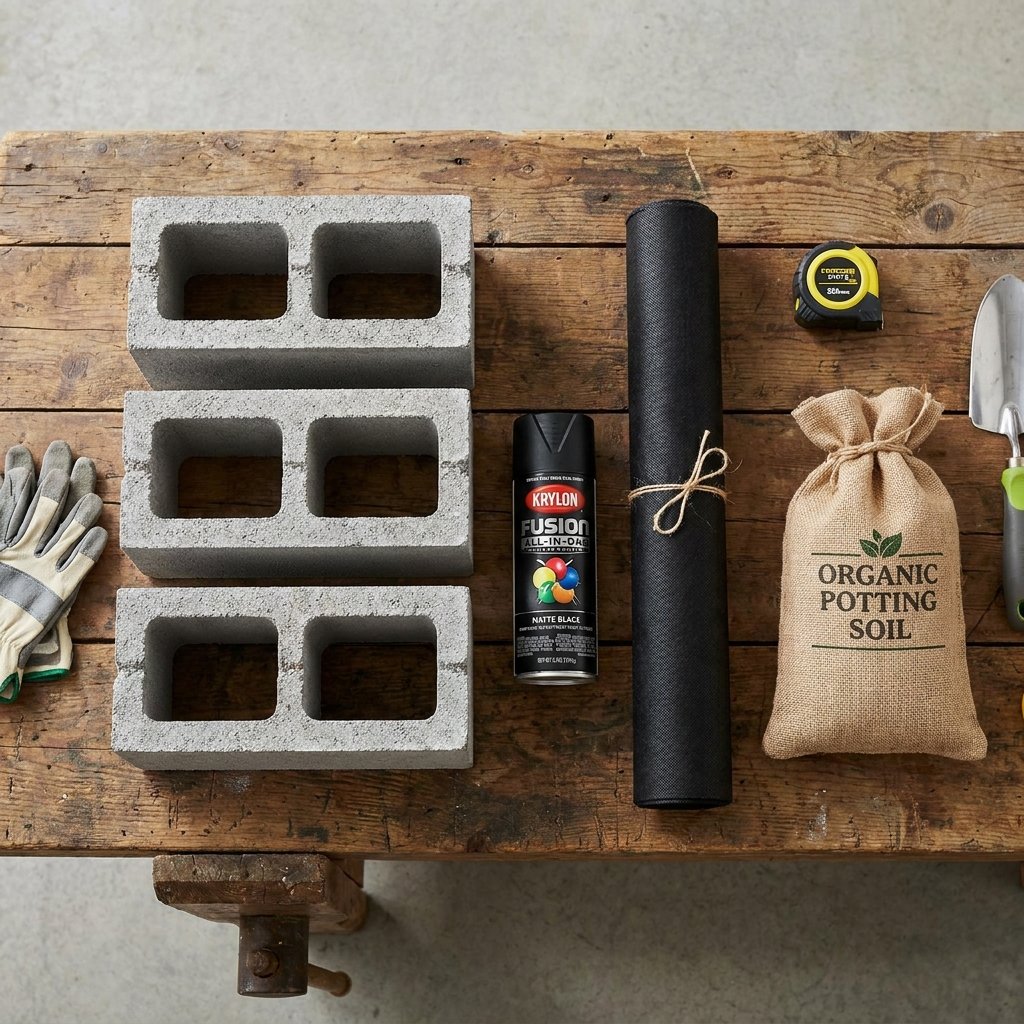
Gathering the Heavy Hitters
The secret to keeping this project under the $10 mark lies in your ability to source the ‘bones’ of the project cheaply. Standard 8x8x16 cinder blocks are the gold standard here. While you can find them at big-box hardware stores for roughly $1.85 to $2.25 each, the true frugal guru knows that these are often available for free on digital marketplaces or at local construction sites (always ask first!). For this build, we are using a 3-block staggered configuration to maximize verticality without compromising stability.
| Item | Source | Estimated Cost |
|---|---|---|
| Cinder Blocks (3) | Hardware Store / Salvage | $5.55 |
| DT Spray Paint or Acrylic | Dollar Tree | $1.25 |
| DT Landscape Fabric/Mesh | Dollar Tree | $1.25 |
| DT Potting Soil (Small Bag) | Dollar Tree | $1.25 |
| Total Investment | $9.30 |
“The best materials aren’t always the most expensive; they are the ones you have the vision to transform.” — The Frugal Guru’s Mantra
Textural Alchemy: Turning Concrete into ‘Stone’
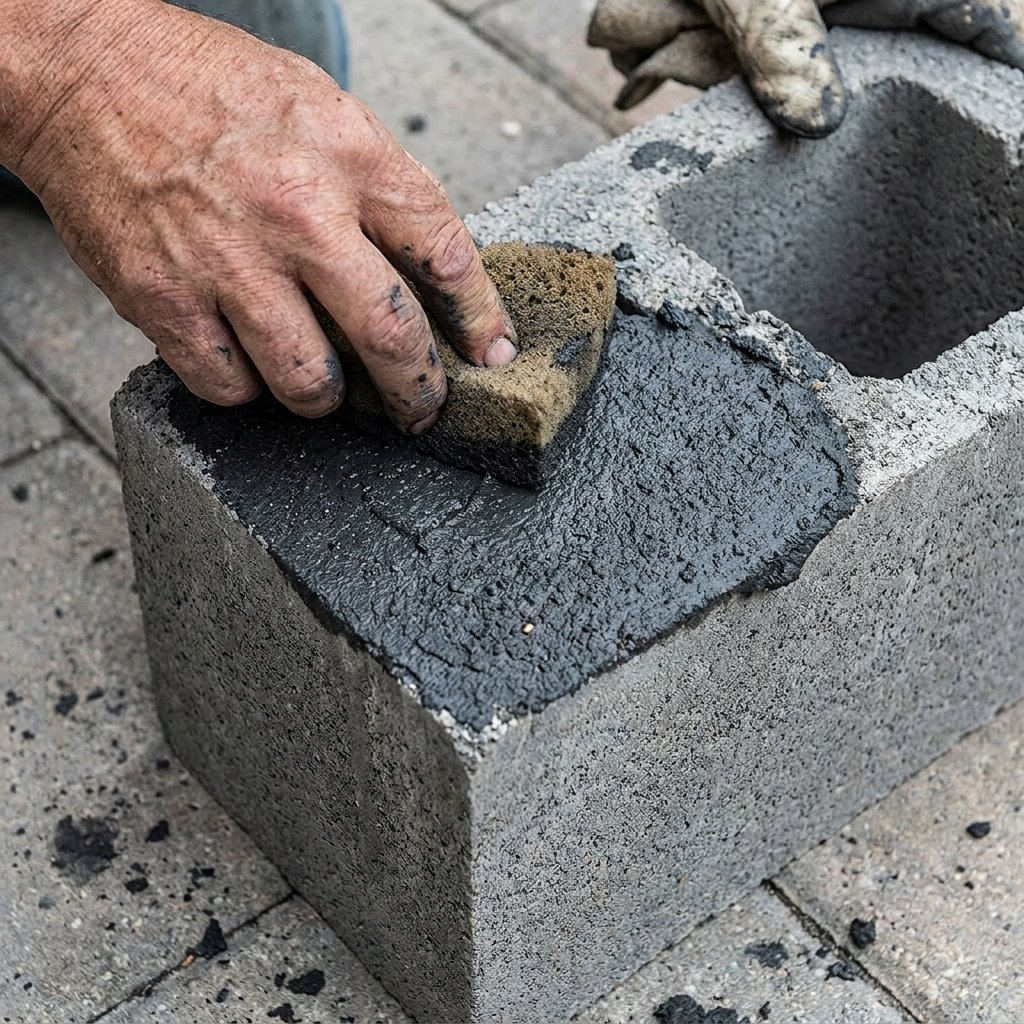
The Baking Soda Paint Trick
Raw cinder blocks can look a bit… well, like a construction site. To achieve that masculine-elegant finish, we are going to use a clever DIY hack: mixing baking soda into our Dollar Tree acrylic paint. This creates a thick, gritty paste that, when dried, mimics the look of expensive cast stone or aged terracotta. It hides the pores of the concrete and gives the planter a monolithic, high-end feel.
- Step 1: Clean your blocks thoroughly with a stiff brush to remove dust and loose grit.
- Step 2: In a plastic container, mix one bottle of $1.25 black or slate gray acrylic paint with 1/4 cup of baking soda.
- Step 3: Use a sponge or a cheap chip brush to ‘stipple’ the mixture onto the exterior faces of the blocks. This creates a non-uniform, organic texture.
- Step 4: Allow to dry for 2 hours. The result is a matte, stone-like finish that looks significantly more expensive than it is.
Safety Note: When working with concrete or spray paints, always ensure you are in a well-ventilated area. If you are sanding the blocks, wear a dust mask to avoid inhaling fine particulates.
Engineering the Stack: Stability and Drainage
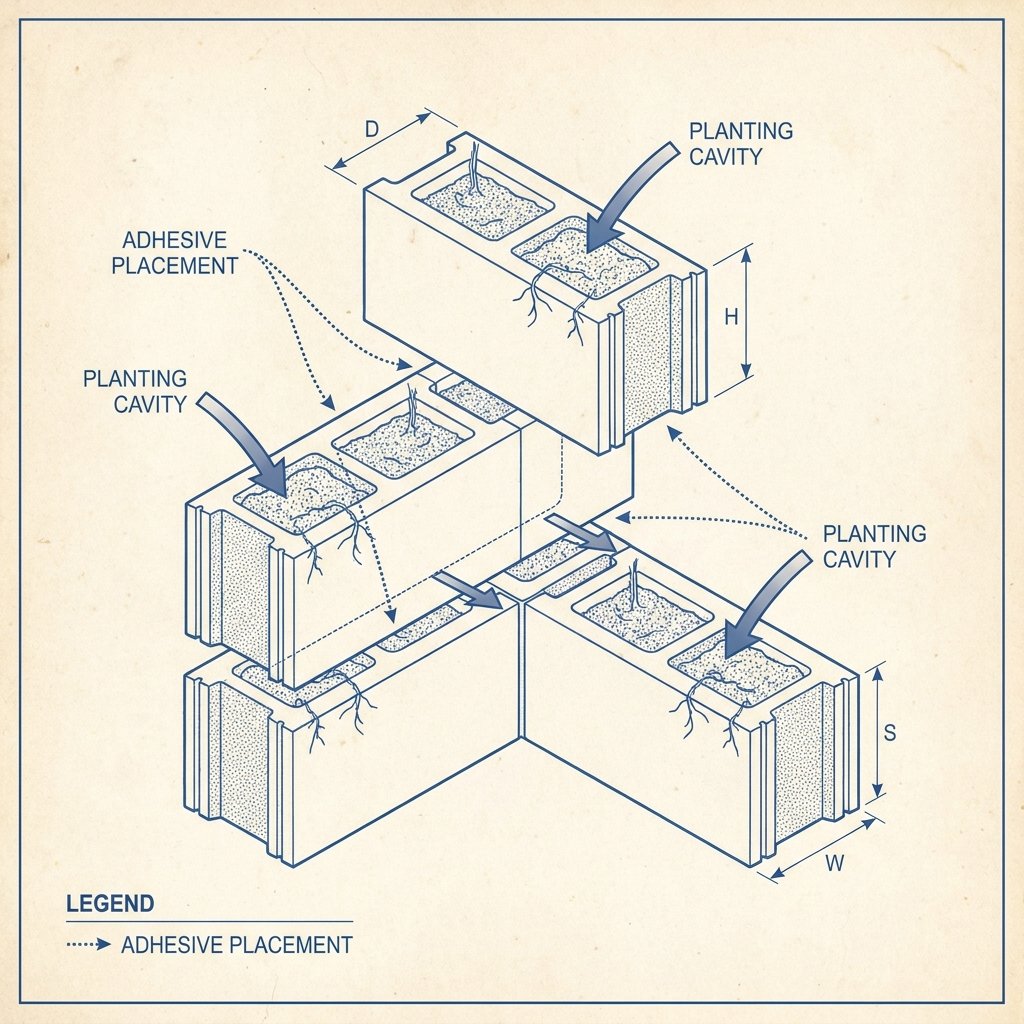
The Staggered Logic
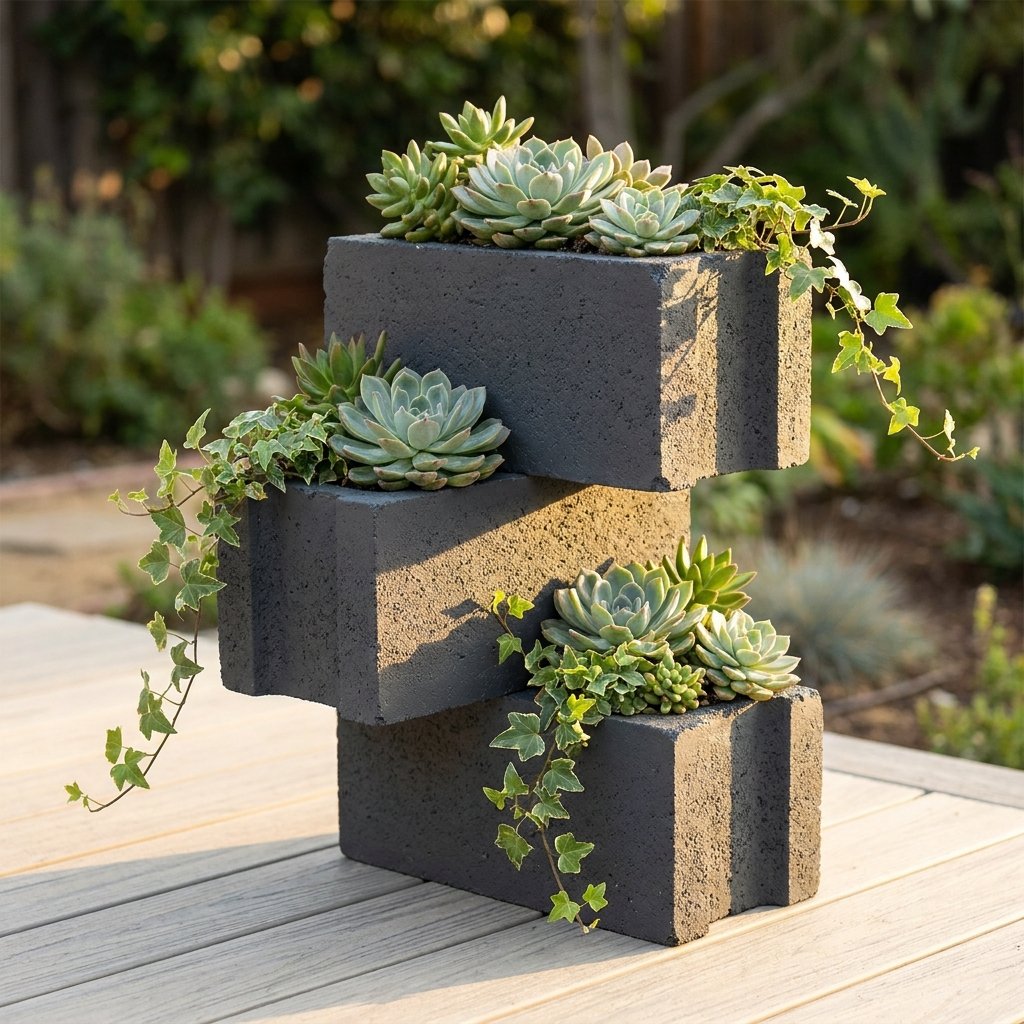
Vertical gardening is all about structural integrity. For a 3-block tower, we aren’t just stacking them vertically; we are staggering them to create ‘planting pockets.’ This provides a wider base for stability and more surface area for your greenery. We want this to look intentional and architectural, not like a pile of debris.
- Base Layer: Place your first block horizontally on your desired surface. Ensure it is level. This is your foundation.
- The Pivot: Place the second block on top, but rotate it 90 degrees so it sits across the center of the first block, leaving the cavities of the bottom block exposed for planting.
- The Crown: Place the third block vertically or horizontally on the very top, depending on your height preference. For maximum ‘spiller’ effect with plants, a vertical orientation on top works beautifully.
- Securing the Joints: While the weight of the concrete (approx. 35 lbs per block) usually keeps them in place, if you have pets or kids, use a bead of $1.25 Dollar Tree Super Glue Gel or construction adhesive between the layers for peace of mind.
| Configuration | Stability Rating | Planting Pockets |
|---|---|---|
| Vertical Column | Moderate | 2 |
| Staggered T-Shape | High | 4 |
| Pyramid (6 blocks) | Extreme | 8 |
The Greenery Blueprint: Planting for Success
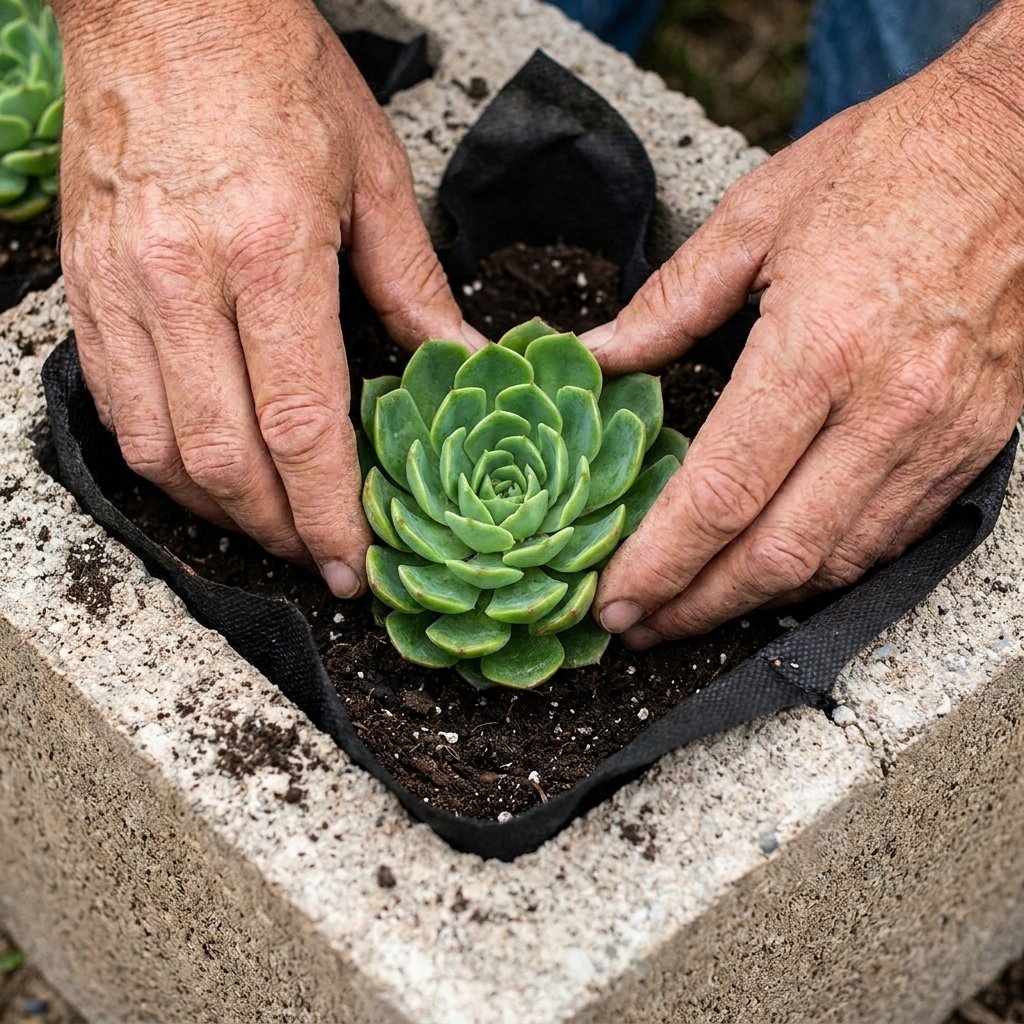
Maximizing Small Cavities
Because cinder block cavities are relatively small, you need plants that are rugged and don’t mind a restricted root zone. This is where we turn back to the Dollar Tree for their seasonal seeds or small starter pots. To prevent soil from washing out of the bottom, we use a clever liner hack.
Creating the Pockets
- Lining: Cut squares of Dollar Tree landscape fabric or even a mesh laundry bag. Stuff these into the cavities to create a ‘cup’ that holds the soil but allows water to drain freely.
- Soil Mix: Fill the pockets with a mix of potting soil and a bit of sand. Concrete can leach lime, which raises the pH, so hardy plants like rosemary, thyme, or succulents are the best choices as they are incredibly resilient.
- The Thriller, Filler, Spiller: In the top cavity, plant a ‘Thriller’ (something tall like a Dracaena). In the middle pockets, use ‘Fillers’ (like Petunias). In the bottom exposed pockets, use ‘Spillers’ (like Creeping Jenny or Ivy) to soften the hard edges of the concrete.
“A garden doesn’t need a backyard; it just needs a bit of concrete and a lot of imagination.” — Budget Builder Wisdom
The Master’s Comparison: DIY vs. Retail
Why We DIY
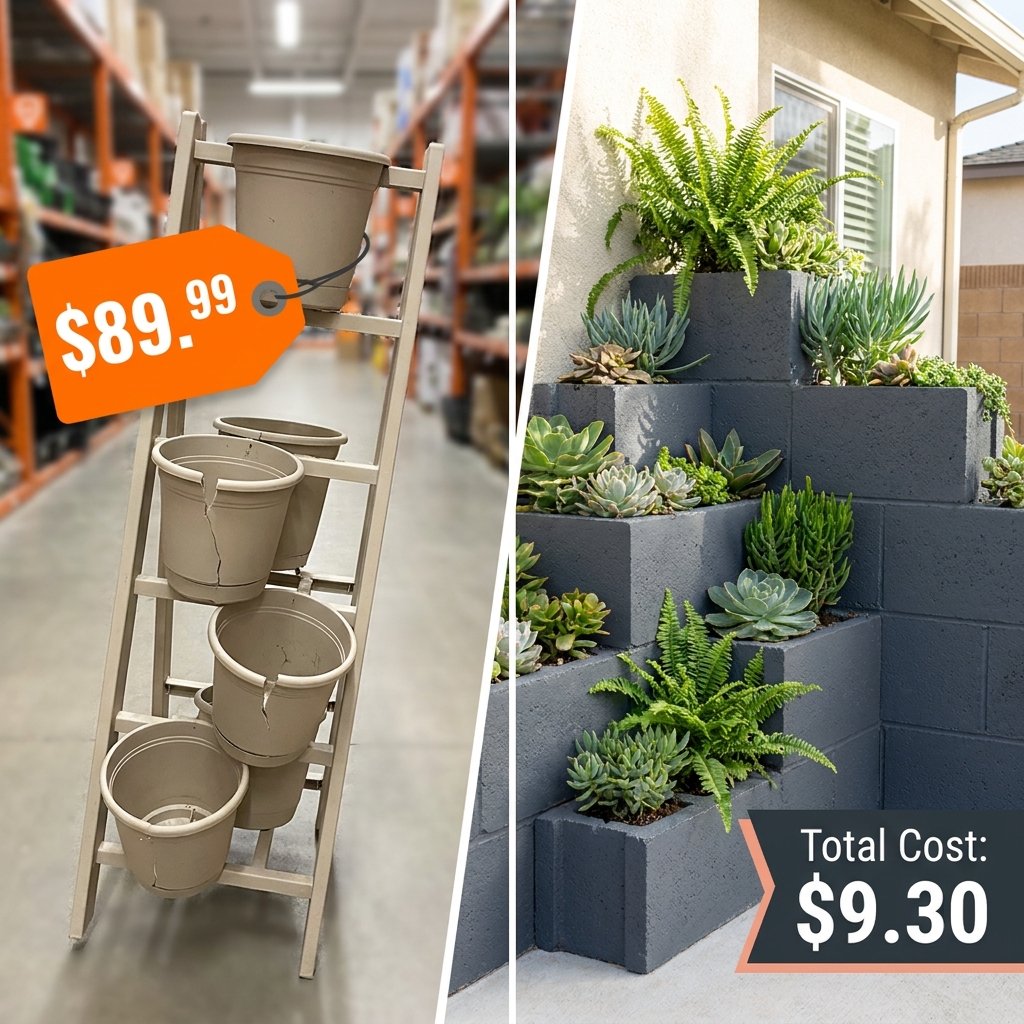
To truly appreciate the cleverness of this hack, we have to look at the numbers. High-end retailers often sell ‘Modular Concrete Planter Systems’ that are essentially just pre-cast blocks with a designer label. By doing it yourself, you are not just saving money; you are building a custom piece that fits your specific space perfectly.
| Feature | Store-Bought Vertical Planter | DIY Cinder Block Hack |
|---|---|---|
| Price | $85.00 – $150.00 | $9.30 |
| Durability | Plastic/Thin Ceramic | Solid Concrete |
| Customization | None (Fixed Colors) | Infinite (Paint/Texture) |
| Assembly Time | 30 Minutes | 45 Minutes |
| Longevity | 3-5 Years | 20+ Years |
The math is clear: for the price of one retail planter, you could build ten of these vertical towers and create an entire perimeter garden for your patio. That is the power of the resourceful crafter.
Maintenance and Seasonal Longevity
Keeping Your Garden Prime
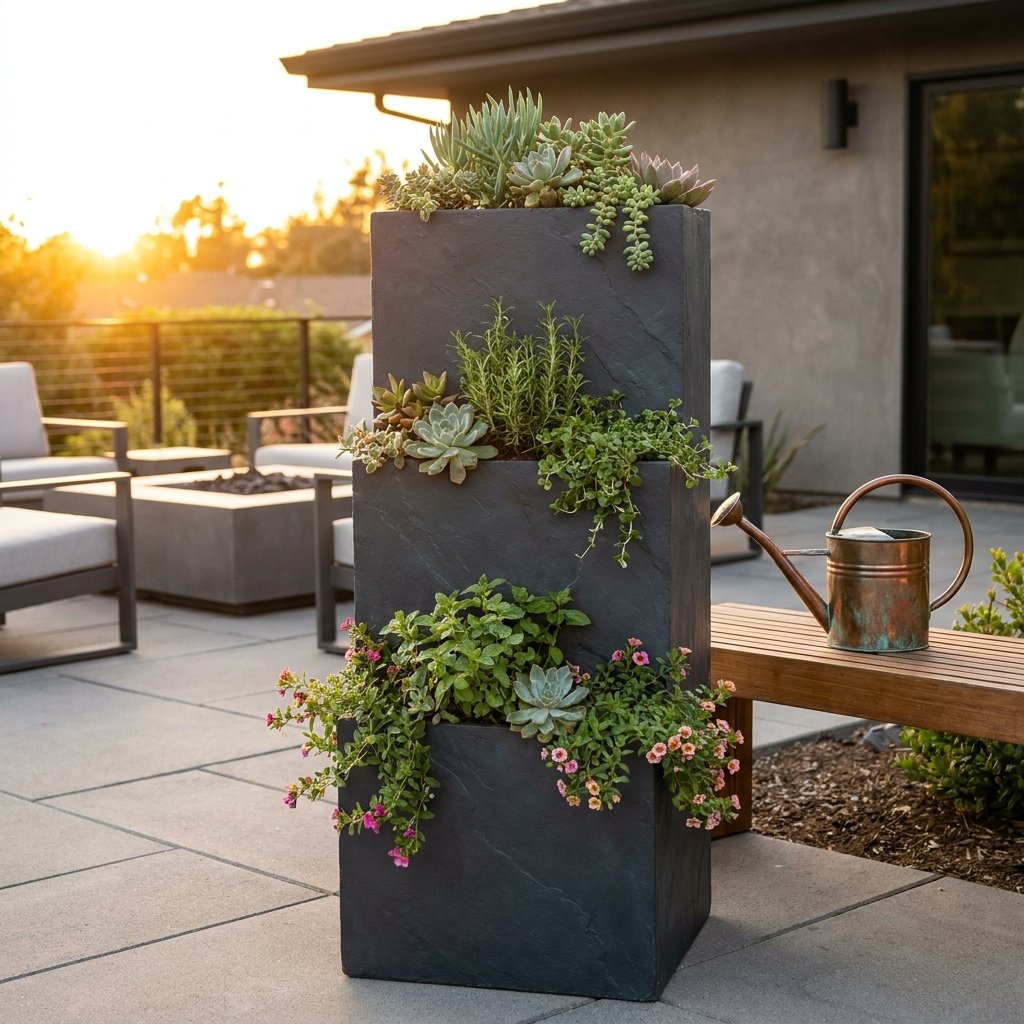
Concrete is porous, which means it can wick moisture away from your plants quickly in the summer heat. To keep your $10 masterpiece looking fresh, follow these simple maintenance tips:
- Watering: Because these are small ‘pockets,’ they dry out faster than large pots. Give them a quick drink every morning or install a cheap Dollar Tree drip line using a perforated plastic bottle.
- Winterizing: Concrete is tough, but standing water in the cavities can freeze and cause cracks. If you live in a harsh climate, ensure your drainage mesh isn’t clogged before the first frost.
- Refreshing the Look: The beauty of the baking soda paint finish is that it’s easy to touch up. Every spring, give it a quick wipe down and a fresh stipple of paint to keep that masculine-elegant edge sharp.
By following these steps, you’ve successfully turned $10 and an hour of your time into a permanent architectural feature that adds value and beauty to your home. You didn’t just build a planter; you mastered the art of the high-end upcycle.
Conclusion
The Final Verdict: A Victory for the Frugal Maker
There you have it—a Brilliant Garden Hack that proves you don’t need a massive budget to have a massive impact. We took three industrial cinder blocks and a handful of Dollar Tree supplies and turned them into a sophisticated, space-saving vertical garden for under $10. This project embodies everything we love about the ‘Trash-to-Treasure’ philosophy: it is practical, it is rugged, and it is undeniably clever.
Whether you are a handy parent looking to spruce up the backyard or a budget-savvy crafter wanting to add some curb appeal to your apartment balcony, this cinder block planter is your ticket to a high-end look on a dime. So, the next time you see a ‘boring’ piece of concrete, don’t just walk by—see the potential for your next masterpiece. Happy building, and may your garden grow as fast as your savings!


Makenzie is the founder and lead writer at MoneyHackTips.com — a personal finance blog dedicated to delivering street-smart financial wisdom for real people on real budgets. With 300+ published articles covering everything from debt management to investing fundamentals, Makenzie’s mission is to make every dollar work harder. When not writing about money hacks, Makenzie is testing frugal living strategies, optimizing side hustles, and helping readers build financial freedom from scratch.