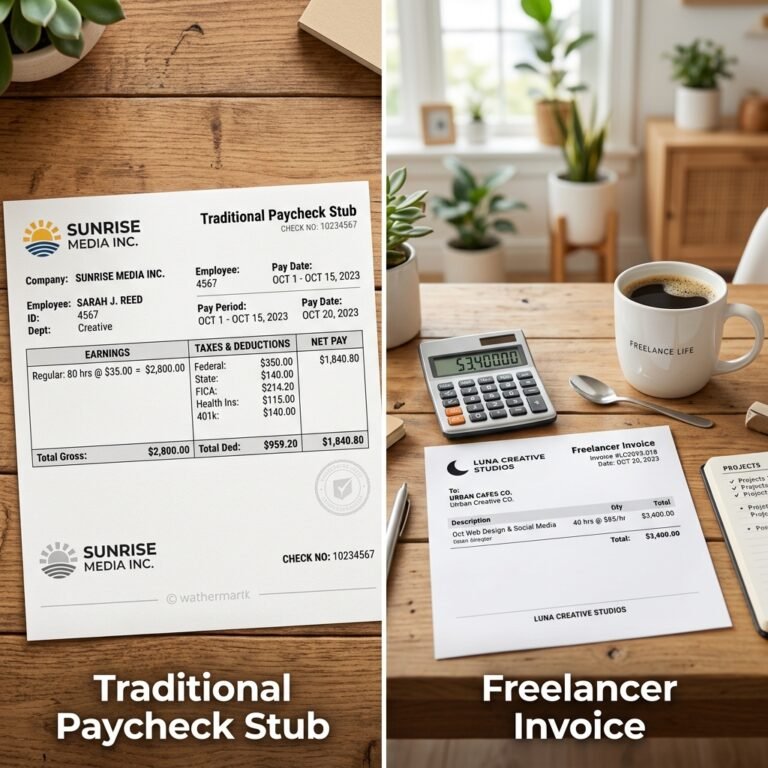


Hey there, fellow frugal hackers! Let us talk about the elephant in the room that rears its ugly head every single spring: tax season. If you are anything like I used to be, April rolls around and suddenly you are tearing your house apart, digging through old shoeboxes, glove compartments, and the dark depths of your email inbox trying to find that one elusive W-2 or a crucial medical receipt. It is stressful, it is messy, and worst of all? It is costing you cold, hard cash.
As frugal living enthusiasts, we spend so much time and energy clipping coupons, meal planning, and negotiating our bills to save a few bucks. But when we are disorganized with our tax documents, we are practically leaving money on the table for the IRS to sweep up. Missing out on legitimate deductions or getting hit with a late filing fee because you could not find your paperwork in time is the ultimate anti-frugal move. We work way too hard for our money to let it slip through our fingers just because of a little paper clutter.
That is exactly why I developed The 10-Minute Tax Doc System. You do not need to be a CPA, and you definitely do not need to spend your entire weekend hunched over a calculator. By dedicating just ten quick minutes a week to this street-smart, practical system, you will build an impenetrable fortress of financial organization. When April finally arrives, you will be sipping your homemade cold brew, calmly handing over a perfectly organized file to your accountant—or flying through your free tax software—without breaking a single sweat. Let us dive into the ultimate hack for your financial sanity!
The Core Strategy: Why 10 Minutes a Week Beats the April Panic
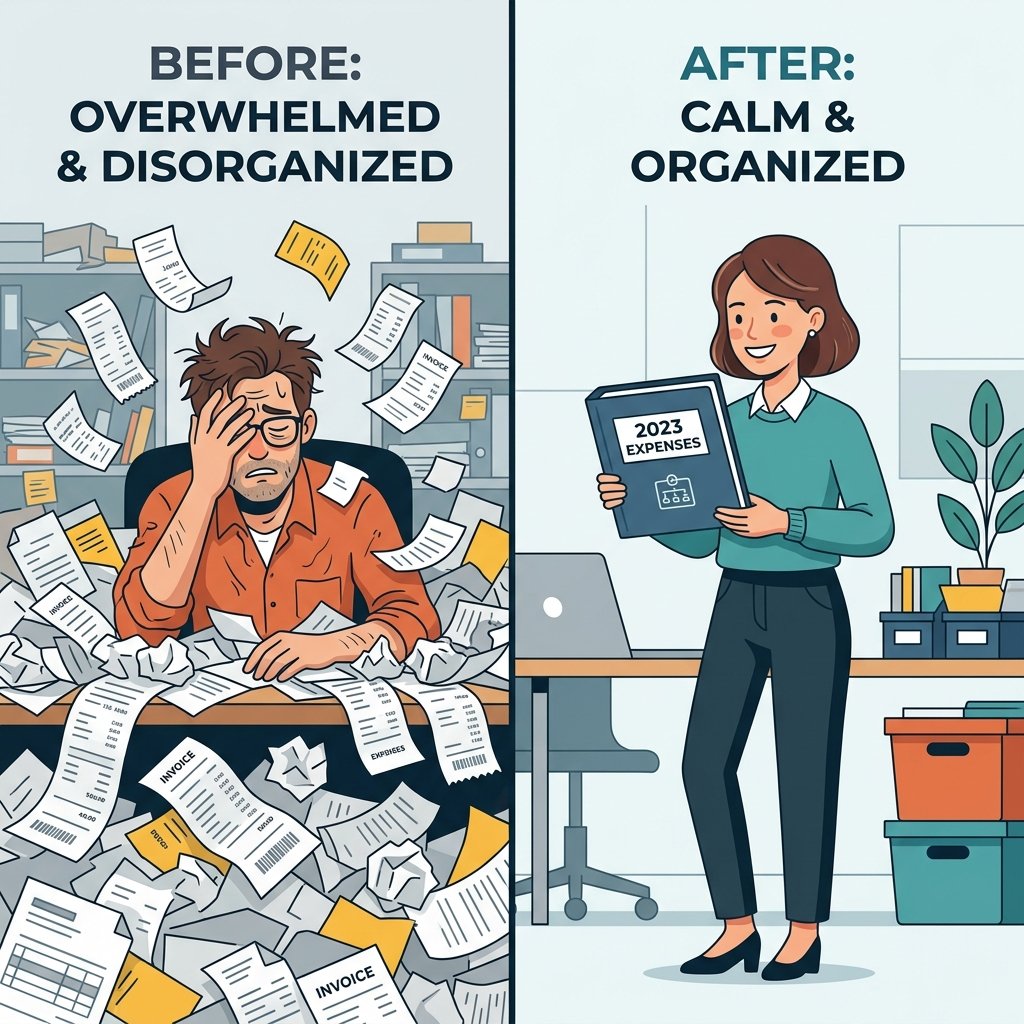
Listen up, because this is the most important mindset shift you will make this year: organization is a financial strategy. When you wait until the last minute to gather your tax documents, you are operating in panic mode. Panic mode leads to mistakes, and in the world of taxes, mistakes equal lost money. The 10-Minute Tax Doc System is all about micro-habits. By touching your documents once a week, you prevent the overwhelming mountain of paperwork from ever forming.
Let us look at the math, because as frugal hackers, we love the numbers. Imagine you have a side hustle or you donate regularly to thrift stores. If you lose track of just a few receipts, you could easily miss out on $500 in legitimate deductions. Depending on your tax bracket, that could mean paying an extra $110 to $150 in taxes that you legally did not owe! Over a few years, that is a massive leak in your budget. By implementing this system, you can easily save $600/year just by claiming what is rightfully yours and avoiding late penalties.
| The Panic Method (Once a Year) | The 10-Minute System (Weekly) |
|---|---|
| Hours of frantic searching in April | 10 minutes of calm sorting every Sunday |
| High risk of losing receipts and missing out on an average of $400 in deductions | Every deduction captured, maximizing your refund |
| High stress, potential arguments with a spouse, and dreading the deadline | Total peace of mind, filing early, and getting your refund faster |
| Risk of paying a $435 minimum late filing penalty if you miss the deadline | Zero late fees, ever |
The choice is pretty clear, right? Ten minutes a week is less time than you spend scrolling social media on a Tuesday morning. Reclaiming that time and directing it toward your financial health is the ultimate frugal power move.
The Setup: Building Your Frugal Tax Command Center
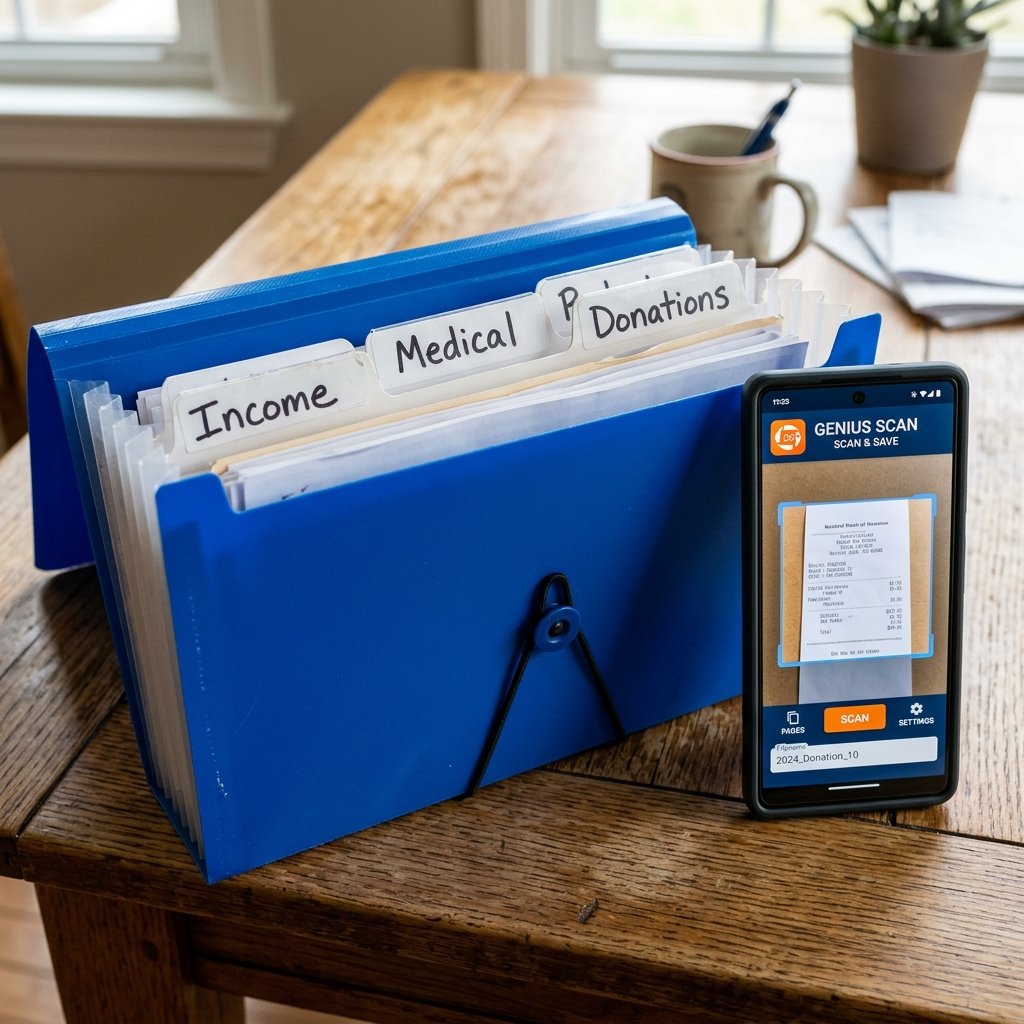
Before we get into the weekly routine, we need to set up your Command Center. Do not worry, you do not need to go out and buy expensive organizational furniture or pricey software subscriptions. We are frugal hackers, which means we are going to use what we have or find free digital alternatives. You need two parallel systems: one for physical mail and one for digital documents.
The Physical Setup
Grab an accordion file or a simple set of manila folders. You only need five main categories to keep things street-smart and simple:
- Income: W-2s, 1099s, bank interest statements.
- Medical: Co-pay receipts, prescription bags with the tags attached, dental bills.
- Charitable Donations: Receipts from Goodwill, church tithing records.
- Childcare/Education: Daycare invoices, student loan interest statements (1098-E).
- Side Hustle/Business: Office supplies, internet bills, mileage logs.
The Digital Setup
Create a master folder on your computer or cloud drive (Google Drive is free and perfect for this) named Tax Year 2024 (or whatever the current year is). Inside that folder, create the exact same five sub-folders listed above. Whenever you get an email receipt, save it directly to the corresponding digital folder as a PDF.
| Setup Component | Frugal Option | Estimated Cost |
|---|---|---|
| Physical Folders | Repurposed manila folders or a dollar-store accordion file | $1.25 |
| Digital Storage | Google Drive (15GB free tier) or Microsoft OneDrive basic | $0.00 |
| Scanner | Your smartphone camera with a free app like Adobe Scan | $0.00 |
| Total Command Center Cost | A fully functional system for practically nothing | $1.25 |
The 10-Minute Weekly Routine (Step-by-Step)

Here is where the magic happens. Pick a day—Sunday evening or Monday morning usually works best. Set a timer on your phone for exactly 10 minutes. Follow these exact steps, and do not overcomplicate it. The goal is speed and consistency.
- Empty the Traps: Gather every receipt from your wallet, purse, car console, and the bottom of your grocery bags. Pull up your email inbox and search for keywords like receipt, invoice, or payment confirmation.
- The Snap and Scan: For any physical receipt that is a tax deduction (like a business expense or a medical co-pay), lay it flat on the table. Use a free app like Adobe Scan or the built-in scanner in the Apple Notes app to snap a picture. Save it directly to your digital Command Center folder.
- Sort the Paper: If you received official tax documents in the mail (like a W-2 that arrived in late January), place it immediately into the physical Income folder. Do not leave it on the kitchen counter!
- Shred the Clutter: Once a receipt is scanned and backed up to your cloud drive, you do not need the physical copy cluttering up your life. Run it through a cheap paper shredder or tear it up. Keep your physical folders reserved only for official, hard-copy documents that cannot easily be digitized.
That is it. When the timer goes off, you are done. By doing this weekly, you are processing maybe 5 to 10 documents at a time instead of 500 documents in April. It is a total game-changer for your sanity.
Maximizing Deductions: The Math That Puts Cash Back in Your Pocket

As frugal enthusiasts, many of us have side hustles to boost our income. Whether you are driving for a rideshare app, flipping furniture, or doing freelance graphic design, tracking your expenses is where the 10-Minute System pays off the most. The IRS allows you to deduct the costs of doing business, which lowers your taxable income. But you can only deduct what you can prove!
During your 10-minute weekly session, pay special attention to these commonly missed deductions. Keeping a strict record can dramatically increase your earning potential and tax refund.
| Common Missed Deduction | How to Track It Weekly | Potential Tax Savings (Math Example) |
|---|---|---|
| Side Hustle Mileage | Log miles in a notebook in your car weekly | 1,000 miles x $0.67/mile = $670 deduction |
| Home Office Supplies | Scan printer ink and paper receipts immediately | $150 spent = $150 deduction |
| Thrift Store Donations | Take a photo of the items and the blank receipt | 4 bags of clothes = approx $200 deduction |
| Job Hunting Expenses | Save premium resume service or travel receipts | $75 spent = $75 deduction (if applicable) |
When you are disciplined about this, you are effectively giving yourself a raise. If you capture an extra $1,000 in deductions over the year, and you are in the 22% tax bracket, you just saved yourself $220 in cold hard cash. That is grocery money for a month, just for spending 10 minutes a week organizing paper!
Scam Warnings & Golden Rules for Tax Season

Because we are street-smart hackers, we also need to talk about defense. Tax season brings out the absolute worst scammers on the internet and over the phone. When you are rushing and disorganized, you are more vulnerable to falling for these tricks because you are already in a state of panic. By using our 10-Minute System, you will be calm, collected, and ready to spot a fraud from a mile away.
SCAM WARNING: The IRS Will Never Call You Demanding Immediate Payment. If you receive a phone call from someone claiming to be the IRS, threatening to arrest you or demanding payment via gift cards, wire transfer, or cryptocurrency, HANG UP IMMEDIATELY. The IRS initiates contact through official letters sent via the US Postal Service. Never give out your Social Security Number over the phone to an unsolicited caller.
Here are your golden rules for protecting your newly organized tax documents:
- Rule 1: Password Protect Your Digital Folders. If you are using cloud storage, ensure your account has Two-Factor Authentication (2FA) turned on. Your tax documents contain your Social Security Number, which is the golden ticket for identity thieves.
- Rule 2: Shred Everything Else. If a document has your name, address, and financial information on it, and it has already been digitized, shred it. Do not just toss it in the recycling bin.
- Rule 3: Beware of Ghost Preparers. If you hire someone to do your taxes, ensure they have a valid Preparer Tax Identification Number (PTIN). If they refuse to sign your return and ask you to sign it as self-prepared, grab your organized folders and run. They are a scammer.
Conclusion
There you have it, my friends. The 10-Minute Tax Doc System is not rocket science, but it is a radical act of self-care for your finances. By breaking down the overwhelming mountain of tax preparation into bite-sized, weekly tasks, you are taking back control of your time and your money. You will never again have to sacrifice a beautiful spring weekend to the chaos of the shoebox method. You will capture every single deduction, avoid every late fee, and keep your hard-earned cash exactly where it belongs: in your bank account.
Start this Sunday. Set that timer for ten minutes, gather your loose receipts, and build your Command Center. Future you, sitting calmly in April with a perfectly organized file, will be so incredibly grateful you took action today. Keep hacking your budget, keep living frugally, and let us make this tax season your most profitable and peaceful one yet!
Disclaimer: I am a frugal living enthusiast sharing my personal organizational hacks and budgeting strategies. I am not a CPA, tax attorney, or certified financial advisor. Tax laws change frequently and vary by location. Always consult a certified tax professional for official tax, legal, or investment advice tailored to your specific situation.


Makenzie is the founder and lead writer at MoneyHackTips.com — a personal finance blog dedicated to delivering street-smart financial wisdom for real people on real budgets. With 300+ published articles covering everything from debt management to investing fundamentals, Makenzie’s mission is to make every dollar work harder. When not writing about money hacks, Makenzie is testing frugal living strategies, optimizing side hustles, and helping readers build financial freedom from scratch.