


Hey there, my fellow frugal hackers! Welcome to the wild, wonderful world of content creation. Whether you are filming DIY tutorials in your garage, writing a budget-friendly recipe blog, or streaming your favorite games, you have finally started making some money. Congratulations! But before you go celebrating and spending that extra cash, we need to have a serious chat about your new silent business partner: Uncle Sam.
As a frugal living enthusiast, you already know the value of a dollar. You clip coupons, you buy generic brands, and you negotiate your bills. So why on earth would you pay more taxes than you absolutely have to? When you become a content creator, you transition from being just an employee to being a small business owner in the eyes of the government. This means you unlock a treasure trove of tax write-offs that can save you thousands of dollars every single year.
However, taxes can feel incredibly intimidating. The jargon is confusing, the forms look like they are written in an alien language, and the fear of getting audited is enough to make anyone want to hide their receipts in a shoebox and pretend tax season does not exist. But we do not operate out of fear around here. We operate on strategy! In this comprehensive, beginner-friendly guide, I am going to walk you through the essential tax write-offs for content creators. We will break down exactly what you can deduct, how to track it, and how to keep more of your hard-earned money in your pocket where it belongs. Grab a cup of homemade coffee, pull up a chair, and let us dive into the ultimate frugal hack: mastering your taxes!
The Basics: What Even Is A Tax Write-Off?

Before we get into the nitty-gritty of cameras and home offices, let us build a solid foundation. What exactly is a tax write-off, and how does it save you money? In simple terms, a write-off (or deduction) is a business expense that you subtract from your total income before calculating how much tax you owe. You are only taxed on your profit, not your gross revenue.
Here is the frugal math: Let us say your YouTube channel and blog brought in $10,000 this year. If you do not claim any deductions, the government will tax you on that full $10,000. But, if you spent $2,000 on legitimate business expenses like web hosting, a new microphone, and internet bills, your taxable income drops to $8,000. You just saved yourself from paying taxes on two grand!
The Frugal Hacker’s Golden Rule of Write-Offs: Never spend money just to get a tax deduction. If you spend $1,000 on a camera you do not need just to save $250 in taxes, you are still out $750. Only buy what your business truly needs to grow, and then make sure you claim it!
To qualify as a write-off, the IRS states that an expense must be both ‘ordinary’ (common and accepted in your industry) and ‘necessary’ (helpful and appropriate for your trade). For content creators, this opens up a massive list of possibilities, provided you are treating your creation process like a legitimate business and not just a casual hobby.
The Home Studio Hack: Deducting Your Space

One of the biggest advantages of being a content creator is that you probably work from home. Whether you have a dedicated filming room, a cozy podcasting closet, or a desk in the corner of your living room where you edit videos, you might be eligible for the Home Office Deduction. This is one of the most powerful frugal hacks for keeping your tax bill low.
There are two ways to calculate this: the Simplified Method and the Regular Method. The Simplified Method is exactly what it sounds like. You multiply the square footage of your dedicated workspace by a set IRS rate (currently $5 per square foot, up to 300 square feet). If your editing bay is 100 square feet, that is a cool $500 deduction right off the bat!
The Regular Method
The Regular Method requires a bit more math but can often yield a higher deduction. You calculate the percentage of your home that is used for business, and then apply that percentage to your overall home expenses. This includes rent, mortgage interest, property taxes, utilities, and even homeowners insurance.
- Measure your total home square footage.
- Measure your dedicated workspace square footage.
- Divide the workspace by the total to get your percentage (e.g., 10%).
- Add up all your eligible home expenses for the year.
- Multiply the total expenses by your percentage.
If your annual rent and utilities cost $20,000, and your home office is 10% of your home, you get a $2,000 write-off! Just remember, the space must be used ‘exclusively and regularly’ for business. Your dining room table where you eat dinner and occasionally edit TikToks does not count.
Gear and Gadgets: Tech Write-Offs
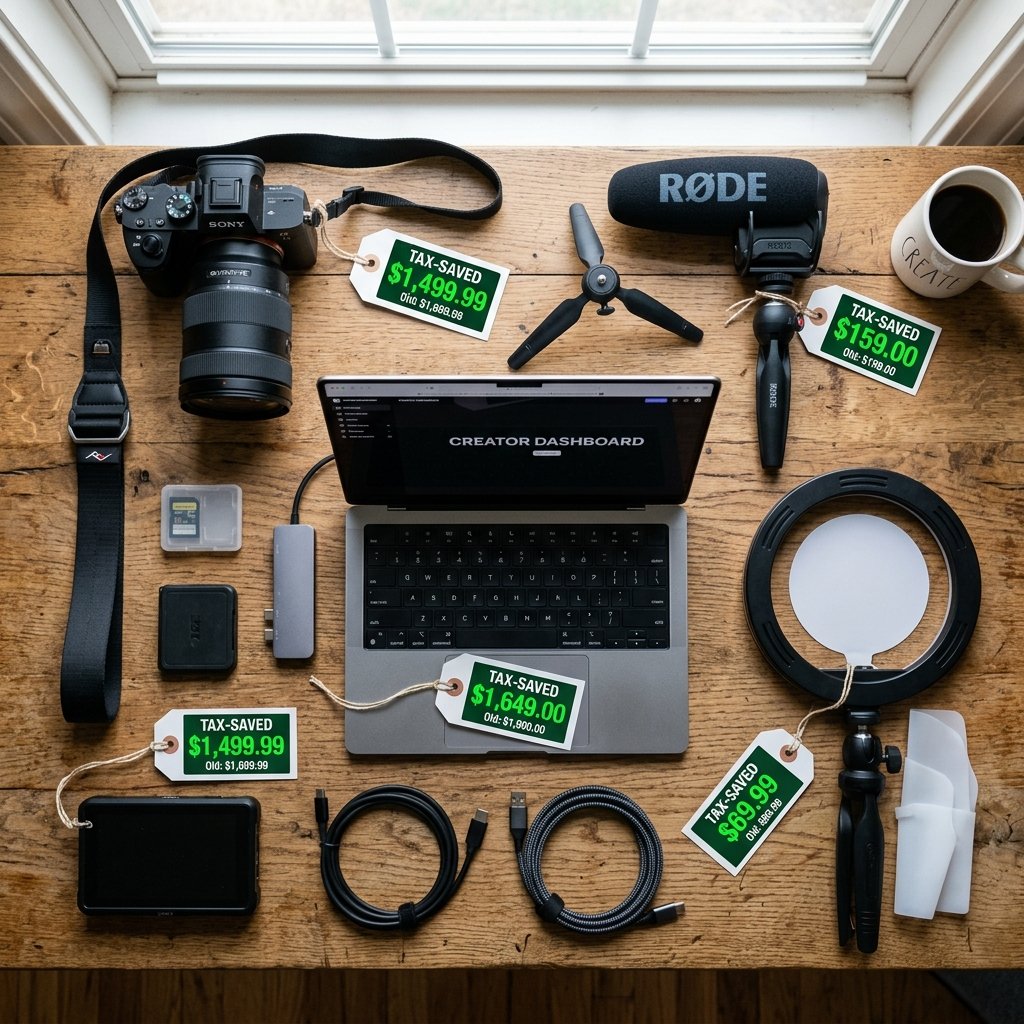
Content creation requires tools. You cannot film high-quality videos without a camera, and you cannot edit them without a computer. The good news is that the gear you buy to run your channel or blog is tax-deductible. This is where your frugal mindset really pays off. Instead of buying the absolute most expensive gear, you buy what gives you the best return on investment (ROI), and then you lower the effective cost even further by writing it off.
Eligible tech expenses typically include:
- Cameras, lenses, and tripods.
- Microphones, audio interfaces, and headphones.
- Laptops, desktop computers, and external hard drives.
- Lighting equipment (ring lights, softboxes).
- Props and backdrops used specifically for filming.
Let us look at a breakdown of how claiming these expenses can impact your bottom line. Assuming you are in a 25% combined tax bracket (federal and state), here is what your real out-of-pocket cost looks like after deductions:
| Equipment Type | Retail Cost | Estimated Tax Savings | True Frugal Cost |
|---|---|---|---|
| Mirrorless Camera | $800 | $200 | $600 |
| USB Microphone | $120 | $30 | $90 |
| Editing Laptop | $1,200 | $300 | $900 |
| LED Lighting Kit | $80 | $20 | $60 |
When you look at the ‘True Frugal Cost,’ upgrading your gear feels a lot more manageable. Just keep in mind that for major purchases (usually over $2,500), you may need to depreciate the asset over several years, though Section 179 of the tax code often allows you to deduct the full purchase price in the first year. Always check with a tax pro for the best strategy for your specific situation.
The Hustle Expenses: Software, Subscriptions, and Marketing

It is not just the physical gear that costs money; the digital tools add up quickly too. As a frugal hacker, you are probably already using free versions of software whenever possible. But when it is time to upgrade to paid tiers to grow your business, you better believe those subscription fees are deductible!
Software and Digital Tools
Every app or software you use to run your content creation business is a write-off. This includes your Adobe Creative Cloud subscription, Canva Pro, website hosting (like Bluehost or SiteGround), domain name renewals, and scheduling tools like Hootsuite or Later. If you pay $20 a month for Epidemic Sound for royalty-free music, that is a $240 annual deduction.
Marketing and Advertising
Did you boost a post on Instagram to get more eyeballs on your latest frugal living guide? Did you run a small Facebook ad campaign? Advertising expenses are 100% deductible. Even the cost of business cards, custom stickers you send to Patreon supporters, or a banner for your YouTube channel art counts as a marketing expense.
Education and Courses
Investing in your skills is one of the smartest things you can do. If you buy a course on how to improve your video editing, attend a virtual summit for bloggers, or buy an eBook on SEO optimization, those educational expenses are deductible because they directly improve your ability to run your business.
Audit-Proofing: The Golden Rules of Record Keeping
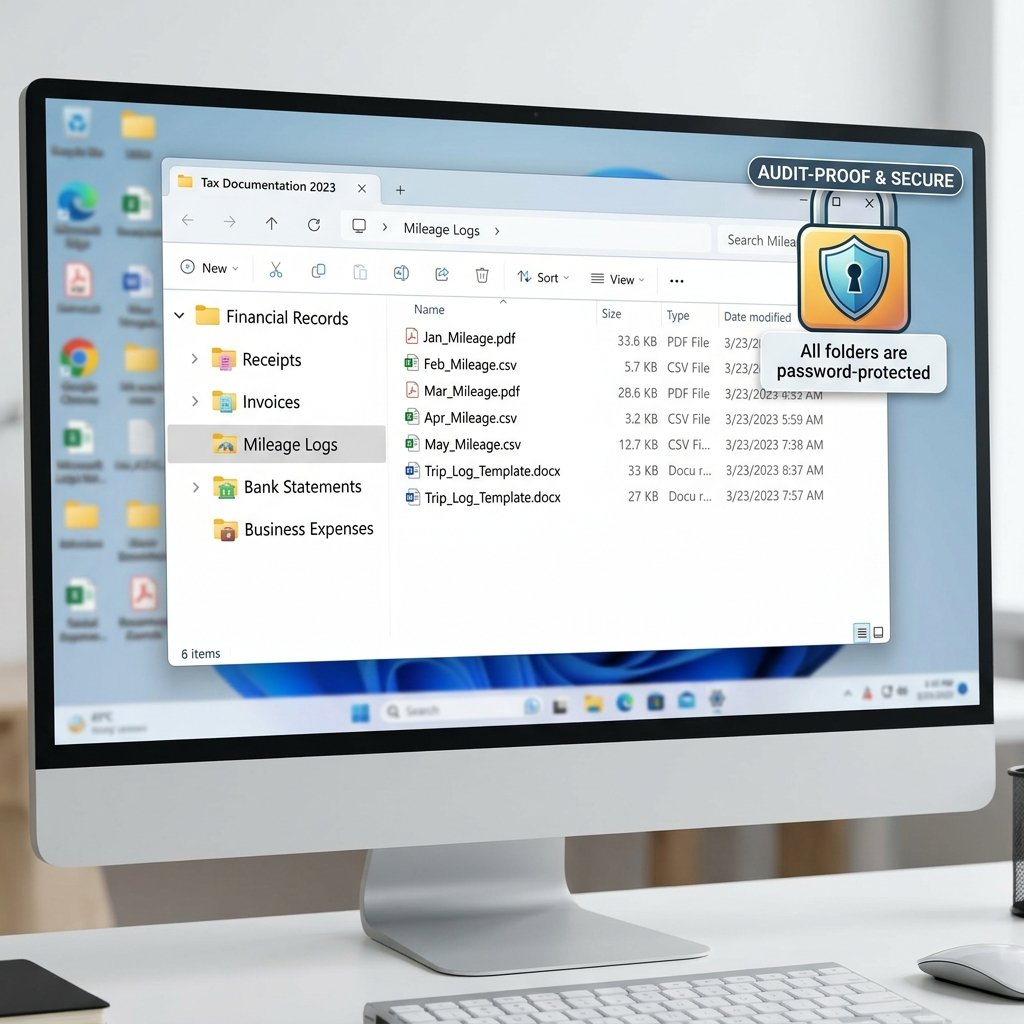
Alright, it is time for some tough love. Claiming deductions is fantastic, but if you do not have the receipts to back them up, you are playing a dangerous game with the IRS. As frugal hackers, we are meticulous with our budgets, and we need to be just as meticulous with our tax records.
Scam Warning & Audit Alert: Do not fall for the viral TikTok advice that claims you can ‘write off your entire life.’ You cannot deduct your daily Starbucks run just because you brainstormed a video idea while drinking it. You cannot deduct designer clothes just because you wore them in a vlog (unless they are a uniform unsuitable for everyday wear). If you cannot prove an expense is strictly and necessarily for your business, do not claim it. The IRS is cracking down on influencers who abuse the system!
To audit-proof your side hustle, follow these actionable steps:
- Open a Separate Bank Account: Never mix personal and business finances. Open a free business checking account and run all your creator income and expenses through it. This makes tracking infinitely easier.
- Save Every Receipt: Digital is best. Use a free app or a dedicated Google Drive folder to snap pictures of your physical receipts and save PDF invoices for your software subscriptions.
- Track Your Mileage: If you drive to a location specifically to film a video, or drive to the post office to ship merch, track those miles! The IRS offers a standard mileage rate (usually around $0.65 per mile) that you can deduct. Use a free mileage tracking app on your phone.
- Do Monthly Bookkeeping: Do not wait until April 14th to figure out what you spent last year. Take 30 minutes at the end of every month to categorize your expenses in a simple spreadsheet.
Conclusion
There you have it, my frugal friends! The ultimate beginner’s guide to tax write-offs for content creators. By understanding what you can deduct, from your home office space to your camera gear and software subscriptions, you are taking control of your finances and ensuring that your side hustle remains as profitable as possible. Remember, the goal is not to spend money just to get a deduction, but to strategically invest in your business and claim every single penny you are legally entitled to.
Taxes do not have to be terrifying. With a little bit of organization, a separate bank account, and a commitment to saving your receipts, you can face tax season with confidence. Keep creating amazing content, keep hacking your frugal life, and watch your savings grow!
Disclaimer: I am The Ultimate Frugal Hacker, but I am strictly not a financial advisor, a CPA, or a tax attorney. The information provided in this article is for educational and entertainment purposes only. Tax laws change frequently and vary by location. Always consult with a certified tax professional or accountant before making any major tax or financial decisions for your business.


Makenzie is the founder and lead writer at MoneyHackTips.com — a personal finance blog dedicated to delivering street-smart financial wisdom for real people on real budgets. With 300+ published articles covering everything from debt management to investing fundamentals, Makenzie’s mission is to make every dollar work harder. When not writing about money hacks, Makenzie is testing frugal living strategies, optimizing side hustles, and helping readers build financial freedom from scratch.