

Welcome back, frugal hackers! Let’s talk about something that isn’t just about saving pennies—it is about saving lives. If you are anything like me, you love finding ways to optimize your life, cut out unnecessary expenses, and keep your household running like a well-oiled machine. But what happens when the unexpected strikes? When a medical emergency happens, the last thing you want to be doing is scrambling through junk drawers looking for an insurance card, a list of current medications, or your family’s medical history. That is exactly where the emergency medical binder comes into play. It is your ultimate safety net, neatly organized in one place. Now, you could easily go online and drop a small fortune on a pre-made, fancy medical organization system. But we are the ultimate frugal hackers, and we know better! We are going to build a customized, highly functional DIY emergency medical binder for a fraction of the cost. Not only will this project give you absolute peace of mind, but it will also keep your hard-earned cash right where it belongs: in your wallet. Grab a cup of coffee, roll up your sleeves, and let’s dive into this life-saving organization project!
The Ultimate Peace of Mind: What Is a Medical Binder?
The Life-Saving Hack You Didn’t Know You Needed
Imagine this scenario: you are at the emergency room at two in the morning. The doctors are firing questions at you about allergies, past surgeries, exact medication dosages, and emergency contacts. Under stress, our brains tend to freeze. A medical binder is a physical, grab-and-go folder that holds every single crucial piece of medical information for you and your family members. It speaks for you when you might not be able to speak for yourself. Having this information readily available can literally be the difference between life and death, preventing dangerous drug interactions and ensuring rapid, accurate treatment. But beyond the extreme emergencies, a medical binder is just incredibly practical for everyday life. Going to a new specialist? Grab the binder. Need to fill out school health forms for the kids? Grab the binder. It streamlines your entire healthcare experience. And the best part? Creating one does not require a huge investment. With a little bit of time, some basic office supplies, and a strategic mindset, you can put together a comprehensive system that rivals anything you could buy in a store.
Cost Breakdown: DIY vs Store Bought
The Math: Why We DIY
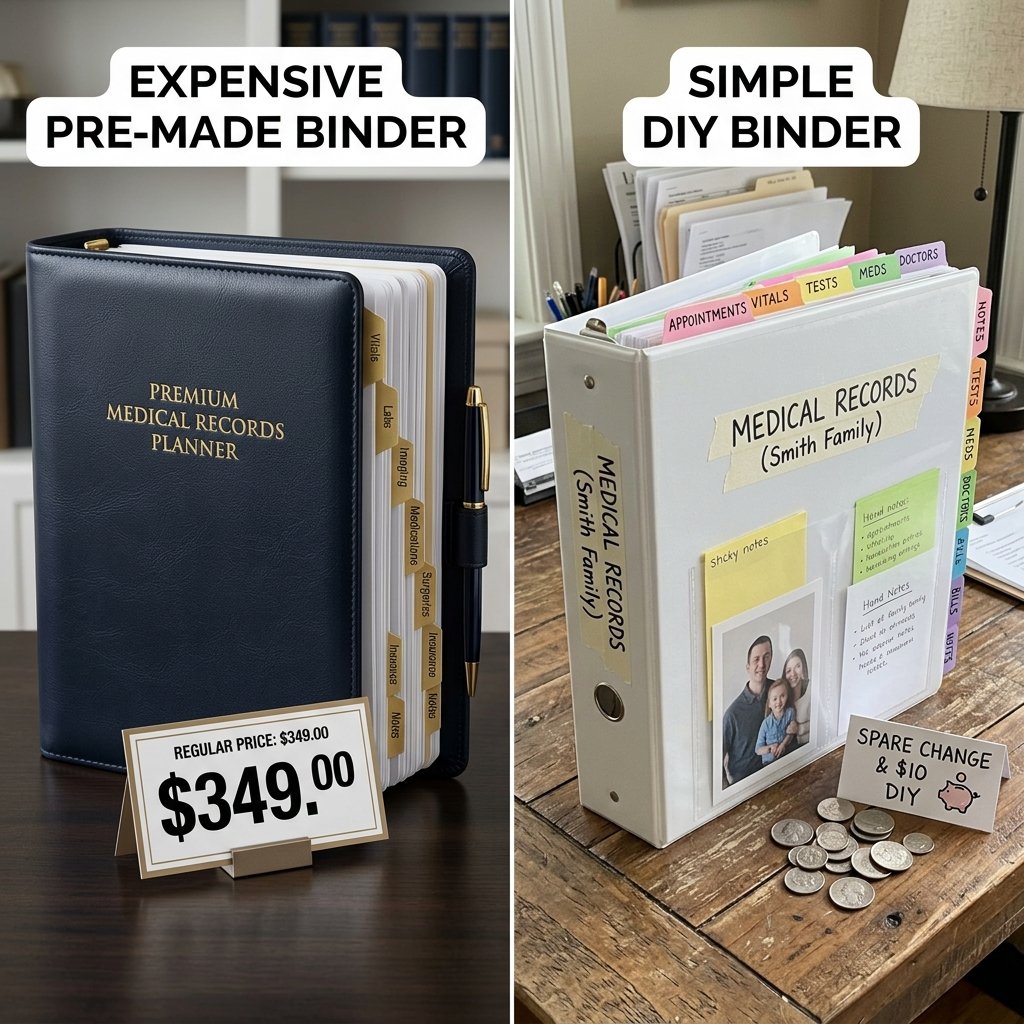
You know I love a good cost comparison! Let’s look at the actual numbers. The healthcare and organization industries love to prey on our anxieties, selling expensive “systems” that are really just basic folders with a hefty markup. Here is the breakdown of what you might spend if you bought a commercial medical binder versus what it costs to use the frugal hacker method.
| Item / Approach | Store-Bought Pre-Made Binder | The Frugal Hacker DIY Method |
|---|---|---|
| The Binder Itself | $35.00 (Specialty medical organizer) | $3.00 (Thrifted or dollar store) |
| Tab Dividers & Protectors | $15.00 (Custom labeled tabs) | $4.00 (Basic office supply store pack) |
| Forms & Templates | $25.00 (Proprietary printed inserts) | $0.00 (Free online printables) |
| Total Estimated Cost | $75.00 | $7.00 |
By building this yourself, you are saving $68.00 right out of the gate! That is money you can put towards your emergency fund, pay down debt, or invest. Plus, the DIY method allows for complete customization. A store-bought binder might not have enough pages for someone with a complex medical history, or it might have too many useless pages for a healthy young adult. When you DIY, you build exactly what you need, nothing more, nothing less.
Step-by-Step: Building Your DIY Medical Binder
How to Start Your Frugal Tutorial
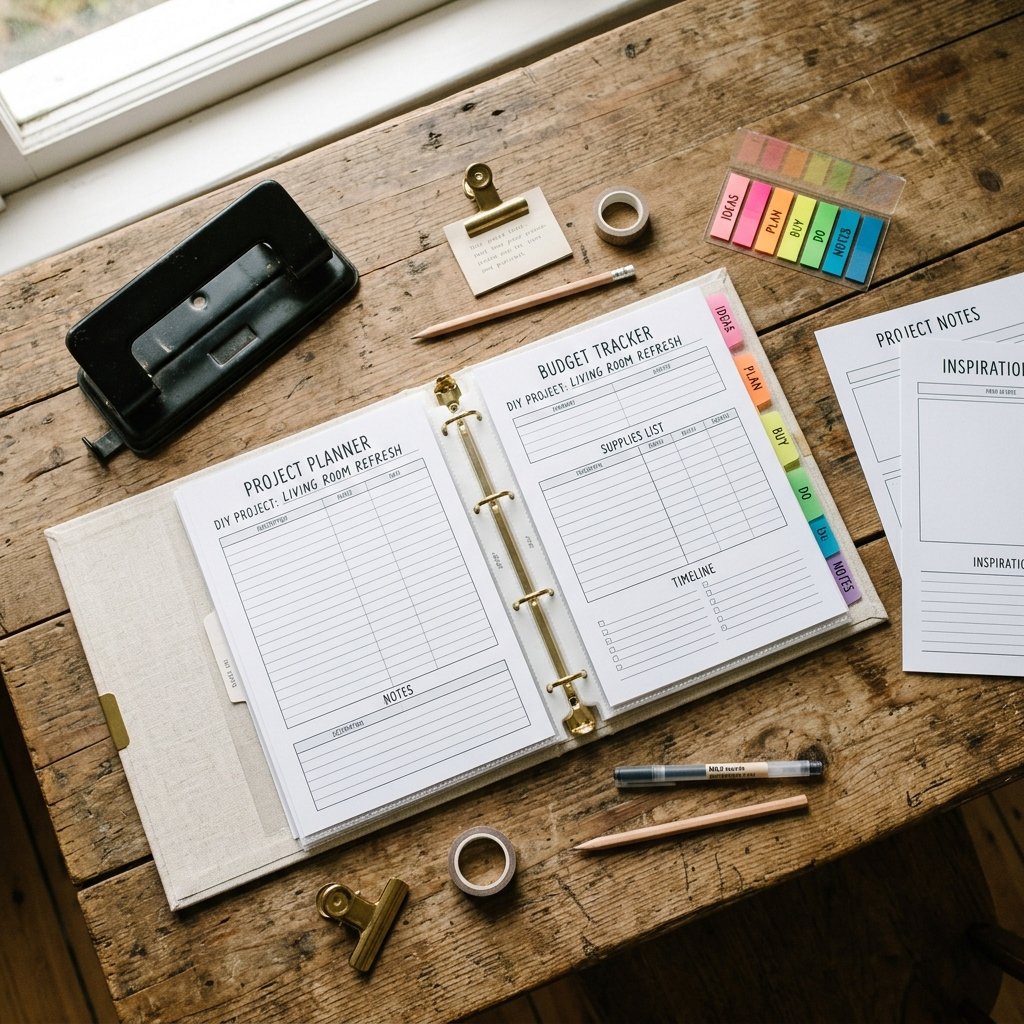
Ready to get organized? Here is your step-by-step action plan to build the ultimate emergency medical binder without breaking the bank.
- Step 1: Scavenge for Supplies. Before you spend a single dime, “shop” your own home. Look for an old 3-ring binder from your school days or a previous project. Check your desk for leftover clear sheet protectors and tab dividers. If you come up empty-handed, head to your local dollar store or thrift shop. You can easily find high-quality binders for next to nothing.
- Step 2: Print Your Free Forms. Do not pay for templates! There are hundreds of free, printable medical forms available online. Search for “free printable medical history form” or “medication log PDF.” Print these out at home or at your local library.
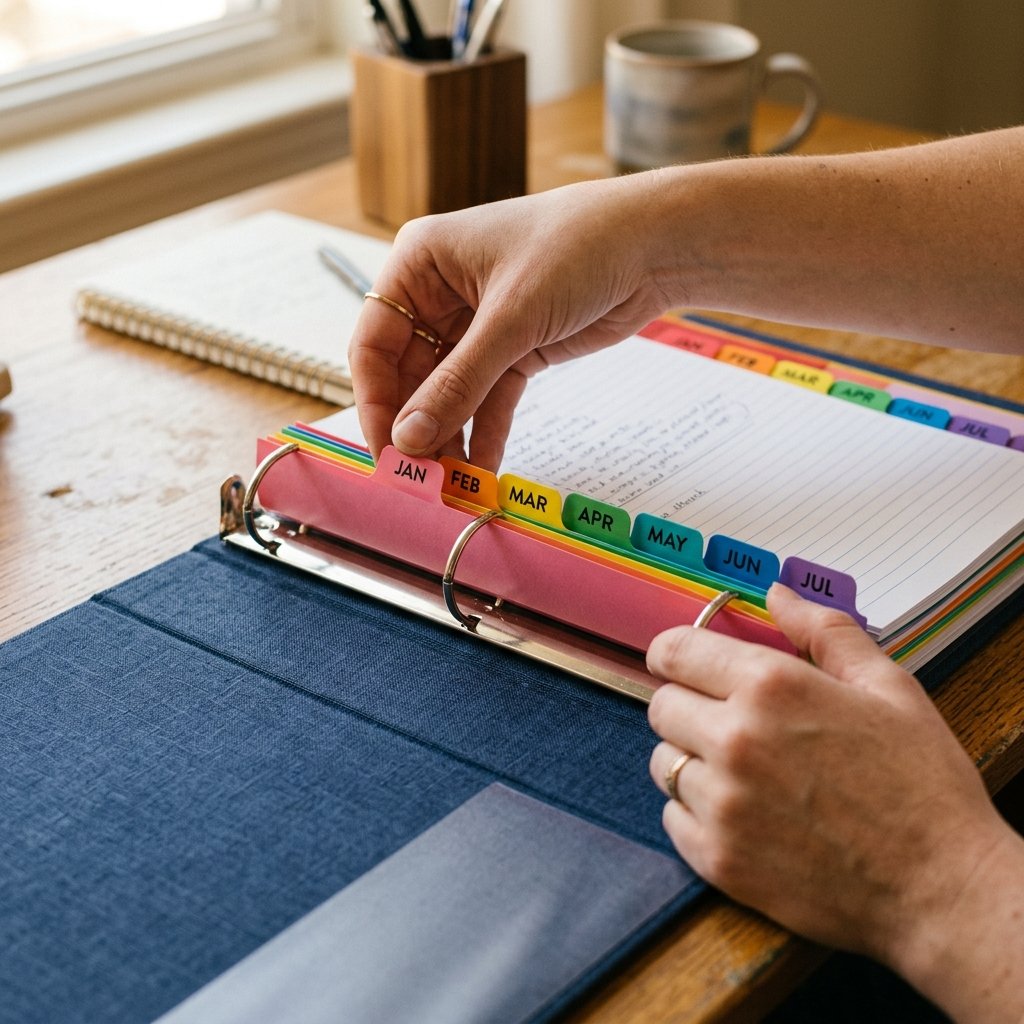
- Step 3: Set Up Your Categories. Use your tab dividers to create clear sections. I recommend organizing by family member first, and then sub-categorizing by “Current Medications,” “Medical History,” “Insurance Info,” and “Emergency Contacts.” Make sure the tabs are clearly labeled and easy to read at a glance.
- Step 4: Protect the Important Stuff. Use clear plastic sheet protectors for documents that you will need to take out and hand to a receptionist, like copies of insurance cards or ID cards. This keeps them safe from spills and tears.
- Step 5: Fill in the Blanks. Sit down with a cup of tea and fill out all the forms. Be meticulous. Write clearly, or better yet, type the information and print it out so there is no confusion over handwriting during a high-stress situation.
The Essential Checklist: What Goes Inside
Don’t Miss a Detail
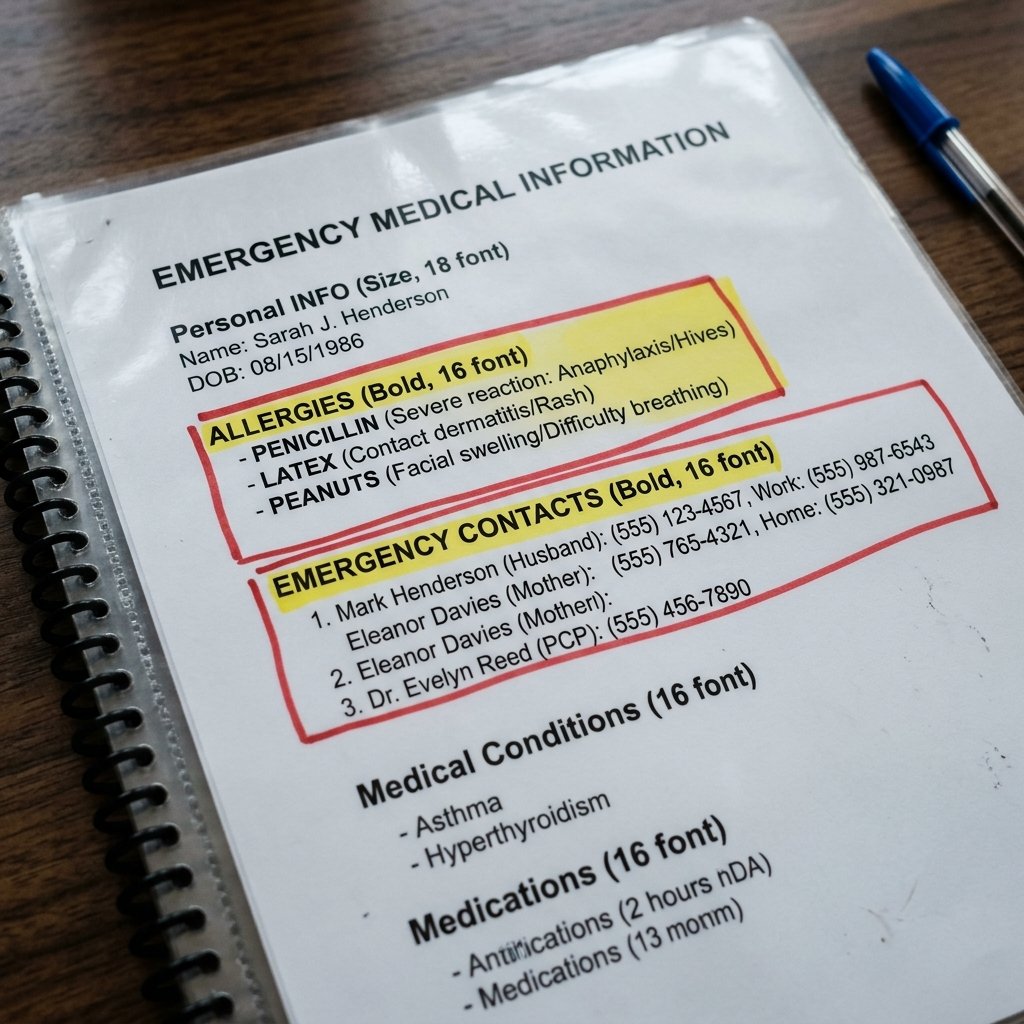
Now that we have the shell built, what exactly goes inside? It is crucial to be thorough but concise. Here is your master checklist of what to include in your DIY emergency medical binder.
- Personal Identification: Clear, color copies of driver’s licenses, state IDs, and health insurance cards (front and back).
- Emergency Contacts: A prioritized list of who to call, including family members, trusted friends, and primary care physicians. Include names, phone numbers, and relationships.
- Medical History: A timeline of major illnesses, past surgeries, hospitalizations, and chronic conditions. Don’t forget to include a family medical history section, as doctors often ask about hereditary conditions.
- Medication List: This is arguably the most important section. List every single medication, including over-the-counter drugs and supplements. Include the exact name, dosage, frequency, and the prescribing doctor.
- Allergies: A highly visible list of all drug, food, and environmental allergies, along with the specific reactions they cause.
- Legal Documents: Copies of advanced directives, living wills, and medical power of attorney documents.
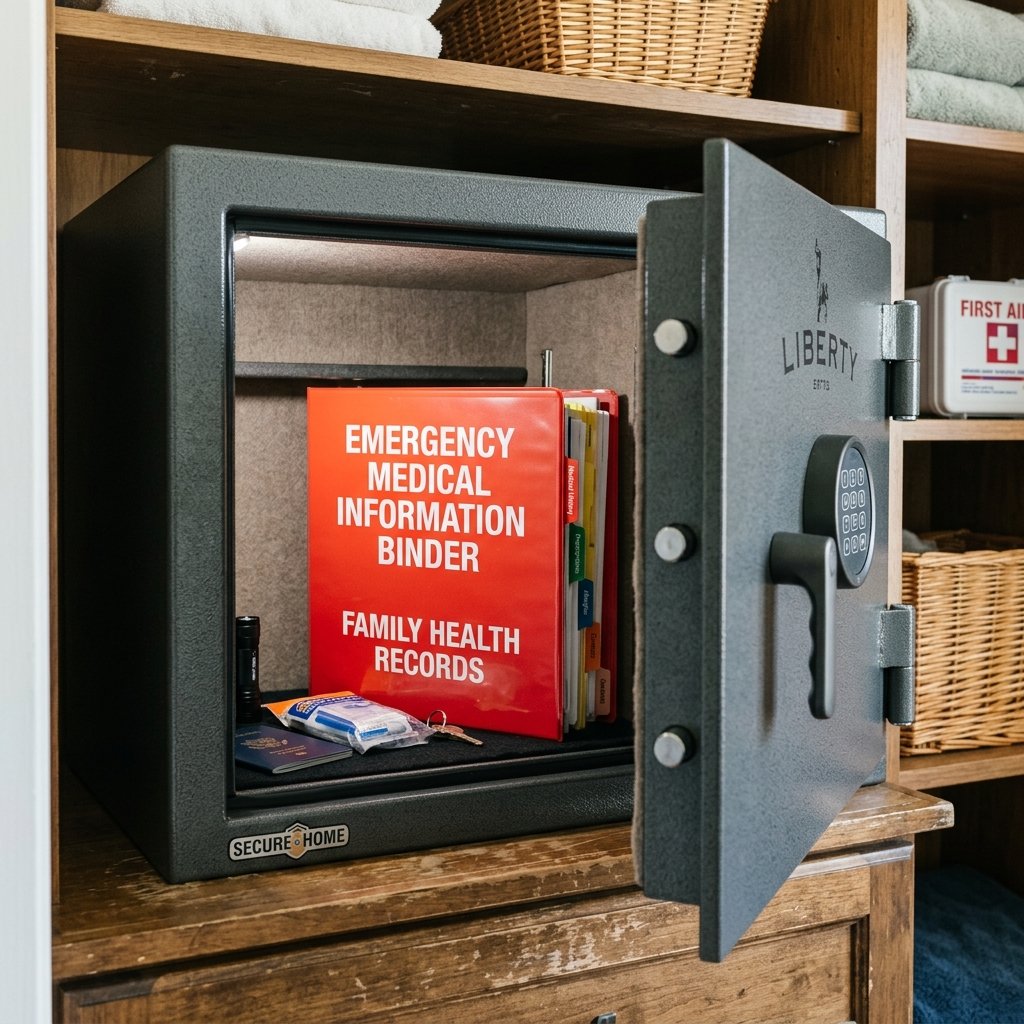
Key Rule: Never put original sensitive documents like Social Security cards or original birth certificates in a binder that you might grab and leave in a chaotic hospital room. Copies only! Keep the originals locked in a secure safe at home.
Keeping It Secure and Updated
The Frugal Hacker Rules for Maintenance
An outdated medical binder is a dangerous medical binder. If you have a major medication change and forget to update your binder, you could be setting yourself up for a medical error. Maintaining your binder is just as important as building it.
The Routine Update Hack
Set a recurring calendar reminder on your phone for every six months. Treat this appointment with yourself like a financial audit. Sit down, review every page, and update any changes in medications, insurance policies, or emergency contacts. If you get a new prescription in the middle of the year, make it a habit to write it in the binder the moment you bring the bottle home.
Scam Warning: Never pay for online services that claim to “host” your medical binder in the cloud for a monthly subscription fee. These are often overpriced, unnecessary, and pose huge privacy risks. Hackers love a centralized database of medical records. Stick to the physical DIY method, or if you want a digital backup, use a secure, encrypted local USB drive that you keep on your keychain!
Finally, make sure everyone in your household knows exactly where the binder is kept. It should be in a highly accessible, central location—like the kitchen command center or a specific shelf in the hallway closet. It does no good if you are the only one who knows where it is hidden during an emergency.
Conclusion
Wrapping It Up: Peace of Mind on a Budget
There you have it, friends! You have just created a completely customized, highly functional emergency medical binder for less than the cost of a fast-food lunch. By taking the time to organize this vital information, you are protecting your family’s health and your hard-earned money. You have avoided the overpriced commercial traps, utilized free resources, and built a system that works perfectly for your specific needs. Keep it updated, keep it accessible, and rest easy knowing you are prepared for whatever life throws your way. Stay frugal, stay safe, and keep hacking your way to a better life!
Disclaimer: I am a frugal living enthusiast, not a doctor, financial advisor, or legal expert. The information provided in this article is for educational and organizational purposes only. Always consult with qualified healthcare professionals regarding medical treatment and legal professionals for advice on advanced directives and medical power of attorney documents.

Makenzie is the founder and lead writer at MoneyHackTips.com — a personal finance blog dedicated to delivering street-smart financial wisdom for real people on real budgets. With 300+ published articles covering everything from debt management to investing fundamentals, Makenzie’s mission is to make every dollar work harder. When not writing about money hacks, Makenzie is testing frugal living strategies, optimizing side hustles, and helping readers build financial freedom from scratch.