
The Heartbreak of the First Snag
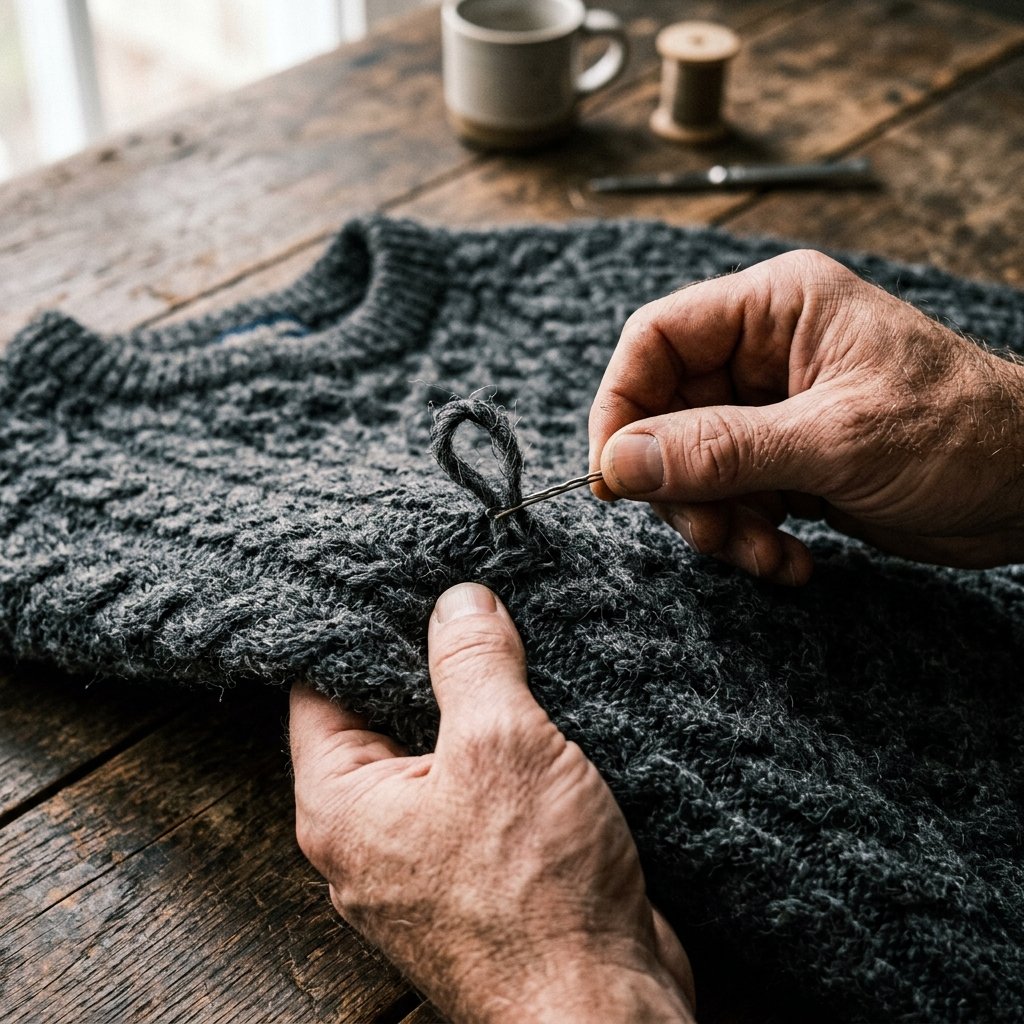
We have all been there. You are reaching for a coffee, moving a box, or playing with the dog, and suddenly—snap. A rogue thread catches on a sharp corner, and your favorite heavyweight wool sweater now has a glaring, unsightly loop protruding from the chest. Your first instinct might be to reach for the scissors, but as a seasoned frugal DIYer, I am here to tell you: Put the scissors down! Cutting a snag is the fastest way to turn a 10-second fix into a permanent hole that will unravel your entire investment.
In the world of rugged, practical fashion, we do not throw away quality gear just because of a minor blemish. Whether it is a thrifted cashmere find or a hard-wearing fisherman’s sweater, mending is a badge of honor. It is about being resourceful, clever, and budget-savvy. Today, I am going to teach you the ultimate ‘Grandma’s Secret’—a tactical maneuver that requires zero sewing skills and exactly one household item you probably already have in a junk drawer. We are going to reclaim your wardrobe in 10 seconds flat.
The Anatomy of a Snag: Why You Should Never Cut
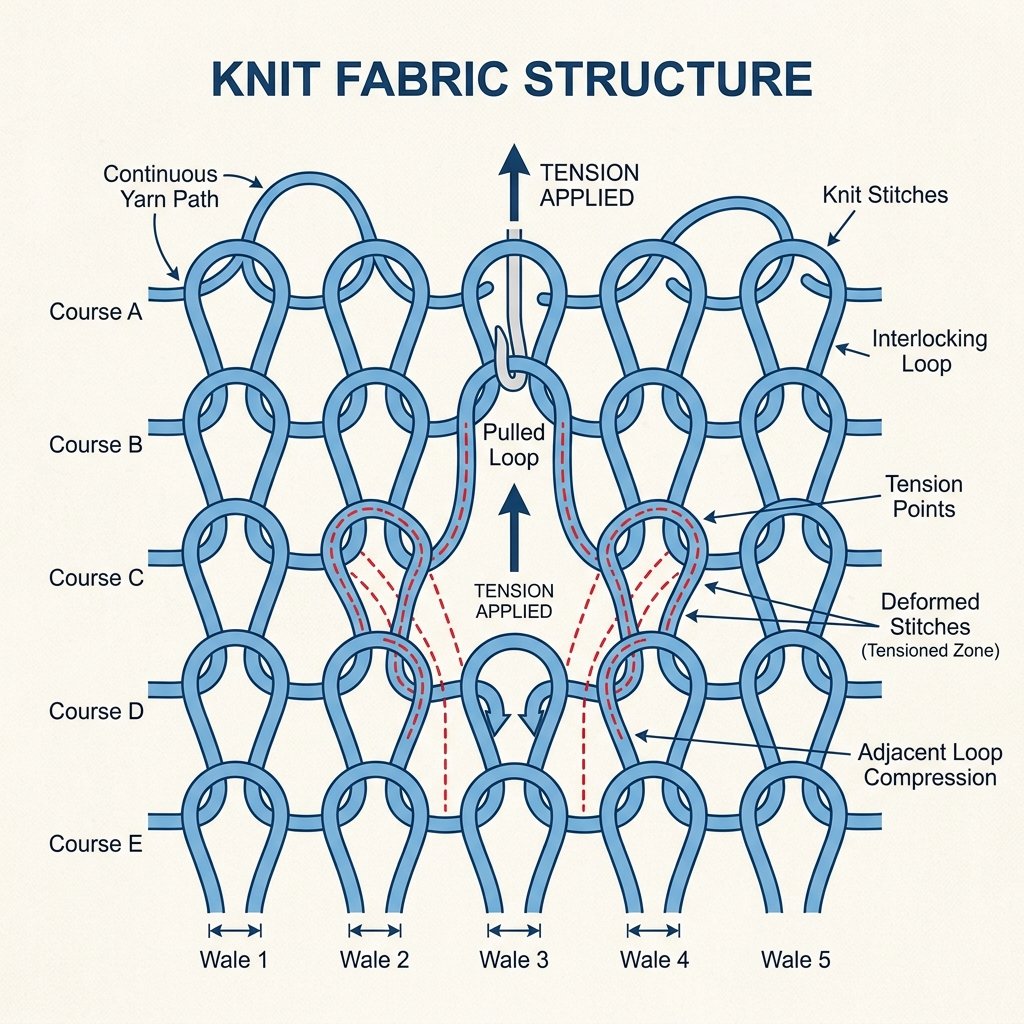
To fix a problem, you must first understand it. A knit garment is essentially one long, continuous piece of yarn looped through itself thousands of times. When you ‘snag’ a sweater, you haven’t actually created more yarn; you have simply displaced a loop from the internal structure to the outside. If you cut that loop, you break the chain. Once the chain is broken, the surrounding loops will begin to slide out, creating a growing hole that is much harder to repair.
The Golden Rule of Knitwear
Always pull, never snip. A snag is just a displaced traveler looking for its way home to the ‘wrong’ side of the fabric.
By understanding that the yarn is still intact, we can use a simple mechanical advantage to pull that extra slack back through to the inside (the ‘wrong side’) of the garment, making the snag completely invisible from the outside. This works on everything from fine-gauge cotton to chunky cable knits.
The 10-Second Tactical Fix: The Bobby Pin Maneuver
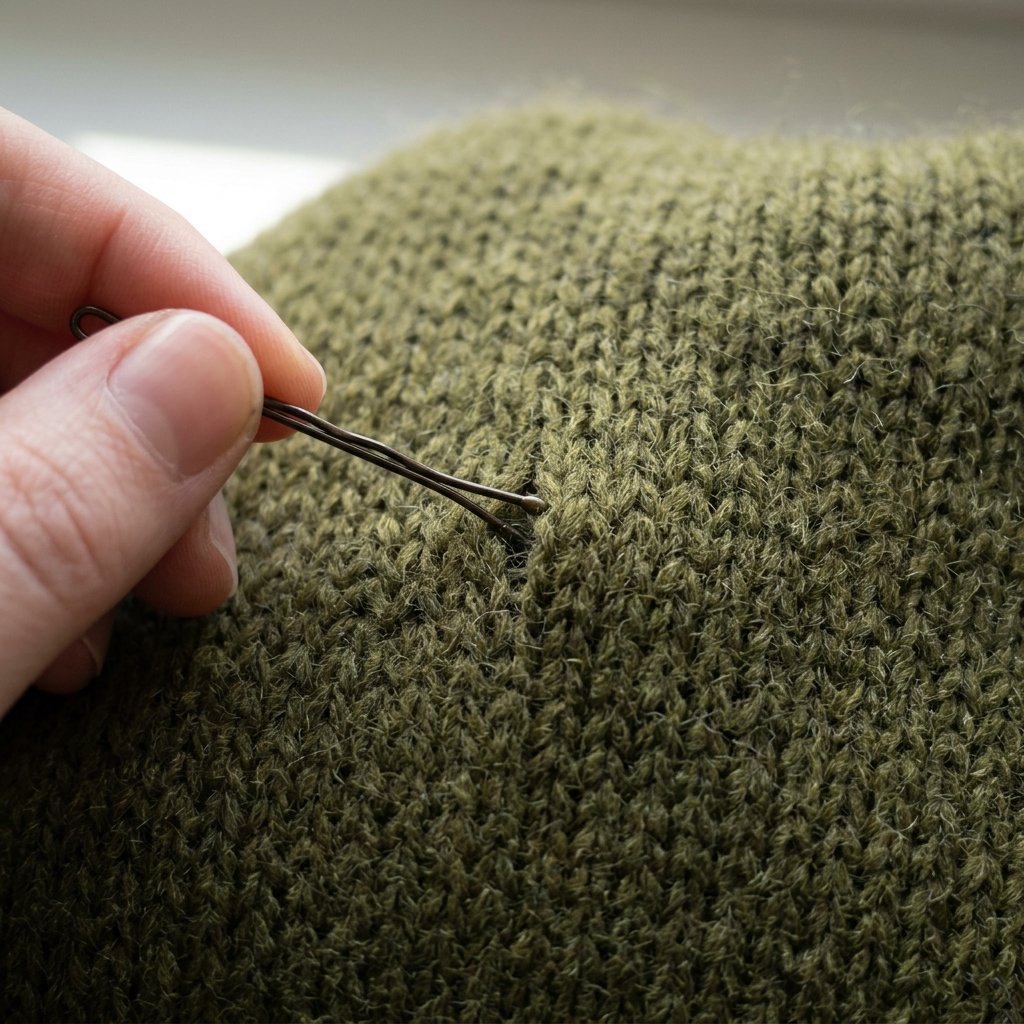
You don’t need a fancy ‘Snag Nab-it’ tool (though they are great for $5). If you are in a pinch, a simple bobby pin or a needle threader is your best friend. This is the ultimate budget-savvy hack for the handy parent or the frugal traveler.
- Identify the Exit Point: Locate exactly where the snagged thread is emerging from the knit.
- Insert the Tool: Take your bobby pin and insert the closed end from the inside of the sweater out through the exact hole where the snag is.
- Catch the Loop: Open the bobby pin slightly and hook the snagged thread into the loop of the pin.
- The Pull-Through: Gently pull the bobby pin back through to the inside of the sweater. The snagged loop will follow.
- Massage the Fabric: Once the loop is on the inside, gently stretch the fabric horizontally and vertically to redistribute the tension.
If the snag is particularly long, you may see a slight ‘tightness’ in the row where the snag occurred. Massaging the fabric helps the neighboring loops ‘share’ the slack again, making the repair 100% invisible.
The Rugged Mender’s Toolkit: Budget vs. Pro
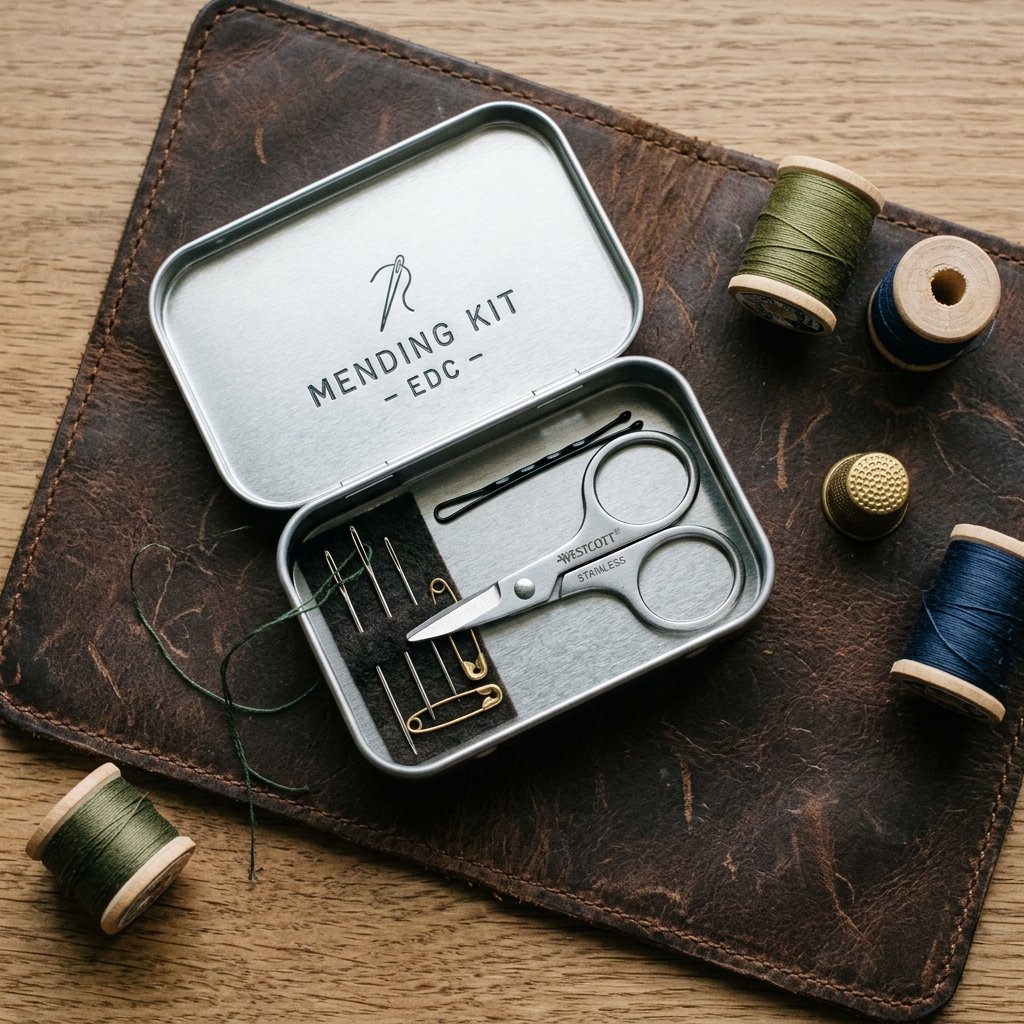
While the bobby pin works in a crisis, a true crafty expert keeps a small mending kit ready. Being resourceful means knowing when to use a household hack and when to invest $2 in a specialized tool that will save $100 sweaters for years to come.
| Tool | Cost | Best Use Case |
|---|---|---|
| Bobby Pin | $0.01 | Emergency fixes on chunky or medium knits. |
| Snag Nab-it Tool | $4.50 | Fine-gauge sweaters, silks, and delicate knits. |
| Tapestry Needle | $0.50 | Heavy wool and cable knits with thick yarn. |
| Needle Threader | $0.10 | Tiny snags on tight weaves like suit jackets. |
As a masculine-elegant minimalist, I recommend keeping a small tin in your dresser with a few tapestry needles and a snag tool. It takes up no space and ensures you never have to retire a garment prematurely.
Advanced Recovery: When the Snag Becomes a Hole
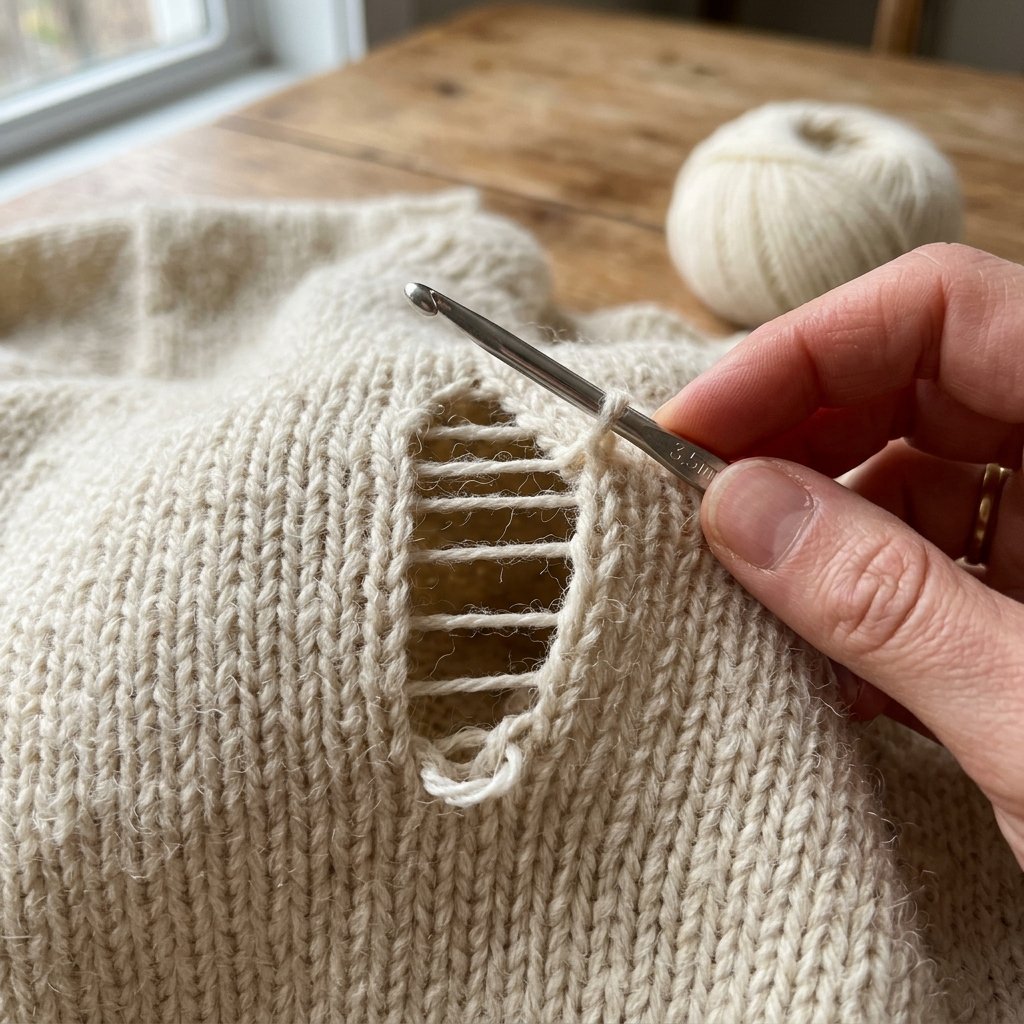
Sometimes, we don’t catch the snag in time, or a thread actually breaks. This is where the ‘Ladder Stitch’ or ‘Darning’ comes into play. If you see a ‘run’ in your sweater (like a ladder in stockings), you can use a crochet hook to ‘knit’ the loops back up to the top.
The Ladder Stitch Technique
Insert a small crochet hook into the lowest intact loop. Catch the horizontal ‘rung’ of the ladder above it and pull it through the loop. Repeat until you reach the top, then secure the final loop with a single matching thread.
This level of repair is what separates the amateurs from the masters. It is a meditative, practical skill that saves money and honors the craftsmanship of the original garment. For a frugal DIYer, mastering the ladder stitch is like having a superpower for your wardrobe.
Preventive Maintenance: Armor-Plating Your Knits

The best way to fix a snag is to never have one. Being a ‘handy parent’ means teaching the family how to care for their clothes so they last a lifetime. Most snags happen during washing or due to ‘abrasive’ accessories.
- Turn It Inside Out: Always wash sweaters inside out. This ensures that if a snag happens in the machine, it happens on the side no one sees.
- Use Mesh Bags: A $1 mesh laundry bag is the best insurance policy for your cashmere.
- Watch the Hardware: Be mindful of velcro, zippers, and open-faced jewelry which are the natural enemies of the knit.
| Fabric Type | Snag Risk | Care Level |
|---|---|---|
| Cashmere | High | High (Hand wash only) |
| Merino Wool | Medium | Moderate (Mesh bag) |
| Cotton Knit | Low | Low (Inside out) |
| Acrylic | Medium | Low (Standard wash) |
Conclusion
Wear Your Repairs with Pride
In a world of fast fashion and disposable culture, choosing to spend 10 seconds fixing a snag is a quiet act of rebellion. It is clever, it is resourceful, and it is incredibly budget-savvy. You haven’t just saved a sweater; you have refined a skill that keeps your hard-earned money in your pocket and high-quality textiles out of the landfill. Whether you are using a bobby pin in a hotel room or a tapestry needle in your home workshop, remember that a mended garment is a story of care. Don’t throw it out—fix it, wear it, and stay crafty.


Makenzie is the founder and lead writer at MoneyHackTips.com — a personal finance blog dedicated to delivering street-smart financial wisdom for real people on real budgets. With 300+ published articles covering everything from debt management to investing fundamentals, Makenzie’s mission is to make every dollar work harder. When not writing about money hacks, Makenzie is testing frugal living strategies, optimizing side hustles, and helping readers build financial freedom from scratch.