
The Frugal Traveler’s Winter Manifesto
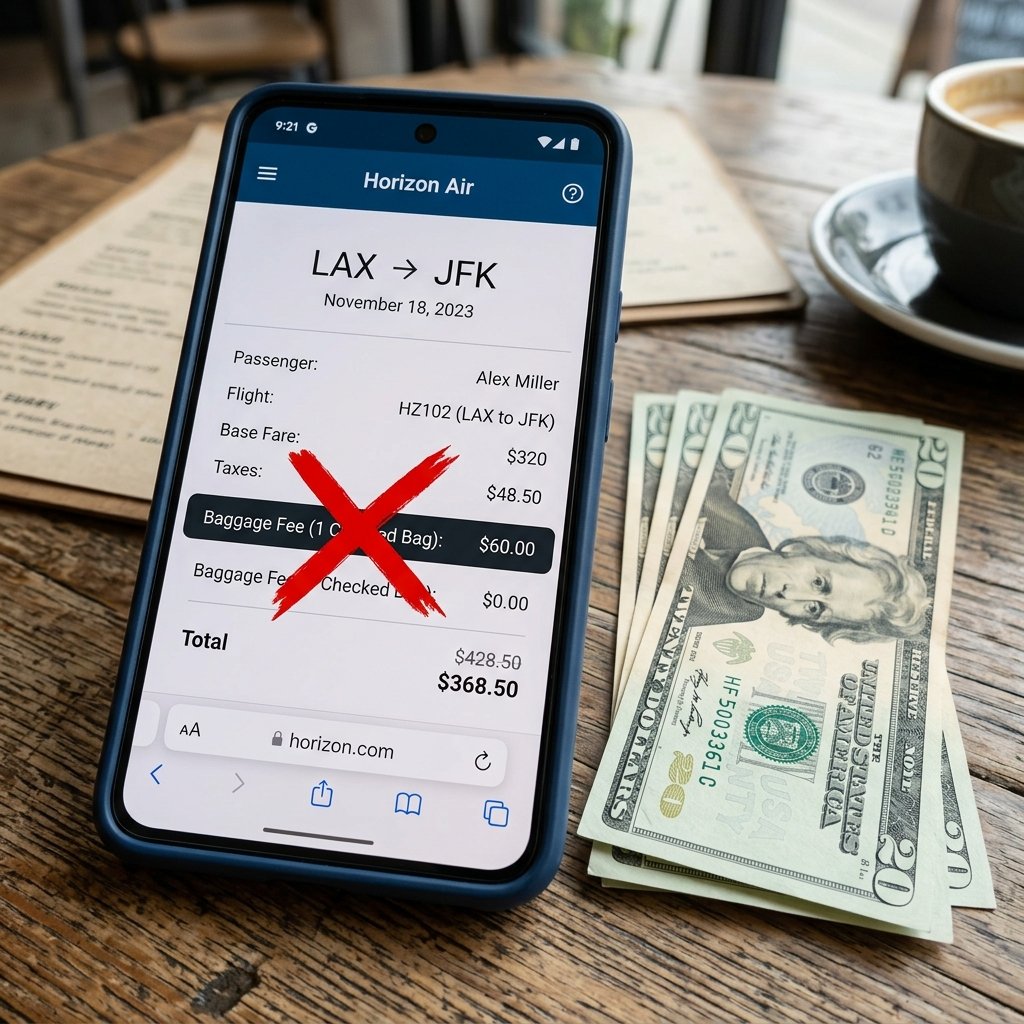
Let’s be honest: winter travel is the ultimate test for any frugal enthusiast. When you’re heading to a destination where the temperature is dropping faster than your bank account after a holiday shopping spree, the instinct is to pack everything but the kitchen sink. You want the heavy coats, the thick boots, and enough sweaters to clothe a small village. But here’s the cold, hard truth: checking a bag can cost you anywhere from $30 to $100 per flight. If you’re flying a budget airline like Spirit or Frontier, those fees can sometimes exceed the cost of the ticket itself!
As your Ultimate Frugal Hacker, I’m here to tell you that you don’t have to choose between staying warm and staying under budget. Packing carry-on only for a winter trip isn’t just possible; it’s a liberating way to travel. Imagine bypassing the crowded check-in counters, skipping the nail-biting wait at the baggage carousel, and walking straight out of the airport with your hard-earned $60 still in your pocket. In this guide, we are going to break down the science of the winter carry-on, from the math of the savings to the specific folding techniques that will save your sanity and your wallet.
The Math: Why ‘One Bag’ is a Financial Game-Changer
Why We Fight the Fees
Before we get into the ‘how,’ let’s talk about the ‘why.’ For the frugal living enthusiast, every dollar saved on logistics is a dollar spent on experiences. Over a single round-trip flight, a checked bag can easily eat up $70. If you travel just three times a year, that is $210 literally thrown into the cargo hold.
Let’s look at the long-term impact of mastering the carry-on life:
| Frequency of Travel | Average Checked Bag Fees (Annual) | Potential Savings Over 5 Years |
|---|---|---|
| 1 Trip per Year | $70 | $350 |
| 3 Trips per Year | $210 | $1,050 |
| 6 Trips per Year | $420 | $2,100 |
That $2,100 could be your next international flight or a significant boost to your emergency fund. The goal here is to optimize your packing so you never have to pay for the ‘privilege’ of the airline hauling your heavy luggage.
Scam Warning: Watch out for ‘Basic Economy’ tickets on legacy carriers like United or JetBlue. Some of these fares do not even allow a standard carry-on bag in the overhead bin—only a small personal item. Always read the fine print before booking, or you might get hit with a $65 gate-check fee!
The Strategy: Wear Your Weight
The Golden Rule of Winter Packing
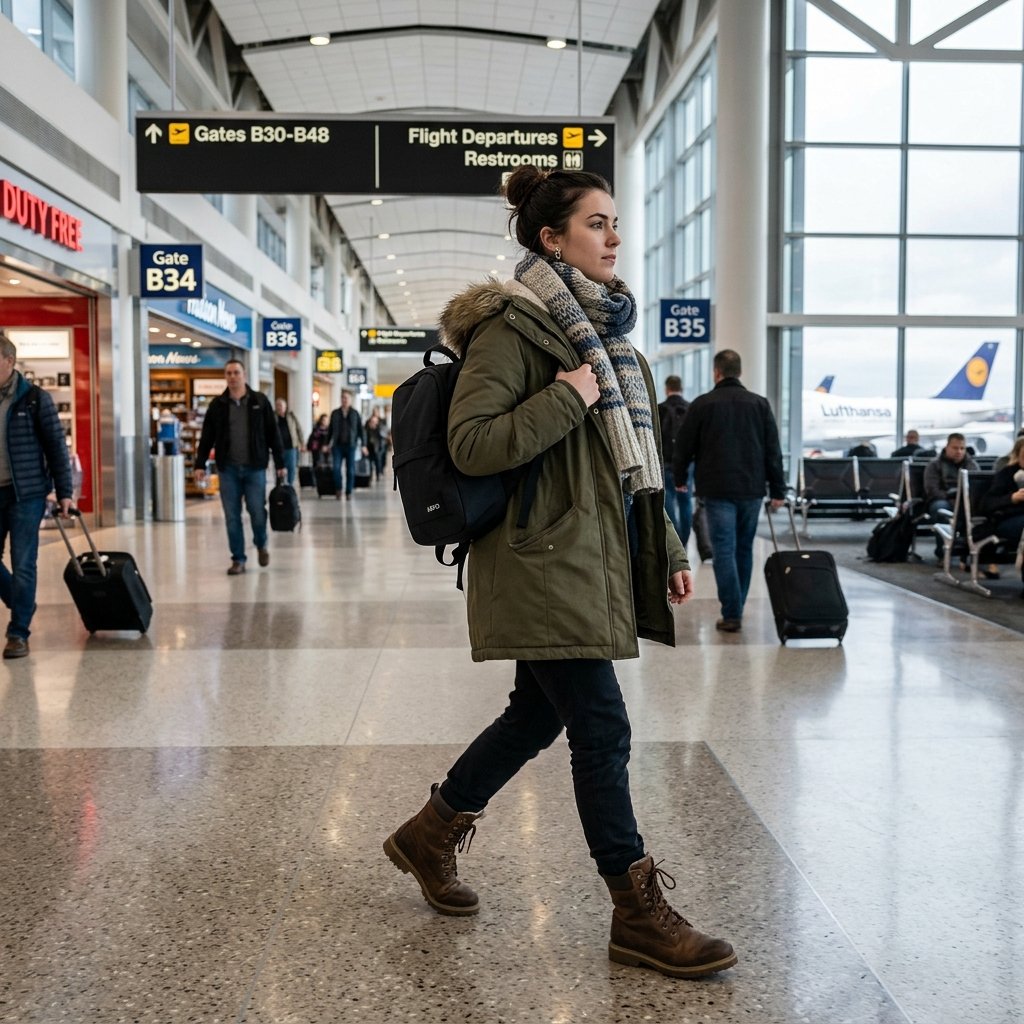
The secret to carry-on success in winter is simple: Wear your bulkiest items on the plane. This is the ultimate hack. Your heavy wool coat, your clunkiest snow boots, and your thickest hoodie should never see the inside of your suitcase during transit. They are part of your ‘flight uniform.’
The Layering System
Instead of packing one giant parka that takes up 50% of your bag, think in layers. Layers are more thermally efficient and significantly easier to pack. Your system should look like this:
- Base Layer: Moisture-wicking thermals (merino wool is the gold standard for frugality because it doesn’t smell and can be worn multiple times).
- Mid-Layer: A light fleece or a thin ‘puffer’ jacket that can be compressed.
- Outer Shell: A waterproof and windproof layer.
By wearing your boots and your heaviest coat onto the plane, you free up a massive amount of volume in your carry-on for everything else. If you get too hot in the terminal, simply drape the coat over your arm or use it as a pillow once you’re in your seat.
The Frugal Tutorial: Building a Winter Capsule Wardrobe
The 5-4-3-2-1 Rule for Winter
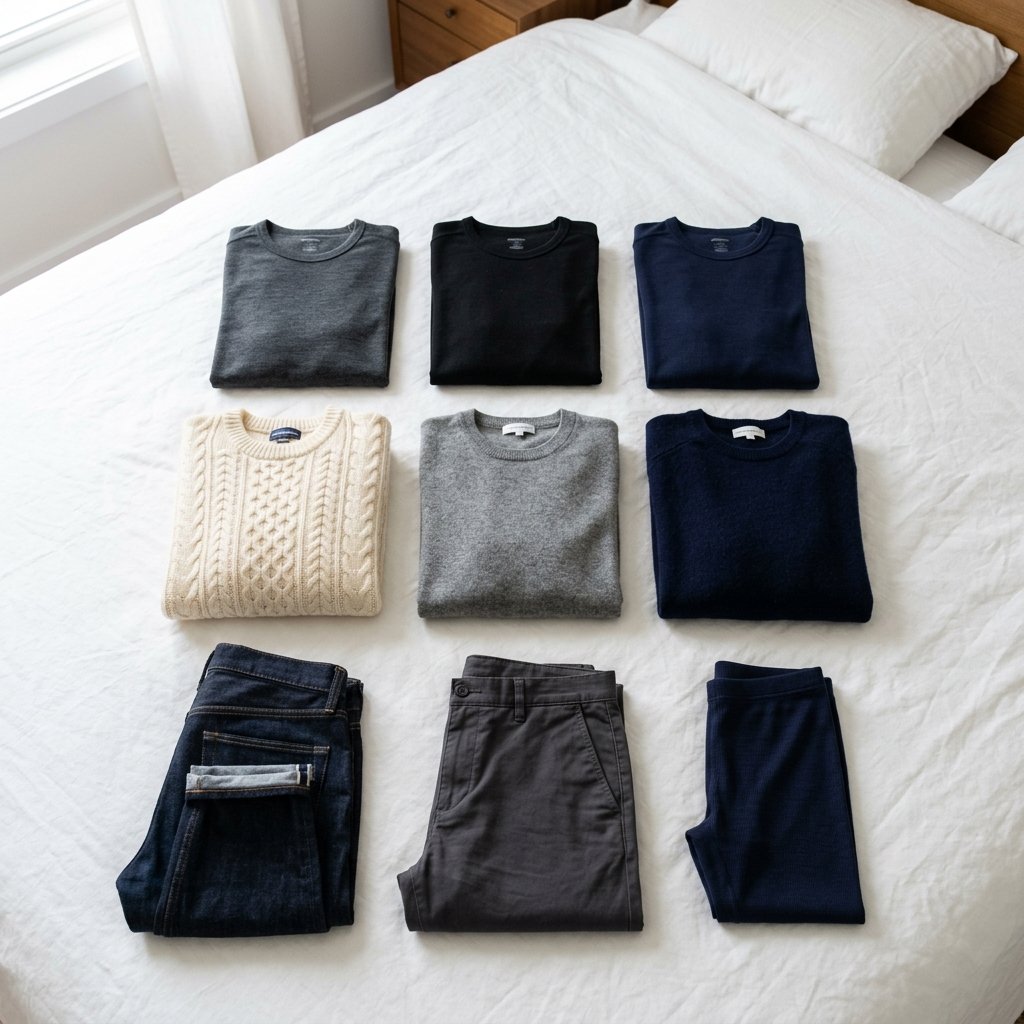
To keep your bag light, you need a capsule wardrobe. This means every item you pack must coordinate with every other item. Stick to a neutral color palette (blacks, greys, navies) so you can mix and match without looking like you’re wearing the same outfit in every photo.
The Packing List
- 5 Sets of Socks and Underwear: Opt for wool-blend socks; they stay warm even if they get damp.
- 4 Tops: A mix of long-sleeve tees and one nice sweater.
- 3 Bottoms: One pair of jeans (wear these), one pair of tech chinos, and one pair of thermal leggings.
- 2 Pairs of Shoes: Your heavy boots (wear these) and one pair of lightweight sneakers or Chelsea boots.
- 1 Accessory Set: A hat, gloves, and a scarf.
Cost Breakdown: High-End Gear vs. Frugal Alternatives
| Item | Brand Name Price | Frugal Alternative | Savings |
|---|---|---|---|
| Merino Wool Base | $95 | Uniqlo HeatTech ($15) | $80 |
| Down Puffer Jacket | $250 | Amazon Essentials ($45) | $205 |
| Wool Hiking Socks | $25 | Costco Kirkland 4-pack ($15) | $10/pair |
By choosing ‘smart’ frugal alternatives, you can assemble a high-performance winter wardrobe for a fraction of the cost of premium outdoor brands.
The Hack: Advanced Packing Techniques
Maximizing Every Square Inch
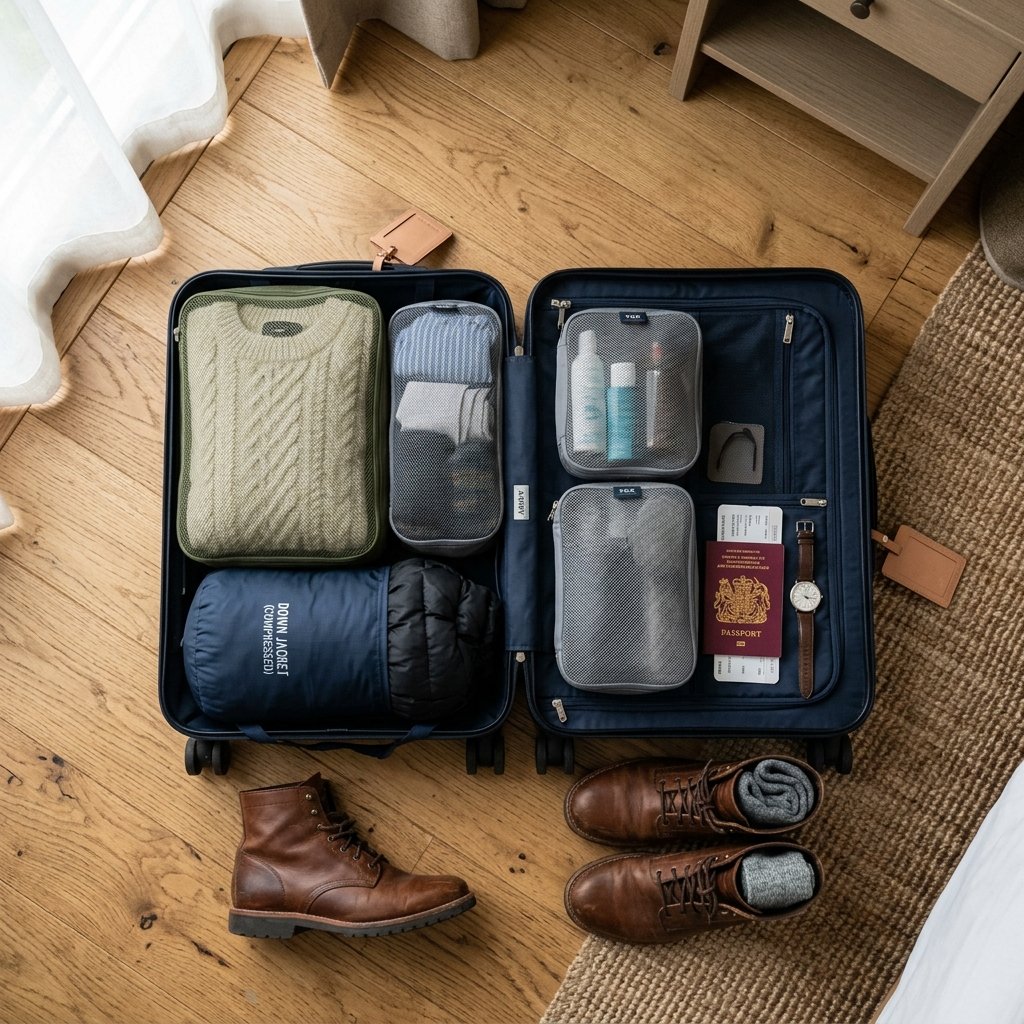
Now that we have the right clothes, we need to get them into the bag. Standard folding is for amateurs. To be a true Frugal Hacker, you need to use the Ranger Roll or Compression Cubes.
The Ranger Roll Method
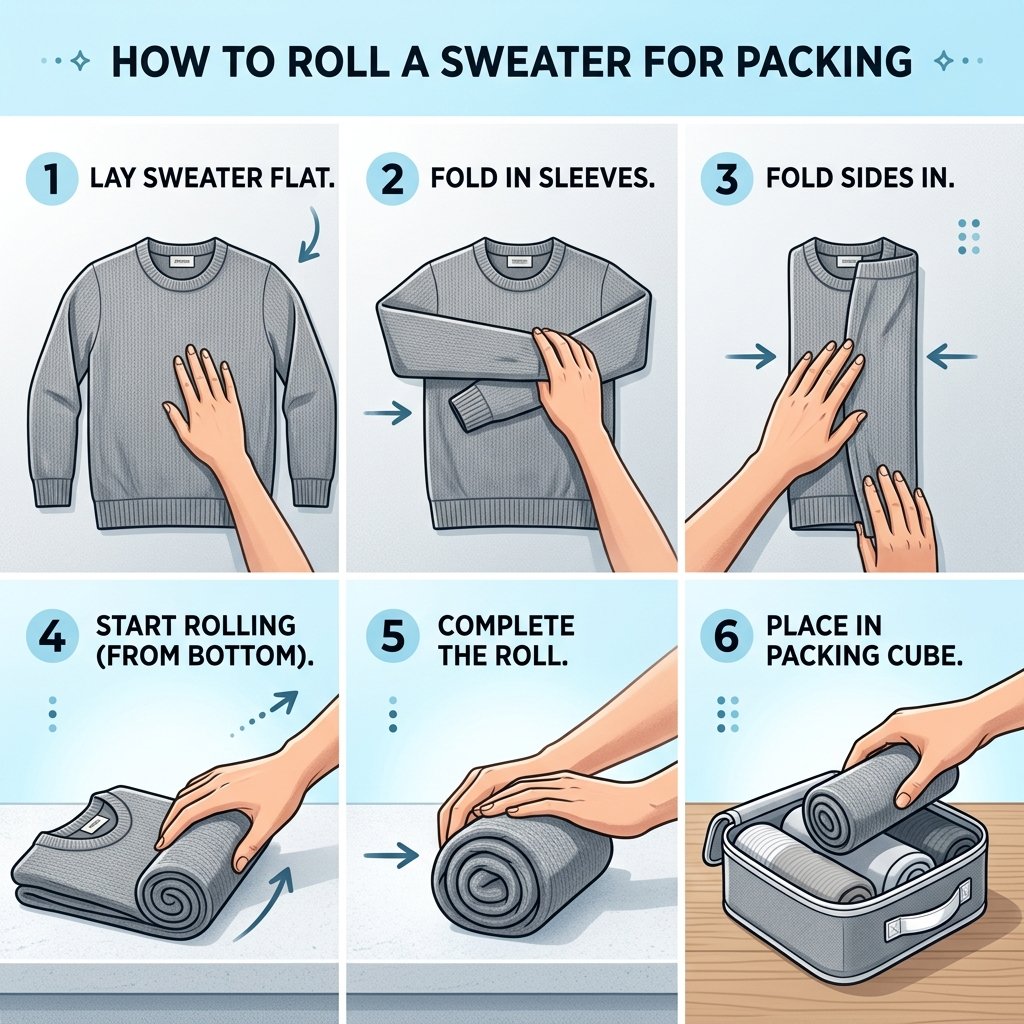
This technique turns your clothes into tight, burrito-like cylinders that prevent wrinkles and save space. Here is how you do it for a sweater:
- Lay the sweater flat and fold the bottom 2 inches inside out to create a ‘cuff.’
- Fold the sleeves into the center.
- Fold the sides inward so you have a long rectangle.
- Roll tightly from the collar down to the bottom.
- Tuck the entire roll into the ‘cuff’ you created in step 1.
Pro Tip: Invest $15 in a set of compression packing cubes. Unlike regular cubes, these have a second zipper that squishes the air out of your clothes. It’s like a vacuum sealer for your suitcase without the vacuum!
Using these methods, you can fit 10 days’ worth of winter gear into a standard 22x14x9-inch carry-on with room to spare.
Toiletries and Tech: The Minimalist Masterclass
Don’t Let the Small Stuff Sink You
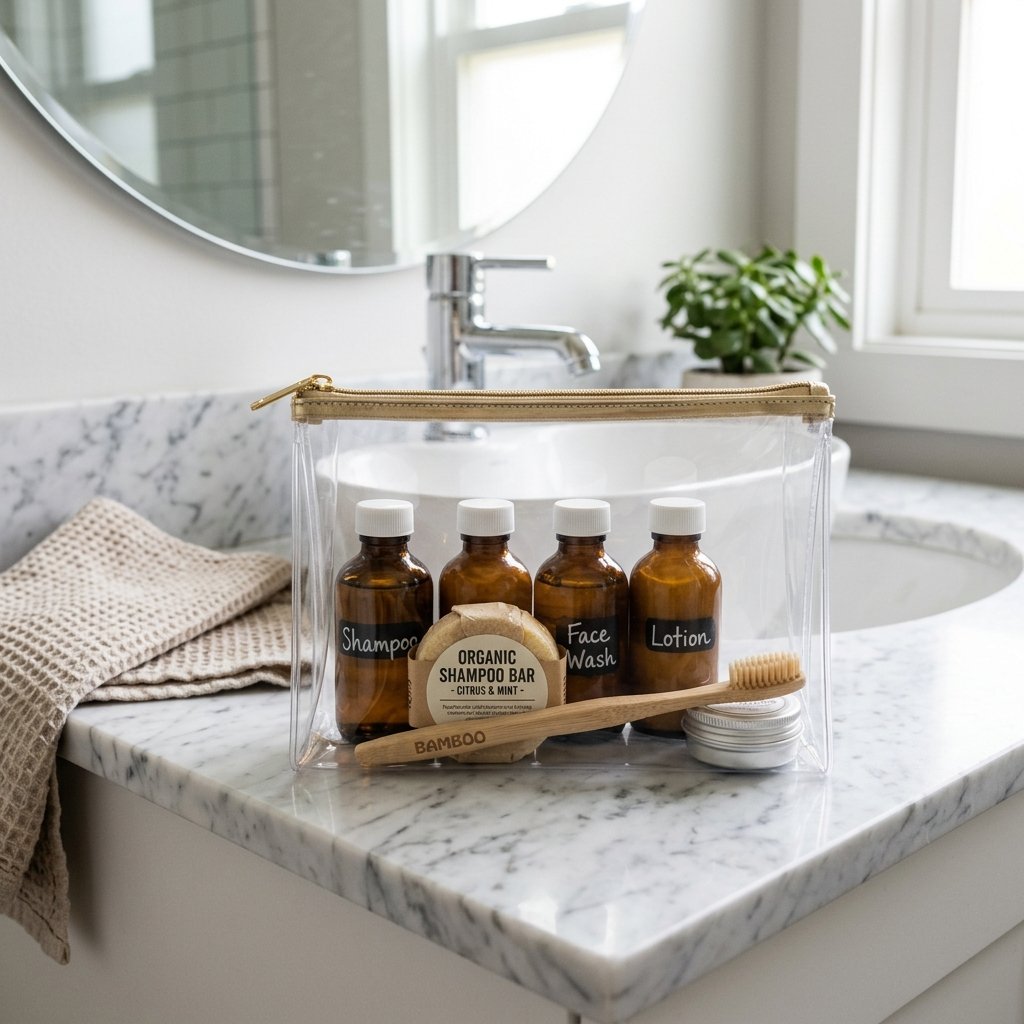
Toiletries are often the reason people give up and check a bag. The 3-1-1 rule (3.4oz bottles in 1 quart-sized bag) is strict, but manageable. To save money, stop buying ‘travel size’ products. They are a massive rip-off, often costing 300% more per ounce than the full-sized version.
The DIY Travel Kit
- Buy a set of reusable silicone bottles for $8.
- Fill them with your existing shampoo, conditioner, and soap.
- The Solid Hack: Switch to bar shampoo and solid toothpaste tabs. They don’t count as liquids, meaning you can bring as much as you want!
Tech Minimalism
Winter gear is heavy, so your tech should be light. Ditch the laptop if you can and use a tablet or just your phone. Use a universal multi-charger cable instead of four different cords. This saves weight and prevents the dreaded ‘bag search’ at security where they make you unpack everything.
The Airport Strategy: Navigating the Gate
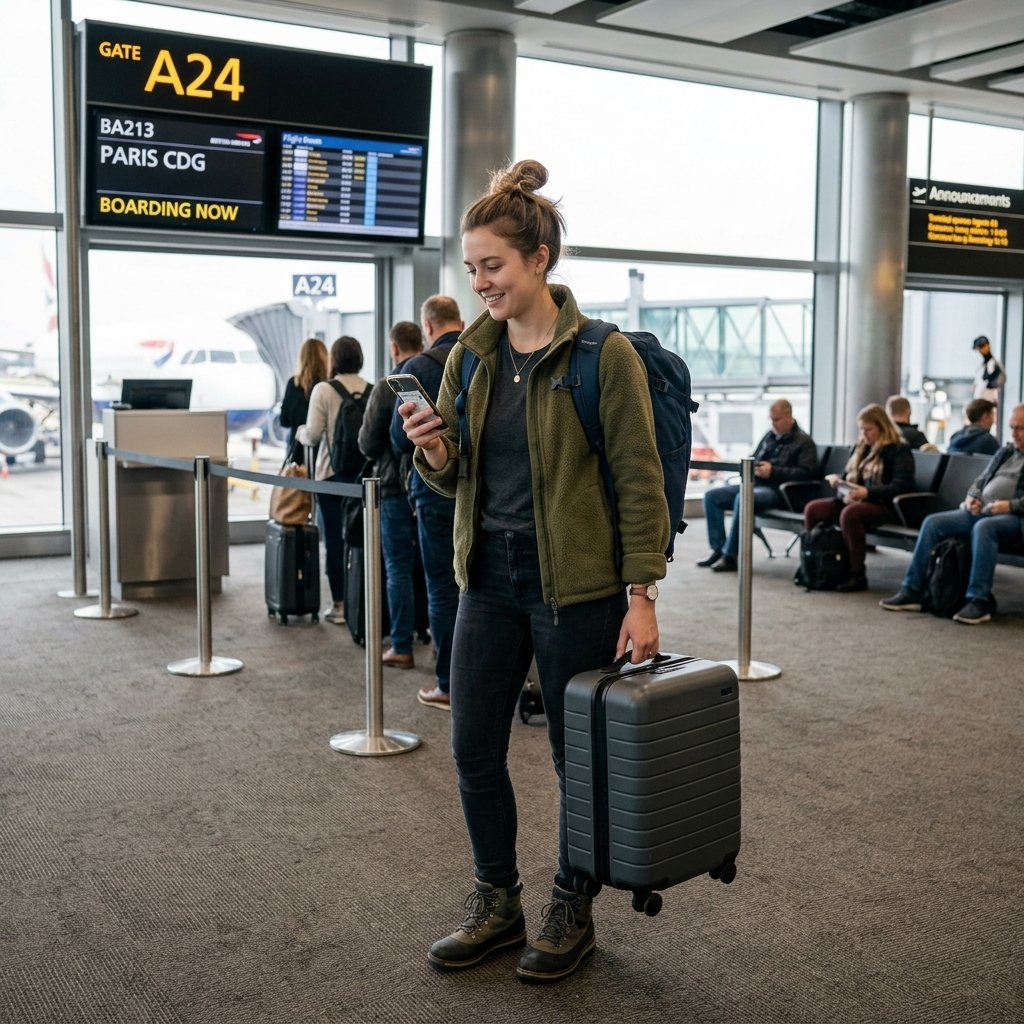
Winning the ‘Personal Item’ Game
Most airlines allow one carry-on AND one personal item (like a backpack). Use that personal item wisely! This is where you store your heavy items like your laptop, chargers, and your ’emergency’ layer.
The ‘Pillowcase’ Hack: If your bag is slightly over the weight limit or too full, some travelers pack a small pillowcase with soft clothes (like sweaters) and carry it onto the plane as a ‘pillow.’ Most airlines don’t count a pillow as a personal item. Use this sparingly, but it’s a great ‘break glass in case of emergency’ tactic!
Final Checklist Before You Leave
- Check the dimensions of your specific airline’s carry-on limits.
- Weigh your bag at home using a cheap $10 luggage scale.
- Download the airline’s app for real-time gate change alerts.
Conclusion
Travel Light, Save Big
Packing carry-on only for a winter trip is more than just a way to save $60; it’s a mindset. It’s about realizing that you don’t need twenty different outfits to have an incredible experience. By focusing on high-quality layers, mastering the art of the ‘Ranger Roll,’ and wearing your heaviest gear on the plane, you become a more agile, efficient, and frugal traveler.
Next time you book a flight to a snowy wonderland, don’t fear the baggage fees. Smile knowing that your gear is tucked neatly above your head, your wallet is full, and you’re ready to explore without being weighed down. Happy (and cheap) travels!
Disclaimer: I am not a financial advisor. These tips are based on personal experience and general travel practices. Always check with your specific airline for their most current baggage policies and fees.


Makenzie is the founder and lead writer at MoneyHackTips.com — a personal finance blog dedicated to delivering street-smart financial wisdom for real people on real budgets. With 300+ published articles covering everything from debt management to investing fundamentals, Makenzie’s mission is to make every dollar work harder. When not writing about money hacks, Makenzie is testing frugal living strategies, optimizing side hustles, and helping readers build financial freedom from scratch.