

The Psychology of the Visual Win
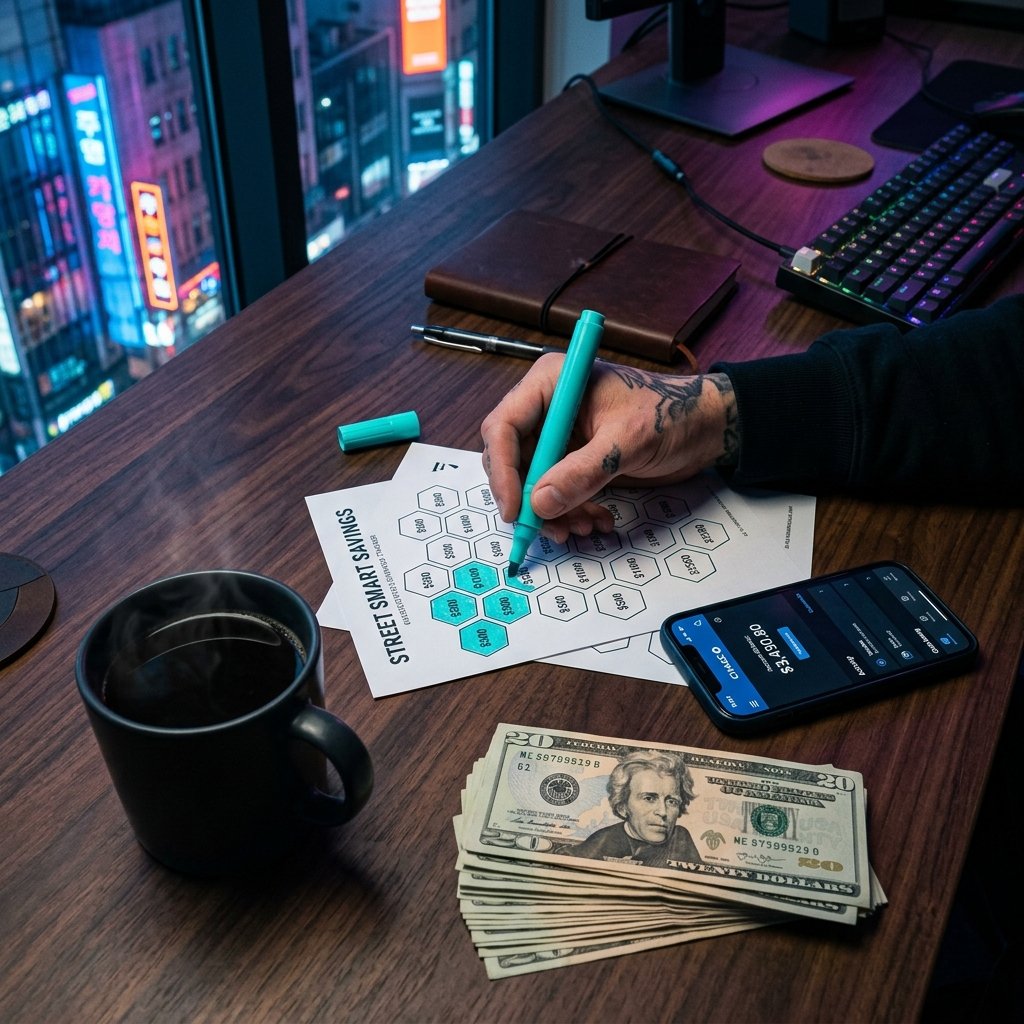
Let’s be real: most budgeting advice is a snooze fest. You’ve heard it all before—cut the lattes, track your pennies, and stare at a soul-crushing Excel sheet until your eyes bleed. If you’re a side hustler, your brain is already wired for the dopamine hit of the ‘cha-ching’ notification. A static spreadsheet doesn’t give you that same rush. That’s where the Coloring Page Savings Tracker comes in. It’s not just ‘cute’—it’s a psychological hack designed to exploit your brain’s reward system. When you color in a segment of a tracker, your brain releases a hit of dopamine, the same chemical associated with winning a bet or landing a new client. This creates a positive feedback loop. Instead of feeling the ‘pain’ of losing $50 to a savings account, you feel the ‘gain’ of completing a visual puzzle. We’re going to dive deep into how you can use these low-tech tools to stack high-tech levels of cash. We are talking about turning your side hustle grind into a game where you always win.
The Dopamine Hack: Why Your Brain Craves the Crayon

Your brain is a survival machine, not an accounting machine. It prioritizes immediate rewards over long-term stability. This is why it’s so easy to blow $100 on a celebratory dinner after a big freelance check instead of putting it toward your taxes. Visual trackers utilize Variable Ratio Reinforcement. Every time you color a section, you see the gap between where you are and where you want to be narrowing. This visual progress is more tangible to your subconscious than a digital number on a screen.
The Gamification of Frugality
By using a coloring tracker, you are gamifying your finances. You aren’t ‘saving’; you are ‘leveling up.’ For side hustlers, this is crucial. Your income is often irregular. A visual tracker allows you to see the aggregate of your small wins. Whether it’s a $5 tip or a $500 project fee, coloring in those blocks provides a sense of consistent momentum.
Key Rule: Never color a space until the cash is physically moved to your savings account. The coloring is the reward for the action, not the intention.
The Math: Turning Small Change into Big Gains
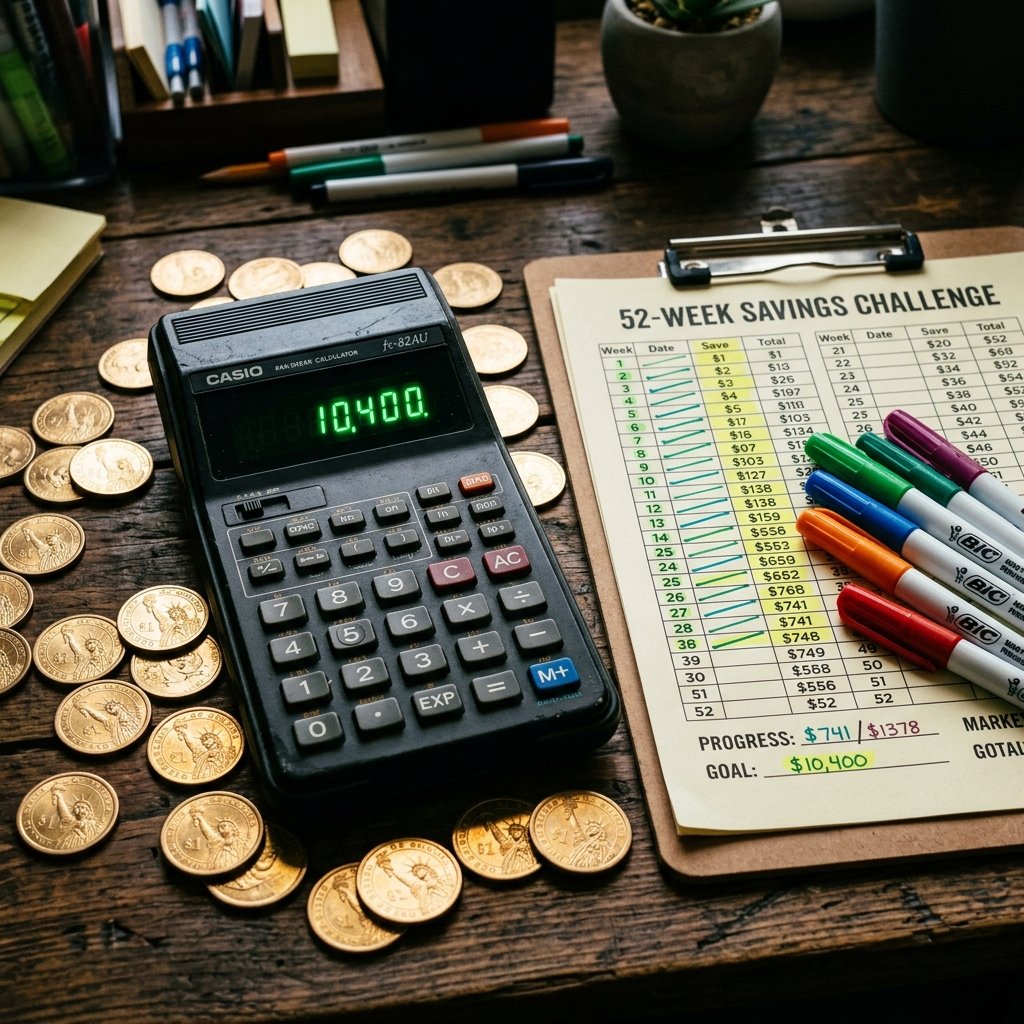
Don’t underestimate the power of micro-savings. Many side hustlers think they need to wait for a ‘big hit’ to start saving. The math proves otherwise. If you use a tracker designed for $10 increments, you can visualize how small, daily actions lead to massive annual results. Let’s look at the breakdown of what happens when you commit to filling just a few blocks a week.
| Action Level | Weekly Savings | Annual Total |
|---|---|---|
| The Starter Hustle | $25 | $1,300 |
| The Weekend Warrior | $75 | $3,900 |
| The Full-Time Grinder | $200 | $10,400 |
When you see $10,400 on a spreadsheet, it feels distant. When you see a 52-block coloring page where each block represents $200, your brain focuses on the single block. It feels manageable. It feels winnable.
Choosing Your Weapon: From Emergency Funds to Vacations
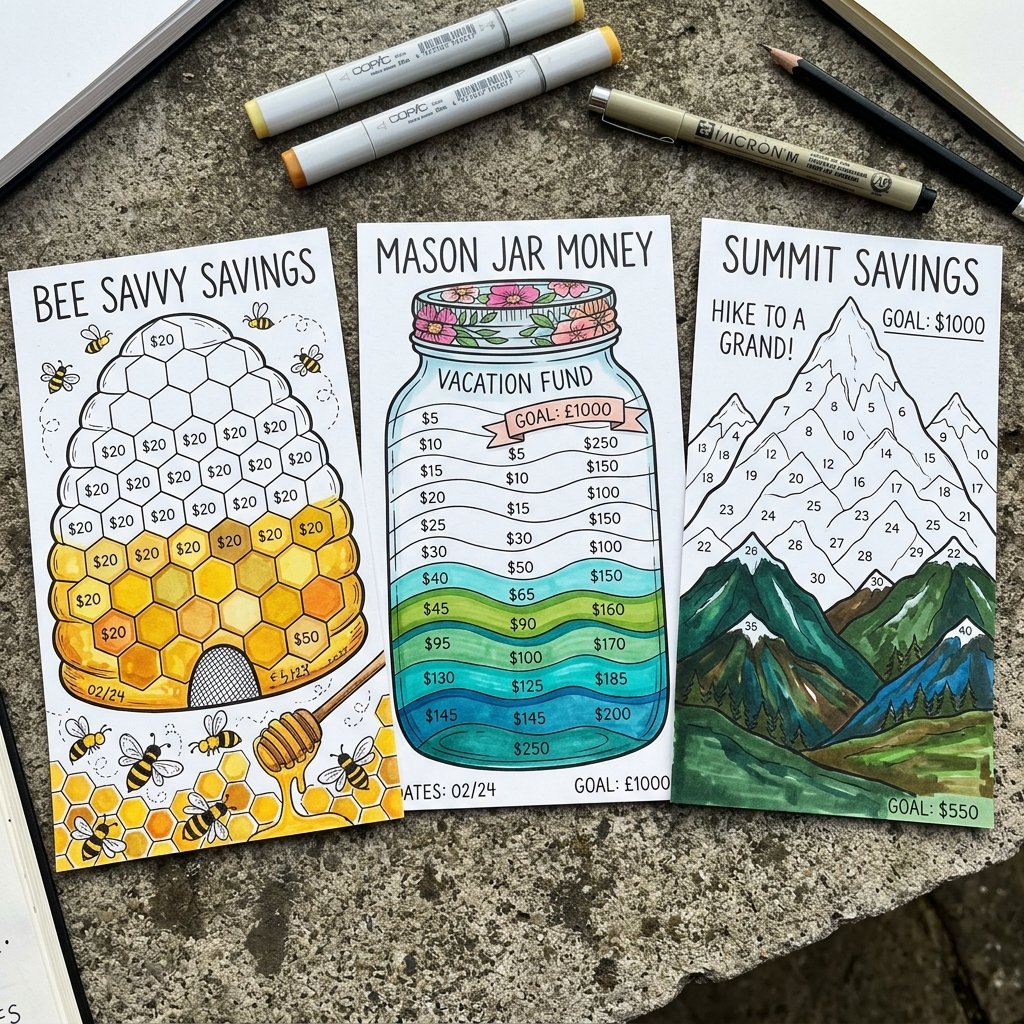
Not all trackers are created equal. Depending on your goal, you need a specific visual layout to keep your motivation high. For side hustlers, I recommend three specific types of trackers:
- The Beehive (Emergency Fund): Hexagonal shapes are perfect for building a ‘wall’ of protection. Each cell represents $50. As you fill it, you literally see your safety net becoming solid.
- The Mason Jar (Specific Purchases): Best for equipment upgrades like a new laptop or camera. It’s a classic for a reason—it mimics the old-school physical cash jar.
- The Mountain (Debt Payoff): Start at the base and color your way to the summit. This is psychologically powerful because the ‘climb’ gets harder as you go, reflecting the discipline needed to kill high-interest debt.
The trick is to match the tracker to the ‘vibe’ of your goal. If you’re saving for a beach vacation with your side hustle money, use a tracker shaped like a palm tree or a suitcase. The more the visual relates to the reward, the harder your brain will work to reach it.
The Execution: How to Integrate Tracking into Your Side Hustle

To make this work, you need a system. You can’t just print a page and hope for the best. You need to treat it like a business process. Here is the street-smart way to integrate visual tracking into your weekly routine:
- The Sunday Settlement: Every Sunday, tally up your side hustle earnings. Subtract your expenses and taxes. Whatever is left is your ‘Tracker Fuel.’
- The Physical Move: Transfer the money to a high-yield savings account. Do not leave it in your checking account where it can be ‘accidentally’ spent on impulse buys.
- The Ritual: This is the most important part. Get your favorite markers. Sit down. Color the blocks that correspond to the amount you saved. Make it a ceremony.
Script to use when tempted to spend: ‘I’m not giving up this $40 dinner; I’m buying another colored block on my path to $5,000.’
By shifting the narrative from ‘restriction’ to ‘acquisition,’ you remove the friction of saving.
Don’t Buy the Hype: Where to Get Trackers for $0
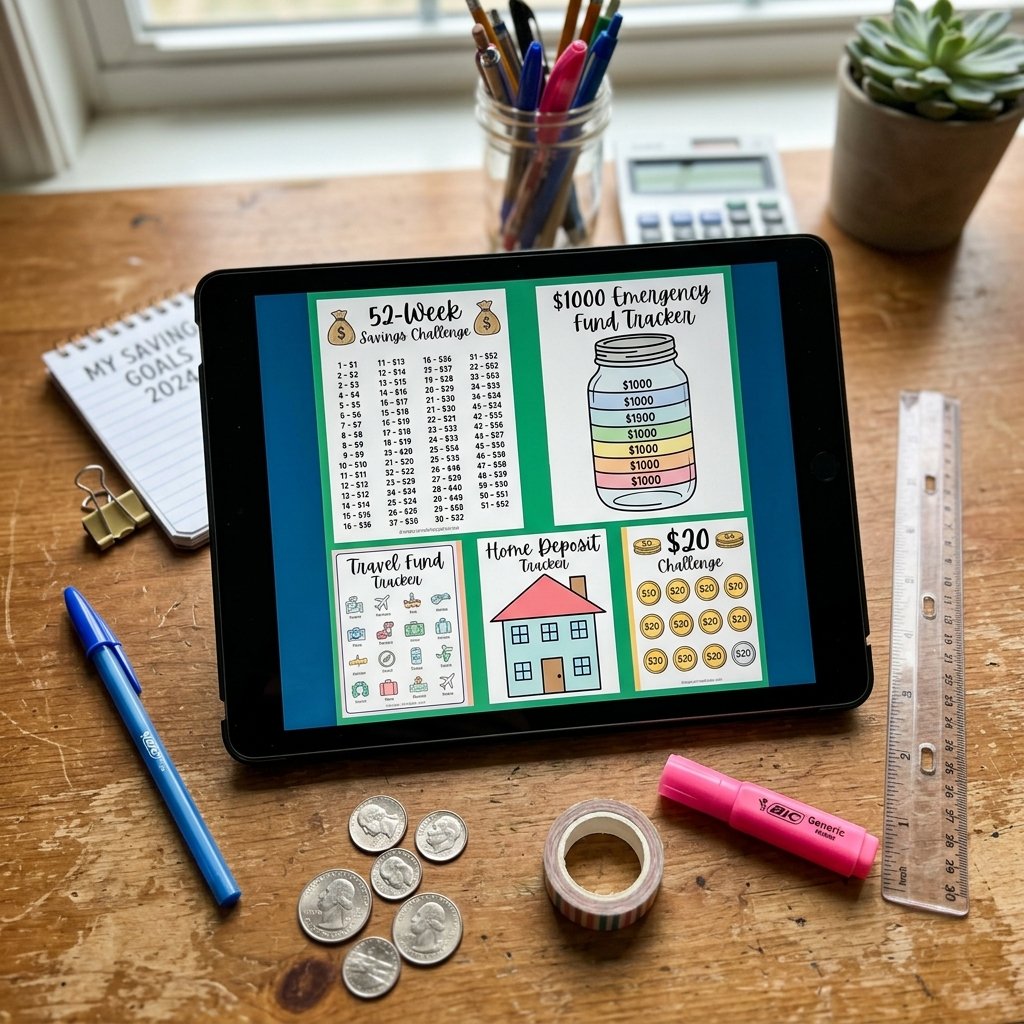
As a Frugal Hacker, the last thing I want you to do is spend $20 on a ‘premium’ savings tracker book. That’s counterproductive. You want to keep your overhead low so your savings stay high. You can find high-quality, free trackers all over the web if you know where to look.
Top Free Resources
- Pinterest: Search for ‘Free Savings Tracker Printable.’ You will find thousands of designs.
- Canva: Use their free templates to design your own. This is great if you have a very specific goal like ‘Save $1,247 for a new MacBook.’
- Reddit: Subreddits like r/frugal or r/personalfinance often have users sharing their custom-built PDF trackers.
Remember: the goal is to save money, not to have the most expensive aesthetic. A black-and-white printout from a library printer works just as well as a professional cardstock version.
The Trap: Don’t Let Pretty Drawings Distract from Real Progress
Scam Warning: The Aesthetic Trap
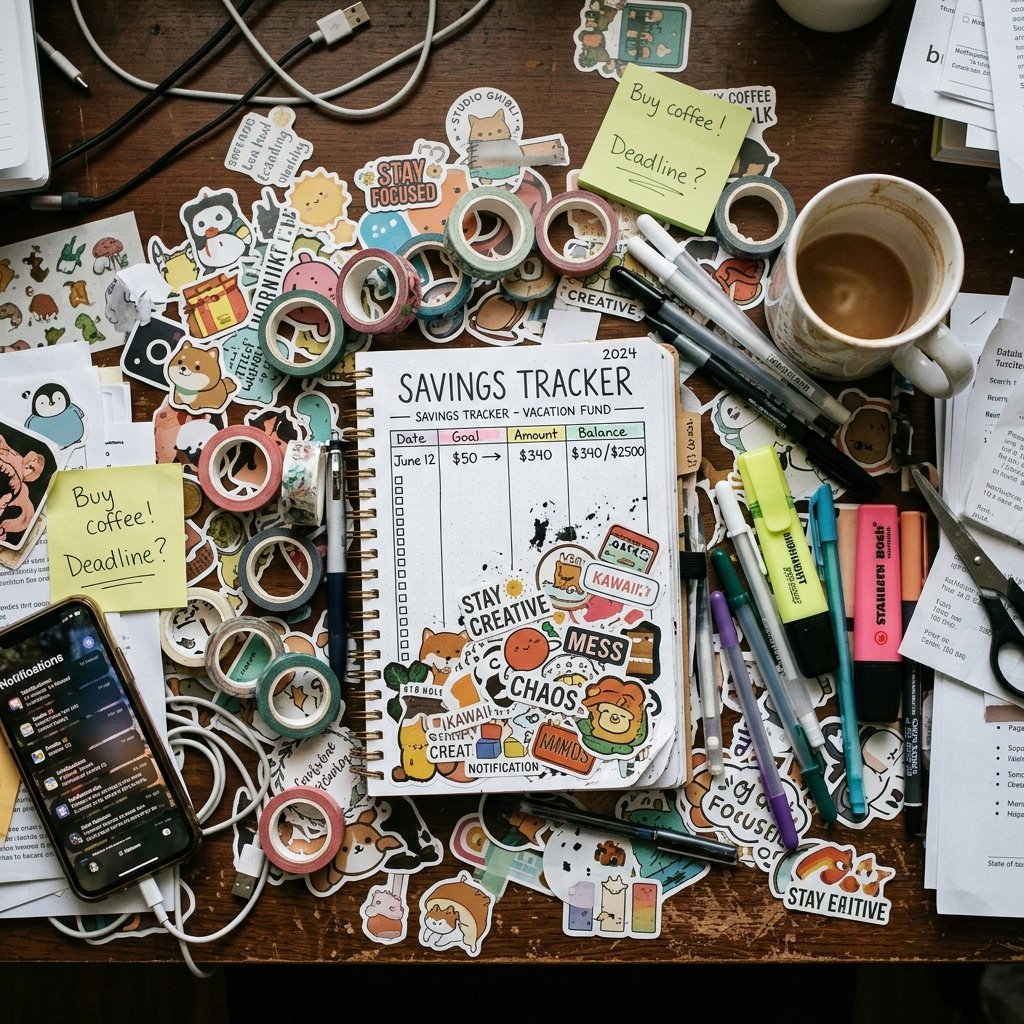
Beware of the ‘Productivity Porn’ trap. Some people spend more time decorating their trackers with stickers and washi tape than they do actually making money. If you find yourself spending 3 hours ‘planning’ your savings and 0 hours actually working your side hustle, you’ve lost the plot. A tracker is a tool, not a hobby.
The Reality Check
Visual trackers work because they are simple. If your tracker becomes too complex—with 50 different colors and intricate rules—you will stop using it. Keep it street-smart: one goal, one tracker, one color. Focus on the $, not the art project.
Scam Warning: Avoid any ‘savings challenge’ that requires you to pay a monthly fee to access their ‘exclusive’ trackers. That’s just a drain on your capital.
Conclusion
Final Thoughts from The Frugal Hacker
Coloring page savings trackers are the ultimate low-tech hack for the high-speed side hustler. They bridge the gap between the cold, hard numbers of your bank account and the reward-seeking nature of your brain. By turning your financial goals into a visual journey, you stop fighting against your instincts and start using them to build wealth. Start small, stay consistent, and color your way to freedom. You’ve got the hustle; now you’ve got the map. Go get it.
Disclaimer: I am not a financial advisor. This content is for educational and motivational purposes only. Always consult with a professional for personalized financial advice.


Makenzie is the founder and lead writer at MoneyHackTips.com — a personal finance blog dedicated to delivering street-smart financial wisdom for real people on real budgets. With 300+ published articles covering everything from debt management to investing fundamentals, Makenzie’s mission is to make every dollar work harder. When not writing about money hacks, Makenzie is testing frugal living strategies, optimizing side hustles, and helping readers build financial freedom from scratch.