

Welcome to the Future of Frugal Fun
Listen up, fellow frugal hackers! If you have ever tried to stick to a rigid, boring budget, you know exactly why most of them fail. They are about as exciting as watching grass grow in a drought. We are human beings, not spreadsheets, and our brains crave a little bit of excitement, a little bit of unpredictability, and a whole lot of dopamine. That is exactly why the Weather Challenge has taken the internet by storm (pun absolutely intended). It is not just a saving method; it is a game where Mother Nature herself becomes your financial advisor. Instead of the same old ‘save $50 a week’ routine, you are letting the daily high temperature dictate your financial future. It is street-smart, it is unpredictable, and most importantly, it makes saving money fun again. In this guide, we are going to break down the mechanics of this viral sensation, look at the cold, hard math, and show you how to turn your local forecast into a ticket to financial freedom. Whether you are living in the scorching heat of Arizona or the chilly plains of Minnesota, there is a version of this challenge designed just for you. Let us dive into the psychology of why this works and how you can start hacking your habits today.
The Psychology of the Forecast: Why Gamifying Savings Works

Why does the Weather Challenge work when traditional ‘envelope systems’ often fall by the wayside? It comes down to the psychology of gamification. When we turn a chore into a game, we bypass the ‘pain’ center of the brain associated with losing money and activate the ‘reward’ center. The Weather Challenge utilizes a concept called Variable Rewards. Because the temperature changes every day, you never quite know how much you are going to save until you check your weather app in the morning. This creates a feedback loop similar to checking social media notifications or playing a slot machine—but instead of wasting time or losing money, you are building wealth.
The Habit Loop of the Weather Hacker
Every habit consists of a cue, a craving, a response, and a reward. In this challenge, the Cue is your morning weather report. The Craving is the desire to see how much ‘skin in the game’ you have for the day. The Response is the act of transferring the money. The Reward is watching your savings account grow in real-time. By linking your savings to something as ubiquitous as the weather, you are creating a habit that is nearly impossible to forget.
Rule #1: The Weather Challenge is about consistency, not perfection. If you forget a day, don’t quit—just double up when the next heatwave or cold snap hits!
By gamifying the process, you stop viewing savings as a sacrifice. Instead, a hot day becomes an opportunity to ‘level up’ your bank account. It shifts your mindset from ‘I have to save’ to ‘I wonder how much I get to save today?’ This subtle shift is the secret sauce of the Ultimate Frugal Hacker.
Setting the Rules: Choosing Your Weather Multiplier
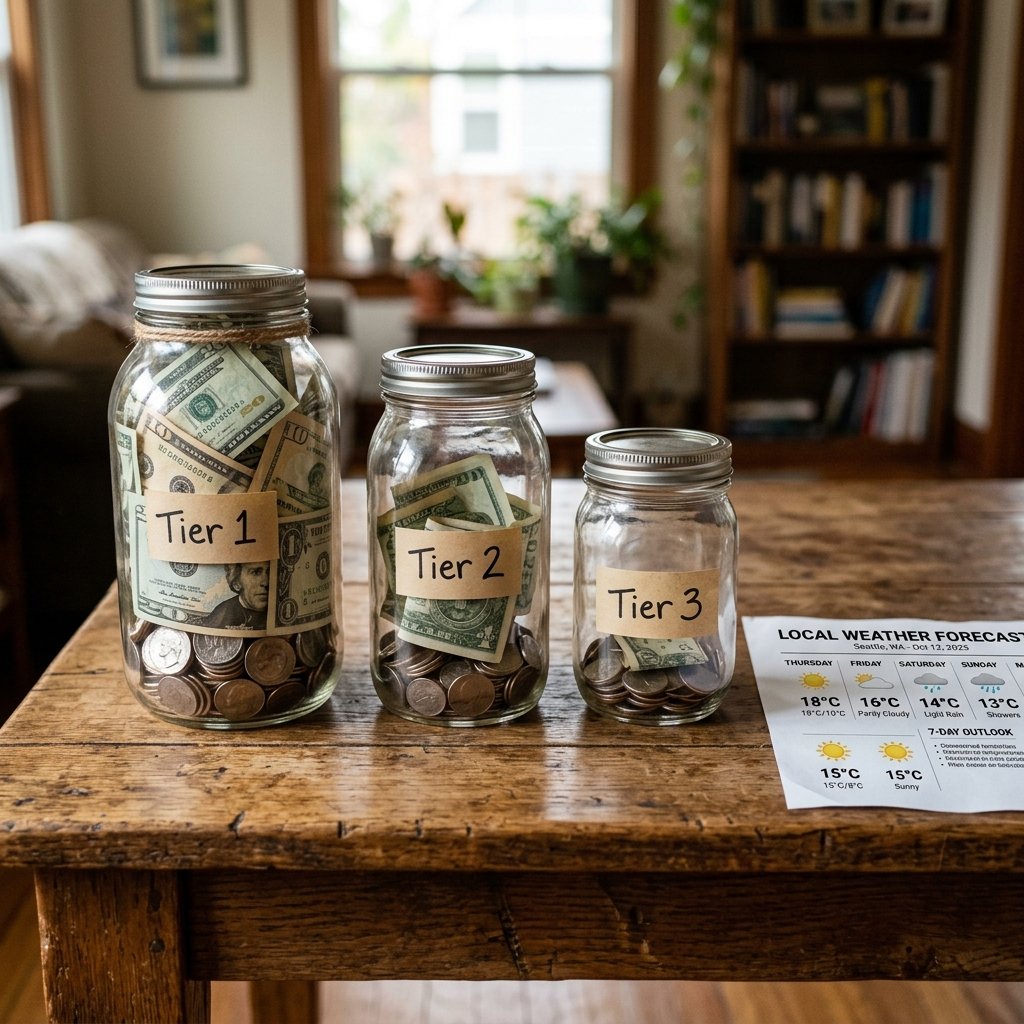
Not everyone has the same cash flow, and that is the beauty of the Weather Challenge—it is infinitely scalable. You need to choose a ‘multiplier’ that fits your current budget. The most common way to play is based on the Daily High Temperature. Here are the three most popular tiers for frugal hackers:
- The Penny Pincher (Tier 1): Save $0.10 for every degree. (e.g., 75°F = $7.50).
- The Steady Saver (Tier 2): Save $0.25 for every degree. (e.g., 75°F = $18.75).
- The Aggressive Accumulator (Tier 3): Save $1.00 for every degree. (e.g., 75°F = $75.00).
Customizing Your Challenge
If you live in an area with extreme temperatures, you might need to adjust. For example, if you live in Phoenix and it is 115°F, a $1.00 multiplier might be too aggressive for a single day. In that case, hackers often use the ‘Low Temperature’ or a ‘Base-50’ rule where they only save the amount above 50 degrees. Alternatively, if you are in a cold climate, you can save the difference between the high and the low. The goal is to find a number that feels like a slight stretch but doesn’t cause financial stress.
| Multiplier Tier | Daily Temp (Avg 70°F) | Weekly Savings | Yearly Potential |
|---|---|---|---|
| $0.10 Tier | $7.00 | $49.00 | $2,555.00 |
| $0.25 Tier | $17.50 | $122.50 | $6,387.50 |
| $0.50 Tier | $35.00 | $245.00 | $12,775.00 |
As you can see, even the smallest tier can result in over $2,500 by the end of the year. That is a vacation, a massive emergency fund boost, or a significant dent in high-interest debt.
Climate Math: What You Can Save in Different Cities
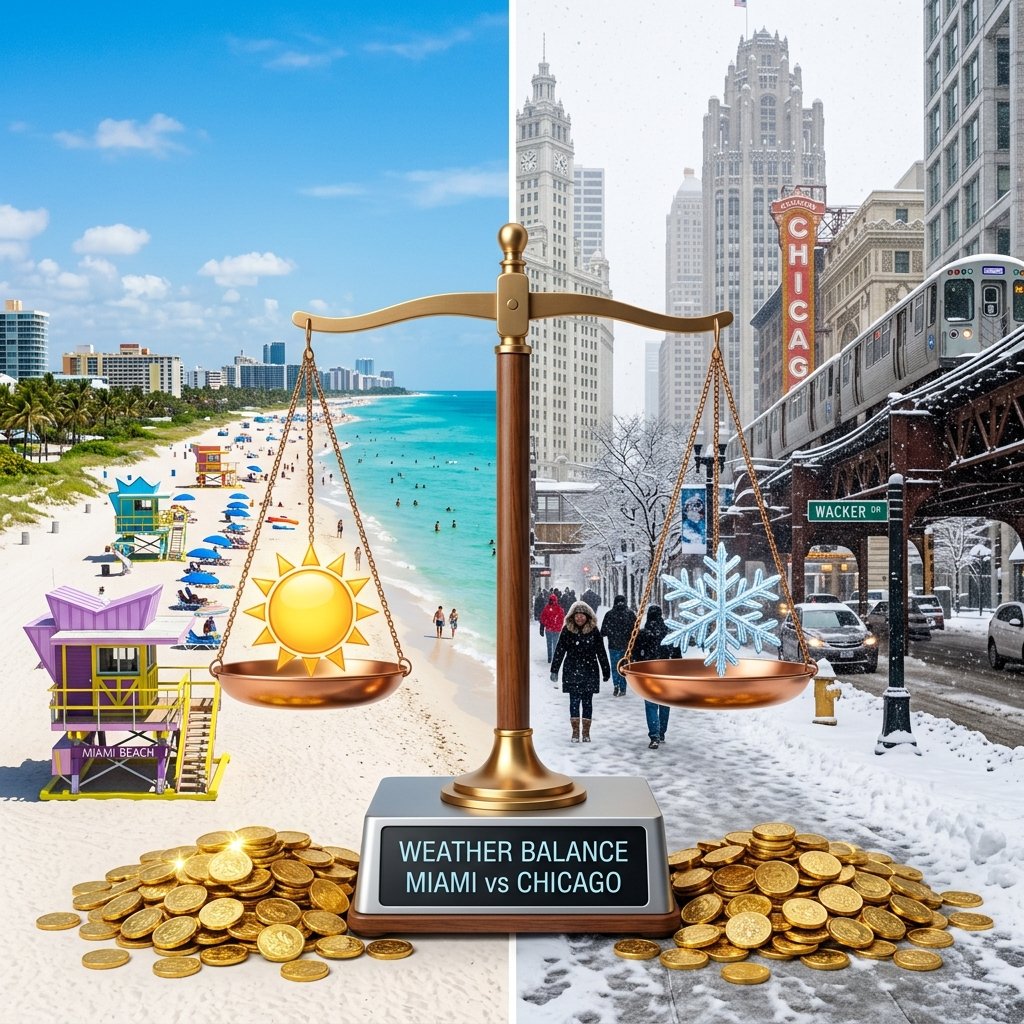
Location, location, location! Your geography dictates your savings potential in this challenge. Let’s look at how the $0.10 multiplier plays out across different U.S. climates. This helps you understand the ‘seasonal’ nature of your savings. In some months, you will be a saving powerhouse; in others, you will have a ‘light’ month, which is great for your cash flow during the holidays or back-to-school season.
The Climate Comparison Table
Below is a breakdown of what a ‘Steady Saver’ using the $0.10 per degree rule might look like in three distinct cities over a standard month.
| City Type | Example City | Avg High (F) | Monthly Savings |
|---|---|---|---|
| The Sun Belt | Miami, FL | 83°F | $249.00 |
| The Midwest | Chicago, IL | 59°F (Avg) | $177.00 |
| The Desert | Phoenix, AZ | 95°F (Summer) | $285.00 |
The math proves that the Weather Challenge is a ‘living budget.’ It breathes with the seasons. If you live in Chicago, your winter savings might drop to $90 a month, giving you extra cash for heating bills. In the summer, when you are likely outside and spending less on indoor entertainment, your savings naturally ramp up to $200+. It is a built-in balancing act that traditional fixed budgets simply cannot match.
Pro Hacker Tip: Use the ‘Extreme Weather Bonus.’ If there is a record-breaking high or a massive storm, throw in an extra $20 as a ‘survival bonus’ to celebrate making it through the day!
Automating the Forecast: Tech Tools for Hands-Off Saving

We are the Ultimate Frugal Hackers, which means we believe in working smarter, not harder. Manually transferring money every single morning is great for the first week, but life happens. To make the Weather Challenge stick, you need to automate it. Luckily, we live in the golden age of fintech.
Using IFTTT (If This Then That)
IFTTT is a free tool that connects different apps. You can create an ‘Applet’ that connects a weather service to your bank or a spreadsheet. While not all banks allow direct IFTTT transfers yet, many ‘Neo-banks’ (like Qapital or Ally) have built-in ‘Weather Rules.’
- Download a Savings App: Apps like Qapital allow you to set a ‘Weather Rule.’ You choose the location and the dollar amount per degree.
- Set Your Trigger: Choose ‘Every time it stays above X degrees’ or ‘Based on the daily high.’
- Forget It: The app will automatically move the money from your checking to a dedicated ‘Weather Challenge’ goal.
The Manual Hack for Traditional Banks
If your bank is a bit old-school, don’t worry. Set a recurring calendar alert for 8:00 AM. When the notification pops up, check your weather app and use your bank’s mobile app to make a ‘Quick Transfer.’ It takes exactly 30 seconds. To stay organized, I recommend opening a separate, high-yield savings account just for this challenge. This keeps the money ‘out of sight, out of mind’ so you aren’t tempted to spend it on pizza.
Scam Warning: Never use third-party apps that ask for your full banking password without multi-factor authentication or reputable encryption. Stick to well-known fintech leaders or your bank’s native tools.
The “Stormy Day” Strategy: Advanced Hacks for Pro Savers

Once you have mastered the basic temperature-based saving, it is time to level up. Pro hackers use ‘Weather Multipliers’ to boost their savings during specific events. This adds another layer of excitement to the game. Think of these as ‘Power-Ups’ in your financial video game.
- The Rain Rule: Every day it rains, double your savings for that day. If it was 70°F ($7.00), you save $14.00.
- The Snow Surcharge: For every inch of snow, add $5.00 to the pot. This is a great way to build a ‘Winter Tires’ or ‘Holiday Gift’ fund.
- The Humidity Hike: If the humidity is over 80%, add $2.00 as a ‘misery tax.’ If you have to suffer through the mugginess, you might as well get paid for it!
The “Polar Vortex” Pivot
What happens when the temperature drops below zero? In the standard challenge, you wouldn’t save anything. But a true hacker sees an opportunity. On sub-zero days, switch the rule: Save $1.00 for every degree below freezing. If it is 20°F, you are 12 degrees below freezing—save $12.00. This ensures that your savings momentum never hits a dead end, regardless of the season.
| Weather Event | Bonus Amount | Purpose |
|---|---|---|
| Thunderstorm | $10.00 | Emergency Fund |
| First Snowfall | $50.00 | Winter Preparedness |
| Heatwave (3+ days) | $25.00 | Utility Bill Buffer |
By adding these rules, you are not just saving; you are creating a comprehensive financial safety net that responds to the world around you. It keeps you engaged with your environment and your bank account simultaneously.
Common Pitfalls and How to Avoid Them

Even the best hacks have potential bugs. The biggest risk with the Weather Challenge is ‘Cash Flow Crunch.’ If you are in the middle of a 100-degree heatwave and you are using the $1.00 per degree rule, you are looking at $700 in savings in a single week. For many, that is a mortgage payment!
Strategies for Success
To avoid breaking your budget, implement a ‘Safety Ceiling.’ Decide on a maximum daily transfer (e.g., ‘I will never save more than $30 a day, regardless of the temperature’). This keeps the challenge sustainable. Another tip is to use a ‘Weekly Average’ instead of daily transfers if your income is volatile. At the end of the week, look at the average high and transfer that amount multiplied by seven.
Lastly, remember that the goal is net savings. Don’t save $100 via the Weather Challenge only to put $100 on a credit card because you ran out of grocery money. The Ultimate Frugal Hacker knows that the best challenge is the one you can actually finish. If you need to lower your multiplier mid-month, do it! The only ‘loss’ in this game is stopping entirely.
Conclusion
Your Forecast: 100% Chance of Wealth
The Weather Challenge is more than just a viral trend; it is a testament to the power of making finance personal and engaging. By tying your savings to the rhythm of the planet, you turn a mundane task into a daily adventure. You have seen the math—saving even $0.10 per degree can put over $2,500 in your pocket by this time next year. You have the tools, the tiers, and the automation hacks to make it happen. So, what is the forecast for tomorrow? Whatever it is, make sure it pays you. Start today, start small, and watch how quickly those ‘sunny day’ savings turn into a financial forest. You’ve got this, hacker!
Disclaimer: I am not a financial advisor. The strategies discussed in this article are for educational and entertainment purposes only. Please consult with a certified financial professional before making significant changes to your financial plan.


Makenzie is the founder and lead writer at MoneyHackTips.com — a personal finance blog dedicated to delivering street-smart financial wisdom for real people on real budgets. With 300+ published articles covering everything from debt management to investing fundamentals, Makenzie’s mission is to make every dollar work harder. When not writing about money hacks, Makenzie is testing frugal living strategies, optimizing side hustles, and helping readers build financial freedom from scratch.