

Hey there, frugal hackers! Let us have a real talk about one of the biggest budget-drainers in your life: your car. Every time you pull up to the pump, you are essentially swiping your card and watching your hard-earned cash turn into literal exhaust. It is painful, right? But here is the street-smart truth that the auto industry and big oil companies do not want you to focus on: you have way more control over your gas mileage than you think. You do not need a brand-new hybrid or an expensive electric vehicle to stop burning money. You just need to hack your driving habits.
We are going to dive into the art of hypermiling—but without the extreme, dangerous tactics. We are talking about practical, everyday adjustments that can seriously stretch your tank. If you are currently getting 20 miles per gallon, adopting these 10 habits can easily push you toward 30 or even 40 MPG depending on your vehicle. That is not just pocket change; we are talking about saving $500 to $1,000 a year just by changing how your right foot behaves.
Key Rule: Your vehicle is a machine that responds directly to your inputs. Smooth, intentional driving is the ultimate cheat code for keeping money in your bank account.
So, buckle up and get ready to transform your daily commute into a money-saving masterclass. Here are the 10 driving habits that will double your gas mileage instantly.
The Lead Foot Tax: Mastering Acceleration and Braking
The Physics of Frugality
Listen up! How you treat your gas and brake pedals is the single biggest factor in your vehicle’s fuel efficiency. When you stomp on the gas when the light turns green, your engine has to dump massive amounts of fuel into the cylinders to move a two-ton metal box from a dead stop. It is incredibly inefficient.
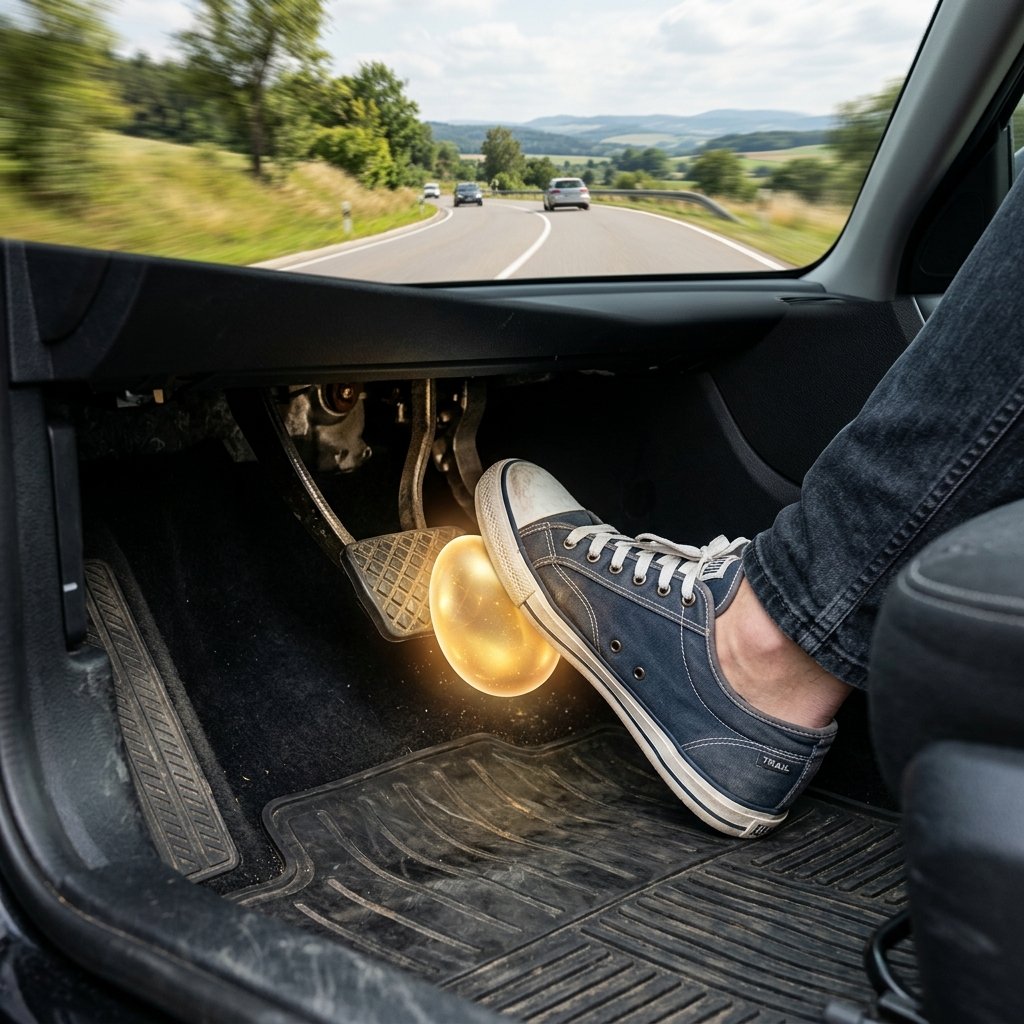
Habit 1: Pretend There is an Egg on Your Pedal
Imagine there is a fragile egg resting between your foot and the gas pedal. If you press too hard, you break the egg (and your budget). You want to accelerate smoothly and gradually. It should take you about five seconds to reach 15 miles per hour from a stop. This simple change can improve your city gas mileage by up to 20%. If you spend $150 a month on city driving, this habit alone saves you $360 a year!
Habit 2: Master the Art of Coasting
Braking is essentially taking the kinetic energy you just paid for with gas and turning it into useless heat. If you see a red light or a stop sign a block away, take your foot off the gas immediately. Let the car’s momentum carry you forward. Coasting costs you absolutely $0.00. Every time you have to slam on the brakes, you are admitting that you spent money on gas to go fast, only to waste it.
- Anticipate traffic flow ahead of you.
- Keep a safe distance from the car in front so you do not have to brake constantly.
- Let gravity do the work when going downhill.
The Highway Sweet Spot: Why Speeding is Costing You Dearly
Speed Kills… Your Wallet
We all want to get to our destination faster, but highway speeding is a massive financial leak. The faster you go, the more aerodynamic drag your car faces. At a certain point, your engine is working exponentially harder just to push through the air.
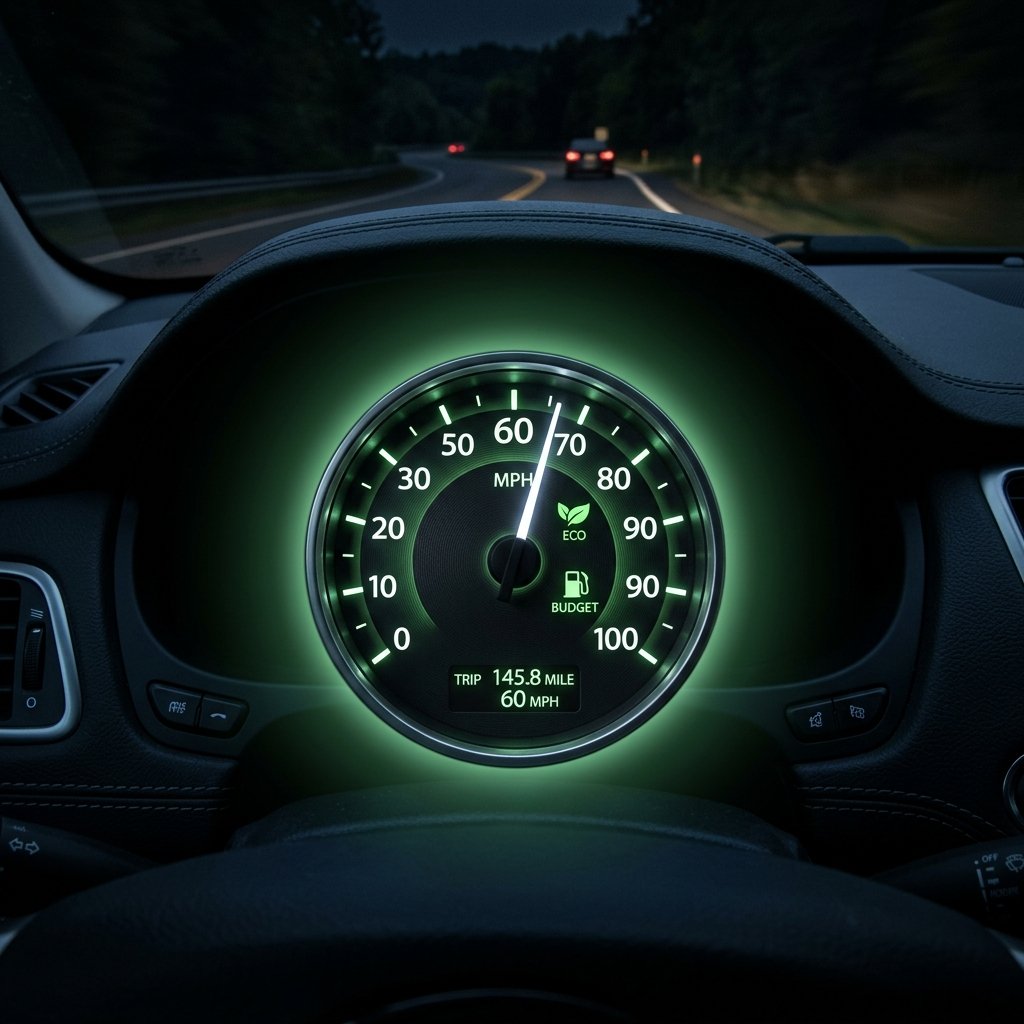
Habit 3: Lock in the Cruise Control at 60 MPH
For most cars, the absolute sweet spot for fuel efficiency is between 55 and 65 miles per hour. Once you cross 65 MPH, your fuel economy drops like a rock. In fact, for every 5 MPH you drive over 60 MPH, you are essentially paying an extra $0.30 per gallon of gas! Using cruise control on flat highways keeps your speed perfectly consistent, preventing the micro-accelerations that secretly drain your tank.
| Speed (MPH) | Fuel Efficiency Loss | Estimated Extra Cost per Gallon |
|---|---|---|
| 55 – 60 | 0% (Optimal) | $0.00 |
| 65 | 8% | $0.28 |
| 75 | 23% | $0.80 |
| 85 | 38% | $1.33 |
Look at that math! If gas is $3.50 a gallon, driving 85 MPH means you are effectively paying $4.83 a gallon. Slow down, enjoy your favorite podcast, and keep that cash.
Shedding the Dead Weight: Aerodynamics and Cargo
Stop Hauling Air and Junk
Automakers spend millions of dollars in wind tunnels designing cars that slice through the air efficiently. Then, we go and strap bulky boxes to the roof and fill our trunks with heavy junk we do not need. It is time for a frugal intervention.
Habit 4: Clean Out Your Junk Trunk
An extra 100 pounds in your vehicle could reduce your MPG by about 1%. That might not sound like a lot, but if you are driving around with a trunk full of tools, old books, sports equipment, and donations you have not dropped off yet, you are paying a weight tax. Clearing out 200 pounds of junk could save you $40 to $50 a year. It is literally paying yourself to clean your car!
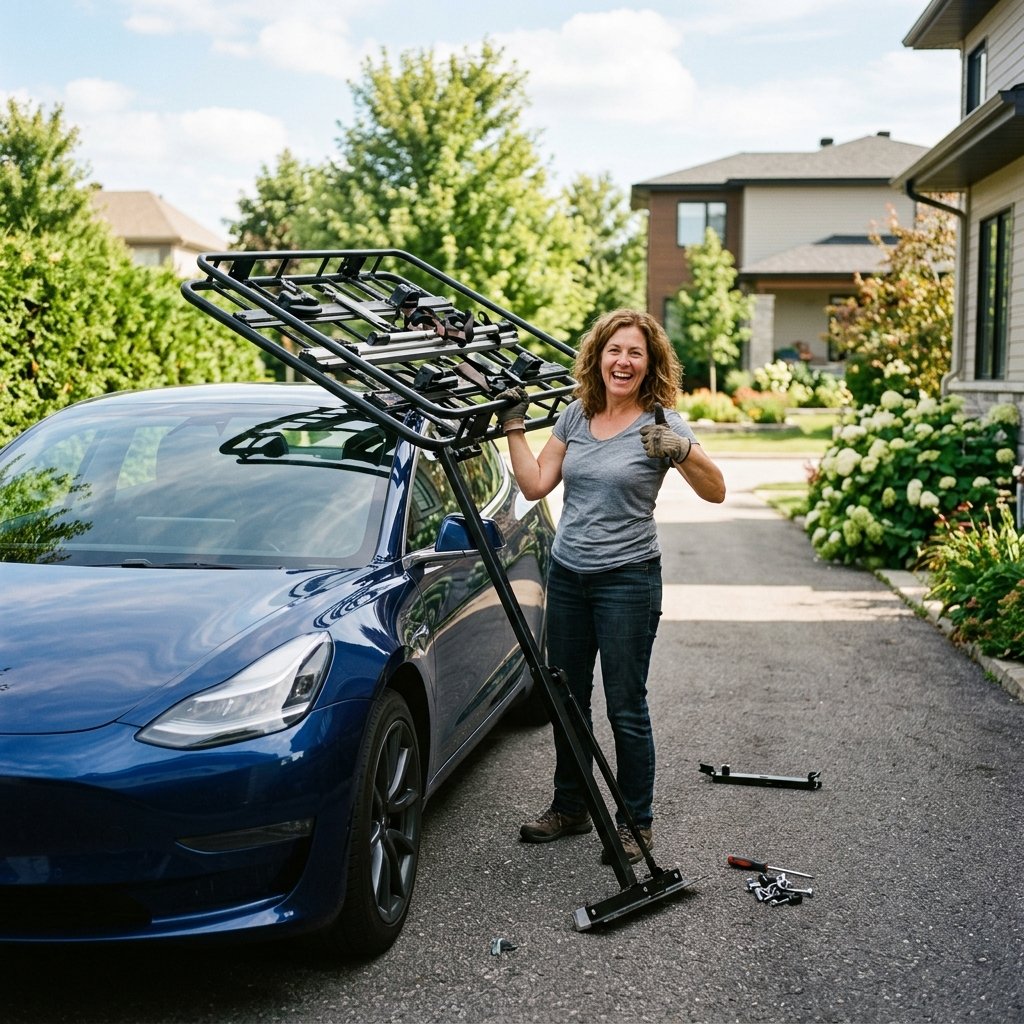
Habit 5: Ditch the Roof Rack
Roof boxes, bike racks, and cargo carriers are aerodynamic nightmares. A large roof box can reduce your fuel economy by up to 25% at interstate speeds! If you are not actively using it this weekend, take it off. Store it in the garage. Your car will look sleeker, drive quieter, and instantly get better mileage.
Scam Warning: Do not fall for ‘fuel-saving’ chips, magnets, or liquid additives sold at auto parts stores or late-night infomercials. These are pure snake oil. The EPA has tested over 100 of these products and found that none of them significantly improve gas mileage, and some can actually damage your engine. Stick to proven driving habits and aerodynamics!
The AC vs. Windows Debate Finally Settled

Cooling Down Without Burning Cash
This is the classic frugal driver’s dilemma: Do you run the air conditioning and burn extra gas, or roll down the windows and ruin your aerodynamics? The answer depends entirely on your speed.
Habit 6: The 45 MPH Rule
Your car’s air conditioning compressor is powered by the engine, which means turning it on absolutely uses extra fuel—sometimes reducing your MPG by up to 10% in very hot weather. However, having your windows down creates a massive amount of aerodynamic drag, acting like a parachute pulling your car backward.
- City Driving (Under 45 MPH): Roll those windows down! At lower speeds, aerodynamic drag is minimal. Enjoy the breeze and save the gas.
- Highway Driving (Over 45 MPH): Roll the windows up and turn on the AC. At high speeds, the drag from open windows uses far more fuel than the air conditioning compressor does.
If your car has a climate control system, use the recirculate feature. It takes less energy to cool air that is already cool inside the cabin than it does to constantly cool hot air from outside.
Maintenance Hacks That Pay You Back
Your Car Needs to Breathe and Roll Smoothly
You cannot hack your driving habits if your car is fighting against you. Basic maintenance is not an expense; it is an investment with a guaranteed ROI (Return on Investment).
Habit 7: Inflate to Save
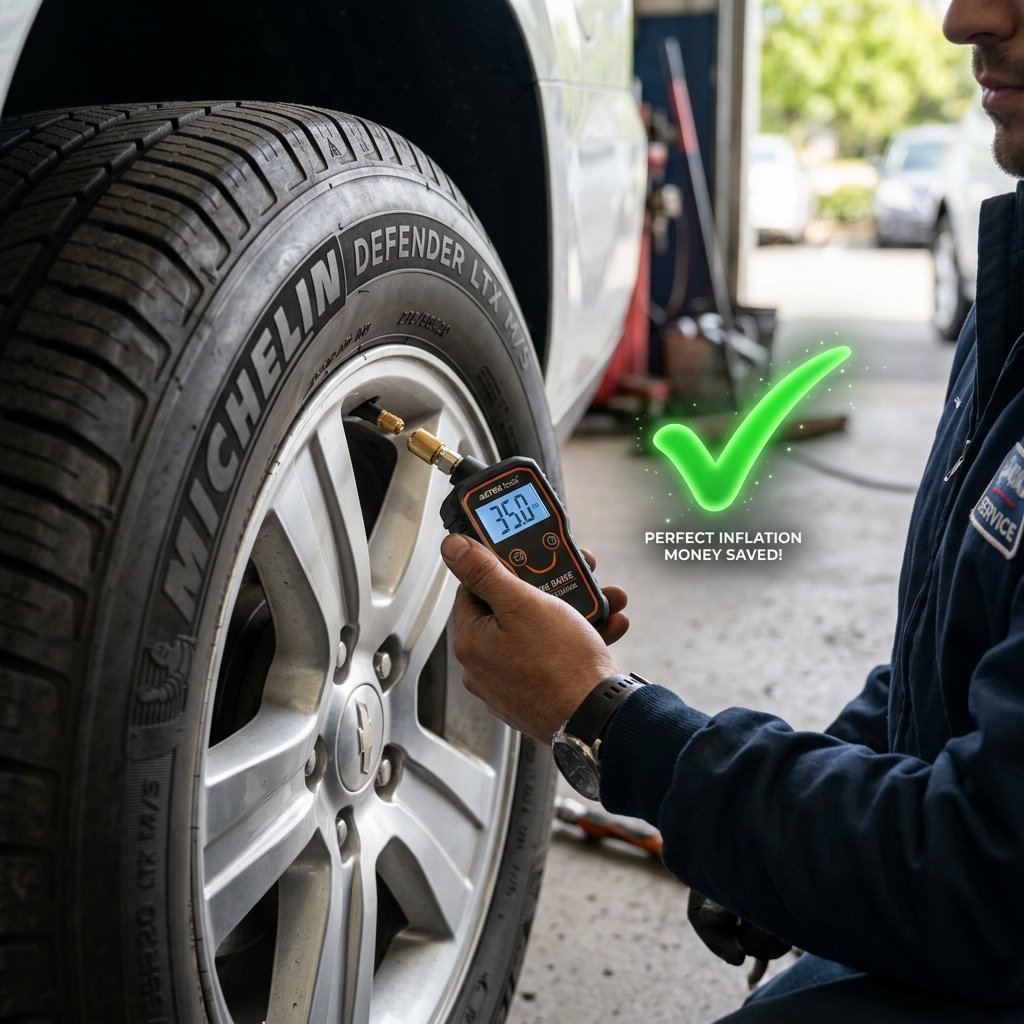
Tire pressure is the invisible mileage killer. Driving on under-inflated tires is like riding a bicycle with flat tires—it takes way more effort. For every 1 PSI drop in pressure across all four tires, your gas mileage lowers by 0.2%. If your tires are 10 PSI low (which is very common in winter), you are losing 2% of your fuel efficiency. Check your tire pressure once a month and keep them inflated to the manufacturer’s recommended level (found on the sticker inside the driver’s door). This simple habit can save you $100 a year and extend the life of your tires!
Habit 8: Stop the Idle Threat
Idling gets exactly 0 miles per gallon. If you are sitting in a drive-thru, waiting to pick up your kids from school, or warming up your car in the winter, you are literally lighting money on fire. Modern fuel-injected engines do not need to be warmed up for 10 minutes; 30 seconds is plenty. If you are going to be stopped for more than 60 seconds, turn the engine off. Restarting the car takes less fuel than idling for a minute.
| Action | Fuel Wasted | Annual Cost (Assuming 15 mins/day) |
|---|---|---|
| Idling in Drive-Thru | 0.5 Gallons/Hour | $95.00 |
| Warming up car (10 mins) | 0.5 Gallons/Hour | $63.00 |
| Turning engine off | Minimal | $0.00 |
Tech and Timing: Driving Smarter, Not Harder
Logistics for the Frugal Hacker
The best way to save gas is to not use it in the first place. By being strategic about when and where you drive, you can cut your mileage significantly without sacrificing your lifestyle.
Habit 9: Batch Your Errands Like a Boss
A cold engine uses significantly more fuel than a warm engine. If you take three separate trips to the grocery store, the pharmacy, and the hardware store throughout the weekend, your engine has to warm up three times. Instead, batch your errands into one continuous loop. Start with the furthest destination first to let the engine reach its optimal operating temperature, then hit the closer stops on the way back. This is called ‘trip chaining’ and it can save you up to 20% on your weekend fuel usage.
Habit 10: Leverage Frugal Apps
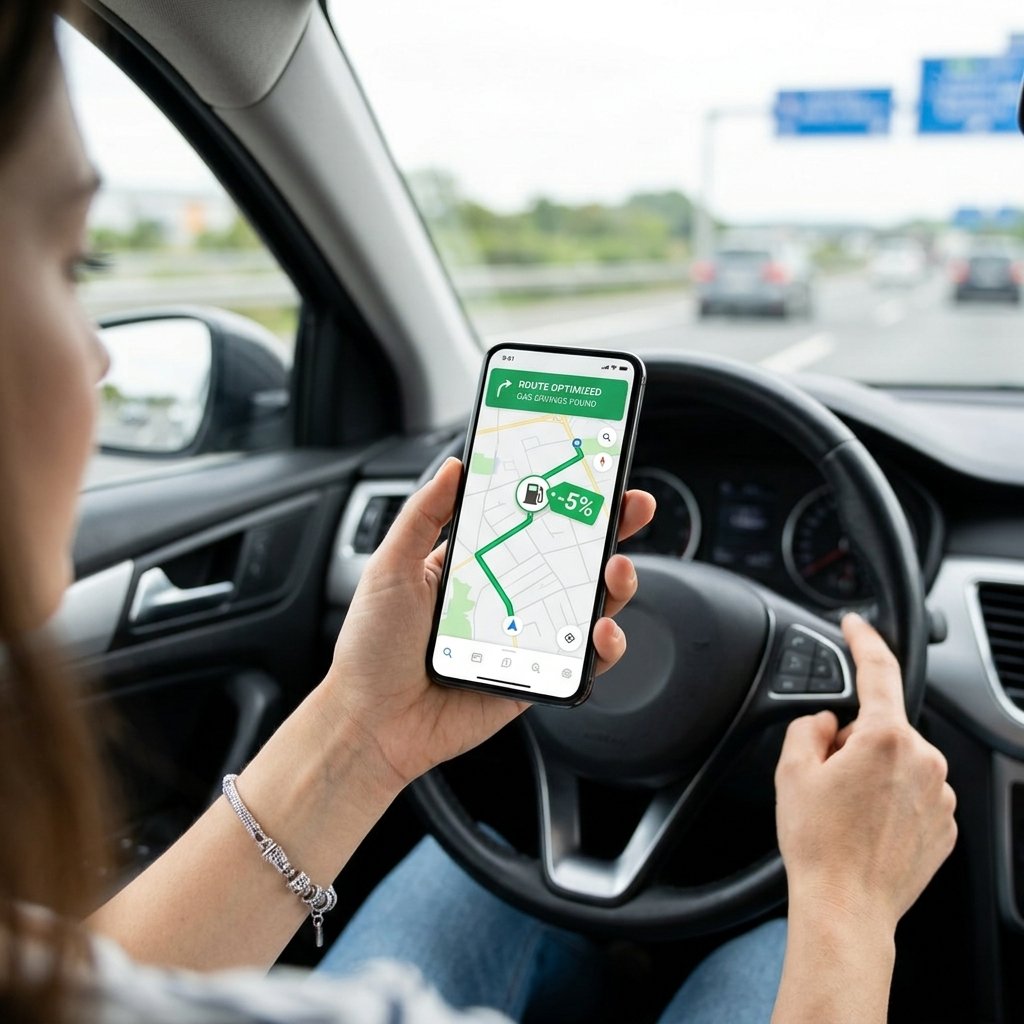
Technology is your best friend when it comes to saving at the pump. Do not just blindly pull into the first gas station you see. Use apps to ensure you are always paying the absolute minimum.
- GasBuddy: This is a must-have. It crowdsources gas prices in your area so you can find the cheapest station. Just driving one block over can sometimes save you $0.20 a gallon.
- Upside: A fantastic cash-back app that gives you money back on every gallon you buy at participating stations. You can easily earn $100 a year just by claiming offers before you pump.
- Waze or Google Maps: Always use GPS, even if you know the way. These apps route you around traffic jams. Sitting in gridlock is terrible for your MPG.
Conclusion
There you have it, frugal fam—the ultimate cheat sheet to stop burning money and start doubling your gas mileage. You do not need to completely change your life to see massive savings at the pump. By simply pretending there is an egg on your gas pedal, utilizing cruise control, keeping your tires inflated, and batching your errands, you are taking back control of your budget.
Remember, frugal living is all about the compound effect. Saving $20 a week on gas might not sound like you are winning the lottery, but that is $1,040 a year! That is a fully funded emergency fund, a massive chunk of debt paid off, or a well-deserved vacation. So the next time you get behind the wheel, drive smart, drive smooth, and keep your hard-earned cash exactly where it belongs—in your wallet.
Disclaimer: I am a frugal living enthusiast, not a financial advisor or a certified mechanic. Always consult your vehicle’s owner manual for specific maintenance guidelines and ensure your driving habits comply with local traffic laws.


Makenzie is the founder and lead writer at MoneyHackTips.com — a personal finance blog dedicated to delivering street-smart financial wisdom for real people on real budgets. With 300+ published articles covering everything from debt management to investing fundamentals, Makenzie’s mission is to make every dollar work harder. When not writing about money hacks, Makenzie is testing frugal living strategies, optimizing side hustles, and helping readers build financial freedom from scratch.