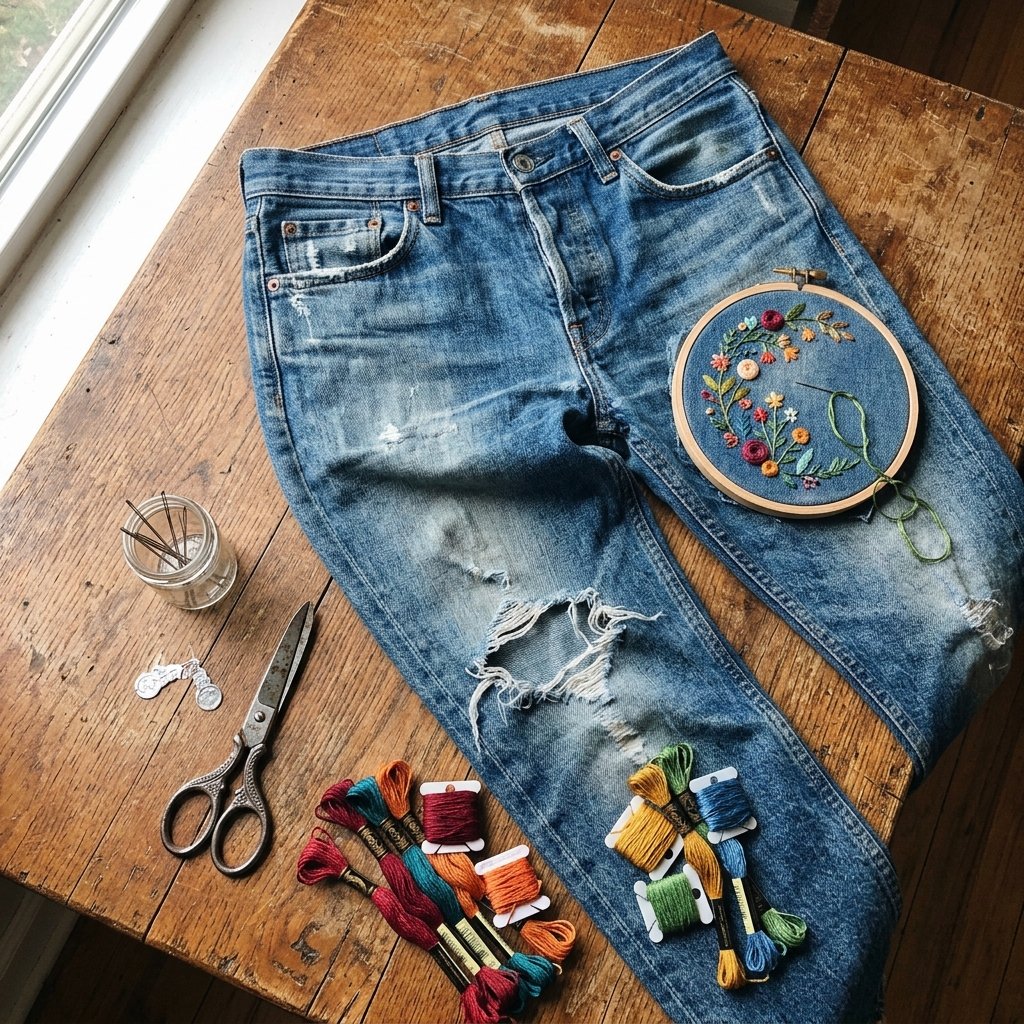

We have all been there: that heartbreaking moment when your favorite pair of jeans—the ones that fit perfectly and have seen you through a thousand adventures—finally gives way at the knee or the thigh. In our fast-fashion world, the instinct is to toss them and spend another $60 to $100 on a new pair. But as a resourceful crafter, you know better. Why settle for a generic replacement when you can turn that blemish into a badge of honor? Visible mending is more than just a repair; it is a rugged, practical, and incredibly clever way to breathe new life into your wardrobe while saving every penny.
By using gorgeous hand embroidery to patch your jeans, you are not just fixing a hole; you are creating a one-of-a-kind piece of wearable art. Whether you prefer the geometric precision of Japanese Sashiko or the whimsical charm of floral vine-work, this guide will show you how to master the art of the ‘elegant mend.’ We are going to dive deep into the world of needles, threads, and scraps to ensure your denim stays out of the landfill and in your rotation for years to come.
The Mender’s Arsenal: Budget-Friendly Supplies

Before we start stitching, we need to gather our tools. The beauty of this project lies in its low barrier to entry. You likely have half of these items in a junk drawer already. If not, a quick trip to a local craft store or even a thrift shop will secure everything you need for under $15.
Essential Materials Checklist
- Embroidery Floss: Standard six-strand cotton thread is your best friend. It is strong, colorful, and costs roughly $0.60 per skein.
- Needles: A pack of assorted embroidery needles with sharp points and large eyes.
- Scrap Fabric: Use old flannel shirts, denim scraps from hemmed pants, or even sturdy cotton canvas. This costs $0.00 if you upcycle!
- Embroidery Hoop: This keeps the denim taut and prevents puckering. A 4-inch or 6-inch hoop is ideal for most repairs.
- Fabric Marker or Chalk: For sketching your design before you commit with thread.
| Item | Estimated Cost | Upcycle Alternative |
|---|---|---|
| Embroidery Floss | $0.60 | Unraveled yarn or heavy thread |
| Embroidery Needles | $3.00 | Standard sewing needles (doubled thread) |
| Embroidery Hoop | $2.50 | Sturdy plastic lid (cut out center) |
| Scrap Patch Fabric | $0.00 | Old t-shirts or canvas bags |
| Total Investment | $6.10 | $0.00 |
Pro Tip: When choosing scrap fabric for the patch, ensure it is of a similar weight to your jeans. A thin silk patch won’t hold up against the rugged friction of denim, while a heavy leather patch might be too stiff for a comfortable fit.
Prepping the Canvas: Stabilizing the Tear
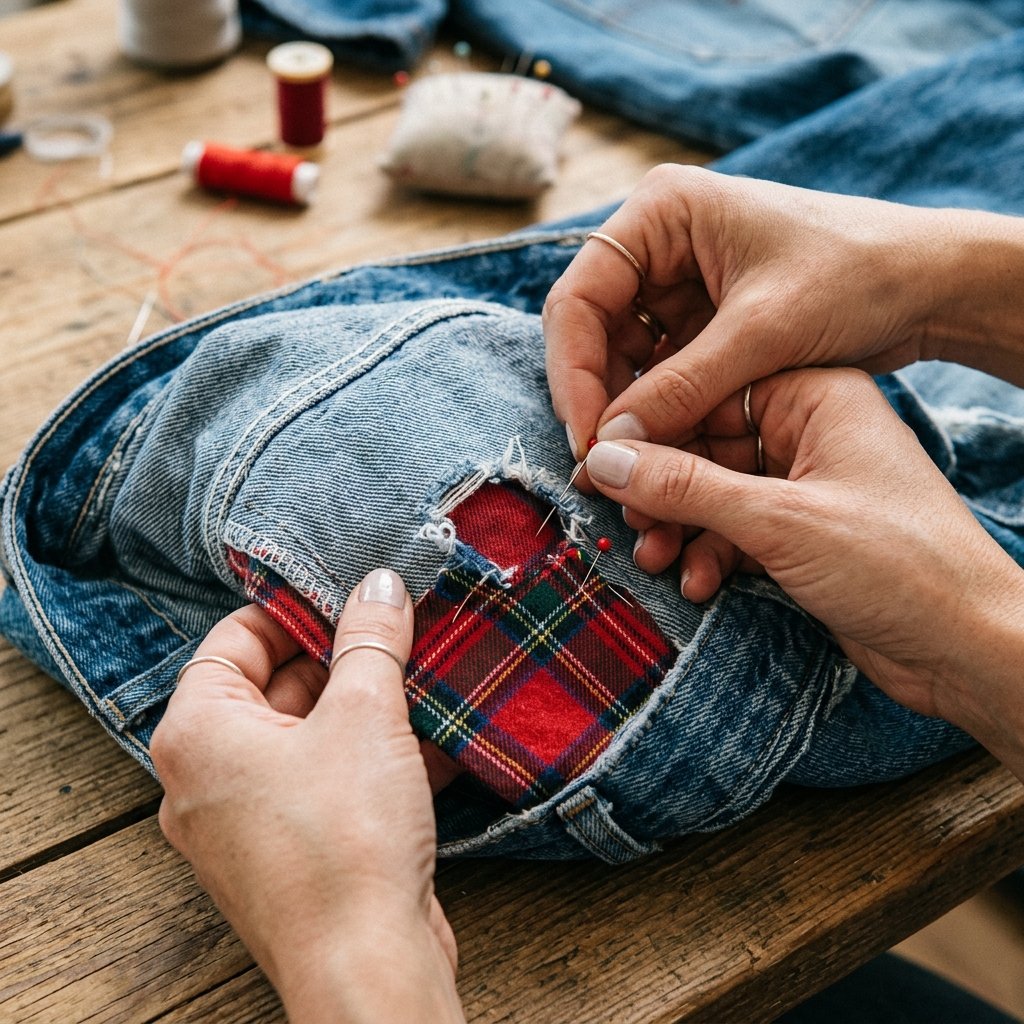
You cannot simply start embroidering over air. To ensure a repair that lasts through 100+ washes, you must stabilize the hole first. This is the ‘rugged’ part of the process where we build the foundation. If you skip this, your beautiful embroidery will eventually pull the denim fibers apart further.
The ‘Sandwich’ Method
- Trim the Fray: Use sharp scissors to remove the long, messy white threads from the hole. Leave about 1/8 inch of fringe for a natural look.
- Cut Your Patch: Cut a piece of scrap fabric that is at least 1 inch larger than the hole on all sides.
- Position the Patch: Place the scrap fabric on the *inside* of the jeans. Pin it securely in place using safety pins or straight pins.
- Baste the Edges: Use a simple, large running stitch around the perimeter of the patch to hold it steady. This prevents the fabric from shifting while you do the detailed embroidery.
“A sturdy mend begins in the shadows. What you put behind the hole matters as much as what you put over it.”
By securing the patch behind the hole, you create a new ‘floor’ for your needle to dance across. This is especially vital for inner-thigh repairs where friction is constant. For knees, consider using a slightly stretchy scrap fabric to allow for movement.
The Sashiko Technique: Geometric Strength
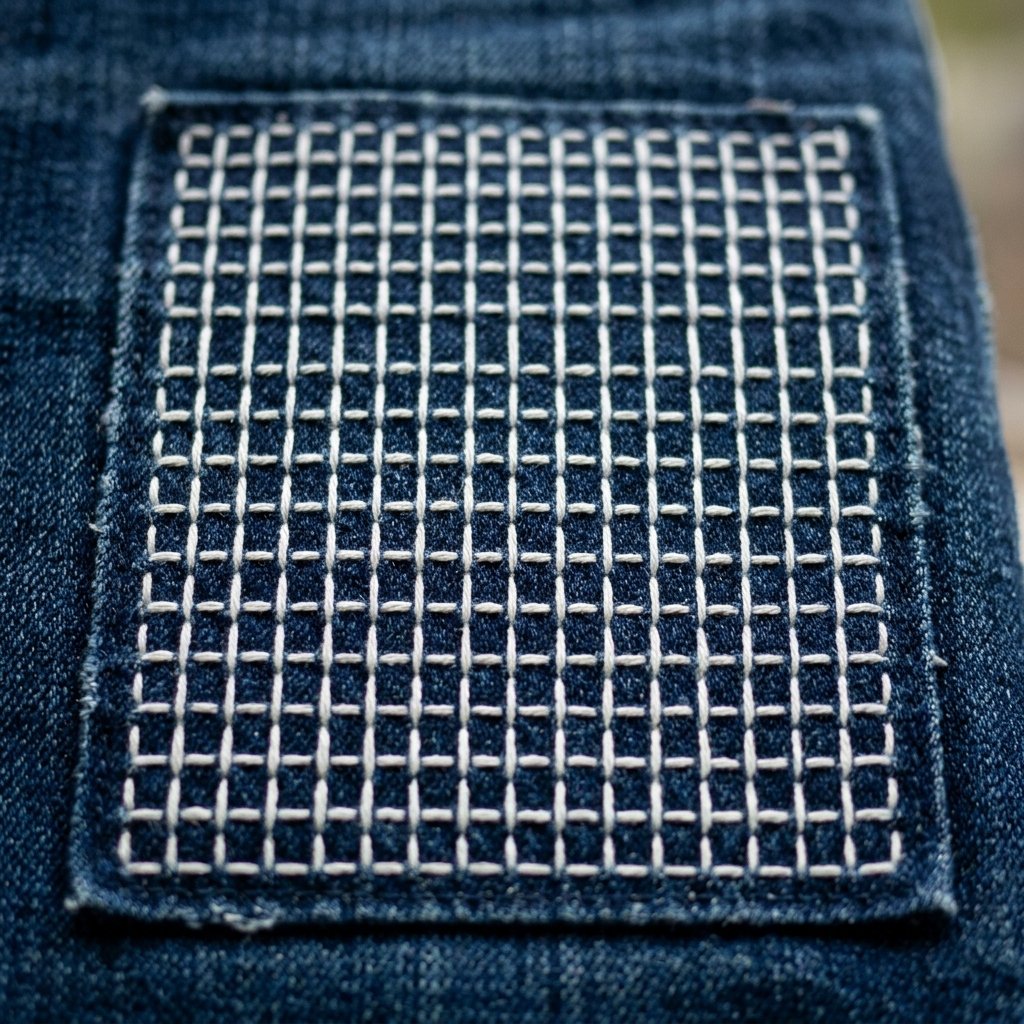
Sashiko is a traditional Japanese form of embroidery that translates to ‘little stabs.’ It is the ultimate clever hack for frugal DIYers because it uses the simplest stitch possible—the running stitch—to create incredibly strong and sophisticated patterns.
Mastering the Running Stitch
The key to Sashiko is consistency. You want your stitches to be the same length as the gaps between them. For a rugged, masculine-elegant look, use white or cream thread on dark indigo denim.
| Sashiko Pattern | Difficulty Level | Best For |
|---|---|---|
| Kome-zashi (Rice Stitch) | Beginner | Small holes and reinforcements |
| Asa-no-ha (Hemp Leaf) | Intermediate | Large knee patches |
| Seigaiha (Waves) | Advanced | Artistic pocket details |
To execute a basic grid pattern:
- Draw a 1cm grid over your patch area using chalk.
- Stitch horizontal lines across the entire patch.
- Stitch vertical lines, intersecting the horizontal ones to create a series of small crosses or a windowpane effect.
- Time required: Approximately 30 to 45 minutes depending on the size of the hole.
Floral Flourishes: Turning Rips into Gardens
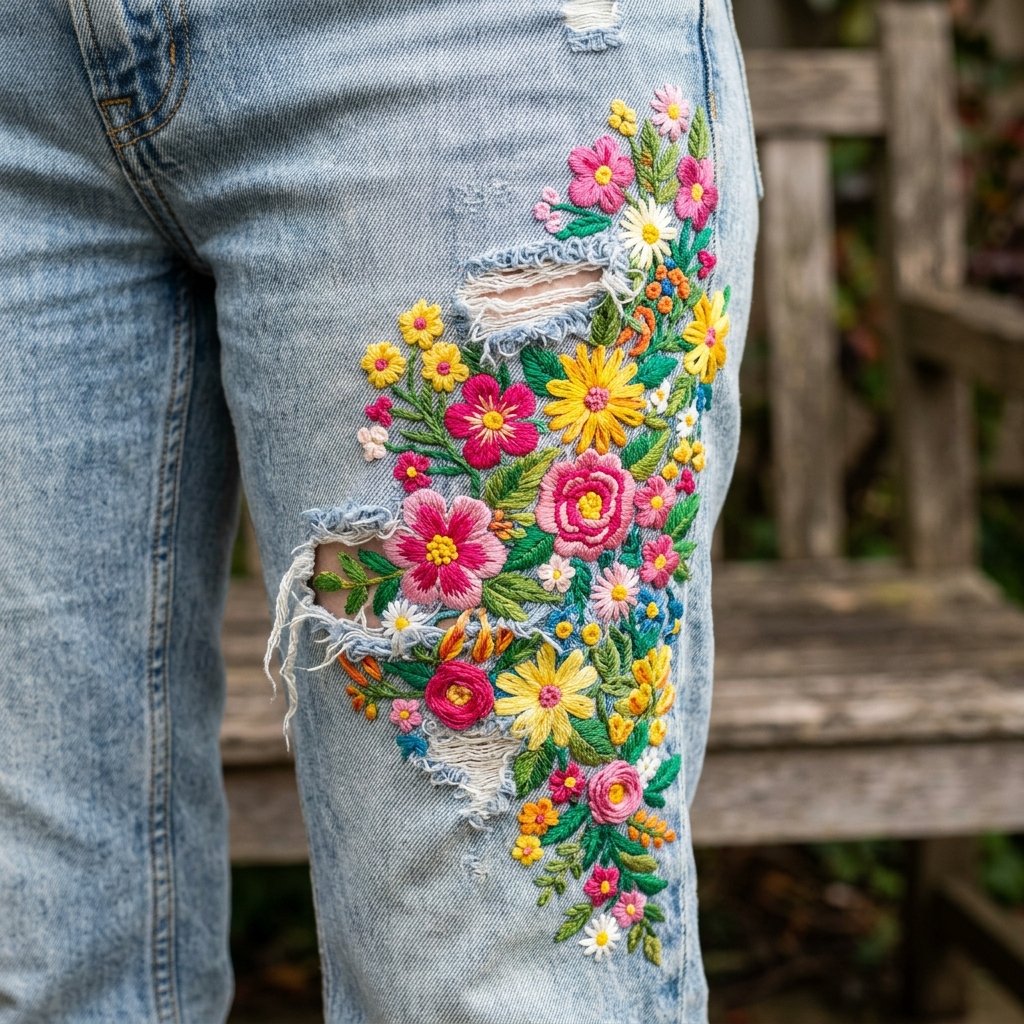
If you prefer a more creative and organic aesthetic, floral embroidery is the way to go. This technique is perfect for hiding irregularly shaped holes or ‘scratches’ in the denim fabric. It allows you to be crafty and expressive while performing a functional repair.
The Three Essential Stitches for Flowers
- The Lazy Daisy: Perfect for petals. Bring your needle up, loop the thread, and anchor it with a tiny stitch at the tip.
- The Satin Stitch: Used for filling in solid shapes like leaves. Simply make closely packed parallel stitches until the denim underneath is invisible.
- The French Knot: Ideal for the center of flowers. Wrap the thread around the needle 2 or 3 times before poking it back down through the fabric.
By clustering these stitches around the edges of the hole, you can make it look as though flowers are growing out of the rip. It is a clever way to distract the eye and turn a ‘mistake’ into a design choice. Total cost for a multi-colored floral mend? Still just pennies worth of thread.
The ‘Invisible’ Visible Mend: Practical Blending
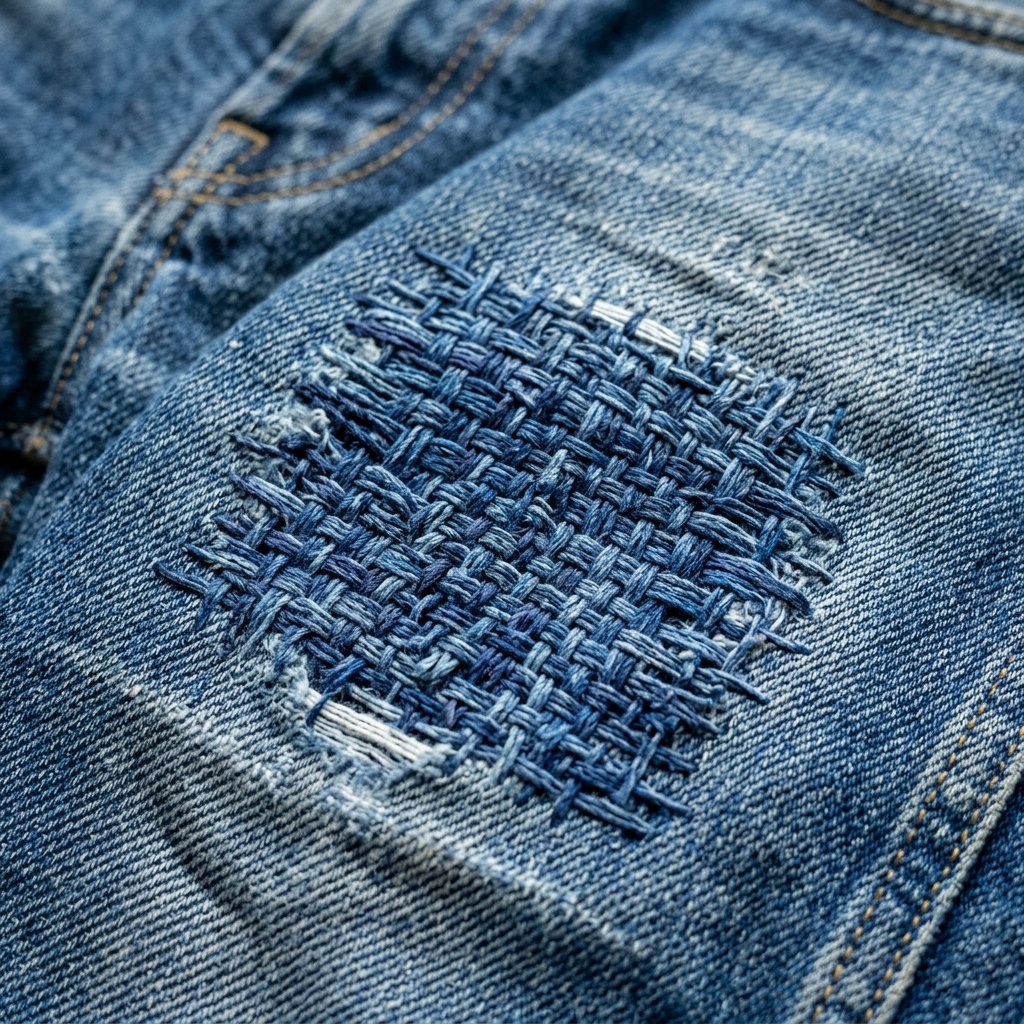
Sometimes you want the repair to be noticed, but you want it to look like it belongs to the original garment. This is where color matching and texture play a role. To achieve a high-end, ’boutique’ look for $0, follow these steps:
Blending Techniques
- Source Thread from the Hem: If you have recently hemmed your jeans, unravel the scrap denim to get thread that is an exact factory match.
- The Ladder Stitch: Use this to pull the edges of a clean rip together before embroidering over them. It creates a seamless bridge.
- Darning: This involves weaving thread back and forth across the hole to create a new piece of fabric. It is time-consuming (expect to spend 1-2 hours), but the result is incredibly durable.
Mending Mantra: “Do not hide the history of your clothes; highlight the care you give them.”
For those seeking a rugged, workwear vibe, use heavy-duty upholstery thread. It adds a thick, textured look that mimics the ‘overbuilt’ aesthetic of high-end heritage brands.
Longevity Secrets: Caring for Your Embroidered Denim
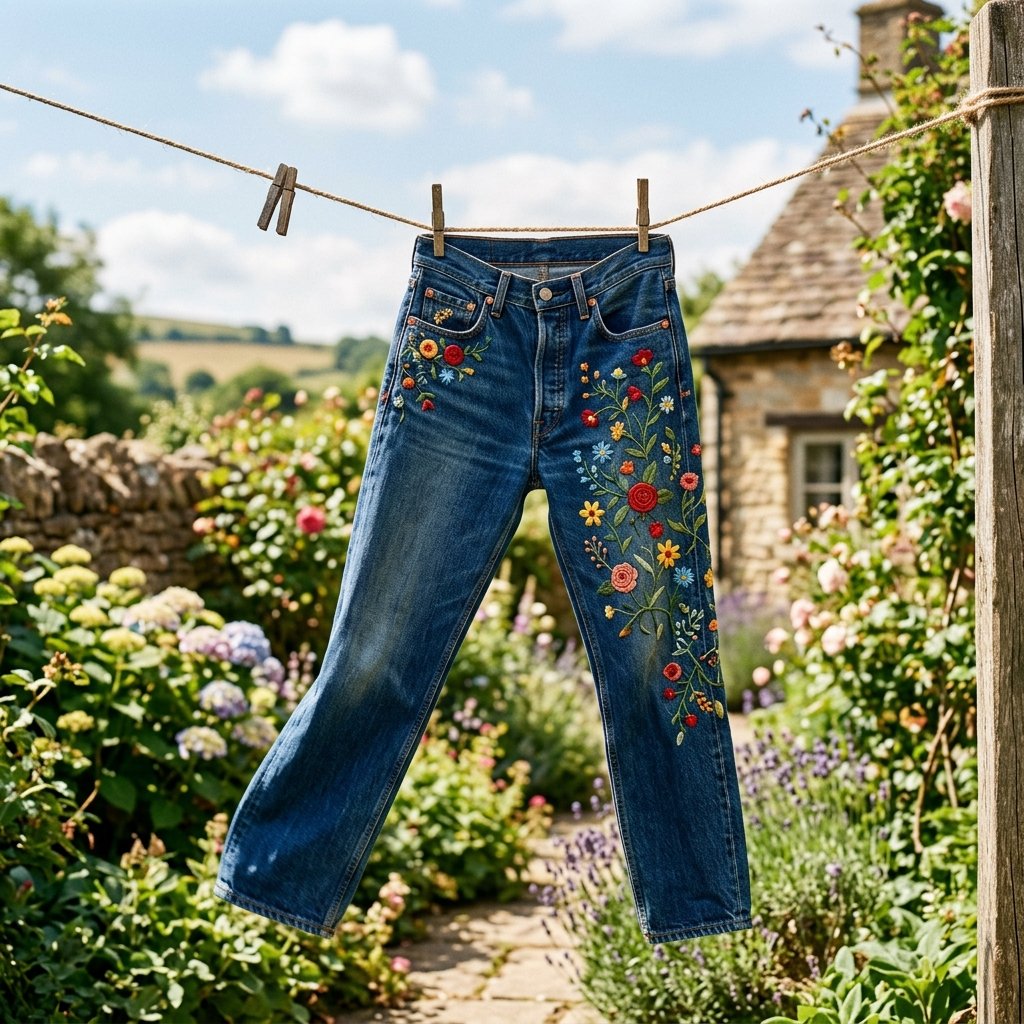
You have spent 3 hours meticulously stitching a masterpiece onto your jeans. The last thing you want is for the first trip through the washing machine to ruin it. Proper care is the final step in the frugal crafter’s journey.
Maintenance Rules
- Turn Inside Out: Always wash your mended jeans inside out to protect the embroidery from rubbing against other clothes or the agitator.
- Cold Water Only: Heat can cause embroidery floss to bleed or shrink at a different rate than the denim.
- Air Dry: The high heat of a dryer is the enemy of hand-stitching. Hang them up or lay them flat. Your jeans will last 2x longer if you skip the dryer entirely.
- Snip the Snags: If a thread pulls loose, don’t pull it! Use a small needle to tuck the loop back to the underside of the fabric and tie it off.
| Care Method | Impact on Lifespan | Effort Level |
|---|---|---|
| Machine Wash/Dry | Decreases by 50% | Low |
| Inside Out/Cold Wash | Increases by 30% | Medium |
| Hand Wash/Air Dry | Increases by 100% | High |
Conclusion
Patching your jeans with hand embroidery is more than a budget-saving hack; it is a declaration of independence from the ‘throw-away’ culture. For the cost of a single cup of coffee, you can transform a pair of ‘trash’ jeans into a ‘treasure’ that tells a story. Whether you chose the rugged geometry of Sashiko or the delicate beauty of silk-thread flowers, you have successfully extended the life of your wardrobe by years. So, the next time you see a hole forming, don’t reach for your wallet—reach for your needle. Happy stitching!


Makenzie is the founder and lead writer at MoneyHackTips.com — a personal finance blog dedicated to delivering street-smart financial wisdom for real people on real budgets. With 300+ published articles covering everything from debt management to investing fundamentals, Makenzie’s mission is to make every dollar work harder. When not writing about money hacks, Makenzie is testing frugal living strategies, optimizing side hustles, and helping readers build financial freedom from scratch.