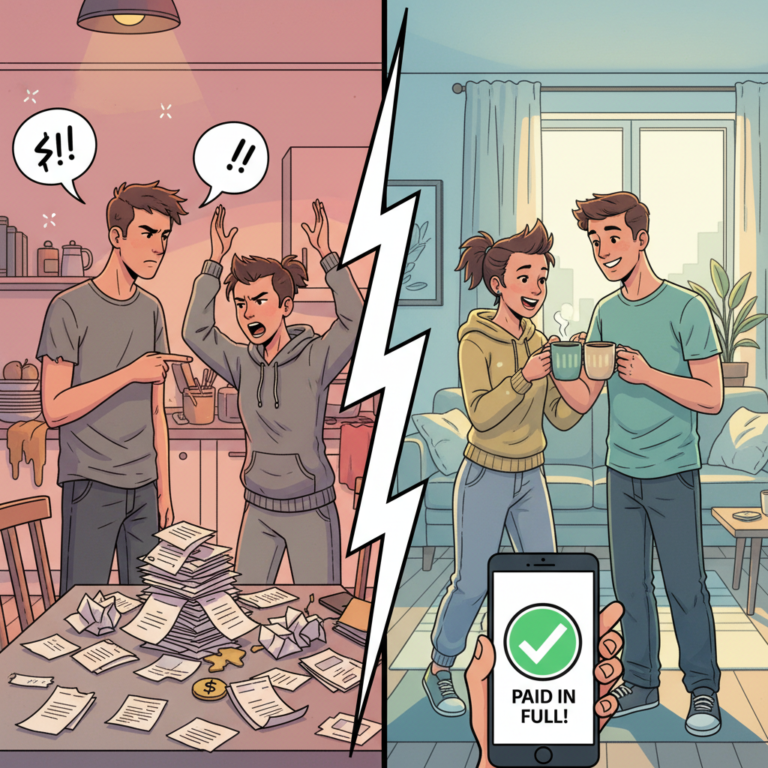


Topic 1: The Who Pays What Breakdown

The Math Breakdown
Let us look at a real-world example of how this saves the lower earner from drowning. If your total household income is $100,000 and you make $40,000 of it, you pay forty percent of the shared bills.
| Expense Category | Total Cost | Partner A (60%) | Partner B (40%) |
|---|---|---|---|
| Rent & Utilities | $2,000 | $1,200 | $800 |
| Groceries | $500 | $300 | $200 |
| Shared Subscriptions | $100 | $60 | $40 |
By using this proportional method, Partner B saves $3,600/year compared to a rigid fifty-fifty split, freeing up capital to reinvest back into their side hustle.
The Script: “I want us both to feel financially secure and not stressed about bills. Since our incomes are different, let’s look at splitting our shared expenses proportionally based on what we each make.”
Topic 2: Debt Reveal & Credit Scores
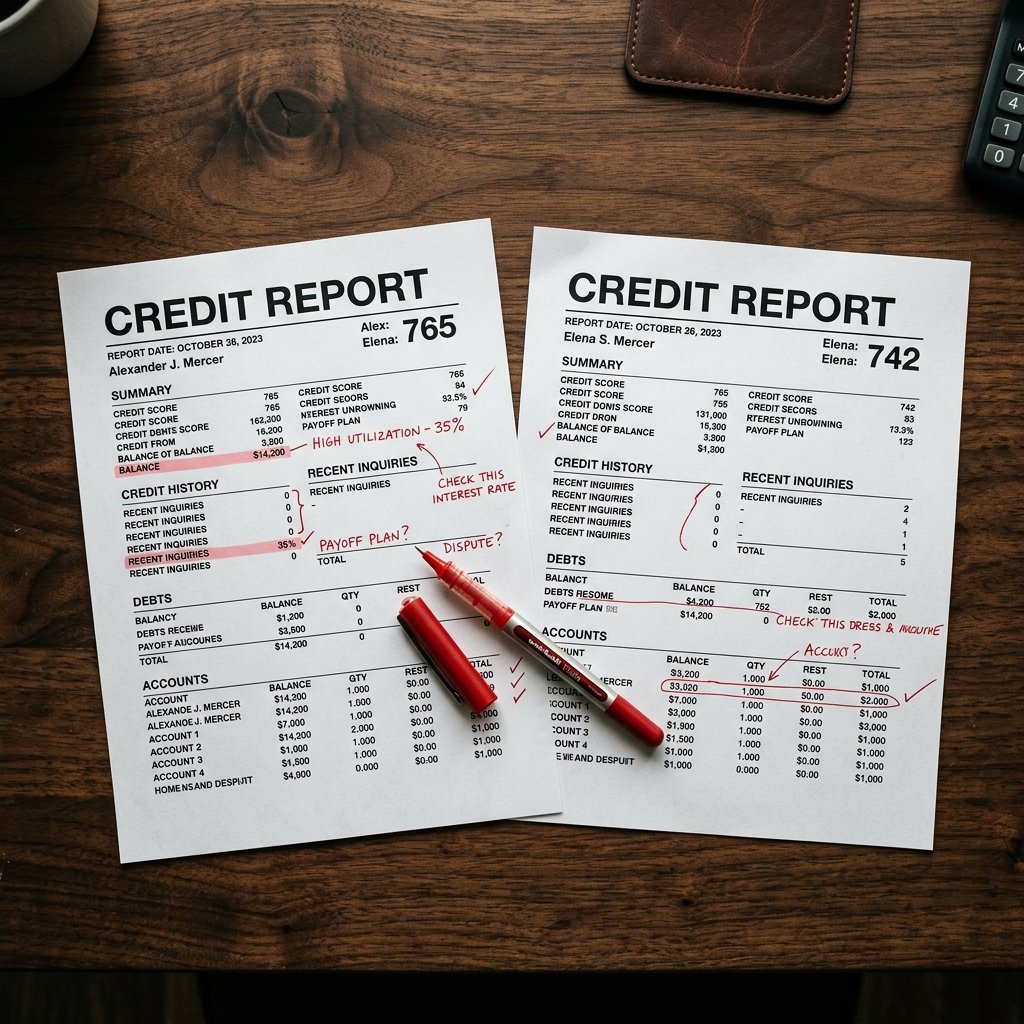
How to Handle the Reveal
Do not judge, but do strategize. Lay it all out on the table.
- List all outstanding debts (student loans, car notes, business loans).
- Share exact credit scores.
- Discuss the repayment plan. Is the debt strictly individual, or will household savings be used to crush it faster?
Key Rule: Your partner’s debt does not automatically become yours when you move in together, but their financial habits absolutely become your daily reality. Protect your own credit score at all costs.
Topic 3: The Joint Emergency Fund

Building the Buffer
Aim for at least three to six months of shared living expenses. If your bare-bones household expenses are $3,000 a month, your target is $9,000 to $18,000.
The Math: Saving Aggressively
If you both contribute just $150 a month to a high-yield savings account earning around five percent APY, you will save $3,600/year in principal alone, plus interest. Over a few years, that is a rock-solid safety net that lets you take bigger risks in your side hustle without jeopardizing your living situation.
Topic 4: Side Hustle Expenses & Physical Space

The Space Tax
If you need a two-bedroom apartment instead of a one-bedroom just so you have an office, who pays for that extra bedroom? The business should ideally subsidize that cost.
| Workspace Option | Monthly Cost | Pros | Cons |
|---|---|---|---|
| Extra Bedroom (Home) | $400 (Rent Difference) | Zero commute, tax write-off | Boundaries blur, partner gets annoyed |
| Coworking Space | $300 | Networking, clear boundaries | Commute time, extra overhead |
| Kitchen Table | $0 | Free, easy access to snacks | Zero privacy, looks unprofessional |
Discuss this upfront. If your hustle requires the extra $4,800/year in rent for a second bedroom, make sure your business revenue justifies it and that your partner is cool with the setup.
Topic 5: Joint vs. Separate Accounts

The Hybrid Strategy
- The Joint Account (Ours): Both of you deposit your agreed-upon proportional share into this account every month. This pays for rent, utilities, groceries, and shared dates.
- The Personal Accounts (Yours & Mine): Whatever is left over stays in your personal checking. You use this for your own clothes, hobbies, and personal debts.
- The Business Account: STRICTLY separate. Never co-mingle your side hustle cash with the joint household account. It will make tax season a living hell.
Scam Warning: Never deposit your 1099 side hustle income directly into a joint account before setting aside your estimated taxes. Your partner might see a massive balance and think it is spending money, leaving you short when the IRS comes knocking.
Topic 6: Lifestyles and The Fun Money Budget

Defining the Fun Money
Agree on a guilt-free Fun Money budget. If you both agree to allocate $300 a month to personal fun, what you do with it is your business. Your partner can buy designer shoes, and you can buy Facebook ads for your side hustle. No judgment, no fights.
The Math: Opportunity Cost
Let us say you curb excessive weekend spending by just $100 a week. That is a savings of $5,200/year. If you invest that into your side hustle and see a twenty percent return, you are compounding your wealth instead of literally flushing it down the drain on overpriced cocktails. Discuss these trade-offs before you sign the lease.
Topic 7: The Exit Strategy

Protecting Your Assets
If both your names are on the lease, you are both legally on the hook for the rent. If your partner bails, the landlord will come after you for the full amount.
- The Buyout Fund: Keep enough personal cash on hand to break the lease or cover the rent solo for at least two months. (Typically $2,000 to $4,000).
- The Furniture Rule: Buy big items separately. You buy the couch, they buy the TV. If you split, you know exactly who takes what. Splitting the cost of a $1,500 mattress is a headache you do not want to deal with during a breakup.
Key Rule: Hope is not a financial strategy. Having an exit plan does not mean you want the relationship to fail; it means you respect yourself enough not to get trapped in a toxic living situation because you cannot afford to leave.
Conclusion
Disclaimer: The content provided in this article is for informational and educational purposes only. I am a street-smart hustler, not a certified financial advisor or CPA. Always consult with a professional before making major financial, tax, or legal decisions.


Makenzie is the founder and lead writer at MoneyHackTips.com — a personal finance blog dedicated to delivering street-smart financial wisdom for real people on real budgets. With 300+ published articles covering everything from debt management to investing fundamentals, Makenzie’s mission is to make every dollar work harder. When not writing about money hacks, Makenzie is testing frugal living strategies, optimizing side hustles, and helping readers build financial freedom from scratch.