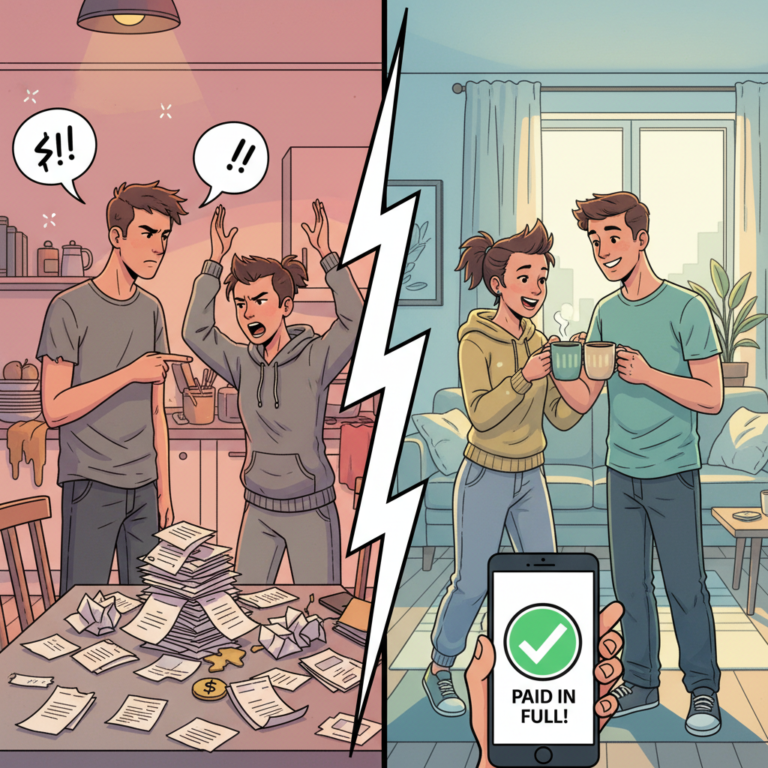


Listen up, hustlers. You found the one. The butterflies are real, the late-night talks are deep, and you are ready to lock it down. But before you go dropping serious cash on a ring or saying ‘I do,’ we need to have a real talk about the ultimate marriage killer: Money.
Love is blind, but your bank account sure isn’t. When you marry someone, you aren’t just marrying their cute smile and their quirky habits; you are marrying their credit score, their debt, and their spending habits. For my side hustlers and frugal warriors out there grinding for financial freedom, nothing will derail your empire faster than a partner who is secretly drowning in debt or blowing their paycheck on depreciating assets.
This isn’t about being unromantic. It is about being street-smart and protecting your future. If you can’t talk about a budget, you have no business planning a wedding. In this guide, we are breaking down the 7 non-negotiable money questions you must ask your partner before getting engaged. I am giving you the exact scripts, the math behind the madness, and the red flags to watch out for. Let’s hack your relationship finances and build a bulletproof foundation.
Question 1: What Is Your Exact Debt Number Right Now?

We are starting with the heavy hitter. Debt is the ghost that haunts many new marriages. You need the raw, unedited numbers: credit cards, student loans, car notes, and personal loans. No estimates. You want to see the statements.
Why It Matters
When you tie the knot, their financial baggage becomes a roadblock to your shared goals. If you want to buy a house, a massive debt-to-income ratio will tank your mortgage application faster than you can say ‘denied’.
The Math
Let’s look at the reality of hidden debt. If your partner has $15,000 in credit card debt at a 24% APR, they are paying $3,600/year just in interest! Over five years, that is $18,000 burned. That is a down payment on a house, gone up in smoke.
The Script
“Hey babe, since we’re talking about our future together, I want us to be completely transparent. Can we sit down this Sunday and put all our debts and assets on the table? I’ll show you mine if you show me yours. No judgment, just so we know what we are tackling as a team.”
Question 2: Are You a Saver, a Spender, or an Avoider?

Opposites attract, right? Often, a hardcore frugal hacker ends up with someone who loves retail therapy. That is fine, as long as you understand how each of you operates and put guardrails in place.
Identifying the Traits
You need to know if your partner gets anxiety from spending money (Saver), gets a dopamine hit from online shopping (Spender), or literally refuses to open their banking app because it stresses them out (Avoider).
The Compatibility Breakdown
| Personality Type | Financial Impact | How to Hack It Together |
|---|---|---|
| The Saver | Builds wealth but may sacrifice quality of life. | Create a ‘Guilt-Free Spending’ budget line. |
| The Spender | Enjoys the moment but risks long-term goals. | Automate savings first, spend what is left. |
| The Avoider | Misses late fees, ignores debt accumulation. | Schedule a mandatory monthly ‘Money Date’. |
The Script
“When you get an unexpected bonus at work, what is your immediate instinct? Do you want to invest it, book a vacation, or just leave it in checking? I want to understand how we both view money so we can balance each other out.”
Question 3: How Do We Split the Bills When We Live Together?

If you are moving in together—or already do—how you split the overhead sets the tone for your marriage. A 50/50 split sounds fair on paper, but if one of you makes $100,000 and the other makes $40,000, a 50/50 split will leave the lower earner broke and resentful.
The Strategy: Proportional Splitting
The street-smart move is splitting bills proportionally based on income. It ensures both partners maintain a similar standard of living and can still contribute to their own savings or side hustles.
The Math: 50/50 vs Proportional
Assume Total Shared Bills = $3,000/month. Partner A earns $6,000/month (60% of total income). Partner B earns $4,000/month (40% of total income).
| Method | Partner A Pays | Partner B Pays | Result for Partner B |
|---|---|---|---|
| 50/50 Split | $1,500 | $1,500 | Struggles to save, high financial stress. |
| Proportional | $1,800 (60%) | $1,200 (40%) | Fair contribution, room to invest. |
The Script
“I want to make sure our living expenses feel fair to both of us. Since our incomes are different, what do you think about splitting the shared bills based on percentages rather than straight down the middle?”
Question 4: What Are Your Financial Goals and Dealbreakers?

You can’t build an empire if one of you is laying bricks and the other is smashing them with a sledgehammer. You need alignment on the big picture. Are you grinding your side hustle to retire at 45? Do they want to work until they are 65 but live in a luxury home right now?
Defining the Endgame
Discuss homeownership, children (kids are wildly expensive), and career ambitions. If you are a frugal living enthusiast who wants to geo-arbitrage and move to a low-cost-of-living area, but they want to live in downtown Manhattan, you have a major conflict.
Common Financial Dealbreakers to Discuss
- Hidden or undisclosed credit card debt.
- Refusal to maintain a steady income or support a side hustle.
- Secretive spending habits or hidden bank accounts.
- Unwillingness to compromise on budget limits.
Scam Warning: The Lifestyle Creep Trap
Beware of the ‘I deserve it’ mentality. If your partner insists on upgrading cars and apartments every time they get a raise, they are falling victim to lifestyle creep. That is a massive dealbreaker for building true wealth.
The Script
“If we had a magic wand and could design our perfect life 10 years from now, what does it look like? Where are we living, what are we driving, and how much is in the bank?”
Question 5: Do We Combine Accounts or Keep Them Separate?

This is the ultimate debate in personal finance. Do you throw all your cash into one pot, or do you keep your financial independence? There is no single right answer, but there is a right answer for your relationship.
The Hybrid Approach (The Hacker’s Choice)
For most modern couples, especially those with side hustles or separate business ventures, the ‘Yours, Mine, and Ours’ method works best. You have a joint account for shared bills (rent, groceries, utilities) and separate accounts for your personal spending.
Pros and Cons Breakdown
| Account Strategy | The Pros | The Cons |
|---|---|---|
| 100% Joint | Total transparency, easy to track shared goals. | Loss of financial autonomy, arguments over small purchases. |
| 100% Separate | Complete independence, protects personal assets. | Hard to pay shared bills, feels less like a team. |
| The Hybrid Model | Best of both worlds: teamwork plus independence. | Requires managing multiple bank accounts and transfers. |
The Script
“I love the idea of having a joint account to tackle our household expenses together, but I also value us having our own separate checking accounts for personal fun money. How do you feel about a hybrid setup?”
Question 6: How Much Are We Willing to Spend on a Wedding?

The wedding industry is designed to drain your wallet by preying on your emotions. As a frugal hacker, you know that a single party is not worth sacrificing your financial future. You need to know if your partner expects a $50,000 blowout or is cool with an intimate $5,000 micro-wedding.
The Math: The Opportunity Cost of a Wedding
Let’s talk opportunity cost. The average US wedding costs around $30,000. If you instead spent $10,000 on a beautiful, budget-friendly wedding and invested the remaining $20,000 in an index fund returning 8% annually, that money would grow to over $93,000 in 20 years. That is your kid’s college fund or a massive chunk of your early retirement!
Setting the Limit
Agree on a hard cap before you look at a single venue. Never, ever go into debt for a wedding. If you can’t pay cash for it, you can’t afford it.
The Script
“I want our wedding day to be amazing, but I also want to make sure we don’t start our marriage stressed about money. What is a realistic, absolute maximum number we are both comfortable spending?”
Question 7: How Do We Handle Family Money and Emergencies?

When you marry someone, you marry their family dynamics. What happens when their brother needs a $2,000 loan? What happens if your parents need help with medical bills? You need a unified front on how to handle external financial pressure.
The ‘Family ATM’ Warning
Never loan money to family that you expect to get back. If you give money to relatives, it must be considered a gift. If you can’t afford to gift it, you cannot afford to lend it. Becoming the ‘Family ATM’ will destroy your marriage and your budget.
Emergency Funds
You also need to agree on what constitutes an actual emergency. A blown transmission? Emergency. A last-minute trip to Vegas for a bachelor party? Not an emergency. You should aim to build a joint emergency fund of 3 to 6 months of living expenses immediately after getting engaged.
The Script
“If one of our family members came to us asking for a significant amount of money, how would we handle it? I think we should agree on a rule that any financial help to family requires a ‘yes’ from both of us.”
Conclusion
Getting engaged is one of the most exciting milestones in your life, but it is also the biggest financial contract you will ever sign. By having these street-smart conversations now, you are bulletproofing your relationship against the number one cause of divorce. Remember, financial transparency isn’t about control; it is about building an unstoppable team.
Take these scripts, sit down with your partner, and start hacking your financial future together. If they get defensive or refuse to talk about money, consider that a massive red flag. Keep grinding, keep saving, and build an empire that lasts.
Disclaimer: I am an empowering frugal hacker, not a certified financial advisor. The math examples, scripts, and strategies provided are for educational and entertainment purposes. Always consult with a licensed professional before making major financial, investment, or legal decisions.

Makenzie is the founder and lead writer at MoneyHackTips.com — a personal finance blog dedicated to delivering street-smart financial wisdom for real people on real budgets. With 300+ published articles covering everything from debt management to investing fundamentals, Makenzie’s mission is to make every dollar work harder. When not writing about money hacks, Makenzie is testing frugal living strategies, optimizing side hustles, and helping readers build financial freedom from scratch.