
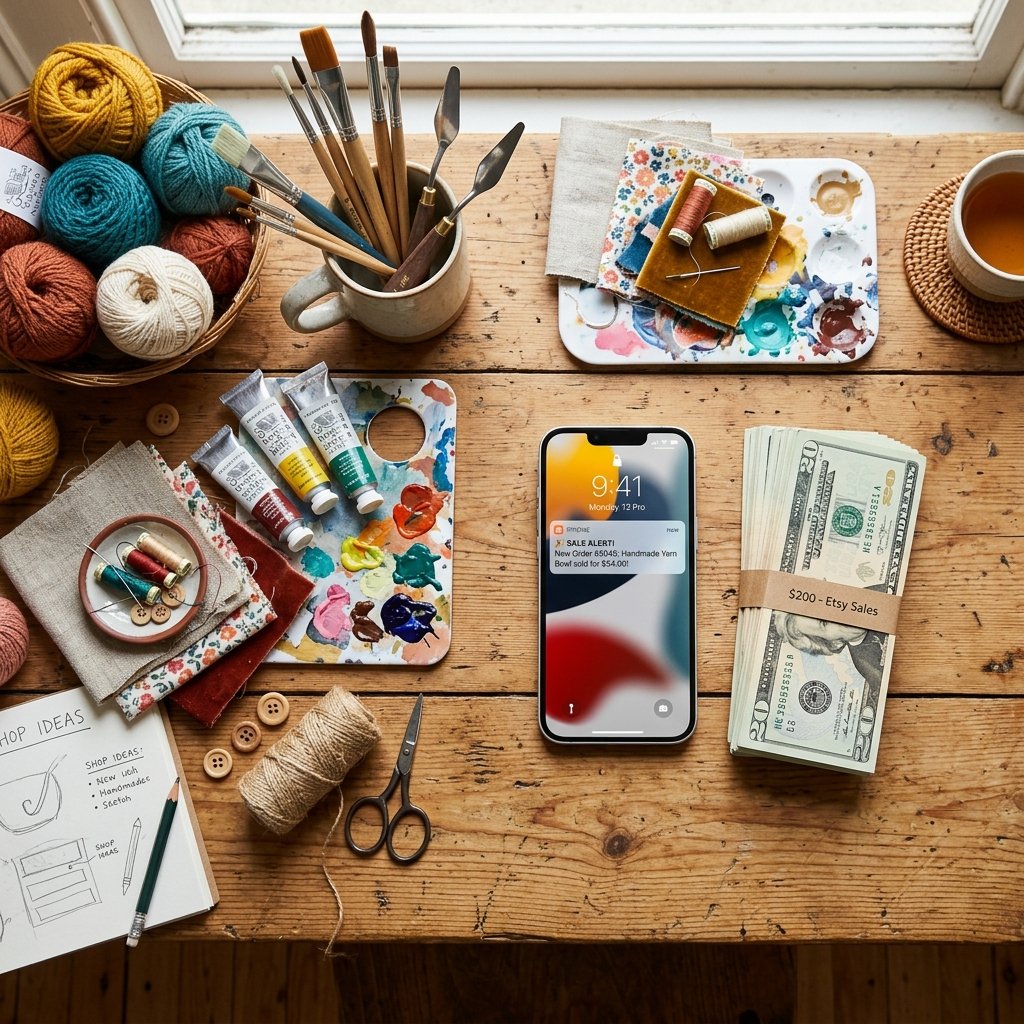

Welcome to the Hustle, Frugal Friends!
Hey there, fellow frugal living enthusiasts! If you are reading this, chances are you already know the profound joy of creating something beautiful out of absolutely nothing. Maybe you knit cozy oversized scarves, upcycle thrifted mid-century furniture, or pour custom scented soy candles that make your entire house smell like a high-end bakery. You are naturally crafty, you are inherently resourceful, and most importantly, you know exactly how to stretch a dollar further than most people think is mathematically possible. But what if I told you that your relaxing weekend hobby could be the exact ticket to bringing in an extra $1000 a month? Yes, you heard me right. We are talking about turning those impressive DIY skills into a legitimate, cash-flowing side hustle without risking your hard-earned savings or taking on a mountain of stressful debt.
As the Ultimate Frugal Hacker, I am here to tell you that the traditional business advice of ‘you have to spend money to make money’ is a complete myth designed to sell you expensive courses and unnecessary tools. You do not need a fancy small business loan, a massive marketing budget, or a rented studio space to get started. In fact, your frugal mindset is your absolute biggest advantage in the competitive business world. Keeping your overhead costs incredibly low means your profit margins stay incredibly high. When you do not have a massive credit card bill hanging over your head, every single sale feels like a massive victory. Today, we are going to break down the exact, step-by-step action plan to take your craft from a fun, casual pastime to a highly profitable venture. We will cover how to source high-quality materials for literal pennies, the exact mathematical formulas you need to price your items for maximum profit, and the precise scripts you can use to land your first sales without feeling slimy or overly salesy. Grab a large cup of home-brewed coffee, pull up a comfortable chair, and let us dive deep into the ultimate guide to monetizing your creativity!
The Frugal Hacker’s Blueprint to Finding Your Profitable Niche

Before you rush out and start mass-producing every single craft you have ever watched a tutorial for, we need to sit down and talk strategy. The absolute biggest mistake new side hustlers make is trying to be everything to everyone. If you sell knitted socks, custom dog collars, and watercolor paintings all in the same shop, you are going to confuse your customers and exhaust yourself. To hit that $1000 a month goal consistently, you need to niche down. You want to find that magical sweet spot where your personal passion intersects perfectly with what people are actually willing to pull out their wallets and pay for. This is where your frugal superpower comes in handy: thorough market research costs absolutely nothing but your time.
Analyze the Market Like a Pro
Start your journey by browsing Etsy, checking local Facebook Marketplace listings, and scrolling through Instagram craft hashtags. Look closely at what is currently selling, but more importantly, train your eye to look for glaring gaps in the market. Are people charging $50 for a basic, uninspired macrame wall hanging? Could you realistically make a much more unique one using upcycled, colorful materials for a fraction of the cost? That gap is your golden entry point. Read customer reviews on popular items to see what buyers are complaining about. If they say a popular candle loses its scent quickly, your marketing angle is ‘long-lasting, highly fragranced candles.’
Realistic Earning Potential by Category
Let us look at some realistic earning potentials based on different popular crafting categories. Remember, these numbers are not just guesses; they assume you are applying our strict frugal sourcing methods to keep your base costs as low as humanly possible.
| Craft Category | Average Cost to Make | Average Selling Price | Sales Needed for $1000 Profit |
|---|---|---|---|
| Custom Scented Candles | $3.00 | $20.00 | Approx. 59 units/month |
| Upcycled Furniture | $25.00 | $150.00 | Approx. 8 units/month |
| Hand-Knit Beanies | $4.00 | $35.00 | Approx. 33 units/month |
| Digital Printables | $0.00 | $5.00 | 200 units/month |
As you can see clearly from the math above, you do not need to sell thousands of items to reach your financial goal. Selling just eight beautifully flipped nightstands or sixty custom candles can easily get you to that $1000 mark. The secret is to pick one or two flagship products to start with. Master the production process, minimize the material costs, build a loyal customer base, and then get ready to scale your operations.
Sourcing Materials on a Shoestring Budget
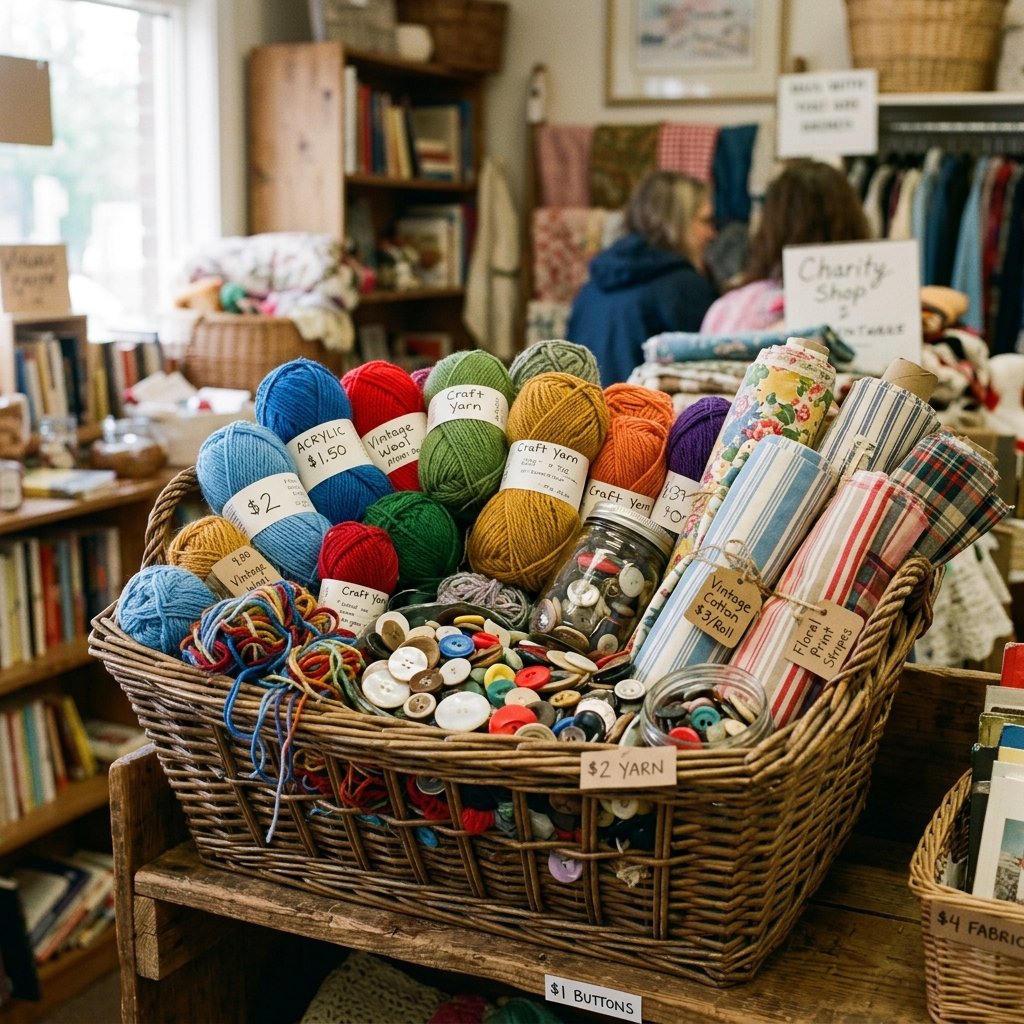
Alright, let us talk about the absolute lifeblood of your new creative business: your supplies. If you walk into a giant big-box craft store and pay premium retail prices for your materials, you are already eating massively into your potential profits. We are frugal hackers, which means we practically never pay full price if we can creatively avoid it. Keeping your material costs incredibly low is the absolute fastest, most effective way to increase your profit margin and hit that $1000 a month target without having to work 80 hours a week.
Where to Find Dirt-Cheap (Or Free) Supplies
- Thrift Stores and Goodwill Outlets: These places are absolute goldmines. You can find incredibly high-quality wool yarn simply by unraveling thrifted, outdated sweaters. You can source beautiful, vintage fabrics from old dresses or bedsheets, and find raw wood materials from discarded, ugly decor. The outlet bins sell items by the pound, making your cost per item practically zero.
- Facebook Buy Nothing Groups: Your local neighbors are constantly cleaning out their closets and giving away half-used craft supplies, scrap wood, leftover house paint, and perfectly good fabric. Join your local group and simply post an ‘In Search Of’ request! People absolutely love supporting local makers and would rather give their clutter to an artist than throw it in the local landfill.
- Estate Sales on the Final Day: Estate sales are veritable treasure troves for vintage craft supplies, unique beads, high-quality tools, and sewing machines. The ultimate frugal hack is to go on the final day of the sale when everything is typically slashed to 50% or even 75% off. Do not be afraid to bundle items together and haggle for a bulk box price.
- Foraging and Nature: If your craft allows for it, look outside! Driftwood, pinecones, pressed flowers, and unique stones are 100% free and highly sought after in rustic or bohemian home decor. Just ensure you are foraging legally and ethically.
By aggressively slashing your material costs right from the start, you can comfortably afford to price your items competitively while still taking home a massive chunk of the revenue. A $20 sale is infinitely sweeter when the item only cost you $1.50 to make instead of a whopping $10.00. Always think outside the big-box store aisles!
Pricing Your Crafts for Profit (The Math)
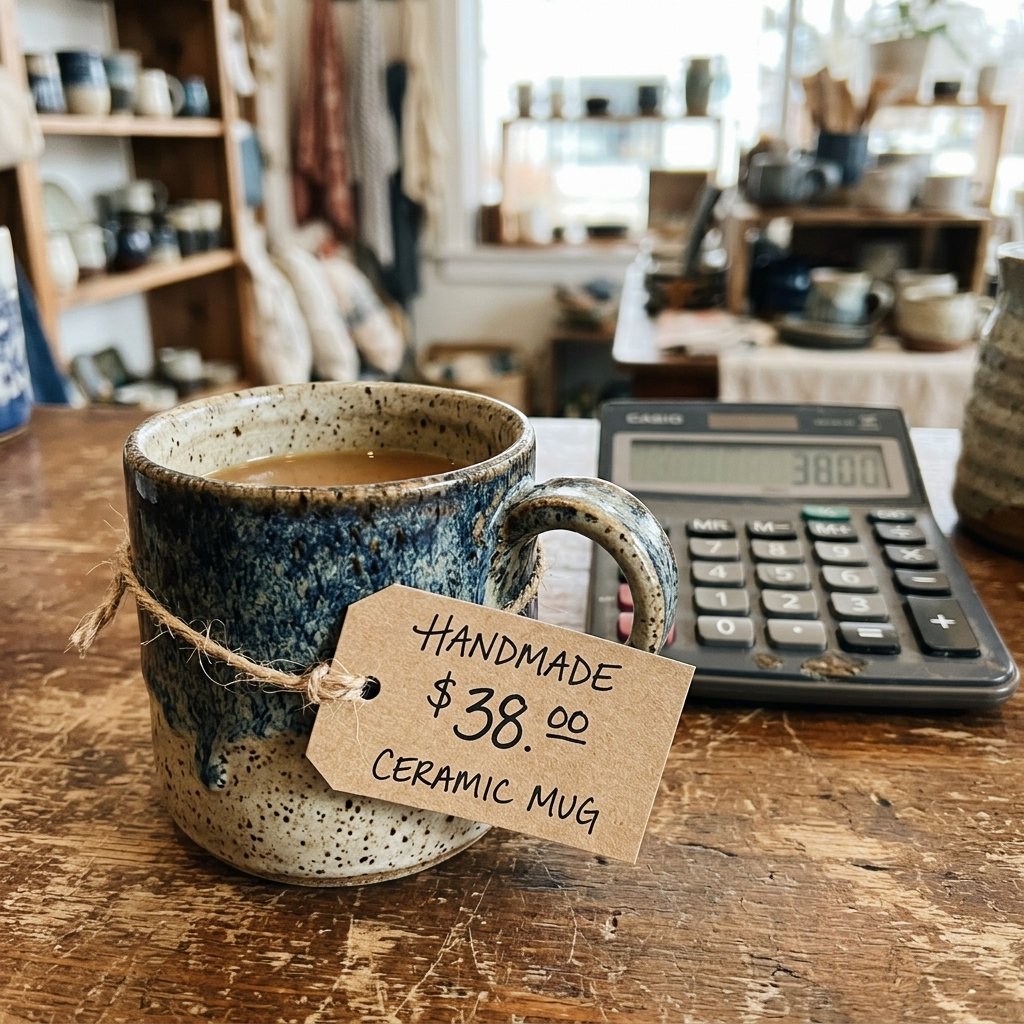
Listen closely, because this is the exact stage where so many incredibly talented crafters completely lose their shirts. They look at a finished project, guess a random number that sounds ‘fair’ in their head, and completely forget to pay themselves for their precious time. We are building a robust $1000/month side hustle here, not running a neighborhood charity! You absolutely must price your handmade items based on a solid, unbreakable mathematical formula. If you do not respect your time, your customers will not respect your prices.
The Frugal Hacker’s Unbreakable Pricing Formula
Here is the golden, non-negotiable rule of pricing your handmade goods: (Materials + Labor + Overhead) x Profit Margin = Retail Price. Let us break that down so you can see exactly how the math works in your favor.
- Materials: This is exactly what it cost to make that one specific item. Thanks to your frugal sourcing, this should be low. (e.g., $4.00)
- Labor: You must decide on a fair hourly wage for yourself. Let us say you value your time at $20.00/hour. If a specific item takes you exactly 30 minutes to create, your labor cost for that item is $10.00.
- Overhead: This is a small, calculated percentage to cover things like packaging materials, marketplace listing fees, shipping tape, and general tool wear-and-tear. (e.g., $1.00)
In this realistic example, your absolute base cost to simply break even is $15.00. If you want a healthy 50% profit margin to reinvest in growing the business, you multiply that base cost by 1.5, giving you a final retail price of $22.50.
| Pricing Component | The Amateur Crafter Method | The Frugal Hacker Method |
|---|---|---|
| Materials | Guessed randomly at $5.00 | Tracked exactly at $3.25 |
| Labor | $0.00 (Completely forgot to charge) | $12.00 (Paid themselves a living wage!) |
| Overhead | $0.00 (Ignored hidden costs) | $1.50 (Accounted for tape and fees) |
| Final Retail Price | $15.00 (Actively losing money) | $33.50 (Running a profitable business) |
Do not ever be afraid to charge what you are genuinely worth. If your handmade items are priced too low, potential customers might actually perceive them as cheap, mass-produced, or low-quality. A premium price tag, when backed by beautiful, well-lit photos and a compelling brand story, actually attracts better, more reliable buyers who appreciate true craftsmanship.
How to Sell and the Exact Scripts to Use

Congratulations! You have successfully found your niche, you are sourcing your cheap supplies like a pro, and you have nailed down your profitable pricing structure. Now comes the fun part: how do you actually get eager people to hand over their hard-earned cash? While massive platforms like Etsy are great for global reach, the listing fees, transaction fees, and advertising costs can quickly eat into your carefully calculated frugal margins. I highly recommend starting locally and leveraging your own social network first to keep 100% of the profits in your pocket.
Selling to Local Boutiques and Shops
Local independent coffee shops, trendy gift shops, and boutique clothing stores absolutely love carrying unique items from local artisans. It makes their store look heavily curated, supports the community, and it gives you a physical storefront without ever having to sign a commercial lease or pay monthly rent. Here is the exact, word-for-word script you can use to confidently approach a local business owner. You can send this via a polite email, a friendly Instagram DM, or even memorize it to say in person when they are not too busy.
The Local Pitch Script:
Hi [Owner Name], I am a huge fan of [Store Name] and visit all the time! I am a local maker who creates [Your Craft, e.g., hand-poured soy candles in upcycled vintage teacups]. I noticed you carry a lot of unique, locally sourced home goods, and I truly think my candles would be a perfect fit for your store’s beautiful aesthetic. I would love to drop off a free sample for you to check out in person, absolutely no strings attached. Do you currently accept wholesale vendors or do you operate on a consignment basis? Let me know! Best, [Your Name].
Notice exactly how this script is structured. It is highly friendly, genuinely complimentary, and offers immediate, risk-free value (a free physical sample). It completely removes the risk for the store owner. If you can hustle and get your items into just three local shops that manage to sell ten of your items a month each, you are incredibly well on your way to crushing your $1000 goal without ever paying a dime in online advertising.
Scam Warnings and Time-Wasters to Avoid

As you actively grow your side hustle and start making a name for yourself, you will inevitably start attracting attention. Unfortunately, not all of that attention is good or helpful. The internet is absolutely full of predatory people looking to make a quick, easy buck off eager, unsuspecting new business owners. As a dedicated frugal hacker, you must fiercely protect your time, your energy, and most importantly, your money.
Major Red Flags in the Crafting Business World
- Pay-to-Play Craft Fairs with Zero Marketing: You must beware of lazy organizers charging a massive $150 or $200 booth fee for a first-time craft fair hosted in a random school gymnasium with absolutely zero advertising budget. Always, always ask for past attendance numbers, photos of previous events, and proof of their marketing strategy before handing over your precious cash.
- Fake Instagram Influencers: Once you set up a business page, you will get relentless direct messages from accounts with 50k followers asking for free products in exchange for ‘exposure.’ Let me be clear: exposure does not pay your electric bill. Unless they have a highly engaged, localized audience that perfectly matches your target demographic, politely decline.
- Overpriced ‘Business Coaching’ Courses: You absolutely do not need to buy a $500 online course to learn how to sell your crafts. Everything you need to know to get started can be found entirely for free on YouTube, in library books, reading blogs, and by simply taking action and learning from your own mistakes.
CRITICAL SCAM WARNING: Never, ever pay a ‘registration fee’ or an ‘onboarding fee’ to an online boutique, wholesale platform, or influencer who claims they will feature your products on their massive platform. Legitimate wholesale buyers will simply purchase your products outright at your wholesale rate, and legitimate consignment shops will only take a percentage after the item actually sells. Keep your wallet tightly closed when approached with these ‘opportunities’!
Stay highly vigilant, always trust your gut instinct, and remember that slow, steady, and profitable growth is much more sustainable than chasing wildly unrealistic overnight success schemes that drain your bank account.
Conclusion
Ready to Build Your $1000/Month Craft Empire?
Turning your beloved crafty hobby into a reliable $1000/month side hustle is entirely within your reach, and you do not need to go into debt to make it happen. By fully leveraging your ingrained frugal living skills, you already have a massive head start over the vast majority of the competition. You inherently know how to source materials creatively, you deeply understand the true value of a dollar, and you are clearly not afraid to put in the necessary sweat equity to make your dreams a reality. Let us quickly recap the ultimate action plan: find a highly profitable niche, keep your material costs in the absolute basement by thrifting and foraging, price your items using real, sustainable math, pitch your goods locally using our proven scripts, and fiercely guard your growing business against common scams and time-wasters.
Your homework is to start incredibly small this coming weekend. Pick just one single project, source the materials for free or as cheap as possible, make a beautiful prototype, take some well-lit photos near a sunny window, and list it on Facebook Marketplace or show it to your friends. The very first sale is always the hardest mental hurdle to overcome, but once you hear that metaphorical cash register ring and hold that profit in your hands, you will be completely hooked. You have absolutely got this, frugal hackers! Now get out there, embrace your creativity, and start building your own financial freedom, one profitable craft at a time.
Disclaimer: The information provided in this comprehensive article is for educational, informational, and entertainment purposes only. I am a passionate frugal living enthusiast and side hustle advocate, not a licensed financial advisor, CPA, or legal professional. Always conduct your own thorough due diligence, do your own research, and consult with a certified professional regarding small business taxes, local business licenses, and personal financial planning before making major financial decisions.


Makenzie is the founder and lead writer at MoneyHackTips.com — a personal finance blog dedicated to delivering street-smart financial wisdom for real people on real budgets. With 300+ published articles covering everything from debt management to investing fundamentals, Makenzie’s mission is to make every dollar work harder. When not writing about money hacks, Makenzie is testing frugal living strategies, optimizing side hustles, and helping readers build financial freedom from scratch.