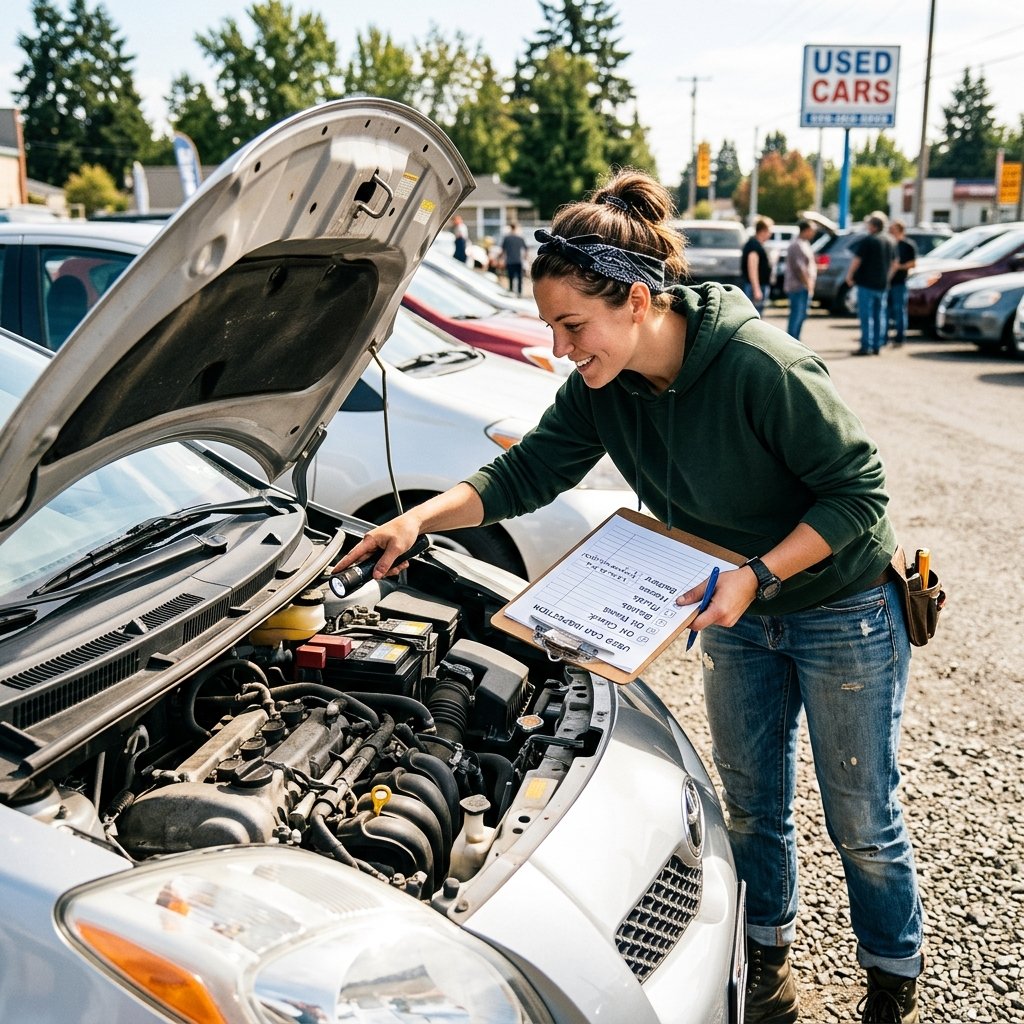

Hey there, frugal family! Welcome back to your ultimate hub for keeping your hard-earned cash exactly where it belongs: in your wallet. Today, we are tackling one of the most nerve-wracking, high-stakes financial milestones you will ever face: buying a used car. Let us be real for a second. The used car market can feel like the Wild West. Between shady private sellers on Facebook Marketplace, fast-talking dealership salespeople, and hidden mechanical nightmares waiting to drain your bank account, it is incredibly easy to get taken for a ride. But not you. Not today. Because you are a frugal hacker, and we do not play games with our money.
Buying a used car is arguably the ultimate frugal flex. Why? Because a brand-new car loses up to twenty percent of its value the second you drive it off the lot. That is thousands of dollars vanishing into thin air! By choosing to buy used, you are already making a brilliant financial decision. However, that brilliant decision can quickly turn into a financial disaster if you end up buying a lemon. A car with a blown head gasket, a slipping transmission, or a hidden salvage title can cost you $3000 or more in unexpected repairs, completely wiping out the savings you gained by buying used in the first place.
That is exactly why I have put together this comprehensive, no-nonsense, street-smart guide. I am going to walk you through every single step of the car-buying process. We are going to cover how to spot online scams from a mile away, the exact scripts you need to weed out shady sellers, how to perform your own ninja-level DIY inspection, and how to negotiate like an absolute boss. Grab a cup of coffee, pull up a chair, and let us dive into the ultimate checklist before buying a used car. You are about to save yourself a ton of money and stress!
The Pre-Game: Research and Budgeting Like a Pro

Before you even open up Craigslist or Facebook Marketplace, you need a battle plan. Going into the car-buying process without a solid foundation of research and a strict budget is like going grocery shopping on an empty stomach without a list: you are going to make bad, expensive decisions. The first step is determining exactly what you can afford, and I do not just mean the sticker price. We need to look at the total cost of ownership.
Calculate Your True Frugal Budget
Many buyers make the critical mistake of only looking at the purchase price of the vehicle. But as frugal hackers, we know better. A cheap car with terrible gas mileage and notoriously high repair costs is not a frugal choice; it is a money pit. You need to account for taxes, registration fees, insurance premiums, and an emergency repair fund. If you have $6000 saved up, you cannot afford a $6000 car. You can afford a $4500 car, leaving a buffer for the inevitable extra costs.
| Expense Category | Estimated Frugal Budget Allocation |
|---|---|
| Vehicle Purchase Price (Cash) | $4500 |
| Taxes, Title & Registration | $400 |
| First Year Insurance Premium | $800 |
| Emergency Repair/Maintenance Fund | $800 |
| Pre-Purchase Inspection (PPI) | $150 |
Once your budget is locked in, start researching reliable models. You want the unsung heroes of the road: older Honda Civics, Toyota Corollas, or Mazda 3s. Check resources like Edmunds, Kelley Blue Book (KBB), and the National Highway Traffic Safety Administration (NHTSA) for common complaints and recall information. Knowledge is your best leverage.
Spotting Online Scams and Red Flags
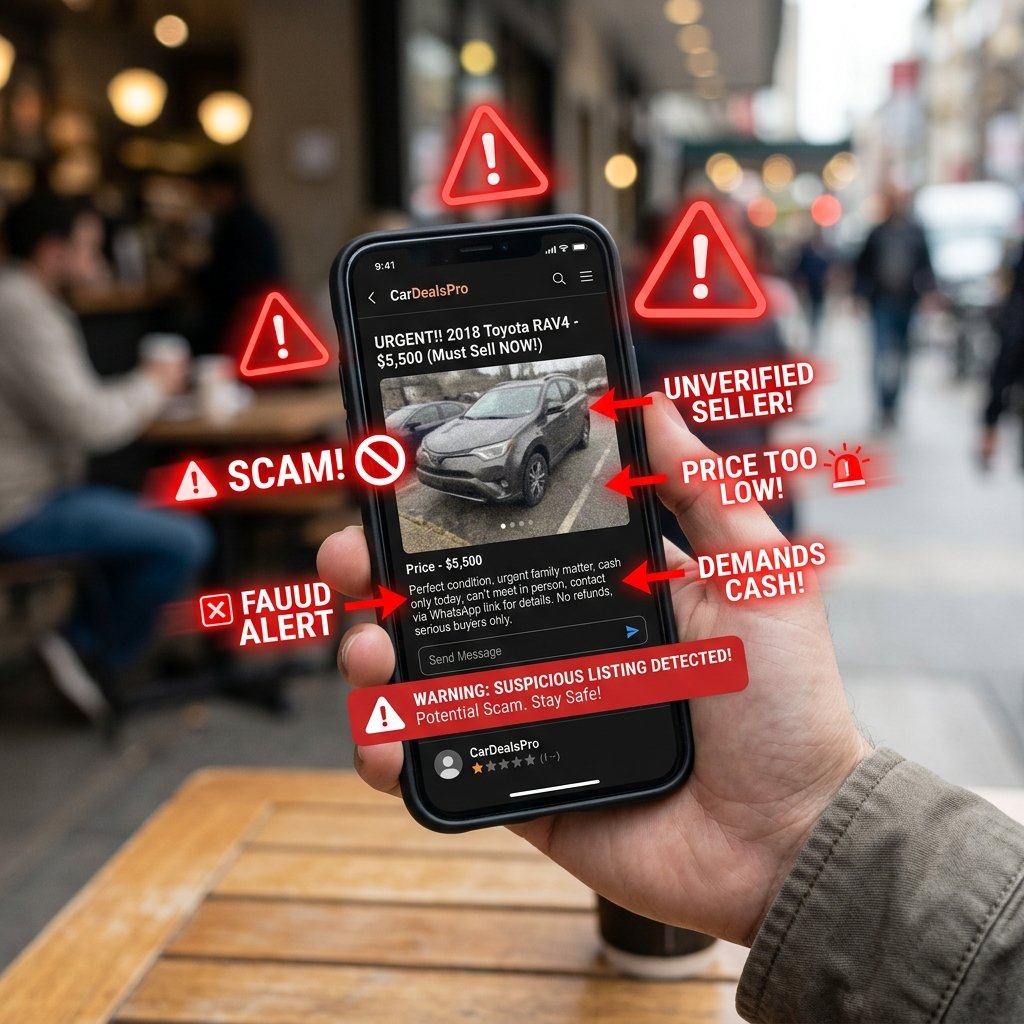
The internet is a goldmine for finding incredible deals on used cars, but it is also a minefield of scams, frauds, and shady characters. When you are browsing listings, you need to have your radar on high alert. The goal here is to filter out the garbage before you ever leave your house, saving you time and gas money.
Beware of the Curbstoner
A curbstoner is an unlicensed, illegal dealer who buys cheap, often damaged cars, does the bare minimum to make them look nice, and flips them for a profit on Craigslist or Facebook Marketplace while posing as a private seller. They often practice title jumping, meaning their name is never actually on the title, which is illegal and leaves you with a massive headache at the DMV.
SCAM WARNING: If you call about a car and say, “I am calling about the car for sale,” and the seller replies, “Which one?”—hang up immediately. Private sellers only have one car for sale. If they have multiple, they are a curbstoner.
Other massive red flags include sellers who refuse to meet at their home, listings with only one or two blurry photos, prices that are suspiciously low (if a 2018 Toyota Camry is listed for $3000, it is a scam), and any mention of third-party buyer protection programs. Scammers love to claim they are military personnel deploying soon and need to use eBay Motors or Amazon gift cards to complete the transaction. Never fall for this!
The Frugal Hacker’s Filtering Script
When you find a car that looks legitimate, do not just say “Is this available?” Take control of the conversation immediately to show you are a serious, educated buyer. Use this exact script:
The Initial Contact Script: “Hi there! I am very interested in your [Car Year and Model]. Before we set up a time to meet, I have three quick questions: 1. Are you the owner and is your name on the clean title? 2. Are there any major mechanical issues or leaks? 3. Are you comfortable with me having a mobile mechanic do a quick pre-purchase inspection? Thanks!”
If they hesitate, get defensive, or refuse the inspection, walk away. You just saved yourself a massive headache.
The Essential Paperwork Check
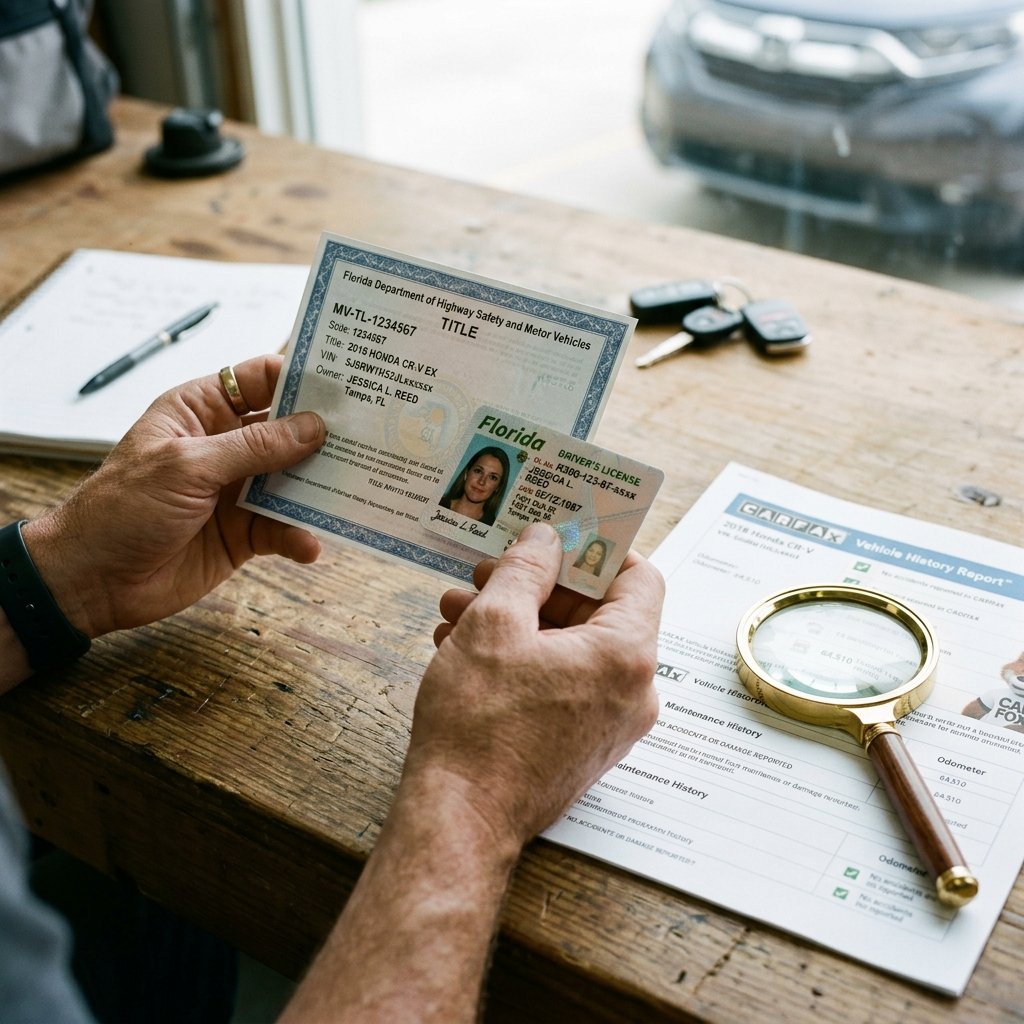
Alright, you have found a car, vetted the seller, and arranged a meetup. Before you even look at the engine or kick the tires, you need to verify the paperwork. This is the most crucial step in avoiding a legal nightmare. A great running car with a messed-up title is completely worthless to you.
Verify the Title Status
Always ask to see the title first. Check the name on the title against the seller’s driver’s license. If they do not match, the seller is title jumping. Do not buy the car. Period. Next, look for the words “Salvage,” “Rebuilt,” or “Flood” on the title. A salvage title means the car was totaled by an insurance company. While rebuilt cars can be cheap, they are incredibly difficult to insure, hard to resell, and often hide dangerous structural damage.
| Title Type | What It Means | Frugal Verdict |
|---|---|---|
| Clean Title | No major insurance write-offs. | Green Light! Proceed with inspection. |
| Salvage Title | Totaled by insurance (damage exceeds value). | Red Light! Walk away immediately. |
| Rebuilt Title | Salvage car that was repaired and passed state inspection. | Yellow Light! Only for expert mechanics. High risk. |
The VIN Verification
Every car has a Vehicle Identification Number (VIN). You need to match the VIN on the title to the VIN on the car. Check the dashboard (visible through the lower driver’s side windshield) and the sticker inside the driver’s side door jamb. If the VINs do not match, the car might be stolen or cobbled together from different vehicles. Finally, run that VIN through a service like Carfax or AutoCheck. Yes, it costs around $40, but it is the best investment you can make. It will reveal past accidents, odometer rollbacks, and the vehicle’s maintenance history.
The In-Person Frugal Inspection
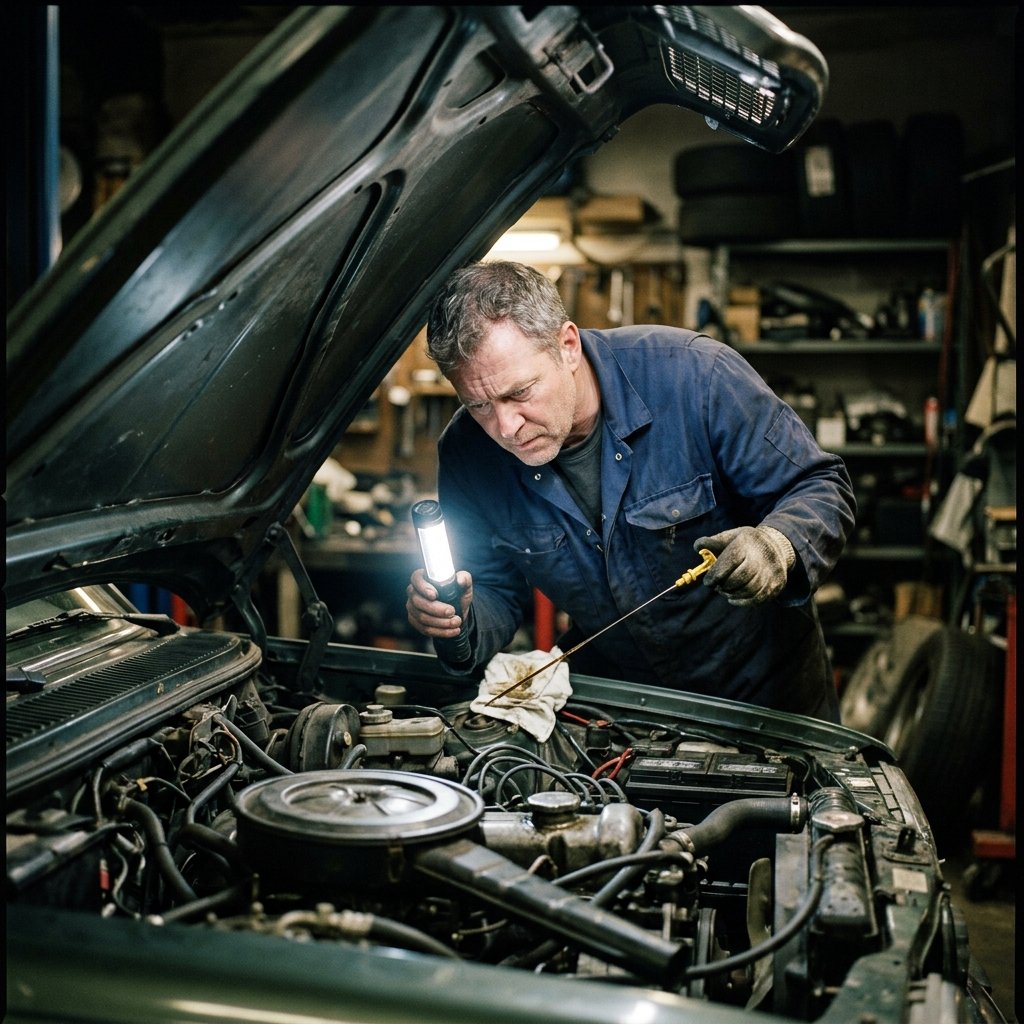
You have verified the paperwork, and everything checks out. Now it is time to channel your inner mechanic. You do not need to be a certified technician to spot major red flags. You just need a flashlight, some paper towels, and a keen eye. Let us break down the DIY inspection step-by-step.
- The Cold Start: Always insist on a cold start. Tell the seller not to start the car before you arrive. Touch the hood when you get there; if it is warm, they might be hiding a rough idle or a smoking exhaust issue that only happens when the engine is cold.
- Check the Fluids: Pull the engine oil dipstick. The oil should be amber or dark brown. If it looks like a thick, milky, chocolate milkshake, the car has a blown head gasket. Walk away immediately; that is a $2000 repair. Next, check the transmission fluid (if the car has a dipstick for it). It should be pink or red. If it is pitch black and smells burnt, the transmission is dying.
- Inspect for Leaks: Get down on the ground with your flashlight and look under the car. Are there puddles of oil, green coolant, or red transmission fluid? A small oil seep on an older car is normal, but active dripping is a costly red flag.
- The Body and Rust Check: Look down the sides of the car in good lighting. Ripples in the paint indicate past bodywork and accidents. Check the wheel wells and the undercarriage for rust. Surface rust is fine, but if the frame is rotting away and crumbling, the car is structurally unsafe.
- The Tire Penny Test: Tires are expensive. A new set can easily cost $500. Take a penny and insert it into the tire tread with Lincoln’s head facing down. If you can see the top of his head, the tires are bald and need immediate replacement. Use this as negotiation leverage!
The Test Drive: Listen to the Car

The test drive is not just a joyride to see if you like the stereo; it is an active diagnostic session. When you get in the car, the very first thing you do is turn the radio off. You need complete silence to hear what the car is trying to tell you. Turn off the climate control initially so you can listen to the engine idle. Is it smooth, or does it shake the steering wheel?
The Test Drive Checklist
- Acceleration and Shifting: Find a safe stretch of road and accelerate aggressively up to highway speeds. The car should shift smoothly without jerking, hesitating, or slipping. If the RPMs shoot up but the car does not speed up, the transmission is failing.
- The Alignment Test: On a flat, straight, uncrowded road, briefly take your hands off the steering wheel. Does the car pull sharply to the left or right? This indicates an alignment issue or worn suspension components.
- The Brake Check: Check your rearview mirror to ensure no one is behind you, then apply the brakes firmly. The car should stop straight. If the steering wheel violently shakes in your hands, the brake rotors are warped, which is a $300 repair.
- The Bump Test: Intentionally drive over some minor bumps or rough pavement. Listen for clunks, rattles, or squeaks from the suspension. These sounds mean worn struts, ball joints, or tie rods.
Finally, turn the air conditioning on full blast. If it blows warm air, do not believe the seller when they say, “It just needs a little freon.” If it just needed a cheap can of freon, they would have fixed it before selling. It likely needs a new AC compressor, which can run you $800 or more.
The Non-Negotiable Pre-Purchase Inspection (PPI)
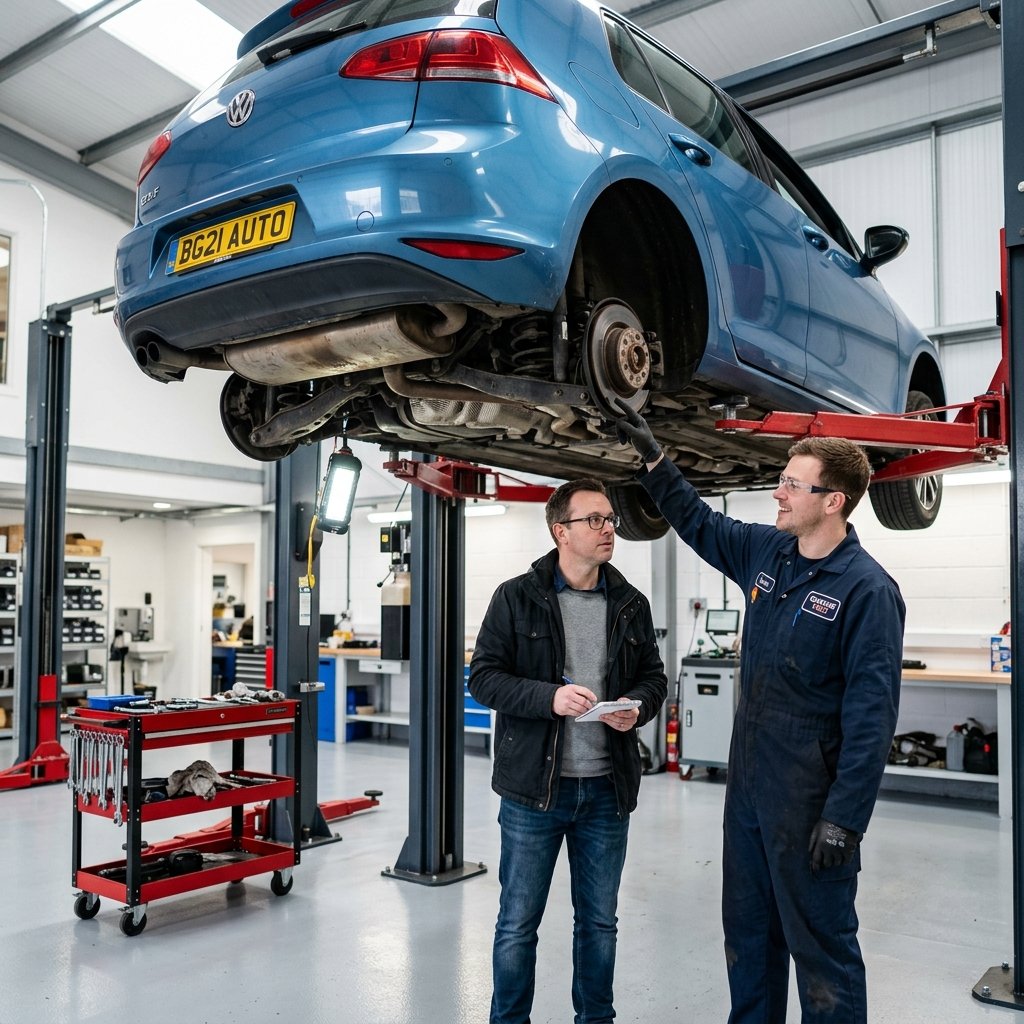
Listen to me very carefully, frugal family: Do not ever skip the Pre-Purchase Inspection. I do not care if the car looks pristine, if the seller is a sweet old lady, or if the car comes with a folder full of maintenance records. You are not a mechanic with a hydraulic lift, and there are things you simply cannot see from the ground.
Why the PPI is Your Best Investment
A PPI involves taking the car to an independent, certified mechanic (chosen by you, not the seller) who will put the car on a lift, check the brakes, suspension, exhaust, frame, and run computer diagnostics. It usually costs between $100 and $200. Many buyers skip this because they are trying to save money. This is the definition of being “penny wise and pound foolish.”
| The Choice | Immediate Cost | Potential Long-Term Consequence |
|---|---|---|
| Skipping the PPI | Save $150 upfront. | Risk buying a car with a failing $3000 transmission or hidden frame damage. |
| Getting the PPI | Spend $150 upfront. | Gain total peace of mind, or avoid a financial disaster. Plus, you get a list of minor flaws to use for negotiation! |
If the mechanic finds that the car needs $600 in brake work and new tires, you can take that written estimate back to the seller and negotiate the price down by $600. The PPI literally pays for itself. If the seller refuses to let you get a PPI, hand them the keys, thank them for their time, and walk away. A honest seller will never fear a mechanic.
The Art of the Frugal Negotiation

You have done the research, the car passed your inspection, and your mechanic gave it the green light (with a few minor flaws noted). Now comes the fun part: keeping your money. Negotiation terrifies a lot of people, but it is just a conversation. The key to frugal negotiation is removing emotion, relying on facts, and being totally willing to walk away.
Cash is King, Silence is Power
Always negotiate in person, never over text or email. When you are ready to make an offer, physically pull out the cash. Seeing a stack of hundred-dollar bills triggers a psychological response in the seller. They want that cash today. Start by gently listing the flaws your mechanic found. Do not insult the car; be objective.
The Frugal Lowball Script: “I really like the car, and I appreciate you taking the time to show it to me. However, my mechanic noted that it needs new tires soon and the valve cover gasket is leaking. Based on those upcoming repair costs, my absolute best cash offer right now is $3800.”
Once you make your offer, close your mouth. Do not say a single word. Embrace the awkward silence. The first person to speak loses. Let them process the offer. They might counteroffer with $4200. You can then meet in the middle at $4000. If they refuse to budge and the price does not fit your strict budget, use the ultimate weapon: walking away.
The Walk-Away Script: “I completely understand, and I want you to get what the car is worth. Unfortunately, with my budget and the needed repairs, I just cannot go that high. If you change your mind, here is my number. Good luck with the sale!”
Turn around and start walking to your car. Half the time, they will call you back before you open your door. If they do not, you still won because you stuck to your frugal principles and protected your budget.
Conclusion
Buying a used car does not have to be a terrifying gamble. By following this ultimate checklist, you have transformed yourself from a vulnerable target into a savvy, street-smart frugal hacker. You know how to set a realistic budget, spot online scammers, verify critical paperwork, perform a thorough DIY inspection, and negotiate a killer deal using facts and leverage. Remember, patience is your greatest asset. The right car at the right price is out there waiting for you; you just have to be willing to walk away from the wrong ones. Keep your emotions in check, trust your gut, and never skip that pre-purchase inspection! Now get out there and score an amazing deal on your next ride.
Disclaimer: I am the Ultimate Frugal Hacker, not a licensed financial advisor or certified mechanic. The information in this article is for educational and entertainment purposes only. Always do your own thorough research, consult with a qualified mechanic, and consider your personal financial situation before making major purchases.

Makenzie is the founder and lead writer at MoneyHackTips.com — a personal finance blog dedicated to delivering street-smart financial wisdom for real people on real budgets. With 300+ published articles covering everything from debt management to investing fundamentals, Makenzie’s mission is to make every dollar work harder. When not writing about money hacks, Makenzie is testing frugal living strategies, optimizing side hustles, and helping readers build financial freedom from scratch.