

Let us get real. If you are running a side hustle, freelance gig, or small business, you already know the income rollercoaster. One month you are pulling in $2,000 extra, and you feel like a genius. The next month, you are scraping together pennies to cover a surprise software subscription, a massive tax bill, or a broken laptop. This feast-or-famine cycle is exactly why you are stressed out and losing sleep. Financial anxiety kills creativity and stops your hustle dead in its tracks. But what if I told you there is a street-smart financial hack that completely eliminates this panic? Enter the sinking fund.
This is not your grandma’s basic savings account; this is a tactical, targeted cash stash designed to bulletproof your life and your hustle. Corporations have used sinking funds for decades to pay off massive debts without going bankrupt, and it is time you steal their strategy. Sinking funds are the ultimate cheat code for anyone with irregular income. By the end of this comprehensive guide, you will know exactly how to leverage sinking funds to never sweat a surprise bill again, keep your business in the green, and finally take control of your financial destiny. Let us dive into the mechanics of making your money work as hard as you do.
The Hack: What Exactly Is a Sinking Fund?
The Ultimate Financial Shock Absorber
Listen up, hustlers. A sinking fund is money you set aside every single month for a specific, known upcoming expense. Unlike an emergency fund, which is a massive pile of cash reserved for unpredictable, catastrophic disasters (like a medical emergency or a sudden total loss of income), a sinking fund is for the things you absolutely know are coming. Annual car registration? Holiday gifts? Quarterly estimated taxes? LLC renewal fees? These are not emergencies. They are predictable facts of life and business. When you do not plan for them, they feel like emergencies, but that is just poor planning.
Key Rule: If you know an expense is coming within the next 12 months, it belongs in a sinking fund, not on a high-interest credit card.
By breaking down a massive annual expense into bite-sized monthly chunks, you protect your daily cash flow. You are effectively hacking your own psychology, turning a terrifying $1,200 annual bill into a totally manageable $100 a month habit. It is about being proactive instead of reactive. When the bill finally arrives in your inbox, you do not panic, you do not scramble, and you do not beg clients for early payments. You just transfer the money from your sinking fund and move on with your life.
The Math: Why Side Hustlers Need Sinking Funds To Survive

Stop Bleeding Cash on Interest
Let us talk numbers because the math never lies. When a surprise bill hits and you do not have the cash liquid, you put it on a credit card. With average credit card interest rates hovering around 24% or higher, that bill just got significantly more expensive. Let us say your primary laptop dies. You need a new one to keep your side hustle running, so you swipe $1,500 on plastic.
If you only pay the minimum balance, you will end up paying hundreds in interest over the years, effectively robbing your future self of profits. But if you had an ‘Equipment Replacement’ sinking fund, you would pay cash, pay zero interest, and keep moving. Here is a real-world math example of your savings over time when you plan ahead:
- Save $50 a month for 12 months: $600 saved.
- Use that $600 to pay your auto insurance in full instead of monthly.
- Result: You avoid the monthly installment fee, saving you an extra $120 a year.
| Expense Type | Without Sinking Fund | With Sinking Fund (Monthly) |
|---|---|---|
| Annual Taxes ($2,400) | Panic, drain savings, or debt | $200 a month (Zero stress) |
| Holiday Gifts ($600) | Credit card hangover in January | $50 a month (Paid in cash) |
| Website Hosting ($300) | Unexpected overdraft fee | $25 a month (Automated) |
The Compound Effect of Preparedness
When you are not wasting money on late fees, overdraft charges, and credit card interest, you actually have more capital to reinvest into your hustle. That $120 saved on car insurance can go directly into Facebook ads, better software, or a new course to level up your skills. Sinking funds do not just save you money; they actively fund your business growth.
The Action Plan: How to Start Your First Sinking Fund Today

Building Your Cash Arsenal
Ready to stop stressing and start stacking? Setting up a sinking fund is ridiculously easy once you know the steps. You do not need to be a Wall Street bro or a math genius to master this. Here is your street-smart action plan to get your first fund up and running today.
- Identify the Target: Write down every single expense that hits you irregularly. Think taxes, car maintenance, software renewals, domain registrations, vacations, and holiday shopping. Do not leave anything out.
- Calculate the Monthly Hit: Take the total cost of the item and divide it by the number of months you have left to save. If Christmas is 10 months away and you want to spend $1,000, you need to save $100 a month.
- Choose the Right Account: Do not mix this money with your daily checking account. Open a High-Yield Savings Account (HYSA) that offers a strong APY so your money grows while it sits there.
- Automate the Transfer: Do not rely on willpower; willpower is for amateurs. Set up an automatic transfer from your checking account to your HYSA the exact day after you get paid.
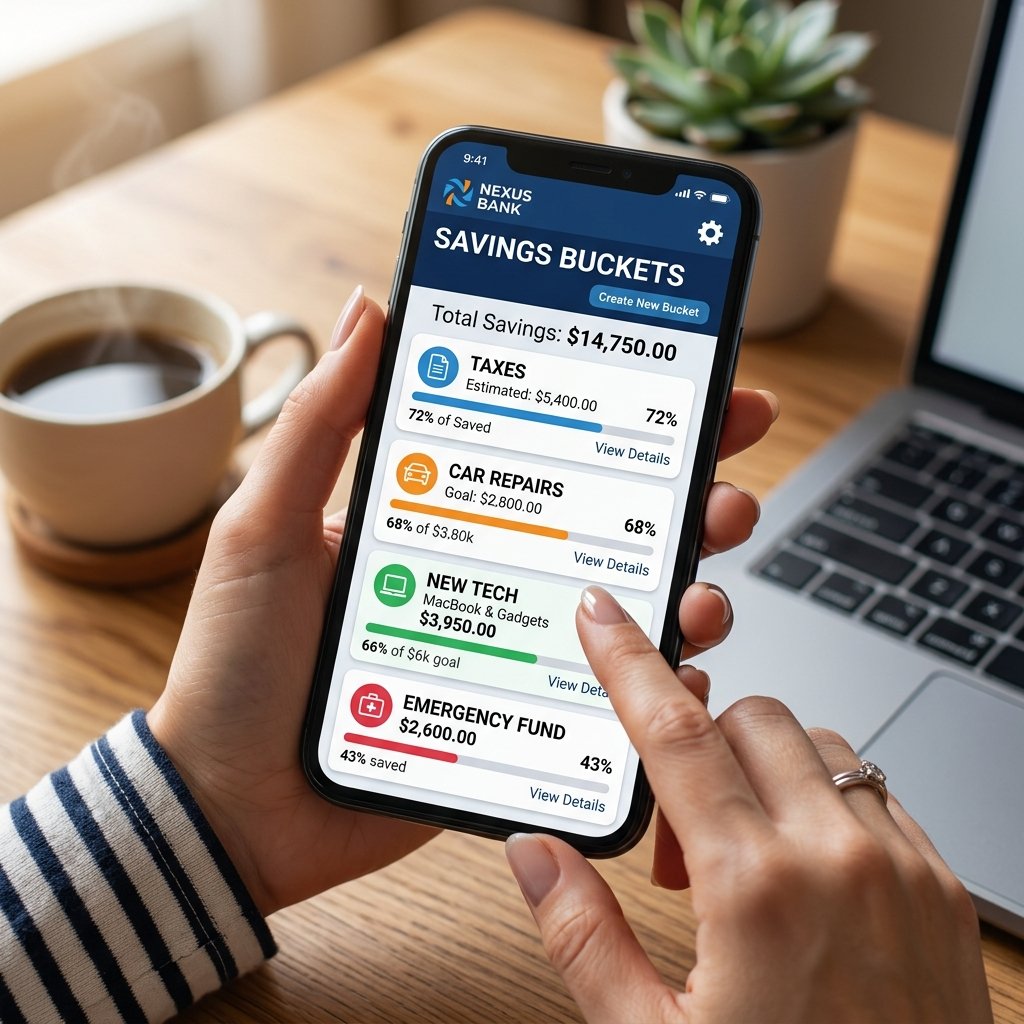
- Name It to Claim It: Most modern banks let you create sub-accounts or buckets. Name them specifically (e.g., ‘Uncle Sam Taxes’, ‘New Tires’, ‘Mental Health Vacation’). This creates an emotional attachment to the money so you will not be tempted to spend it on takeout.
Scam Warning: Beware of flashy budgeting apps that charge you massive monthly fees just to organize your money. You can do this for free with a standard high-yield savings account and a basic spreadsheet. Do not pay $15 a month just to look at your own money. Keep your overhead low.
The Hustler’s Blueprint: Top Sinking Funds Every Freelancer Needs

Protecting Your Side Hustle Profits
When you work for yourself, you are the HR department, the IT guy, and the CFO all rolled into one. If you do not protect your business, no one else will. You cannot rely on a corporate safety net. Here are the mandatory sinking funds every single side hustler needs to stay afloat and thrive.
- The Tax Man Fund: Never get caught slipping by the IRS. Set aside 25% to 30% of every single payment you receive. Period. Put it in a separate account and pretend it does not exist until tax season.
- The Tech & Equipment Fund: Laptops die. Cameras break. Software subscriptions renew. Put away $50 to $100 a month so you can upgrade your gear without going into debt.
- The Time-Off Fund: Freelancers do not get paid time off. If you want to take a vacation, or if you get sick and cannot work, you need to fund it yourself.
- The Marketing & Growth Fund: Want to rebrand? Need to run ads during the holidays? Having a dedicated fund means you can strike when the iron is hot without draining your personal checking account.
| Sinking Fund Category | Target Amount | Monthly Contribution |
|---|---|---|
| Self-Employment Taxes | $3,000 | $250 |
| Tech Upgrades | $1,200 | $100 |
| Client Schmoozing & Marketing | $600 | $50 |
| PTO / Sick Pay | $1,500 | $125 |
Securing the Bag Upfront
To fund these accounts, you need consistent cash flow. Stop doing work for free or waiting 60 days to get paid by flaky clients. Use this script to demand upfront payment from clients so you can immediately fund your sinking buckets and secure your financial foundation:
Script for Client Deposits: “To secure your spot on my calendar and cover initial project resources, I require a 50% non-refundable deposit upfront. The remaining balance will be due upon project completion.”
Conclusion
Own Your Money, Own Your Life
Sinking funds are the ultimate secret weapon for side hustlers who want to reclaim their peace of mind and scale their businesses without fear. By anticipating your expenses, doing the simple math, and automating your savings, you transform from a reactive spender to a proactive wealth builder. Stop letting surprise bills dictate your mood and your hustle. Start your first sinking fund today, even if it is just $20 a month, and watch how quickly your financial stress melts away. You have the power to control your cash flow, so go execute, build that financial fortress, and keep hustling smart.
Disclaimer: I am a street-smart hustler sharing what works, not a certified financial advisor. The information provided in this article is for educational and informational purposes only. Always do your own research or consult with a licensed professional before making major financial, tax, or investment decisions.


Makenzie is the founder and lead writer at MoneyHackTips.com — a personal finance blog dedicated to delivering street-smart financial wisdom for real people on real budgets. With 300+ published articles covering everything from debt management to investing fundamentals, Makenzie’s mission is to make every dollar work harder. When not writing about money hacks, Makenzie is testing frugal living strategies, optimizing side hustles, and helping readers build financial freedom from scratch.