


The Dopamine Hit Your Bank Account Deserves
Listen, I’ve been in the trenches. You’re out here grinding, flipping products on eBay, driving for rideshares, or freelancing until 2 AM. But at the end of the month, you look at your banking app and… nothing. It feels like your hard-earned $500 or $1,000 just evaporated into the void of rent, gas, and ‘life.’ That’s because digital numbers are boring, abstract, and easy to ignore. If you want to stop the bleed and actually see your wealth accumulate, you need to stop playing the game on their terms and start playing it on yours. Enter the Visual Savings Tracker.
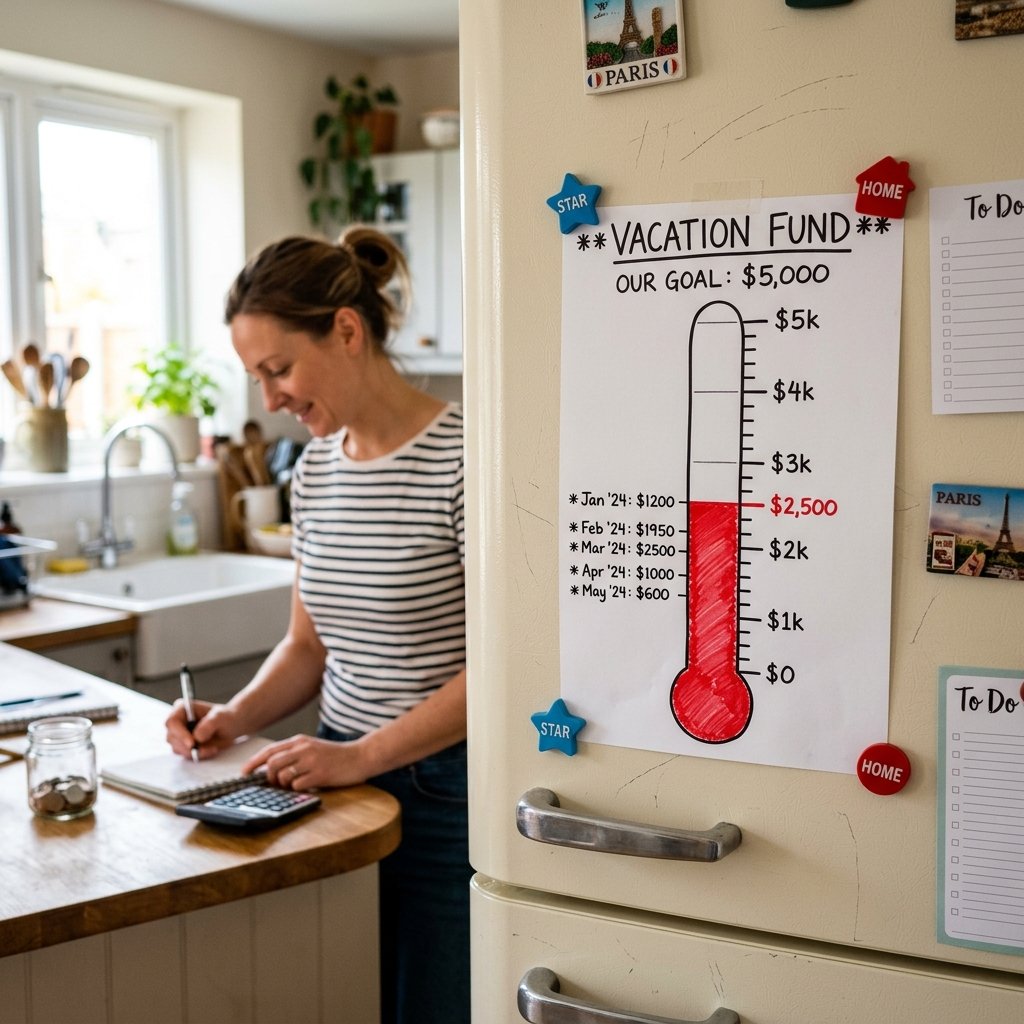
We are hard-wired to respond to visual progress. It’s why video games are addictive—you see that XP bar fill up and you want more. Why shouldn’t your bank account feel the same way? By using a physical, printable tracker, you’re turning your financial goals into a game you can actually win. Every time you finish a side hustle gig and move $20 into savings, you get to color in a square. It sounds simple—maybe even a little ‘elementary school’—but the psychological impact is massive. It creates a ‘streak’ you don’t want to break. Today, we’re going to break down exactly how to use these trackers to explode your savings and keep your side hustle momentum at an all-time high.
The Psychology of the Visual Win
Why Your Brain Craves the Color-In
Most budgeting advice is written by people who love spreadsheets. But for the rest of us—the hustlers, the creatives, the doers—spreadsheets are where dreams go to die. When you use a visual tracker, you’re leveraging the Endowment Effect and Visual Salience. You start to value the progress you’ve ‘built’ on that piece of paper. Seeing a half-colored-in chart makes you significantly more likely to find an extra $10 to finish the row than looking at a digital balance ever will.
The Rules of the Visual Game
Rule #1: The tracker must be visible. Tape it to your fridge or the wall behind your computer. Rule #2: Only color it in when the money is actually moved to savings. Rule #3: No skipping. Even a $5 contribution counts toward the visual goal.
When you see that paper every morning, it acts as a silent coach. It reminds you why you’re skipping the $7 latte and why you’re putting in that extra hour of work. You aren’t just ‘saving money’; you’re completing a mission.
The Math: Turning Small Wins into Big Wealth
The Compound Power of the Hustle
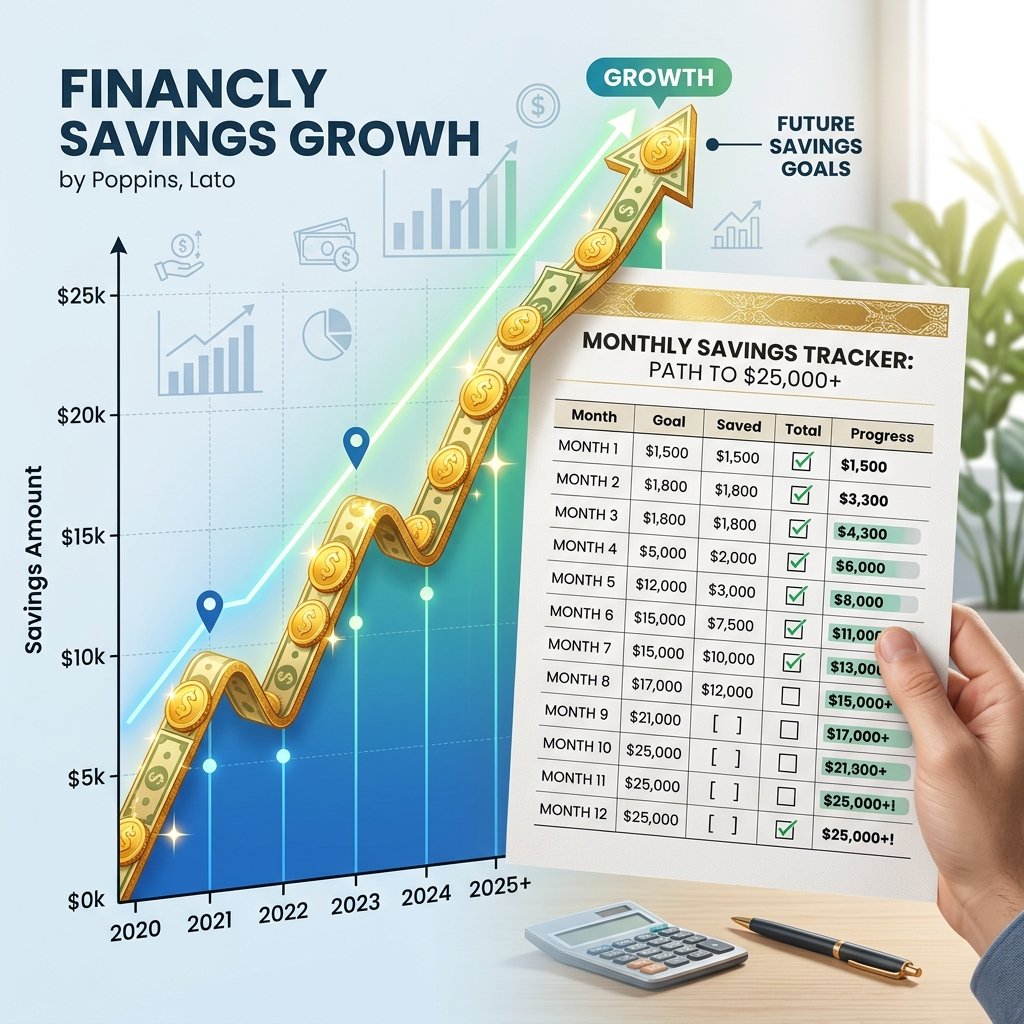
Let’s get real about the numbers. Most people think they need a massive windfall to save big. They’re waiting for a $10,000 miracle. In the world of the Frugal Hacker, we know that miracles are built $20 at a time. If you can find an extra $50 a week from your side hustle and track it visually, you aren’t just saving; you’re building an empire.
Savings Trajectory Over 12 Months
| Weekly Hustle Savings | Monthly Total | Annual Explosion |
|---|---|---|
| $25 | $100 | $1,200 |
| $50 | $200 | $2,400 |
| $100 | $400 | $4,800 |
| $250 | $1,000 | $12,000 |
Look at that table. If you can hustle hard enough to put away $100 a week—which is totally doable with a solid side gig—you are looking at nearly $5,000 by the end of the year. When you track this visually, the ‘pain’ of saving disappears because you are focused on the $5,000 finish line, not the $100 sacrifice.
The Strategy: How to Integrate Tracking with Your Hustle
Don’t Just Save, Strategize
To make your savings explode, you need a system that connects your income directly to your tracker. This is where most people fail—they wait until the end of the month to see what’s left. As a side hustler, your income is often sporadic. That’s actually an advantage for visual tracking.
The ‘Direct-to-Tracker’ Workflow
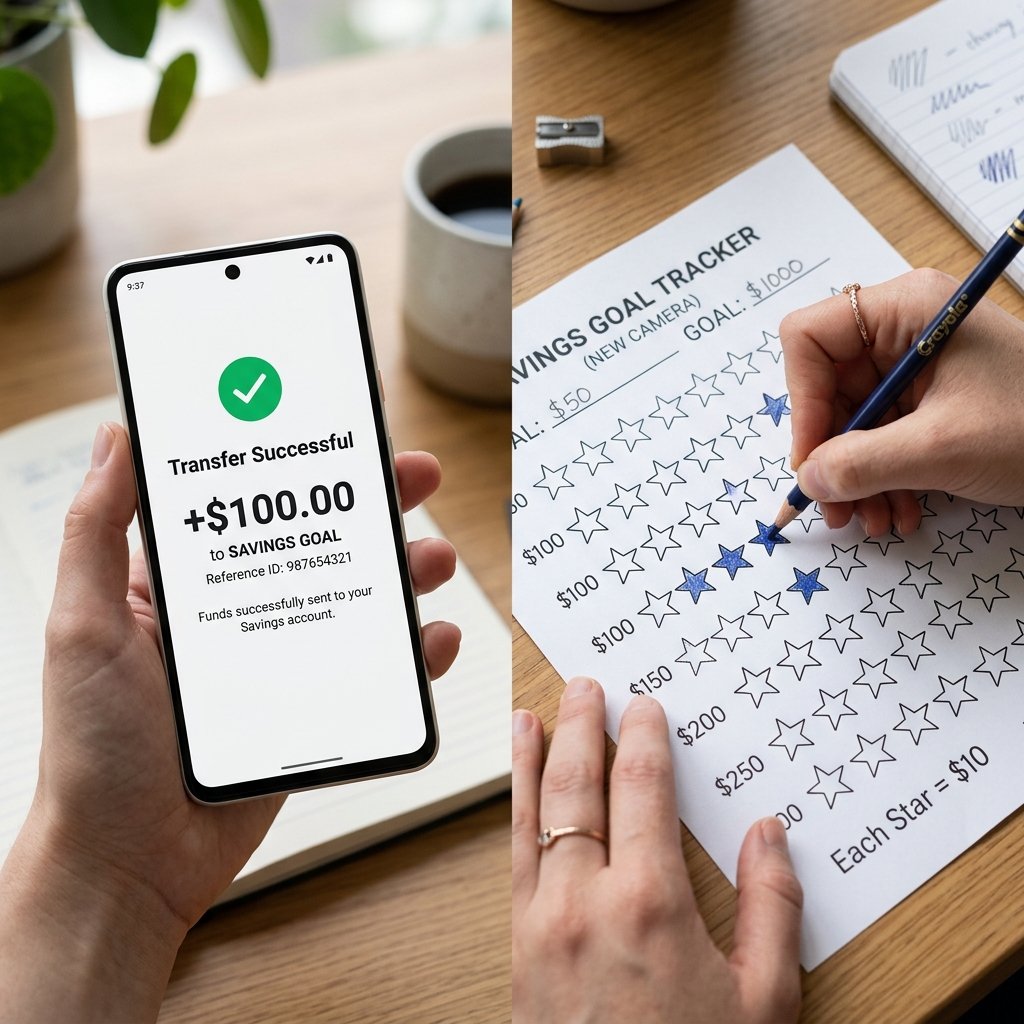
- Identify Your ‘Unit’: Decide what each icon on your tracker represents. Is it $10? $50? $100?
- The Instant Transfer: The moment you get paid for a gig (Venmo, PayPal, Cash), immediately transfer a percentage to a high-yield savings account.
- The Ceremony: Grab your marker and color in the corresponding sections. This ‘ceremony’ reinforces the positive behavior.
Pro Tip: Use different colors for different income streams. Green for your 9-5, blue for your Etsy shop, and gold for your dividend income. It turns your tracker into a heat map of your success.
The Cheat Sheet: DIY vs. Store Bought Trackers
The Frugal Hacker’s Guide to Tracker Sourcing
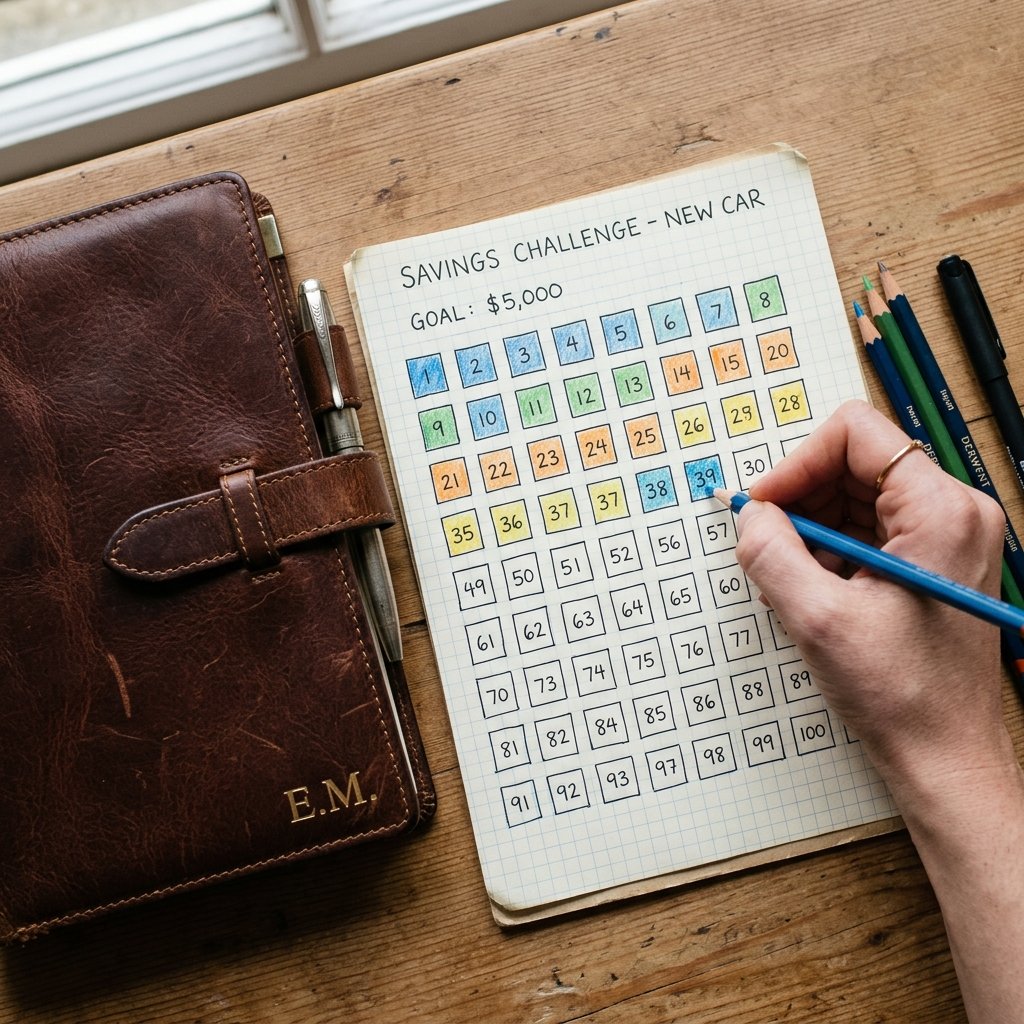
You don’t need to spend $30 on a ‘premium’ budget planner to start tracking. In fact, spending big money to save money is a rookie mistake. You have two real options: find a free printable or make your own. Here is how they stack up.
Cost Comparison: Tracker Options
| Option | Upfront Cost | Pros | Cons |
|---|---|---|---|
| DIY Hand-Drawn | $0.00 | 100% Custom, Therapeutic | Takes time to draw |
| Free Printables | $0.05 (Ink/Paper) | Professional look, instant | Generic designs |
| Etsy Digital Downloads | $2.00 – $5.00 | Highly aesthetic, motivating | Small cost involved |
| Luxury Bound Planners | $25.00 – $50.00 | Very durable, ‘status’ feel | Expensive, rigid structure |
I recommend starting with a free printable or a simple DIY grid. Save that $30 you would have spent on a luxury planner and put it directly into your first tracker square. That is how a real hacker thinks.
Common Pitfalls: Don’t Let Your Tracker Become Clutter

Avoiding the ‘Abandoned Planner’ Syndrome
We’ve all been there—you start a new habit with 100% intensity and by week three, the tracker is buried under a pile of mail. To make your savings truly explode, you have to avoid these common traps.
The Scam of ‘Perfect’ Budgeting
Don’t fall for the trap of thinking you need to track every single cent of your spending on these visual sheets. These are for savings goals, not expense tracking. Keep your expense tracking digital and automated. Use the visual tracker only for the ‘fun’ part: watching the mountain of cash grow.
Warning: If you miss a week, do not scrap the tracker. Just pick up where you left off. The goal is progress, not perfection. A tracker with a few gaps is still worth more than a blank one in the trash.
If you find yourself losing interest, change the goal. Maybe instead of a ‘New Car’ tracker, you make a ‘Freedom Fund’ tracker where every square represents one day of expenses covered. That shift in perspective can reignite your fire.
Conclusion
Your Future is Waiting to be Colored In
The difference between a side hustler who stays broke and one who builds real wealth isn’t the amount of money they make—it’s what they do with it. Visual trackers are the ultimate ‘hack’ because they turn the boring discipline of saving into a high-stakes, visual game. You’ve got the drive, you’ve got the hustle, and now you have the tool to make it all stick. Print that tracker, grab a marker, and start coloring your way to a life where you don’t have to check your bank balance before buying groceries. Go get what’s yours.
Not a financial advisor. This content is for educational and entertainment purposes only. Please consult with a professional for specific investment or tax advice.


Makenzie is the founder and lead writer at MoneyHackTips.com — a personal finance blog dedicated to delivering street-smart financial wisdom for real people on real budgets. With 300+ published articles covering everything from debt management to investing fundamentals, Makenzie’s mission is to make every dollar work harder. When not writing about money hacks, Makenzie is testing frugal living strategies, optimizing side hustles, and helping readers build financial freedom from scratch.