


Let’s get real. Being a student is a hustle. You’re juggling classes, a part-time job that barely covers coffee, and a social life that demands cash you don’t have. The official student meal plan seems to be instant ramen, panic, and a side of guilt every time you tap your card. You’re told this is just ‘the broke student experience,’ but that’s a lie. It’s not a rite of passage you have to endure; it’s a problem you can solve.
The feeling of your stomach dropping when you check your bank account isn’t normal. It’s a sign that you’re operating without a game plan. You’re letting your money—or lack of it—call the shots. Today, that ends. This isn’t another boring lecture about saving pennies. This is your playbook for taking back control. We’re going to arm you with a powerful, no-fluff strategy and the one tool you need to make it happen: a free, downloadable Excel budget template built specifically for the chaos of student life. Forget complicated apps with hidden fees. This is about clarity, power, and finally telling your money exactly where to go.
The Broke Student Trap: Why ‘Wingin’ It’ Doesn’t Work

You think you have a handle on your spending. A few bucks here for a coffee, a subscription there, ordering pizza because you’re too fried to cook. You tell yourself it’s ‘just $5,’ but those little hits are financial death by a thousand cuts. This isn’t a personal failure; it’s a trap, and it’s designed to keep you stressed and broke.
The real enemy is mindless spending. It’s the automatic tap of your card without a second thought. It’s the social pressure to go out when your wallet is screaming ‘no.’ Each of these small decisions adds up to a mountain of financial anxiety. The stress from not knowing where your money is going is more draining than an all-night study session.
The Math Doesn’t Lie
Let’s break it down. That ‘harmless’ $5 coffee you grab on the way to class four times a week? That’s not $5. It’s $20 a week. It’s $80 a month. Over a year, that’s $960. Think about what $960 means for a student. That’s a couple of expensive textbooks. That’s a flight home for the holidays. That’s a security deposit on your first apartment after graduation. It’s not about giving up coffee; it’s about making a conscious choice and understanding the trade-off. Right now, you’re making that trade without even realizing it. The goal is to move from mindless swiping to conscious spending, and that starts with seeing the numbers laid out in black and white.
The Game Plan: The 50/30/20 Rule (Student Edition)
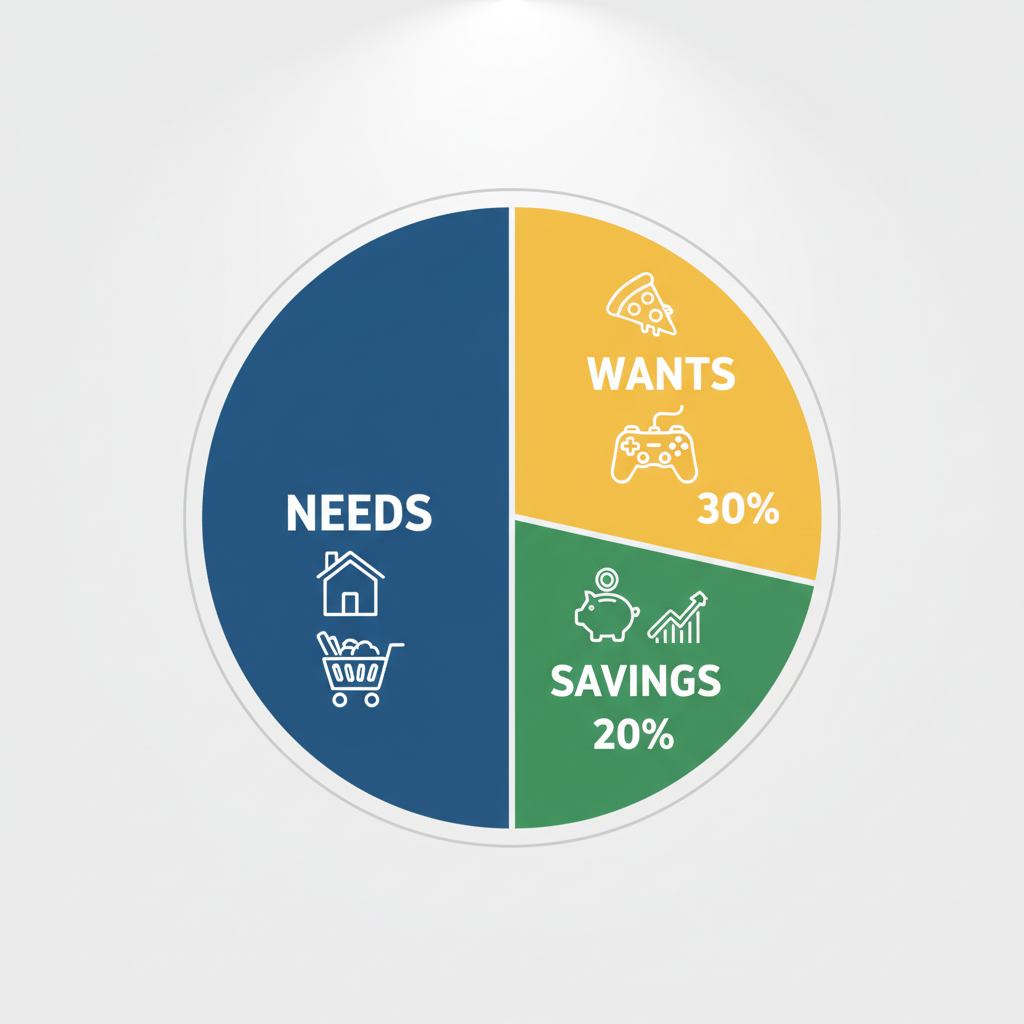
Forget everything you’ve heard about complicated budgeting methods. We’re starting with a simple, powerful framework: the 50/30/20 rule. It’s a guideline, not a prison. The goal is to give your money a job.
- 50% for NEEDS: This is the boring but essential stuff. The absolute have-to-pays. For a student, this includes rent or dorm fees, utilities, a basic grocery budget (not fancy snacks), your phone bill, and transportation to get to class and work.
- 30% for WANTS: This is the fun stuff that keeps you sane. Streaming subscriptions, that late-night pizza, clothes that aren’t from your high school closet, concert tickets. This is the category you have the most control over.
- 20% for SAVINGS & DEBT: This is for Future You. It’s the most important category for breaking the broke cycle. This includes building a tiny emergency fund (start with a goal of $500), paying more than the minimum on credit card debt, or saving up for something big.
Now, the student hustle is different. Your income might be a wild mix of part-time wages, loan disbursements, and help from family. The key is to take your TOTAL monthly income and apply the percentages. If you only bring in $1,000 a month, your map looks like this: $500 for Needs, $300 for Wants, and $200 for Savings/Debt. If your rent alone eats up 60% of your income, this rule immediately shows you that your budget is out of balance. It’s not a judgment; it’s data. It’s a signal that you need to either cut back on Wants or find a way to increase your income. This simple framework is your financial GPS.
Your Secret Weapon: The Free Excel Budget Template Breakdown

Talk is cheap. You need a tool. So we built one for you. Our Free Excel Budget Template is designed to do all the heavy lifting. It’s simple, visual, and you can customize it to your exact situation. No sign-ups, no fees, just a straightforward way to see where your money is going.
How To Use It in 5 Simple Steps:
- Download & Open: Grab the template [a placeholder for the download link would go here] and open it in Excel, Google Sheets, or any spreadsheet program. It’s ready to go.
- Plug In Your Income: Go to the ‘Income’ tab. List all the money you get each month. Your job, student loan disbursement (divided by the months it needs to cover), scholarship money, cash from your parents. Get it all down. This is your total firepower.
- List Your Fixed Costs: These are your ‘Needs’ that cost the same every month. Rent, your phone bill, car insurance, streaming services. The template will automatically subtract these from your income.
- Track Your Variable Spending (The Hard Part): For one week, be a detective. Every single time you spend money—coffee, snacks, books, Ubers—log it in the ‘Expenses’ tab. Be brutally honest. This is the most crucial step.
- Analyze the Results: At the end of the week, the template’s dashboard will give you the truth. It will show you exactly what percentage of your money is going to food, fun, and transport. You’ll see your 50/30/20 ratio in real-time. This is your moment of clarity. This is where you see the leaks in your financial boat.
The Rule of Honesty: This template only works if you’re real with yourself. No one’s judging your $20 avocado toast habit, but you have to account for it. The spreadsheet doesn’t have feelings, it only has facts.
The Grocery Hack: Slashing Your Food Bill Without Eating Cardboard

Food is often the biggest budget-wrecker for students. You’re short on time and energy, so the appeal of takeout is strong. But this is where you can make the biggest impact on your savings. Learning to master the grocery store is a superpower.
Your New Grocery List: The Champions of Cheap Eats
- Protein Power: Eggs, canned tuna, beans (black, chickpeas), lentils, and chicken thighs are your best friends. They are cheap, filling, and versatile.
- Carb Corner: Oats, rice, potatoes, and pasta. You can buy these in bulk for next to nothing and they form the base of hundreds of meals.
- Veggies & Fruits: Focus on what’s in season. Bananas, apples, carrots, onions, and frozen vegetables offer the most nutritional bang for your buck.
The number one rule is meal prep. Spend two hours on a Sunday afternoon cooking a big batch of rice, roasting some chicken, and chopping veggies. This sets you up for a week of grab-and-go meals like burrito bowls, salads, and stir-fries, killing the temptation to buy an overpriced campus lunch. Just see the difference it makes:
| Meal Component | Cost via Takeout (1 Burrito Bowl) | Cost via DIY (Makes 4+ Bowls) |
|---|---|---|
| Rice | Part of $14.00 meal | $0.25 per serving |
| Chicken | Part of $14.00 meal | $2.00 per serving |
| Beans & Corn | Part of $14.00 meal | $0.50 per serving |
| Salsa & Toppings | Part of $14.00 meal | $0.75 per serving |
| TOTAL COST | $14.00 | $3.50 |
By making it yourself, you save over $10 on a single meal. Do that three times a week, and you’re saving $120 a month. That’s real money.
Level Up: Pro-Tier Hacks to Maximize Your Cash
Once you’ve got your budget and food game sorted, it’s time to go pro. These are the street-smart hacks that separate the survivors from the thrivers.
- Weaponize Your Student ID: Your .edu email address is a key to a kingdom of discounts. Before you buy anything online, search for ‘[Brand Name] student discount.’ Use apps like UNiDAYS and Student Beans to get codes for everything from clothes to tech. Flashing your ID at local movie theaters, restaurants, and museums is a must.
- Master the 24-Hour Rule: See something you want that’s not a true ‘Need’? A new pair of sneakers, a video game, a concert ticket? Put it on a list and wait 24 hours. Don’t let impulse buys dictate your financial future. 9 times out of 10, the intense ‘need’ for it will fade, and you’ll have saved yourself $50 or more.
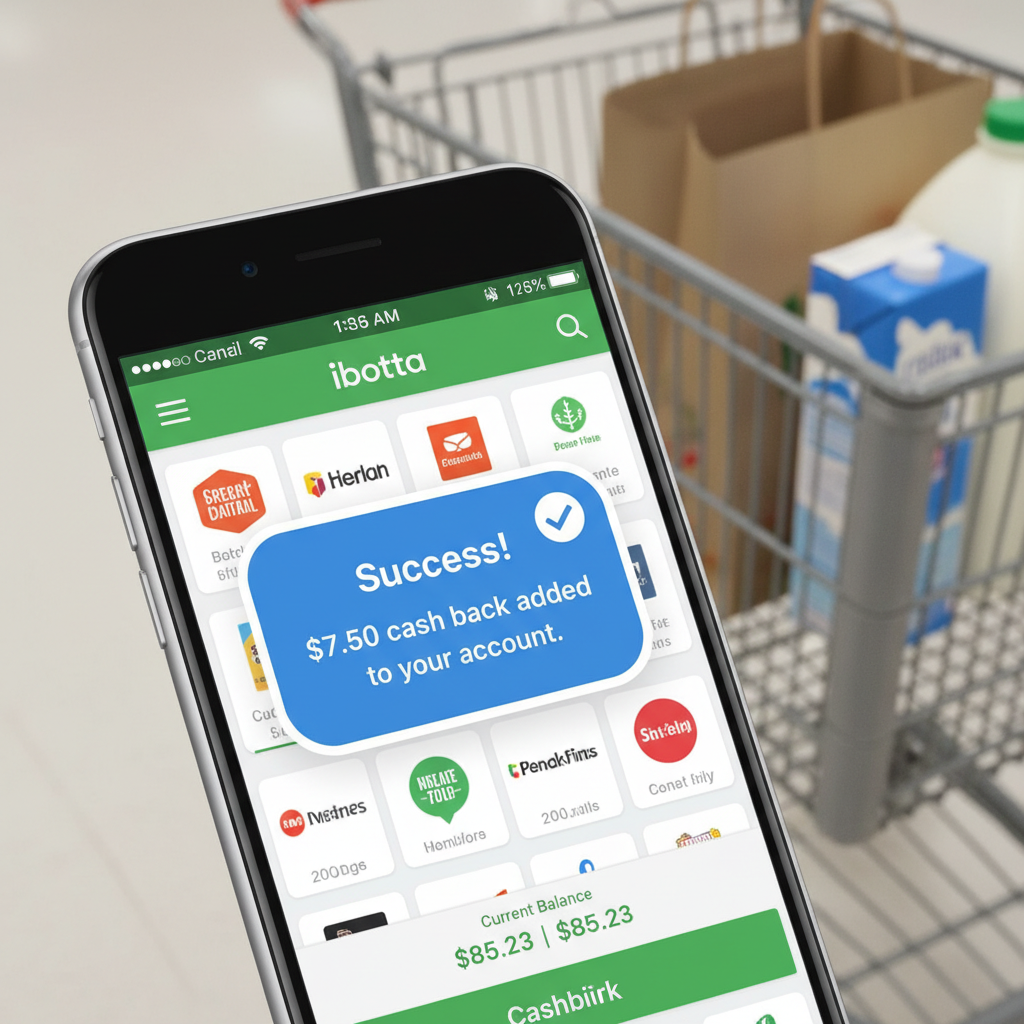
- Get Paid to Shop: This sounds like a scam, but it’s not. Use cashback apps and browser extensions for things you were going to buy anyway. Use Rakuten when you shop online. Use Ibotta to scan your grocery receipts. It’s free money. It might only be a few dollars at a time, but over a year, that can add up to $100-$200 for doing almost nothing.
- The Textbook Takedown: The campus bookstore should be your absolute last resort. It’s almost always a rip-off. Rent your textbooks from Chegg or Amazon. Search for the book’s ISBN on sites like BookFinder.com to compare prices from thousands of sellers. And don’t forget to check your university library—they often have copies on reserve for free.
- Automate Your Wealth: The easiest way to save is to make it invisible. Log into your bank account right now and set up an automatic transfer. Every Friday, move just $10 from your checking to your savings. You won’t even feel it. But at the end of the year, you’ll have $520 sitting there for an emergency or a well-deserved treat. This is how you build a safety net without even trying.
Conclusion
Look, the ‘broke student’ narrative is optional. You don’t have to participate. You don’t have to live with that constant, low-level financial anxiety. The power to change your situation is literally in your hands. It starts with deciding that you’re in charge, not your bank balance.
This guide and the free Excel template aren’t magic. They are tools. They provide clarity and a plan of attack. Budgeting isn’t about restriction; it’s about permission. It’s about telling your money, ‘I’m going to spend you on this, so I can save for that.’ It’s about funding the life you actually want, not just the one that happens to you. Download the template. Spend 30 minutes this week filling it out. It will be the most profitable half-hour of your semester. Stop surviving. It’s time to start building.


Makenzie is the founder and lead writer at MoneyHackTips.com — a personal finance blog dedicated to delivering street-smart financial wisdom for real people on real budgets. With 300+ published articles covering everything from debt management to investing fundamentals, Makenzie’s mission is to make every dollar work harder. When not writing about money hacks, Makenzie is testing frugal living strategies, optimizing side hustles, and helping readers build financial freedom from scratch.