


Listen up. That FAFSA form isn’t just paperwork; it’s the gatekeeper to thousands, even tens of thousands, of dollars in free money for college. But most people fill it out all wrong, leaving a fortune on the table for someone else to grab. They treat it like a tax return, but it’s a completely different game with its own set of rules. And if you don’t know the rules, you’re guaranteed to lose.
Forget the generic advice you’ve heard from guidance counselors. We’re talking about real, actionable strategies—the kind of street-smart hacks that can dramatically lower your Student Aid Index (SAI), the number that colleges use to decide how much you can afford to pay. A lower SAI means a higher financial aid offer. It’s that simple. In this guide, we’re breaking down 7 closely-guarded secrets that will empower you to take control of the financial aid process and fight for every last dollar you deserve. It’s time to stop paying retail for college.
Secret #1: The Parent Trap – Strategically Choose the Filer

This is the single biggest mistake divorced or separated parents make. They assume they both need to be on the form, or they just pick one at random. Wrong. The FAFSA has a specific rule: only the custodial parent—the parent the student lived with more during the past 12 months—is required to fill out the FAFSA. If living time was split exactly 50/50, then the parent who provided more financial support files.
Here’s the hack: If there’s a significant income difference between parents, you need to play this strategically. If possible, ensure the student legally lives more with the lower-income parent during the 12 months leading up to filing the FAFSA. This isn’t about gaming the system; it’s about following the rules to your maximum advantage.
The Math Breakdown
Let’s say Parent A earns $120,000 a year and Parent B earns $55,000. If Parent A is the custodial parent, your SAI will be sky-high, likely wiping out your eligibility for need-based aid like the Pell Grant. But if Parent B is the legal custodial parent, their lower income and assets become the basis for the calculation. This one move could be the difference between getting $0 in grant aid and getting over $7,000 from the Pell Grant alone, plus institutional aid from the college itself.
Key Rule: It’s not about who claims the child on their taxes. It’s about who the student physically lived with the most. Document it if you have to. This is a business decision.
Secret #2: The Asset Shell Game – Legally Shield Your Savings

The FAFSA wants to know your net worth, but it doesn’t count everything equally. Money in your kid’s name is assessed at a much higher rate (20%) than money in the parents’ name (up to 5.64%). And some assets aren’t counted at all. This is where you get smart.
Your primary home equity? Not counted on the FAFSA. Money in qualified retirement accounts like a 401(k), 403(b), or IRA? Not counted. The cash value of a life insurance policy? Not counted. Money in a regular savings or brokerage account? 100% counted.
The hack is to legally move money from ‘countable’ assets to ‘non-countable’ assets before you file the FAFSA. If you have $20,000 sitting in a savings account, consider using it to pay down high-interest debt like credit cards or a car loan. Or, if you haven’t maxed out your retirement contributions for the year, make a lump-sum contribution. You’re not spending the money; you’re just repositioning it where the FAFSA can’t see it.
Actionable Steps:
- Pay Down Debt: Use non-retirement savings to pay off credit cards, auto loans, or other personal debt. This reduces your cash on hand, which is a reportable asset.
- Max Out Retirement: Contribute the maximum allowable amount to your 401(k) or a traditional IRA. The money is still yours, but it’s shielded from the FAFSA calculation.
- Prepay Major Expenses: If you know you have a big expense coming up, like a new roof or property taxes, pay for it before the FAFSA filing date from your savings.
Secret #3: The Income Squeeze – Master the Calendar

The FAFSA uses tax information from the ‘prior-prior year.’ For the 2024-2025 FAFSA, they look at your 2022 tax return. This means you have a long runway to plan. Your income during the student’s sophomore and junior years of high school is what really counts.
The hack is to minimize your Adjusted Gross Income (AGI) during that critical base year. This doesn’t mean quitting your job. It means being strategic about financial moves that create taxable income.
- Capital Gains: Avoid selling stocks or investments that will realize a large capital gain during your income base year. If you must sell, try to do it the year before or the year after. Selling $30,000 in stock could reduce your aid eligibility by nearly $15,000.
- Bonuses: If you have any control over when you receive a work bonus, try to defer it to outside the base income year. Ask your employer if it can be paid out in January of the next year instead of December.
- Retirement Withdrawals: Do not, under any circumstances, take a withdrawal from a retirement account during the base year. It counts as taxable income and will devastate your aid eligibility.
Think of your income during the student’s sophomore and junior years of high school as ‘super-taxed’ by the financial aid formula. Every extra dollar you earn can reduce your aid package by up to 47 cents. Be smart about timing.
Secret #4: The Sibling Multiplier – More Kids, More Aid

This used to be a huge hack, but it’s changed. Let’s get this straight. Under the old FAFSA system, your Expected Family Contribution (EFC) was split between the number of kids you had in college. Two kids meant your EFC for each was cut in half. That was huge.
With the new Student Aid Index (SAI) system, that automatic division is gone. So, is the hack dead? Not entirely. It’s just different. While the federal formula doesn’t automatically divide your SAI, many colleges and universities do. When they calculate their own institutional aid packages, they absolutely take into account that your resources are being stretched across multiple tuitions.
The New Strategy:
You must still list all children who will be in college on your FAFSA. The information is still collected. When you get your aid offers, if they look low, this is your prime leverage for an appeal (see Secret #6). You call the financial aid office and make the case: ‘My SAI might be X, but you must understand that has to cover two (or three) tuitions. We need you to reconsider our institutional grant.’ Many schools will adjust their offer when reminded of this reality. The federal government may have changed the rule, but the reality of a family’s budget has not. Use that reality to your advantage.
Secret #5: Beyond the FAFSA – The CSS Profile Power Play
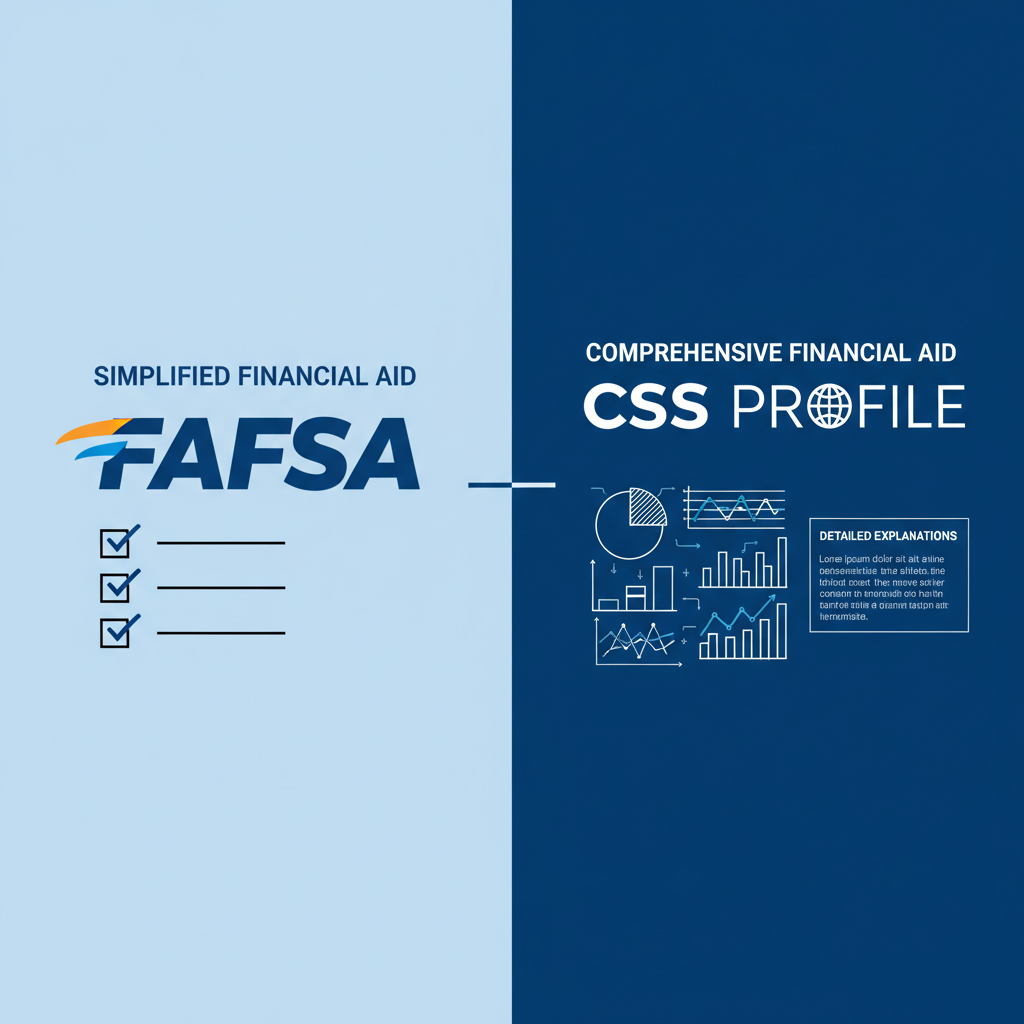
If your kid is applying to any of the roughly 200 selective, private colleges, you’ll likely have to fill out the CSS Profile in addition to the FAFSA. This form is a deep dive into your finances, and it has different rules you can leverage.
The CSS Profile often counts things the FAFSA ignores, like your primary home equity and non-custodial parent income. This can be bad news. But it also allows for things the FAFSA doesn’t, like reporting medical expenses, private school tuition for younger siblings, and other special circumstances that can lower your expected contribution.
CSS Profile Hacks:
- Explain Everything: There’s a ‘Special Circumstances’ section. Use it. Detail any and all financial hardships, from high medical bills to caring for an elderly parent. Quantify everything.
- Business Owners: The CSS Profile digs into business assets. It’s crucial to understand how depreciation and business expenses are treated. Work with an accountant who understands the CSS Profile, not just taxes.
- Negotiate Home Equity: The CSS Profile asks for your home’s value. Don’t just pull a Zestimate. Use a conservative, defensible value. If the market is shaky, you can argue for a lower valuation, which can translate into thousands more in aid.
Treat the CSS Profile as your chance to tell your family’s complete financial story, not just the numbers on a tax return. The more context you provide, the better your chances of a generous aid package.
Secret #6: The Art of the Appeal – Negotiate Your Offer

Your first financial aid offer is not final. It’s an opening bid. Most families just accept it without a peep, which is exactly what colleges hope for. But if your financial situation has changed since that ‘prior-prior year’ tax return was filed, you have every right to appeal for a ‘professional judgment review’.
Valid reasons for an appeal include:
- A job loss or significant reduction in income for either a parent or the student.
- A medical or family emergency that resulted in large, unreimbursed expenses.
- Divorce or separation of the parents after filing the FAFSA.
- A one-time income event (like a retirement withdrawal) that inflated your income in the base year but won’t be repeated.
Don’t just send a sad email. Be professional. Write a formal letter, provide documentation (termination letters, medical bills, etc.), and be specific about what you’re asking for. And don’t forget to mention competing offers. If another, similar college offered you $5,000 more, say so. They compete for students just like businesses compete for customers.
The Script to Use on the Phone:
“Hello, my name is [Your Name] and my child, [Student’s Name], has been accepted. We were thrilled with the acceptance but found the financial aid offer to be less than we had hoped for, given our recent job loss. I’ve sent a formal letter with documentation, and I’m calling to ensure you received it and to ask about the process for a professional judgment review. We are very excited about [College Name], and a re-evaluation of our aid package would make it possible for [Student’s Name] to attend.”
Secret #7: The ‘Independent’ Gambit – A High-Stakes Move

This is the nuclear option, and it’s not for everyone. Achieving ‘independent student’ status means your parents’ income and assets are completely excluded from the FAFSA. For a student from a high-income family, this can mean going from $0 in aid to qualifying for the maximum Pell Grant and other substantial need-based aid.
But it’s incredibly difficult to qualify. You can’t just decide you’re independent. You must meet one of the strict federal criteria:
- Being 24 years or older.
- Being married.
- Being a graduate or professional student.
- Having a legal dependent other than a spouse.
- Being an active-duty member of the U.S. armed forces or a veteran.
- Being an orphan, in foster care, or a ward of the court at any time since age 13.
- Being an emancipated minor or in a legal guardianship.
- Being an unaccompanied youth who is homeless or at risk of being homeless.
Simply living on your own or your parents refusing to pay is not enough. However, if you legitimately meet one of these criteria, you must pursue it. It’s a golden ticket. For some, this might mean delaying college until age 24 or getting married, which are huge life decisions. But for a student who is truly on their own due to extreme circumstances, a ‘dependency override’ appeal with the financial aid office is possible, though it requires extensive documentation of an abusive or untenable home situation.
Conclusion
The financial aid system is complex, but it’s not unbreakable. It has rules, and now you have the playbook. Filling out the FAFSA isn’t a passive activity; it’s an active strategy. By choosing the right filer, legally shielding your assets, timing your income, leveraging your circumstances, and appealing your offer, you shift the power back into your hands. You’re no longer just a supplicant asking for money; you’re a savvy consumer demanding the best possible price for one of the biggest investments of your life.
Don’t be intimidated. Don’t leave that money on the table. Use these secrets, fight for your financial future, and get the education you deserve without the mountain of debt they want you to carry.
Disclaimer: I am not a financial advisor. The information provided in this article is for informational purposes only. You should consult with a qualified financial professional to understand how this information applies to your specific situation.


Makenzie is the founder and lead writer at MoneyHackTips.com — a personal finance blog dedicated to delivering street-smart financial wisdom for real people on real budgets. With 300+ published articles covering everything from debt management to investing fundamentals, Makenzie’s mission is to make every dollar work harder. When not writing about money hacks, Makenzie is testing frugal living strategies, optimizing side hustles, and helping readers build financial freedom from scratch.