


Hey there, frugal friends! Let us have a real talk about something that frustrates almost everyone trying to live a healthy lifestyle: the outrageous price of organic food. We have all been there. You walk into a high-end grocery store, pick up a beautiful, pesticide-free apple, check the price tag, and suddenly feel like you need to take out a second mortgage just to make a fruit salad. It is enough to make you want to throw in the towel and head straight for the dollar menu. But hold up! What if I told you that eating like a millionaire does not actually require a millionaire’s bank account? As your resident frugal hacker, I am here to tell you that buying organic food on a tight budget is 100% possible. You just need to know how to play the game.
The truth is, the grocery industry relies on convenience and ignorance. They want you to pay a premium for the “Organic” label because they know health-conscious shoppers will blindly hand over their hard-earned cash. But we are smarter than that. We are going to use street-smart strategies, insider hacks, and a little bit of elbow grease to bypass the markup. By the end of this guide, you will know exactly how to fill your fridge with top-tier, nutrient-dense organic foods while keeping your grocery budget shockingly low. We are talking about shaving hundreds of dollars off your monthly food bill without sacrificing quality. Grab a cup of coffee, pull up a chair, and let us dive into the ultimate action plan for eating organic without going broke.
The Golden Rule: Master the Dirty Dozen and Clean Fifteen

If you take nothing else away from this guide, let it be this: you do not need to buy EVERYTHING organic. That is the quickest way to drain your bank account. Instead, you need to be strategic about where you spend your organic dollars. Every year, the Environmental Working Group (EWG) releases two lists that should become your frugal grocery shopping bible: The Dirty Dozen and The Clean Fifteen.
The Dirty Dozen represents the fruits and vegetables that are heavily sprayed with pesticides. These are the items where you absolutely want to spend the extra money on the organic version. Think strawberries, spinach, kale, apples, and grapes. Their thin skins mean they absorb chemicals like a sponge. On the flip side, the Clean Fifteen are the crops that require very little pesticide use or have thick, inedible skins that protect the flesh inside. Think avocados, pineapples, onions, and sweet corn. Buying organic versions of the Clean Fifteen is essentially throwing your money away.
The Frugal Hacker Rule #1: Never pay the organic premium for thick-skinned produce. Save your money for the items that actually matter to your health.
Let us look at how this simple strategy can save you money on a typical shopping trip.
| Produce Item | Conventional Price | Organic Price | The Frugal Hacker Move |
|---|---|---|---|
| Strawberries (1 lb) | $3.99 | $5.99 | Buy Organic (Dirty Dozen) |
| Avocados (each) | $0.99 | $2.49 | Buy Conventional (Clean Fifteen) |
| Spinach (bunch) | $1.99 | $3.49 | Buy Organic (Dirty Dozen) |
| Pineapple (each) | $2.99 | $4.99 | Buy Conventional (Clean Fifteen) |
By simply knowing what to prioritize, you are already keeping an extra $3.50 in your pocket just on avocados and pineapples alone. Over a year, this one simple swap can save you upwards of $180!
Hack Your Local Farmers Market Like a Pro

Farmers markets are often viewed as expensive weekend outings for the elite, but if you know how to work them, they are actually goldmines for cheap organic produce. The secret? Timing and communication. If you show up at 9:00 AM on a Saturday, you are going to pay top dollar. But if you roll up about 30 minutes before the market closes, the game completely changes.
Farmers do not want to pack up their unsold produce, load it back into their trucks, and haul it home where it might spoil. They want to liquidate their inventory. This is your moment to strike. Walk around, find the vendors who still have a surplus of organic veggies, and get ready to negotiate. Do not be intimidated; haggling is expected and welcomed at farmers markets if done respectfully.
The Frugal Hacker Script: “Hey there! I see you have a lot of those beautiful organic heirloom tomatoes left. If I take that whole flat off your hands so you don’t have to pack it up, would you be willing to let it go for $15?”
More often than not, they will say yes, or counter with a price that is still dramatically lower than the grocery store. Another pro-tip: Look for “seconds” or “ugly produce.” These are fruits and vegetables that are perfectly fine nutritionally but might have a weird shape or a small blemish. Farmers usually sell these at a massive discount, sometimes up to 50% off! They are perfect for smoothies, soups, and sauces where appearance does not matter at all.
Embrace Store-Brand Organics and Discount Grocers

We need to break the stigma that “generic” means lower quality. When it comes to organic food, the USDA organic certification standards are exactly the same whether the product has a fancy designer label or the store’s in-house brand. Stores like Aldi, Trader Joe’s, Costco, and even Walmart have aggressively expanded their organic lines, and they are practically giving it away compared to boutique health food stores.
Aldi, in particular, is a frugal hacker’s paradise. Their “Simply Nature” line is entirely organic and non-GMO, and the prices will make you do a double-take. Costco is another heavy hitter. Buying organic pantry staples like quinoa, oats, maple syrup, and frozen berries in bulk at Costco can cut your grocery bill in half. Yes, you have to pay an upfront membership fee (usually around $60), but you will easily recoup that cost in your first two or three shopping trips.
Let us do some math and look at a real-world cost comparison between a high-end brand name and a discount store brand for identical organic products.
| Organic Pantry Staple | Name Brand Price (Premium Store) | Store Brand Price (Discount Grocer) | Your Savings |
|---|---|---|---|
| Organic Rolled Oats (32 oz) | $7.99 | $3.49 | $4.50 |
| Organic Maple Syrup (12 oz) | $12.99 | $6.99 | $6.00 |
| Organic Extra Virgin Olive Oil (16 oz) | $14.99 | $7.49 | $7.50 |
| Organic Peanut Butter (16 oz) | $6.99 | $3.99 | $3.00 |
Just by switching to store-brand organics for these four basic pantry items, you are saving $21.00. Do that every month, and you are keeping over $250 a year in your bank account. Stop paying for fancy marketing and start paying for the food!
Tech Tools: Apps That Pay You to Eat Organic
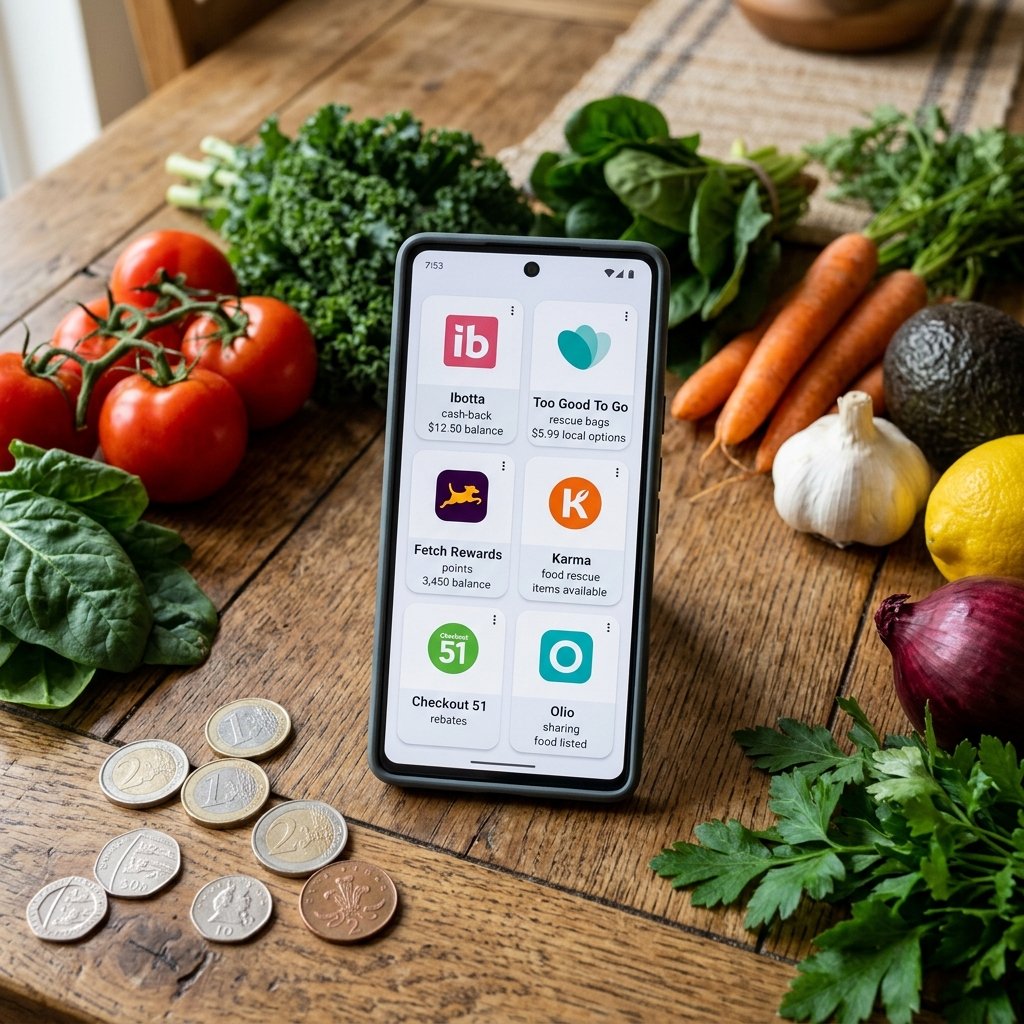
Welcome to the 21st century, where your smartphone is your best weapon against inflation. If you are not using grocery rebate apps, you are literally leaving free money on the table. There is a whole ecosystem of tech tools designed to help you score cheap organic food and get cash back on your purchases.
First up are the cash-back giants: Ibotta and Fetch Rewards. While these apps used to focus heavily on processed junk food, they now feature massive cash-back offers on organic brands, fresh produce, and “any item” receipts. Simply scan your receipt after shopping, and watch the cash roll in. You can easily make an extra $10 to $20 a month just by scanning receipts for stuff you were going to buy anyway.
But the real secret weapons for the frugal hacker are food rescue apps like Flashfood and Too Good To Go.
The Frugal Hacker Strategy: Grocery stores throw away millions of pounds of perfectly good organic food every year just because it is nearing its “best by” date. Food rescue apps let you buy this food for pennies on the dollar.
With Flashfood, you can browse discounted food from local grocery stores directly on your phone, pay through the app, and pick it up at the customer service desk. It is incredibly common to find organic meat, dairy, and produce marked down by 50% to 75%. Too Good To Go allows you to buy “surprise bags” of surplus food from local bakeries, cafes, and health food stores for a fraction of the retail price. It is eco-friendly, budget-friendly, and feels like a treasure hunt!
Buy in Bulk and Freeze Like a Boss
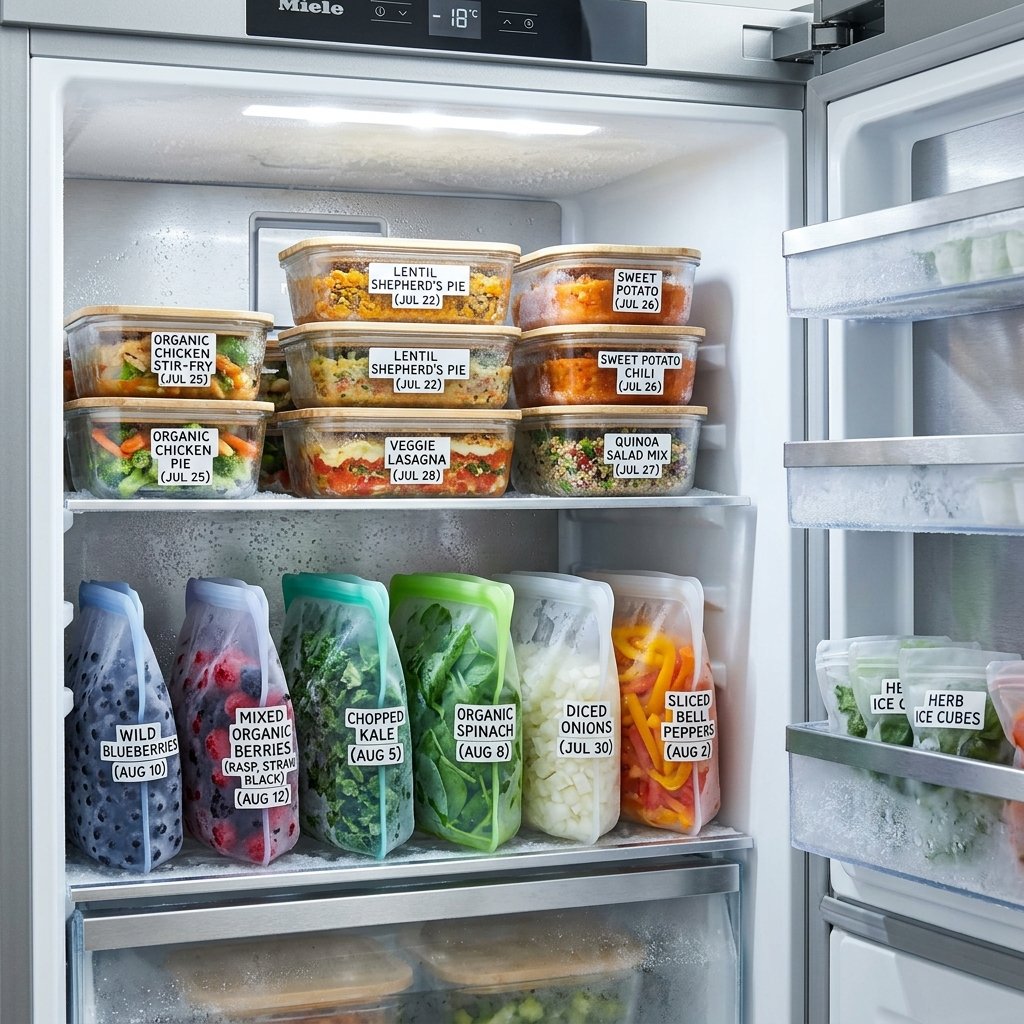
One of the biggest complaints about buying organic produce is that it goes bad faster than conventional produce because it lacks synthetic preservatives. There is nothing more heartbreaking (and financially draining) than throwing away a $6.00 box of moldy organic spinach. The solution? Become a master of the freezer.
Buying in bulk is always cheaper, but it only works if you can preserve the food before it spoils. When you spot a massive sale on organic berries, bananas, or greens, buy as much as you can reasonably afford and process it immediately. Wash and dry your greens, portion them into freezer-safe bags, and freeze them flat. They are now perfect for tossing into morning smoothies. For berries and bananas, lay them out on a baking sheet lined with parchment paper, freeze them solid, and then transfer them to a bag. This prevents them from turning into a giant, unusable block of ice.
You can also apply this strategy to organic meats. Organic chicken breasts and grass-fed ground beef can easily cost upwards of $9.99/lb. But if you buy a massive family pack when it goes on sale for $5.99/lb, you can divide it into individual portions, wrap them tightly in freezer paper, and store them for months. You are essentially locking in the sale price and protecting yourself against future price hikes. A well-stocked freezer is a frugal hacker’s ultimate savings account.
Grow Your Own: The Ultimate Frugal Flex

You do not need a sprawling backyard or a tractor to grow your own organic food. Even if you live in a tiny 500-square-foot apartment, you can start hacking your grocery bill with a windowsill garden. The easiest and most profitable place to start is with fresh herbs. Have you looked at the price of organic basil or thyme at the grocery store lately? They charge $3.99 for a tiny plastic clamshell that wilts in three days!
For the cost of one of those clamshells, you can buy a packet of organic seeds and some potting soil, and grow a continuous supply of herbs for months. You can also practice the art of “regrowing.” When you buy organic green onions, celery, or romaine lettuce, do not throw the root base away! Place it in a shallow glass of water on your windowsill, and watch it magically sprout new growth in a matter of days. It is literally free food.
Let us look at the undeniable math of a DIY herb garden versus buying from the store over a 6-month period.
| Herb (6 Months Supply) | Store-Bought Cost (2 packs/month) | DIY Grow Cost (Seeds + Soil) | Your Savings |
|---|---|---|---|
| Organic Basil | $47.88 | $4.00 | $43.88 |
| Organic Cilantro | $35.88 | $3.50 | $32.38 |
| Organic Green Onions | $23.88 | $0.00 (Regrown from scraps) | $23.88 |
Just by growing three simple things on a sunny windowsill, you are saving nearly $100! Plus, there is an immense sense of pride that comes from eating something you grew with your own hands. It is the ultimate frugal flex.
Conclusion
Eating organic food does not have to be a luxury reserved for the rich and famous. By shifting your mindset, learning the rules of the grocery game, and applying these frugal hacks, you can absolutely eat like a millionaire on a shoestring budget. Remember, the goal isn’t to be perfect; it is to make smarter, more strategic choices. Start small. Memorize the Dirty Dozen, switch to store-brand pantry staples, or download a cash-back app today. Every dollar you save is a dollar you can put toward your financial freedom. You deserve to eat high-quality, nourishing food, and now you have the blueprint to make it happen without going broke. Now get out there and start hacking your grocery bill!
Disclaimer: The information provided in this article is for educational and informational purposes only. I am a frugal living enthusiast, not a licensed financial advisor. Always do your own research and consult with a professional before making major changes to your budget or financial strategy.


Makenzie is the founder and lead writer at MoneyHackTips.com — a personal finance blog dedicated to delivering street-smart financial wisdom for real people on real budgets. With 300+ published articles covering everything from debt management to investing fundamentals, Makenzie’s mission is to make every dollar work harder. When not writing about money hacks, Makenzie is testing frugal living strategies, optimizing side hustles, and helping readers build financial freedom from scratch.