
Double Your Income: How to Learn to Code for $0
Let’s cut the crap. You’re here because you’re tired of the grind. You’re tired of your paycheck disappearing the second it hits your account. You see people in tech pulling in six figures and think, ‘That could never be me.’ Wrong. That’s the old way of thinking, the one that keeps you stuck. The idea that you need a $100,000 computer science degree to make real money is a myth sold to you by institutions that profit from your debt. The truth? The internet is the ultimate equalizer. You have access to the exact same knowledge as a Stanford grad, and you can get it for $0. This isn’t a ‘get rich quick’ scheme; this is a ‘get smart and work your ass off’ plan. This is your blueprint to learning a high-income skill for free and using it to double, or even triple, your income. It’s time to stop trading your time for pennies and start building real wealth. Let’s get to work.
The Grind is Over: Why Coding is Your Ultimate Financial Hack

Real Talk on Earning Potential
Forget your hourly wage job for a second. Let’s talk numbers that actually change your life. The demand for developers is insane, and it’s not slowing down. Companies are desperate for people who can build and maintain websites, apps, and software. They care about one thing: can you do the work? They don’t care if you learned on your couch or in a fancy lecture hall. This is where you slide in. You don’t need permission to enter this field; you just need the skills.
Even entry-level and junior developer roles can start at $60,000 to $80,000 per year. Compare that to the federal minimum wage, which works out to about $15,080 a year. We’re talking about a 4x or 5x increase from the jump. And that’s just the start. With a couple of years of experience, a mid-level developer can easily command over $100,000. This isn’t lottery money; it’s the direct result of learning a valuable skill. Check this out:
| Job Title | Typical Annual Salary (Full-Time) | Potential Freelance Hourly Rate |
|---|---|---|
| Retail / Food Service | $25,000 – $35,000 | N/A |
| Junior Web Developer (Year 1) | $60,000 – $80,000 | $30 – $50/hr |
| Mid-Level Software Developer (Year 3+) | $90,000 – $120,000+ | $60 – $100+/hr |
The best part? You can start earning on the side. Pick up a freelance gig building a simple website for a local business for $500. Then another for $1,000. Suddenly you’ve made an extra $1,500 this month while you’re still at your day job. That’s the power of this hustle. It’s scalable, it’s in-demand, and you can start for free.
Your Zero-Cost Curriculum: The Step-by-Step Game Plan
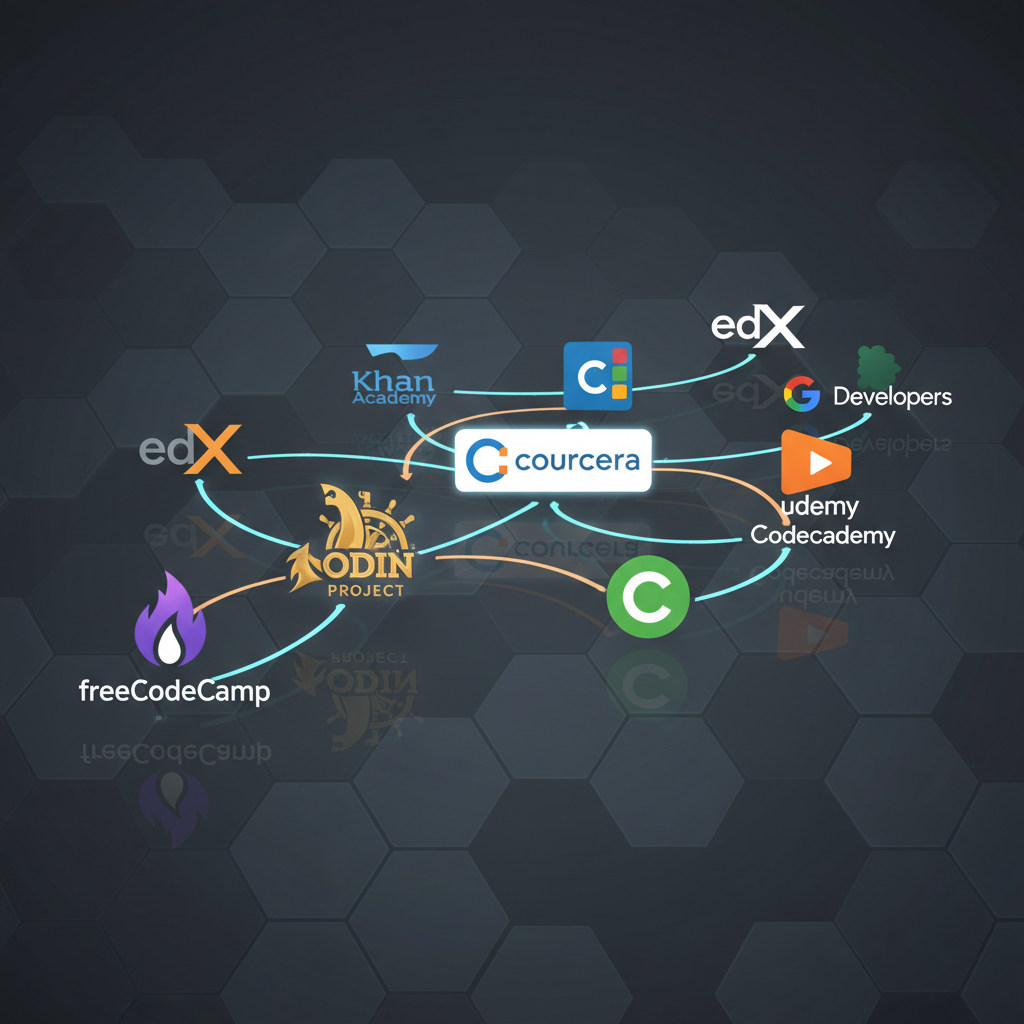
Alright, no more talk. It’s time for action. A ‘curriculum’ sounds expensive, but yours is going to be 100% free. You just need to supply the grit and the consistency. Don’t jump around. Follow this road map, and you’ll build a solid foundation that companies will actually pay for.
Phase 1: The Absolute Basics (The ‘See-Through’ of the Web)
This is non-negotiable. You have to learn the structure and styling of the web first. It’s like learning the alphabet before you write a book.
- HTML (HyperText Markup Language): The skeleton of every webpage.
- CSS (Cascading Style Sheets): The skin and clothes that make webpages look good.
Your Go-To Free Resource: freeCodeCamp. Their ‘Responsive Web Design’ certification is a comprehensive, hands-on course that takes you from zero to building actual web pages. It’s free. Period. No upsells, no ‘premium’ content. Just pure learning.
Phase 2: Making It Work (The Brains of the Operation)
Once you can build a static, good-looking page, you need to make it interactive. This is where the magic happens, and it’s the single most important language for web developers.
- JavaScript: This is what makes websites do things—clickable buttons, pop-up forms, interactive maps. It’s the engine under the hood.
Your Go-To Free Resource: Stick with freeCodeCamp for their ‘JavaScript Algorithms and Data Structures’ certification. For a more in-depth, project-based approach, check out The Odin Project. It’s a full-stack curriculum that is legendary in the self-taught developer community, also 100% free.
Phase 3: Leveling Up (Building Faster and Smarter)
Once you have a solid grasp of JavaScript, you learn frameworks and libraries. These are tools that let you build complex applications more efficiently. Don’t even think about this phase until you’re comfortable with Phase 2.
- A JavaScript Framework (like React): React was created by Facebook and is used by huge companies like Netflix, Instagram, and Airbnb. Learning it makes you incredibly marketable.
Your Go-To Free Resource: The official React documentation (reactjs.org) is fantastic. Supplement this with countless free, high-quality tutorials on YouTube. A search for ‘React full course for beginners’ will give you dozens of options from world-class instructors, for free.
Build It and They Will Pay: Your Free Portfolio is Your Resume
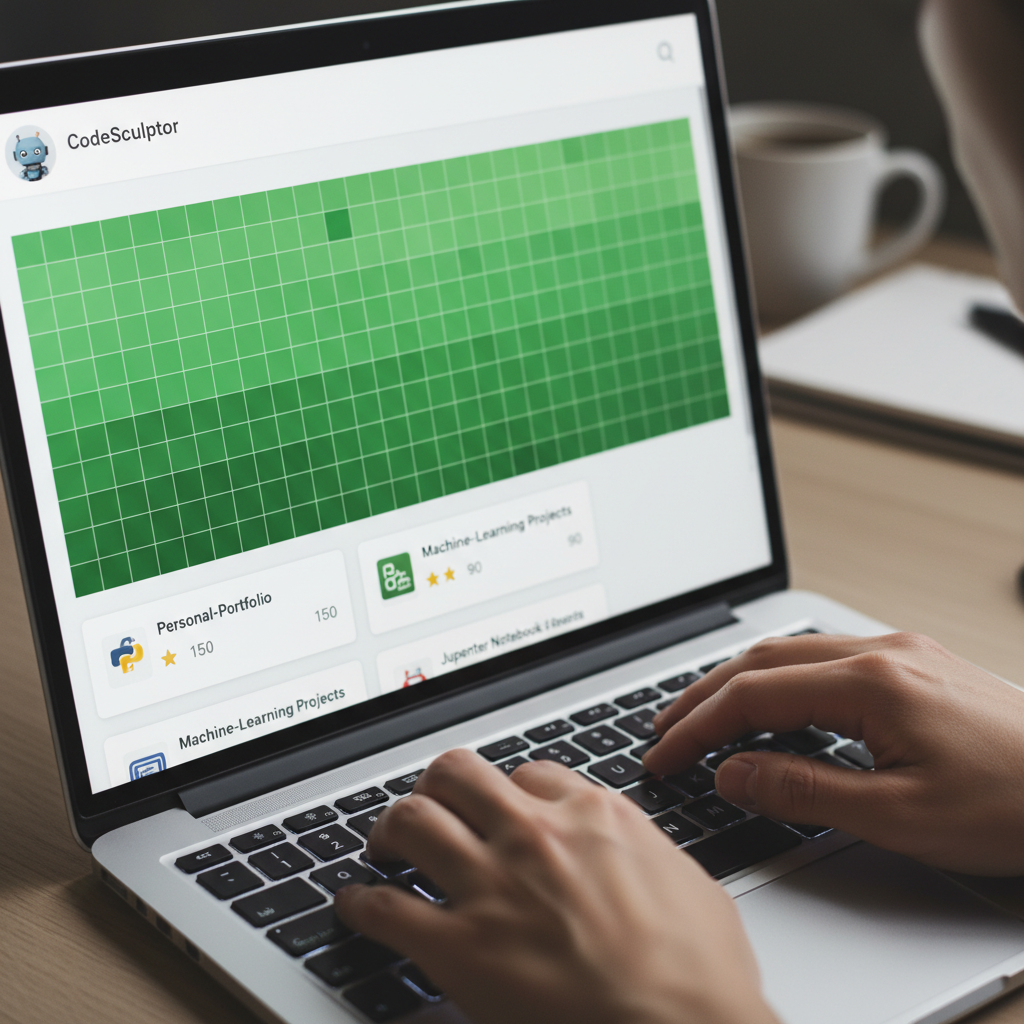
A traditional resume is worthless in this game without proof. Your portfolio of projects is your resume. It’s your undeniable evidence that you can build stuff that works. You don’t need to work for a company to build a portfolio; you build it yourself, for free.
Step 1: Get on GitHub. Today.
GitHub is a platform where developers store their code. Think of it as a social network for programmers. Create a profile right now. It’s free. Every project you build, every line of code you write from your learning journey, should be ‘pushed’ to your GitHub. A potential employer will look at your GitHub profile before they even look at your name. A busy profile shows you’re active, learning, and passionate.
Step 2: Build Three Killer Projects
Don’t just complete tutorials. Build your own projects. They don’t have to be the next Facebook, but they have to be clean, functional, and solve a problem (even a small one).
- Project 1: A Personal Portfolio Website. Build a website about yourself. Use HTML, CSS, and a little JavaScript to make it look professional and showcase your other projects. This shows you can market yourself.
- Project 2: A Functional App with an API. An API (Application Programming Interface) is just a way to get data from another service. Build a simple weather app that pulls data from a free weather API. This shows you can work with external data, a core skill for any developer.
- Project 3: A Clone of a Simple Website. Pick a simple, well-designed website and try to rebuild it from scratch. It could be a login page, a product landing page, or a simple blog layout. This shows you have an eye for detail and can replicate existing designs.
Host these projects for free using services like GitHub Pages or Netlify. Now when you apply for jobs, you’re not sending a piece of paper; you’re sending a link to live, working applications that you built from nothing.
The Hustle: Landing Your First Check

You’ve got the skills. You’ve got the proof. Now it’s time to get paid. Don’t wait for the ‘perfect’ job. Your first goal is to get someone to pay you for your code. This validates everything.
Strategy 1: The Local Hustle
Look around your own town. Every dentist, landscaper, and pizza shop needs a website, and many have terrible ones. They don’t need a complex $50,000 application. They need a clean, modern, mobile-friendly site that lists their hours, services, and a contact form. You can build that. And you can charge $500 – $2,000 for it.
The Cold Email/Walk-in Script:
“Hi [Business Owner Name], I’m a local web developer. I noticed your website isn’t optimized for mobile phones, which means you could be losing customers searching on their devices. I can build you a fast, modern site that looks great everywhere for a flat fee. Could I show you a 10-minute demo of what’s possible next week?”
Strategy 2: The Freelance Marketplaces
Sites like Upwork and Fiverr are crowded, but they’re a great place to get your first few wins. Start with smaller jobs to build up your reviews and reputation. Look for gigs like ‘fix a CSS bug,’ ‘make a website responsive,’ or ‘add a contact form.’ These are quick jobs you can do to prove your worth.
The Upwork Proposal Script:
“Hi, I see you need help fixing the navigation bar on your WordPress site. I’ve just reviewed the link and I can see the issue is a CSS specificity problem. I have extensive experience with this and can get it fixed for you within 3 hours. I’ve attached a link to my portfolio project [Your Relevant Project] where I built a similar component from scratch. I am available to start immediately.”
This script works because it’s direct, shows you’ve actually read their post, diagnoses the problem, provides proof of your skills, and calls to action. It beats 90% of the generic proposals they’ll get.
Scam Warning: Dodging the ‘Code Camp’ Debt Traps

As soon as you start searching for ‘learn to code,’ you’ll be bombarded with ads for coding bootcamps. Some are legitimate, but many are predatory. They prey on your desire for a better life and charge you a fortune for information you can get for free.
The Red Flags:
- Guaranteed Job Placement: This is a massive red flag. No one can guarantee you a job. Reputable places have career services, but guarantees are often a marketing lie with tons of fine print.
- Massive Upfront Costs: If a program costs $15,000, $20,000, or more, you have to ask: are they providing $20,000 of value beyond what you can get from free resources and your own discipline? Usually, the answer is no.
- Income Share Agreements (ISAs): These sound great—’don’t pay until you get a job!’—but they can be incredibly predatory. You might end up paying a huge percentage of your salary for years, costing you far more than the initial tuition. Read every single word of that contract.
The Ultimate Rule: A bootcamp’s primary value is structure, accountability, and career services. It is NOT access to secret knowledge. If you are a self-motivated person who can follow the free game plan in this article, you do not need to go into debt to learn this skill. Don’t let slick marketing convince you that your only path is a $20,000 loan. Your path is your grit.
Conclusion
The path from where you are to a high-income tech career isn’t a dream. It’s a series of deliberate, actionable steps. You now have the complete blueprint. You have the list of free, world-class resources. You have the strategy to build proof of your skills and the scripts to land your first paying clients. The only missing ingredient is you. It won’t be easy. It will require late nights, frustration, and the discipline to show up when you don’t feel like it. But the alternative is staying exactly where you are. Every hour you invest starting today is a direct deposit into your future self. Stop waiting for permission. Stop waiting for the ‘right time.’ The time is now. Open a new tab, go to freeCodeCamp, and write your first line of code. Your future starts today.