
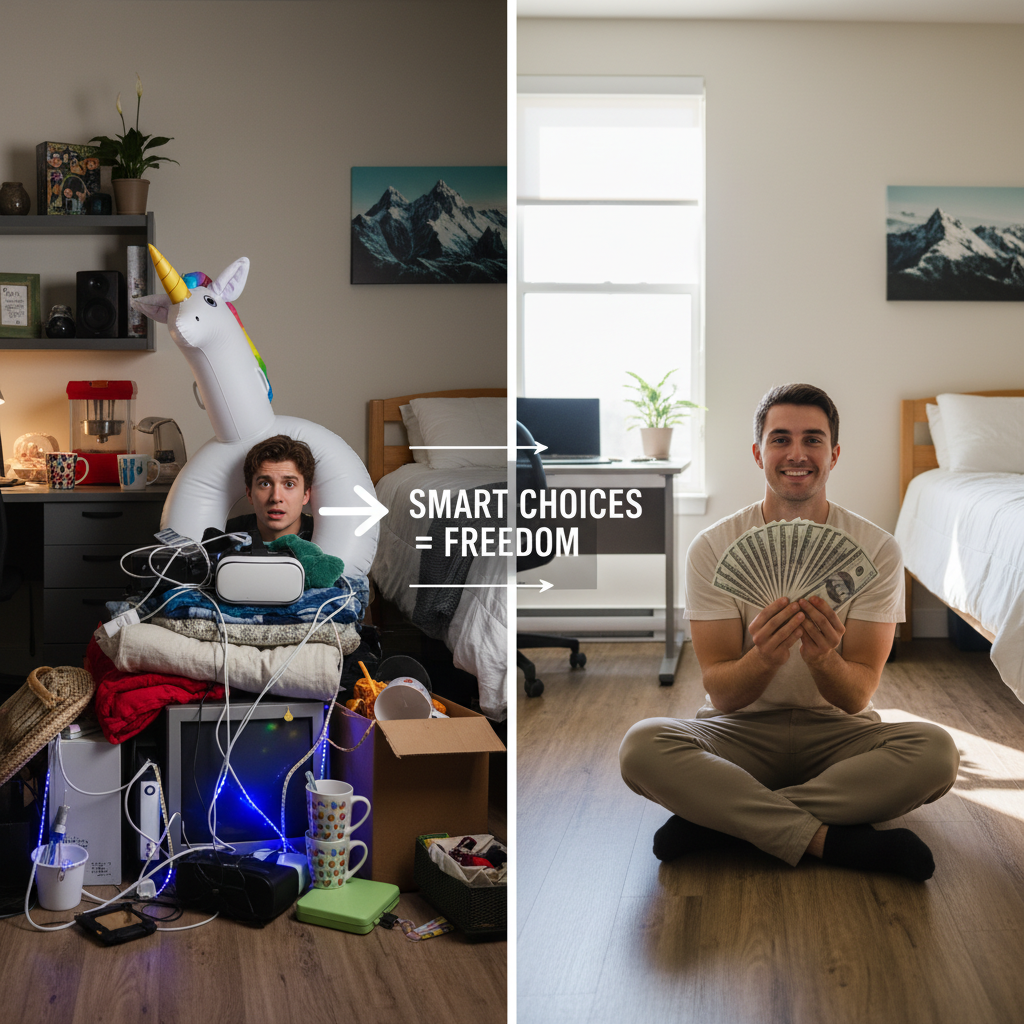
What You Actually Need For College (And What Is A Total Waste Of Money)
Listen up. The moment you get that college acceptance letter, the machine kicks into high gear. Suddenly, you’re bombarded with ‘Ultimate College Packing Lists’ from big-box stores that are longer than your freshman year reading list. They want you to believe you need a specialized gadget for every possible scenario and a matching 18-piece bedding set to survive. It’s a hustle, plain and simple, designed to drain your (or your parents’) bank account before you even pay for a single textbook.
This isn’t that list. This is your reality check. We’re cutting through the marketing BS to give you the ground truth on what you actually need to crush it at college and what is a total waste of money. Every dollar you don’t spend on a useless panini press or a ‘bedside essentials caddy’ is a dollar you can put towards tuition, an emergency fund, or, you know, actually having a social life without going into debt. It’s time to take control of your cash and start your college career smarter than everyone else.
Dorm Room Reality Check: The ‘Must-Haves’ vs. The Money Pits
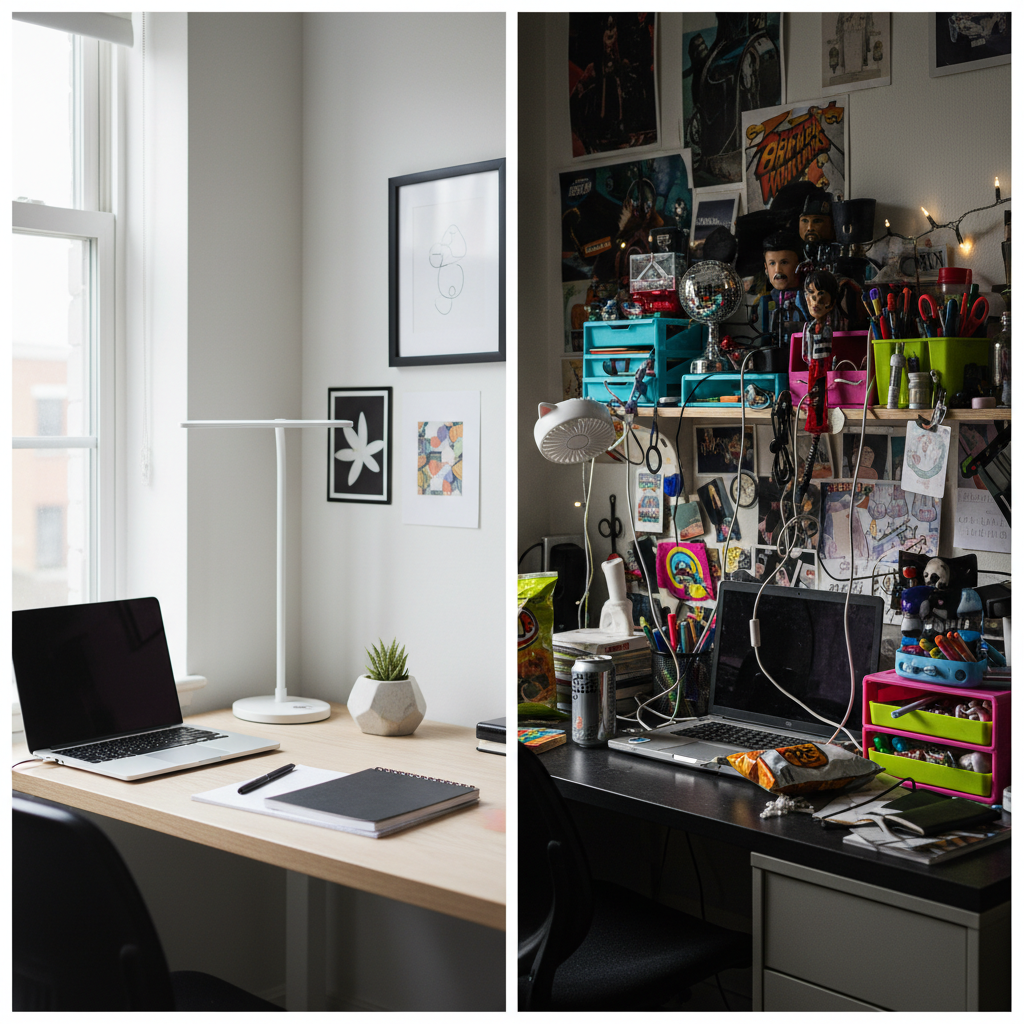
Your dorm room is your new home base, but it’s also a tiny, temporary box. The goal is function and comfort, not recreating a Pinterest-perfect apartment. Stores will try to sell you on ‘solutions’ to problems that don’t exist. Your mission is to see through the hype and stick to the essentials. Think multi-purpose, durable, and compact.
Bed & Bath: Sleep Well, Don’t Go Broke
You need to sleep, and you need to be clean. That’s it. Don’t fall for the ‘dorm-in-a-bag’ trap. These bundles are often low-quality and packed with stuff you won’t use. Buy items individually for better quality and savings.
| Smart Buy (The Essentials) | Money Pit (The Hype) |
|---|---|
| A high-quality mattress topper. This is non-negotiable. Dorm mattresses are notoriously awful. A good topper (memory foam or thick pillow-top) is an investment in your sleep and sanity. Expect to spend $80-$150. | A 12-piece ‘Bed-in-a-Bag’ set. These are usually made of cheap microfiber that pills after two washes. You don’t need five decorative pillows for a Twin XL bed. You’ll just end up throwing them on the floor every night. Cost: $150+ for junk. |
| Two sets of Twin XL sheets. One to use, one to wash. Look for cotton or a durable blend. You can find solid sets for $30-$50 each. | Designer brand bedding. No one cares if your sheets are from a high-end brand. They will get pizza grease on them. Save your money. |
| Two bath towels, two hand towels, two washcloths. Get a dark color to hide stains. A decent set costs around $40. A shower caddy is a must for shared bathrooms. | A full towel wardrobe. You don’t have the storage space for a spa-level collection of towels. Keep it simple. |
Desk & Study Zone: Focus on Function
Your desk is for studying, not for displaying a collection of cute but useless organizers. The key is to create a space that helps you work efficiently. Good lighting and easy access to power are the real game-changers.
| Smart Buy (The Essentials) | Money Pit (The Hype) |
|---|---|
| A good desk lamp with a bright, cool-toned LED bulb. Late-night study sessions will thank you. Essential for avoiding eye strain. Cost: $20-$30. | Elaborate desk organizers. That 10-piece matching rose gold set looks great on Instagram but takes up valuable space. A simple pen cup and a file holder will do the same job for under $10. |
| A surge protector power strip with a long cord. This is a critical item. Dorms never have enough outlets, and they’re always in the wrong place. Get one with at least 6-8 outlets and a 6-foot cord. Cost: $25. | A dedicated charging station for all your devices. It’s just an overpriced power strip. Your surge protector does the same thing. |
The Mini-Kitchen Trap
Before you buy ANY cooking appliances, check your dorm’s rules. Many have strict limits on what’s allowed. Don’t waste money on something that will get confiscated. A meal plan is usually mandatory for freshmen, so you won’t be cooking three-course meals.
Key Rule: If you have a full meal plan, you only need a mini-fridge for drinks and leftovers and maybe a microwave for popcorn or reheating coffee. That’s it.
Appliances like blenders, toaster ovens, electric kettles, and George Foreman grills are often forbidden or just end up collecting dust and taking up precious counter space. If you find you desperately need one later, you can always buy it then. Don’t buy it ‘just in case’.
The Tech Trap: Splurge Smart, Save Big

Tech is likely your biggest college expense after tuition. This is where stores make a killing on upsells, unnecessary accessories, and overpriced ‘student bundles.’ Your strategy is to identify the one or two pieces of tech that are critical to your success and refuse to overspend on the rest.
Your Laptop is Your Lifeline
A reliable laptop is non-negotiable. But ‘reliable’ doesn’t mean ‘the most expensive model available.’ Your English Lit class does not require a $3,000 gaming laptop with a top-of-the-line graphics card. Be honest about your needs.
- Check for University Discounts: Many schools have partnerships with Apple, Dell, and other manufacturers for student discounts. Always check their portal first.
- Consider Refurbished: You can get a certified refurbished machine directly from manufacturers like Apple for hundreds of dollars less, and it comes with the same warranty as a new one. This is one of the smartest hacks out there.
- Software is often FREE: Your university likely provides a free Microsoft Office 365 subscription and may offer other expensive software like Adobe Creative Suite at a massive discount or for free. Never buy software until you check the school’s IT website.
The Tech You Can Absolutely Skip
| Smart Tech Spend | Sucker Spend |
|---|---|
| A reliable mid-range laptop that fits your major’s needs (e.g., a MacBook Air for writing, a Windows laptop with more power for engineering). Cost: $800-$1,200. | The newest, most powerful laptop on the market just for bragging rights. You’re paying a $1,000+ premium for features you’ll never use. |
| A good pair of noise-canceling headphones. Essential for studying in a loud dorm or library. This is a worthwhile investment in your focus. Cost: $100-$250. | A brand new printer. This is the biggest scam. Ink is insanely expensive, and you’ll barely use it. Your university library lets you print for pennies per page. A $150 printer plus $60 ink cartridges is a money pit. |
| A portable hard drive for backups. Your laptop will die at the worst possible moment. Back up your work. A 1TB drive costs around $50. It’s cheap insurance. | A tablet if you already have a good laptop. Unless you’re an art major, a tablet is often a redundant device that you think you’ll use for taking notes but never do. |
| A high-quality, long (6-10 ft) charging cable for your phone. The one that comes in the box is never long enough to reach your bed from the outlet. Cost: $15. | ‘Smart’ home devices for your dorm. You don’t need a smart speaker or color-changing lights in a 150-square-foot room. It’s clutter. |
Beat the Bookstore Monopoly: Your Guide to Slashing Textbook Costs

Walking into the campus bookstore and paying full price for new textbooks is like setting a pile of money on fire. The textbook industry is a racket, with publishers releasing ‘new’ editions with minor changes to kill the used book market. You don’t have to play their game. It is entirely possible to get through college spending a fraction of the sticker price on books.
Scam Warning: Be wary of ‘custom edition’ bundles sold only at your bookstore. Often, these are just standard textbooks bundled with an online access code you might not even need. Always ask your professor on the first day of class if the access code is mandatory for homework grades. If not, you can buy a used copy of the book for way less.
Your goal is to never pay full price. Here are the tools for your arsenal:
- Rent Your Textbooks: Websites like Chegg and Amazon Textbook Rentals are your best friends. You can rent a book for the semester for a fraction of the purchase price. At the end of the term, you print a free shipping label and send it back. Easy.
- Buy Used: Check online marketplaces like AbeBooks, ThriftBooks, or even the Amazon marketplace for used copies. Look for previous editions, too. Ask your professor if an older edition is acceptable—often, the changes are minimal, and you can save 90%.
- Check the Library: This is the most overlooked hack. Your university library often has a copy of required textbooks on reserve. You may not be able to check it out for long, but you can use it for a few hours at a time to get your reading done.
- Go Digital: E-textbooks are almost always cheaper than physical copies. Plus, they’re searchable and don’t weigh down your backpack.
Let’s look at the real-world math on a typical freshman semester.
| Book Type | Campus Bookstore (New Price) | Smart Frugal Option (Average) | Your Savings |
|---|---|---|---|
| Intro to Psychology Textbook | $220 | $45 (Rental on Chegg) | $175 |
| Calculus I Textbook | $185 | $60 (Used copy on Amazon) | $125 |
| English Composition Reader | $90 | $15 (Older edition, used) | $75 |
| Intro to Biology w/ Access Code | $250 | $130 (Buy code direct from publisher, find free PDF of book) | $120 |
| TOTAL SEMESTER COST | $745 | $250 | $495 in savings! |
Your Closet & Clutter: Pack Smart, Not Heavy
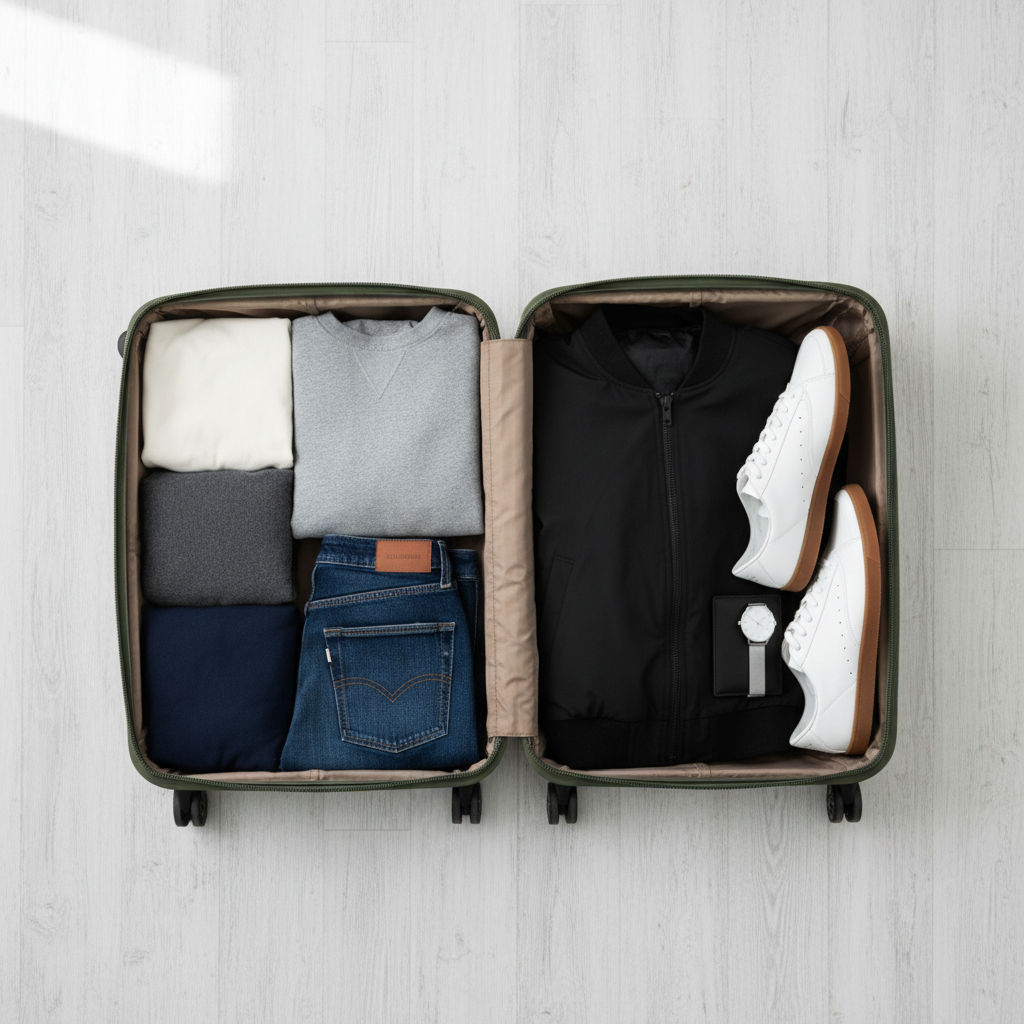
The urge to reinvent yourself for college often comes with the urge to buy an entirely new wardrobe. Resist it. You’re moving into a closet the size of a phone booth, and you have no idea what the real ‘style’ on campus is yet. Packing less is always the smarter move.
The Minimalist Wardrobe Hack
Instead of packing 12 pairs of shoes and every piece of clothing you own, focus on versatile basics that you can mix and match. You’ll be doing your own laundry, possibly in a basement three buildings away, and you’ll quickly realize that having fewer, better items is the way to go.
- Pack for One Season: If you’re going home for Thanksgiving or winter break, leave your heavy winter coat and boots at home. You can swap out your wardrobe then. Don’t waste precious closet space on off-season clothes.
- Prioritize Comfort: You’ll be walking to class, sitting in libraries, and lounging in your dorm. You will likely wear comfortable clothes like hoodies, jeans, and leggings 90% of the time. Pack more of that than fancy party outfits.
- The ‘One In, One Out’ Rule: If you buy a new sweatshirt at the campus store, be prepared to get rid of an old one. This prevents your tiny closet from exploding.
Useless Stuff People Waste Money On
Beyond clothes, there’s a universe of miscellaneous junk that stores market as ‘dorm essentials.’ They are not.
- An Iron and Ironing Board: You will never, ever use this. Ever. If you have a fancy event, borrow one or use the wrinkle-release spray trick (hang it in the bathroom while you shower).
- Excessive Wall Decor: A few posters or photos are great for making the space feel like yours. But you don’t need complex string light arrangements, wall tapestries, or a gallery wall. It’s clutter, and many dorms have strict rules about what you can hang anyway.
- A Trunk/Footlocker: Looks cool in movies, but it’s just a giant, heavy box that takes up a ton of floor space and is awkward to access. Under-bed storage bins are far more practical.
- Pricey Luggage: You need a durable duffel bag or suitcase, not a matching five-piece designer luggage set. It’s going to get thrown around and shoved into storage.
Remember, your dorm is a temporary living situation. Don’t invest hundreds of dollars in decorating and organizing a space you’ll be in for nine months. Save that money for experiences that you’ll actually remember.
Conclusion
The path to college is paved with money traps disguised as ‘necessities.’ The biggest hack isn’t a special coupon or a secret website; it’s a mindset shift. You are in control. You don’t need to buy into the consumer frenzy to have a successful and fulfilling college experience. In fact, starting this journey with a smart, frugal mindset will serve you far better than any gadget or gizmo ever will.
Every dollar you save on an overpriced textbook or a useless piece of dorm decor is a dollar you’ve earned back for yourself. That’s money that reduces your future student loan burden, builds your first emergency fund, or pays for a memorable trip with friends. You’re not just buying stuff for college; you’re building the financial habits that will set you up for life. Now go through that packing list one more time and slash everything that isn’t truly essential. Your future self will thank you.