The Engagement Ring Secret: How to Get a Huge Rock for Half the Price
Listen up. For decades, we’ve been fed a line: that a symbol of your love has to cost you three months’ salary. That the bigger the price tag, the deeper the commitment. That’s a marketing campaign, not a rule. The jewelry industry built an empire on making you feel like you have to overspend to prove your worth. It’s time to flip the script. Forget what the slick commercials tell you. You’re a hustler, a savvy shopper, someone who knows the value of a dollar. You don’t get played. This guide is your secret weapon. We’re going to break down the industry’s biggest secrets, expose the myths, and show you exactly how to get a jaw-dropping ring that looks like it cost $20,000 for less than half the price. Get ready to win the game.
The Diamond Industry’s Dirty Little Secret: Natural vs. Lab-Grown
The Diamond Industry’s Dirty Little Secret: Natural vs. Lab-Grown
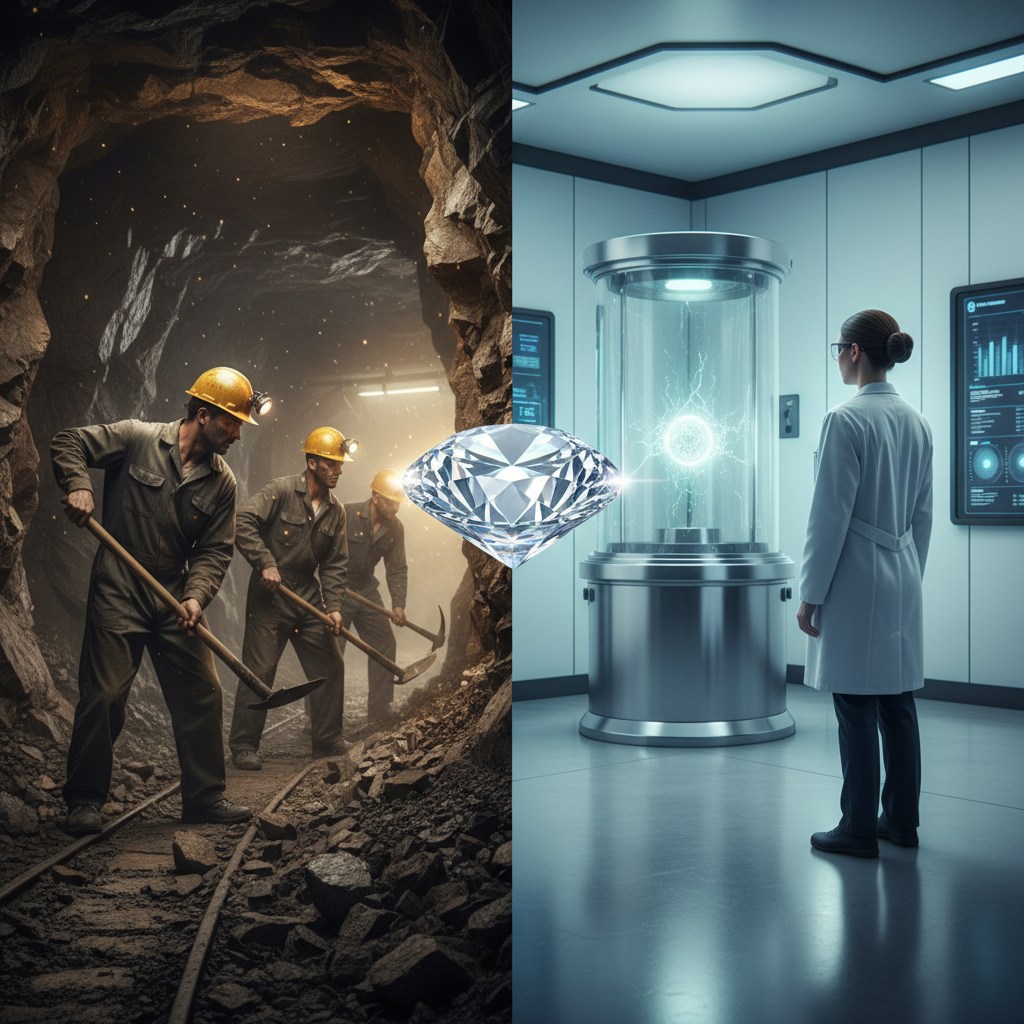
Here’s the absolute number one hack, the one that changes everything: Lab-grown diamonds. Forget everything you think you know. These are not fakes. They’re not cubic zirconia or moissanite. A lab-grown diamond is chemically, physically, and optically identical to a mined diamond. The only difference? One came from a billion years of pressure under the earth, and the other came from a high-tech lab that recreates that same process. A GIA-certified gemologist can’t tell the difference without specialized, expensive equipment. Your friends, family, and future mother-in-law definitely can’t. The industry spent millions making you believe ‘natural’ is better. The reality? ‘Natural’ often comes with ethical baggage (hello, blood diamonds) and a massively inflated price tag. Lab-grown gives you a bigger, better-quality stone for your money, with a clean conscience. Don’t pay for dirt. Pay for the diamond.
The Real-World Cost Smackdown
Let’s stop talking theory and look at the cold, hard numbers. This is where the game is won. We’re comparing a typical 2-carat, high-quality diamond. The specs are identical (VS1 clarity, G color, excellent cut). The only variable is origin.
| Feature | Mined (Natural) Diamond | Lab-Grown Diamond |
|---|---|---|
| Carat Weight | 2.0 Carat | 2.0 Carat |
| Clarity | VS1 (Very Slightly Included) | VS1 (Very Slightly Included) |
| Color | G (Near Colorless) | G (Near Colorless) |
| Ethical Concerns | Potential for conflict sourcing | Conflict-free, guaranteed |
| Average Market Price | $18,000 – $25,000+ | $4,000 – $7,000 |
| Your Savings | The ‘privilege’ of paying more | An extra $14,000 to $18,000 in your pocket |
The math doesn’t lie. You can get the exact same rock—or an even bigger, better one—and save enough money to pay for your entire honeymoon, boost your emergency fund, or invest in your next side hustle. Choosing lab-grown isn’t being cheap; it’s being smart.
The ‘4 Cs’ Are a Trap: Here’s What Really Matters
The ‘4 Cs’ Are a Trap: Here’s What Really Matters
The Four Cs (Cut, Color, Clarity, Carat) are the industry’s favorite tool for upselling you. They make it sound like a complex science, but for a smart shopper, it’s a simple game of priorities. You don’t need perfection in every category—you just need the stone to look perfect to the naked eye. That’s the only thing that matters.
The C that Crowns Them All: Cut
If you splurge on one thing, make it the Cut. An ‘Excellent’ or ‘Ideal’ cut is non-negotiable. The cut is what gives a diamond its fire, its sparkle, its life. A perfectly cut 1.5-carat diamond will outshine a poorly cut 2-carat diamond every single time. It’s the engine of the stone. Don’t compromise here.
The C You Can Cheat On: Color
Diamond color is graded from D (colorless) to Z (light yellow). The price difference between a D and an H is massive. The visual difference? Almost impossible to see unless you’re a trained gemologist holding them side-by-side under a special light. For a brilliant, white-looking stone that doesn’t break the bank, aim for a G, H, or even an I color grade. Set in yellow or rose gold, you can go even lower because the warm metal masks any faint color in the stone. Save your money.
The Ultimate Hack: Clarity
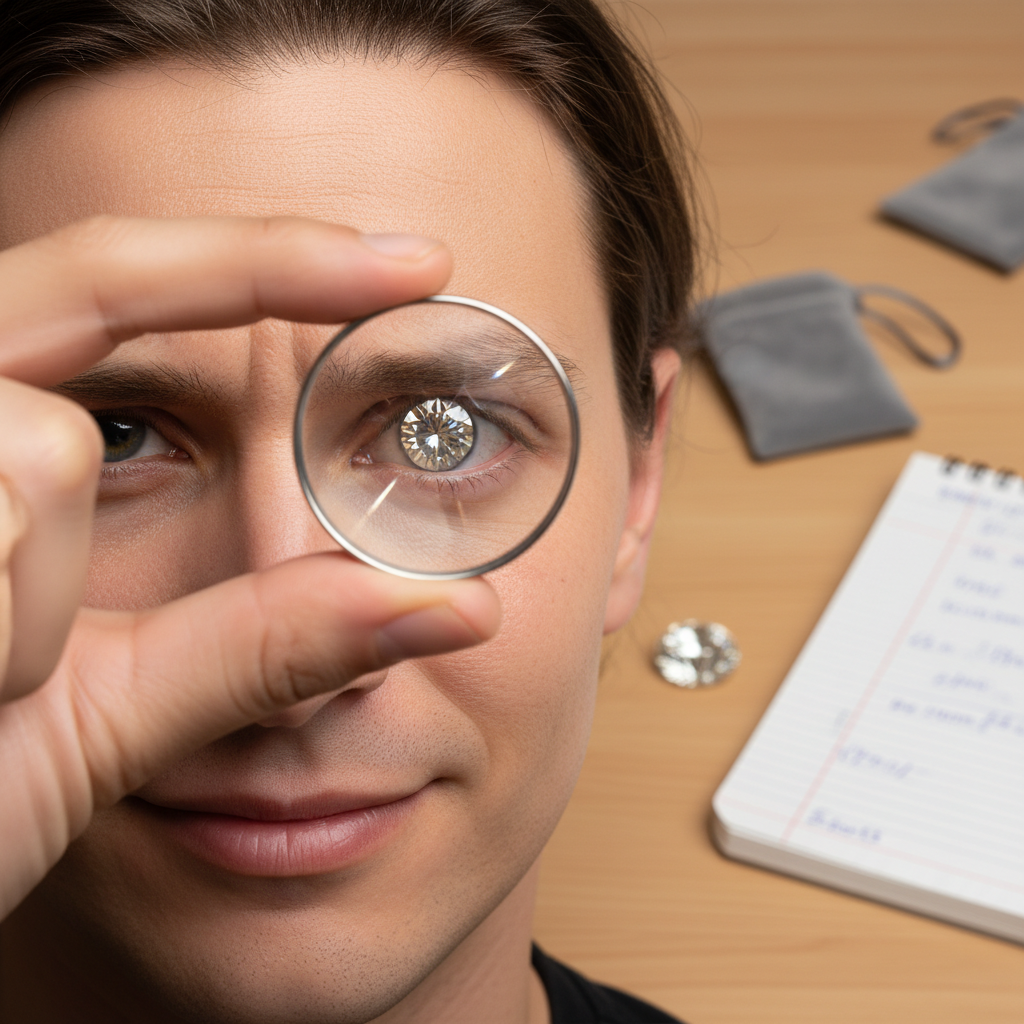
Clarity refers to the internal flaws (inclusions). A ‘Flawless’ (FL) diamond is astronomically expensive. But here’s the secret: you just need it to be ‘eye-clean’. This means looking for diamonds in the VS1, VS2, or even SI1 range. These have tiny inclusions that are only visible under 10x magnification. Nobody is carrying a jeweler’s loupe to inspect your ring. If you can’t see the flaws with your naked eye, they don’t matter. You can save thousands by choosing an eye-clean SI1 over a VVS2, and no one will ever know the difference.
Key Rule: The Eye-Clean Standard. Before you buy, always look at the high-definition 360-degree video of the actual diamond (any reputable online seller has this). Zoom in. Spin it around. If you can’t see any distracting black spots or clouds, you’re golden. You’ve just hacked the clarity game.
Your Cheat Sheet: Where to Buy a High-Value, Low-Cost Ring
Your Cheat Sheet: Where to Buy a High-Value, Low-Cost Ring
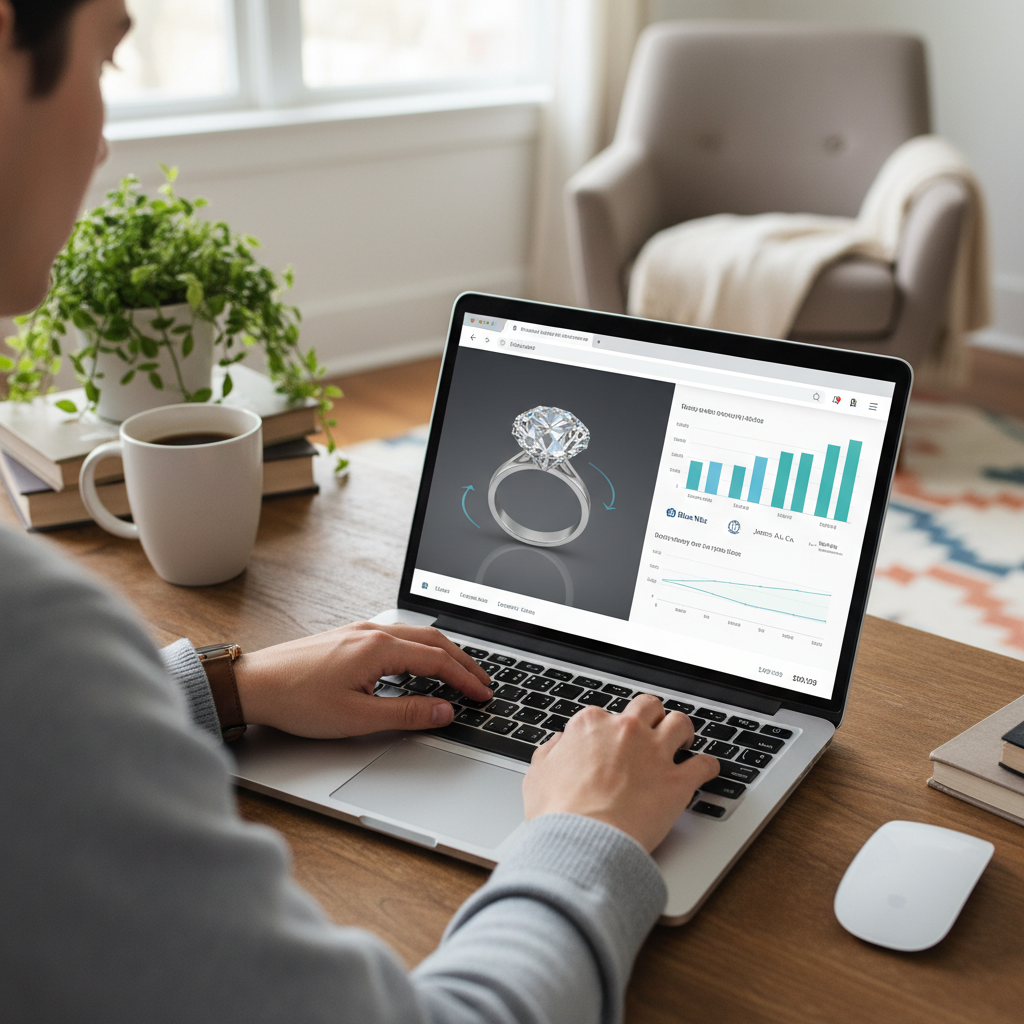
Walking into a big-name jewelry store in the mall is like walking into a casino where the house always wins. The overhead, the commission-hungry salespeople, the fancy lighting—you’re paying for all of it. The smart money buys online. Online vendors have less overhead and massive inventories, which means more competition and way better prices for you. They cut out the middleman and pass the savings directly to you.
Top Online Battlegrounds
- James Allen & Blue Nile: These are the heavyweights. They have enormous inventories of both lab-grown and natural diamonds, and their biggest weapon is the 360° high-definition video of every single stone. This is critical for applying the ‘eye-clean’ hack we just talked about. You see the exact diamond you’re buying, not a stock photo. Their prices are some of the most competitive on the market.
- Brilliant Earth: If ethics and sustainability are your top priority, these guys are for you. They specialize in conflict-free natural diamonds and have a huge selection of lab-grown stones and recycled precious metals. Their branding is top-notch, and they offer a great user experience.
- Ritani: A fantastic option that combines online pricing with a brick-and-mortar experience. You can browse their massive online inventory, pick a diamond, and have it sent for free to a local partner jeweler for you to preview in person before you commit. It’s the best of both worlds.
Scam Warning: Certification is Everything
Scam Warning: Never, ever buy a diamond without an independent grading report. If a seller offers you a ‘great deal’ on an uncertified stone or one with an in-house ‘appraisal’, run. The only names you should trust are the GIA (Gemological Institute of America) and IGI (International Gemological Institute). These labs are the unbiased gold standard. Their reports guarantee that the diamond you’re paying for is the diamond you’re getting. A certificate from anyone else is practically worthless.
Beyond the Diamond: Alternative Stones That Scream ‘Wow’ Without Screaming ‘Broke’
Beyond the Diamond: Alternative Stones That Scream ‘Wow’ Without Screaming ‘Broke’
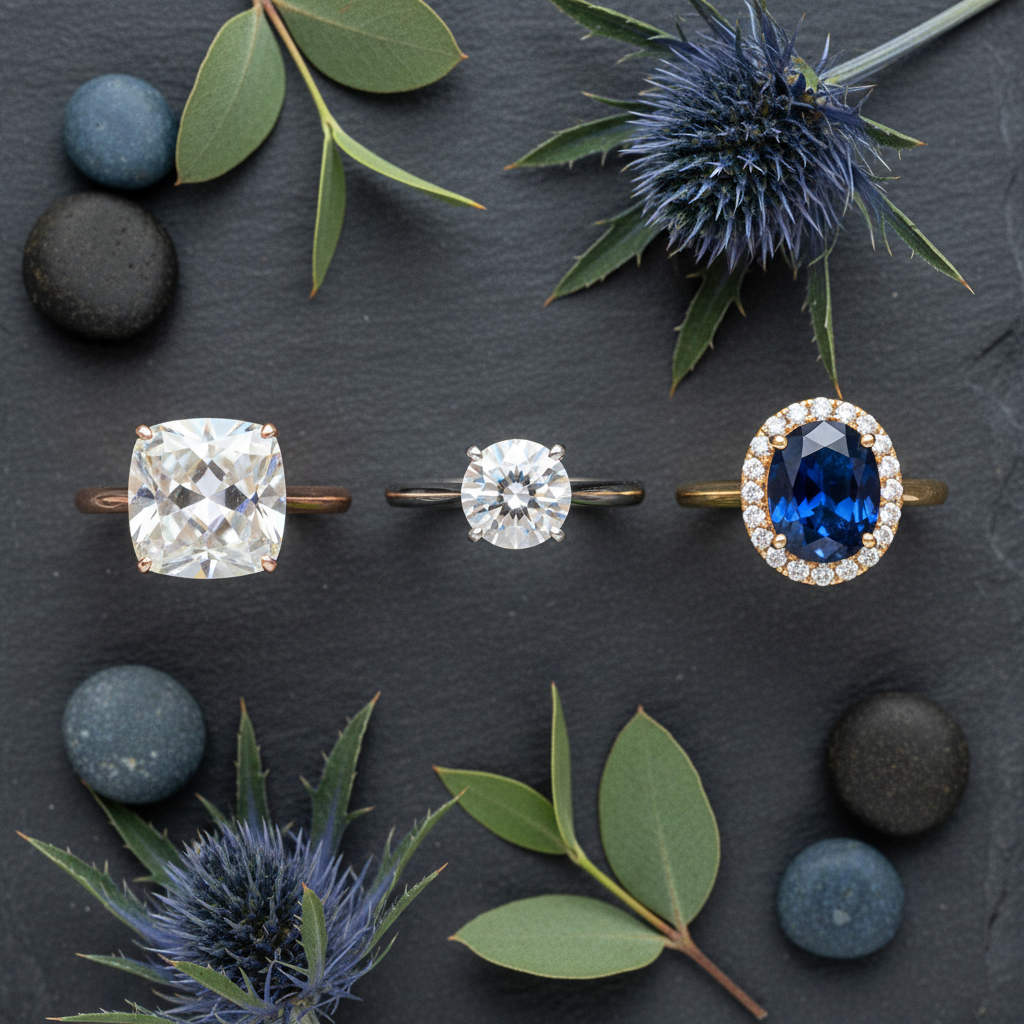
Who said it has to be a diamond? That’s just more marketing we’ve been conditioned to believe. Some of the most stunning, durable, and unique engagement rings feature alternative gemstones. This isn’t just a budget move; it’s a power move. It shows personality and confidence. It says you don’t follow the herd.
The Top Contender: Moissanite
If you want the diamond look without the diamond price, Moissanite is your champion. It’s a lab-created gemstone that’s almost as hard as a diamond (9.25 on the Mohs scale vs. diamond’s 10), so it’s perfect for everyday wear. Here’s the kicker: moissanite has even more fire and brilliance than a diamond. It throws off more rainbow flashes, giving it an incredible sparkle. And the cost? A fraction of a lab diamond. You can get a huge, flawless-looking moissanite for under $1,000.
The Colorful Classics: Sapphires, Rubies, and Emeralds
Want to stand out? Go for color. A deep blue sapphire, a fiery red ruby, or a vibrant green emerald makes a bold and beautiful statement. Princess Diana’s (and now Kate Middleton’s) iconic ring is a sapphire, for crying out loud. These stones are rich with history and personality. Just be mindful of hardness—sapphires and rubies are very durable (9 on the Mohs scale), while emeralds are a bit softer (7.5-8) and require more careful wear.
Cost Comparison: The Alternatives
| Stone (Approx. 2-Carat Equivalent Size) | Typical Price Range | Key Feature |
|---|---|---|
| Lab-Grown Diamond | $4,000 – $7,000 | Identical to a diamond, best value |
| Moissanite | $800 – $1,500 | More sparkle than a diamond, incredible price |
| Sapphire (High Quality) | $2,000 – $5,000 | Classic, durable, and uniquely colorful |
| White Topaz / White Sapphire | $300 – $600 | Most affordable diamond look-alike, less sparkle |
Choosing an alternative isn’t settling. It’s about consciously deciding where you want your money to go and what you truly value—a specific carbon crystal or a beautiful symbol of your relationship that allows you to start your life together on solid financial footing.
The Final Play: Setting, Insurance, and Long-Term Value
The Final Play: Setting, Insurance, and Long-Term Value
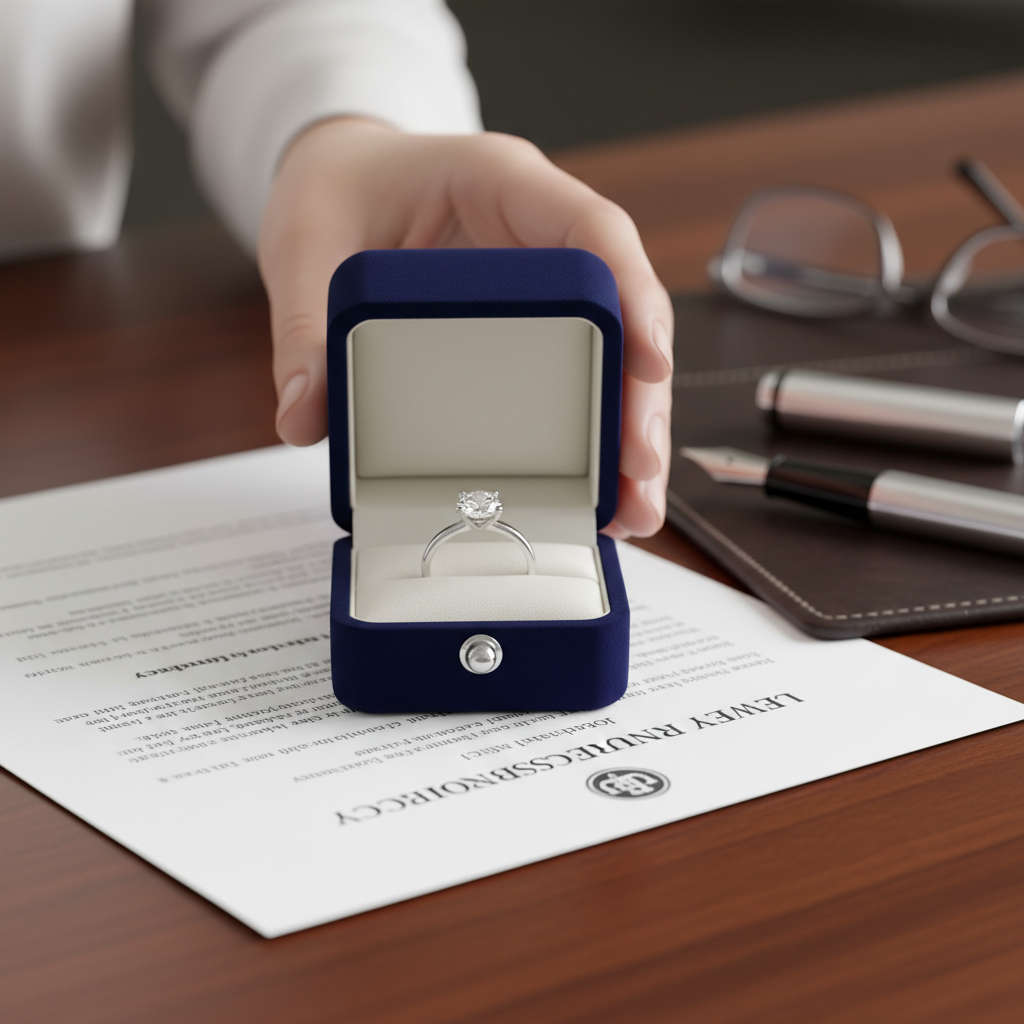
You’ve found the perfect, high-value stone. Don’t fumble the ball on the five-yard line. The final details are what separate a good deal from a brilliant financial move.
The Setting: Get More Bling for Your Buck
The metal and design of the ring setting can dramatically change the look and perceived size of your center stone. Want to make your stone look even bigger? Use these tricks:
- The Halo Setting: A circle of smaller diamonds around the center stone. It’s the oldest trick in the book for a reason—it can make the center stone look up to a half-carat larger.
- Slim Bands: A thinner, more delicate band makes the center stone look bigger by comparison. Avoid thick, chunky bands that can overwhelm the diamond.
- Choose Your Metal Wisely: Platinum is premium, but 14k or 18k white gold gives you the exact same look for significantly less money. They are both durable and beautiful. The only difference is the price tag.
Protect Your Hustle: Get it Insured
This is non-negotiable. You just made a major purchase, no matter how good a deal you got. You need to insure it. But don’t just go with the first offer. First, check your homeowner’s or renter’s insurance. Sometimes you can add a ‘rider’ to your existing policy for a very low cost. If not, look at specialized jewelry insurers like Jewelers Mutual. Get quotes. Read the fine print. Make sure it covers loss, theft, and damage. The annual cost is usually 1-2% of the ring’s appraised value, a small price to pay for peace of mind (e.g., a $7,000 ring might cost $70-$140 per year to insure).
A Note on Resale Value
Let’s be real. An engagement ring is a symbol, not a stock portfolio. The resale value for all diamonds—natural or lab—is poor. You’ll never get back what you paid at a retail level. This is why spending less upfront is so critical. By saving 50-70% with a lab-grown diamond, you’re minimizing your financial risk from day one. You’re buying a beautiful piece of jewelry to be worn and loved, not an asset to be flipped. The true ‘value’ is starting your marriage with thousands of extra dollars in the bank.
Conclusion
The engagement ring game is designed to make you feel emotional, pressured, and uninformed. But now you have the cheat codes. You know that a lab-grown diamond is the smarter, richer choice. You know how to play the ‘4 Cs’ to your advantage and focus on what’s visible, not what’s on a certificate. You know where to shop to avoid the retail markup and how to protect your purchase once you’ve made it. Buying an engagement ring shouldn’t be a test of how much debt you can take on. It should be the first smart financial decision you make together as a couple. Take this knowledge, ignore the noise, and go get a stunning ring that reflects your love—and your intelligence.