
Welcome to the World of Voice Acting (The Frugal Way)
Have you ever been told you have a great voice? Or maybe you’ve spent hours mimicking your favorite cartoon characters or movie trailers? Most people think that starting a voice acting career requires a $10,000 studio and a degree from a fancy acting school. I’m here to tell you that’s a total myth. As a frugal hacker, I know that the best way to start a side hustle is to keep your overhead low and your hustle high. You can absolutely start voice acting with $0 experience and a very modest budget.
In this guide, we aren’t just talking about ‘getting lucky.’ We are talking about a strategic, low-cost entry into a multi-billion dollar industry. Whether you want to narrate audiobooks, voice YouTube videos, or do character work for indie games, the barrier to entry has never been lower. We’re going to look at how to build a professional-sounding setup using items you already own, which budget microphones actually punch above their weight class, and how to land your first paying client without spending a dime on ‘premium’ job boards.
The Real Math: Earning Potential for Newbies
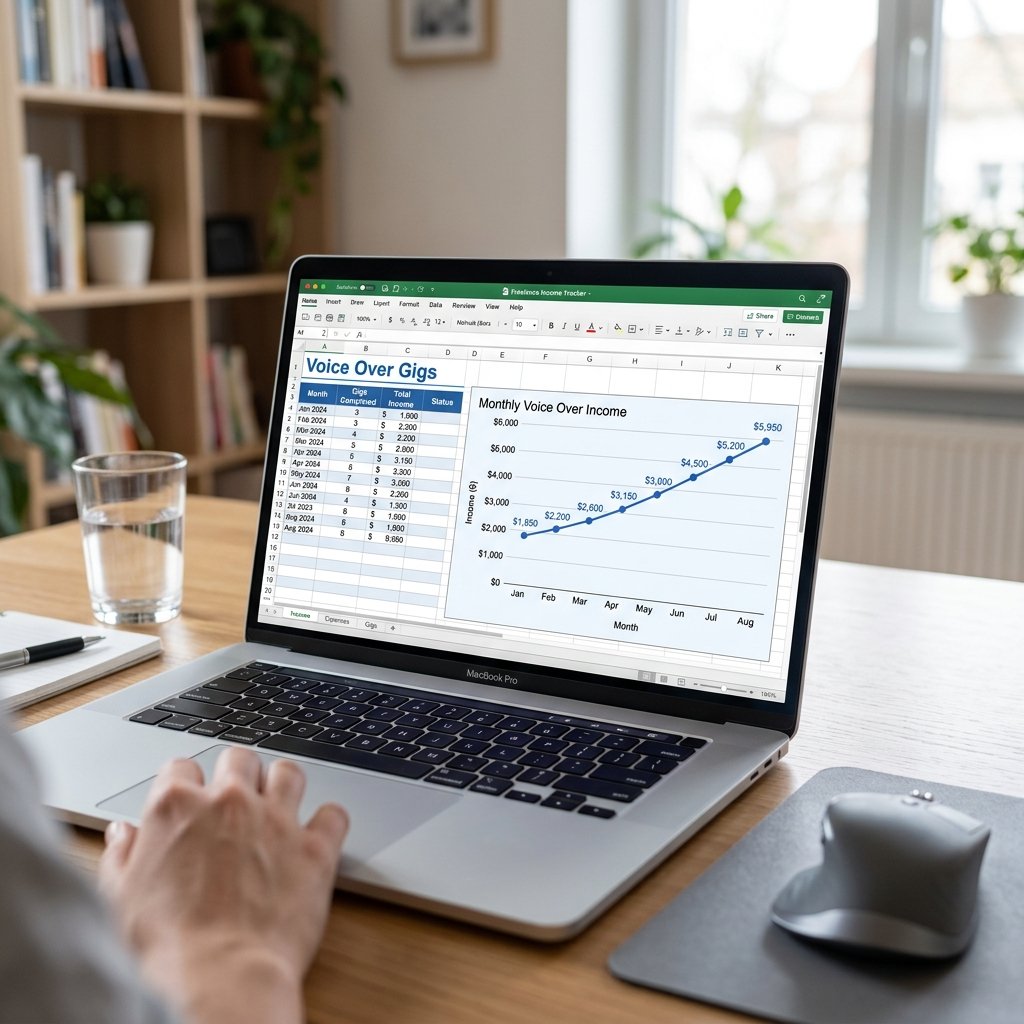
What Can You Actually Make?
Let’s talk numbers. You aren’t going to make $1,000,000 in your first month voicing a Super Bowl commercial. However, the ‘middle class’ of voice acting is booming. Small businesses, YouTubers, and independent authors are constantly looking for relatable voices. For a beginner, you can realistically expect to earn between $20 and $50 per finished hour of audio for basic narration work.
| Project Type | Estimated Earning (Beginner) | Time Commitment |
|---|---|---|
| YouTube Narration (10 mins) | $25 – $75 | 1-2 Hours |
| Short Audiobook (ACX) | $50 – $100 per finished hour | Variable |
| Radio Spot (Local) | $100 – $250 | 1 Hour |
| E-Learning Module | $0.15 – $0.25 per word | Variable |
As you build your portfolio, these rates climb. The key is to treat those first few low-paying gigs as ‘paid training.’ You are getting paid to learn the software and refine your technique. Once you have a few solid reviews on platforms like Upwork or Fiverr, you can start bumping your rates into the $100+ per hour range.
The Budget Gear Guide: Best Mics Under $100
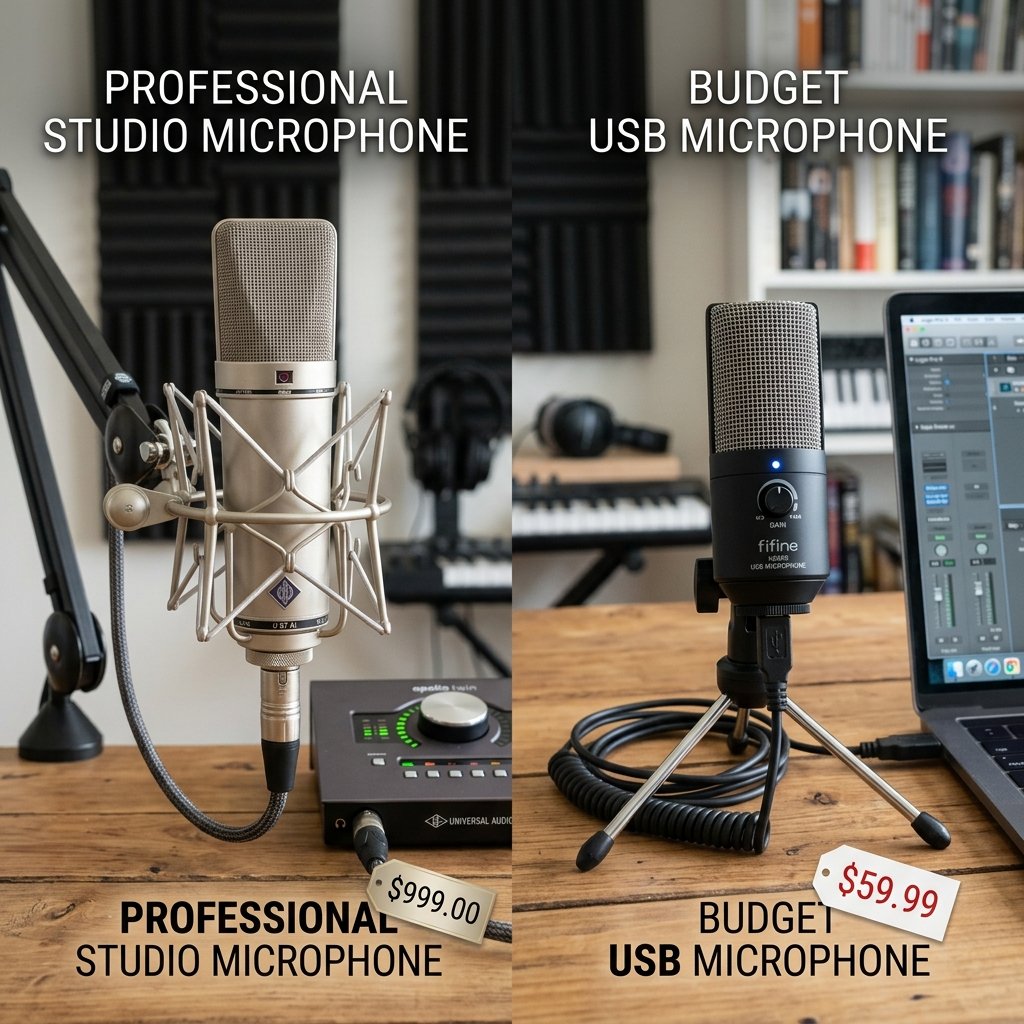
The Low Budget Microphone Setup
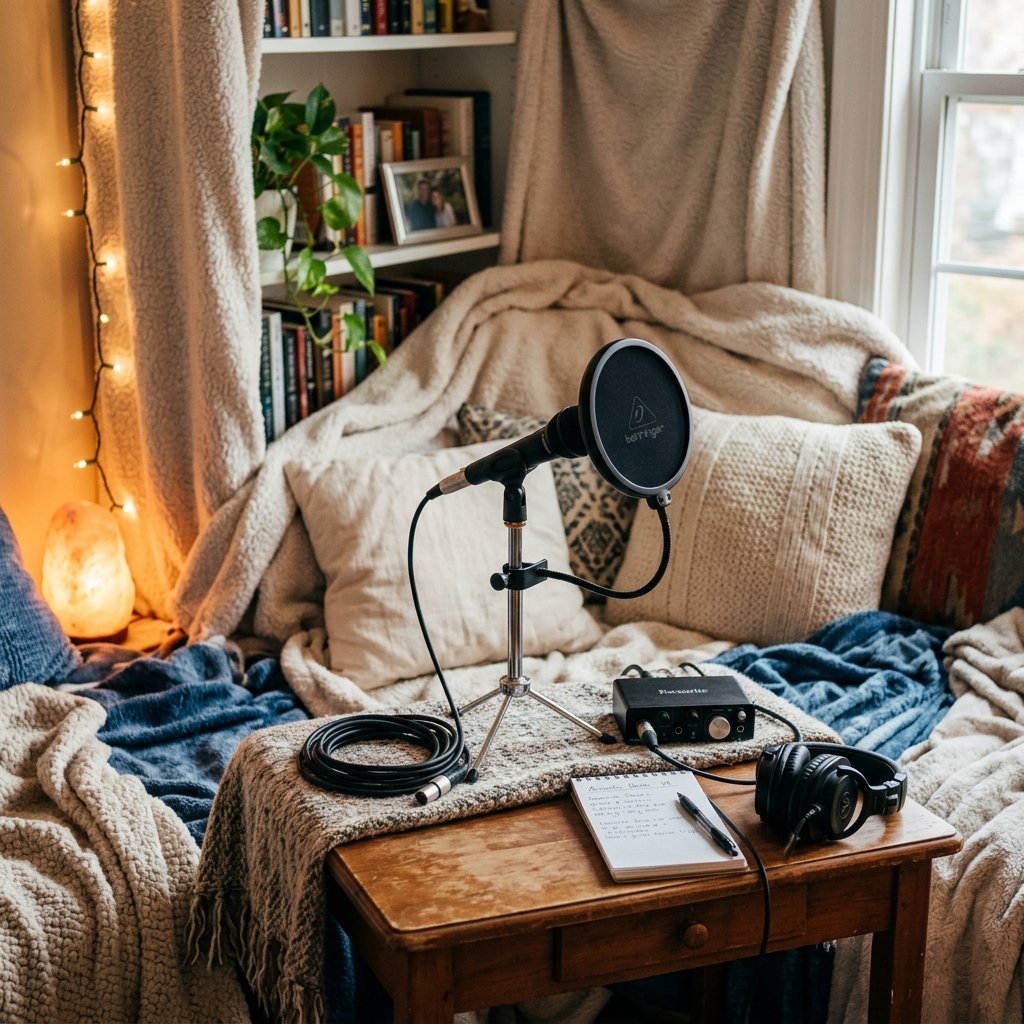
You do not need a $1,000 Neumann microphone to start. In fact, modern USB microphones have become so good that most listeners (and even some pros) can’t tell the difference if your room is treated well. When you’re starting on a budget, you want a microphone that is ‘Plug and Play’ so you don’t have to buy an expensive audio interface immediately.
Top Frugal Picks
- Samson Q2U (Approx. $60): This is the holy grail for frugal voice actors. It is a dynamic microphone (which means it ignores a lot of background noise) and it has both USB and XLR outputs. This means it grows with you!
- Audio-Technica ATR2100x (Approx. $70): Similar to the Samson, this is a versatile mic that sounds great on almost any voice type.
- Fifine K669B (Approx. $30): If you are on a razor-thin budget, this is the absolute minimum. It’s surprisingly clear for the price, though it requires more post-production work.
| Item | Professional Cost | Frugal Hacker Cost |
|---|---|---|
| Microphone | $400+ | $60 |
| Audio Interface | $150+ | $0 (Use USB) |
| Pop Filter | $25 | $0 (Use a clean sock!) |
| Mic Stand | $50 | $0 (Stack of books) |
| Total | $625+ | $60 |
The goal here is to spend the least amount of money to get ‘broadcast quality’ sound. Broadcast quality simply means no hiss, no echo, and clear vocals. Your $60 Samson Q2U can achieve this if you follow the studio setup in the next section.
The ‘Closet Studio’ Strategy
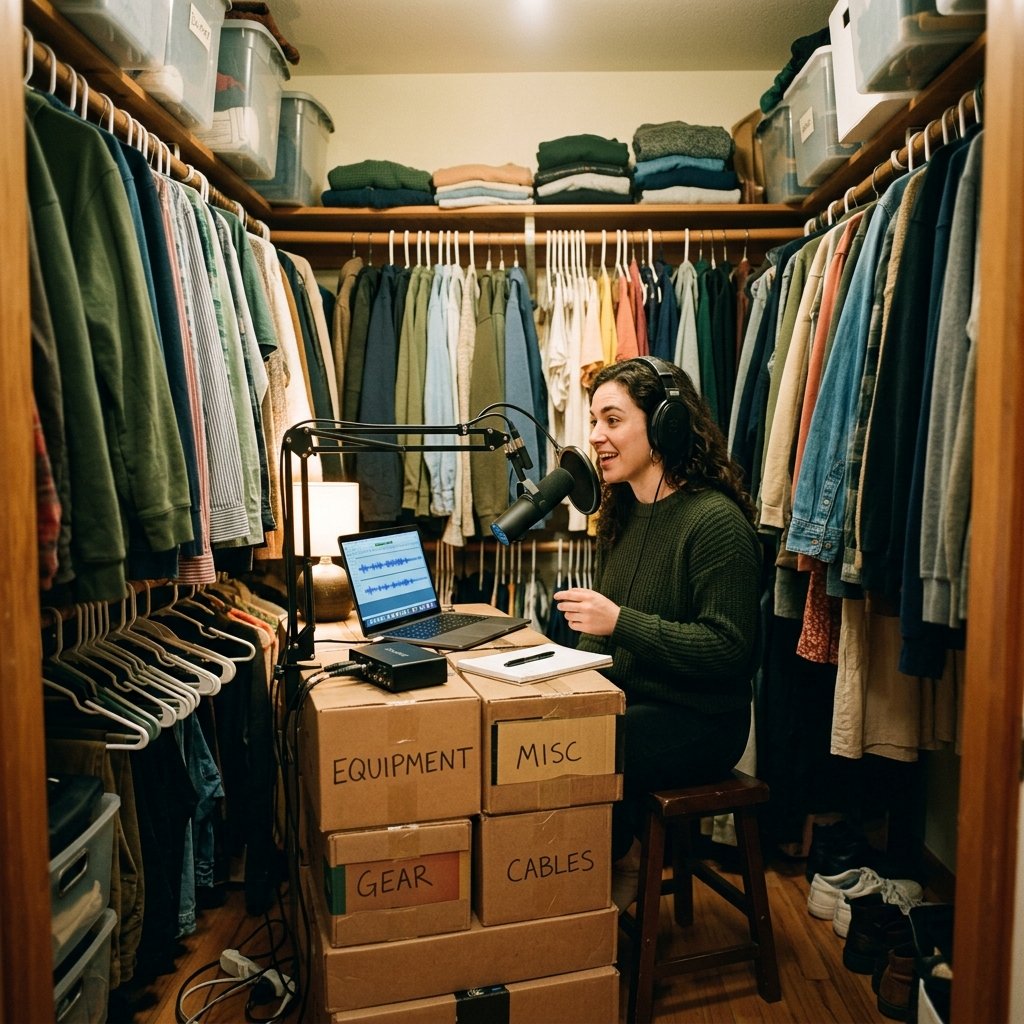
Soundproofing for $0
The biggest mistake beginners make is recording in a big, empty room. Your microphone will pick up the sound bouncing off the walls, creating an ‘echo’ that screams ‘amateur.’ To fix this, we use the Frugal Hacker’s favorite tool: Soft Stuff.
How to Build Your Booth
- The Closet Method: Find a closet full of clothes. The hanging clothes act as perfect sound absorbers. Set your mic up right in the middle of your shirts and jackets.
- The Pillow Fort: If you don’t have a closet, build a ‘fort’ around your microphone using bed pillows and heavy blankets. The thicker the blanket, the better.
- The Box Trick: Take a cardboard box, line it with acoustic foam (or egg cartons if you’re desperate, though foam is better), and place your mic inside the box.
“Pro Tip: Turn off your AC, heater, and fridge if they are noisy. Silence is your best friend in voice acting.”
By dampening the sound around you, your $60 microphone will sound like a $500 setup. It’s all about controlling the environment, not just the gear.
Free Software and Training
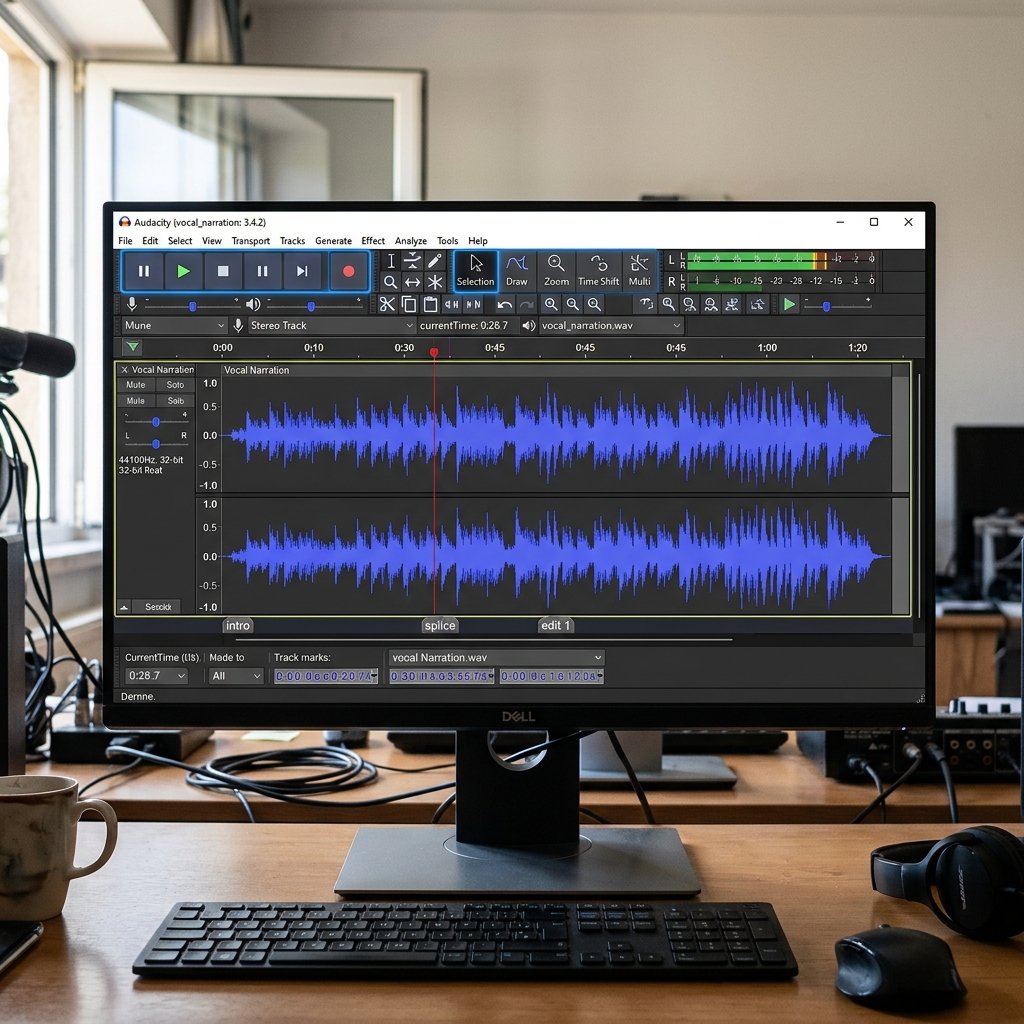
The Tools of the Trade (That Cost Nothing)
Once you have your mic and your ‘booth’ ready, you need to record and edit. Do not buy expensive software like Adobe Audition or Pro Tools yet. There are world-class free options available.
Essential Free Apps
- Audacity: The gold standard for free audio editing. It is open-source and has a massive community of tutorials.
- OCENAudio: A slightly more modern, user-friendly alternative to Audacity.
- Reaper (Free Trial): Technically paid, but the trial is full-featured and lasts a long time.
The 3-Step Editing Process
You don’t need to be an engineer. Just learn these three things in Audacity: Noise Reduction (to remove background hiss), Compression (to make your volume consistent), and Normalization (to bring the overall volume to industry standards). You can find 5-minute tutorials on YouTube for each of these. Total cost: $0.
Finding Gigs and The Audition Script
Where to Start Hustling
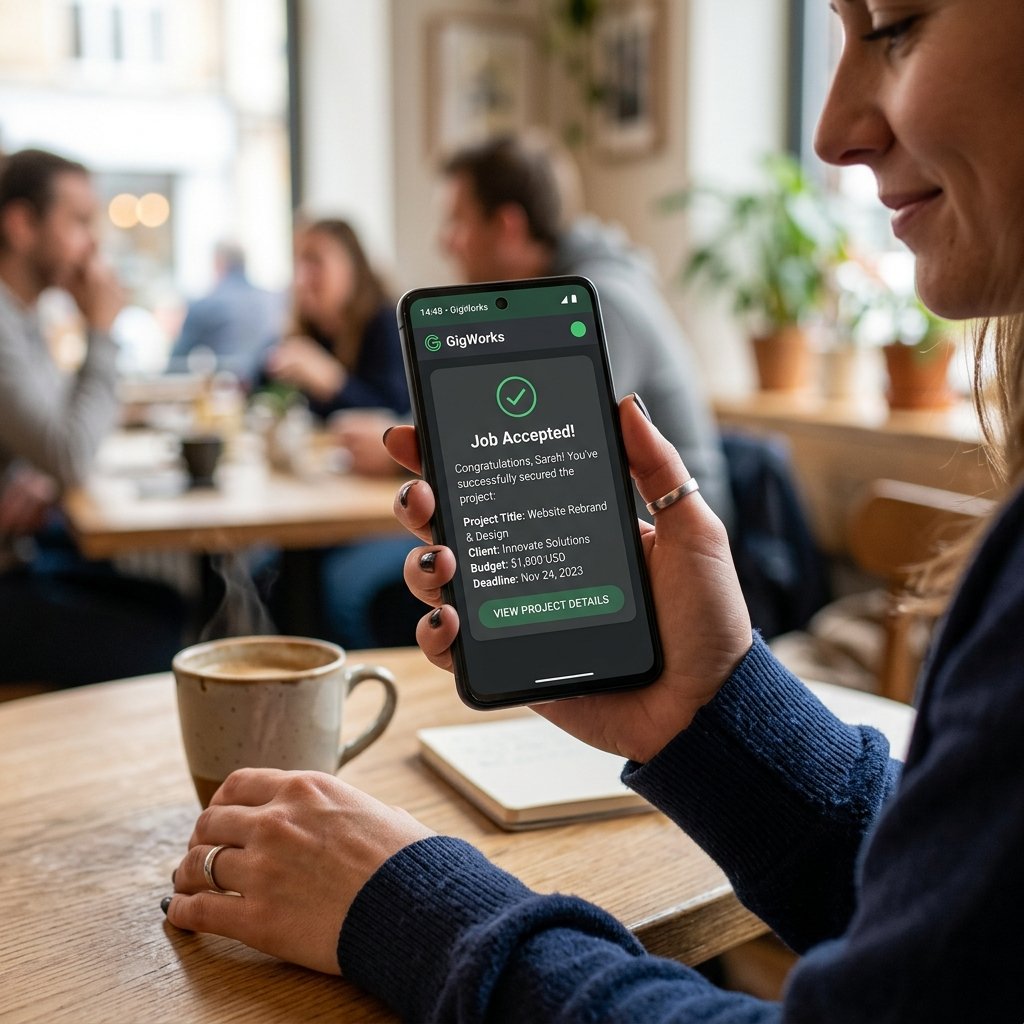
Now that you sound like a pro, you need to get paid. For a beginner with no experience, I recommend starting with ‘Low Barrier’ sites. You won’t get rich here, but you will build a resume.
- Casting Call Club: Great for indie games and fan projects. Many are unpaid, but the paid ones are perfect for beginners.
- ACX (Audiobook Creation Exchange): This is Amazon’s platform. You can find ‘Royalty Share’ projects where you narrate a book and split the profits with the author.
- Upwork/Fiverr: Create a profile focusing on a specific niche (e.g., ‘Friendly Guy Next Door’ or ‘Professional Corporate Narrator’).
The ‘Winning’ Audition Script
When applying for a gig, don’t just say ‘I can do this.’ Use a script like this:
“Hi [Client Name], I saw your post for [Project Name]. I’ve attached a custom sample of your script so you can hear exactly how my voice fits your vision. I use a professional-grade setup and can deliver the final files within [Timeframe]. Looking forward to potentially working together!”
Always, always, ALWAYS provide a custom sample. Most actors just send a generic demo. By recording 30 seconds of their actual script, you prove you are serious and that your gear sounds good.
Scam Warning: Protect Your Wallet
Red Flags to Watch Out For
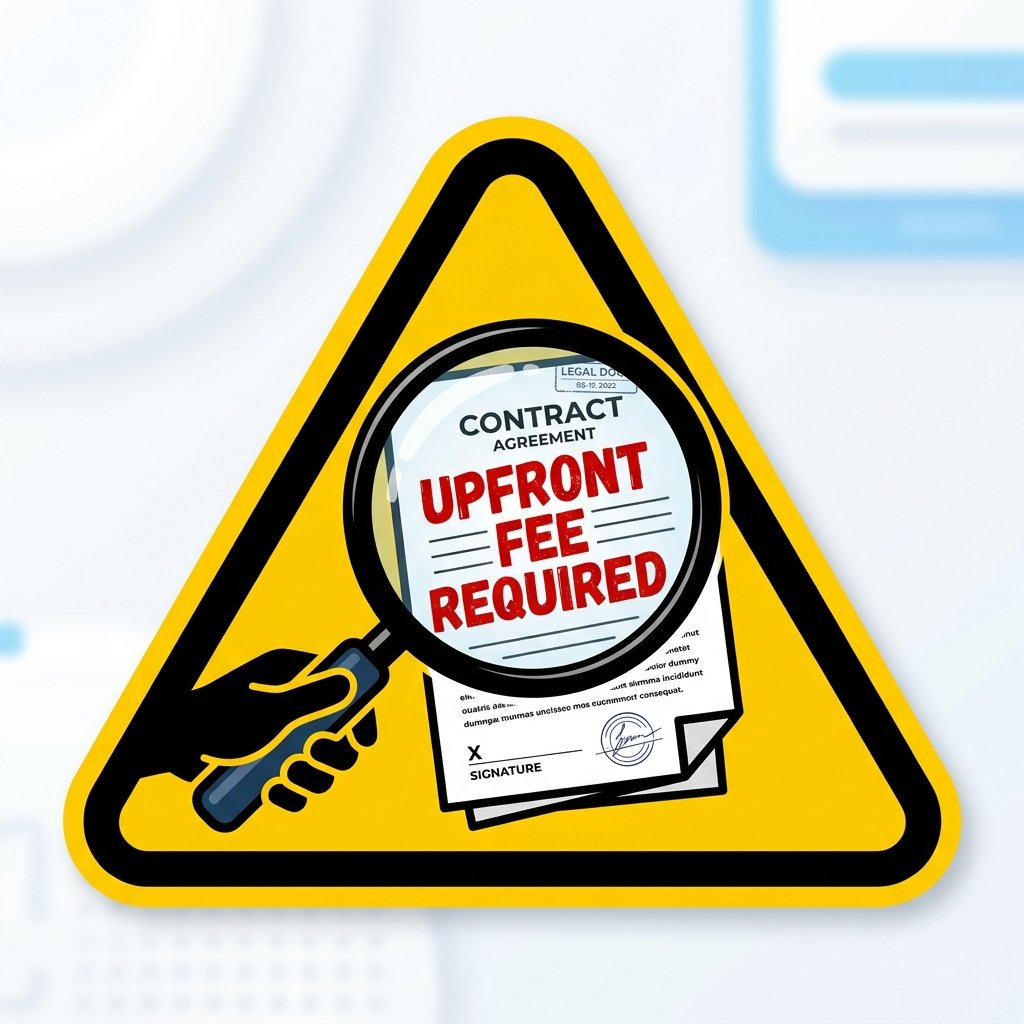
Because voice acting is a dream job for many, there are plenty of scammers looking to take advantage of newcomers. As a frugal hacker, your goal is to make money, not spend it on empty promises.
“SCAM ALERT: Never pay a ‘talent agent’ an upfront fee to represent you. Real agents only get paid when YOU get paid (usually a 10-20% commission).”
Other Red Flags:
- Pay-to-Play Certification: You do not need a ‘Voice Acting Certificate’ to get work. Your voice is your certificate.
- Expensive Demo Reels: Scammers will tell you that you MUST spend $2,000 on a professional demo reel before you can even apply for jobs. This is false. You can make your own ‘home-grown’ demo once you’ve practiced enough.
- Vague Job Posts: If a job offers $5,000 for 5 minutes of work and asks for your bank details immediately, run away.
Conclusion
Final Thoughts: Just Press Record
Starting voice acting with no experience is entirely possible if you are willing to be creative with your budget. By using a $60 microphone, a closet full of clothes, and free software, you are removing the financial risk and focusing on the only thing that matters: your performance. Remember, every famous voice actor started exactly where you are—wondering if they sounded silly talking to themselves in a dark room. Keep your costs low, keep your auditions frequent, and eventually, the checks will start rolling in. Now, go build that pillow fort and start recording!
Disclaimer: I am not a financial advisor. Earning potential is based on industry averages and individual effort. Always perform your own due diligence before signing contracts or purchasing equipment.


Makenzie is the founder and lead writer at MoneyHackTips.com — a personal finance blog dedicated to delivering street-smart financial wisdom for real people on real budgets. With 300+ published articles covering everything from debt management to investing fundamentals, Makenzie’s mission is to make every dollar work harder. When not writing about money hacks, Makenzie is testing frugal living strategies, optimizing side hustles, and helping readers build financial freedom from scratch.