
Fluent in 3 Months: How to Learn Any Language Without Paying a Cent
Let’s get real. You’ve seen the ads for Rosetta Stone, Babbel, and a dozen other slick apps promising fluency for a ‘small’ monthly fee. They sell a dream, but they charge you for tools you can get for free. The secret the $60 billion language industry doesn’t want you to know is that fluency isn’t bought; it’s built. It’s about consistency, strategy, and hustle—not a hefty subscription.
This isn’t just about saving a few bucks. It’s about a power move. Learning a new language for free is the ultimate frugal hack that pays dividends for life. It opens doors to new cultures, new friendships, and yes, new income streams. Forget the paywalls. This is your 90-day, zero-cost game plan to rewire your brain and learn any language without spending a single cent.
The Zero-Dollar Mindset: Why Paying for Language Apps is a Trap

Before we even download a single app, we need to get our mindset right. The biggest lie in self-improvement is that you need to spend money to get results. It’s a trap designed to make you feel like you’re making progress just by swiping your credit card. The truth? Free resources force you to be resourceful. They make you an active participant in your learning, not a passive consumer.
Think about it: when you pay for something, you outsource the effort. You expect the app to do the heavy lifting. When you use free tools, you are the system. You have to actively seek out podcasts, find conversation partners, and build your own study plan. This active engagement is what separates casual learners from future speakers. It builds discipline, the most valuable skill of all.
Key Rules for the Zero-Dollar Mindset:
- Consistency Over Cost: 15 minutes a day with a free flashcard app is infinitely more valuable than a $150 program you never open.
- Resourcefulness is the Real Skill: Learning how to find free, high-quality material is a skill that will serve you far beyond language learning.
- Own Your Progress: Without a subscription to blame, your success is 100% on you. That’s not scary; that’s empowering.
Your 90-Day Blueprint: The Free Fluency Game Plan
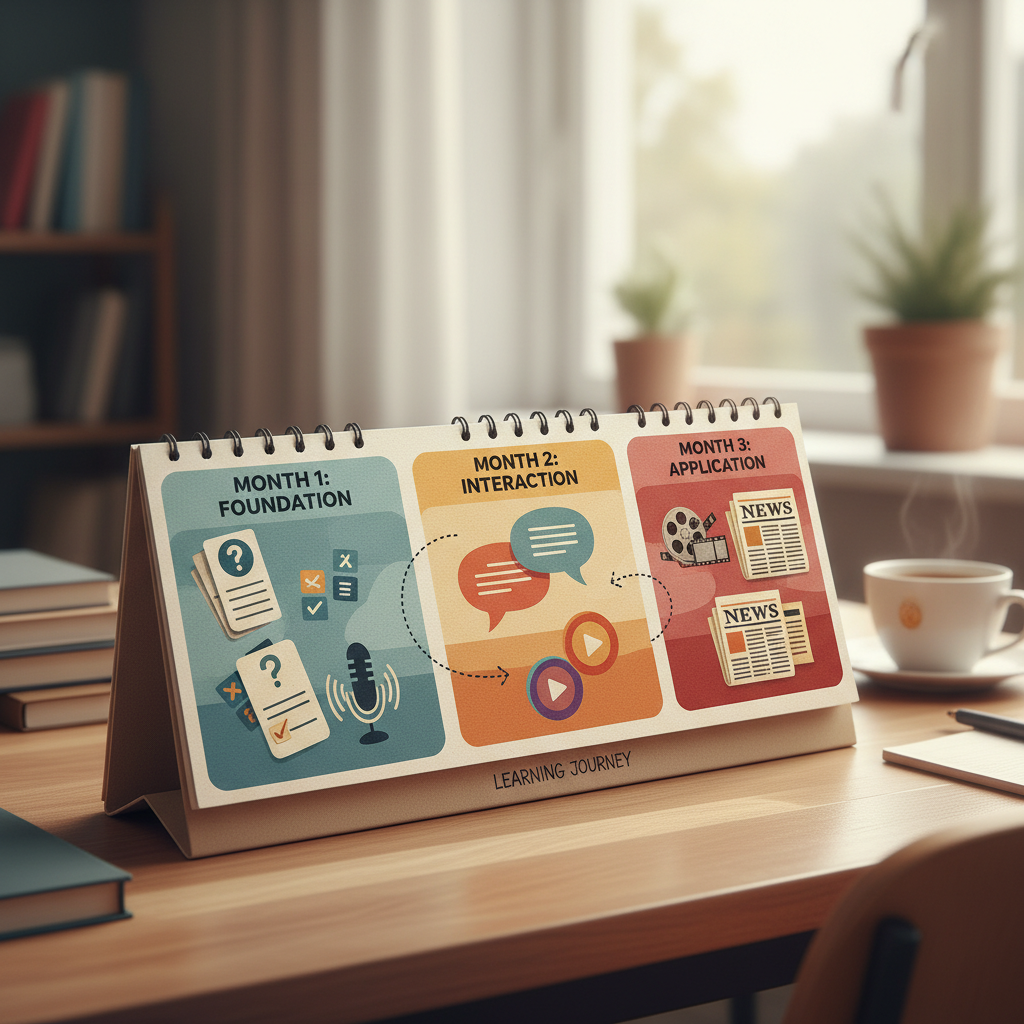
Alright, let’s talk strategy. Fluency in 3 months is an ambitious goal, but it’s not impossible if you have a plan. We’re going to break this down into three 30-day sprints, each with a specific focus. This is your roadmap. Don’t deviate.
Month 1 (Days 1-30): Building the Foundation
This month is all about input and core vocabulary. You’re building the scaffolding. Your goal is to learn the most common 500-1000 words and understand the basic sentence structure.
- Core Vocabulary (30 mins/day): Use a free spaced-repetition app like Anki or the free version of Memrise. Focus on high-frequency word lists. Don’t just learn words; learn them in simple sentences.
- Pronunciation & Basics (15 mins/day): YouTube is your best friend. Search for ‘[Your Language] Pronunciation for Beginners’ and ‘[Your Language] Basic Grammar’. Watch, listen, and repeat out loud. Mimic everything.
- Passive Listening (Whenever possible): Find a podcast or a music playlist in your target language. You won’t understand much, but you’re training your ear to the sounds and rhythm. Let it play in the background while you cook or commute.
Month 2 (Days 31-60): Active Immersion & Output
Now we start connecting the dots and activating the knowledge you’ve built. The goal is to move from passive understanding to active use.
- Start Speaking (30 mins, 3x/week): This is non-negotiable. Use a free language exchange app like Tandem or HelloTalk. Find a native speaker learning your language. Start with text, but push yourself to send voice messages and do short calls. It will be awkward. Do it anyway.
- Comprehensible Input (30 mins/day): Find content made for learners. Search YouTube for ‘[Your Language] Comprehensible Input’ or ‘Easy [Your Language] Stories’. This is content where you can understand 60-80% of what’s being said. It’s the sweet spot for growth.
- Continue Vocabulary (15 mins/day): Keep building your vocabulary with your flashcard app. You should be aiming for the 2000-word mark by the end of this month.
Month 3 (Days 61-90): Real-World Refinement
This is where it all comes together. We’re moving from ‘learner’ material to ‘native’ material and pushing your conversational skills to the next level.
- Consume Native Media (45 mins/day): Watch Netflix shows in the original language (start with subtitles in that language, not English). Read news articles from popular websites in that country. Listen to podcasts made for native speakers on topics you enjoy.
- Long-Form Conversation (1 hour, 2x/week): Schedule longer calls with your language partners. Try to discuss more complex topics—your hobbies, your job, your opinions. The goal is to sustain a conversation.
- Identify and Fill Gaps: As you talk and listen, you’ll notice gaps in your grammar or vocabulary. Note them down and actively look up the answers. This is targeted, efficient learning.
The Ultimate Freebie Toolkit: Your Digital Language Arsenal
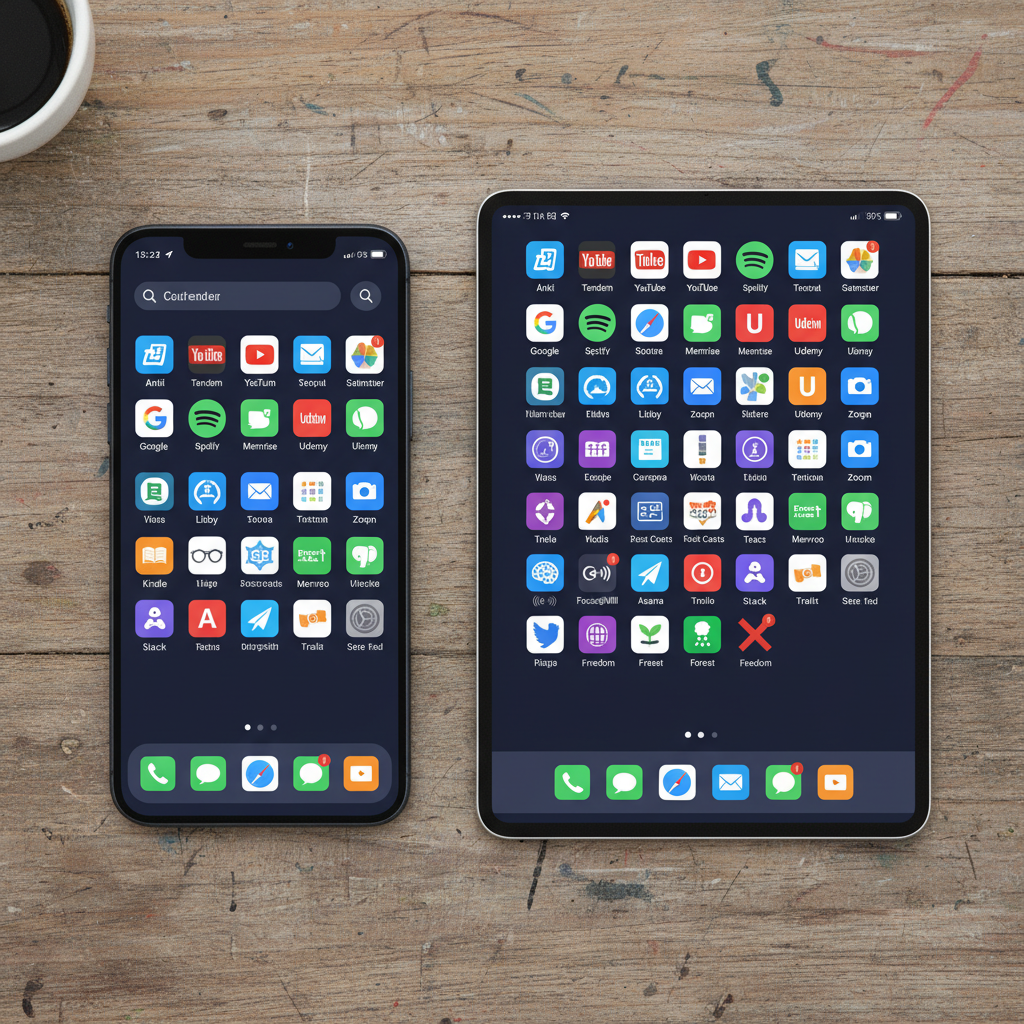
A game plan is nothing without the right tools. The internet is flooded with free resources, but you need to know which ones deliver. This is your curated, no-fluff list of the best free tools to get the job done. No trials, no hidden fees, just pure value.
| Resource Type | Top Free Picks | Best For… |
|---|---|---|
| Vocabulary & Flashcards | Anki (desktop/Android), Memrise (free tier), Quizlet (free tier) | Memorizing high-frequency words with spaced repetition. |
| Conversation Exchange | Tandem, HelloTalk, Speaky | Finding native speakers for free text, voice, and video chat. |
| Pronunciation | Forvo.com, Google Translate (audio feature), YouTube | Hearing how native speakers pronounce any word or phrase. |
| Listening & Audio | Spotify/Apple Music (foreign playlists), TuneIn Radio, Podcasts for learners | Training your ear and absorbing the rhythm of the language. |
| Video & Immersion | YouTube, Netflix (with a language learning extension), Public Library Apps (Kanopy) | Consuming native media and learning from context and visuals. |
| Reading | Local news websites, Wikipedia, Project Gutenberg (for public domain books) | Expanding vocabulary and understanding complex sentence structures. |
| Grammar & Reference | WordReference.com, Hinative, Free online grammar guides | Quickly looking up verb conjugations, definitions, and usage questions. |
Scam Warning: Be wary of sites promising ‘secret government methods’ or ‘fluency in 10 days’. Real learning takes work. Also, on conversation exchange apps, never share personal financial information or click on suspicious links. Keep conversations focused on language and culture. The hustle is learning, not getting scammed.
The Immersion Hack: Live the Language Without Booking a Flight

The fastest way to learn is to surround yourself with the language. But you don’t need a plane ticket and a passport to create an immersive environment. You can turn your daily life into a language-learning boot camp for free. This is about making the language unavoidable.
Your At-Home Immersion Checklist:
- Digital Switch-Up: Change the language on your smartphone, your laptop, and your social media accounts. You already know where the buttons are based on muscle memory; now you’ll learn the words for them. This single hack provides dozens of touchpoints with the language every single day.
- Curate Your Content: Go on YouTube, Spotify, and Instagram and start following creators who post in your target language. Unfollow accounts that don’t serve your goal. Your entertainment feed should become your study guide.
- The Netflix Trick: Create a new user profile on Netflix and set the language to your target language. The entire interface, including descriptions and recommendations, will switch over. Watch shows made in that country. Start with subtitles in that language (not English) to connect spoken and written words, then challenge yourself to turn them off.
- Narrate Your Life: This one feels weird at first, but it works. As you go about your day, try to think and even whisper to yourself in the new language. ‘I am opening the fridge. I see milk and eggs.’ This forces your brain to actively recall vocabulary for everyday objects and actions.
By weaving the language into the technology and routines you already use, you’re creating hundreds of mini-lessons for yourself every day. It’s effortless, it’s effective, and it’s completely free.
The Side Hustle Angle: How to Monetize Your New Language Skills
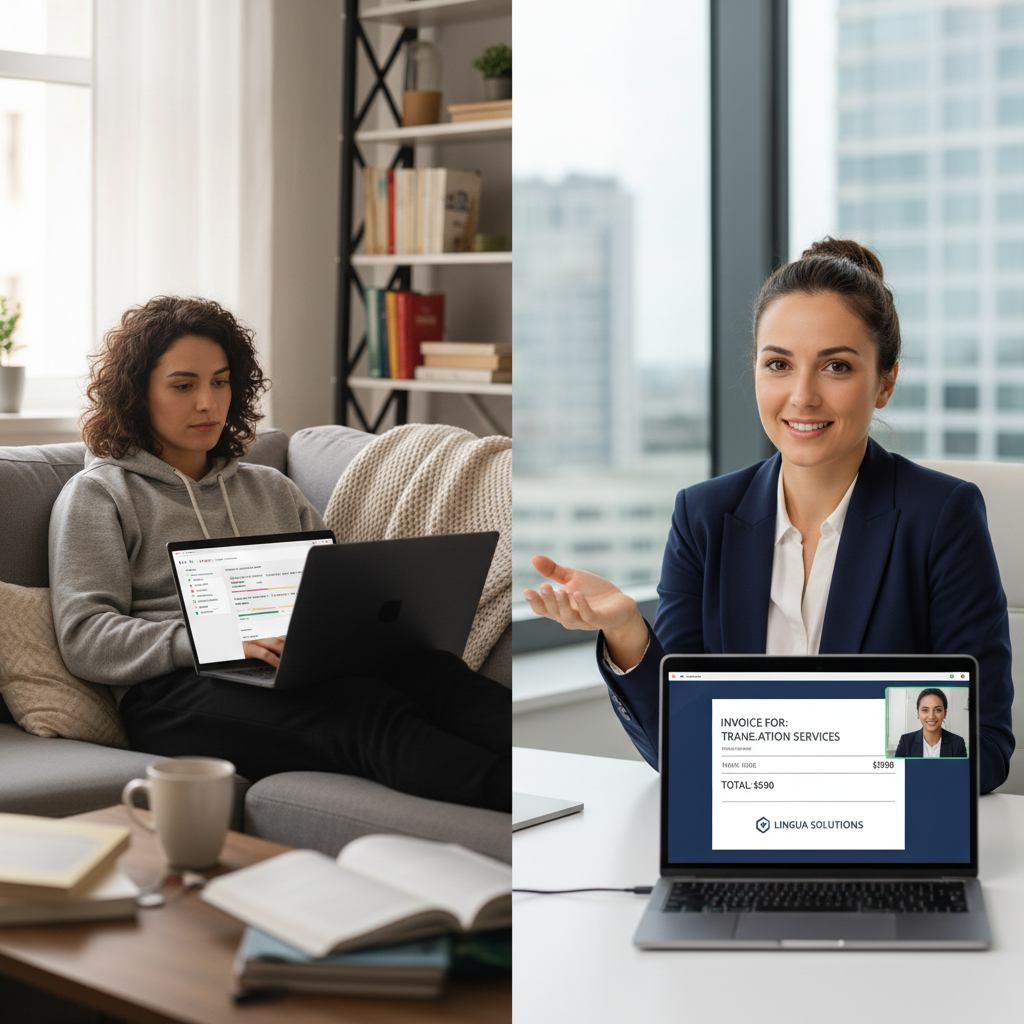
For us, every new skill is a potential income stream. Learning a language isn’t just a hobby; it’s a marketable asset. Once you reach a conversational or proficient level, you can start cashing in. You don’t need to be perfectly fluent to start earning; you just need to be better than your client in a specific area.
Entry-Level Language Hustles:
- Simple Translation Gigs: Platforms like Upwork and Fiverr have countless clients looking for people to translate blog posts, product descriptions, or social media content. You can start with gigs that match your proficiency and earn anywhere from $15 to $30 per hour as you build your reputation.
- Community Tutoring: You don’t need a teaching degree to help a high school student with their Spanish homework. Post on local community boards or sites like Craigslist. You can charge $20 to $40 per hour for basic tutoring sessions.
- Transcription Services: If your listening skills are sharp, you can transcribe audio from podcasts or videos. Services like Rev.com have sections for foreign language transcriptionists, and the pay is often higher than for English-only work.
- Bilingual Virtual Assistant: Small businesses or entrepreneurs often need assistants who can handle emails or customer service for a specific language market. This can be a steady remote gig, often paying $18 to $25 per hour or more.
The key is to start small, build a portfolio of positive reviews, and market your new skill confidently. Your 90-day investment of time can translate directly into a new, flexible income stream that costs you nothing to acquire.
Conclusion
There you have it—the complete playbook to go from zero to conversationally fluent in a new language without opening your wallet. We’ve busted the myth that you need expensive software, laid out a clear 90-day action plan, and equipped you with a toolkit of powerful, free resources. We even showed you how to turn this new skill into a legitimate side hustle.
The only variable left is you. Fluency isn’t a product you can buy; it’s a state you achieve through consistent, focused effort. The resources are there. The path is clear. Stop waiting for the ‘perfect’ time or the ‘perfect’ program. The perfect time is now, and the perfect program is the one you build yourself. Pick your language, grab your free tools, and start your 90-day mission today. The world is waiting to talk to you.