

Why I Ditched My Contract: The Ultimate Guide To $15/Month Phone Plans
Let’s get real. Your phone bill is a hustle-killer. That $80, $100, or even $120 monthly payment is a ball and chain, shackling your budget and draining cash that could be funding your next project, paying off debt, or just giving you some breathing room. For years, the big carriers have sold us a story: that you need their bloated, overpriced contracts for reliable service and the newest phone. That’s a lie.
I’m here to tell you I called their bluff, ditched my contract, and never looked back. My wallet has never been happier. Welcome to the world of $15/month phone plans. This isn’t a scam or a temporary deal; it’s the new standard for anyone who’s smart about their money. This guide is your escape plan. We’re going to break down the racket, expose the secrets the big guys don’t want you to know, and give you a step-by-step playbook to slash your phone bill and reclaim your cash. It’s time to stop getting played and start taking control.
The Big Carrier Heist: Why Your ‘Loyalty’ is Costing You a Fortune

You think you’re getting a deal with that ‘free’ phone upgrade and your ‘loyalty’ discount? Think again. You’re a captive customer, and they’re milking you for every penny. The entire business model of major carriers is built on locking you into two-year contracts with hidden fees, confusing terms, and prices that creep up over time. That shiny new phone isn’t free; its cost is just baked into your outrageous monthly bill. You’re paying for it, plus interest, over the life of your contract.
The math is downright criminal. Let’s say you’re paying a ‘reasonable’ $80/month. That’s $960 a year. Over two years, you’ve handed them nearly $2,000. Now, compare that to a lean, mean $15/month plan. The difference is staggering. You’re not just paying for service; you’re funding their massive marketing budgets, corner-office salaries, and brick-and-mortar stores you barely use.
The Math Doesn’t Lie: Big Carrier vs. Smart Saver
Don’t just take my word for it. Look at the numbers. This is the cash you’re leaving on the table by sticking with the big guys.
| Time Period | Typical Big Carrier Plan (@ $80/month) | Smart Saver Plan (@ $15/month) | Your Total Savings |
|---|---|---|---|
| 1 Year | $960 | $180 | $780 |
| 2 Years | $1,920 | $360 | $1,560 |
| 5 Years | $4,800 | $900 | $3,900 |
Seeing that $3,900 number should light a fire under you. That’s a serious chunk of change. It’s a vacation, a paid-off credit card, or a seed investment for your side hustle. All of that is being siphoned away by a utility bill you can drastically reduce today. Your loyalty isn’t being rewarded; it’s being exploited.
The Underground Network: Your Guide to MVNOs
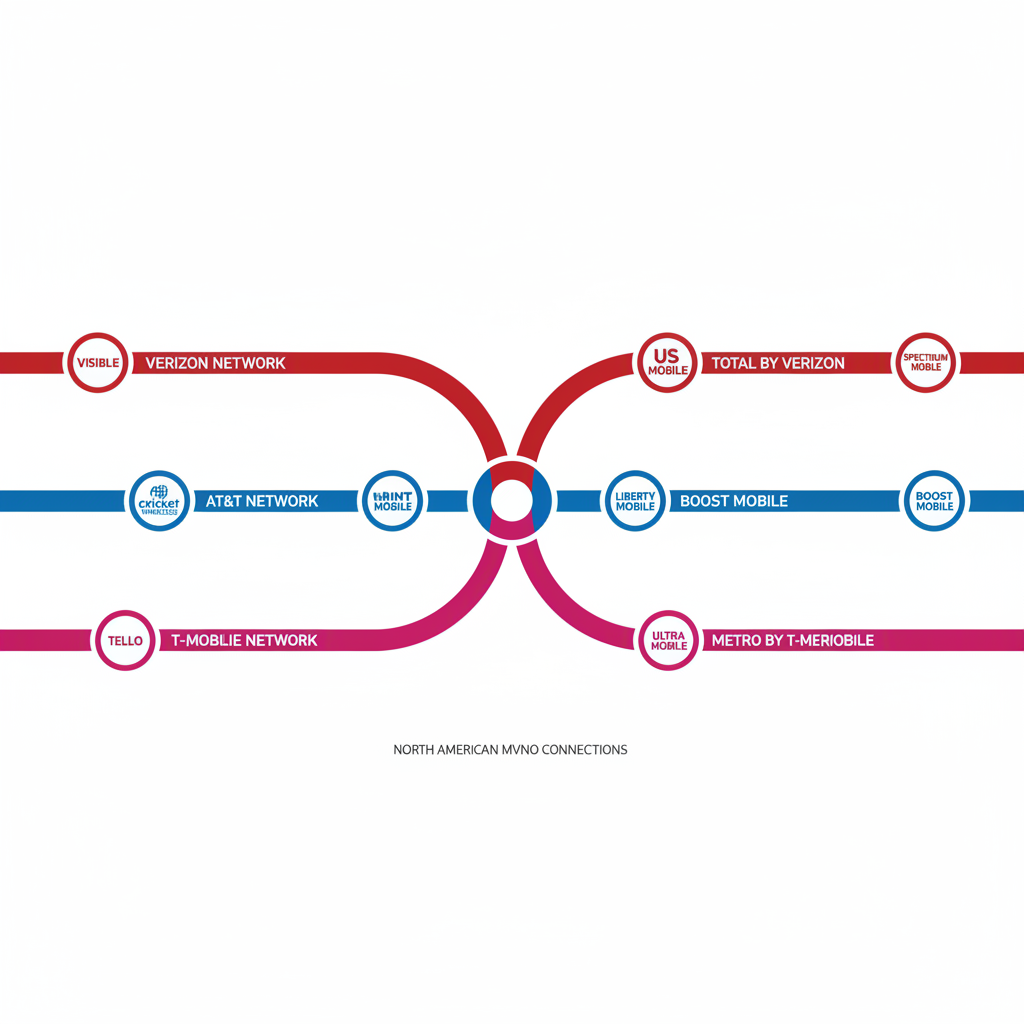
So, how is a $15/month plan even possible? Meet the secret weapon of frugal hackers everywhere: the MVNO, or Mobile Virtual Network Operator. Think of it like this: an MVNO is the generic brand of cell service. They don’t own the massive, expensive cell towers. Instead, they buy network access in bulk from the big players—AT&T, T-Mobile, and Verizon—and resell it to you for a fraction of the price.
You get the exact same coverage because you’re on the exact same network. The only thing you’re losing is the bloated overhead. MVNOs operate lean. They don’t have thousands of fancy retail stores or spend billions on Super Bowl ads. They pass those savings directly to you. It’s the biggest no-brainer in personal finance.
Who Runs on What?
Worried about coverage? Just pick an MVNO that uses the network that’s strongest in your area. It’s that simple.
- If you like Verizon’s Network: Check out MVNOs like Visible, US Mobile, or Straight Talk.
- If you like T-Mobile’s Network: Mint Mobile, Tello, and Google Fi have you covered.
- If you like AT&T’s Network: Look at options like Consumer Cellular, Red Pocket Mobile, or Boost Mobile.
The only potential difference you might encounter is something called deprioritization. During times of heavy network congestion (like at a packed concert or sporting event), the main carrier might slow down MVNO users’ data speeds before their own direct customers. Honestly? For most people, most of the time, it’s completely unnoticeable. It’s a tiny trade-off for saving $780 a year.
The $15/Month Heavyweights: A Head-to-Head Showdown
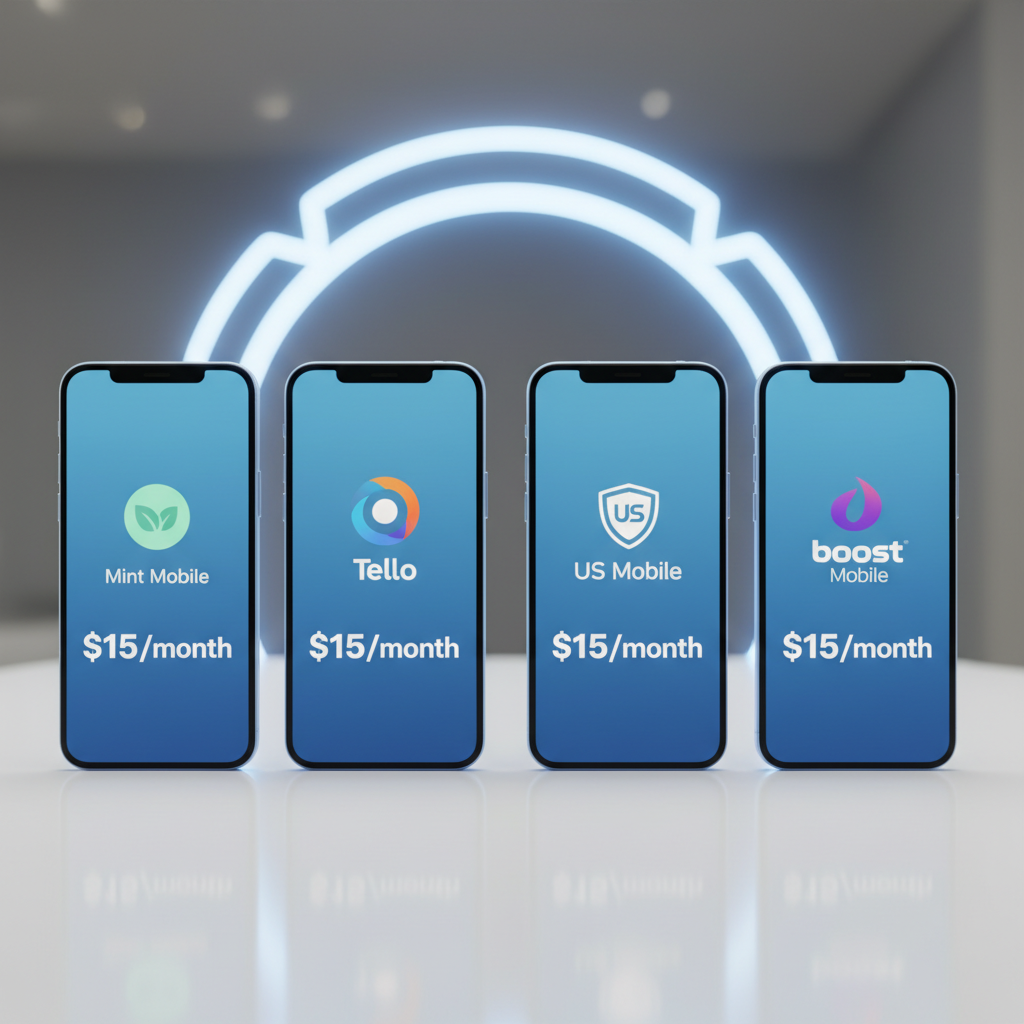
Alright, let’s get down to brass tacks. You want a cheap plan, but you also want a good one. There are a ton of players in the low-cost game, but a few consistently rise to the top for offering incredible value. Here’s a breakdown of some of the best contenders in the $15/month price range. Remember, these prices can be introductory or require you to buy a few months upfront, so always double-check the fine print. This is your cheat sheet.
| Provider | Price (per month) | Data Allowance | Network Used | The Street-Smart Take |
|---|---|---|---|---|
| Mint Mobile | $15 (for first 3 months, then requires annual payment) | 5GB of 5G/4G LTE | T-Mobile | The crowd favorite. Great marketing, solid service. The catch is you have to prepay for a full year to keep the lowest price, but the math still works out beautifully. |
| Tello Mobile | $14 | 5GB of 5G/4G LTE | T-Mobile | The ultimate customizer. You can build your own plan. If you don’t need many minutes but want more data (or vice versa), you can tweak it. Super flexible and no bulk-buying required. |
| US Mobile | ~$15 (with multi-line or annual discounts) | 5GB – 10GB (plans vary) | Verizon or T-Mobile | The tech lover’s choice. They offer service on two different networks, so you can pick the best one for you. Great dashboards and perks like international data on some plans. |
| Boost Mobile | $15 (often for new customers) | 5GB of 5G/4G LTE | AT&T, T-Mobile, Dish | The comeback kid. Boost has some killer intro offers. Just be sure to read the terms, as prices can change after the initial period. A great way to test the waters. |
Your choice depends on your needs. Are you a data hog? A talk-and-texter? Do you need international calling? Check the details, but know this: you have powerful, cheap options that blow your old contract out of the water.
The Great Escape: Your 5-Step Plan to Freedom

Ready to pull the trigger? Making the switch is easier than you think. The carriers make it seem complicated because they don’t want you to leave. Follow this simple, five-step plan to break free and start saving.
-
Step 1: Check Your Chains (Contract & Phone Status)
First, figure out where you stand. Log in to your current carrier’s online account or call them (be prepared for a sales pitch) and ask two questions: “When does my contract end?” and “Do I owe any money on my device?” If your contract is up and your phone is paid off, you’re golden. If not, find out the exact cost to break the contract or pay off the phone. Often, the savings from switching will cover those fees within a few months.
-
Step 2: Unlock Your Phone
If you bought your phone from your carrier, it’s likely “locked,” meaning it will only work on their network. You need to unlock it. Most carriers will do this for free once your phone is fully paid off. You can usually submit a request through their website or by calling customer service. This is a critical step, so don’t skip it.
-
Step 3: Get Your Getaway Info (Porting Details)
You want to keep your phone number, right? To do that, you need to “port” it to your new carrier. You’ll need your current account number and a special “Number Transfer PIN.” You can find the account number on your bill. You may have to call your carrier or go through their app to get the Transfer PIN. Write these down and keep them safe.
KEY RULE: Do NOT, under any circumstances, cancel your old service yourself. Your new provider will handle the cancellation as part of the porting process. If you cancel it first, you will lose your phone number forever.
-
Step 4: Choose Your New Crew & Order a SIM
Pick your new MVNO from the list above (or another one you’ve researched). Go to their website, select your plan, and order a SIM kit. They’ll mail you a physical SIM card or give you instructions for an eSIM (a digital SIM) that can be activated instantly on newer phones.
-
Step 5: Make the Switch (Activate & Port)
Once your SIM kit arrives, follow the activation instructions. This is usually done on the MVNO’s website or app. You’ll be asked for your phone’s IMEI number (just dial *#06# to find it) and the account number and Transfer PIN you gathered in Step 3. The porting process can take anywhere from a few minutes to a few hours. Once it’s done, your old service will cancel automatically, and your new, cheap service will be live. You’ve done it.
Myth Busters & Trap Dodgers: The Real Deal on Budget Plans

The big carriers spend billions on marketing to create fear, uncertainty, and doubt about switching. Let’s bust some of the most common myths and help you dodge the traps that keep people overpaying.
Myth #1: “The coverage is terrible and my calls will drop.”
Reality: This is the biggest lie. As we covered, MVNOs use the exact same towers and infrastructure as the major networks. If you have good Verizon coverage now, you’ll have good coverage with an MVNO that runs on Verizon. Period.
Myth #2: “There’s no customer service if something goes wrong.”
Reality: The service model is different, not non-existent. Most MVNOs handle customer service through online chat, apps, or email. For many, this is faster and more efficient than waiting on hold for 45 minutes to talk to someone in a call center. The service is there; it’s just more modern.
Trap #1: The “Unlimited” Data Lie
Many plans, both from big carriers and MVNOs, are advertised as “unlimited.” Read the fine print. This usually means you get a certain amount of high-speed data (e.g., 35GB), and after you use it, your speeds are slowed down, sometimes to a crawl. For a $15/month plan, you’re usually buying a set amount of high-speed data (like 5GB). This is more honest and is more than enough for the average user who uses Wi-Fi at home and work.
SCAM WARNING: Watch out for teaser rates that skyrocket after a short promotional period. The best MVNOs are transparent about their pricing. If a deal seems too good to be true, read the terms and conditions to see what the price will be in month four or after the first year. Always know what you’re signing up for long-term.
Conclusion
The choice is yours. You can keep sending a huge chunk of your hard-earned money to a massive corporation every month, or you can take 30 minutes of your time to make a change that will save you hundreds, if not thousands, of dollars. Ditching my contract was one of the easiest and most impactful financial decisions I’ve ever made. It’s not just about saving money; it’s about being a savvy consumer who refuses to be taken for a ride.
You have the knowledge. You have the step-by-step plan. All that’s left is to take action. Stop funding their marketing machine and start funding your own dreams. Make the switch. Your budget will thank you, and you’ll wonder why you didn’t do it years ago.