
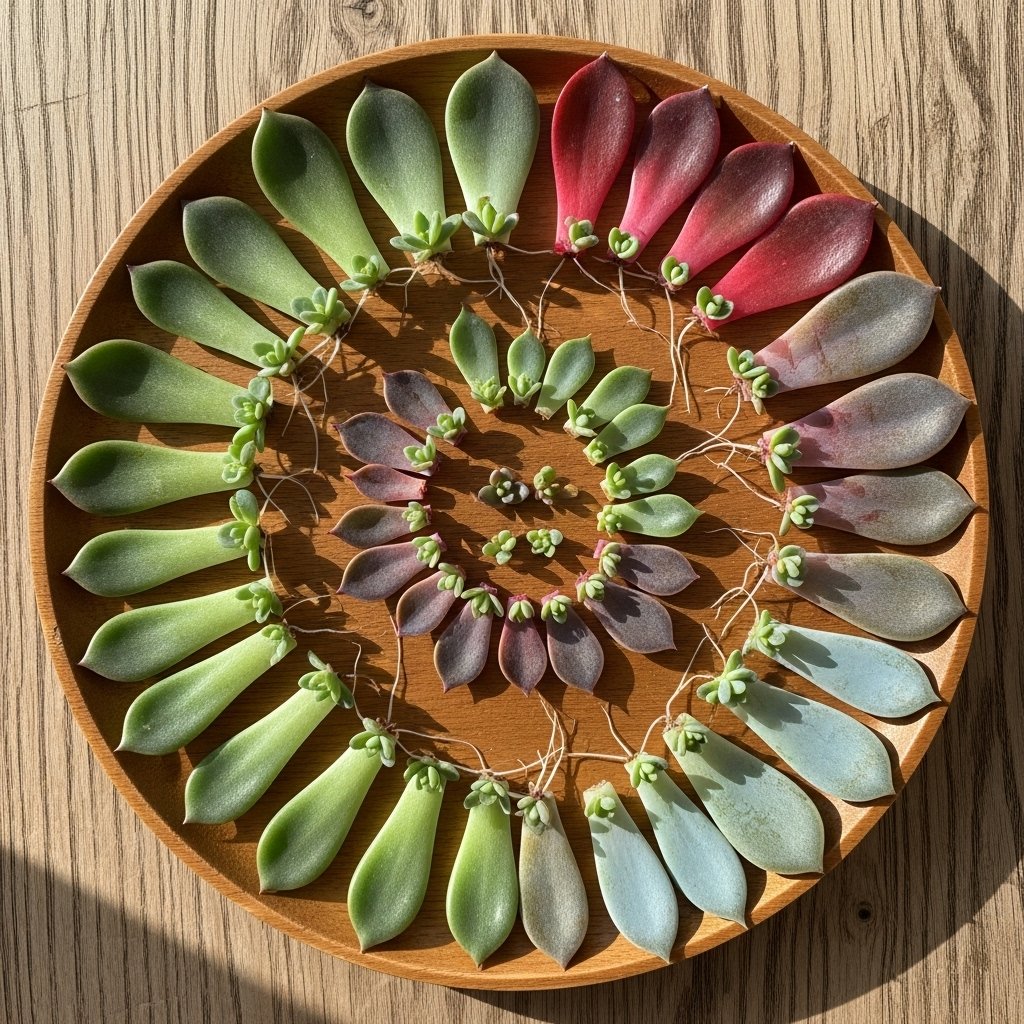
Infinite Plants Hack: How to Propagate Succulents from Leaves
Let’s be real: walking into a plant shop feels great until you hit the checkout. That cute little succulent you picked up costs $15, and the bigger one is $40. It’s a ripoff. You’re paying for a pot, some dirt, and a plant that, with a little know-how, can literally print its own babies for free. Welcome to the infinite plants hack. This isn’t just about gardening; it’s about breaking a system designed to take your money. We’re talking about turning one plant you already own (or a leaf you *find* on the floor at a big box store… no judgment) into 10, 20, or even 100 new plants. It costs pennies, requires almost no space, and can easily become a legit side hustle that pads your bank account. Forget paying retail. It’s time to learn how to clone your assets and build a green empire from your windowsill.
Stop Buying, Start Cloning: The Insane ROI of a Single Leaf

Before we get into the ‘how,’ let’s talk about the ‘why.’ The math on this is a no-brainer. Every time you propagate a plant instead of buying one, you’re winning. Think of each healthy leaf on your existing succulent not as a piece of the plant, but as a free coupon for a brand new one. The return on investment (ROI) is practically infinite because your initial cost is essentially zero. You’re leveraging an asset you already have to create more assets. It’s the most basic rule of building wealth, applied to houseplants.
Most people don’t think this way. They see a plant, they buy it. We see a plant, we see a factory. This mindset shift is what separates the casual consumer from the savvy hustler. You’re not just saving money; you’re creating value out of thin air. Let’s break down exactly what those savings look like when you ditch the store and start your own production line.
Cost Breakdown: DIY Propagation vs. Buying Retail
The numbers don’t lie. The initial investment for propagation is laughably low, and the payoff is huge, whether you’re decorating your own space or selling your creations.
| Item | DIY Propagation Cost (for 10 Plants) | Store-Bought Cost (for 10 Plants) |
|---|---|---|
| Succulent Plants | $0 (from an existing plant) | $50 – $150 (at $5-$15 per plant) |
| Potting Mix | $5 (one small bag makes dozens) | Included in plant price |
| Pots/Containers | $0 – $10 (recycled containers or cheap terracotta pots) | Included in plant price |
| Total Initial Cost | $5 – $15 | $50 – $150 |
| Savings | You save between $45 and $135 instantly! | |
As you can see, the difference is massive. For the price of ONE store-bought succulent, you can create an entire army of them. This is the foundation of the hustle. You absorb a tiny upfront cost for supplies that will last you through hundreds of propagations, and your ‘inventory’—the leaves—is free and self-replenishing.
Your Propagation Station: The Dirt-Cheap Setup
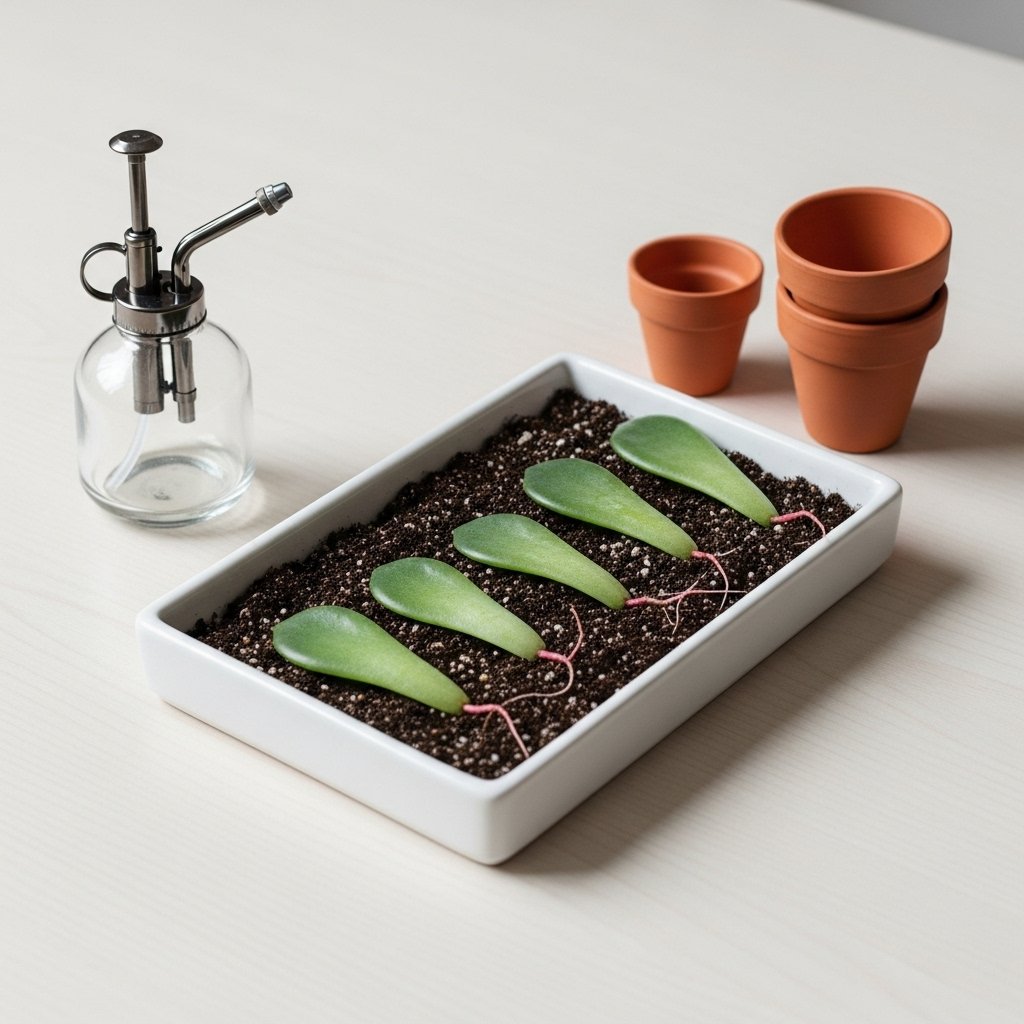
You don’t need a fancy greenhouse or expensive equipment to start propagating. In fact, you probably have most of what you need already. The goal here is efficiency and low cost. Don’t let fancy Instagram setups fool you into thinking you need to spend money. Keep it simple.
Essential Gear List:
- A Mother Plant: You need a healthy, well-hydrated succulent to source your leaves from. Echeverias, Sedums, and Graptopetalums are fantastic, easy-to-propagate choices.
- A Shallow Tray or Container: Anything that can hold a thin layer of soil will work. Old takeout containers, egg cartons, or cheap plastic seed trays are perfect. No need to buy anything special.
- Succulent/Cactus Potting Mix: This is the one thing worth spending a few bucks on. You need well-draining soil. Standard potting soil holds too much water and will rot your leaves. A small bag costs about $5 and will last forever.
- A Spray Bottle: For gentle watering once roots appear. A cheap one from the dollar store is all you need.
- Patience: This is a waiting game. Your leaves aren’t going to sprout overnight. Set them up and let them do their thing.
That’s it. Your entire setup should cost less than $10 if you have to buy everything. Your propagation station can be a quiet corner on a bookshelf, a spot on your desk, or a windowsill that gets bright, indirect light. Direct sun will scorch your delicate leaves, so avoid that. You are creating a low-maintenance, money-printing machine in the corner of your room.
The 5-Step Playbook to Clone Your Succulents
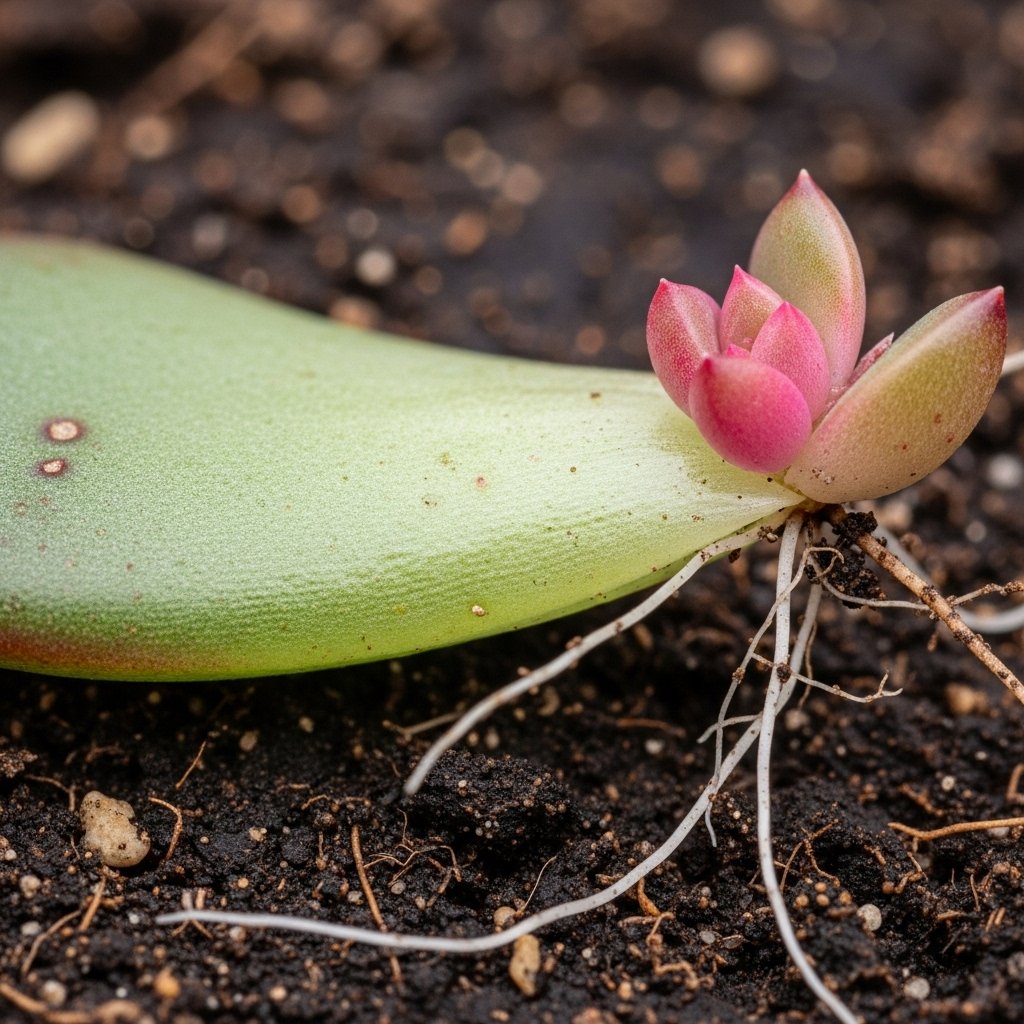
Alright, this is where the magic happens. Follow these steps exactly, and you’ll have a high success rate. The process is simple, but the details matter. Rushing or getting sloppy is how you end up with a tray of mush instead of a tray of baby plants.
-
Step 1: The Perfect Leaf Pull
This is the most critical step. Don’t cut the leaves. Gently hold the leaf near the stem and give it a slight side-to-side wiggle. You want a clean break right at the stem. If part of the leaf tears or stays on the stem, it likely won’t propagate. You need the very base of the leaf, where the growth cells are concentrated. Take more leaves than you think you need; not every single one will be successful, and that’s just part of the game.
-
Step 2: Let Them Callus
Once you have your leaves, don’t immediately put them on soil. Lay them out on a paper towel in a dry, shady spot for 2-4 days. You’ll see the ‘wound’ where you pulled it from the stem dry up and form a callus. This step is non-negotiable. It prevents the leaf from absorbing too much water and rotting when you place it on the soil.
-
Step 3: Arrange on Soil
Fill your shallow tray with your succulent mix. Lay your callused leaves directly on top of the dry soil. You don’t need to bury them or stick them in. Just lay them flat on the surface. Give them some space so they have room to grow and get air circulation. Place the tray in a spot with bright, indirect sunlight.
-
Step 4: Wait for Roots (and Ignore Them)
Now comes the hard part: waiting. Do NOT water them yet. The leaves have all the water and nutrients they need to start producing roots. This can take anywhere from two weeks to over a month. You’ll eventually see tiny, pinkish-white roots emerging from the callused end. Once you see roots, you can start lightly misting the soil with your spray bottle every few days—just enough to give the new roots something to drink. Don’t soak the soil or the parent leaf.
Key Rule: When in doubt, don’t water. Overwatering is the #1 killer of succulent propagations. The parent leaf will start to shrivel as the new baby plant uses its energy—this is normal. It’s your signal that things are working.
-
Step 5: Pot Your New Plants
Once your baby plant (the ‘pup’) is about the size of a dime and has a decent little root system, it’s ready for its own pot. The parent leaf will be mostly shriveled and dry by this point and may fall off on its own. Gently pluck it off if it hasn’t. Plant your new baby in its own small pot with succulent mix, and you’re done. You’ve officially created a brand new plant for free. Now, do it a hundred more times.
From Windowsill to Wallet: Monetizing Your Plant Army
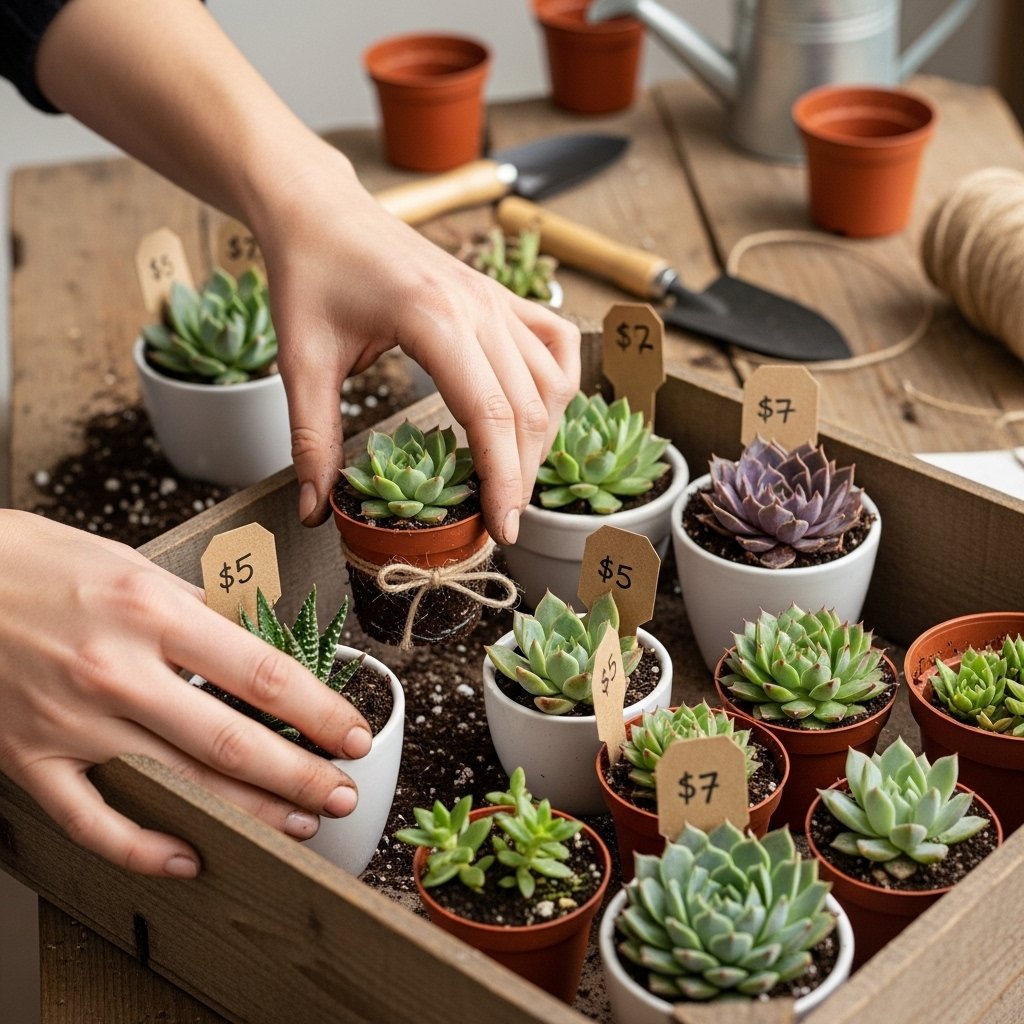
Okay, your windowsill is overflowing. You’ve mastered the art of cloning. Now it’s time to get paid. Selling propagated succulents is one of the easiest side hustles to start because your inventory costs are practically zero. Your profit margins are massive.
Where to Sell Your Clones:
- Facebook Marketplace & Local Groups: This is your best starting point. No fees, local pickup. Take bright, attractive photos. Bundle small plants in sets of 3 or 5 for quick sales. Price them competitively—if a store sells a similar plant for $8, you sell yours for $4. You’ll dominate the market.
- Etsy: If you want to ship, Etsy is the place. You’ll need to learn how to ship plants safely (it’s easier than it sounds). Your photos and branding matter more here. You can charge more, but you’ll have fees and shipping costs to factor in.
- Local Farmers’ Markets or Craft Fairs: Renting a table can be a great way to sell a lot of inventory in one day. This is perfect for people who enjoy the in-person hustle. Create cute arrangements and displays to attract buyers.
- Offer Bulk Deals: Market your tiny plants as wedding favors, party gifts, or office decor. Selling 50-100 plants at once is a huge win.
Realistic Earning Potential
This isn’t a get-rich-quick scheme, but it’s a reliable way to generate extra cash. Let’s look at some conservative numbers for a beginner selling locally.
| Scale of Operation | Plants Sold Per Month | Average Price Per Plant | Potential Monthly Revenue |
|---|---|---|---|
| Beginner Hustler | 20 | $4 | $80 |
| Consistent Side Gig | 50 | $5 | $250 |
| Serious Propagator | 150 | $5 | $750 |
An extra $250 a month from a hobby that costs next to nothing? That’s a car payment, a big chunk of your groceries, or a serious boost to your savings account. As you get better and scale up, those numbers can grow significantly. It all starts with that first leaf.
Hustler’s Handbook: Pro Tips & Avoiding Rookie Mistakes

As you scale up, you’ll run into new challenges. Here’s how to troubleshoot common problems and avoid the mistakes that stop most beginners in their tracks.
- Problem: Leaves are rotting or turning to mush.
Solution: You’re overwatering. Stop. Let the soil dry out completely. Remember, no water at all until roots appear. Also, ensure you’re letting the leaves callus properly before placing them on soil. - Problem: Baby plants are long and stretched out.
Solution: They need more light. This is called etiolation. Move your tray to a brighter location, but still avoid harsh, direct sun. A south-facing window with a sheer curtain is often perfect. - Problem: Nothing is happening.
Solution: Patience. Some succulent varieties take much longer than others. As long as the leaf isn’t rotting or completely dried to a crisp, leave it alone. It might just be taking its sweet time. - Pro Tip: The ‘Leaf Tax’.
When you buy a new, interesting succulent for your collection, immediately propagate a few leaves from it. This is your ‘tax.’ It ensures you always have a backup if the mother plant dies, and it constantly feeds new, interesting varieties into your sales inventory.
Scam Warning: Be very wary of buying ‘rare’ succulent leaves online, especially from overseas sellers. Many sellers on sites like eBay or Etsy will sell leaves of rare, colorful plants that are notoriously difficult or impossible to propagate from a leaf. You’ll pay a premium, and the leaf will just rot. Stick to propagating from plants you can see are healthy and known to be generous propagators. Don’t pay for someone else’s compost.
Conclusion
The infinite plants hack is more than just a cool gardening trick—it’s a perfect example of the frugal, street-smart mindset. It’s about seeing value where others don’t and creating abundance from practically nothing. You’ve learned how to bypass retail markups, set up a near-zero-cost production line, and turn a simple houseplant into a legitimate stream of income. The barrier to entry is a single leaf. You don’t need a loan, a business plan, or a huge amount of space. You just need a little bit of knowledge and the patience to let nature do its work. So go find a healthy succulent, grab a leaf, and start your empire. Your wallet will thank you.