
What Is ‘Loud Budgeting’? The Viral Trend Saving Gen Z Thousands
Let’s be real: for decades, talking about money has been taboo. We were taught to keep our financial struggles under wraps, to quietly stress about bills while pretending everything was fine. If you couldn’t afford something, you were supposed to make up an excuse, not admit the truth. This culture of silence created a pressure cooker of debt, comparison, and ‘keeping up with the Joneses’ that has left millions feeling powerless. But the game is changing, thanks to a viral trend that’s all about being unapologetically open about your finances: Loud Budgeting.
Forget ‘quiet luxury’ and the pressure to spend money you don’t have. Loud budgeting is the counter-movement. It’s about declaring your financial goals from the rooftops and making it cool to say, ‘Sorry, I can’t afford that right now. I’m saving for a house.’ It’s a power move that transforms financial limitations from a source of shame into a statement of intent. This isn’t just another fleeting TikTok trend; it’s a fundamental shift in how we talk about and manage our money. In this guide, we’re going to break down exactly what loud budgeting is, how to use it to your advantage, and how this simple change in communication can literally save you thousands of dollars a year.
The Breakdown: What ‘Loud Budgeting’ Really Means

So what’s the real deal with loud budgeting? At its core, it’s the practice of being transparent and vocal about your financial goals and spending limits. Instead of hiding the fact that you’re on a budget, you own it. It’s about consciously opting out of consumer culture and prioritizing your long-term goals over short-term social spending. Think of it as the ultimate financial boundary-setting tool.
This trend is a direct rebellion against the ‘quiet luxury’ and ‘stealth wealth’ aesthetics that encourage subtle, expensive status symbols. Loud budgeting says the opposite: my biggest flex isn’t a designer bag; it’s my growing savings account, my shrinking debt, or the fact I’m on track to buy a home. It’s a massive psychological shift. When you say, ‘I can’t go out for that expensive dinner because I’m aggressively paying off my student loans,’ you’re not saying ‘I’m broke.’ You’re saying, ‘I’m disciplined, I have a plan, and my future is more important than this one night out.’ You’re turning a ‘no’ into a story about your ambition. This simple reframe takes the power back from societal expectations and puts it squarely in your hands—and your wallet.
From Shame to Strategy
The old way of budgeting was a private, often shameful, activity. You’d track your expenses in a spreadsheet you’d quickly minimize if someone walked by. Loud budgeting externalizes this process. By telling your friends you’re saving for a down payment, you’re not just declining an invitation; you’re also inviting them to be part of your support system. They might even start suggesting cheaper or free activities to support your goal. It transforms budgeting from a solitary struggle into a shared, empowering journey. It’s not about complaining about being poor; it’s about being proud of being smart with your money.
The ‘Loud Budgeting’ Playbook: 3 Rules to Live By
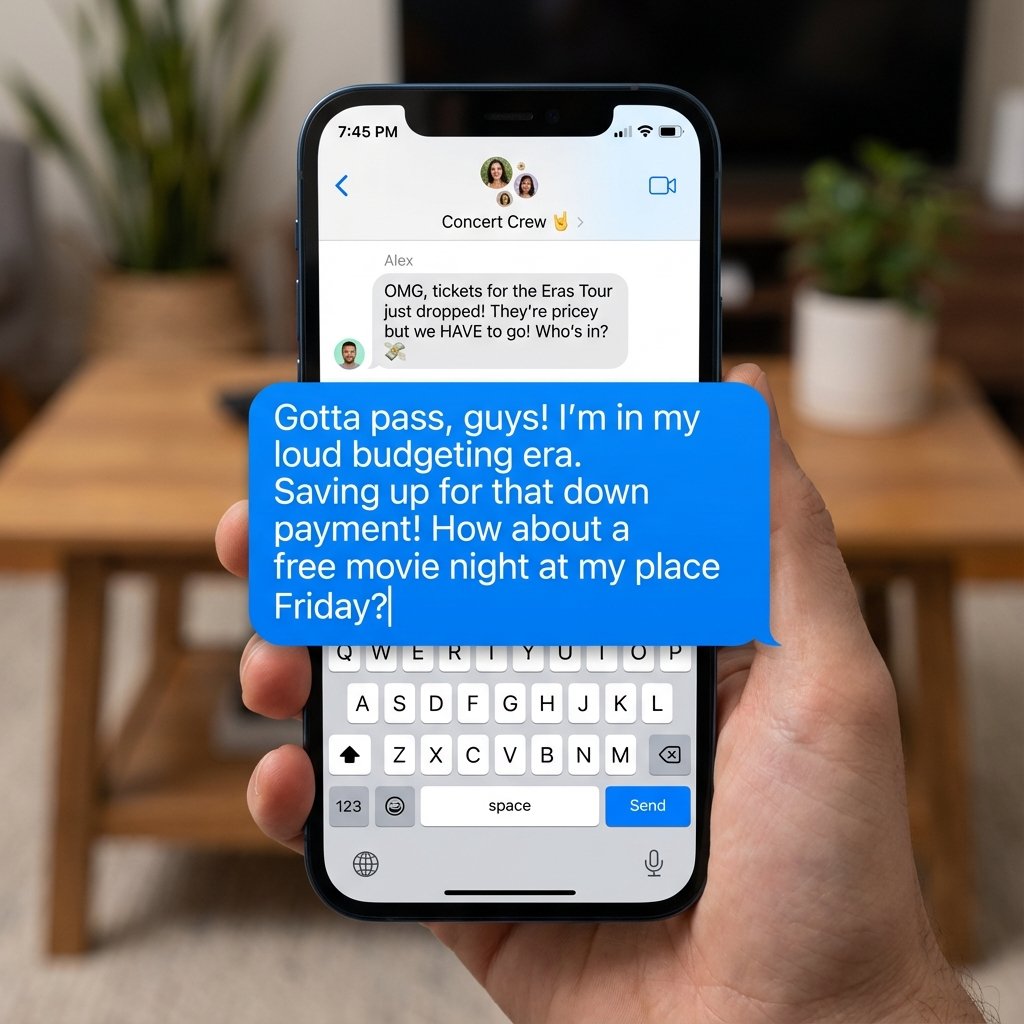
Ready to put this into action? Loud budgeting isn’t about yelling your bank balance at strangers. It’s about strategic communication. Here’s the playbook to make it work for you without alienating your friends or family.
Rule #1: Define Your ‘Why’ and Give It a Name
You can’t be loud about a goal that’s vague. Get crystal clear on what you’re saving for. Is it ‘The $20,000 Down Payment Fund’? ‘Operation: Annihilate Credit Card Debt’? ‘The Bali Escape Plan’? Give your goal a name. This makes it real and gives you something specific to talk about. When you have a powerful ‘why,’ saying ‘no’ becomes easier because you know what you’re saying ‘yes’ to.
Rule #2: Master the Art of the ‘Power Decline’
This is where the rubber meets the road. You need scripts. You need go-to phrases that are polite, firm, and communicate your position without making things awkward. The goal is to decline the activity, not the person. Memorize a few of these and practice them.
For Casual Hangouts: ‘That sounds like a blast, but it’s not in the budget for me this month. I’m all-in on Operation: Annihilate Credit Card Debt! How about we do a potluck at my place instead?’
For Group Trips/Events: ‘I’m going to have to sit this one out. My wallet and I are in a very serious relationship right now, and our goal is The $20,000 Down Payment Fund. Have an amazing time, and send pics!’
The Simple & Direct: ‘I’d love to, but I’m being super intentional with my spending right now. I’m on a loud budgeting kick!’
Notice the pattern? You state the decline, briefly mention your goal (the ‘why’), and sometimes offer a cheaper alternative. It’s confident, not apologetic.
Rule #3: Find Your Crew (or Educate Them)
The best-case scenario is having friends who are also on their financial grind. You can hold each other accountable and plan budget-friendly activities together. But if your friends are big spenders, loud budgeting becomes an educational tool. You’re teaching them about your priorities. True friends will respect your hustle. They might even be inspired by it. If someone consistently gives you a hard time for being smart with your money, it might be time to evaluate that friendship. Your financial future is too important to be derailed by peer pressure.
The Math: From Viral Trend to Real-World Riches

This all sounds good, but what does it actually look like in your bank account? Let’s break down the cold, hard numbers. Loud budgeting isn’t just about feeling empowered; it’s about stacking cash. The small, everyday spending decisions, often driven by social pressure, are where your budget goes to die. By getting loud, you reclaim that money.
Consider a typical young professional’s social spending habits. The pressure to say ‘yes’ to every invitation adds up faster than you think. Here’s a look at the potential savings when you swap expensive habits for loud budgeting alternatives.
| Expense Category | ‘Keeping Up’ Weekly Cost | ‘Loud Budgeting’ Weekly Cost | Potential Annual Savings |
|---|---|---|---|
| Friday Night Dinner & Drinks | $75 | $10 (Hosting a potluck) | $3,380 |
| Saturday Brunch | $40 | $5 (Coffee at home, meet for a walk) | $1,820 |
| Daily ‘Work’ Coffee Run | $35 ($7/day) | $5 (Making it at home) | $1,560 |
| Impulse ‘Treat Yourself’ Shopping | $50 | $0 (Declaring a no-spend month) | $2,600 |
| Subscription Services (Peer Recommended) | $20 | $0 (Vocalizing what you actually use) | $1,040 |
| TOTALS | $220 | $20 | $10,400 |
Look at that. By making conscious, vocal choices, you could potentially redirect over $10,000 a year. That’s not small change. That’s a fully-funded emergency fund. That’s a significant chunk of a down payment. That’s your student loans gone years ahead of schedule. The math doesn’t lie. Every time you use a ‘power decline,’ you’re not just saving $40 on brunch; you’re making a deposit into your future. This is how you turn a viral trend into tangible wealth.
Dodging the Drama: How to Handle Pushback Like a Pro

Let’s be honest: not everyone is going to throw you a parade for your newfound frugality. Loud budgeting can sometimes rock the boat. When you change your habits, it can make people around you uncomfortable with their own. Here’s how to handle the inevitable pushback without losing your cool or your friends.
The Spender Friend Who Doesn’t Get It
We all have that friend who equates spending money with having fun. When you start saying no, they might take it personally or try to guilt you. The key is to be firm but loving.
The Script: ‘Hey, I really value our friendship, which is why I want to be upfront. My financial goals are a massive priority for me right now, and that means I have to cut back on things like [expensive dinners/concerts]. I would love to find other ways to hang out that work for both of us. Your friendship is what matters to me, not how much we spend.’
This approach validates the friendship while reinforcing your boundary. It makes it about your goals, not about them.
Battling the Green-Eyed Monster: FOMO
The fear of missing out is real. Seeing your friends post photos from a brunch you skipped can sting. The antidote is to reframe it. You’re not missing out; you’re opting in. You’re opting into financial stability, peace of mind, and achieving your dreams. This is the Joy Of Missing Out (JOMO). Every time you feel a pang of FOMO, open your banking app and look at your savings. Look at your debt shrinking. That’s your reward. You’re playing the long game, and your future self will thank you for it.
Knowing When to Adjust the Volume
Loud budgeting is a powerful tool, but it’s not a hammer for every nail. You need to read the room. Complaining about the price of a cocktail at your boss’s retirement party? Bad look. Announcing your no-spend challenge during a critical work lunch? Probably not the time. Street smarts are key. The ‘loudest’ you should be is with your close circle of friends and family—the people who are actually on the journey with you. In professional or more formal settings, a simple and polite ‘No, thank you’ is often all that’s needed. You don’t have to give your whole financial backstory to your great-aunt or your HR manager.
Conclusion
Loud budgeting is so much more than a hashtag. It’s a rebellion against the silent financial pressures that have kept people stuck for generations. It’s a declaration that your financial well-being is worth more than any overpriced dinner, festival ticket, or fleeting trend. By embracing transparency and owning your goals, you transform budgeting from a chore into a source of power.
The challenge is simple: try it. For the next week, pick one social invitation that stretches your budget and deploy a ‘power decline.’ Don’t apologize. State your reason confidently. ‘I can’t, I’m saving up for my car.’ ‘It’s not in the budget, I’m focused on my debt-free journey.’ See how it feels. You might be surprised by the respect you get—from others and, more importantly, from yourself. Stop letting society dictate the terms of your financial life. It’s your money, your rules, and your future. It’s time to get loud about it.