
The No-Spend Challenge: How to Reset Your Finances in Just 30 Days
Let’s get real for a second. You work hard. You grind it out day after day. So why does it feel like your bank account is always running on fumes? You look at your statement and wonder where it all went. The random coffee here, the ‘it’s on sale’ purchase there, the takeout because you were ‘too tired to cook.’ It all adds up, leaving you feeling trapped in a cycle of earning and burning. It’s frustrating, it’s stressful, and it’s time to break the cycle.
Enter the No-Spend Challenge. This isn’t some miserable, deprivation diet for your wallet. Think of it as a 30-day financial detox. It’s a powerful, short-term sprint designed to do one thing: hit the reset button on your spending habits. For one month, you’re going to consciously stop the mindless cash bleed and rediscover the difference between what you need and what you just kinda, sorta want. This guide is your street-smart playbook to not just survive the challenge, but to come out the other side with more cash in your pocket, a clearer head, and total control over your financial destiny.
The Ground Rules: What a No-Spend Challenge Really Is

First things first, let’s clear the air. A ‘no-spend’ challenge doesn’t mean you spend absolutely zero dollars. You’re not expected to forage for berries or stop paying your rent. That’s not a challenge; that’s just unrealistic. The real goal is to eliminate all non-essential spending. It’s about drawing a hard line in the sand between your needs and your wants.
Your mission is to cut out the impulse buys, the convenience spending, and the ‘treat yourself’ moments that have been silently draining your account. It’s about being intentional with every single dollar that leaves your possession. For 30 days, you become a ruthless gatekeeper of your own money.
What’s Allowed (The Essentials)
This is your survival list. These are the non-negotiables you must pay to keep your life running.
- Housing: Rent or mortgage payments.
- Utilities: Electricity, water, gas, internet (if you need it for work).
- Essential Groceries: Food you buy to cook at home. We’re talking staples, not gourmet cheeses and fancy snacks.
- Transportation: Gas for your car to get to work or essential appointments, or public transit passes.
- Debt: Minimum payments on any existing debts (student loans, credit cards). Don’t wreck your credit score.
- Insurance: Health, car, and home insurance premiums.
- Core Subscriptions: Only if they are absolutely essential (e.g., a software you need for your side hustle). Netflix can wait.
What’s Banned (The Wants)
This is where the magic happens. This list is where you’ll find all your savings. Be honest and be tough.
- Restaurants & Takeout: No delivery, no drive-thru, no fancy dinners. You’re the chef now.
- Coffee Shops: Brew your own. That $6 latte is a prime target.
- New Clothes, Shoes, & Accessories: Shop your own closet. You have enough.
- Entertainment: Movie tickets, concerts, paid streaming service upgrades.
- Hobbies: No new craft supplies, sporting goods, or books. Use what you have.
- Beauty Services & Products: No manicures, no new makeup palettes.
- Convenience Items: Pre-cut vegetables, single-serving snacks, bottled water.
- Impulse Buys: Anything from the checkout aisle, Amazon ‘deals,’ or social media ads.
The Game Plan: Prepping for Your 30-Day Financial Takedown

Walking into a no-spend challenge unprepared is like walking into a boxing ring blindfolded. You’re going to get hit with temptation and you won’t know how to react. A true financial hacker knows that victory is all in the prep work. Spend a few days before Day 1 setting up your battlefield.
Step 1: Define Your ‘Why’
This is your fuel. Why are you doing this? ‘Saving money’ is too vague. Get specific. Are you trying to kill a $1,000 credit card bill? Build a $500 emergency fund starter? Save for a down payment? Write that goal down. Put it on your fridge, on your bathroom mirror, on your car’s dashboard. When you’re tempted to buy that coffee, you’ll see your ‘Why’ staring back at you.
Step 2: Audit Your Spending Leaks
You can’t plug a leak you don’t know exists. Grab your last 30-60 days of bank and credit card statements and a highlighter. Go through line by line and highlight every single non-essential purchase. The Uber Eats orders, the Amazon sprees, the trips to Target ‘for one thing.’ Add it all up. This number might shock you, and that’s good. This is the amount of money you’re fighting to get back every month.
Step 3: Prepare for Your Vices
You know your weaknesses. If you’re addicted to drive-thru coffee, buy a bag of good beans and a travel mug. If you love getting takeout, plan a simple menu for the first week and buy the groceries for it. If you’re a boredom shopper, you need a new plan for your downtime. Make a list of free things you can do instead.
The key is to create an alternative *before* the craving hits. Don’t leave it to willpower alone—set up your environment to make the right choice the easy choice.
Step 4: Go on a Digital Detox
Modern temptation lives in your pocket. It’s time to cut it off at the source.
- Unsubscribe: Go through your email and mercilessly unsubscribe from every marketing list. Every single one.
- Delete Apps: Take the Amazon, Target, DoorDash, and other shopping apps off your phone’s home screen, or delete them entirely for the month.
- Unfollow: Mute or unfollow social media influencers or brands that make you want to spend money. Your feed should inspire you, not tempt you.
The Payoff: Running the Numbers on Your No-Spend Month
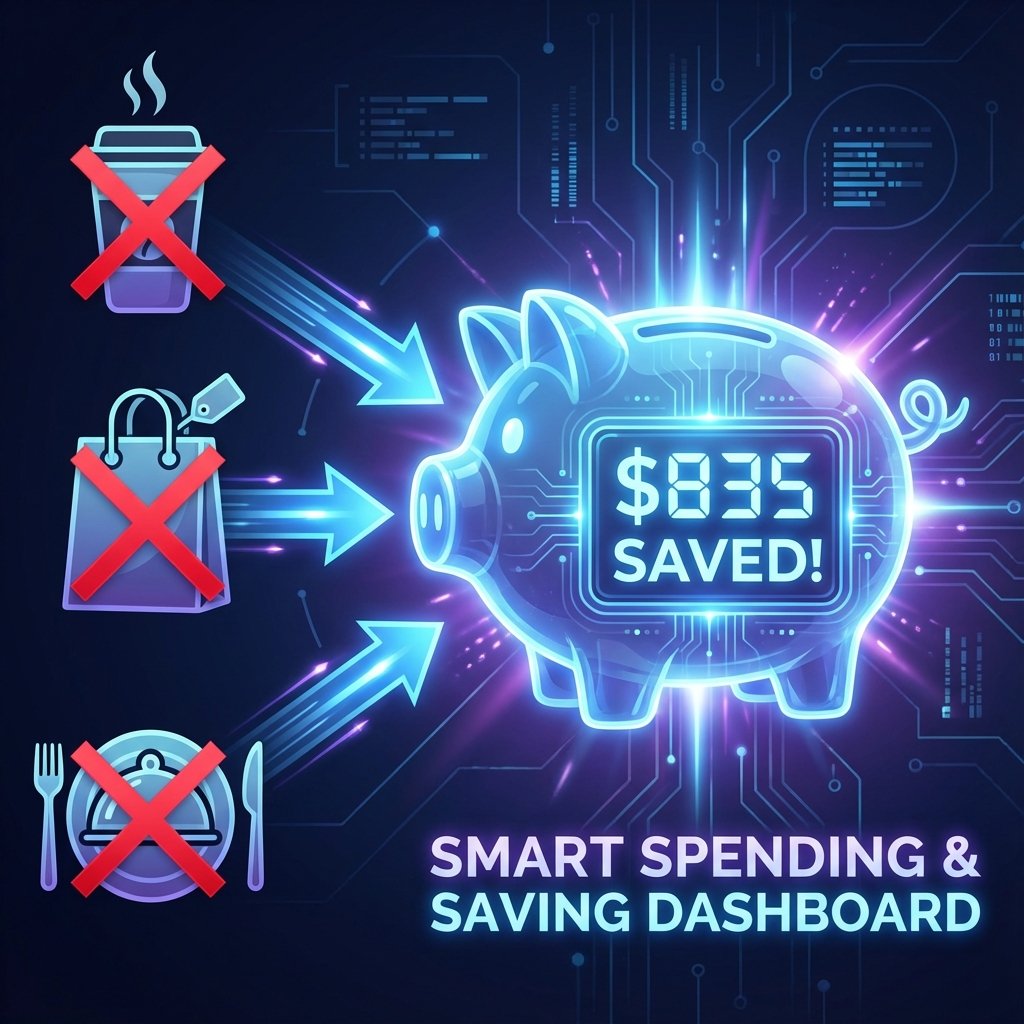
Talk is cheap. Let’s look at the cold, hard cash. This isn’t about saving a few pennies; it’s about reclaiming a significant chunk of your income. When you cut out the non-essentials, the numbers add up faster than you think. Let’s break down some common spending leaks and see the real-world impact.
The Math of Small Cuts
Think your daily habits don’t matter? Think again.
- The Daily Coffee: That ‘quick’ coffee stop at $5 per workday costs you $25 a week. In one month, that’s $100. Over a year? That’s $1,200 you could be investing or using to smash debt.
- The Lunch Rush: Grabbing lunch out just three times a week at an average of $15 per meal is $45 a week. That’s $180 per month or a staggering $2,160 per year. Packing a lunch is like giving yourself a $2,000 raise.
- The Subscription Creep: That $15 streaming service, the $10 music app, the $20 subscription box… they add up. Just $50 in monthly subscriptions you could pause or cancel is $600 a year.
By tackling just these three areas, you could easily be saving $400-$500 in a single no-spend month. Now, imagine applying that focus to every non-essential category.
Cost Comparison: The 30-Day Reset
Here’s a look at a hypothetical budget for a typical spender vs. someone on the No-Spend Challenge. This is where you see the power of the reset in black and white.
| Expense Category | ‘Normal’ Spending Month | No-Spend Challenge Month | Monthly Savings |
|---|---|---|---|
| Groceries | $400 (Includes snacks/specialty items) | $250 (Staples only) | $150 |
| Restaurants/Takeout/Coffee | $350 | $0 | $350 |
| Shopping (Clothes/Home/Misc) | $200 | $0 | $200 |
| Entertainment (Movies/Subscriptions) | $75 | $0 | $75 |
| Personal Care (Nails/Extra Products) | $60 | $0 | $60 |
| Total Non-Essential Savings | $835 |
Look at that number. In this example, one month of focused effort recaptured over $800. That’s not wishful thinking; that’s a direct result of making conscious choices. That’s car repair money, emergency fund money, or a massive debt payment. That’s freedom.
The Daily Grind: How to Crush the Challenge Week by Week

The first week is about adrenaline. The middle weeks are about grit. The final week is about the finish line. Here’s how to handle the common traps and stay on track.
Dealing with Social Pressure
Your friends will inevitably ask you to go out. You don’t have to be a hermit. You just need a script. Don’t make it weird; be direct and confident.
“Hey, I’d love to hang out! Just so you know, I’m doing a 30-day savings challenge to hit a big financial goal, so I’m not spending on [restaurants/bars/etc.] this month. How about we [suggest a free alternative like a potluck, a hike, a board game night] instead?”
Most people will respect the hustle. They might even be inspired. The ones who give you a hard time? Maybe they’re not the best influence on your wallet anyway.
Finding Free Fun
Boredom is the number one enemy of a no-spend challenge. When you’re bored, you scroll, and when you scroll, you shop. You need a go-to list of free activities to fill the void.
- Hit the Library: Free books, movies, audiobooks, and sometimes even free museum passes.
- Explore Nature: Hiking, walking in a park, going to the beach.
- ‘Shop’ Your House: Tackle that DIY project you’ve been putting off with supplies you already own. Declutter a room. Reorganize your closet.
- Skill Up for Free: Use YouTube or free library apps like Libby to learn a new skill—coding, a new language, how to bake bread.
- Host a Potluck or Game Night: You can be social without a huge bill. Everyone brings a dish or a game, and you provide the space.
What to Do When You Slip Up
It might happen. You have a terrible day and you buy a pint of expensive ice cream. Don’t panic. Don’t throw the whole challenge away. One mistake doesn’t define the month. Acknowledge it, track the expense, and get right back on the horse the next day. This is about building a new muscle, and sometimes you fail a rep. The key is to keep going with the workout.
The Aftermath: Turning a 30-Day Sprint into a Financial Marathon

You did it. You survived 30 days. You have a fatter bank account and a newfound sense of control. Now what? The goal isn’t to live in a state of permanent austerity. The goal is to use the lessons from the challenge to build a smarter, more intentional financial life moving forward.
Step 1: Analyze the Data
Look back at your month. What was the hardest thing to give up? What did you not miss at all? The challenge is a magnifying glass on your true priorities. Maybe you realized you don’t care about new clothes but you desperately missed going out for dinner with friends. Great! That’s valuable data. It tells you where to allocate your ‘fun money’ in your new budget for maximum happiness.
Step 2: Create a ‘Mindful Spending’ Budget
Don’t just go back to your old ways. Use your insights to build a budget that works for you. Take the money you saved—let’s say it was $600—and give it a job before the next month starts.
- Automate Your Savings: Immediately set up an automatic transfer of $400 (or whatever you can afford) to a high-yield savings account. Pay yourself first, always.
- Create a ‘Guilt-Free’ Spending Fund: Allocate the remaining $200 to the things you truly missed. Now when you go out to eat, you can enjoy it, knowing the money was set aside for that exact purpose.
Step 3: Implement the 72-Hour Rule
This is one of the most powerful habits you can build to kill impulse spending for good. It’s simple, but it’s a game-changer.
For any non-essential purchase over $50, you must wait 72 hours before you buy it. Put it in your online cart and walk away. Write it on a list. More often than not, after three days, the urgent ‘need’ will have vanished. This single rule will save you thousands over time.
The no-spend challenge isn’t the end goal. It’s the training ground. It’s where you prove to yourself that you are the one in charge of your money, not the other way around.
Conclusion
Thirty days. That’s all it takes to completely shift your perspective on money. The No-Spend Challenge is more than a savings hack; it’s a pattern interrupt. It forces you to stop, think, and question the habits that have been holding you back financially. You’ve learned the difference between a genuine need and a manufactured want. You’ve discovered your own resourcefulness and found joy in things that don’t come with a price tag.
You’ve proven that you can do this. You are in the driver’s seat. Don’t let this momentum fade. Take the lessons, take the cash you saved, and start building the future you deserve. Whether your next step is attacking debt, building an emergency fund, or saving for something amazing, you now have the tools and the mindset to make it happen. So, what are you waiting for? Your financial reset starts now.