

The Irregular Income Survival Guide: Budgeting For freelancers Made Easy
One month you’re making it rain, swimming in client payments. The next, you’re eating instant noodles and frantically checking your inbox for a paid invoice. Sound familiar? That’s the freelancer life. The constant swing between feast and famine can give you financial whiplash, making it impossible to plan, save, or even breathe. But here’s the raw truth: that chaotic cycle is a choice, not a curse. Traditional budgets are built for the 9-to-5 crowd with their predictable paychecks. They don’t work for us, the hustlers, the creators, the CEOs of our own one-person empires. It’s time to ditch the broken system. This guide isn’t about cutting coupons or giving up lattes. It’s a street-smart survival plan to tame your wild income, build a rock-solid financial foundation, and give you the one thing every freelancer craves: stability. Get ready to stop stressing and start thriving.
Forget Everything You Know: The ‘Pay Yourself a Salary’ System
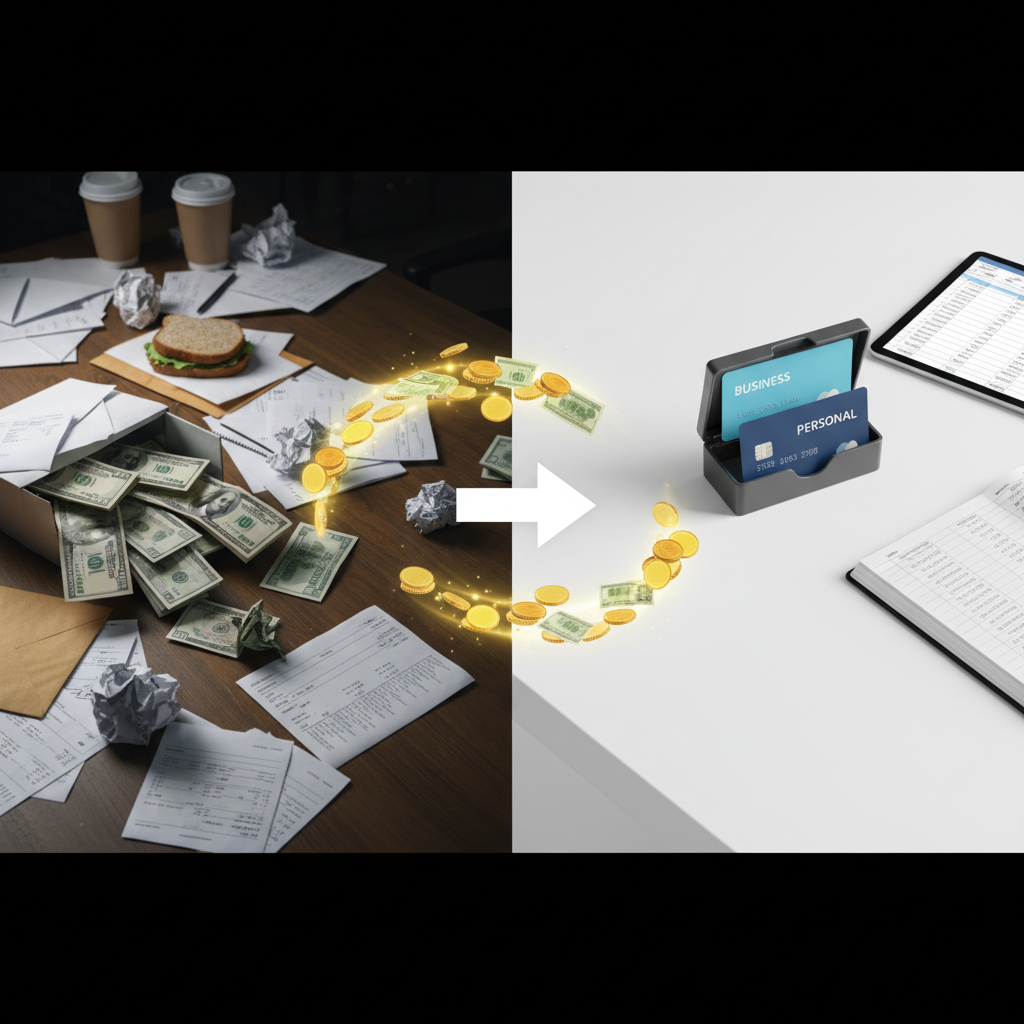
The single biggest mistake freelancers make is treating their business bank account like a personal slush fund. A $5,000 project lands, and suddenly you’re living like royalty. A dry spell hits, and panic sets in. This is amateur hour. It’s time to professionalize your own finances. The solution is deceptively simple: stop living project-to-project and start paying yourself a consistent salary.
Here’s the game plan:
- Open Two Separate Bank Accounts. This is non-negotiable. You need one account strictly for business income and expenses (your ‘Business Hub’) and another for your personal life (your ‘Personal Checking’). All client payments, without exception, go directly into the Business Hub.
- Calculate Your ‘Survival Salary.’ Look at your last six to twelve months of personal expenses. What is the absolute minimum you need to cover your core living costs—rent/mortgage, utilities, groceries, insurance, debt payments? Add a small buffer (10-15%) for sanity. Let’s say that number is $3,500 a month. This is your new salary. It’s not a guess; it’s a hard number based on real data.
- Automate Your Paycheck. Set up an automatic, recurring transfer from your Business Hub to your Personal Checking. You can do this weekly, bi-weekly, or monthly—whatever mimics a real job. If your salary is $3,500/month, you might set up a transfer of $1,750 on the 1st and 15th of every month. This is your paycheck. You live off of this amount, and *only* this amount.
The Math That Sets You Free
Let’s see this in action. Imagine this is your income for three months:
- Month 1 (Feast): You land a huge project and bank $8,000.
- Month 2 (Okay): A few smaller gigs bring in $4,000.
- Month 3 (Famine): A client pays late, you only bring in $1,500.
The old you would have blown through cash in Month 1 and starved in Month 3. The new you? You pay yourself the same steady $3,500 salary each month. In Month 1, you have a surplus of $4,500 that stays safe in your Business Hub. In Month 2, you have a $500 surplus. In Month 3, you have a $2,000 shortfall, but it doesn’t matter. You still pay yourself $3,500 by drawing from the $5,000 surplus you built up. You just weathered a famine month without breaking a sweat. This surplus isn’t just leftover cash; it’s your business’s working capital, your tax fund, and your buffer against the inevitable dry spells. You’ve created predictability out of chaos.
The Three-Bucket Budget: How to Actually Spend Your ‘Salary’

Now that you have a steady, predictable salary hitting your personal account, you can finally create a budget that actually works. Forget complex spreadsheets and a million categories. We’re keeping it simple and powerful with the Three-Bucket System. Your $3,500 salary gets split into just three places.
Bucket 1: Fixed Necessities (The Foundation)
These are the non-negotiable, predictable costs of living. They’re the same every month. Think rent or mortgage, car payment, insurance, internet, phone bill, and subscription services. The goal is to keep these as low as possible, ideally under 50-60% of your take-home pay. Automate these payments so you never miss one.
Bucket 2: Variable Necessities (The Flex Fund)
This bucket covers expenses that you need but that fluctuate each month. This includes groceries, gas, utilities (like electricity and water), and household supplies. This is where you have some control. You can choose to eat out less or drive more efficiently to keep these costs in check. Tracking this category is key to finding extra cash.
Bucket 3: ‘Future You’ & Fun (The Freedom Fund)
Everything left over after filling the first two buckets goes here. This is the most important bucket for getting ahead. It’s not just one thing; it’s a sub-bucket for your biggest goals:
- Aggressive Debt Payoff: Extra payments on credit cards or student loans.
- Serious Savings: Your emergency fund, retirement accounts (like a SEP IRA), and big-purchase savings (car, down payment).
- Guilt-Free Spending: Yes, you need a fun fund! This is for dinners out, hobbies, vacations. Assigning money for fun prevents burnout and keeps you on track.
Here’s what that looks like for your $3,500 salary:
| Bucket Category | Expense Example | Monthly Amount | Percentage of Salary |
|---|---|---|---|
| Bucket 1: Fixed | Rent: $1200, Car/Insurance: $400, Phone/Internet: $150 | $1,750 | 50% |
| Bucket 2: Variable | Groceries: $500, Gas: $200, Utilities: $150 | $850 | ~24% |
| Bucket 3: Future You & Fun | Debt Payoff: $400, Savings/IRA: $300, Fun Money: $200 | $900 | ~26% |
This structure gives every single dollar a job. There’s no more wondering where your money went. You told it where to go.
The Tax Man Cometh: Your ‘Don’t-Get-Screwed’ Fund

Welcome to self-employment, where you are now your own payroll department. The government doesn’t take taxes out of your client payments, which means you’re responsible for paying them yourself. Ignoring this is the fastest way to get into a deep financial hole. You must treat tax money as if it was never yours to begin with.
The Golden Rule of Freelance Taxes: The moment a client payment hits your Business Hub, immediately transfer 25-30% of it into a separate, high-yield savings account labeled ‘TAX FUND.’ Do not touch this money for anything else. Ever.
Why 25-30%? This is a conservative estimate to cover federal and state income taxes, plus Self-Employment taxes (Social Security and Medicare, which your 9-to-5 employer used to split with you). It’s better to over-save and have a surprise refund than to under-save and owe thousands.
The Math That Saves Your Ass
Let’s say you get a $4,000 payment from a client.
- Wrong Way: You see $4,000 in your account. You pay some bills, buy some stuff, and figure you’ll deal with taxes later. You do this all year. In April, you get a tax bill for $15,000 and have a full-blown panic attack.
- Street-Smart Way: You see a $4,000 payment. You immediately log into your bank app and transfer 30% ($1,200) to your ‘TAX FUND’ savings account. The remaining $2,800 is your actual business revenue, which you use to pay yourself your salary. In April, you have $15,000 sitting in your tax account, ready to go. You pay your bill stress-free.
This isn’t just about avoiding debt; it’s about peace of mind. That tax account is a fortress protecting you from the IRS. You’ll also need to pay these taxes quarterly (usually April 15, June 15, Sept 15, and Jan 15). Having the money already set aside makes this a simple transaction instead of a quarterly crisis.
Build Your Moat: The ‘Lean Month’ Income Buffer

An emergency fund is for life’s disasters—your car breaks down, you have a medical emergency. An income buffer is different. It’s your business’s dedicated cash reserve to protect your personal salary from a slow month or a client who ghosts you. This buffer lives permanently in your Business Hub account. It’s the moat around your financial castle.
Your target is to have 3 to 6 months’ worth of your personal salary saved as a buffer. If your salary is $3,500, your minimum buffer goal is $10,500.
That number might seem intimidating, but you build it brick by brick from the surplus cash your business generates. Remember that ‘Feast Month’ where you earned $8,000? After paying yourself ($3,500) and setting aside taxes (let’s say $2,400), you were left with $2,100 in business profit. This is the money you use to build your buffer.
How to Build Your Buffer Without Feeling the Pinch
- Start Small: In the beginning, commit to leaving $200-$500 from every single client payment in the Business Hub as ‘buffer seed money.’
- Use the Surplus: During high-income months, after you’ve paid your salary and set aside tax money, allocate at least 50% of the remaining profit to the buffer until it’s fully funded.
- Don’t Touch It: The buffer is only used to cover your salary during a legitimate income shortfall. It is not for a new laptop or a vacation. Once you use some of it, your top priority is to replenish it during the next good month.
Having this buffer is the ultimate power move. It allows you to say ‘no’ to bad clients, to take a sick day without panicking, and to navigate the natural ebbs and flows of freelance life with confidence instead of fear. It’s the difference between being a desperate freelancer and a savvy business owner.
Conclusion
Let’s cut to the chase. Managing an irregular income isn’t about complex financial wizardry. It’s about creating a system to impose order on chaos. By ditching the traditional budget, paying yourself a consistent salary, and separating your money into purposeful accounts for taxes and buffers, you’re not just budgeting—you’re building a business. You are the CEO, and this is your new, smarter financial operating procedure. The goal isn’t to restrict yourself; it’s to free yourself. Free yourself from the anxiety of a slow month, from the dread of tax season, and from the exhausting feast-or-famine cycle. Take these steps, automate the process, and reclaim your mental energy to focus on what you do best: killing it for your clients and growing your empire.
Disclaimer: I am not a financial advisor, and this article is for informational and educational purposes only. The content provided is not intended to be a substitute for professional financial, tax, or legal advice. Always consult with a qualified professional before making any financial decisions.