Taming The Clothes Mountain: The Ultimate Hand-Me-Down Organization System
Let’s be real. That pile of outgrown kid clothes in your basement, attic, or the back of a closet isn’t a ‘system.’ It’s a mountain of good intentions that’s slowly turning into a monster of chaos. You saved them to be frugal, to pass down to the next kid, or to give to a friend. But now you can’t find the 2T snow pants when you need them, you’re pretty sure there’s a forgotten stain on that cute sweater, and you just rebought a pack of socks you *know* you have somewhere. You’re losing time, money, and your sanity.
Forget the guilt and the mess. It’s time to stop letting the clutter manage you and start managing your money like a boss. This isn’t just another cleaning tutorial; this is a street-smart financial strategy. We’re going to turn that clothes mountain into a streamlined, money-saving, and even money-making machine. This is the ultimate hand-me-down organization system for people who would rather spend their time and money on things that actually matter.
Why Your ‘System’ Isn’t Working (And What It’s Costing You)

You think you’re saving money by stuffing clothes into garbage bags, but your ‘system’ is probably leaking cash. Every disorganized pile represents a hidden cost, and it’s time for a reality check. Let’s break down the real price of clothing chaos.
The True Cost of Clutter
Your current method—or lack thereof—is a financial trap. Here’s how it’s nickel-and-diming you into the poorhouse:
- The Re-Buy Penalty: This is the most common money leak. A cold snap hits, and you can’t find the 3T fleece jackets you saved. You waste 45 minutes digging through a messy box before giving up and running to Target. You just spent $25 on something you already own. That’s not frugal; that’s frustrating.
- Lost Opportunity Cost: Clothes that sit in a damp basement or a dusty attic get ruined. They develop that musty smell, yellow spots appear out of nowhere, and by the time you unearth them, they’re not fit for your own kid, let alone for resale. Every ruined outfit is potential cash—$5, $10, even $20 for a nice piece—straight into the trash.
- The Time Tax: Your time is money. Spending hours every season change trying to figure out what you have, what fits, and what’s in decent condition is a massive time suck. If you value your time at even $20/hour, a few weekends of sorting chaos a year can cost you hundreds in lost time you could have spent on a side hustle or with your family.
- The Space Hog Fee: Real estate in your home is valuable. That mountain of clothes is taking up prime storage space that could be used for something else. It creates mental clutter, adding to your stress levels. Living in chaos has a psychological cost, and it’s exhausting.
Your jumbled bags are a liability, not an asset. To win the frugal game, you need a new playbook. One that’s simple, repeatable, and actually works.
The Frugal Hacker’s Hand-Me-Down Blueprint: The Bin System
Alright, it’s time to stop the bleeding and build a system that pays you back. This isn’t about complicated folding techniques or expensive custom closets. This is a rugged, no-nonsense blueprint that anyone can implement. Welcome to the Bin System.
The Tools of the Trade
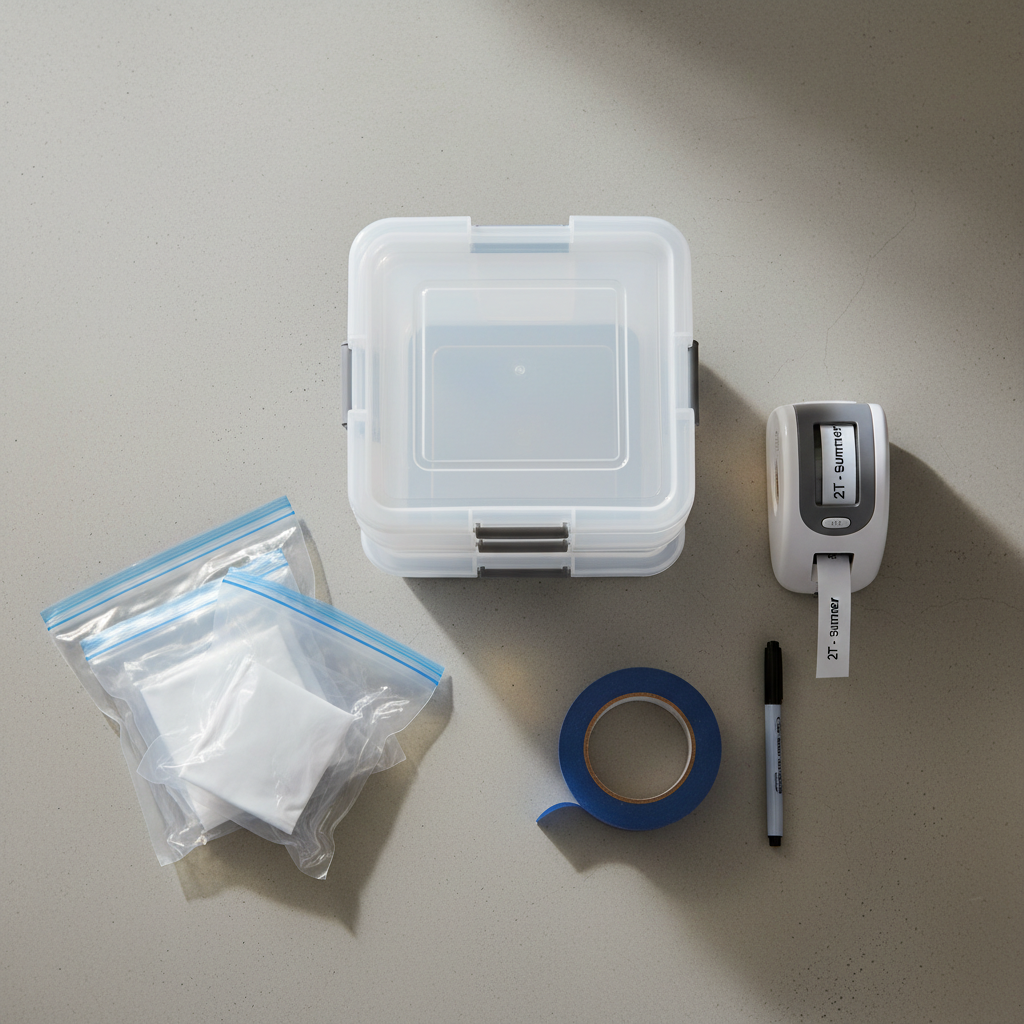
To build a fortress of organization, you need the right gear. Don’t cheap out here—investing a small amount upfront will save you thousands down the road. Here’s your shopping list:
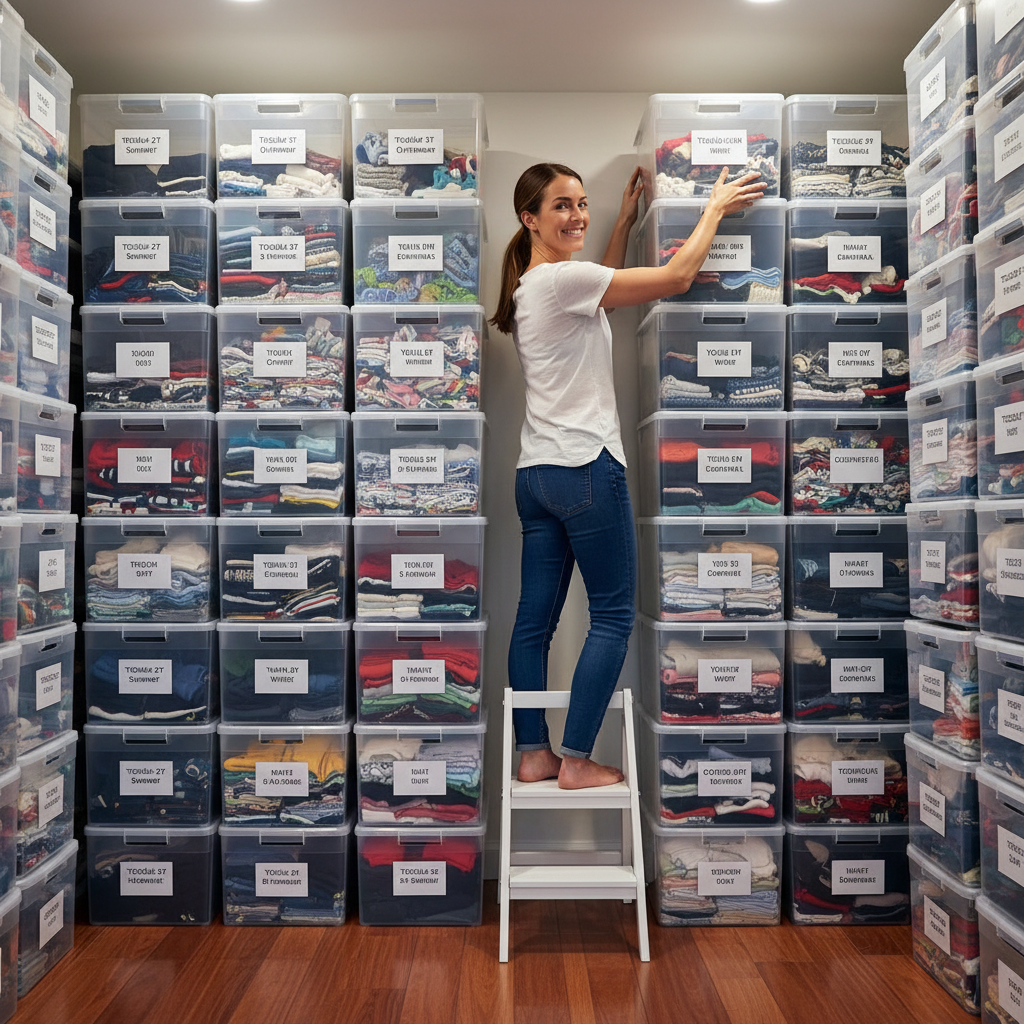
- Clear Plastic Bins with Lids: This is non-negotiable. CLEAR. You need to see what’s inside at a glance. Get a standard size that stacks well, like the 27-Quart ones. They are your system’s backbone.
- A Good Labeling Method: A label maker is your best friend for a clean, uniform look. If you’re on a tighter budget, a roll of painter’s tape and a black permanent marker works just fine. No excuses.
- Vacuum Seal Bags (Optional, but a Game-Changer): These are your secret weapon against bulky items. Puffy winter coats, snow pants, and blankets can be compressed down to a fraction of their size, saving you a ton of space.
The Golden Rules
This system only works if you follow the rules. They are simple but absolute. Internalize them. Live by them.
Rule #1: One Size, One Season, One Bin. Never mix sizes or seasons. A bin should be ‘3T – Summer’ or ‘5T – Winter.’ No exceptions. This is the core principle that makes the whole system work.
Rule #2: If It’s Stained or Ripped, It’s Out. Be ruthless. If you wouldn’t buy it in a store, don’t keep it. Don’t save ‘play clothes’ that are wrecked. Your future self doesn’t have time for that. A small pile of play clothes is fine, but be honest about what’s truly garbage.
Rule #3: Label Everything. Immediately. Don’t tell yourself you’ll ‘remember what’s in that one.’ You won’t. The label should be clear and concise: Size, Season, and Key Contents (e.g., ‘2T – Winter – Sweaters & Pants’).
Level Up: Sorting, Storing, and Rotating Like a Pro
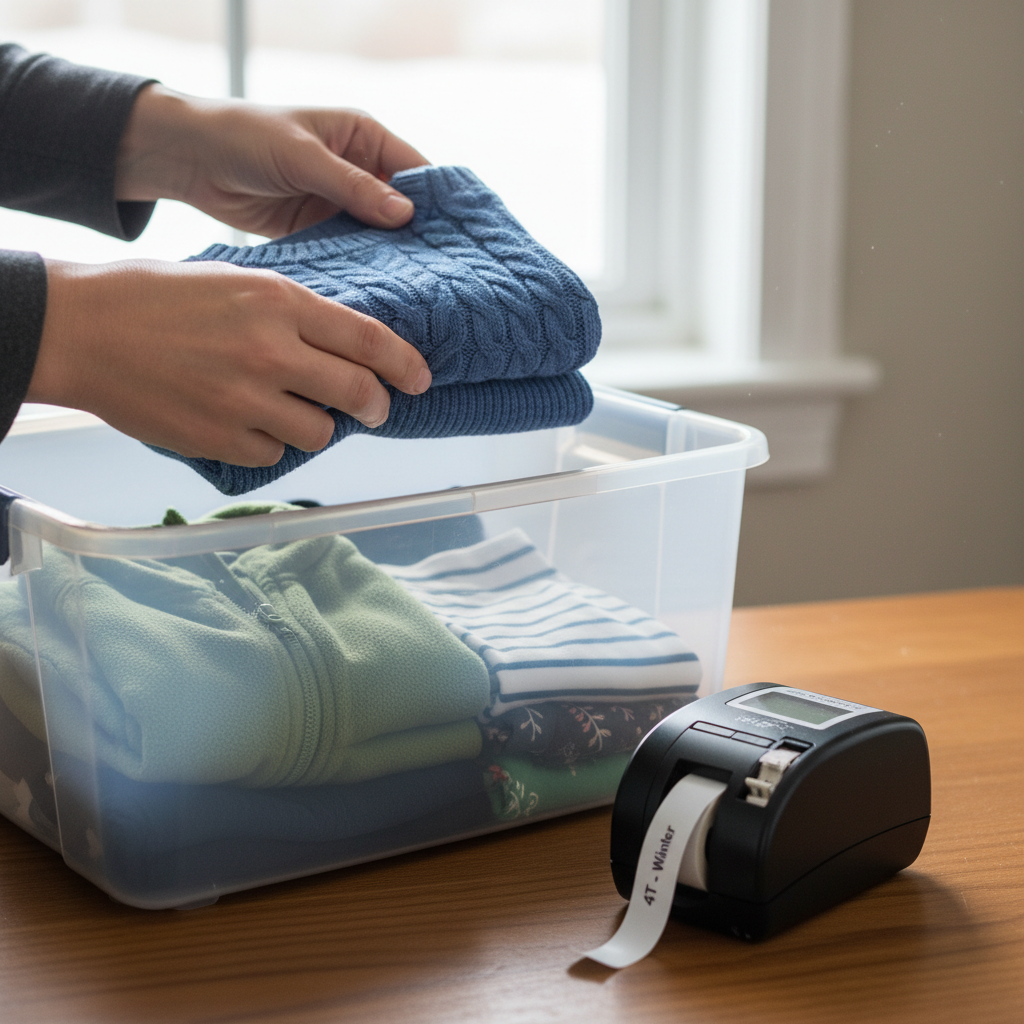
You’ve got the tools and the rules. Now it’s time for execution. This is where you roll up your sleeves and transform that mountain into a molehill of pure, organized efficiency. Follow these steps, and you’ll build your system in an afternoon.
- The Great Purge: This is the hard part. Gather every single outgrown piece of clothing from every corner of your house. All of it. Put it in one giant pile in the middle of a room. Seeing the sheer volume will be the motivation you need to never let it get this bad again.
- The Brutal Sort: Get three boxes or laundry baskets and label them: SELL/CONSIGN, DONATE, and TRASH. Pick up each item and make a snap decision. Is it in great shape? Sell pile. Good, but not worth the hassle of selling? Donate pile. Stained, ripped, or worn out? Trash. Don’t overthink it. Be merciless.
- The Size & Season Breakdown: Now, take everything you’re keeping and start sorting it into smaller piles by size (Newborn, 0-3M, 3-6M, 12M, 18M, 2T, 3T, etc.). Once you have your size piles, subdivide each one by season (Summer/Winter or Warm/Cold).
- Pack, Seal, and Label: This is the satisfying part. Start with one pile, for example, ‘2T – Summer.’ Fold or roll the items neatly and pack them into a clear bin. Use vacuum seal bags for any bulky items. Don’t overstuff the bin. Once it’s full, seal it and immediately create a clear, detailed label. Stick it on the short end of the bin so you can read it when they’re stacked. Repeat until every pile has a home.
- The Smart Storage & Rotation Game: Stack your bins in a designated storage area (basement, garage, closet). Arrange them logically—smallest sizes on the bottom or in the back, largest sizes on top or at the front. Create an ‘On Deck’ bin. This is the bin for the next size up. Keep it in an easily accessible spot, so when your kid has a sudden growth spurt, you’re not digging through the archives. When you empty a bin, that bin now becomes the ‘Too Small’ bin in their closet, ready to catch outgrown clothes as they happen.
The Exit Strategy: Cashing In On Your Clothes Mountain
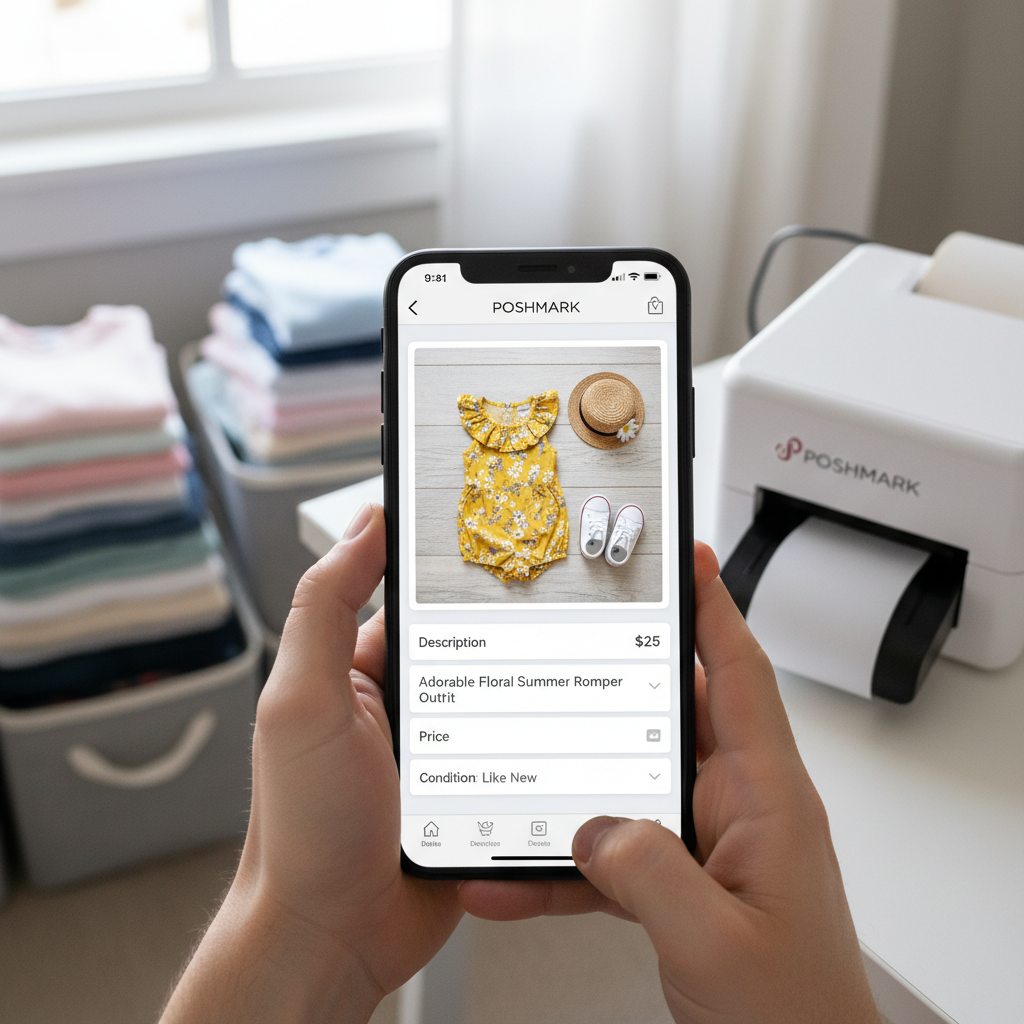
Remember that ‘SELL/CONSIGN’ pile? That’s not clutter; it’s your new side hustle. An organized system makes selling ridiculously easy because you’ve already done the hard work of sorting and quality control. Now, let’s turn those threads into cash.
Your Selling Playbook
Don’t just dump it all at a consignment store. Maximize your profit with a multi-pronged attack:
- High-Value Items: Boutique brands, mint-condition coats, or special occasion outfits? Sell these individually on platforms like Poshmark or Mercari. You’ll get the best price, but it takes more effort to list and ship.
- Mid-Range Staples: Good condition, everyday brands like Carter’s, Cat & Jack, or Old Navy are perfect for Facebook Marketplace. Sell them in ‘lots’ or bundles. For example, ‘Lot of 10 Boys 2T Summer Shirts – $20.’ This moves inventory fast and saves you time.
- The Big Purge: Local consignment events like Just Between Friends (JBF) are goldmines for getting rid of a lot of stuff at once. The key is to price your items to sell, not to sit.
Pricing Cheat Sheet
Pricing is everything. Too high and it won’t sell. Too low and you’re leaving money on the table. Here’s a quick guide:
| Item Condition | Standard Brands (Carter’s, Old Navy) | Premium Brands (Hanna Andersson, Mini Boden) | Pricing Strategy |
|---|---|---|---|
| New With Tags (NWT) | 50-60% of retail | 60-70% of retail | Price individually online. |
| Excellent Used (EUC) | 30-40% of retail | 40-50% of retail | Great for individual sale or small, high-quality lots. |
| Very Good Used (VGUC) | $1-3 per item | $4-8 per item | Perfect for bundling into large lots on Marketplace. |
| Good Used Condition (GUC) | $0.50-$1 per item | $2-4 per item | Bundle these up. Aim for volume selling. |
Scam Warning: Marketplace 101
When selling online, trust your gut. Never accept a check or overpayment. Stick to cash for local pickups or use the platform’s built-in payment system for shipping. Anyone asking you to text them a ‘code’ to ‘prove you’re real’ is a scammer. Block and move on.
The Math: How This System Prints Money (Seriously)

This is where the real magic happens. We’re not just organizing for fun; we’re doing it to have a direct, measurable impact on your family’s budget. When you stop thinking about it as ‘saving old clothes’ and start thinking about it as ‘managing a valuable asset,’ your financial picture changes. Let’s run the numbers on what this system can save and earn you for just ONE child transitioning through sizes.
This isn’t fuzzy math. This is a concrete look at the cash that stays in your pocket and the cash you can generate.
| Clothing Category | Cost to Buy New | Savings with Hand-Me-Downs (Child #2) | Potential Resale Value (After Use) | Total Net Value Per Item |
|---|---|---|---|---|
| Winter Coat | $60 | $60 | $15 | $75 |
| Snow Pants | $40 | $40 | $10 | $50 |
| 5x Sweaters | $100 | $100 | $20 (as a lot) | $120 |
| 10x Long-Sleeve Shirts | $120 | $120 | $15 (as a lot) | $135 |
| 5x Jeans/Pants | $100 | $100 | $15 (as a lot) | $115 |
| Full Summer Wardrobe (Shorts, Tees, etc.) | $250 | $250 | $40 (in lots) | $290 |
| Shoes & Boots (3 pairs) | $120 | $120 | $25 | $145 |
| TOTALS | $790 | $790 | $140 | A WHOPPING $930 |
Look at that last number. By implementing this system for just one year of clothing sizes, you’ve created a $930 positive swing for your family’s finances. You avoided spending $790 on the next kid, AND you put an extra $140 of pure profit back into your wallet. Now, multiply that by the number of sizes your kids will go through. The numbers become staggering. This system isn’t a chore; it’s an investment strategy with a guaranteed return.
Conclusion
The clothes mountain doesn’t have to be a source of stress and financial drain. With the right blueprint, it becomes one of your family’s most powerful money-saving tools and a surprisingly effective side hustle. You now have the complete game plan to transform chaos into cash. It’s about more than just tidy closets; it’s about taking control, being resourceful, and making your assets work for you.
Stop letting the clutter win. This weekend, grab your bins and your marker. Put on some music, and start your assault on the mountain. Every item you sort, every bin you label, and every dollar you save or earn is a win. This is your system now. Go execute the plan and reap the rewards. Your future, less-stressed, and significantly richer self will thank you for it.