Stop Wasting Money! 10 Budget Friendly Meal Prep Hacks for Beginners
Let’s be real. You work hard for your money. So why does it feel like a huge chunk of it just evaporates between paychecks? You look at your bank statement and see a death by a thousand cuts: $15 on a sad desk salad, $20 on a last-minute delivery, $7 on a fancy coffee because you had no energy. It’s a cycle that leaves you broke and frustrated. You’ve probably heard about meal prep, maybe pictured fitness influencers with 20 identical containers of chicken and broccoli. Forget that. We’re not about that life. This is about a power move. Meal prep is your secret weapon to fight back against impulse spending, slash your food bill, and reclaim your cash. This isn’t about being a gourmet chef; it’s about being smarter with your resources. Ready to stop leaking money and start building wealth? Here are 10 no-BS meal prep hacks to get you started.
Hack #1: Master the ‘Shop Your Pantry First’ Rule
The Blueprint: Plan Like a Boss
Hack #1: Master the ‘Shop Your Pantry First’ Rule
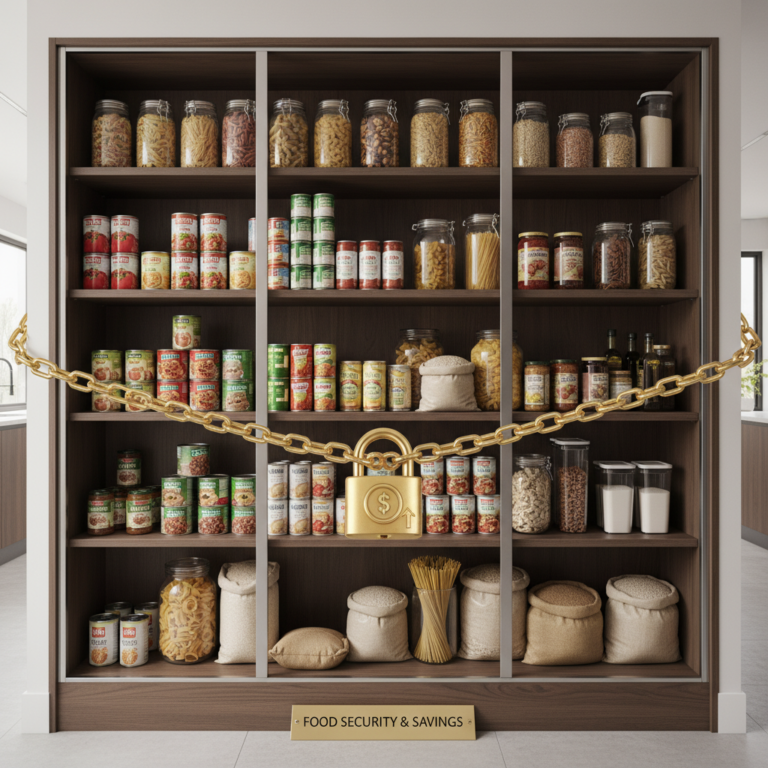
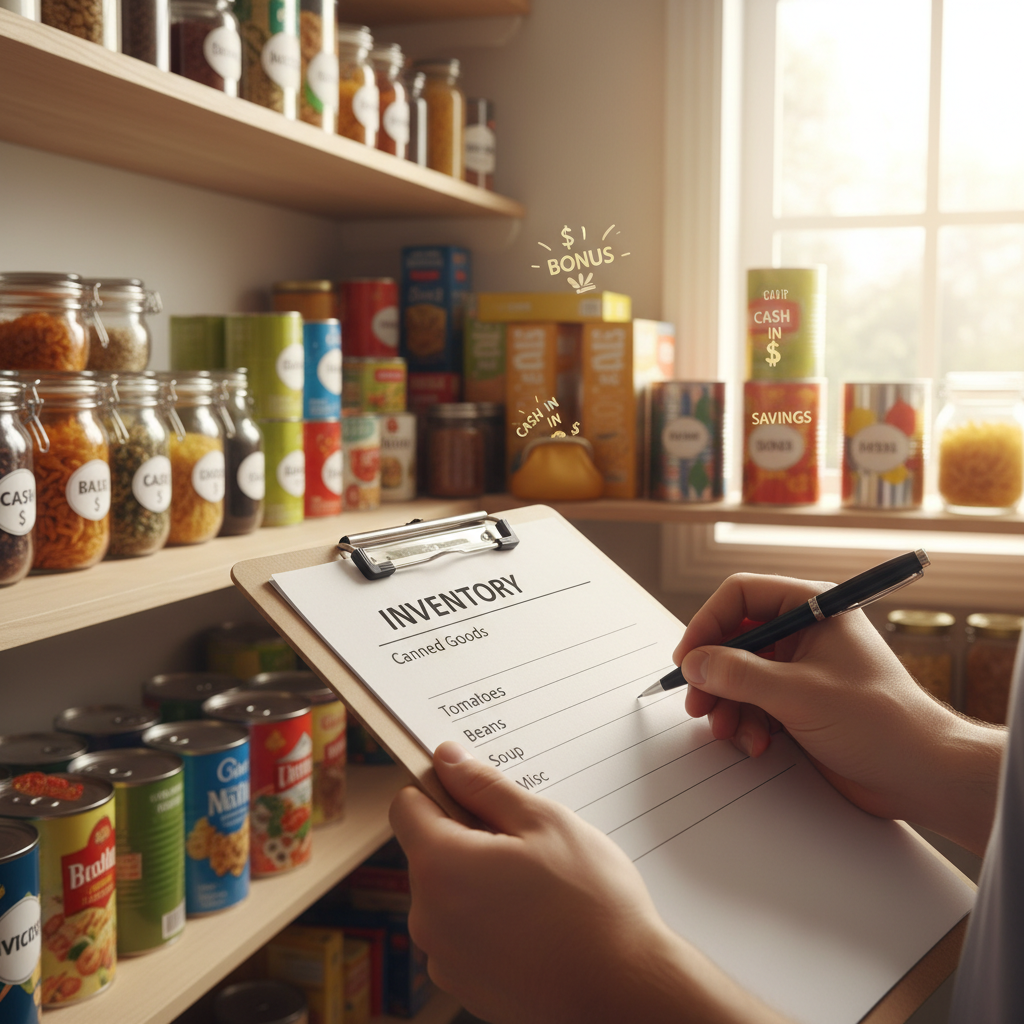
Before you even think about making a grocery list or stepping foot in a store, you need to become a detective in your own kitchen. Most of us have a graveyard of forgotten foods lurking in our pantries, fridges, and freezers. That half-bag of rice, the can of black beans you bought for a recipe you never made, the frozen chicken you forgot about—that’s not clutter, that’s cash. Wasting it is like literally throwing money in the trash.
Your first move is a full audit. Grab a notepad or open a note on your phone. Go through every shelf and drawer. What do you have? Be specific. Don’t just write ‘pasta’; write ‘half-box of spaghetti, one box of penne.’ This isn’t about shaming yourself; it’s about creating an inventory. This list is now the foundation of your meal plan for the week. You build your meals around what you already own, not what you whimsically want.
The Golden Rule: An ingredient doesn’t go on the shopping list until you can prove it’s not already hiding in your kitchen.
Got a can of chickpeas and some canned tomatoes? That’s the start of a killer curry or a hearty soup. Found some frozen ground beef? You’re halfway to tacos or spaghetti bolognese. This one shift in mindset—from ‘What do I want to eat?’ to ‘What can I make with what I have?’—is the single biggest lever you can pull to immediately lower your grocery bill. You’ll be shocked at how many meals you can pull together with a little creativity, saving you $20, $30, or even $50 on your next shopping trip before you even leave the house.
Hack #2: Build Your Menu Around Sales Flyers, Not Cravings
Hack #2: Build Your Menu Around Sales Flyers, Not Cravings
Walking into a grocery store without a plan is like walking into a casino and expecting to leave richer. The entire environment is engineered to make you spend more. The end-cap displays, the ‘special’ deals, the smell of the rotisserie chicken—it’s all designed to target your impulses. The way you win is by flipping the script. You don’t decide your menu and then go find the ingredients; you let the sales dictate your menu.
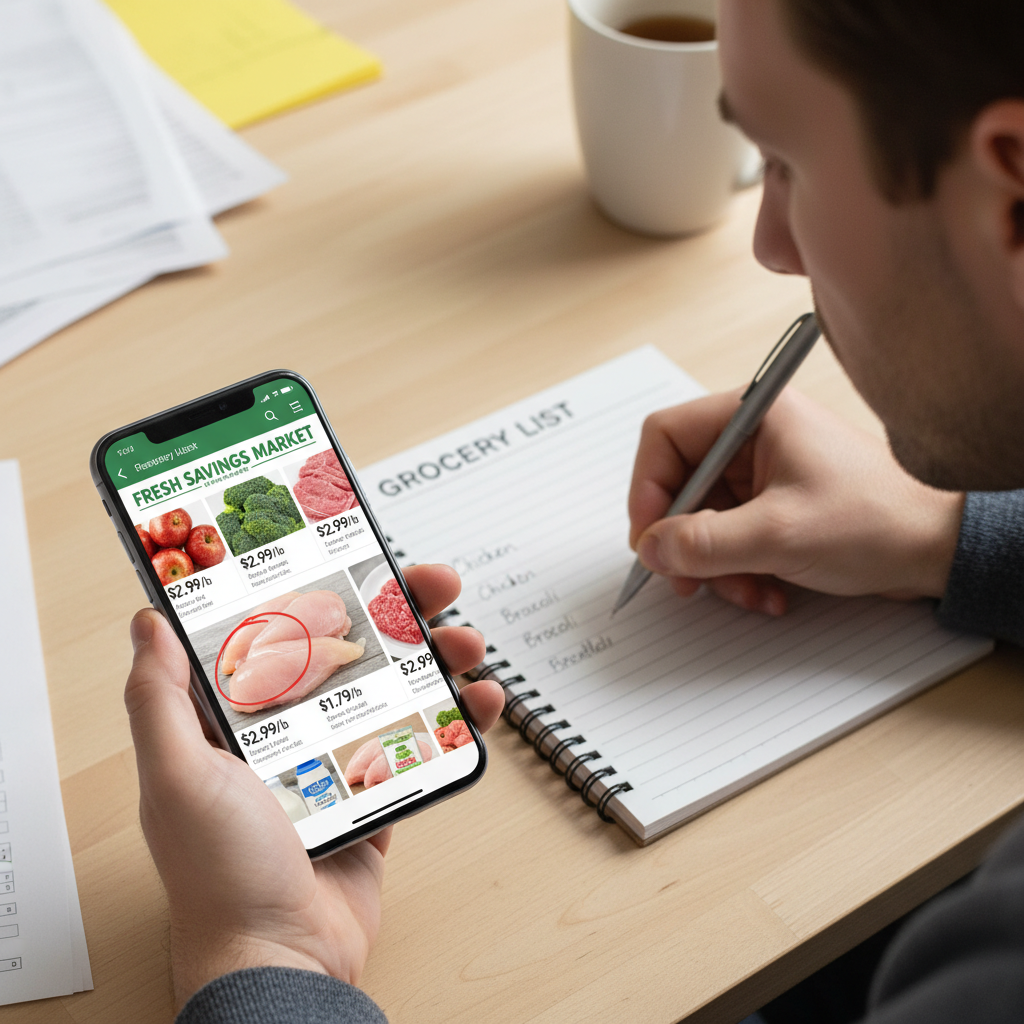
Every week, your local grocery stores release their sales flyers. This is your new bible. Use apps like Flipp or your store’s dedicated app to see what’s on deep discount. Is chicken breast $1.99/lb this week? Guess what’s on the menu. Are bell peppers, onions, and zucchini on sale? Sounds like a perfect week for sheet pan roasted veggies, stir-fries, or fajitas. This reverse-engineering approach puts you in the driver’s seat. You’re no longer a victim of marketing; you’re a strategic shopper hunting for value.
Let’s do the math. Let’s say you want to make salmon, but it’s $12.99/lb. Meanwhile, pork loin is on sale for $2.49/lb. By swapping your protein choice for just three meals this week, you could save over $20 without sacrificing quality or flavor. This isn’t about deprivation; it’s about being agile. Your cravings don’t control your wallet—the deals do. Combine this with your pantry inventory from Hack #1, and you’ve got a powerful one-two punch for creating an ultra-cheap, targeted grocery list that eliminates waste and impulse buys.
Hack #3: Embrace ‘Budget Protein’ Powerhouses
The Arsenal: Ingredients & Tools That Work For You
Hack #3: Embrace ‘Budget Protein’ Powerhouses
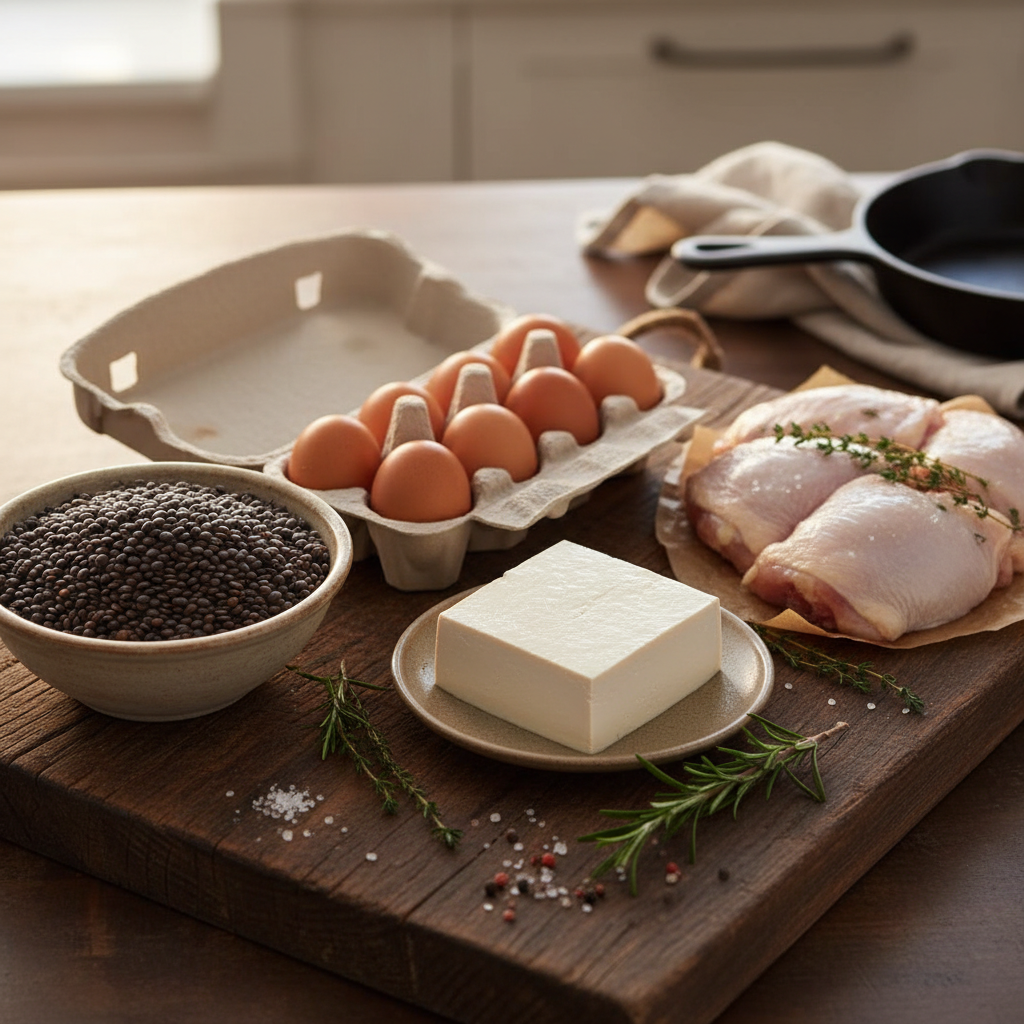
Protein is usually the most expensive component of any meal, and it’s where budgets get blown. We’re conditioned to think of boneless, skinless chicken breasts and lean ground beef as staples, but they often come with a premium price tag. It’s time to expand your definition of protein and embrace the unsung heroes of the frugal world.
Think smarter, not more expensive. Chicken thighs, for example, are almost always cheaper than breasts, have more flavor, and are more forgiving to cook. Ground turkey can be a great, lean alternative to ground beef when it’s on sale. But the real game-changers are plant-based proteins and eggs. A dozen eggs can provide protein for multiple meals for just a couple of bucks. Canned beans (black, pinto, kidney) and dried lentils are nutritional powerhouses that cost pennies per serving. A one-pound bag of lentils can cost less than $2 and be the base for soups, stews, and salads for the entire week.
Don’t be afraid of tofu or edamame either. They are incredibly versatile and absorb any flavor you throw at them. By simply swapping a few meat-centric meals for these budget powerhouses each week, the savings are massive. Imagine replacing two $10 packages of ground beef with a $1.50 bag of lentils and a $2 block of tofu. You’ve just saved $16.50 while still getting filling, protein-packed meals. This is about building a versatile protein arsenal that gives you options and keeps your wallet full.
Hack #4: The ‘Cook Once, Eat Thrice’ Method
Hack #4: The ‘Cook Once, Eat Thrice’ Method
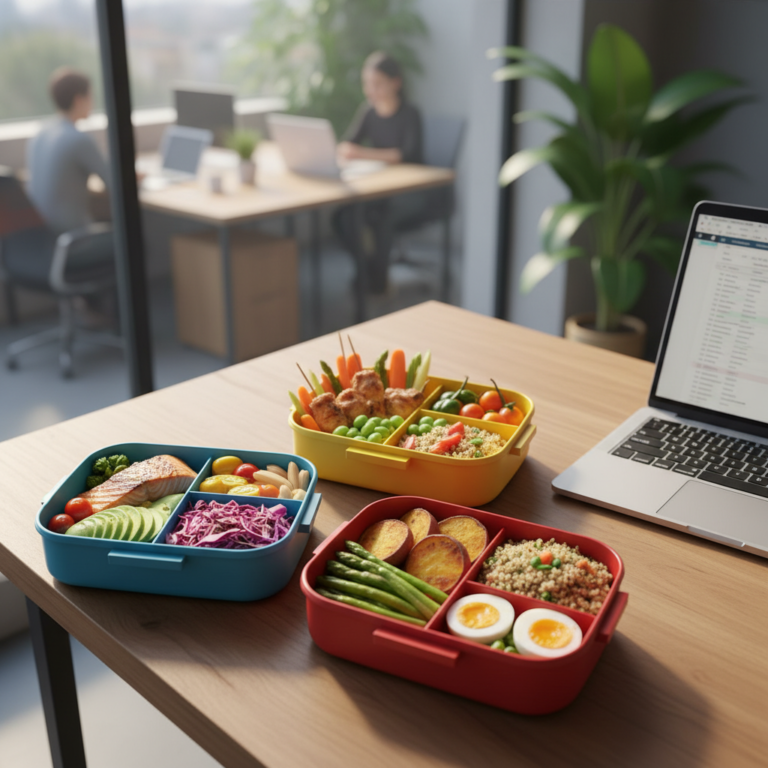
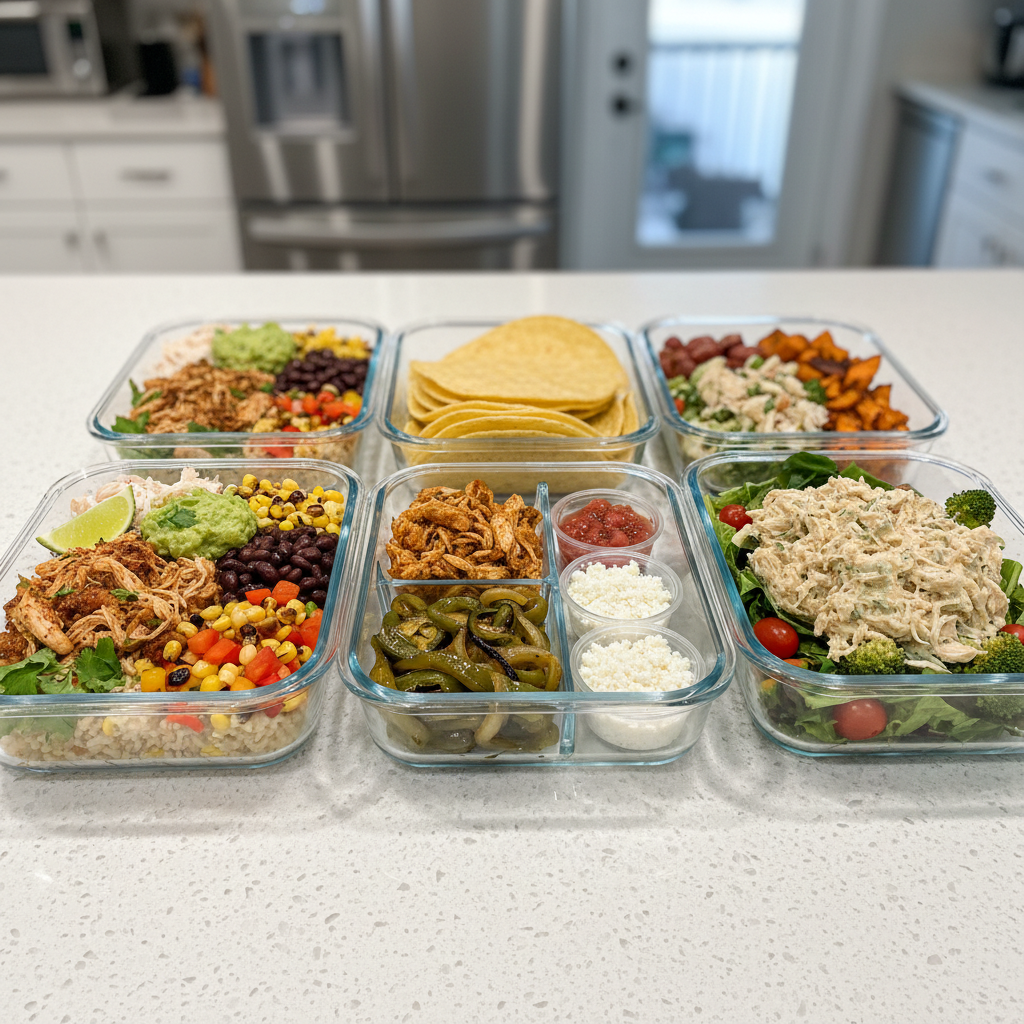
One of the biggest complaints about meal prep is the boredom. Eating the exact same thing for five days straight is a recipe for failure, because by Wednesday, that $15 burrito from down the street will start calling your name. The secret isn’t to cook five different meals; it’s to cook versatile components that can be assembled in different ways.
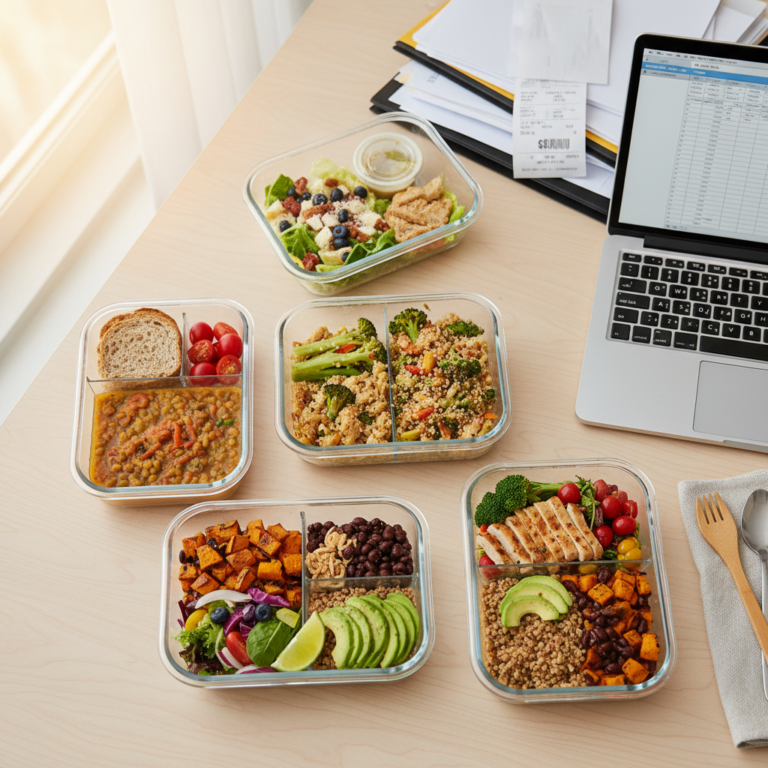
This is the ‘Cook Once, Eat Thrice’ strategy. On Sunday, instead of making five identical containers of ‘Chicken, Rice, and Broccoli,’ you batch cook the components separately. For example:
- Your Protein: Cook a big batch of shredded chicken in the slow cooker.
- Your Grain: Make a large pot of quinoa or brown rice.
- Your Veggies: Roast a huge sheet pan of mixed vegetables like bell peppers, onions, and broccoli.
- Your Legume: Cook or rinse a can of black beans.
Now you have an arsenal of ready-to-go ingredients. Here’s how you remix them throughout the week:
- Monday: A classic bowl with chicken, quinoa, roasted veggies, and a little salsa.
- Tuesday: Tacos using the shredded chicken, black beans, and veggies in a corn tortilla.
- Wednesday: A big salad using leafy greens, topped with the cold chicken, quinoa, and a simple vinaigrette.
You’ve cooked once, but you’ve created three distinct meals. This mental shift from ‘prepping meals’ to ‘prepping ingredients’ is what makes meal prep sustainable. It saves you time, prevents food waste, and crucially, gives you the variety you need to stick with it long-term and bank the savings.
Hack #5: Stop Buying Pre-Chopped Anything. Ever.
Hack #5: Stop Buying Pre-Chopped Anything. Ever.
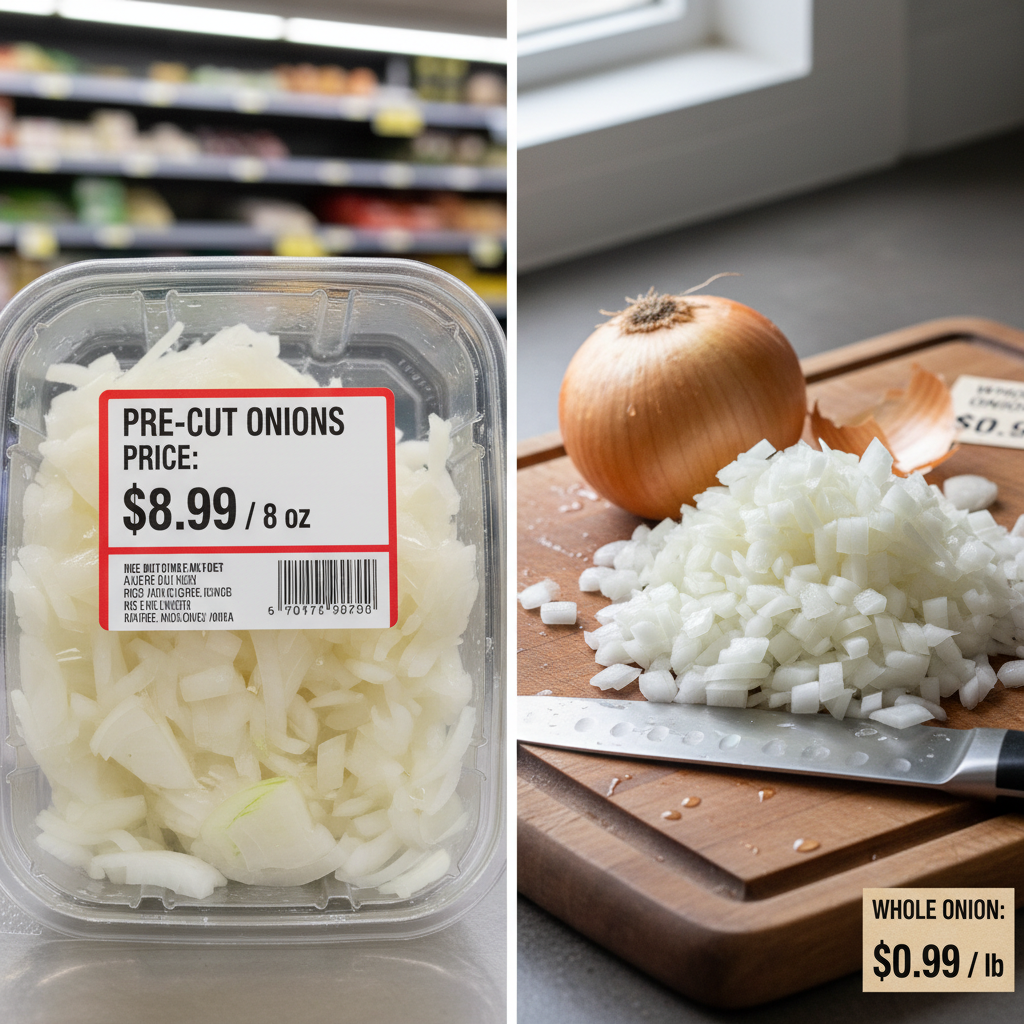
Grocery stores love to sell you convenience, and they charge a hefty tax for it. Those perfectly diced onions, those pre-sliced mushrooms, that bag of shredded carrots—they are budget killers hiding in plain sight. You are literally paying someone else to do a job that takes you minutes with a simple knife and cutting board.
Let’s look at the cold, hard numbers. A whole onion might cost you $0.80. A small plastic tub of pre-diced onion? Easily $3.50. You’re paying a 300%+ markup for five minutes of work. A block of cheese for $4.00 will yield far more shredded cheese than the $4.00 pre-shredded bag, which also contains additives like cellulose (wood pulp!) to prevent caking. The ‘convenience tax’ applies to almost everything: cubed butternut squash, pre-washed lettuce mixes, sliced fruit. It all adds up, nickel-and-diming your grocery budget into oblivion.
Scam Warning: The ‘convenience tax’ is one of the biggest hidden drains on a food budget. If you can do the work yourself in under 15 minutes, do it. Your wallet will thank you.
Invest in a decent chef’s knife and spend 30 minutes during your Sunday prep time chopping your own onions, carrots, and celery (a classic mirepoix base for soups and sauces). Put on a podcast or some music. Not only will you save a significant amount of money over the course of a year (easily $200-$300 or more), but your food will also be fresher and free of unnecessary additives. This is a non-negotiable rule for anyone serious about cutting their food costs.
Hack #6: Flavor is Your Friend (And It’s Cheap)

The Execution: Making It All Stick
Hack #6: Flavor is Your Friend (And It’s Cheap)
So you’ve embraced budget proteins and versatile components. The next challenge? Making them taste incredible so you don’t get bored. The biggest mistake beginners make is under-seasoning their food, leading to bland, repetitive meals. The solution isn’t expensive, pre-made sauces and marinades, which are often loaded with sugar, sodium, and a high price tag.
The secret is building your own flavor arsenal. A well-stocked spice rack is a one-time investment that pays dividends for years. You don’t need 50 exotic spices. Start with the workhorses: salt, black pepper, garlic powder, onion powder, paprika (smoked is great!), cumin, and chili powder. With these, you can create dozens of flavor profiles from Mexican to Moroccan. Buy them from the bulk section or at an ethnic grocery store for a fraction of the price of the tiny jars in the main aisle.
Beyond spices, acid and freshness are key. A squeeze of lemon or lime juice can brighten up an entire dish. A handful of fresh, chopped cilantro or parsley (which you can easily grow in a pot on your windowsill for a few bucks) adds a burst of freshness that makes a meal feel premium. Learn to make a basic vinaigrette: oil, vinegar, a little mustard, salt, and pepper. It’s cheaper, healthier, and tastes infinitely better than anything from a bottle. Mastering cheap flavor is how you turn a $1.50 meal of chicken thighs and rice into something you actually look forward to eating.
Hack #7: The Freezer is Your Time Machine
Hack #7: The Freezer is Your Time Machine
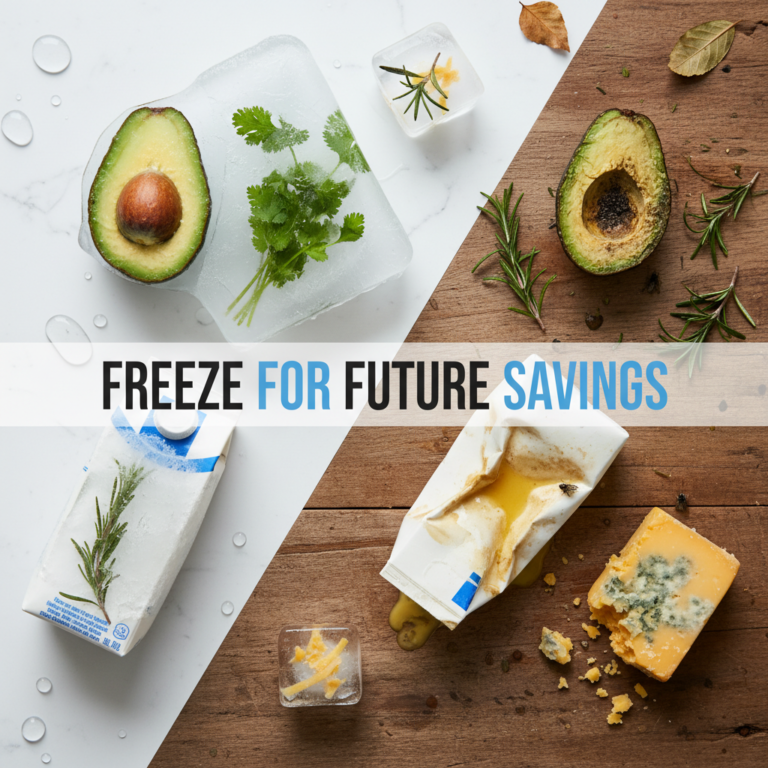
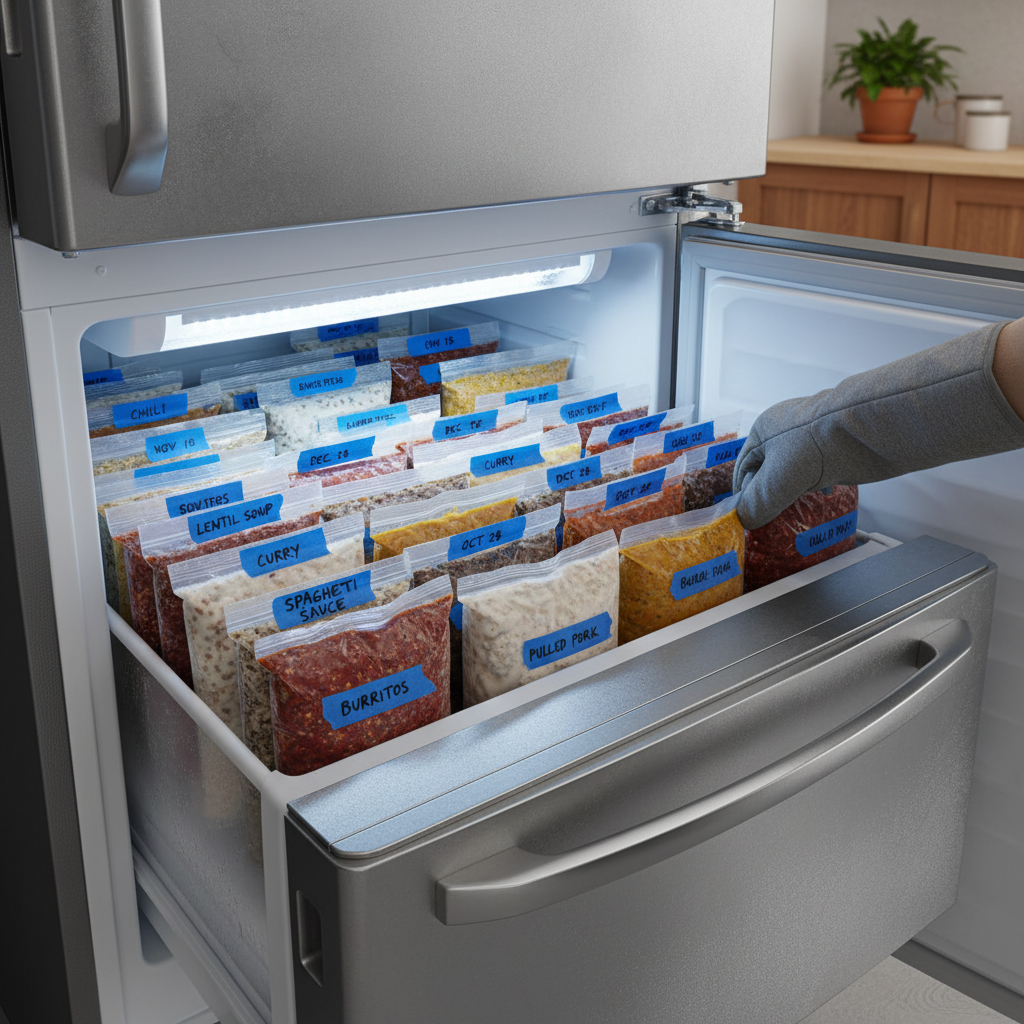
Your freezer is the most powerful and underutilized tool in your frugal kitchen. Most people think of meal prep as just making lunches for the week ahead, but the real pro move is to prep for your future, tired self. Life happens. You’ll have nights where you work late, feel sick, or simply have zero energy to cook. These are the moments of weakness when the siren song of Uber Eats becomes irresistible.
The freezer is your defense system. Any time you make a meal that freezes well, make a double batch. This works perfectly for things like:
- Chili and stews
- Soups of all kinds
- Pasta sauces
- Casseroles like lasagna or shepherd’s pie
- Burritos and breakfast sandwiches
Portion the extra batch into individual or family-sized servings, let it cool completely, and then freeze it. Crucially, you must label everything clearly with the name of the dish and the date it was made. A freezer full of mystery meals is useless. Use freezer-safe bags (you can lay them flat to save space) or containers.
Now, on that chaotic Tuesday night when you’re tempted to spend $30 on takeout, you can ‘shop’ your own freezer instead. You have a delicious, homemade meal ready to be reheated in minutes for virtually no cost. This single habit can save you hundreds of dollars over a year by eliminating those last-minute, desperation-fueled food purchases. It’s like a savings account that you can eat.
Hack #8: Use ‘Ugly’ Produce & Discount Racks
Hack #8: Use ‘Ugly’ Produce & Discount Racks
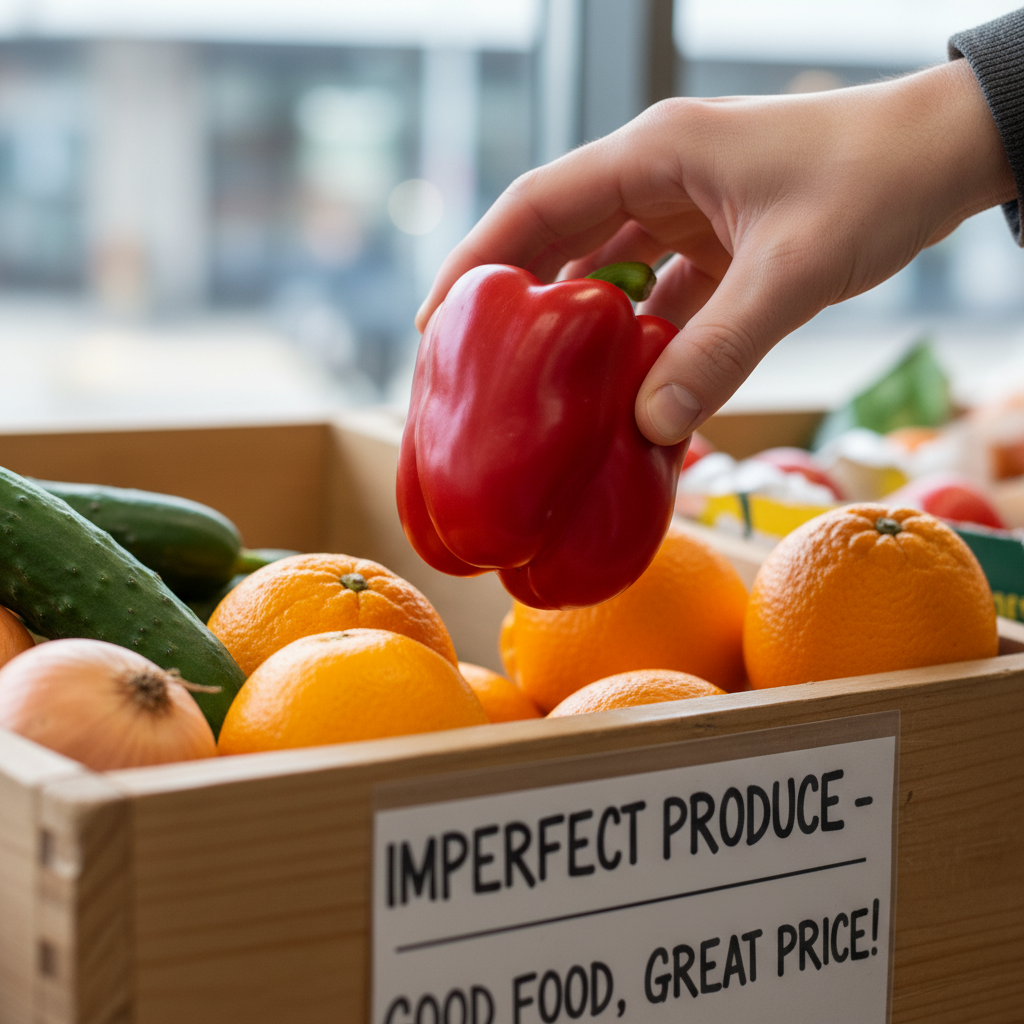
Our society has a weird obsession with cosmetic perfection, and it extends to our food. Grocery stores know that shoppers prefer perfectly round apples and straight carrots, so tons of completely edible, nutritious produce gets rejected or tossed simply because it looks a little weird. This is where savvy shoppers can score big.
First, actively look for the ‘ugly’ produce. Many stores are starting to offer bags of misshapen or slightly bruised produce at a steep discount. A pepper with a funny bump or a carrot with two ‘legs’ tastes exactly the same, especially when you’re going to chop it up for a soup, stew, or stir-fry anyway. Why pay a premium for looks?
Second, become a hunter of the discount rack. Most grocery stores have a designated section, often in the back of the produce department, where they put items that are nearing their best-by date. This is a goldmine for things like browning bananas (perfect for banana bread or smoothies), slightly soft tomatoes (ideal for sauce), and greens that are just a little wilted (great for sautéing). You can often get this stuff for 50-75% off.
You can also explore services like Misfits Market or Imperfect Foods, which specialize in delivering this ‘rescued’ produce right to your door at a lower cost than the grocery store. By embracing the imperfect, you not only save money but also help reduce food waste—a win for your wallet and the planet.
Hack #9: The ‘Lunch Money’ Challenge: Track Your Savings
The Payoff: Seeing the Real Savings
Hack #9: The ‘Lunch Money’ Challenge: Track Your Savings
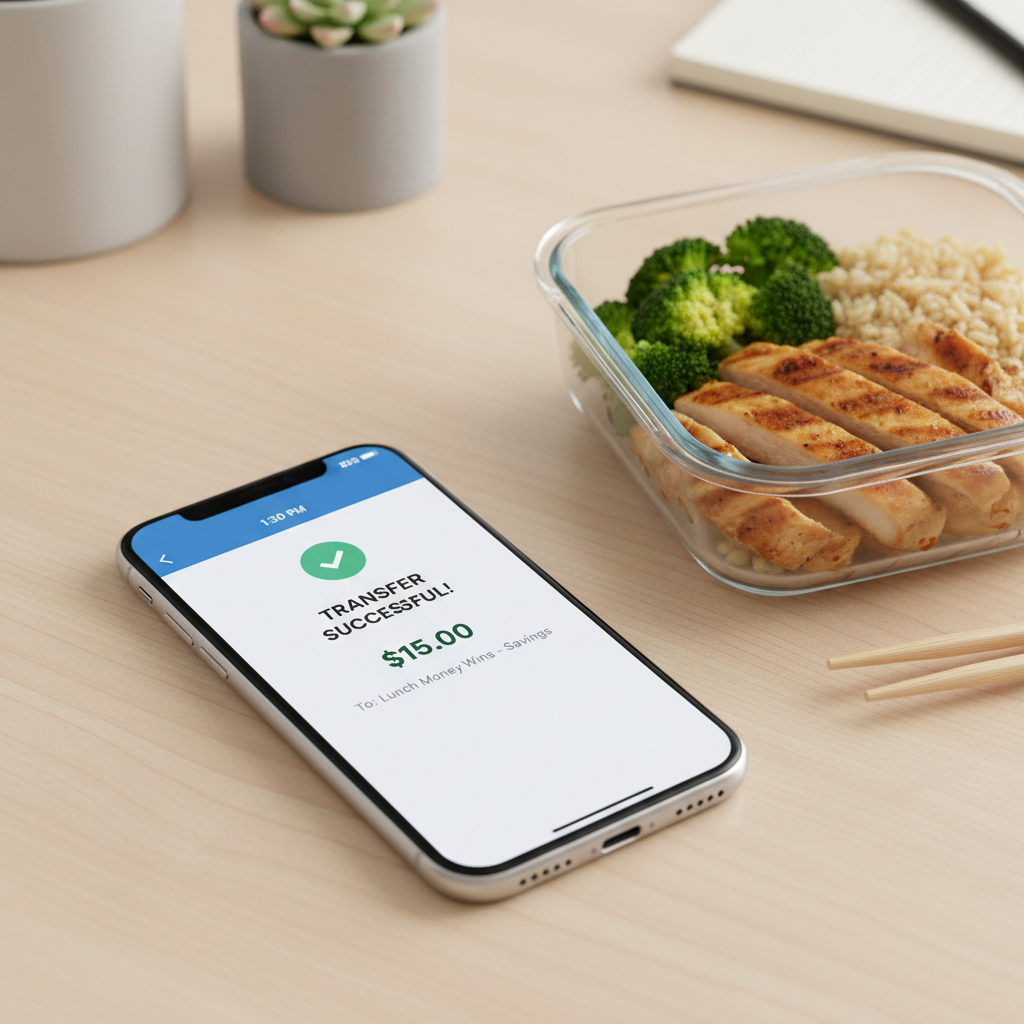
The best way to stay motivated is to see tangible results. It’s one thing to know you’re saving money, but it’s another thing to actually see the cash pile up. Turn your meal prep habit into a game with the ‘Lunch Money’ Challenge. The rules are simple: every single time you eat a lunch you prepped instead of buying one, you immediately transfer the money you *would have* spent into a dedicated savings account.
Be honest about your usual spending. Did you typically grab a $12 salad? A $15 burrito bowl? A $7 sandwich and chips? Whatever that number is, that’s what you transfer. You can do this manually through your banking app or automate it with an app like Qapital. Label the savings goal ‘Lunch Money Wins’ or ‘Takeout Takedown Fund’.
The math is shockingly powerful. Let’s say your average bought lunch costs $15. If you work a standard 20 days a month, that’s a potential savings of $300 per month.
- Monthly Savings: 20 days x $15 = $300
- Yearly Savings: $300 x 12 months = $3,600
That’s a vacation. That’s a paid-off credit card. That’s a serious emergency fund. Watching that account grow every day provides a powerful psychological boost. It’s no longer about ‘missing out’ on buying lunch; it’s about actively paying yourself first. Each prepped meal becomes a direct deposit into your wealth-building account.
Hack #10: The Ultimate Cost Breakdown: DIY vs. Takeout
Hack #10: The Ultimate Cost Breakdown: DIY vs. Takeout
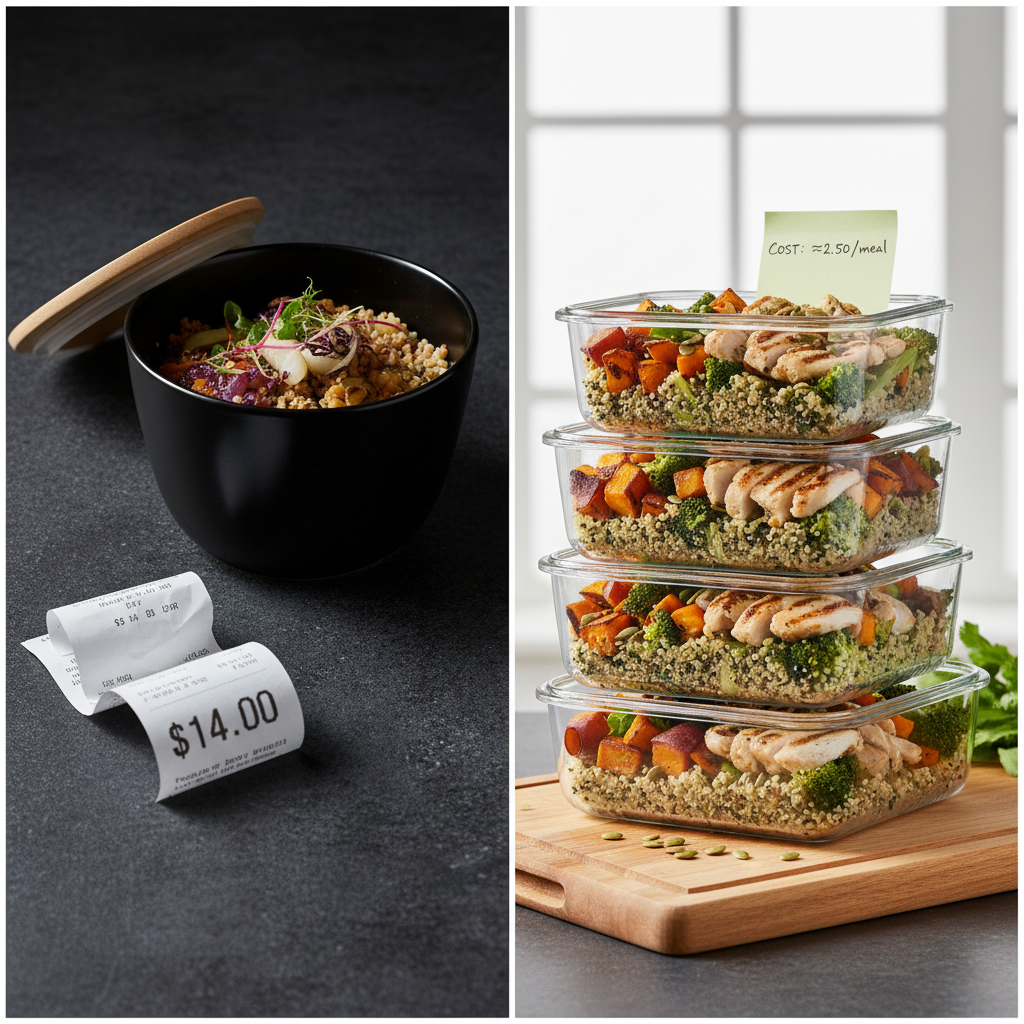
Still not convinced? Let’s break down the numbers in the most direct way possible. We’ll compare the cost of a week of homemade chicken and veggie bowls versus buying a similar bowl from a popular fast-casual restaurant every day for a 5-day work week.
Here’s what you buy for your DIY prep:
| Ingredient | Estimated Cost |
|---|---|
| 2 lbs Chicken Breast (@ $2.99/lb) | $5.98 |
| 1 Large Bag of Brown Rice | $3.00 |
| 2 lbs Broccoli Crowns (@ $1.50/lb) | $3.00 |
| 1 Onion & 2 Bell Peppers | $3.50 |
| Olive Oil & Spices (per serving cost) | $1.50 |
| Total for 5 Homemade Meals | $16.98 |
| Cost Per Meal | $3.40 |
Now, let’s compare that to the alternative:
| Expense | Cost Per Day | Cost Per Week (5 Days) |
|---|---|---|
| Fast-Casual Chicken & Rice Bowl | $14.00 | $70.00 |
| Homemade Meal Prep Bowl | $3.40 | $16.98 |
| Weekly Savings | $53.02 | |
| Monthly Savings (4 weeks) | $212.08 | |
| Annual Savings | $2,544.96 |
The numbers don’t lie. By investing a little time on a Sunday, you are pocketing over $50 a week. That’s over $2,500 a year from just changing your lunch habit. When you see the raw data, the choice becomes crystal clear. You can either pay someone else a massive premium for convenience, or you can pay yourself by taking control of your kitchen.
Conclusion
There you have it—10 real-world, no-fluff hacks to stop the financial bleeding and turn your kitchen into a money-saving machine. Meal prep isn’t about being a perfect, Instagram-worthy chef. It’s a declaration of independence from the tyranny of impulse buys and overpriced takeout. It’s about deciding where your hard-earned money goes. Don’t try to do all ten things at once. Pick one. Master the pantry audit this week. Next week, try building your menu around the sales flyer. Start small, build momentum, and watch your savings account grow. You have the power to change your financial future, and it can start with something as simple as what’s for lunch.