Stop Buying Trash: Identifying High Quality Clothing At Thrift Stores For Beginners
Let’s get real. Walking into a thrift store can feel like diving into a chaotic ocean of other people’s unwanted stuff. You’re on a mission to save money and find hidden gems, but you walk out with a bag of cheap, pilling clothes that look sad after one wash. You didn’t save money; you just bought someone else’s trash. It’s time to stop the cycle. This isn’t just about being cheap; it’s about being smart. It’s about building a wardrobe that actually lasts, feels amazing, and keeps your hard-earned cash in your pocket. For the side hustlers in the room, it’s about learning the skills to pull $50 profits from the $5 rack. This is your ultimate guide to developing ‘the eye’ for quality. Forget aimless browsing. From now on, you’re a hunter, and this is your field guide to bagging the trophies and leaving the junk behind.
The Mindset Shift: Think Like a Pro, Not a Rookie
Before you even touch a clothing rack, you need to upgrade your mental software. Most people wander into a thrift store with a vague hope of finding ‘something cute.’ That’s rookie thinking. A pro walks in with a strategy. You’re not just shopping; you’re curating. You’re on an acquisition mission for assets, whether those assets are for your closet or your reselling business.
The ‘Cost-Per-Wear’ Hustle
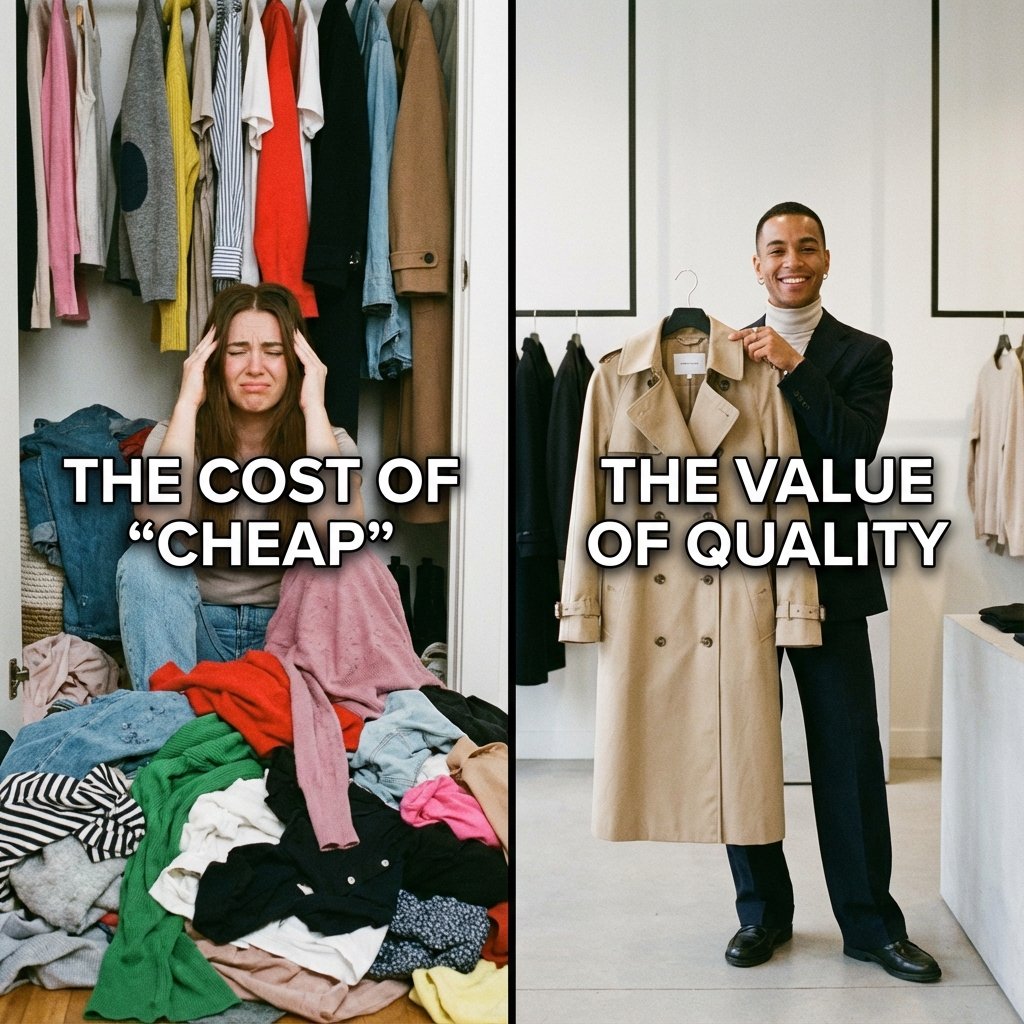
The most important metric in the frugal fashion game is Cost-Per-Wear (CPW). Fast fashion has brainwashed us into looking only at the price tag. A $5 shirt seems like a steal, right? But if it’s made of cheap polyester that pills and loses its shape after three wears, its CPW is $1.67. Now, imagine you find a high-quality, 100% merino wool sweater for $12 at the thrift store. You’ll wear that thing for years—let’s say 60 times. Your CPW is a mere $0.20. You’re not just saving money upfront; you’re making a long-term investment. Every item you pick up should be judged on its potential lifespan, not just its initial price. This mindset shift is what separates the amateurs from the pros who build incredible, long-lasting wardrobes for pennies on the dollar.
Go In With a Battle Plan
Never go thrifting without a list. It doesn’t have to be super specific, but have categories in mind: ‘dark wash jeans,’ ‘wool winter coat,’ ‘silk blouses,’ ‘leather boots.’ This focus prevents you from getting distracted by the sheer volume of stuff and making impulse buys on junk you don’t need. Your time is money. A focused 45-minute hunt is more profitable than a three-hour wander. Know your measurements, know the colors that work for you, and know the materials you’re looking for. This is your strategic advantage.
The 5-Point Inspection: Your No-Fail Quality Checklist
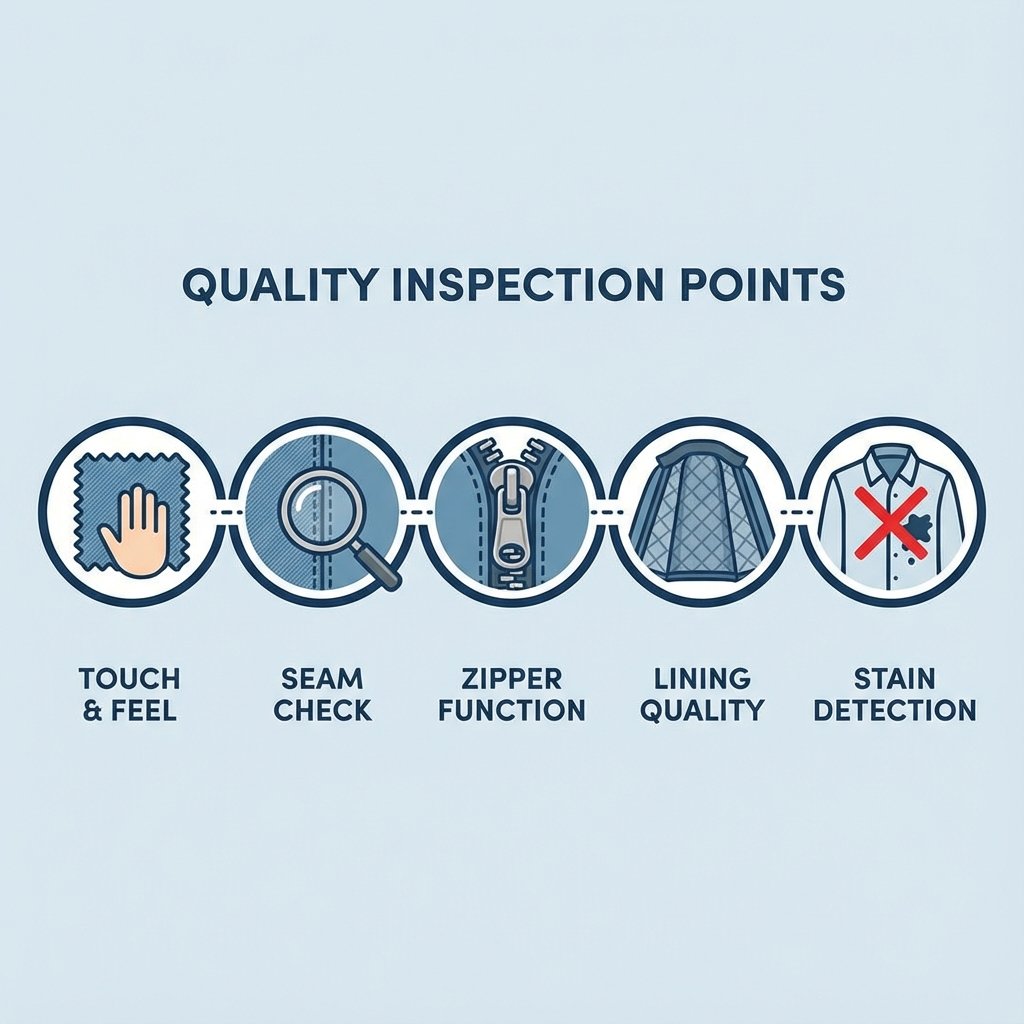
This is where the real work happens. You need to become a clothing detective. Once you’ve pulled a potential item from the rack, perform this 5-point inspection. It takes less than 60 seconds per garment and will save you from 99% of bad purchases.
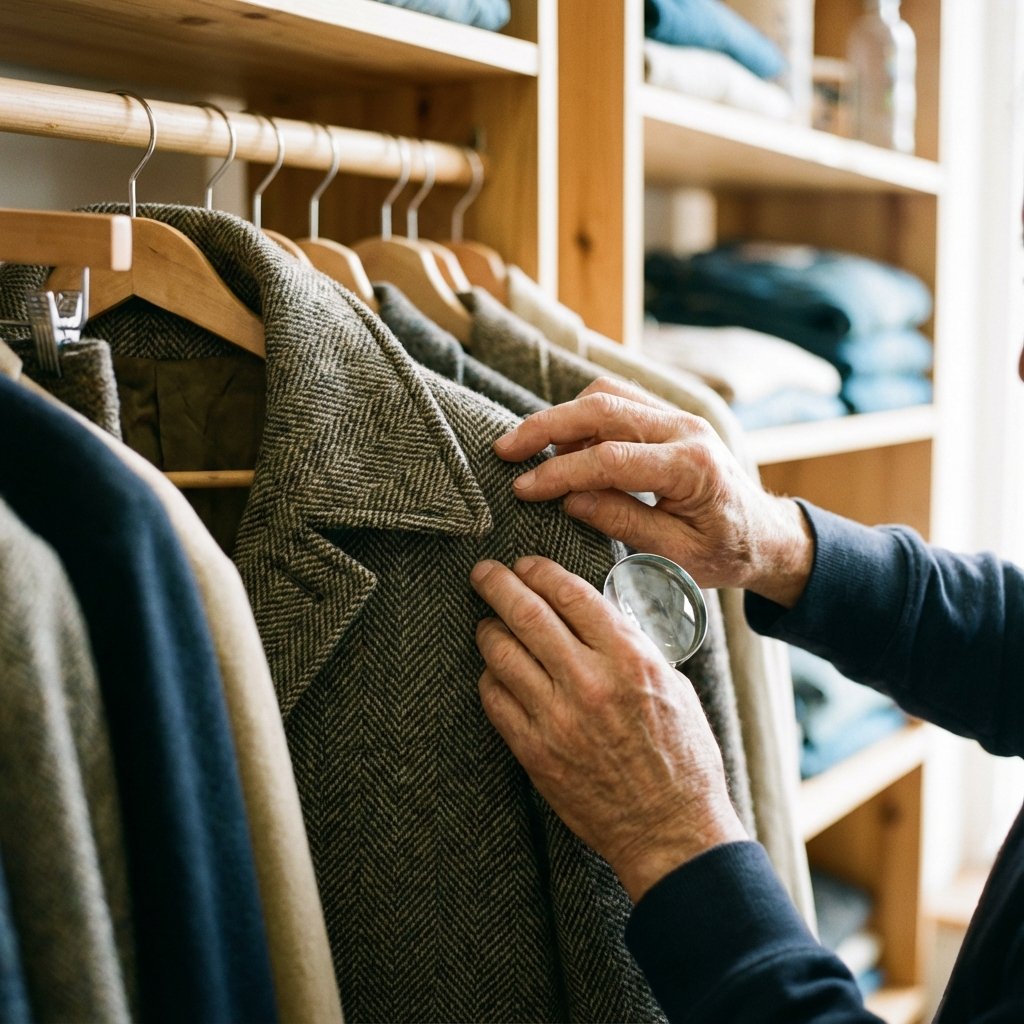
- Feel the Fabric: Let Your Fingers Do the Talking. The single biggest indicator of quality is the material. Your first move should always be to touch the garment. Natural fibers are your goal: wool, cashmere, silk, 100% cotton (especially Pima or Egyptian), and linen. They breathe better, last longer, and feel more luxurious. Get used to how they feel. Wool has a substantial, sometimes slightly scratchy feel. Silk is smooth and light. Good cotton is soft and sturdy. Synthetics like polyester and acrylic often feel slick, plasticky, or overly fuzzy and are prone to pilling and holding odors. Check the tag, but trust your touch first—sometimes tags are wrong or missing.
- Check the Seams & Stitching: The Skeleton of the Garment. Turn the garment inside out. This is where companies cut corners. Look for high stitch density—more stitches per inch means a stronger seam. Gently pull at the seams; they shouldn’t gap or show thread. Look for finished edges. High-quality garments will have enclosed seams (like French seams) or serged edges that are neat and tidy. If you see raw, fraying fabric, it’s a sign of cheap construction.
- Inspect the Hardware: Zippers, Buttons, and Clasps. The small details scream quality (or lack thereof). Check the zipper. Is it a sturdy metal zipper from a reputable brand like YKK or Riri? Or is it a flimsy, plastic one? Test it a few times. For buttons, are they cheap, thin plastic, or are they substantial? Look for buttons made of wood, mother-of-pearl, or thick, quality plastic. Check that they are all present and sewn on securely. A missing button can be replaced, but it’s a bargaining chip or a sign to pass if you don’t have the time to fix it.
- Look for Lining: The Hidden Mark of Quality. In items like blazers, coats, skirts, and some dresses, a full lining is a hallmark of a well-made piece. It helps the garment hang properly, adds durability, and makes it more comfortable to wear. A cheap piece might have no lining or a partial lining made of flimsy, static-prone polyester. A quality lining, often made of silk, rayon, or acetate, is a huge green light.
- Scan for Flaws (The Deal-Breakers). Do a final, ruthless scan under good light. Look for stains, especially in the armpits, collar, and cuffs. Some are removable, but grease or old, set-in stains are often permanent. Check for pilling, particularly on knits. A little can be removed with a fabric shaver, but excessive pilling indicates poor-quality fiber. Look for moth holes in wool, rips along seams, and stretched-out elastic. Differentiate between an easy fix (a dropped hem) and a fatal flaw (a huge tear in a delicate fabric).
The Brand Bible: Labels to Hunt (and Avoid)
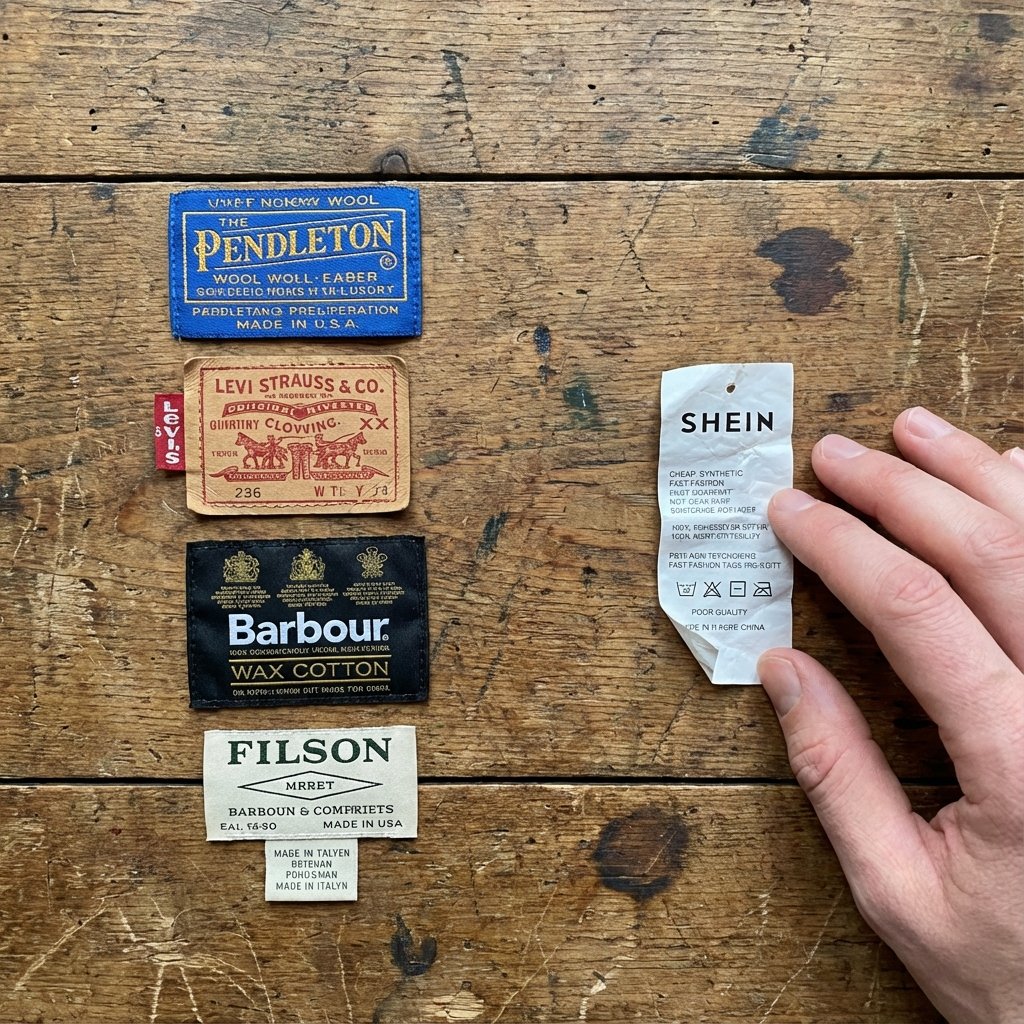
While the 5-point inspection is your primary tool, knowing your brands is a powerful shortcut. It helps you quickly scan racks and identify potential winners. Don’t be a brand snob, but be a brand strategist. Some brands are consistently well-made, while others are consistently trash. Here’s a cheat sheet to get you started.
Brand Tiers: Your Quick Reference Guide
Use your smartphone to do a quick search on any brand you don’t recognize. Look up what their items retail for new. If a brand’s t-shirts sell for $80 new, finding one for $6 is a major score.
| Category | Brands to Hunt For (Examples) | Brands to Be Wary Of (Fast Fashion) |
|---|---|---|
| Work & Outerwear | Pendleton, L.L. Bean, Eddie Bauer, J. Crew (older items), Talbots, Brooks Brothers, Patagonia, The North Face | Shein, Forever 21, H&M (most lines), Zara (check quality), Fashion Nova |
| Denim | Levi’s (especially vintage), Madewell, AG, 7 For All Mankind, Paige, Lee, Wrangler | Brands with thin, overly stretchy fabric that lose shape quickly. Often found in fast-fashion stores. |
| Knitwear & Sweaters | Look for 100% Wool, Cashmere, or Merino Wool tags regardless of brand. Brands like Dale of Norway, Vince, Eileen Fisher are great finds. | Anything with a high acrylic content. These will pill and look old almost immediately. |
| Vintage Clues | Look for ‘Made in USA’ tags, International Ladies’ Garment Workers’ Union (ILGWU) tags, unique fonts, and thick, substantial fabrics. | N/A |
Decoding Vintage
Don’t sleep on items with no recognizable brand. Vintage clothing was often made with a focus on durability that modern clothing lacks. Look for metal zippers on dresses, unique details, and union tags (like the ILGWU tag) which can help you date a piece and is a guarantee of quality for its era.
The Reseller’s Edge: Turning Quality Finds into Cash
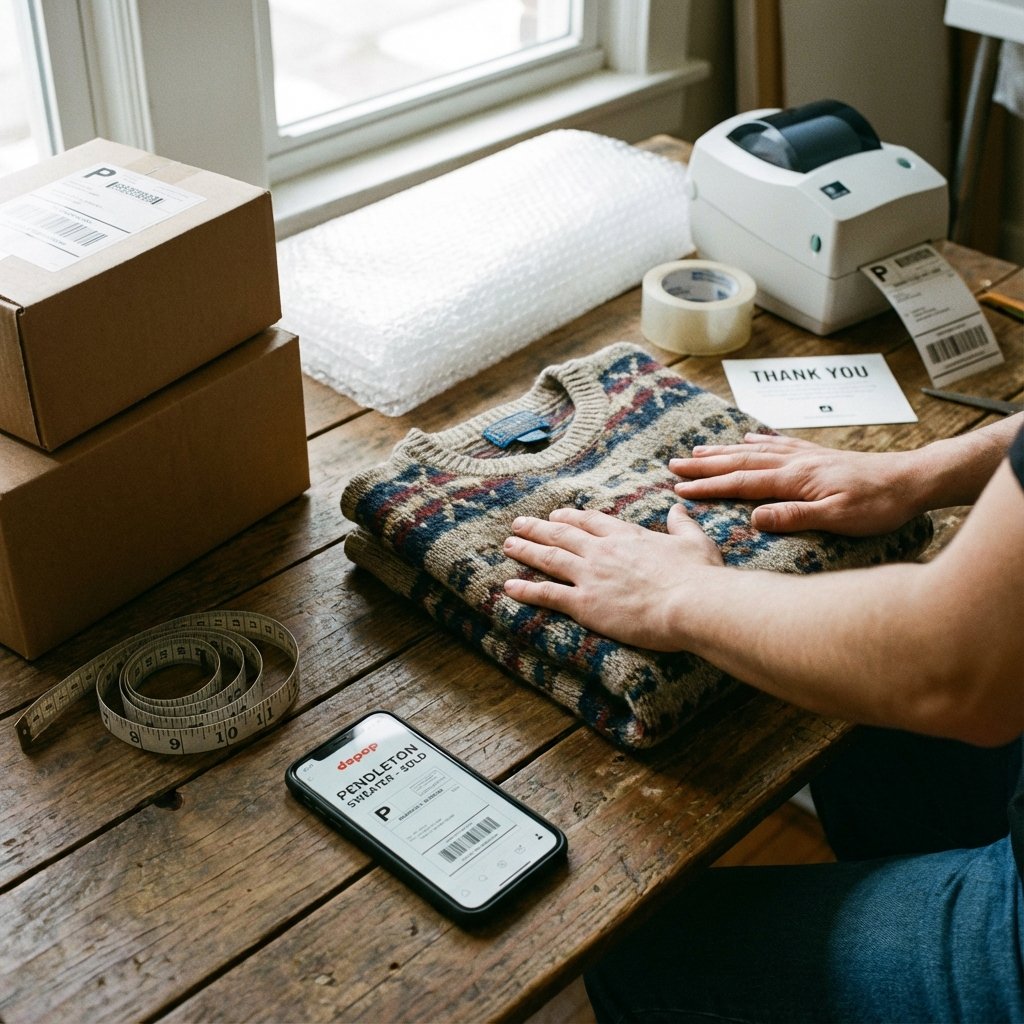
For the side hustlers, every high-quality find is potential profit. The skills you use to build your own wardrobe are the exact same skills you need to build a profitable reselling business. The thrift store is your wholesale supplier.
Realistic Earning Potential
The margins can be incredible if you know what you’re looking for. This isn’t a get-rich-quick scheme; it’s a game of knowledge and consistency. The more you learn about brands, materials, and styles, the more you earn.
| Item Type | Typical Thrift Cost | Potential Resale Price | Potential Profit |
|---|---|---|---|
| Vintage Levi’s 501 Jeans | $8 – $15 | $50 – $100+ | $42 – $85+ |
| 100% Cashmere Sweater (Good Condition) | $10 – $18 | $45 – $80 | $35 – $62 |
| Pendleton Wool Blanket Shirt | $12 – $20 | $75 – $150 | $63 – $130 |
| Silk Blouse (e.g., Equipment, Theory) | $6 – $10 | $30 – $55 | $24 – $45 |
Tools of the Reselling Trade
You don’t need a fancy setup to start. You need a few key tools:
- A Smartphone: For researching comps (what similar items are selling for) in the store and for taking great photos.
- A Measuring Tape: Essential. All online listings need measurements (chest, length, inseam, waist).
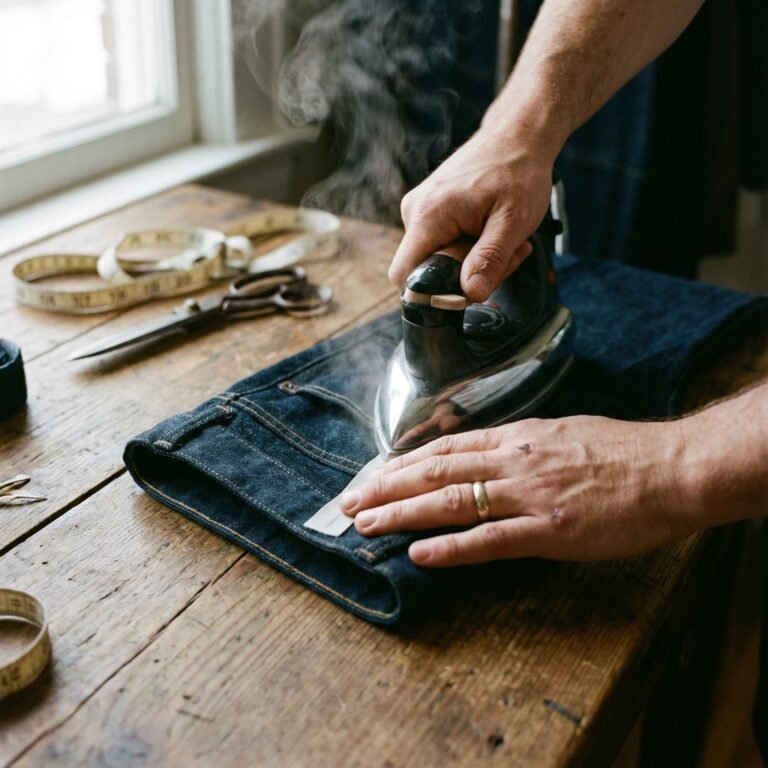
- A Steamer or Iron: Wrinkled items don’t sell. A $30 handheld steamer is one of the best investments you can make.
- Good Lighting: Natural light from a window is free and works best. Don’t take dark, yellow-tinged photos.
- Reselling Platforms: Start with user-friendly platforms like Poshmark, Mercari, or Depop. As you grow, you can expand to eBay or Etsy for vintage items.
Sample Listing Script
A good description builds trust and makes the sale. Be honest about condition and provide details. Use this template:
Title: Vintage Pendleton High Grade Western Wear Wool Shirt Jacket – Men’s Large
Description: Incredible vintage 100% virgin wool Pendleton shirt from the 1980s. Made in the USA. Features a classic red and black plaid pattern with pearl snap buttons and two chest pockets. This is a heavyweight, high-quality piece perfect for fall and winter. Excellent vintage condition with no holes, stains, or odors.
Measurements (Flat Lay):
– Pit to Pit: 23 inches
– Length: 30 inches
– Sleeve: 25 inchesTags: Vintage, Pendleton, Wool, Western, Plaid, Made in USA, Gorpcore, Cabin, Outdoor
The Red Flags: How to Spot Fakes and Scams
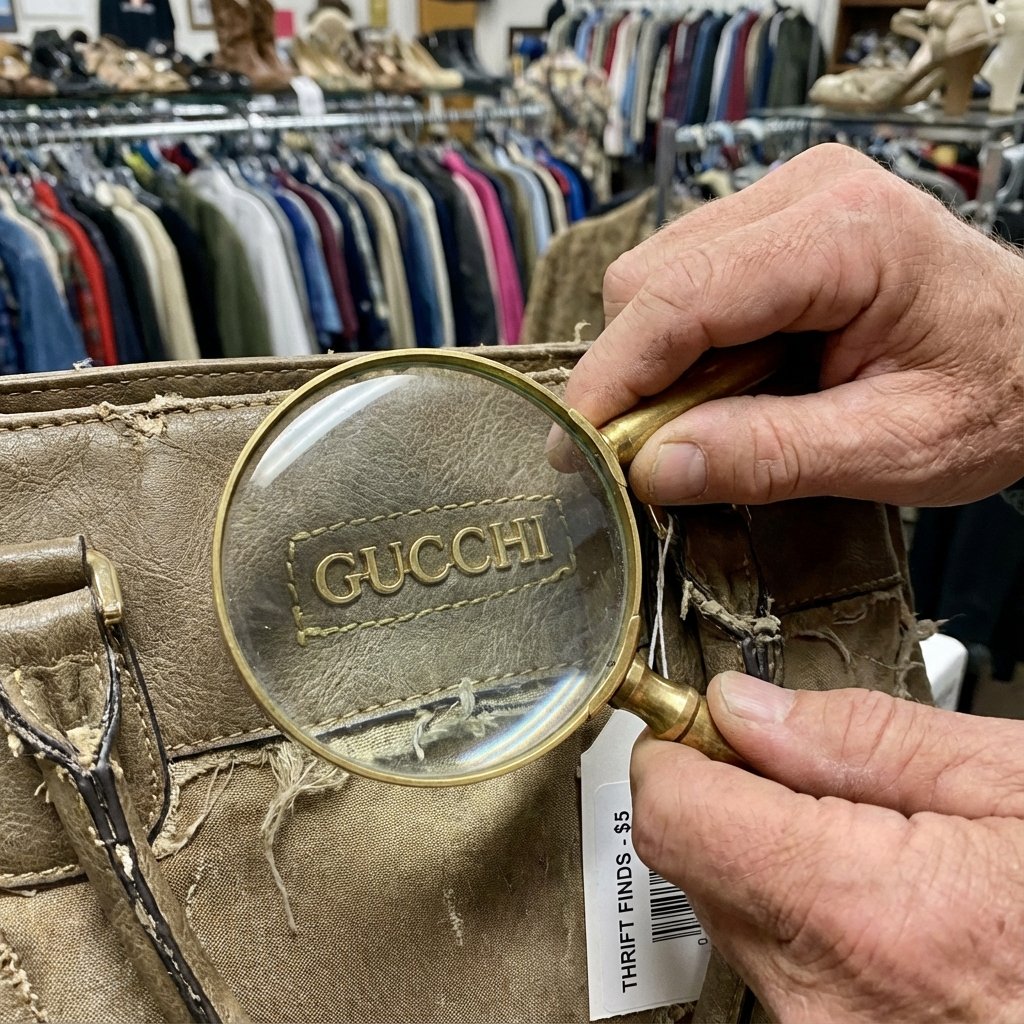
As you get better, you might start hunting for luxury goods—designer bags, high-end coats, etc. This is high-risk, high-reward territory, and you need to be aware of counterfeits, which absolutely make their way into thrift stores.
The Telltale Signs of a Fake
Counterfeiters often mess up the small stuff. Your 5-point inspection is your best defense.
- Sloppy Logos & Fonts: Look up the real logo on your phone. On a fake, the font might be slightly off, the spacing weird, or the stitching around a patch might be messy.
- Cheap Hardware: A real Gucci bag will not have a flimsy, unbranded plastic zipper. Luxury brands use custom, heavy, branded hardware. If it feels light or cheap, it’s a fake.
- Bad Stitching: This is the easiest way to tell. Luxury items have perfect, even, dense stitching. Fakes often have crooked, uneven, or loose stitches. Check the corners and inside seams.
- Material Mismatch: If you find a Chanel bag that’s supposed to be lambskin leather and it feels like plastic (‘pleather’), trust your senses. It’s a fake.
Key Rule: If a deal on a luxury item seems too good to be true, it probably is. Trust your inspection, not just the label. A real Burberry trench coat for $15 is possible, but it’s a one-in-a-million find. A fake one is a one-in-ten find. Be skeptical and do your research before you buy.
Conclusion
You’re now armed with the knowledge to walk into any thrift store and cut through the noise. You have the inspection checklist to identify quality, the brand knowledge to work smart, and the reseller’s mindset to turn your skills into cash. Stop gambling your money on clothes that won’t last. Start building a wardrobe of assets—pieces you love that are durable, stylish, and incredibly cheap. The best part? Every time you choose a quality secondhand piece over new fast fashion, you’re keeping money in your wallet and textiles out of the landfill. That’s not just smart shopping; it’s a power move. Now get out there and start the hunt.