
Never Overpay Again: How To Start A Grocery Price Book Today
Let’s be real: walking into a grocery store can feel like stepping into a financial battlefield. Prices change weekly, ‘sale’ tags scream for your attention, and you’re left wondering if you’re actually getting a deal or just falling for a clever marketing trick. It’s a rigged game, and most of us are losing without even knowing it. You work too hard for your money to just hand it over because a bright yellow tag told you to.
What if you had the ultimate cheat code? A secret weapon that tells you the absolute rock-bottom price for everything on your list, so you know with 100% certainty when to buy and when to walk away. That weapon is a Grocery Price Book, and it’s the single most powerful tool for taking back control of your food budget.
Forget complicated systems or extreme couponing. A price book is your personal, customized database of what things *should* cost. It’s about being smarter than the store. This guide is your step-by-step plan to build one from scratch, turning you from a passive spender into a savvy shopper who never overpays again.
What the Heck is a Grocery Price Book (And Why You Need One)?

Before we dive into the ‘how,’ let’s get straight on the ‘what.’ A grocery price book is brutally simple: it’s a log where you track the prices of the items you buy most often across different stores over time. That’s it. No magic, just data. Your data.
Think of it like this: stores know everything about their pricing. They know the sales cycles, the profit margins, and what price makes you pull the trigger. A price book flips the script. It puts you in the driver’s seat by arming you with the same knowledge. It’s your intel report on the grocery game.
Why It’s a Non-Negotiable Tool for Smart Shoppers:
- It Exposes Fake Sales: You know that ‘SALE! 2 for $5’ sign on your favorite cereal? Your price book will tell you if the real rock-bottom price is actually $1.99 a box, making that ‘sale’ a total rip-off. You’ll learn to spot the difference between a genuine stock-up opportunity and marketing fluff.
- It Kills Impulse Buys: When you have a clear ‘buy price’ in mind, you’re less likely to be swayed by flashy end-cap displays. If it’s not at your price, you don’t buy it. Period. It builds incredible shopping discipline.
- It Simplifies Your Strategy: No more driving to three different stores to chase every advertised deal. Your price book helps you understand which store consistently has the best prices on your staples. Maybe Aldi is your go-to for produce and pantry goods, while Costco wins for paper products. Your book will prove it with cold, hard numbers.
- It Puts You in Control: The most empowering part of a price book is the feeling of control. You’re no longer a victim of random price hikes or deceptive deals. You are making strategic decisions based on facts, and that’s how you win the money game.
The goal of a price book isn’t to be cheap; it’s to be intentional. It ensures that every dollar you spend on groceries is working as hard as it possibly can for you.
The Arsenal: Choosing Your Price Book Weapon
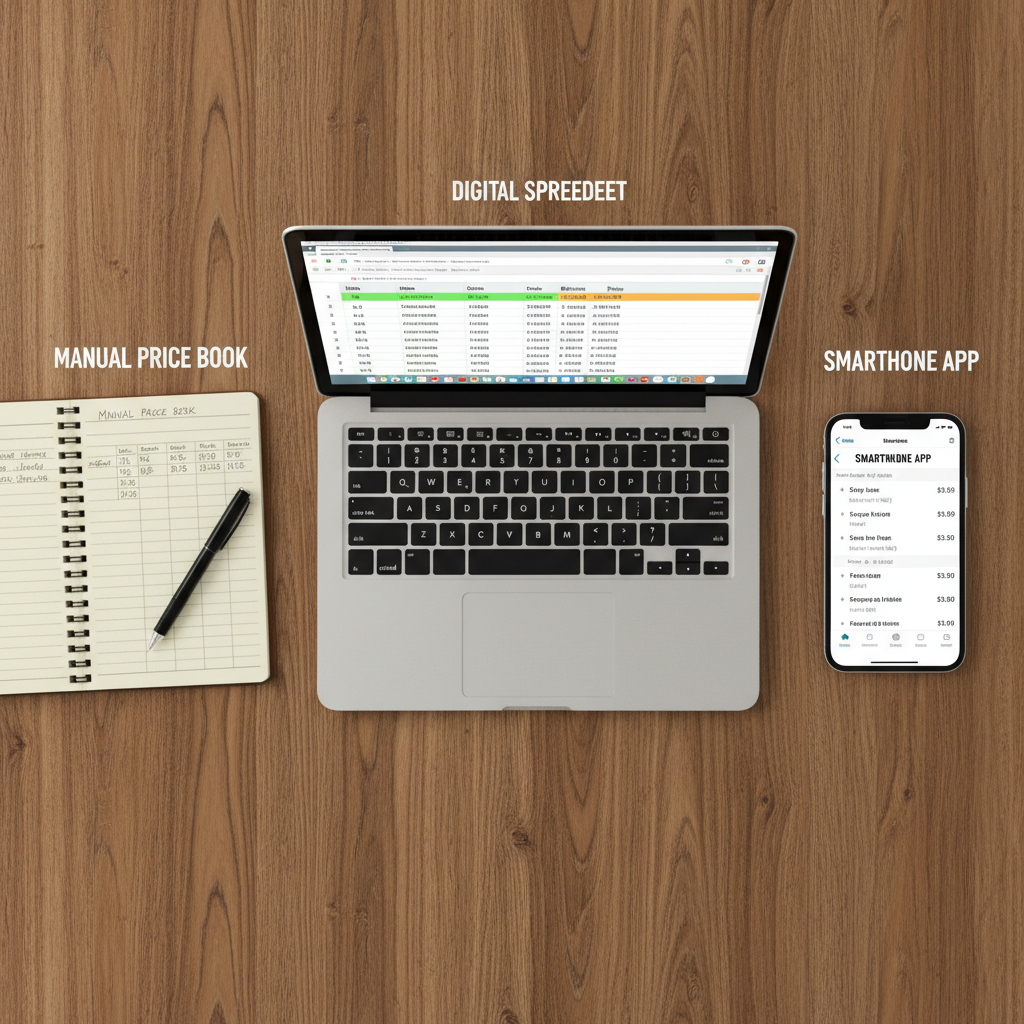
There’s no one-size-fits-all answer here. The best price book is the one you’ll actually use. Your mission is to pick the tool that fits your lifestyle. Let’s break down the top three contenders in the frugal arsenal.
The Old-School Notebook
Sometimes simple is best. A small, dedicated notebook and a pen can be a powerful combination. You can toss it in your purse or car and have it ready to go. You’re not at the mercy of a dead phone battery or a spotty data connection.
How to set it up: Create columns for: Item, Brand, Size/Weight, Store, Date, Price, and the all-important Unit Price.
The Spreadsheet Hustle
For those who love data, a spreadsheet is king. Using a free tool like Google Sheets means you can access and update your price book from your phone, tablet, or computer. The biggest advantage? It does the math for you. You can set up a formula to automatically calculate the unit price, saving you time in the store.
How to set it up: Create the same columns as the notebook. In the ‘Unit Price’ column, use a simple formula like `=F2/C2` (assuming Price is in column F and Size is in column C). You can then sort by item to see all your price history at a glance.
The App-Savvy Approach
While there are some dedicated price book apps, they often come and go. A more reliable method is using a flexible note-taking app you already have, like Notion, Evernote, or even Google Keep. You can create a simple note or a more complex database for each item, and the search function makes finding information instant.
How to set it up: Create a new ‘notebook’ or ‘database’ titled ‘Grocery Price Book.’ For each item, create a new note. The title is the item name (e.g., ‘Pasta – Barilla’), and in the body, you can log entries by date, store, price, and unit price.
| Method | Pros | Cons | Best For… |
|---|---|---|---|
| Notebook | Simple, tangible, no battery or internet required. | Manual math, can get messy, harder to search. | The tech-averse shopper who loves pen and paper. |
| Spreadsheet | Auto-calculates unit price, easily sortable and searchable, free. | Requires a device and basic spreadsheet comfort. | The data-lover who wants ultimate control and analysis. |
| Note-Taking App | Always on your phone, easily searchable, can add photos of tags. | Can be less structured, might require more setup. | The digital minimalist who wants everything in one place. |
The Game Plan: Building Your Price Book From Scratch

Alright, you’ve chosen your weapon. Now it’s time to build your intel database. Don’t get overwhelmed; we’re going to do this strategically. Follow these steps, and you’ll have a working price book in no time.
- List Your Staples (The ‘Top 20’): Don’t try to track every single thing you buy. That’s a recipe for burnout. Start by listing the 20-30 items that are always in your cart. Think milk, eggs, bread, your go-to pasta, chicken breasts, coffee, cereal, toilet paper. These are the items that make up the bulk of your budget, so they offer the biggest savings potential.
- Gather Your Initial Intel: You have two options here. You can use your last few grocery receipts to pull your first data points. Or, dedicate one shopping trip to being a ‘spy.’ Walk the aisles, and instead of buying, just record the prices of your ‘Top 20’ items. Use your phone to snap pictures of the shelf tags—they have all the info you need (price, size, brand).
- Master the Unit Price: This is the most critical step. The shelf price is misleading. A giant box of cereal for $5 seems cheaper than a smaller one for $3, but is it? The unit price reveals the truth.
The Unit Price Rule: Always, always, always calculate the price per unit. The formula is simple: Total Price ÷ Quantity (e.g., ounces, pounds, number of items) = Unit Price. This allows you to compare apples to apples, no matter the package size.
For example, a 64oz carton of orange juice for $3.49 is 5.4 cents per ounce. A 52oz carton for $2.99 is 5.7 cents per ounce. The bigger one is the better deal, and now you have the proof.
- Track for a Full Sales Cycle (4-6 Weeks): Consistency is key. Keep logging the prices for your core items every time you shop for at least a month. You’ll quickly start to see patterns. You’ll notice that the price of chicken breast at Store A bottoms out every third week, or that your favorite coffee goes on a deep discount every six weeks. This is the intel you’ve been missing.
- Identify Your ‘Stock-Up Price’: After a few weeks, you’ll see a clear low price for each item. This is it. This is your magic number, your ‘Stock-Up Price.’ When you see an item you use regularly hit this price, that’s your signal to buy enough to last until the next sales cycle (if it’s non-perishable, of course). This is how you stop buying on the store’s schedule and start buying on yours.
The Math: How a Price Book Prints Money
This isn’t about saving a few pennies here and there. This is about generating significant, tangible savings that can add up to hundreds or even thousands of dollars a year. Let’s run the numbers and see how your new intel translates directly into cash back in your pocket.
We’ll use a few common household staples as an example. Let’s say, after tracking for a month, you’ve identified your ‘Stock-Up Prices’ and compared them to what you were typically paying.
The math is simple but powerful. For each item, the formula is: (Typical Price – Stock-Up Price) x Annual Quantity = Annual Savings.
Look how quickly it adds up on just a handful of items:
| Item | Typical Price | Your Stock-Up Price | Annual Usage | Annual Savings |
|---|---|---|---|---|
| Pasta (1lb box) | $1.99 | $0.99 | 104 boxes (2/week) | $104.00 |
| Cereal (Family Size) | $4.79 | $2.99 | 52 boxes (1/week) | $93.60 |
| Chicken Breast (per lb) | $4.49 | $1.99 | 100 lbs | $250.00 |
| Coffee (12oz bag) | $8.99 | $5.99 | 24 bags (2/month) | $72.00 |
| Laundry Detergent (100oz) | $12.99 | $8.99 | 12 bottles (1/month) | $48.00 |
| TOTAL POTENTIAL SAVINGS | $567.60 |
That’s over $560 saved on just five items! Now imagine applying this same principle to your 20 or 30 most-purchased products. It’s not unrealistic to see savings of $100 or more per month. That’s $1,200 a year. What could you do with an extra $1,200? Pay off debt? Boost your savings? Fund a vacation? This isn’t wishful thinking; it’s the direct result of shopping with data instead of hope.
Level Up Your Game: Pro Tips & Common Pitfalls
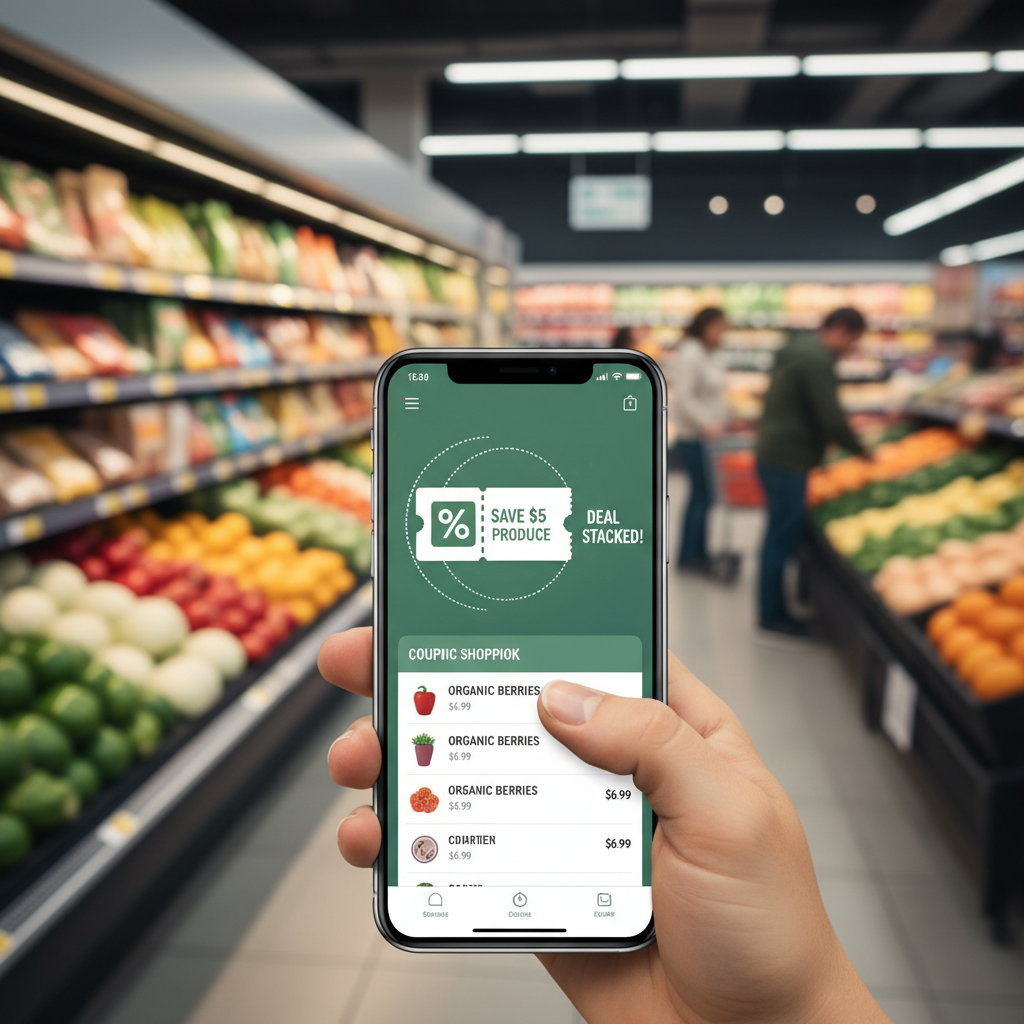
Once you’ve got the basics down, you can take your price book strategy to the next level. These pro tips will maximize your savings, while being aware of the common pitfalls will keep you from giving up.
Pro Tips for Maximum Savings
- Stack Your Deals: Your stock-up price is the foundation. The next level is stacking it with other deals. See your favorite detergent hit its rock-bottom price? Now check for a digital coupon or a manufacturer’s rebate. Combining a great sale price with a coupon is how you get items for pennies on the dollar, or even free.
- Watch for ‘Shrinkflation’: Companies are sneaky. They’ll often keep the price the same but reduce the amount of product in the package. This is where your unit price calculation is your shield. You might notice your ‘deal’ on ice cream isn’t a deal at all because the carton just shrank from 1.5 quarts to 1.4 quarts. Your price book will catch it every time.
- Learn the Sales Cycles: Pay attention to the calendar. Grilling meats and condiments are cheapest leading up to summer holidays. Baking supplies go on deep discount before Thanksgiving and Christmas. Canned goods are often cheapest during fall ‘stock-up’ sales. Your price book will help you anticipate these cycles so you can budget and buy ahead.
- Ditch Brand Loyalty: Your price book is objective; it has no emotional attachment to a brand. It will show you in black and white when the store brand is a significantly better value per unit. Be open to trying generics when the math makes sense—you might discover a new favorite and save a fortune in the process.
Common Pitfalls to Avoid
- Analysis Paralysis: The biggest mistake is trying to track everything from day one. You’ll burn out. Stick to your Top 20-30 items. Once you’ve mastered those, you can slowly add more if you want. Start small, build the habit, then expand.
- Forgetting Your Book: A price book is useless if it’s sitting on your kitchen counter. This is why digital methods are so popular. If you use a notebook, make a rule: it lives in your car or your purse. No exceptions.
- Buying Just Because It’s Cheap: A great deal on something you won’t use is still a waste of money. If your family hates canned tuna, it doesn’t matter if it’s $0.25 a can. Stick to buying deals on items you already know and love.
Conclusion
The days of walking into a grocery store and hoping for the best are over. A grocery price book isn’t just a list of numbers; it’s a declaration that you’re in charge of your money. It’s the difference between being a passive consumer and an empowered financial strategist. You’re no longer playing their game; you’re creating your own, with rules that guarantee you win.
Yes, it takes a little effort up front. But the payoff is massive and ongoing. Every shopping trip becomes a victory, and every dollar saved is a dollar you can put toward things that truly matter to you. The confidence you’ll gain from knowing you’re making the smartest possible decision with every purchase is priceless.
So, what are you waiting for? Your mission is clear. Choose your weapon—notebook, spreadsheet, or app—and start gathering your intel on your very next shopping trip. Stop letting the stores dictate your budget. It’s time to start tracking and never overpay again.