My $50/Week Grocery Challenge: Eat Healthy Without Going Broke
Let’s be real: walking into a grocery store these days can feel like getting mugged in slow motion. Prices are climbing, your wallet is screaming, and the dream of eating healthy, delicious food feels like it’s reserved for the rich and famous. But what if I told you that’s a lie? What if you could walk out of that store with a week’s worth of nutritious food for just $50? Not $150. Not $100. Fifty bucks.
This isn’t about eating ramen noodles for seven days straight or surviving on saltines and hope. This is the $50/Week Grocery Challenge, and it’s your playbook for taking back control. It’s a system built on street smarts, not sacrifice. We’re talking about a strategic approach that turns you from a passive consumer into the CEO of your kitchen. Forget coupon-clipping marathons and dumpster diving. We’re going to plan, execute, and eat like royalty on a budget that would make your bank account weep with joy. Ready to stop bleeding cash in the checkout line? Let’s get to work.
The Mindset Shift: Ditching the ‘Broke & Hungry’ Myth

Before you even think about making a grocery list, we need to perform some mental surgery. Most people fail at budgeting because their mindset is sabotaging them from the start. They see a tight budget as a cage, a life of deprivation and bland, sad meals. That ends now. Your new mantra is: Resourceful, not restricted.
The biggest myth we need to bust is that ‘cheap food’ equals ‘unhealthy junk.’ Sure, you can fill a cart with processed garbage for cheap, but that’s amateur hour. A true frugal hacker knows that some of the most nutrient-dense foods on the planet are also the cheapest: lentils, beans, oats, potatoes, carrots, bananas. We’re not downgrading our health; we’re upgrading our strategy.
Embrace the Abundance Mindset
Instead of focusing on what you can’t have, you’re going to focus on the abundance you can create. That half-empty bag of rice in your pantry? That’s the base for five different meals. That lonely onion? It’s the flavor foundation for soups, stir-fries, and sauces. You have more resources at your fingertips than you realize. The goal is to unlock their potential.
Food Waste is Burning Cash
Here’s a hard truth: every time you throw away wilted lettuce or moldy bread, you are literally throwing cash into the garbage can. The average American family tosses out hundreds of dollars in food each year. From this moment on, your kitchen is a zero-waste zone. We will use everything. That limp celery? It’s going into a soup base. Those chicken bones? They’re becoming a rich, nutritious broth. This isn’t just about being eco-friendly; it’s about respecting your hard-earned money.
Key Rule: You are not ‘on a budget.’ You are a financial operator executing a strategic spending plan to maximize value and build wealth.
The Pre-Game: Your Kitchen & Pantry Audit
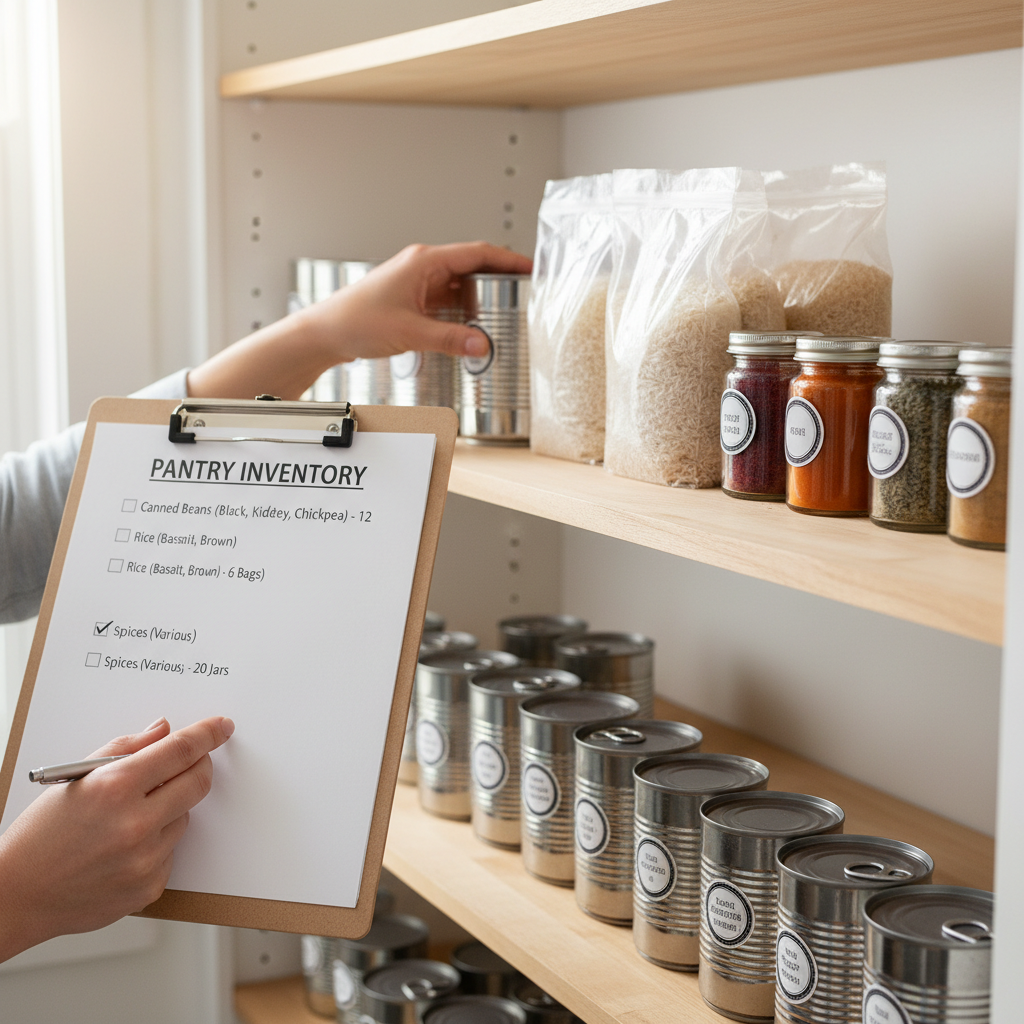
You wouldn’t go into a negotiation without knowing your position, and you don’t go into this challenge without a full audit of your assets. Your kitchen is your armory. It’s time to see what you’re working with.
Step 1: The Inventory Takedown
Get a notepad or open a new note on your phone. It’s time for a deep dive. Systematically go through your:
- Pantry: Every can, box, bag, and spice jar. Write it all down. How much rice is left? What kind of beans do you have?
- Fridge: Check every shelf and drawer. What produce needs to be used ASAP? What condiments are hiding in the back?
- Freezer: This is often a goldmine of forgotten food. Dig deep. That frozen chicken breast or bag of peas is money you’ve already spent.
This inventory isn’t just a list; it’s the foundation of your first week’s meal plan. The goal is to build your shopping list around what you already own.
Step 2: Master Your Core Staples Arsenal
Every frugal pro has a core list of high-versatility, low-cost staples that form the backbone of their cooking. These are the items you should always try to have on hand. They allow you to whip up a meal from almost nothing. Your mission is to build this arsenal over time.
| Category | Examples | Why It’s a Staple |
|---|---|---|
| Grains | Rice, Oats, Pasta, Quinoa | Cheap, filling, and a blank canvas for any meal. |
| Legumes | Lentils (all colors), Chickpeas, Black Beans | Incredibly cheap protein and fiber source. |
| Aromatics | Onions, Garlic, Ginger | The flavor base for 90% of savory dishes. Non-negotiable. |
| Oils & Vinegars | Vegetable/Canola Oil, Apple Cider Vinegar | Essential for cooking, dressings, and marinades. |
| Canned Goods | Diced Tomatoes, Tomato Paste, Coconut Milk | Shelf-stable and can transform a dish. |
| Spices | Salt, Pepper, Cumin, Paprika, Chili Powder | The key to making cheap ingredients taste amazing. |
The Playbook: Meal Planning Like a Grandmaster
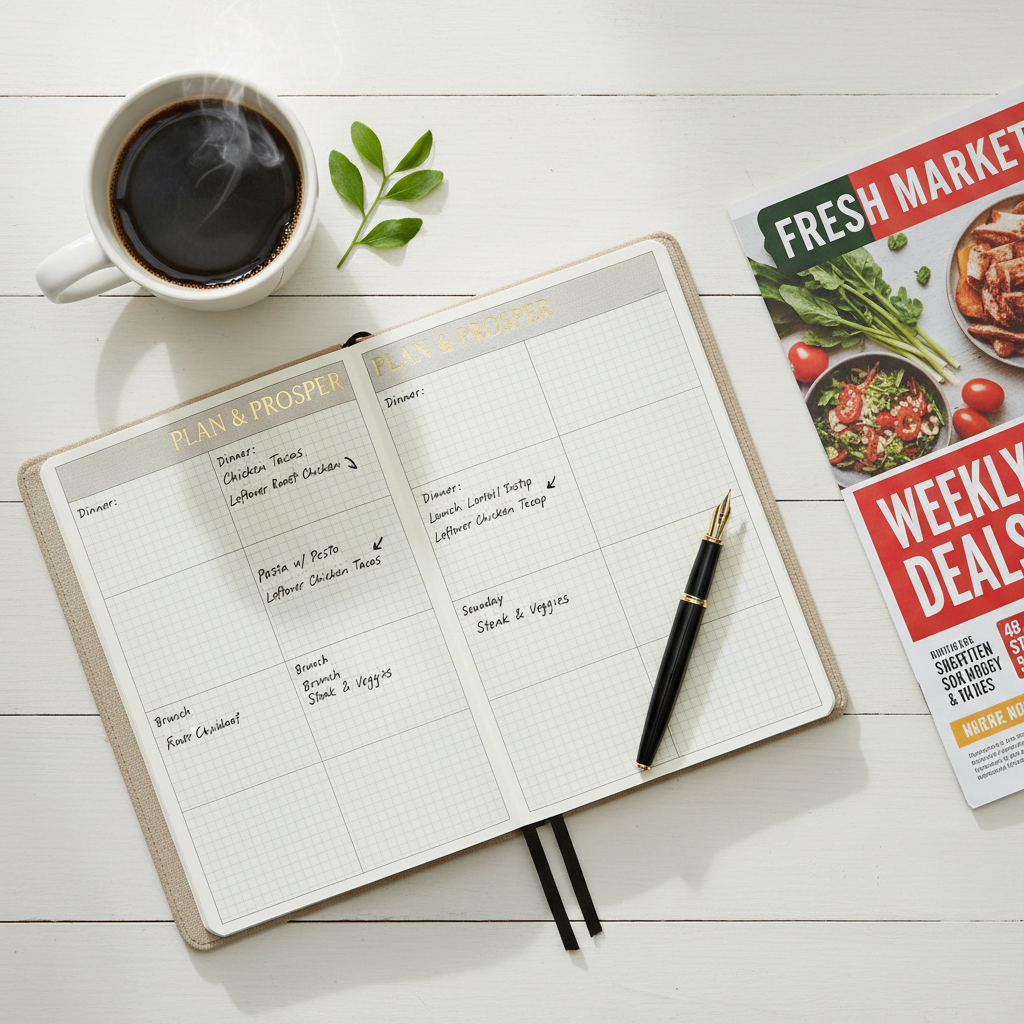
This is where the magic happens. A meal plan is not a prison; it’s your liberation from the daily ‘what’s for dinner?’ panic that leads to expensive takeout. With a plan, you’re in control.
Rule #1: Reverse-Engineer from the Sales Flyer
Amateurs decide what they want to eat and then go find the ingredients. Pros look at what’s on sale and build their meals around the deals. Grab the weekly flyers from your local stores (or use an app like Flipp) before you plan anything. Chicken thighs are $0.99/lb? Guess what’s on the menu. Broccoli is half-price? You’re having broccoli. Let the deals dictate your diet.
Rule #2: The ‘Cook Once, Eat Thrice’ Method
Never cook a single-serving meal again. It’s a massive waste of time and energy. Think in batches. If you’re cooking, make enough for leftovers.
- Night 1: Roast a whole chicken with potatoes and carrots.
- Night 2: Shred the leftover chicken for tacos or quesadillas.
- Night 3: Use the chicken carcass to make a simple broth, then add leftover veggies and some pasta for a hearty soup.
That’s three distinct meals from one main ingredient. This is the efficiency mindset in action.
Sample $50/Week Meal Plan (Based on Sales)
Here’s a realistic example of what a week could look like. Note how ingredients are used multiple times.
| Day | Breakfast | Lunch | Dinner |
|---|---|---|---|
| Monday | Oatmeal with Banana | Leftover Lentil Soup | Black Bean Burgers on Buns with a Side Salad |
| Tuesday | Scrambled Eggs | Leftover Black Bean Burgers | Pasta with Tomato Sauce and Sautéed Zucchini |
| Wednesday | Oatmeal with Banana | Leftover Pasta | Large Batch Lentil Soup with a side of Bread |
| Thursday | Scrambled Eggs | Leftover Lentil Soup | Chicken & Veggie Stir-fry with Rice (using sale chicken) |
| Friday | Oatmeal with Banana | Leftover Stir-fry | Homemade Pizza on Naan/Pita Bread |
| Saturday | Scrambled Eggs | Big Salad with Chickpeas & Leftover Chicken | ‘Clean Out the Fridge’ Frittata |
| Sunday | Pancakes (from pantry staples) | Leftover Frittata | Rice and Beans with Sautéed Onions & Peppers |
The Heist: Conquering the Grocery Store

You’ve got your mindset right and your plan in hand. Now it’s time for execution. The grocery store is a battlefield designed to make you spend more than you intend. But you’re coming prepared.
The Golden Rules of Engagement
- Never Shop Hungry: This is rule number one for a reason. A hungry brain makes impulsive, expensive decisions. Eat a snack before you go.
- The List is Law: You made a list for a reason. Stick to it. If it’s not on the list, it doesn’t go in the cart. End of story. This single rule will save you a fortune.
- Shop the Perimeter: Most stores are designed with fresh produce, meat, and dairy along the outer walls, and the expensive, processed stuff in the middle aisles. Do a lap of the perimeter first to load up on whole foods.
- Unit Price is Your North Star: Ignore the big, bright sale price. Look for the tiny price-per-ounce or price-per-unit on the shelf tag. The bigger box isn’t always cheaper. This is the ultimate truth-teller in the grocery aisle. Do the quick math.
Brand Loyalty is for Suckers
Unless you have a very specific dietary need or a genuine, massive taste preference, brand loyalty is costing you money. Store brands (generics) are often made in the same factories as the name brands and are significantly cheaper. Challenge yourself to try one new generic item each week. You’ll find that in most cases, you can’t even tell the difference.
| Product | Brand Name Price (Example) | Store Brand Price (Example) | Potential Savings |
|---|---|---|---|
| Canned Diced Tomatoes (14.5 oz) | $1.89 | $0.89 | $1.00 (53%) |
| Black Beans (15 oz can) | $1.59 | $0.79 | $0.80 (50%) |
| Shredded Cheddar Cheese (8 oz) | $4.29 | $2.99 | $1.30 (30%) |
| Pasta (16 oz box) | $2.19 | $1.19 | $1.00 (46%) |
Scam Warning: Watch out for ‘shrinkflation.’ That’s when a company keeps the price the same but reduces the amount of product in the package. This is another reason why checking the unit price is non-negotiable.
The Math: Seeing the Savings Stack Up
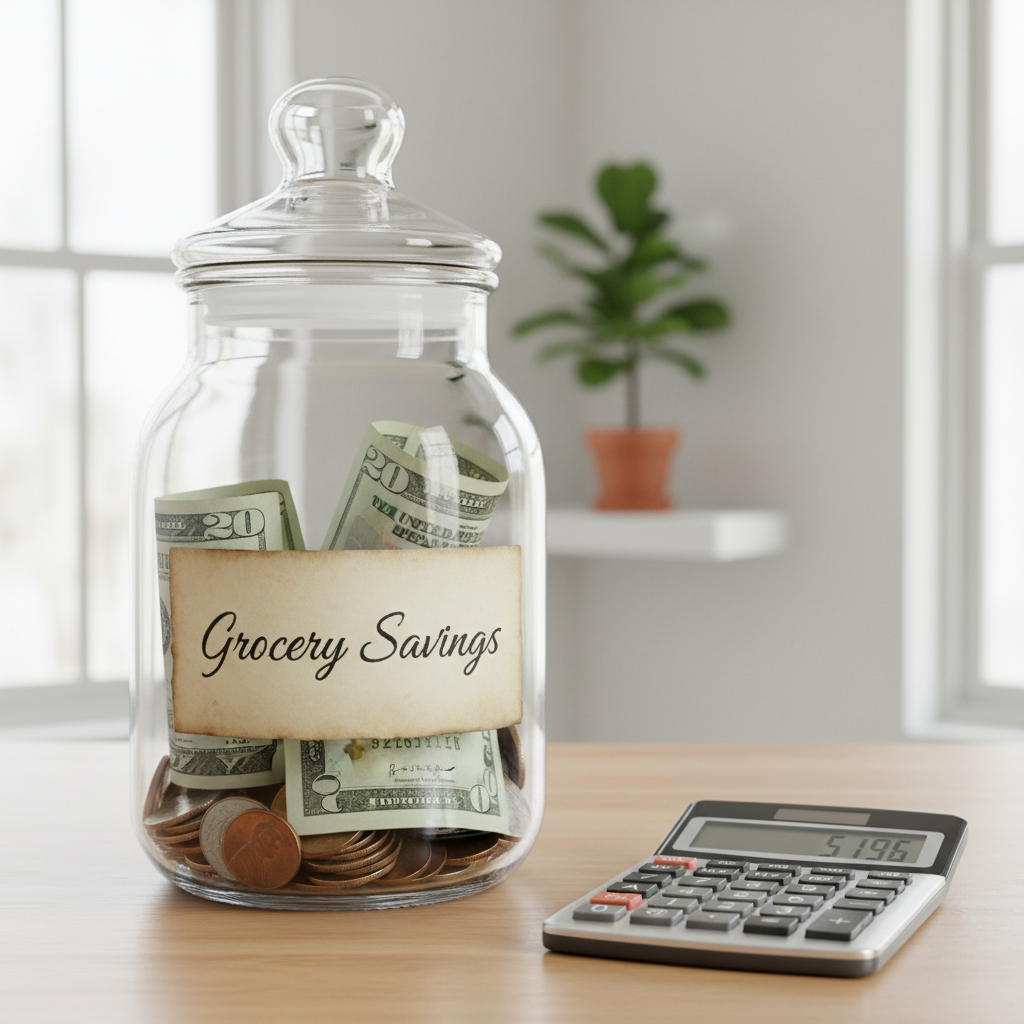
Let’s talk numbers. This isn’t just about feeling good; it’s about a tangible impact on your financial future. People often underestimate the power of small, consistent savings. We’re about to change that.
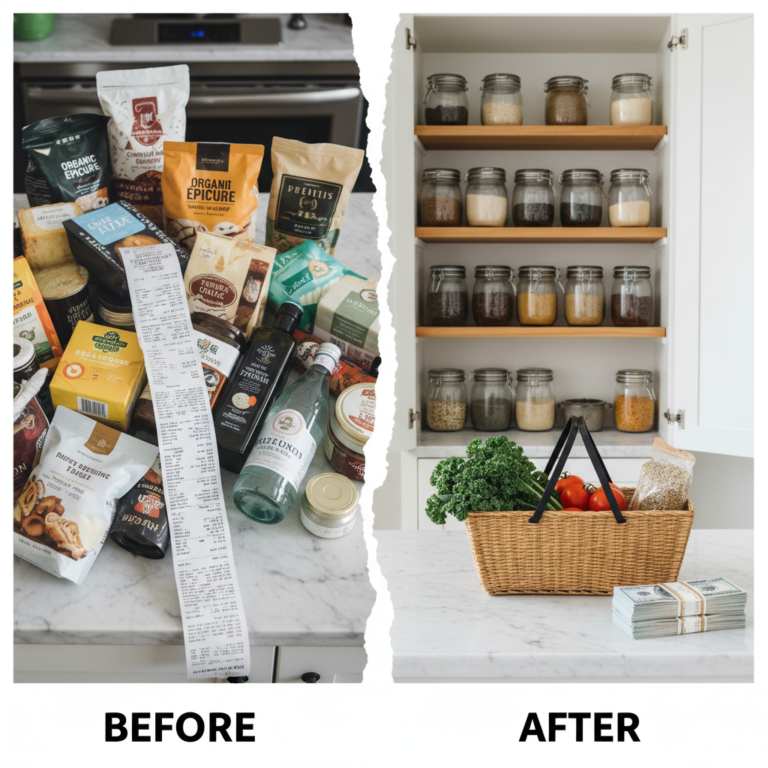
Let’s assume a conservative ‘before’ scenario. Maybe you and a partner, or just you with less discipline, were spending about $150 per week on groceries. That’s not an extravagant number for many households.
The Weekly Payoff
Your old weekly bill was $150. Your new, strategic weekly bill is $50. The math is simple, but the impact is profound.
$150 (Old Habit) – $50 (New Strategy) = $100 in your pocket. Every. Single. Week.
That’s not a one-time win. That’s a recurring dividend you pay yourself for being smart.
The Annual Windfall
Now, let’s zoom out. What does that $100 per week look like over the course of a year? This is where it gets exciting. This is where you start funding your goals, not just your groceries.
| Timeframe | Savings Calculation | Total Saved | What That Money Could Be |
|---|---|---|---|
| Per Week | – | $100 | A nice dinner out, guilt-free. |
| Per Month | $100 x 4.33 weeks | $433 | A car payment, a student loan payment, a big chunk of a credit card bill. |
| Per Year | $433 x 12 months | $5,196 | A maxed-out Roth IRA contribution, a down payment on a car, an incredible vacation, wiping out a high-interest debt. |
Look at that number again: over $5,000 a year. That’s life-changing money. It’s the difference between feeling stuck and feeling empowered. And it’s all unlocked by changing the way you approach one simple task: buying food. This isn’t about being cheap. This is about reallocating your resources from a corporate grocery chain’s bottom line directly into your own future.
Conclusion
The $50/Week Grocery Challenge is more than a budget; it’s a declaration of independence. It’s proof that you don’t need a six-figure salary to eat well and build wealth. All you need is a strategy, a little bit of planning, and the will to execute.
We’ve covered the entire playbook: shifting your mindset from scarcity to resourcefulness, auditing your kitchen like a CFO, planning your meals like a strategist, and executing your shopping trip like a covert operation. You’ve seen the math—this isn’t about saving a few pennies; it’s about unlocking thousands of dollars a year to fund your real goals.
Now it’s your turn. Don’t just read this and think ‘that’s a nice idea.’ Take action. Challenge yourself for one week. Just one. Use the principles. Make a plan. Stick to the list. See how it feels to walk out of that store with a full cart and a full wallet. You have nothing to lose except a massive, soul-crushing grocery bill. You’ve got this.