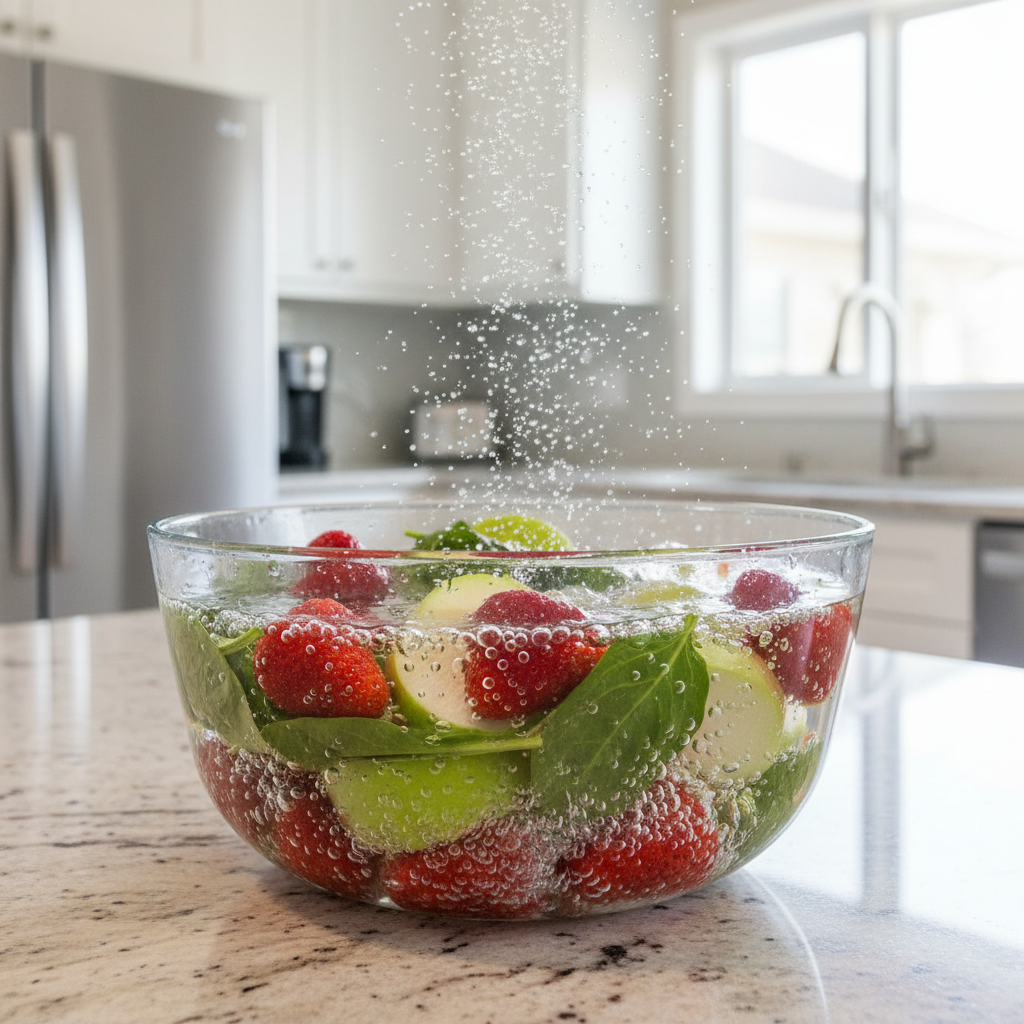
Is Your Fruit Actually Clean? The DIY Veggie Soak That Removes Pesticides Cheaply
You grab that shiny apple, give it a quick rinse under the tap, and take a bite. You think it’s clean, right? Think again. That quick splash of water is doing next to nothing against the cocktail of pesticides, waxes, and grime clinging to your favorite fruits and veggies. We’ve all seen the ‘Dirty Dozen’ lists that make us paranoid about what we’re eating, pushing us toward the organic aisle where prices are jacked up.
Then you see them: the fancy ‘fruit and veggie washes’ promising to dissolve all the bad stuff for a premium price. Let’s be real—that’s just another way for companies to drain your wallet. You’re a frugal hacker, a savvy shopper. You know there has to be a better way. And there is. Forget paying a premium for clean food. The most powerful, effective, and ridiculously cheap solution is probably already sitting in your pantry. It’s time to stop guessing if your food is clean and take control. This is the ultimate guide to the DIY veggie soak that will protect your health and your bank account.
The Grimy Truth: Why a Simple Rinse Isn’t Cutting It
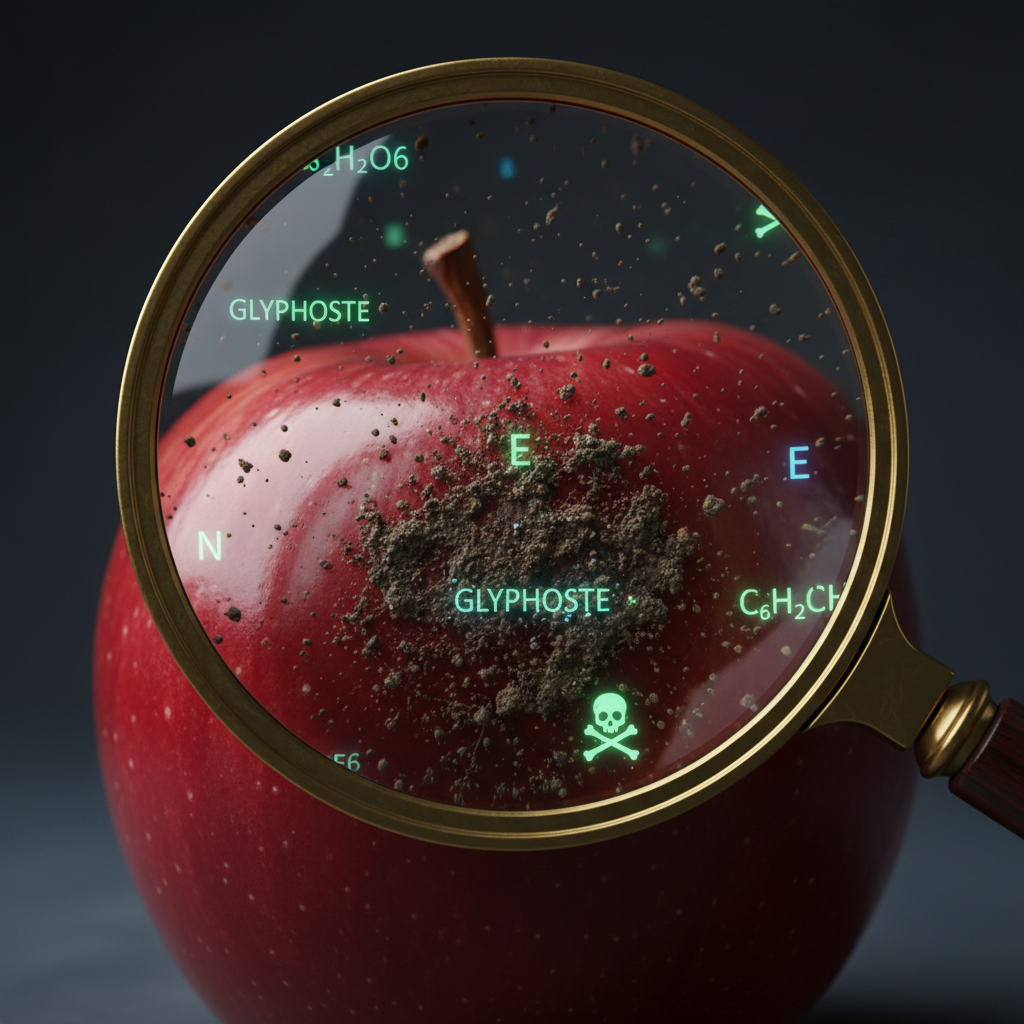
Listen up, because this is the part they don’t want you to think about. That beautiful, perfect-looking produce has been on a long journey to get to your kitchen, and it’s picked up a lot of baggage along the way. We’re not just talking about a little dirt. We’re talking about a stubborn, invisible layer of gunk that a simple rinse can’t touch.
What’s Really on Your Food?
When you rinse a piece of fruit, you might get off some loose soil, but you’re leaving the real enemies behind. Here’s the deal:
- Pesticides: Farmers use these to protect crops, but residues stick around. Some are designed to be water-resistant so they don’t wash off in the rain. That means your tap water isn’t going to faze them. We’re talking about chemicals that you definitely don’t want to be ingesting with your morning smoothie.
- Waxes: See that high-gloss shine on your apple or cucumber? That’s not natural. It’s a food-grade wax applied to preserve freshness and improve appearance. While it’s considered ‘safe,’ this wax also traps pesticides and bacteria underneath it, sealing them against the skin.
- Bacteria and Pathogens: From the field to the truck to the grocery store shelf, countless hands have touched your produce. It’s been exposed to everything, picking up bacteria like Salmonella, E. coli, and Listeria along the way. A quick rinse is like trying to put out a fire with a squirt gun.
- Fungicides: Especially on fruits like berries and grapes, fungicides are used to prevent mold during transport. These chemicals are designed to stick, and they’re not coming off without a fight.
The bottom line is that water alone is an amateur move. It just rolls off the waxy, chemical-laden surface. To truly clean your produce, you need to change the game. You need a solution that can break down and lift away the grime, not just give it a gentle bath. This isn’t about being a germaphobe; it’s about being smart and taking a simple step to reduce your exposure to a whole lot of stuff you don’t need in your body.
The Frugal Fix: Your 2-Ingredient DIY Veggie Soak Recipe
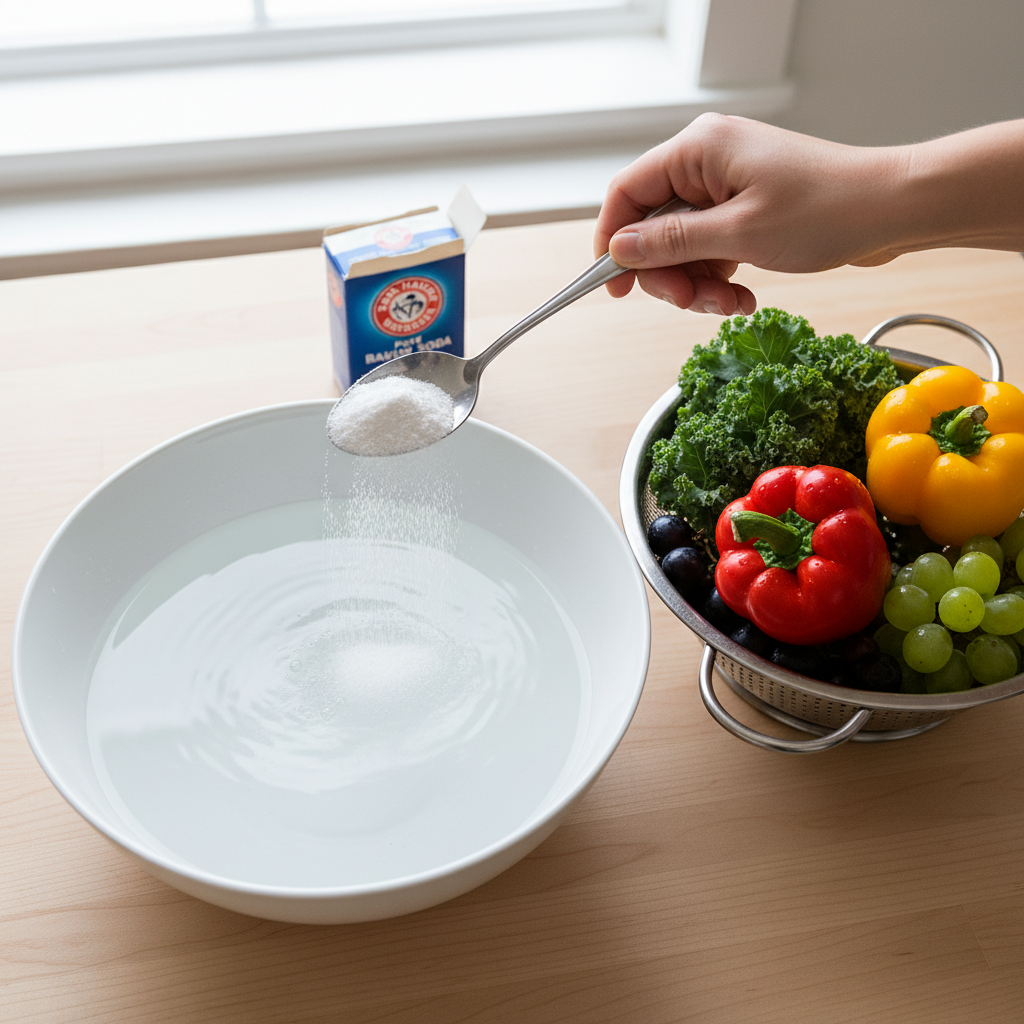
Alright, let’s get to the hack that will change how you eat forever. No more overpriced, chemical-filled sprays. This is the street-smart solution that costs pennies and works better than the fancy stuff. The secret weapon? Baking soda.
Why Baking Soda is Your Best Friend
It’s not magic; it’s simple science. Baking soda (sodium bicarbonate) is alkaline. When you mix it with water, it creates a solution that helps to neutralize and break down many common pesticides, which are often acidic. It effectively scrubs away the gunk on a molecular level, something plain water just can’t do. It’s cheap, it’s safe, and it’s brutally effective.
The Step-by-Step Playbook
- Get Your Gear: You don’t need a lab. Just grab a large bowl (or just use a clean sink), your box of baking soda, and a colander.
- The Magic Ratio: There’s no need to be super precise. A good rule of thumb is 1 to 2 teaspoons of baking soda for every 4 cups (1 liter) of water. For a sink-full, you might use a few tablespoons.
- Mix & Dissolve: Fill your bowl or sink with cool water. Add the baking soda and swish it around with your hand until it’s mostly dissolved.
- Add Your Produce: Submerge your fruits and veggies in the solution. Make sure they have room to float around and aren’t packed in too tightly. Works great for leafy greens like spinach, sturdy fruits like apples, and delicate items like berries.
- Let It Soak: This is the most important step. Let everything soak for 12 to 15 minutes. Go do something else. Let the baking soda work its magic. You might even see the water get a little cloudy—that’s the gunk you would have eaten.
- Rinse & Dry: After soaking, transfer the produce to a colander and give it a thorough final rinse under cool running water to wash off any remaining residue and baking soda. Pat dry with a clean towel or let them air dry.
The Golden Rule: Don’t rush the soak. The 12-15 minute timeframe is crucial for the baking soda to effectively break down pesticide residues. Set a timer and walk away.
The Cost Breakdown: DIY vs. Store-Bought Veggie Wash
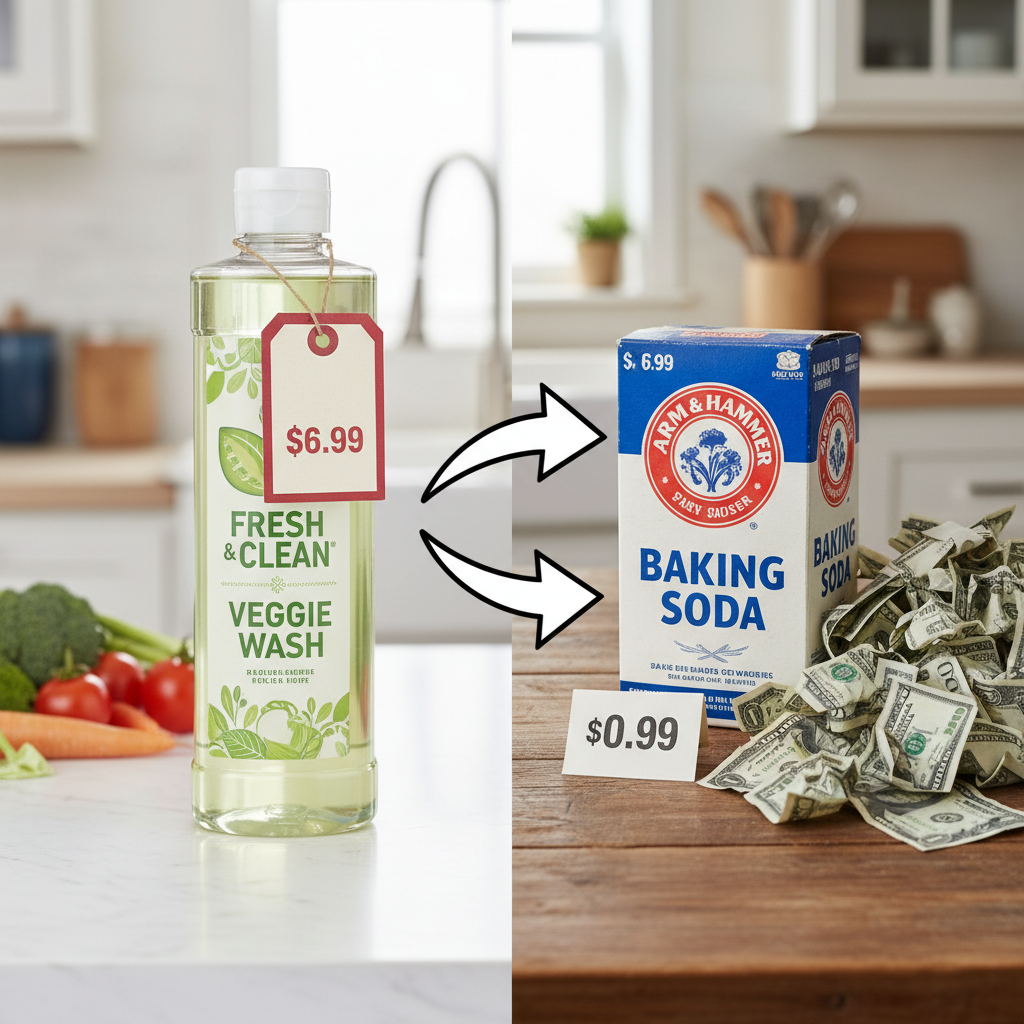
Now for the part that really hits home for any frugal living enthusiast: the math. Companies have built an entire industry on convincing you that you need their special, proprietary formulas to eat clean. Let’s pull back the curtain and see how much you’re overpaying for what is essentially soapy, scented water. We’re going to compare our DIY baking soda soak to a typical 16 oz bottle of commercial veggie wash.
The numbers don’t lie. This isn’t just about saving a few cents; it’s about reclaiming a significant chunk of your grocery budget over time.
| Metric | DIY Baking Soda Soak | Store-Bought Veggie Wash |
|---|---|---|
| Cost of Ingredient | Approx. $1.00 for a 1lb (453g) box of baking soda | Approx. $6.99 for a 16oz (473ml) bottle |
| Amount per Wash | 1 tsp (approx. 4g) | 1 tbsp (approx. 15ml) – typical suggested use |
| Washes per Unit | About 113 washes per box | About 31 washes per bottle |
| Cost Per Wash | Less than $0.01 | About $0.23 |
| Annual Cost (Washing produce 5x/week) | $2.34 per year (260 washes x $0.009) | $59.80 per year (260 washes x $0.23) |
The Annual Savings: $57.46
That’s right. By switching from a store-bought wash to a simple box of baking soda, you’re saving nearly $60 a year. That’s money you could use for a couple of nice meals out, an extra tank of gas, or to boost your savings account. It’s a classic frugal hack: a tiny change in habit that yields real, tangible savings without sacrificing quality or effectiveness. In fact, you’re arguably using a better, more proven method. Stop paying the marketing tax and keep that cash for yourself.
Beyond the Soak: Smart Habits for Cleaner, Safer Produce
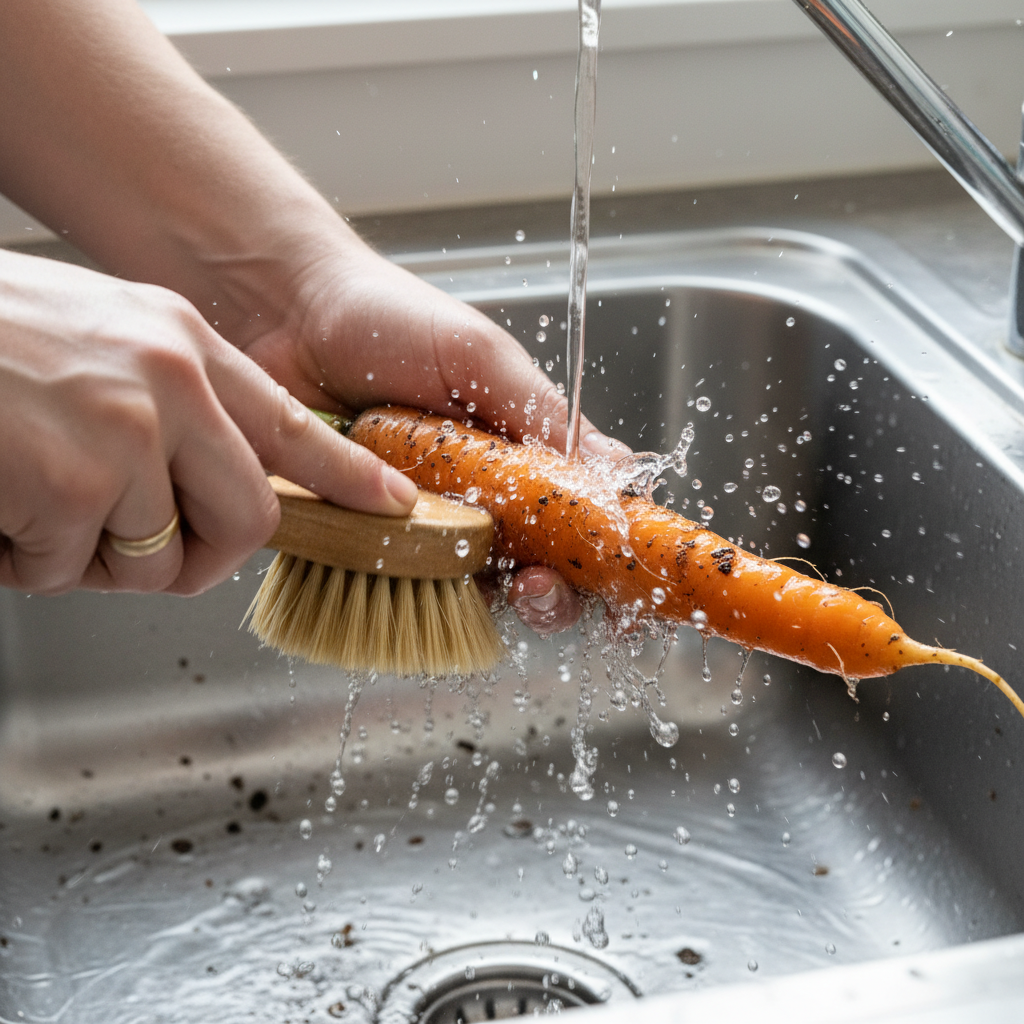
The baking soda soak is your heavy hitter, but to become a true master of clean eating on a budget, you need a few more plays in your book. These are the pro-level habits that ensure you’re getting the most out of your produce while keeping your family safe.
- Invest in a Brush: For anything with a tough skin—potatoes, carrots, melons, cucumbers—a dedicated vegetable brush is your best friend. After soaking, give them a good scrub under running water to physically dislodge any stubborn dirt or wax. It costs a couple of bucks and will last for years.
- Wash Before You Cut: This is a critical rule most people ignore. If you cut into a dirty fruit or vegetable, the knife drags all the bacteria and pesticides from the surface right into the flesh you’re about to eat. Always wash and dry everything *before* the knife ever touches it.
- Don’t Skip ‘Organic’: Just because you paid a premium for organic doesn’t mean it’s clean. It’s still been grown in soil, harvested, and handled by many people. It won’t have synthetic pesticides, but it can still have organic pesticides, dirt, and bacteria. Give your organic produce the same soak treatment.
- Wash Your Hands First: Seems obvious, but it’s easy to forget. Before you even start prepping your food, wash your hands thoroughly with soap and water. You don’t want to be the one contaminating your own food.
- Dry Your Produce Properly: Bacteria love moisture. After washing, pat your produce dry with a clean cloth or paper towel, especially leafy greens. This not only removes more contaminants but also helps your produce last longer in the fridge. For greens, a salad spinner is a fantastic frugal investment.
These aren’t complicated steps. They’re simple, smart habits that become second nature. By combining these tactics with your DIY soak, you’re building a bulletproof system for cleaner food without spending a dime on useless products.
Scam Warning: What to Avoid in the Produce Aisle & Online

The ‘wellness’ industry is full of traps for people trying to do the right thing. They prey on your desire for health and safety, charging you a premium for peace of mind. Here’s how you can spot the scams and keep your money in your pocket.
The ‘All-Natural’ Spray Rip-Off
You’ll see bottles filled with ‘natural’ ingredients like citrus extracts or sea salt. Flip that bottle over and look at the price. You’re paying $5 to $10 for what is essentially water with a drop of lemon oil. While not harmful, they are nowhere near as effective as a proper baking soda soak at removing pesticides and they cost hundreds of times more. Don’t pay for marketing hype.
Gimmicky Gadgets and Devices
Scroll online and you’ll find them: ultrasonic fruit cleaners, ozone water purifiers, and other high-tech gadgets promising to zap your produce clean. These are often expensive, unproven, and completely unnecessary. They are a solution in search of a problem, designed to separate you from your cash. Your simple bowl and baking soda method is backed by more practical evidence than these overpriced kitchen ornaments.
CRITICAL WARNING: Never Use Soap, Detergent, or Bleach!
This is a dangerous myth that needs to be busted. Never, ever use dish soap, hand soap, or bleach to wash your produce. These products are not meant for consumption. The porous nature of fruits and vegetables can absorb these chemicals, leading to nausea, stomach issues, or worse. Stick to simple, food-safe ingredients like baking soda or even white vinegar (though studies show baking soda is more effective for pesticides).
Your street smarts are your best defense. If a product seems too good to be true or costs way more than a simple, common-sense alternative, it’s almost always a scam. Trust the simple, effective, and cheap solution you can control yourself.
Conclusion
You now have the knowledge and the playbook to take charge of what’s on your plate. The days of wondering if your food is truly clean, or overspending on useless products, are over. For the cost of a single box of baking soda—less than a cup of coffee—you’ve unlocked a year’s worth of powerful, effective produce cleaning. This isn’t just about removing pesticides; it’s a mindset. It’s about refusing to pay the ‘convenience tax’ on things you can easily and better do yourself. It’s about being smarter with your money and more deliberate about your health.
So next time you’re in the grocery store, walk right past those fancy veggie washes with a smirk. You know the secret. You have the power to protect your health and your wallet with a simple, honest, and effective hack. Stop paying for marketing and start investing in yourself. Your body and your bank account will thank you.