

Is Debt Consolidation a Trap? What Beginners Need to Know Before Signing
Let’s get real. Staring at a mountain of credit card bills feels like you’re trying to breathe underwater. Every month, you throw money at them, but the balances barely budge thanks to killer interest rates. It’s exhausting, stressful, and makes you feel like you’re failing. Then you see an ad: “One Easy Monthly Payment! Consolidate Your Debt Today!” It sounds like a lifeline.
But here’s the street-smart truth: debt consolidation isn’t a get-out-of-jail-free card. It’s a financial tool. And like any powerful tool, if you use it wrong, you can do some serious damage. For every person it helps escape the debt cycle, another falls into a deeper trap. So, how do you make sure you’re one of the success stories? You arm yourself with knowledge. We’re about to cut through the marketing hype and break down exactly what debt consolidation is, when it’s a brilliant move, and when it’s a trap waiting to spring.
The No-BS Breakdown: What is Debt Consolidation, Really?
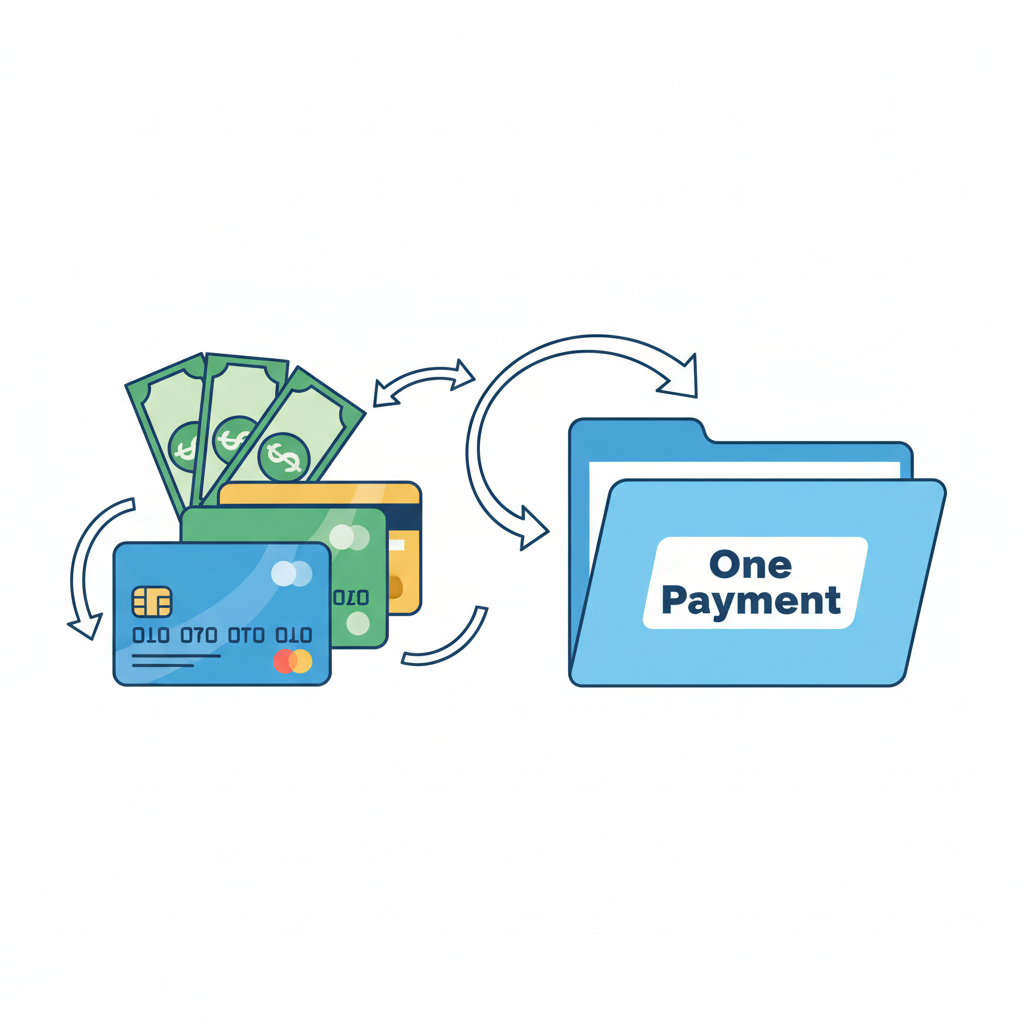
Forget the fancy bank jargon. At its core, debt consolidation is just trading a bunch of messy, expensive debts for one single, simpler loan. Think of it like this: you have five different grocery bags, each with a few heavy items. It’s awkward and you might drop something. Consolidation is like getting one big, sturdy shopping cart to put everything into. It’s all still your stuff, and you still have to get it home, but it’s a hell of a lot easier to manage.
You’re taking out a new loan to pay off your old debts. The goal is to get a lower interest rate on that new loan than the average rate you were paying on all your old debts (especially high-interest credit cards). If you can do that, you save money and can get out of debt faster.
The Main Ways to Consolidate:
- Personal Loans: This is the most common route. You get a lump sum of cash from a bank, credit union, or online lender to pay off your credit cards. You then have a fixed monthly payment for a set number of years. It’s clean and straightforward.
- Balance Transfer Credit Cards: Some cards offer a 0% introductory APR for 12, 18, or even 21 months. You transfer your high-interest balances to this new card and attack the principal debt interest-free. But watch out for transfer fees (usually 3-5%) and that sky-high interest rate that kicks in when the promo period ends.
- Home Equity Loan or HELOC: This involves borrowing against the value of your home. The interest rates are often very low, which is tempting. BUT THIS IS A HUGE RISK. You are turning unsecured debt (like credit cards) into secured debt. If you screw up and can’t make the payments, the bank can take your house. Tread very, very carefully here.
The Upside: When Consolidation is a Smart Money Move

When done right, debt consolidation can feel like a massive weight has been lifted off your shoulders. It’s not just about the numbers; it’s about reclaiming your peace of mind. Here’s when it works like a charm.
You Score a Lower Interest Rate (The Real Win)
This is the number one reason to consolidate. If you can’t lower your overall interest rate, it’s probably not worth it. A lower rate means more of your payment goes toward the actual debt, not just feeding the bank’s profit margin. Let’s look at the math.
| Debt Type | Balance | Interest Rate (APR) | Monthly Payment |
|---|---|---|---|
| Credit Card 1 | $5,000 | 22% | $150 |
| Credit Card 2 | $3,500 | 25% | $110 |
| Store Card | $1,500 | 29% | $60 |
| TOTALS (Before) | $10,000 | ~24% (Avg) | $320 |
Now, let’s say you get a personal loan to consolidate that $10,000.
| Consolidation Scenario | New Loan Details | Total Interest Paid | Savings |
|---|---|---|---|
| Before Consolidation | Paying minimums over many years | ~$8,500+ | $0 |
| After Consolidation | $10,000 loan at 11% APR over 5 years ($217/mo) | ~$3,040 | ~$5,460+ |
Look at that. You’re not just simplifying your life with one payment; you’re potentially saving over $5,000 in interest and paying it off years sooner. That’s a game-changer.
You Get a Fixed Payoff Date
Credit cards are designed to keep you in debt forever. It’s called revolving debt for a reason. A consolidation loan is an installment loan—it has a clear finish line. Knowing your debt will be 100% gone in 3, 4, or 5 years is incredibly empowering.
The Red Flags: How Debt Consolidation Becomes a Trap

Alright, time for the tough love. Debt consolidation can go sideways fast if you’re not careful. It’s a tool for a disciplined person, not a magic wand for a spending problem. Here’s how people get trapped.
The ‘More Room to Spend’ Illusion
This is the single biggest trap. You pay off all your credit cards with the loan. Suddenly, you have $10,000 of available credit again. It feels like you have more money. So you start swiping again for small things… a coffee here, a new pair of shoes there. Before you know it, you’ve racked up thousands in new debt. Now you have the consolidation loan payment AND new credit card payments. You’ve doubled your problem. Consolidation is useless if you haven’t fixed the habits that got you into debt in the first place.
Origination Fees & Hidden Costs
That shiny low interest rate isn’t always the whole story. Many personal loans come with an “origination fee,” which is a percentage of the loan amount taken right off the top. A 5% fee on a $20,000 loan means you only get $19,000 in your bank account, but you owe the full $20,000 plus interest. That’s $1,000 gone instantly. You have to factor this cost in to see if you’re really saving money.
Stretching Out the Loan Term
Sometimes, a lender will offer you a super low monthly payment by stretching the loan out over a very long term, like 7 years. Your monthly cash flow might feel better, but you could end up paying way more in total interest over the life of the loan, even if the rate is lower. Always calculate the total cost, not just the monthly payment.
Scam Warning: Spotting the Sharks in the Water

The debt relief industry is full of predators who prey on people in desperate situations. They talk a good game, but they’re just there to take your money and leave you worse off. You need to be able to spot them from a mile away.
Key Rule: Legitimate lenders will never ask you to pay fees upfront before you’ve been approved for and received a loan. If a company demands money for ‘insurance’ or ‘processing’ before the deal is done, it’s a scam. End the call. Block the number.
Here are other major red flags of a predatory debt consolidation company:
- Guaranteed Approval: No legitimate lender can guarantee approval without checking your credit and income. This is a classic bait-and-switch tactic.
- High-Pressure Sales Tactics: If they say the “offer is only good for today” or pressure you to sign documents you haven’t had time to read, they’re hiding something. A good deal will still be there tomorrow.
- Vague or Hidden Fees: They should be able to clearly and simply explain every single fee. If they can’t, or if the contract is confusing, walk away.
- Asking for Sensitive Info via Email/Text: Be very wary of providing your Social Security number or bank account information through insecure channels. Work with established, reputable institutions.
Stick with well-known banks, your local credit union, or highly-rated online lenders with a long track record of positive reviews.
The Real Fix: Your Action Plan Before You Sign Anything

Thinking about consolidating? Hold on. Don’t even start shopping for loans until you complete this non-negotiable action plan. This is how you ensure the tool works for you, not against you.
- Face the Numbers: You can’t fix a problem you don’t understand. Make a list of every single debt you have. The creditor, the total balance, the interest rate, and the minimum payment. All of it. Seeing the full picture, as scary as it is, is the first step to taking control.
- Build a ‘Stop the Bleeding’ Budget: You MUST know where your money is going. Track your spending for a month. A consolidation loan won’t help if you have a spending leak. Cut out everything non-essential until you have a handle on your cash flow. The goal is to spend less than you earn. No exceptions.
- Shore Up Your Credit: Before you apply, get a free copy of your credit report. Dispute any errors. Make sure you haven’t missed any payments recently. A higher credit score unlocks better interest rates, which is the whole point of this exercise.
- Shop Around Smartly: Don’t just jump at the first offer. Check rates with at least three to five different lenders. Start with your local credit union, as they often have great rates. Then check reputable online lenders. Many have pre-qualification tools that use a ‘soft’ credit pull, which won’t hurt your score, to show you what rates you might qualify for.
- Read Every. Single. Word.: When you get a loan offer, read the entire contract. I know it’s boring, but this is your money and your future. Look specifically for the APR (the real interest rate), origination fees, and any prepayment penalties (a fee for paying the loan off early). If you don’t understand something, ask until you do.
Conclusion
So, is debt consolidation a trap? The answer is no… and yes. It’s not a trap if you are in the driver’s seat. It’s a trap if you think it’s a self-driving car that will magically get you to financial freedom. The loan itself is neutral. It’s a tool. It becomes a lifesaver when it’s paired with a solid budget, changed spending habits, and a fierce commitment to getting out of debt for good. It becomes a nightmare when it’s used as an excuse to rack up more debt.
The power is in your hands. By doing your homework, understanding the risks, and fixing the root cause of your debt, you can use consolidation to build a bridge to a better financial future, not dig a deeper hole. You’ve got this.
Disclaimer: I am not a financial advisor. This article is for informational and educational purposes only and does not constitute financial advice. Please consult with a qualified financial professional before making any major financial decisions.