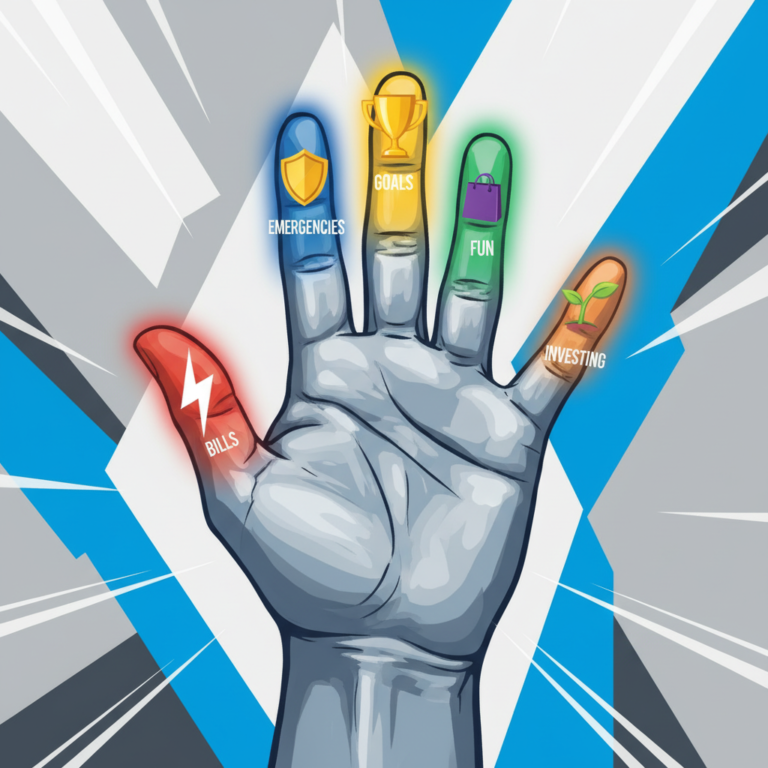

How To Survive When You’re Broke: The Ultimate Low Income Survival Guide
Let’s get one thing straight: being broke sucks. It’s a heavy weight of stress, anxiety, and a constant, nagging fear in the back of your mind. The world keeps spinning, bills keep coming, and it feels like you’re drowning. But here’s the truth they don’t tell you in inspirational quotes—this is a situation, not your identity. It’s a problem to be solved, and you, my friend, are a problem solver.
This isn’t another guide full of useless advice like ‘just stop buying lattes.’ We’re past that. This is a financial triage guide. A street-smart survival plan. We’re going to stop the bleeding, patch the wounds, and build a strategy that not only gets you through this but makes you financially tougher and smarter on the other side. Forget the shame and embarrassment. It’s time to get tactical, get tough, and take back control of your money, one dollar at a time. Let’s get to work.
Triage Your Finances: The Brutal First Steps

When you’re financially bleeding out, you don’t start by planning a marathon; you find the wound and apply pressure. That’s what we’re doing right now. This is about radical honesty and immediate action. No more hiding from the numbers.
Step 1: The Spending Freeze
Effective immediately, you are on a spending freeze. This means zero non-essential spending. No takeout, no subscriptions you don’t absolutely need for work, no ‘little treats.’ We’re talking survival mode. Go through your bank statements and cancel every single subscription you can live without. That gym membership you don’t use? Gone. The five streaming services? Pick one, or better yet, use a free service like Tubi or Freevee for a month. This isn’t forever, it’s for now.
Step 2: Know Your Enemy
You can’t fight what you can’t see. Grab a piece of paper, a notebook, or a spreadsheet and draw two columns: Money In and Money Out. Be brutally honest.
| Money In (Monthly) | Money Out (Monthly) |
|---|---|
| Paycheck 1: $950 | Rent: $1200 |
| Paycheck 2: $950 | Electric: $150 |
| Side Hustle: $120 | Phone: $80 |
| Total In: $2020 | Car Payment + Insurance: $450 |
| Groceries: $400 | |
| Credit Card Minimum: $120 | |
| Student Loan: $250 | |
| Total Out: $2650 |
Seeing a deficit like this (-$630) is terrifying, but it’s also your battle plan. Now you know exactly how big the gap is that you need to fill.
Step 3: The ‘Four Walls’ Rule
Your money has one job right now: protect your four walls. In this order of priority: 1. Food, 2. Utilities, 3. Shelter, and 4. Basic Transportation. These are the things you must pay to survive. Credit card bills, old medical debt, student loans? They get in line. They are not more important than keeping the lights on and a roof over your head. This might mean making minimum payments, or it might mean making a tough phone call.
Step 4: Make the Call
Your creditors don’t want you to default. It’s expensive and messy for them. They would rather get something than nothing. It’s time to pick up the phone, swallow your pride, and negotiate. Use this script:
Hi, my name is [Your Name] and my account number is [Account Number]. I’m calling because I’m experiencing a temporary financial hardship and I will not be able to make my full payment. I want to be proactive and work with you to find a solution. Can we discuss my options, such as a temporary forbearance or a reduced payment plan?
They might not always say yes, but you lose nothing by asking. Document who you spoke to and what was agreed upon. This single action can free up critical cash flow.
Slash Your Big Three: Housing, Food, & Transportation

The bulk of your income is devoured by three things: where you live, what you eat, and how you get around. Shaving just 10-20% off these categories is like giving yourself a massive raise. It’s time to get surgical.
Housing Hacks
Your rent or mortgage is probably your biggest expense. If you’re renting, don’t assume the price is non-negotiable, especially if you’re a good tenant. When your lease is up for renewal, do some research. Are similar units in your area going for less? Use that as leverage. If you can’t move, consider getting a roommate or renting out a spare room on a platform like SpareRoom. The temporary inconvenience could save you $500-$800 a month.
The Grocery Gauntlet
Your mission is to get your food bill down to its bare bones without surviving on ramen alone. This means a military-style approach to groceries.
- Meal Plan, No Exceptions: Plan every single meal for the week. This eliminates impulse buys and food waste.
- Shop the Perimeter: Stick to the outer edges of the store where the whole foods are—produce, dairy, meat. The processed, expensive stuff lives in the center aisles.
- Unit Pricing is Your Bible: Ignore the big price tag. Look at the price per ounce/gram on the shelf tag. The bigger box isn’t always cheaper.
- Go Generic: For staples like pasta, canned tomatoes, rice, and oats, the store brand is often identical to the name brand, for a fraction of the cost.
| Expense Item | Typical Shopper Cost | Frugal Hacker Cost | Monthly Savings |
|---|---|---|---|
| Name-Brand Cereal | $5.50 | Generic Oats: $3.00 | $2.50 |
| Pre-made Salads | $12.00 (2x per week) | DIY Salad Ingredients: $7.00 | $5.00 |
| Snack Packs | $6.00 | Bulk Carrots/Apples: $4.00 | $2.00 |
| Coffee Shop Runs | $50.00 | Brew at Home: $10.00 | $40.00 |
| Weekly Total | $125.00+ | $75.00 | $50.00+ |
A savings of $50 a week is $200 a month, or $2,400 a year. That’s not chump change; that’s an emergency fund.
Transportation Takedown
Your car is a money pit. Insurance, gas, maintenance, payments—it’s a constant drain. If you live in an area with decent public transit, do the math. A $100 monthly bus pass vs. a $400 car payment, $150 in insurance, and $200 in gas is a no-brainer. That’s a $650/month savings. If you need a car, optimize. Use the GasBuddy app to find the cheapest fuel, bundle your errands into one trip to save gas, and learn to do basic maintenance like changing your own oil and air filters via YouTube tutorials.
The Side Hustle Grind: Making Cash When You Have None

Cutting expenses is only half the battle. You need to get on offense and increase your income. Forget get-rich-quick schemes. We need cash, now. This means leveraging your time and existing skills, even if you think you don’t have any.
Quick Cash Now (Low Skill, High Urgency)
When you need money for groceries tomorrow, these are your go-to options. The pay isn’t glamorous, but it’s fast and flexible.
- Food Delivery/Gig Work: Apps like DoorDash, Uber Eats, and Instacart. You can sign up and often start earning within a few days. Best during peak lunch and dinner hours.
- Task-Based Gigs: TaskRabbit lets you get paid for things like assembling IKEA furniture, mounting TVs, or doing handyman work for people in your area.
- Donating Plasma: It’s not for everyone, but you can often make a few hundred dollars a month for a few hours of your time. Search for a local CSL Plasma or Grifols center.
Leverage Your Brain (Higher Skill, Higher Pay)
If you have a computer and an internet connection, you have a potential business. These take a little more time to get going but have a much higher ceiling.
- Freelance on Upwork/Fiverr: Are you a decent writer? A good organizer? Can you do basic graphic design using a free tool like Canva? People will pay for these skills. Start with low rates to build reviews, then increase them.
- Become a Virtual Assistant (VA): Many small business owners are desperate for help with scheduling, answering emails, and managing social media. You can start by offering your services for 5-10 hours a week.
| Side Hustle | Startup Cost | Realistic Earning Potential (Part-Time) |
|---|---|---|
| Food Delivery (DoorDash, etc.) | $0 (if you have a car/bike) | $15 – $25/hour (during peak times) |
| TaskRabbit | $25 (background check fee) | $20 – $50/hour (depending on the task) |
| Freelance Writing (Upwork) | $0 | $200 – $1000+/month |
| Virtual Assistant | $0 | $300 – $1500+/month |
Scam Warning: If a ‘job opportunity’ asks you to pay a hefty fee upfront for a ‘starter kit’ or promises you’ll make thousands with no effort, it’s a scam. Real hustles pay you; you don’t pay them. Be wary of anything that sounds too good to be true, especially in multi-level marketing (MLM) pitches disguised as jobs.
Mastering the Frugal Mindset: Rewire Your Brain for Wealth

Getting out of this hole isn’t just about math; it’s about mindset. The consumer culture has trained us to want, to buy, to seek comfort in spending. We need to break that programming. This is where you build the mental toughness to not just survive, but to thrive long-term.
Frugal vs. Cheap
Being cheap is about spending the least amount of money possible, right now. It means buying the $20 boots that fall apart in two months. Being frugal is about maximizing value. It’s about spending $100 on well-made boots that will last you five years. Before any necessary purchase, ask yourself: ‘What is the cost-per-use?’ This shifts your perspective from short-term cost to long-term value.
Embrace the ‘Pause’
Impulse buying is the enemy. When you feel the urge to buy something you don’t absolutely need, implement a mandatory 48-hour waiting period. Put the item in your online cart and walk away. Or write it on a list. After two days, the emotional ‘high’ of wanting it will have faded, and you can make a logical decision. 9 times out of 10, you’ll realize you don’t actually need it.
Find Your ‘Why’
Saying ‘no’ to things is hard. It’s exhausting. To stay motivated, you need a powerful ‘why.’ What are you fighting for? Is it to be debt-free? To build a $1,000 emergency fund so you never feel this powerless again? To save for a down payment? Write it down. Put it on your bathroom mirror. When you’re tempted to splurge, that ‘why’ is your shield.
Leverage Free Resources: Your Survival Toolkit
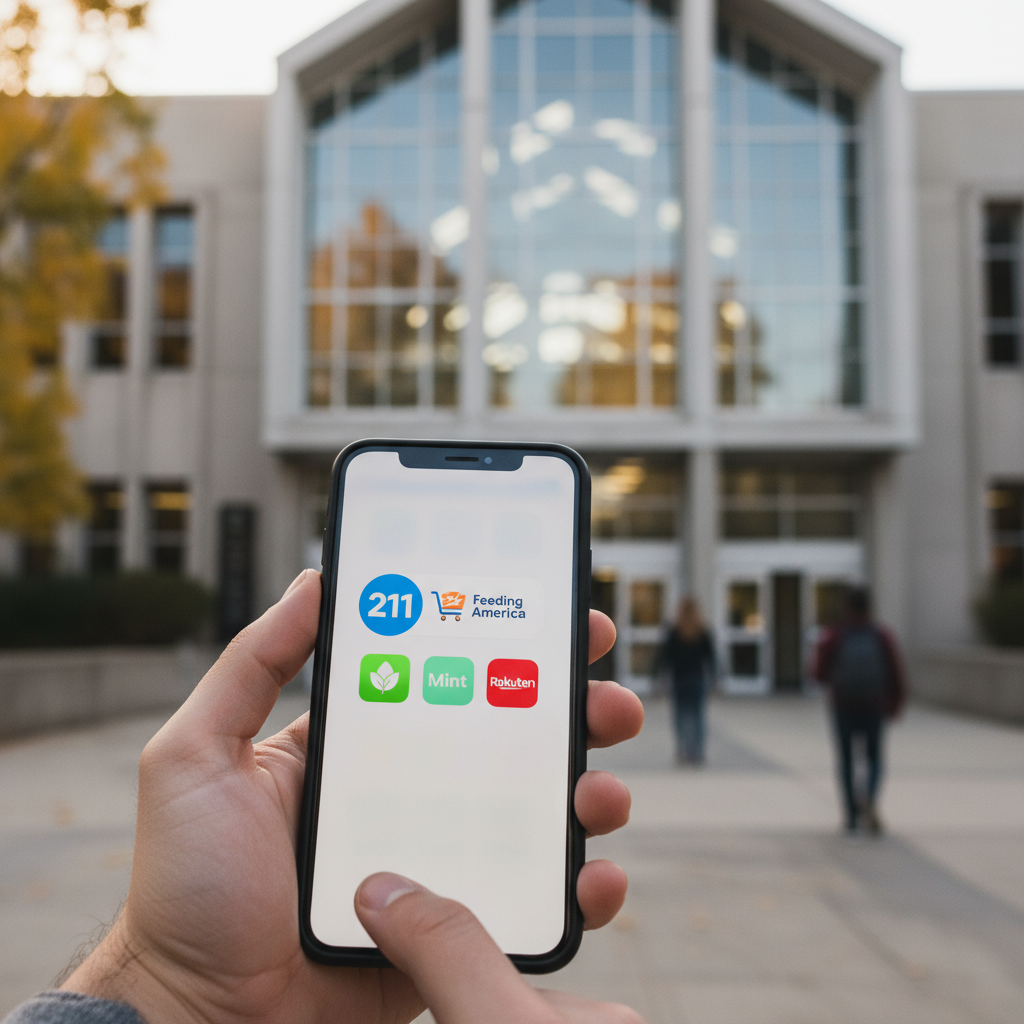
You are not alone in this fight. There’s a massive ecosystem of free resources designed to help people in exactly your situation. Pride is a luxury you can’t afford right now. It’s time to use every tool at your disposal.
Community & Government Aid
- 211.org: This is your starting point. You can call 211 or visit their website. They are a clearinghouse that connects you to local resources for rental assistance, utility bills, food, and more.
- Food Banks: Find your local food bank through Feeding America. There is zero shame in getting help to feed yourself and your family. It’s what these services are for.
- LIHEAP: The Low Income Home Energy Assistance Program can help you pay your heating and cooling bills. Google ‘LIHEAP’ and your state’s name to find the local agency.
Your Digital Toolkit
- Budgeting Apps: Use a free app like Mint or Empower Personal Dashboard to track all your accounts in one place. Knowledge is power.
- Coupon and Cashback Apps: Before you buy anything online, check for cashback through Rakuten. For groceries, use apps like Ibotta or Fetch Rewards to scan your receipts and earn points or cash back.
- Browser Extensions: Install extensions like Honey or Capital One Shopping. They automatically search for coupon codes when you check out online. This takes zero effort and can save you 10-20% instantly.
The Library: Your Frugal HQ
Your local library is the most underrated resource on the planet. It’s not just for books. You can get free high-speed internet access, borrow movies and video games (goodbye, streaming costs), take free online courses through services like LinkedIn Learning, use their printers, and attend free community events. It is a warm, safe place that costs you nothing. Use it.
Conclusion
Surviving when you’re broke is a grind. It’s a test of your will, your creativity, and your resilience. But it is not a life sentence. The steps we’ve laid out—Triage, Slash, Hustle, Rewire, and Leverage—are your roadmap. Follow it. Every dollar saved is a small victory. Every extra dollar earned is a step toward freedom. You will make mistakes, and some days will be harder than others, but you are building more than just a better bank balance. You are forging financial discipline and a level of resourcefulness that will serve you for the rest of your life. This period will end, and when it does, you will not just be a survivor; you will be a financial powerhouse. You’ve got this.
Disclaimer: I am not a financial advisor. The information provided in this article is for informational and educational purposes only. You should consult with a licensed professional for advice concerning your specific situation.