
Get Hired Fast: Build a VA Portfolio With Zero Experience
Let’s talk about the biggest trap in the freelance world: the classic chicken-and-egg problem. You need experience to get clients, but you need clients to get experience. It’s a frustrating loop designed to keep you on the sidelines, thinking you’re not ‘ready’ or ‘qualified’ enough. Forget that noise. That thinking is for people who wait for permission. You’re a hustler, and hustlers create their own opportunities.
This isn’t just another article telling you to ‘just start.’ This is your action plan, your step-by-step blueprint to build a rock-solid Virtual Assistant (VA) portfolio that screams ‘HIRE ME’—even if you’ve never had a single paying client. We’re going to bypass the system by creating undeniable proof of your skills. Consider this your official permission to stop waiting and start building. Let’s get to work.
The Zero-Client Portfolio: Your Secret Weapon
The Zero-Client Portfolio: Your Secret Weapon
First, let’s get one thing straight: a portfolio is not just a collection of past paid jobs. A portfolio is a demonstration of your skills. That’s it. Clients don’t actually care if you got paid for the work; they care if you can solve their problem. Your job is to show them you can, and a ‘zero-client’ or ‘spec’ portfolio is how you do it.
Spec work is work you create for a fictional client or purpose. It’s your training ground and your showcase all in one. It proves three things that every client is desperately looking for:
- Skill Proficiency: Can you actually do the work? Your spec pieces are the undeniable ‘yes.’
- Professionalism: Can you present work in a clean, organized, and professional manner? How you package your spec work answers this.
- Strategic Thinking: Do you just follow orders, or can you think through a problem? By creating a ‘case study’ for your fictional client, you prove you’re a problem-solver, not just a task-doer.
You can create powerful spec pieces for the most in-demand VA services without needing anyone’s permission. Think about services like:
- Social Media Management
- Email Inbox Management & Organization
- Content Creation (Blog Posts, Newsletters)
- Data Entry & Spreadsheet Management
- Scheduling & Appointment Setting
- Creating Presentations & Reports
You don’t need to be an expert in all of them. You just need to pick a few, create killer samples, and you’re already ahead of 90% of beginners who are still waiting for that first client to magically appear.
The Grind: How to Create Portfolio Pieces That Pop

The Grind: How to Create Portfolio Pieces That Pop
Alright, time to roll up your sleeves. This is where you build the assets that are going to make you money. We’re not just making stuff; we’re creating strategic samples that directly address client pain points. Follow these steps exactly.
Step 1: Pick Your Lane
Don’t try to be a VA who does everything. That makes you sound like a master of none. Pick 2-3 services you either enjoy or have a natural knack for. If you’re obsessively organized, lean into admin and email management. If you spend all day on Instagram anyway, focus on social media. Choose services that don’t feel like a total drag. Your enthusiasm (or lack thereof) will show in the work.
Step 2: Invent Your ‘Clients’
This is the secret sauce. Don’t just make a random social media graphic. Create it for a *reason*. Invent 2-3 fictional businesses. This makes your work feel real and demonstrates that you understand business needs.
- Example Client 1: ‘Bloom & Branch’ – A new, trendy local florist who is great with flowers but clueless about social media. Their goal is to increase local brand awareness and get more online orders.
- Example Client 2: ‘Apex Coaching’ – A busy life coach whose inbox is a disaster zone. They’re missing client inquiries and wasting hours a day on email. Their goal is to streamline communication and never miss a lead.
- Example Client 3: ‘Wanderlust Weekly’ – A travel blogger who needs help organizing research for an upcoming series of articles on backpacking through Southeast Asia. Their goal is to have all the information organized and easy to access.
Step 3: Do the Work
Now, solve your fictional clients’ problems. This is your chance to show off. Here’s what you could create:
- For ‘Bloom & Branch’ (Social Media):
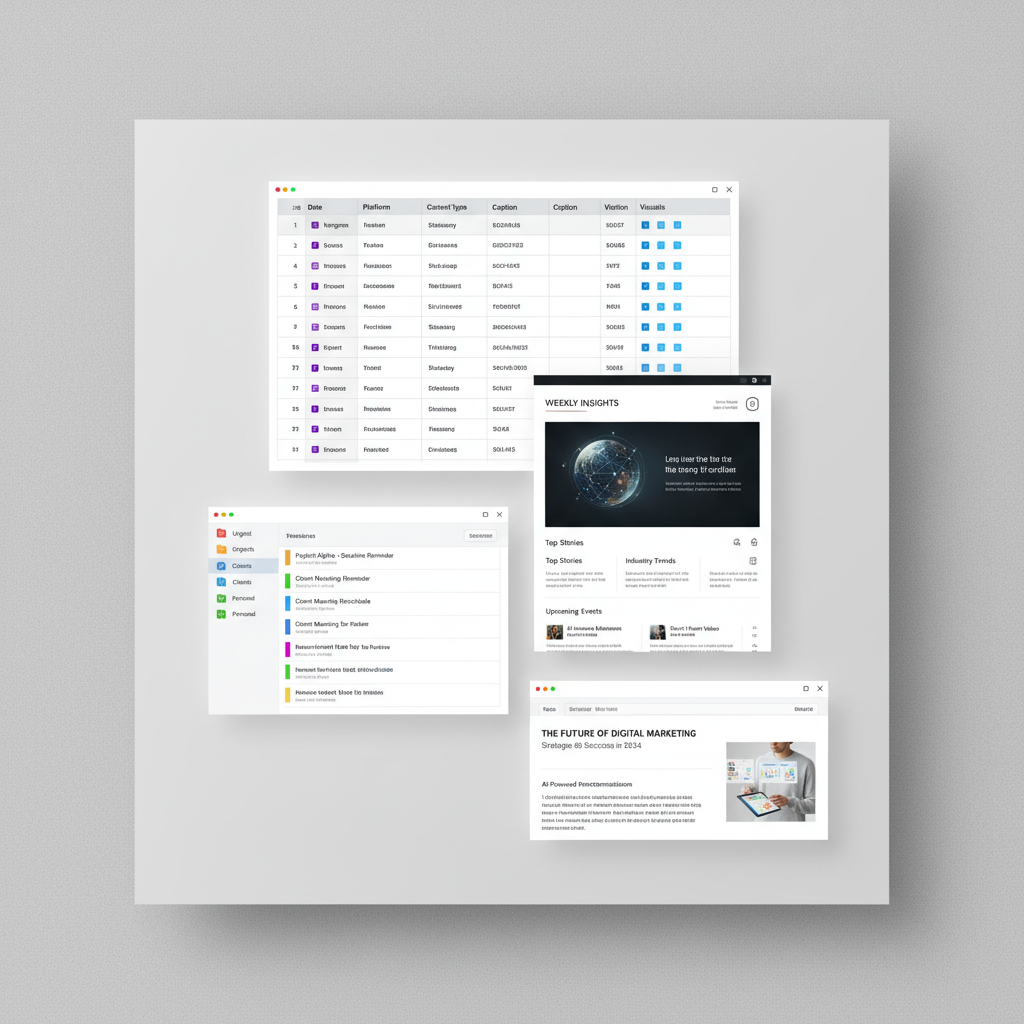
– Create a 1-week Instagram content calendar in a Google Sheet, detailing post types (carousel, Reel, static image), captions, and relevant local hashtags.
– Design 5-7 beautiful and on-brand graphics using Canva.
– Write a sample script for a 15-second Instagram Reel showcasing a new bouquet. - For ‘Apex Coaching’ (Email Management):
– Create a PDF or Google Doc outlining a proposed ‘Inbox Zero’ system using labels/folders (e.g., ‘Action Required,’ ‘Client Inquiry,’ ‘Waiting for Response,’ ‘Receipts’).
– Write 3-4 template email responses for frequently asked questions about their coaching packages.
– Record a short (1-2 minute) Loom video of you walking through a demo Gmail account, showing how you’d implement the filtering system. This is next-level stuff. - For ‘Wanderlust Weekly’ (Admin/Research):
– Create a detailed travel itinerary for a 3-day trip to Bangkok in a Google Doc, including researched flight options, 3 hotel choices with pros/cons, and a daily activity schedule.
– Build a spreadsheet comparing visa requirements and costs for Thailand, Vietnam, and Cambodia.
Step 4: Package It Like a Pro
Don’t just send a folder of random files. This is where you separate yourself from the amateurs. For each fictional client, create a simple 3-5 slide presentation using Canva or Google Slides. Structure it like this:
- Slide 1: The Client & The Problem. Introduce ‘Bloom & Branch’ and their social media struggles.
- Slide 2: My Solution. Briefly explain your strategy (e.g., ‘I developed a content strategy to increase engagement and showcase their unique floral designs.’).
- Slide 3-4: The Work. This is the money shot. Show screenshots of the content calendar, the Canva graphics, and the sample captions.
- Slide 5: The (Projected) Outcome. Explain how your solution helps the client (e.g., ‘This system saves the owner 5 hours a week and creates a professional, consistent brand image to attract more customers.’).
Do this for each of your fictional clients, and you’ll have a portfolio that looks like you’ve been freelancing for years.
The Showcase: Where to Put Your Portfolio So It Gets Seen
The Showcase: Where to Put Your Portfolio So It Gets Seen
A killer portfolio is useless if nobody sees it. You don’t need a fancy, $500 website right out of the gate. Start smart, start free, and level up later. Here are your best options:
Option 1: The Freebie Powerhouse (Canva or PDF)
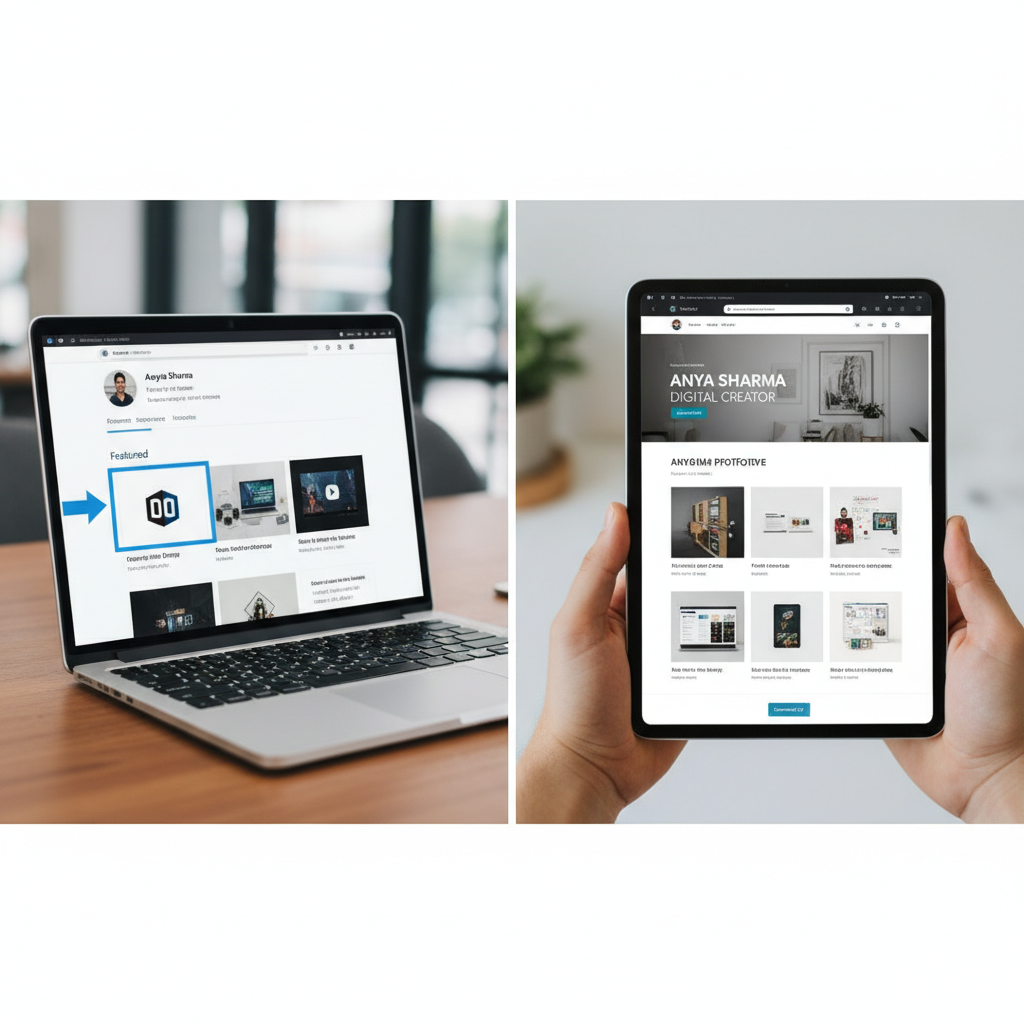
Combine all your case study presentations into a single, polished PDF. You can create this easily in Canva. Save it to a Google Drive or Dropbox folder and create a shareable link. This is your portfolio. Simple. Effective. Free. You can also use Canva’s ‘Website’ feature to create a simple, one-page site to host your work. It’s surprisingly professional and costs you nothing.
Option 2: The Social Proof Hub (LinkedIn)
Your LinkedIn profile is prime real estate. Don’t just list your old jobs. Turn it into a client-attraction machine. Upload your portfolio PDF to the ‘Featured’ section right at the top of your profile. When a potential client lands on your page, it’s the first thing they’ll see. Write posts about the spec projects you created. Talk about your process. This shows you’re proactive and serious about your business.
Option 3: The Level-Up (A Simple Website)
Once you’ve landed a client or two and have some cash flow, investing in a simple website from a service like Carrd (for one-page sites) or a basic WordPress site can be a great move. But do not let ‘I need a website first’ be your excuse for not starting. A Google Drive link is all you need to get hired.
The most important part is how you talk about it. You need to reframe the conversation from ‘lack of experience’ to ‘proof of skills.’ Use this script:
When a potential client asks about your experience, don’t stumble. Hit them with this:
‘That’s a great question. While I’m currently taking on new clients, I’ve already developed several project samples that directly showcase my skills in social media management and email organization. I’ve found it’s the best way to demonstrate the quality of my work. You can view my portfolio right here [insert your link].’
See the difference? It’s confident. It’s proactive. It flips the entire script from ‘I don’t have experience’ to ‘Look what I can do.’
The Payday: What Can You Actually Earn?

The Payday: What Can You Actually Earn?
Let’s talk money. Having a portfolio from day one is your fast track to better rates. People with no proof of work have to take the lowest-paying gigs to get started. You can skip that line. While rates vary wildly based on skill, location, and niche, here’s a realistic look at what you can aim for as you grow.
Initially, you’ll likely charge by the hour. It’s the simplest way to get started. As you get more confident, you’ll want to move to monthly retainer packages, which provide more stable income.
| Experience Level | Typical Hourly Rate (USD) | Potential Monthly Income (Part-Time, 20 hrs/week) |
|---|---|---|
| Beginner (With a Killer Portfolio) | $20 – $30/hr | $1,600 – $2,400/month |
| Intermediate (1-2 Years & Testimonials) | $30 – $50/hr | $2,400 – $4,000/month |
| Expert/Specialist (Proven Results) | $50 – $75+/hr | $4,000 – $6,000+/month |
Your spec portfolio gets you into that $20 – $30/hr bracket immediately. Without it, you’d be fighting for scraps at $15/hr or less on crowded platforms. The math is simple: a few hours spent building your portfolio could immediately boost your earning potential by 50% or more. That’s not just a good investment of your time; it’s a no-brainer.
Scam Warning: Don’t Get Played

Scam Warning: Don’t Get Played
The freelance world is full of opportunity, but it’s also got its share of sharks. As a newcomer, you’re a prime target. Keep your street smarts about you and watch for these giant red flags. Getting excited about a new gig can make you ignore your gut—don’t.
- Red Flag 1: You Have to Pay Them. This is the oldest trick in the book. A real client pays you, period. If they ask for money for ‘training materials,’ ‘software licenses,’ or a ‘background check fee,’ it’s a scam. Shut it down and block them.
- Red Flag 2: The Vague, ‘Too Good to Be True’ Offer. If a job post promises $50/hour for ‘basic data entry’ with no interview and a vague job description, be suspicious. Professional clients have clear expectations and a proper vetting process.
- Red Flag 3: Unprofessional Communication. Are their emails full of typos and grammatical errors? Do they pressure you to move the conversation to WhatsApp or Telegram immediately? Do they refuse a video call? These are signs of an amateur or, more likely, a scammer hiding their identity.
- Red Flag 4: The Overpayment/Check Cashing Scam. This is a nasty one. They’ll send you a check for, say, $2,000 to ‘buy equipment’ and ask you to wire the ‘remaining’ $500 to another vendor. The check is fake. It will eventually bounce, but by then, your $500 is long gone. Never accept overpayments and never use your personal bank account to handle a client’s business expenses.
The Ultimate Rule: Trust your gut. If something feels off, it is. A legitimate client will respect your questions, agree to a contract, and have a clear, professional process. Never let the desperation for a gig cloud your judgment. It’s better to pass on a dozen fishy offers than to get hooked by one scam.
Conclusion
The idea that you need years of experience to start a successful side hustle is a myth. It’s an excuse that keeps people stuck. You just dismantled that excuse. You now have the exact blueprint to create tangible proof of your value, without needing anyone’s permission or a single dollar from a client.
Action is the only thing that separates you from the people who are actually doing this. Your portfolio is your ticket into the game. The work you create this week could be what lands you your first paying client next week. That’s not wishful thinking; it’s cause and effect.
So, close this article. Pick one service. Invent one client. Create one killer portfolio piece. The longer you wait, the longer you’re leaving money on the table. Stop thinking about it and start doing. Go get it.