

Explode Your Job Offers: The Beginner’s Guide to LinkedIn Optimization
Let’s get real. Firing your resume into the black hole of online job applications is a soul-crushing, full-time job that doesn’t pay. You tweak your cover letter, hit ‘submit,’ and get… crickets. You’re qualified, you’re smart, you’re a hustler. So why does it feel like you’re invisible? Because you’re playing the wrong game. While you’re spamming applications, recruiters are living on LinkedIn, hunting for talent. Your profile isn’t just a digital resume; it’s a billboard on the busiest highway in the professional world. If it’s blank, you don’t exist. This isn’t another boring guide full of corporate fluff. This is your action plan to weaponize your LinkedIn profile, make recruiters slide into your DMs, and get so many offers you can actually negotiate for the salary you deserve. It’s time to stop waiting for opportunities and start making them come to you.
Stop Being Invisible: Your Profile is Your Digital Billboard
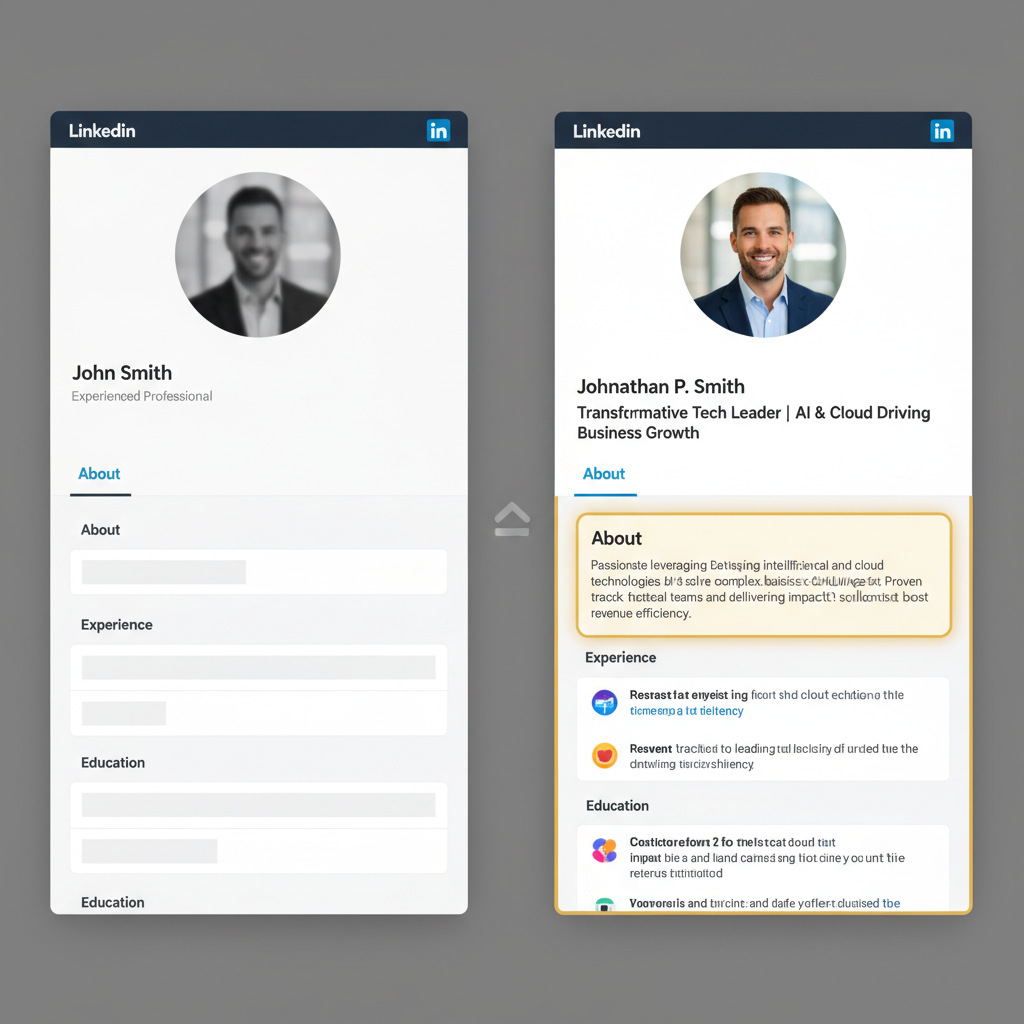
First things first: if your LinkedIn profile looks like a ghost town, you’re losing money. Recruiters spend an average of 7.4 seconds on a resume. On LinkedIn, they skim even faster. You have to grab their attention immediately. Think of the top part of your profile—your picture, banner, and headline—as the cover of a book. If it’s boring, nobody’s reading the first chapter.
The Headshot: Look Like a Pro, Not a Tourist
This is non-negotiable. No blurry pictures from your cousin’s wedding, no vacation photos with a palm tree growing out of your head, and for the love of all that is holy, no cartoon avatars. You don’t need to spend $500 on a professional photographer. Just follow these rules:
- Clear & High-Quality: Use a modern smartphone in good lighting. Face a window for natural light.
- Head and Shoulders: That’s it. They need to see your face.
- Professional…ish: Wear what you’d wear to an interview for the job you want. It shows you get the culture.
- Smile: Look approachable. You’re not taking a mugshot.
The Headline: Your 220-Character Sales Pitch
Your headline is the most valuable real estate on your profile. The default “Job Title at Company” is a massive wasted opportunity. It says what you *are*, not what you *do*. You need to turn it into a value proposition. This is your hook. Use a formula like:
[Your Role/Expertise] | Helping [Who You Help] To [The Result You Get Them]
Examples:
- Instead of: “Marketing Manager at ABC Corp”
- Try: “Growth Marketing Manager | Driving User Acquisition & Brand Awareness for Tech Startups”
- Instead of: “Software Engineer”
- Try: “Full-Stack Software Engineer | Building Scalable and User-Friendly Web Applications in React & Node.js”
This simple switch tells recruiters exactly what you bring to the table and stuffs it with the keywords they’re searching for.
The “About” Section: Your Origin Story
This is where you connect the dots. Don’t just list your skills like a robot. Tell a story. Who are you? What problems do you love to solve? What are your biggest accomplishments? Structure it simply:
- The Hook: A 1-2 sentence summary of your professional identity and passion.
- The Proof: 2-3 sentences detailing your key skills and a major accomplishment. Use numbers! “Increased lead generation by 45%” sounds way better than “Managed lead generation.”
- The Future: 1-2 sentences about what you’re looking for next. This helps recruiters match you with the right roles.
- The Call to Action & Keywords: End with a line like “Open to opportunities in [Your Field]. Let’s connect!” and then list your core competencies or specialties. This is another chance to load up on keywords.
Fill this out. A blank “About” section screams laziness. You’re a hustler, not lazy.
The Recruiter’s Cheat Code: Keywords Are Your Secret Weapon

Here’s the secret sauce: LinkedIn is a search engine. Recruiters don’t scroll through millions of profiles. They type in keywords like “Project Manager,” “Agile,” “SEO,” “JavaScript,” or “Financial Modeling.” If those words aren’t in your profile, you are invisible. You won’t show up in their search results. Period. Your job is to figure out what they’re typing and plaster your profile with those terms.
How to Find Your Golden Keywords
This isn’t guesswork. It’s research. It’s a five-minute hack that puts you ahead of 90% of other job seekers.
- Go to the LinkedIn Jobs tab.
- Search for the job title you want. Find 5 to 10 job descriptions that look like your dream job.
- Copy and paste the entire text of those descriptions into a word cloud generator (like MonkeyLearn or WordArt).
- Analyze the results. The biggest, most frequent words are your golden keywords. These are the exact skills and qualifications companies are paying for right now.
You’ll probably see a mix of hard skills (like “Python,” “Salesforce,” “Adobe Creative Suite”) and soft skills (like “Leadership,” “Communication,” “Strategy”). Make a list of the top 15-20 terms.
Where to Plant Your Keywords
Now you need to strategically embed these keywords throughout your profile so the LinkedIn algorithm can find you. Don’t just dump them in a list; weave them in naturally.
- Headline: The most important spot. Get your top 2-3 keywords here.
- About Section: Weave them into your story and have a dedicated “Specialties” or “Core Competencies” list at the bottom.
- Experience Section: Don’t just list your duties. Re-write your bullet points using the keywords you found. Instead of “Was responsible for social media,” write “Managed and executed SEO-driven social media campaigns across multiple platforms, increasing engagement by 30%.”
- Skills & Endorsements: This section is literally a keyword goldmine. Add up to 50 relevant skills. Pin your top three most important ones to the top. This is a direct signal to the algorithm.
By treating your profile like a webpage you’re trying to get on the front page of Google, you flip the script. You stop chasing recruiters and let the algorithm bring them to you.
Connect Like a Boss, Not a Spammer: The Network Hustle

Hitting the blue “Connect” button without a note is the professional equivalent of walking up to a stranger at a party and just staring at them. It’s lazy and ineffective. Your network is your net worth, but only if you build it with intent. Forget about having 500+ random connections. A smaller network of meaningful contacts is infinitely more powerful.
The “Always Add a Note” Rule
Every single time you send a connection request, you MUST add a personalized note. The 300-character limit is a blessing—it forces you to be concise and get to the point. The goal isn’t to ask for a job. The goal is to start a conversation.
Hi [Name], I came across your profile while researching [Their Company/Industry] and was really impressed by your work in [Mention a Specific Project, Post, or Area of Expertise]. I’m also passionate about [Shared Interest/Field] and would love to connect and follow your work.
This script works because it’s not about you. It’s about them. You’ve done your homework, you’re showing genuine interest, and you’re not asking for anything. It makes you a peer, not a pest. Customize it for every single person. Find a recruiter at your dream company? Mention the company. Find someone in your target role? Mention their career path.
Who to Connect With
Be strategic. Don’t just add random CEOs. Focus on people who can actually help you.
- Recruiters: Search for “Talent Acquisition” or “Recruiter” at companies you want to work for. They are literally paid to find people like you.
- People in Your Target Role: Find people who have the job you want, either at your target companies or others in the industry. They can provide invaluable insight.
- Hiring Managers: A little trickier to find, but often they’ll have titles like “Director of Marketing” or “Engineering Manager.” If you see they’re hiring for a role on their team, connecting with them directly can put you at the top of the pile.
Networking isn’t about collecting contacts; it’s about building relationships. Play the long game. Connect, engage with their content, and when the time is right, you’ll have a warm contact to reach out to instead of a cold application.
The Payoff: Turning Profile Views into Cold, Hard Cash

Let’s talk about the bottom line. Why are we doing all this? To get a job that pays you what you’re worth. A fully optimized LinkedIn profile doesn’t just get you one job offer—it creates a pipeline of opportunities. When you have multiple companies interested in you, you are no longer a hopeful applicant. You are in-demand talent. And that gives you one thing: leverage.
The Math of Leverage
Having a single job offer is great, but you have no negotiating power. You take what they give you. But with two, three, or even four companies in the running, you control the conversation. This is how you make a significant jump in salary.
Think about it: A strong LinkedIn presence can easily lead to 2-3 competing offers. That leverage alone can empower you to negotiate a 10-20% higher starting salary.
| Base Salary Offer | 10% Negotiated Increase | 20% Negotiated Increase |
|---|---|---|
| $60,000 | + $6,000/year | + $12,000/year |
| $80,000 | + $8,000/year | + $16,000/year |
| $100,000 | + $10,000/year | + $20,000/year |
That extra $10,000 a year isn’t just a number. That’s paying off debt faster, building your emergency fund, or finally taking that vacation. This is the real ROI of spending a few hours optimizing your profile.
From Profile View to Interview
When you’re active and optimized, recruiters will start viewing your profile. Don’t just wait for them to reach out. If you see a recruiter from a dream company or a hiring manager for a role you want has viewed your profile, make a move. Wait a day, then send a message.
Hi [Name], thanks for viewing my profile. I noticed you’re with [Company], which I’ve been following for a while—I’m a big fan of how you’re approaching [Something Specific About the Company]. Based on my background in [Your Key Skill] and [Your Other Key Skill], I believe I could bring a lot of value to your team. Are you open to a brief chat about any relevant opportunities?
This is confident, direct, and shows you’ve done your research. It’s a power move that turns a passive view into an active conversation, and often, an interview.
Scam Warning: How to Spot Phony Recruiters and Fake Jobs

The job market is hot, and that brings out the sharks. As you make your profile more visible, you’ll get more messages—and some of them will be from scammers. Your time is valuable, and your personal information is priceless. You need to know how to spot the fakes from a mile away.
Real recruiters are professionals. Scammers are sloppy. Look for these red flags:
- Vague Job Descriptions: If the message is fuzzy on the actual duties but heavy on promises of huge pay for little work, it’s a scam.
- Unprofessional Communication: Legitimate recruiters from major companies won’t have typos and grammar mistakes all over their messages. They’ll use a professional email address (e.g., jane.doe@company.com, not recruiterjane@gmail.com).
- Immediate Request for Personal Info: No real recruiter will ask for your social security number, bank account details, or date of birth in an initial LinkedIn message. That’s a massive red flag.
- Guaranteed Job Offers: The hiring process takes time. Anyone promising you a guaranteed job without a proper interview process is lying.
- Interviews via Messaging Apps: If they want to conduct the entire interview process over WhatsApp or Telegram, run.
- Request for Money: This is the biggest one. You should NEVER have to pay for a job. If they ask you to pay for training materials, a background check, or equipment upfront, it is 100% a scam.
The Golden Rule of Job Hunting: If it feels rushed, unprofessional, or too good to be true, it probably is. Trust your gut. A legitimate opportunity will feel right. A scam will feel ‘off.’ Never, ever send money or sensitive financial information to get a job.
Protect yourself. A great job offer will build your bank account, not drain it.
Conclusion
Your LinkedIn profile is one of the most powerful financial tools you have. It’s not just a static resume—it’s a dynamic, living advertisement for your skills, your ambition, and your value. Stop treating it like an afterthought. Treat it like the money-making machine it is. By building a killer profile, loading it with the right keywords, networking with intention, and knowing how to spot the scams, you’re not just looking for a job anymore. You’re building a career brand that attracts opportunities. You’re taking control. The days of getting ghosted are over. Now go optimize that profile, get those competing offers, and get paid what you’re damn well worth.