Don’t Call a Plumber! Unclog Drains Fast With Pantry Staples
Listen up. That gurgling, slow-draining sink isn’t just an annoyance—it’s a ticking time bomb for your wallet. The moment you see that water pooling, your brain flashes a dollar sign, picturing a plumber’s van in your driveway and your hard-earned cash flying out the window. But what if I told you the solution isn’t in a plumber’s toolkit, but right inside your pantry? It’s time to stop paying the ‘panic tax’ for simple home repairs. This isn’t just about unclogging a drain; it’s about taking back control and keeping your money where it belongs: in your pocket. We’re going to break down the exact, dead-simple method to clear most common clogs using two powerhouse ingredients that cost less than a cup of coffee. Get ready to feel capable, save a chunk of change, and tell that clog who’s boss.
The Real Cost: Why That Plumber’s Bill Hits So Hard

Let’s get real about the numbers. Calling a plumber isn’t like ordering a pizza. The meter starts running the second they get in their truck. You’re not just paying for their time; you’re paying for their overhead, their insurance, their truck, their tools… and their profit. A ‘simple’ drain clog can easily set you back $150 to $350, and that’s if things go smoothly. If they need to use a snake or a camera, that price skyrockets. And those chemical drain cleaners at the store? They’re not just toxic; they’re a temporary fix that can damage your pipes over time, leading to an even bigger, more expensive problem down the road. You’re trying to save money, not set yourself up for a $2,000 pipe replacement. The smart money isn’t on the quick fix; it’s on the effective, cheap, and safe fix. Let’s look at the cold, hard math.
| Solution | Average Cost | Effectiveness & Safety |
|---|---|---|
| Pro Plumber Visit | $150 – $350+ | Effective, but a massive hit to your budget for minor clogs. |
| Chemical Drain Cleaner | $10 – $25 per bottle | Can be ineffective on grease, damages pipes over time, toxic fumes. |
| DIY Pantry Method | Less than $2.00 | Highly effective on common clogs, safe for pipes, non-toxic. |
The numbers don’t lie. For less than the cost of a fancy latte, you can achieve the same, or even better, results without risking your pipes or your savings account. This is the definition of a frugal power move.
Your DIY Arsenal: The Pantry Power Players
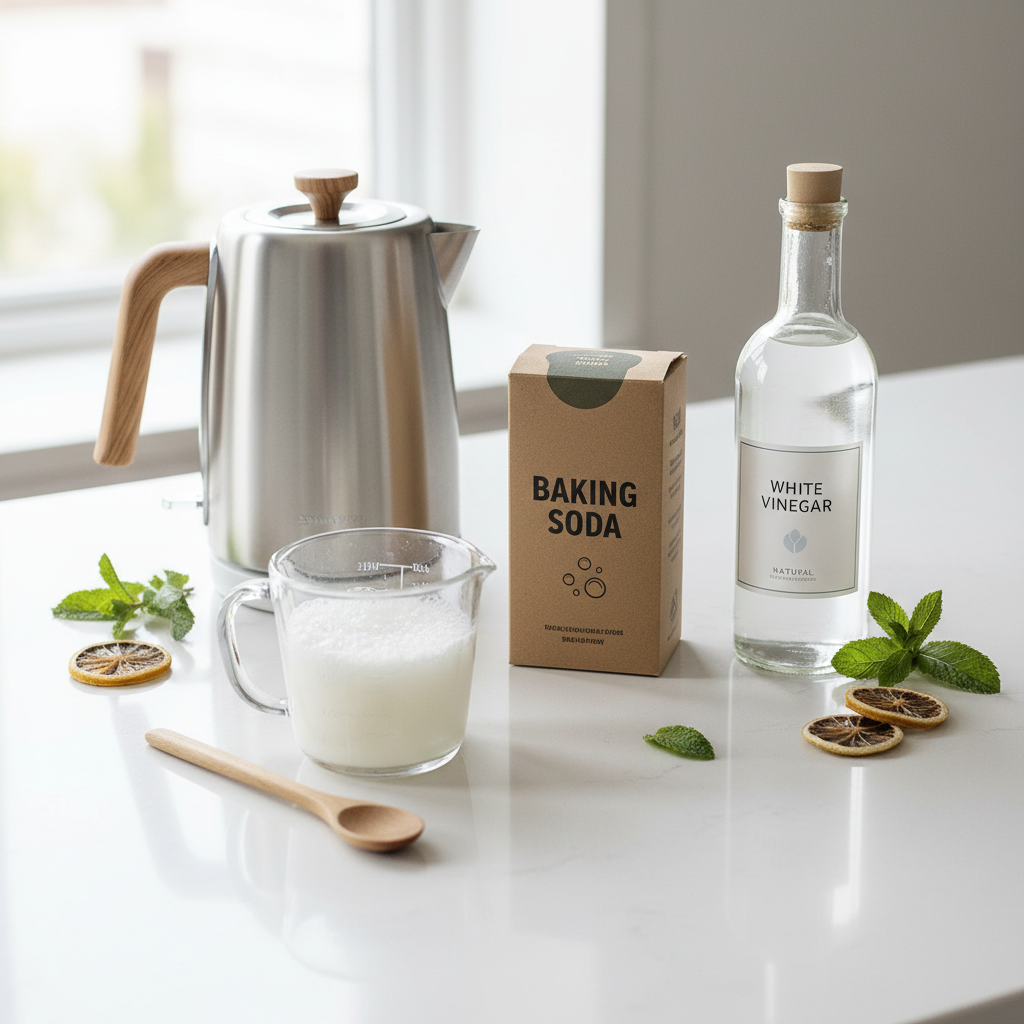
Your Unclogging Toolkit
Forget complicated tools and fancy equipment. Your mission, should you choose to accept it, requires only a few basic items you almost certainly have right now. This is your frugal-living, clog-busting starter pack:
- Baking Soda: This isn’t just for cookies. Baking soda (or its scientific name, sodium bicarbonate) is a base. It’s a natural cleaner and deodorizer that provides the gritty, gentle abrasion needed to break up gunk. You’ll need about half a cup to a full cup.
- White Vinegar: The other half of our power couple. Vinegar is a mild acetic acid. When this acid meets the baking soda base, you get a powerful chemical reaction. Think of your 3rd-grade volcano project, but weaponized against drain grime.
- Boiling Water: The unsung hero. Hot water is crucial for melting and flushing away grease, soap scum, and the loosened debris from the baking soda/vinegar reaction. You’ll need a kettle or a large pot full.
Why This Combo Works Wonders
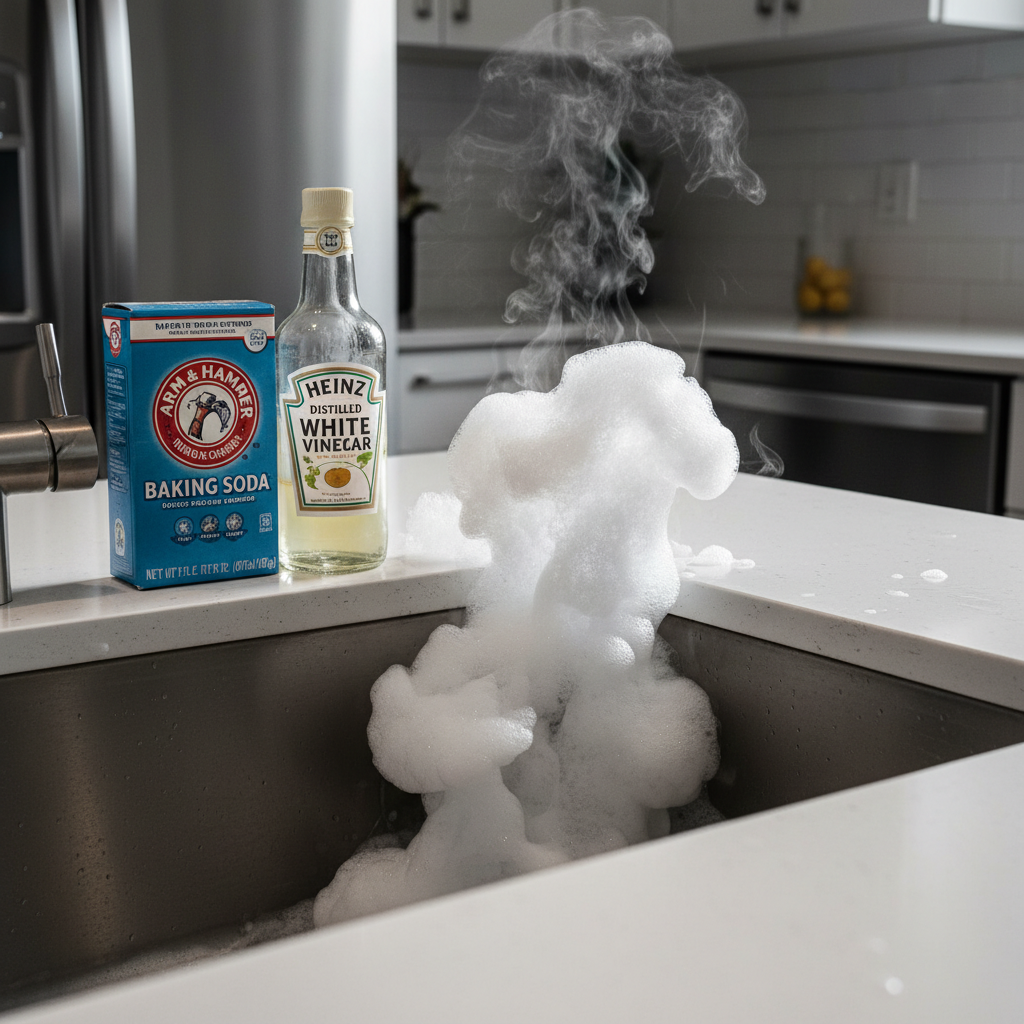
It’s simple chemistry, not magic. When the baking soda and vinegar mix, they create carbon dioxide gas. This rapid fizzing and expansion acts like a mini-pressure washer inside your pipes, physically scrubbing and pushing the clog loose. The boiling water then acts as the finisher, melting any greasy residue and washing everything down the line. It’s a one-two-three punch that grease, hair, and soap scum can’t handle.
The Unclogging Playbook: Your Step-by-Step Guide
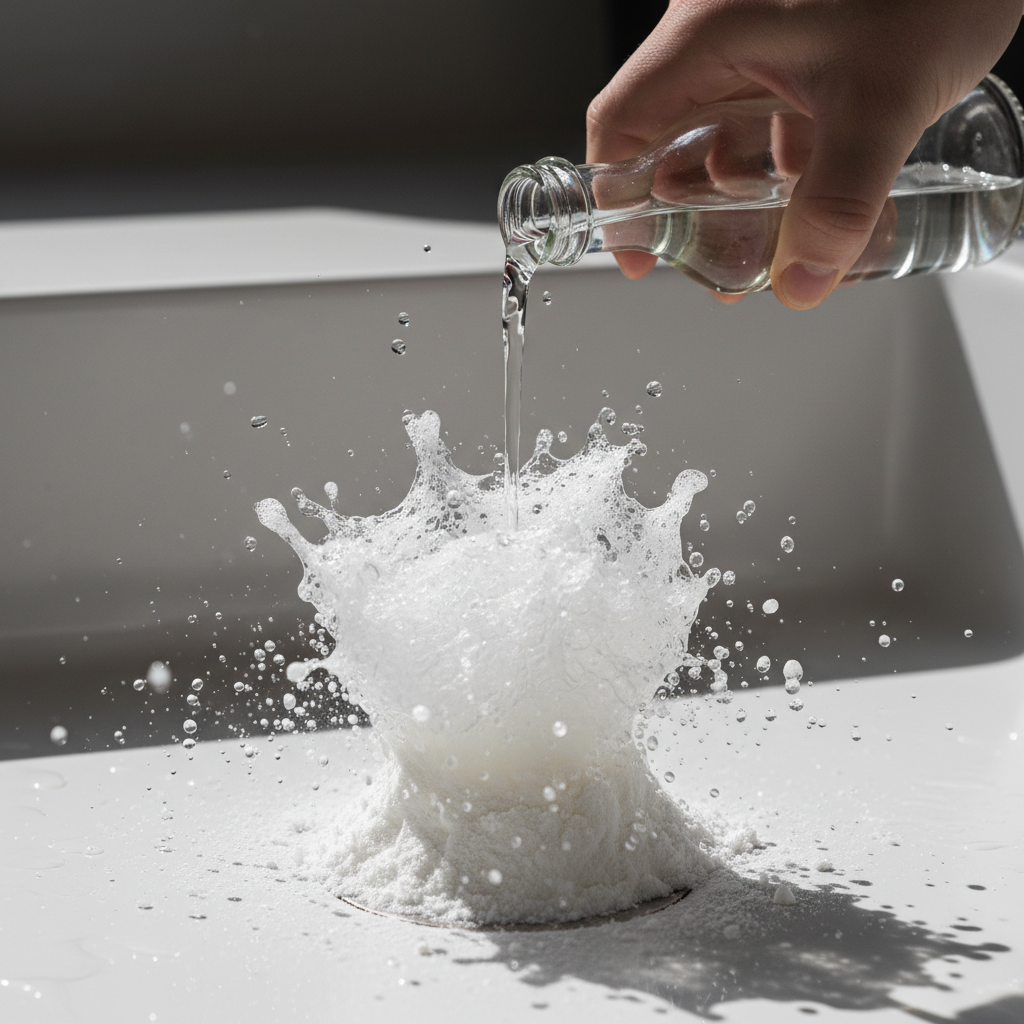
Alright, it’s go time. No more waiting. Follow these steps exactly and watch the magic happen. Don’t rush it; let the ingredients do their job.
- Clear the Area: If you have standing water in the sink, bail out as much as you can into a bucket. You want the mixture to get straight to the clog, not swim around on the surface.
- The First Strike – Boiling Water: Carefully pour a full kettle or pot of boiling water directly down the drain. This is a pre-treatment that will start to melt any grease or soap binding the clog together.
- Deploy the Baking Soda: Dump about a half-cup of baking soda directly into the drain opening. Try to get as much of it down the pipe as possible. Don’t worry if some sits at the top.
- Unleash the Fizz – Add Vinegar: Now for the fun part. Pour about a half-cup of white vinegar down the drain on top of the baking soda. It will immediately start to fizz and bubble aggressively. This is the reaction you want! Immediately cover the drain with a plug or a wet rag to force the reaction downwards, into the clog, instead of up into your sink.
- Let It Cook: Patience is key. Let the mixture sit and work its magic for at least 30 minutes. For a really stubborn clog, you can even let it sit for an hour or overnight. Go do something else; let the science happen.
- The Final Flush: After waiting, boil another full kettle of water. Uncover the drain and slowly pour the entire pot of boiling water down to flush everything out. You should hear the water flowing freely.
Troubleshooting Tough Clogs
If the drain is still slow after the first attempt, don’t give up. Repeat the entire process. Sometimes a really tough clog built up over months or years needs a second round to be fully defeated. For bathroom drains prone to hair, you might want to use a cheap plastic hair snake (a few bucks at any hardware store) to pull out the bulk of the hair *before* you do the chemical treatment. This combination is nearly unstoppable.
Know When to Fold ‘Em: Red Flags to Call a Pro

Being street-smart means knowing which fights to pick. This DIY hack is a killer for 90% of common clogs, but there are times when you need to tap out and call in a professional. Pushing a problem you can’t solve can turn a $200 fix into a $2,000 disaster. Here’s when to put down the vinegar and pick up the phone:
- Multiple Drains are Clogged: If your sink, shower, and toilet are all backing up at once, the problem isn’t in your sink trap. It’s likely a major blockage in your main sewer line. This is not a DIY job. Period.
- The Clog Keeps Coming Back: If you clear a clog and it’s back again a week later, there’s a deeper issue. It could be tree roots in the line or a major buildup further down that your pantry solution can’t reach.
- You Hear Strange Gurgling: When you flush a toilet, do you hear a gurgling sound coming from the shower drain? This is a classic sign of a blocked sewer vent or a mainline clog.
- Zero Drainage Whatsoever: If the standing water doesn’t go down AT ALL, even after a couple of hours, it’s a complete blockage. While the DIY method can sometimes work, a complete blockage often requires the mechanical force of a plumber’s auger (snake).
Scam Warning: The Upsell. When you do have to call a plumber, be smart. A common tactic is to turn a simple snake job into a recommendation for ‘hydro-jetting’ for $800 or a full pipe replacement for thousands. Always ask for a camera inspection to *prove* the more expensive work is needed. If they refuse, get a second opinion. A trustworthy pro will show you the evidence.
Conclusion
You did it. You faced the dreaded clogged drain and won, all with a couple of bucks and a little bit of know-how. This is more than just a clean pipe; it’s proof that you have the power to handle problems and save serious money. Every dollar you don’t give to a plumber for a simple fix is a dollar you can put toward your savings goals, your investments, or paying down debt. That’s the frugal hacker mindset. Keep this trick in your back pocket, share it with friends who are about to make that expensive call, and never underestimate the power of your own pantry. You’ve got this.