Don’t Buy That! The Only Newborn Essentials You Actually Need
Listen up, future parents. You’re about to be bombarded. Your social media feeds, your email, even your well-meaning relatives will push an endless list of “must-have” newborn gadgets. Wipe warmers, designer diaper pails, smart bassinets that cost more than your first car. It’s a marketing machine designed to prey on your excitement and fear. The message is clear: if you don’t buy all this stuff, you’re not a good parent. That’s a lie. The truth is, a newborn needs surprisingly little. They need to be safe, warm, fed, and loved. That’s it. We’re here to give you the ultimate cheat sheet to hack the baby industry, save you thousands of dollars, and empower you to focus on what actually matters. Forget the hype. Let’s get real about what your baby actually needs.
The ‘Skip It’ List: Money Traps and Marketing Gimmicks to Avoid
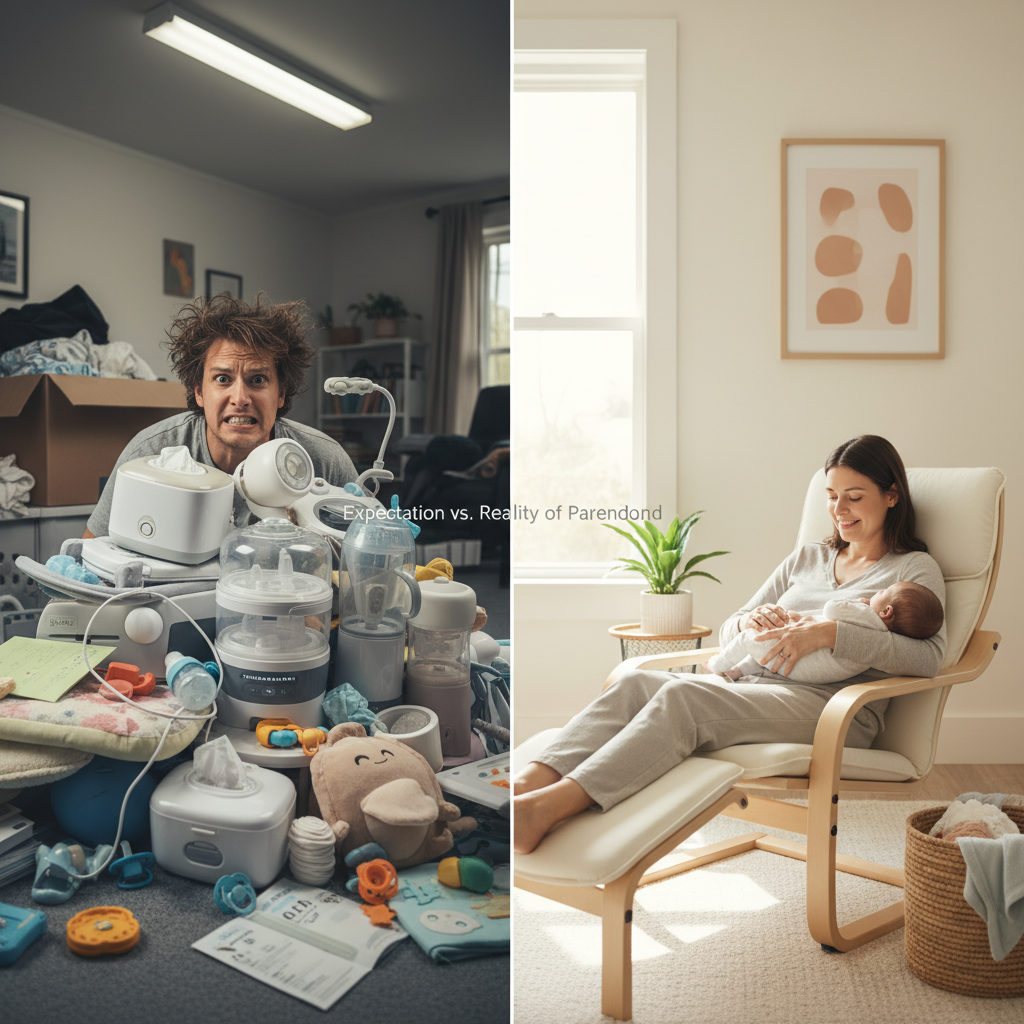
Before we even talk about what to buy, let’s talk about what to run away from. Companies spend billions to convince you that these items are non-negotiable. They’re not. They’re clutter, they’re a waste of money, and they solve problems that don’t even exist. Here’s your official permission slip to walk right past this stuff in the store.
Top Offenders on the ‘Don’t Buy’ List:
- Wipe Warmer: Your baby will survive a room-temperature wipe. We promise. If you’re really concerned, cup the wipe in your warm hands for a few seconds. Cost saved: $30.
- Bottle Sterilizer: Your dishwasher has a sanitize cycle. It works perfectly. No dishwasher? A large pot of boiling water does the exact same thing for free. Cost saved: $70.
- Diaper Pail Systems (like Diaper Genie): These are the ultimate racket. You buy the pail, then you’re locked into buying their expensive, proprietary bag refills forever. A small trash can with a lid, emptied daily, works just as well and uses regular trash bags. Cost saved: $50 + $20/month on refills.
- Fancy Crib Bedding Sets: Those beautiful bumpers, quilts, and pillows you see in store displays? They are a suffocation hazard and are not recommended by the American Academy of Pediatrics. All you need is a fitted sheet. Cost saved: $150+.
- Newborn Shoes: They can’t walk. They look cute for a photo and then get kicked off in five minutes. Stick to socks or footie pajamas. Cost saved: $25 per pair.
- Baby-Specific Laundry Detergent: Unless your baby has a specific skin condition, a “free and clear” version of your regular detergent is perfectly fine and much cheaper. Cost saved: $5-10 per bottle.
- Changing Table: A dedicated piece of furniture for this? Nah. A waterproof changing pad placed on top of a low, sturdy dresser you already own works perfectly and saves space. Cost saved: $200.
Your mantra should be: Does this solve a real problem, or a problem marketing created? If you can live without it for the first two weeks, you probably don’t need it at all.
The Core Four: Sleep, Eat, Diaper, & Wear
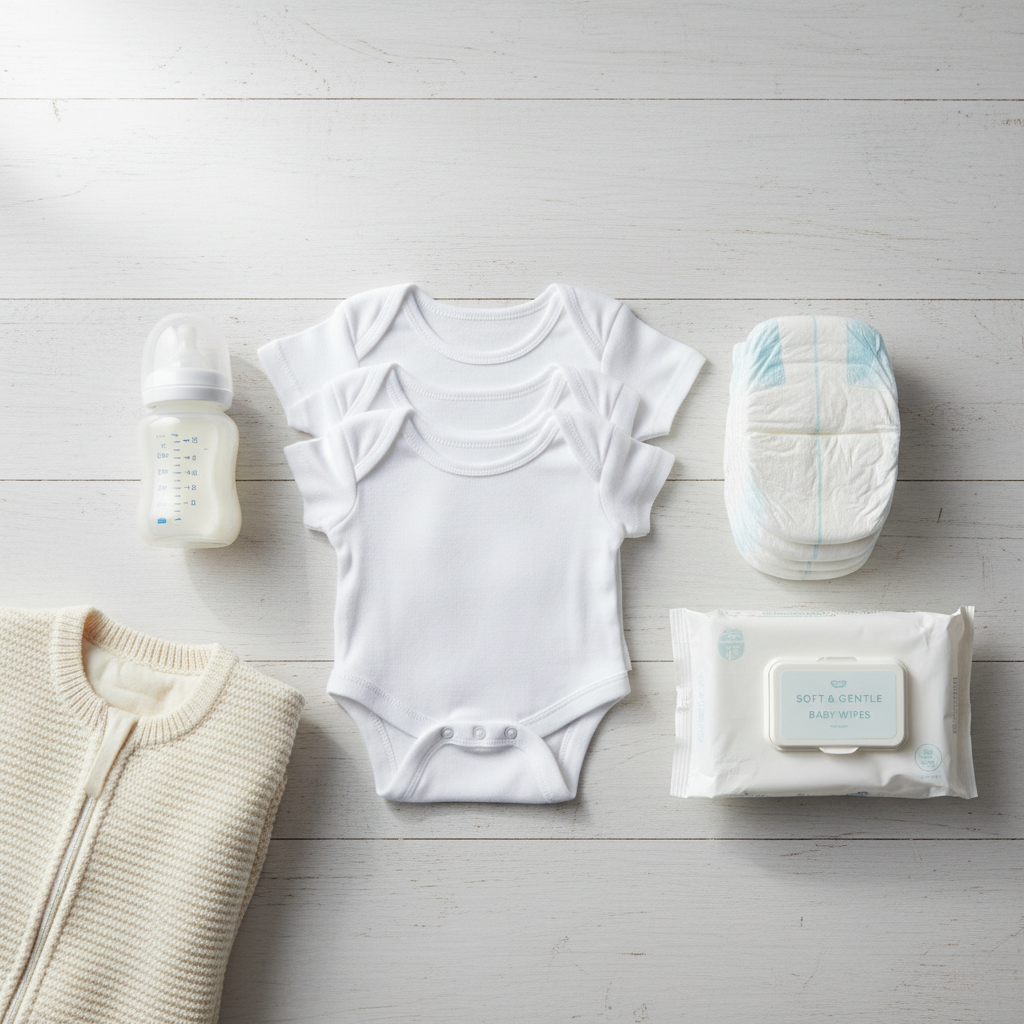
Okay, you’ve dodged the money traps. Now, what do you actually need? We’ve broken it down into four simple categories. This is your minimalist, high-impact shopping list. Focus your budget here, and look for secondhand options whenever possible.
1. Sleep: Safe & Simple
The goal is a safe sleep space. That’s it. No frills needed.
- A Safe Place to Sleep: This could be a crib, a bassinet, or a pack-n-play. The key word is safe. Make sure it meets current CPSC safety standards, especially if you’re buying used.
- Firm Mattress & Fitted Sheets: A firm, flat mattress that fits snugly in the crib. Get 2-3 fitted sheets for inevitable messes.
- Wearable Blankets/Sleep Sacks: Since loose blankets are a no-go, sleep sacks are the answer to keep your baby warm and safe. Get 2-3 in a newborn size.
2. Eat: Fueling the Engine
This will depend on whether you’re breastfeeding or formula-feeding, but the principle is the same: keep it simple.
- If Breastfeeding: A good nursing bra, nursing pads, and lanolin cream are your main essentials. A breast pump is often covered by insurance, so check that first! You’ll also need some bottles and milk storage bags if you plan to pump.
- If Formula Feeding: Bottles (start with a few different kinds to see what baby prefers), nipples in a slow-flow size, formula (don’t stockpile until you know what works for your baby), and a bottle brush for cleaning.
- Burp Cloths: You can never have too many. Old receiving blankets or cloth diapers work great and are super cheap.
3. Diaper: The Inevitable
You’re going to be changing a lot of diapers. Prepare for battle.
- Diapers: Whether you choose cloth or disposable, you’ll need a starting supply. Don’t go crazy buying newborn size; they grow out of them fast. A couple of boxes is plenty.
- Wipes: Buy them in bulk. Look for unscented/sensitive options.
- Changing Pad: A simple, waterproof pad you can put on a dresser or the floor.
- Diaper Cream: One tube of a good zinc-oxide based cream is a must-have.
4. Wear: The Daily Uniform
Think comfort, ease, and quantity over quality. They will be covered in spit-up 90% of the time.
- Onesies & Bodysuits (8-10): These are the workhorses of a baby’s wardrobe. Look for the ones with shoulder flaps for easy pull-down removal during diaper blowouts.
- Footie Pajamas/Sleepers (8-10): The baby’s 24/7 uniform. Zippers are your best friend during 3 AM changes. Avoid a million tiny snaps.
- Socks & Mittens: A few pairs of socks and some no-scratch mittens.
- A Few Weather-Appropriate Items: A hat for sun or cold, and maybe one warm sweater or bunting for winter babies.
Pro Tip: Buy almost all clothing secondhand. They wear it for such a short time it’s practically new. Check out local consignment stores, Facebook Marketplace, and ask friends with older kids.
The Bottom Line: A Reality Check on Your Savings
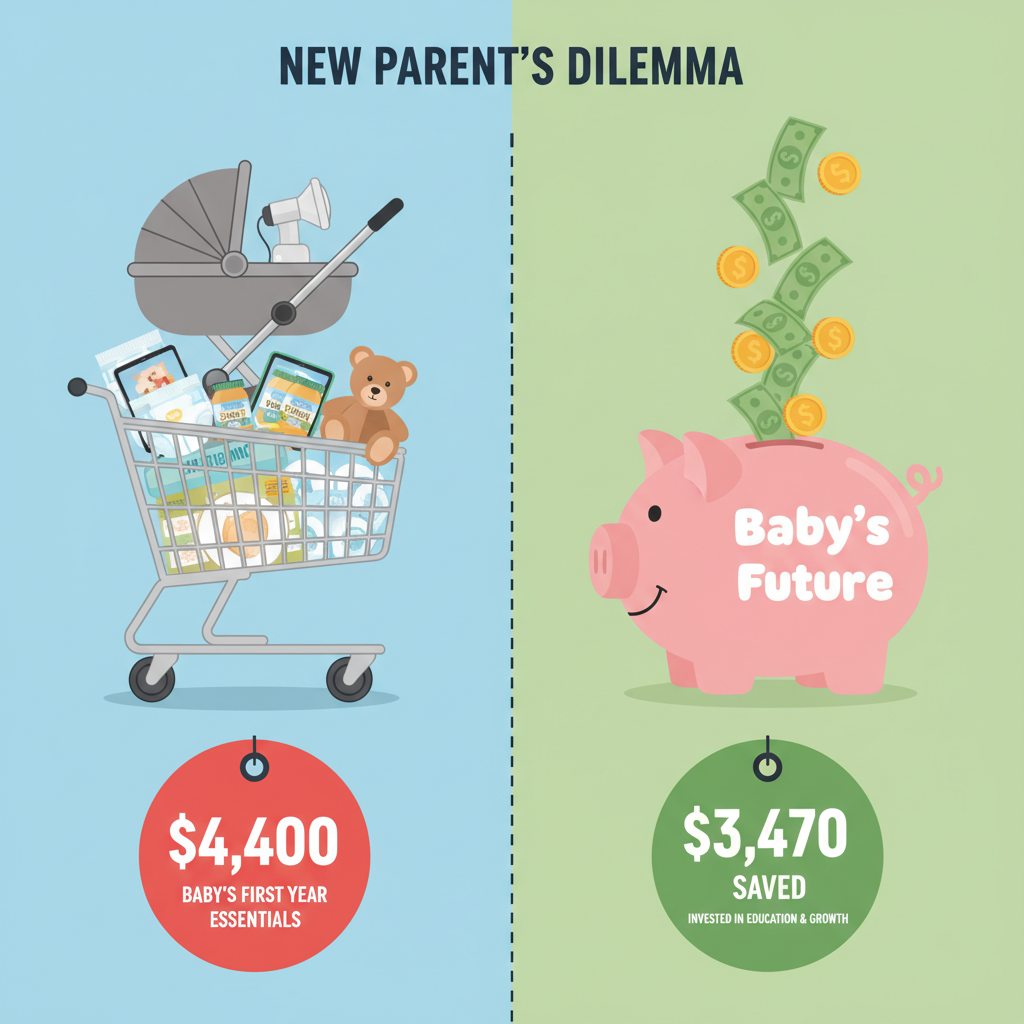
Seeing the numbers in black and white is a game-changer. It shows you this isn’t about being cheap; it’s about being smart. You’re not depriving your child by skipping the wipe warmer; you’re funding their future. Look at the difference between a typical, marketing-driven shopping spree and the Frugal Hacker’s essentialist approach. The savings are staggering.
| Item Category | ‘Retail Hype’ Cost | ‘Frugal Hacker’ Cost (New/Used Mix) | Your Savings |
|---|---|---|---|
| Nursery Furniture (Crib, Dresser, Glider, Changing Table) | $1,500+ | $400 (Used crib, dresser you own, used glider) | $1,100+ |
| Gear & Gadgets (High-End Stroller, Smart Bassinet, Swing, Bouncer) | $2,000+ | $350 (Used mid-range stroller, basic bouncer) | $1,650+ |
| Feeding Supplies (Sterilizer, Warmer, Designer Bottles) | $250 | $60 (Basic bottles, pot of water) | $190 |
| Diapering (Diaper Pail + Refills, Wipe Warmer) | $150 (first year) | $20 (Lidded trash can) | $130 |
| Clothing & Bedding (Designer Outfits, Full Bedding Set) | $500+ | $100 (Mostly secondhand, simple sheets) | $400+ |
| TOTALS | $4,400+ | $930 | ~$3,470 |
That’s nearly $3,500. What could you do with an extra $3,500? You could fully fund a Roth IRA for the year. You could start a 529 college savings plan for your baby. You could build up a massive emergency fund for peace of mind. That’s the power of rejecting the hype. You’re not just saving money; you’re buying freedom and security.
Level Up: Pro Hacks for a Truly Frugal Baby Budget
You’ve got the essential list. Now it’s time to become a master. These are the strategies that separate the amateurs from the pros and will save you even more money and stress in the long run.
Master the Secondhand Market
Facebook Marketplace, OfferUp, and local consignment stores are your new best friends. You can find high-quality, barely-used items for 50-80% off retail prices. Key Rule: For safety items like car seats and cribs, be extra cautious. Check the model for recalls online and never buy a car seat if you don’t know its full history (it could have been in an accident). For everything else—clothes, bouncers, strollers—it’s fair game.
Join a ‘Buy Nothing’ Group
Search on Facebook for a ‘Buy Nothing’ group in your specific neighborhood. These are hyper-local groups where people give away things for free. It’s a goldmine for baby stuff. People are constantly giving away huge bags of baby clothes their kids have outgrown, bouncers, and toys. It’s an amazing way to build community and get what you need for $0.
Hack Your Baby Registry
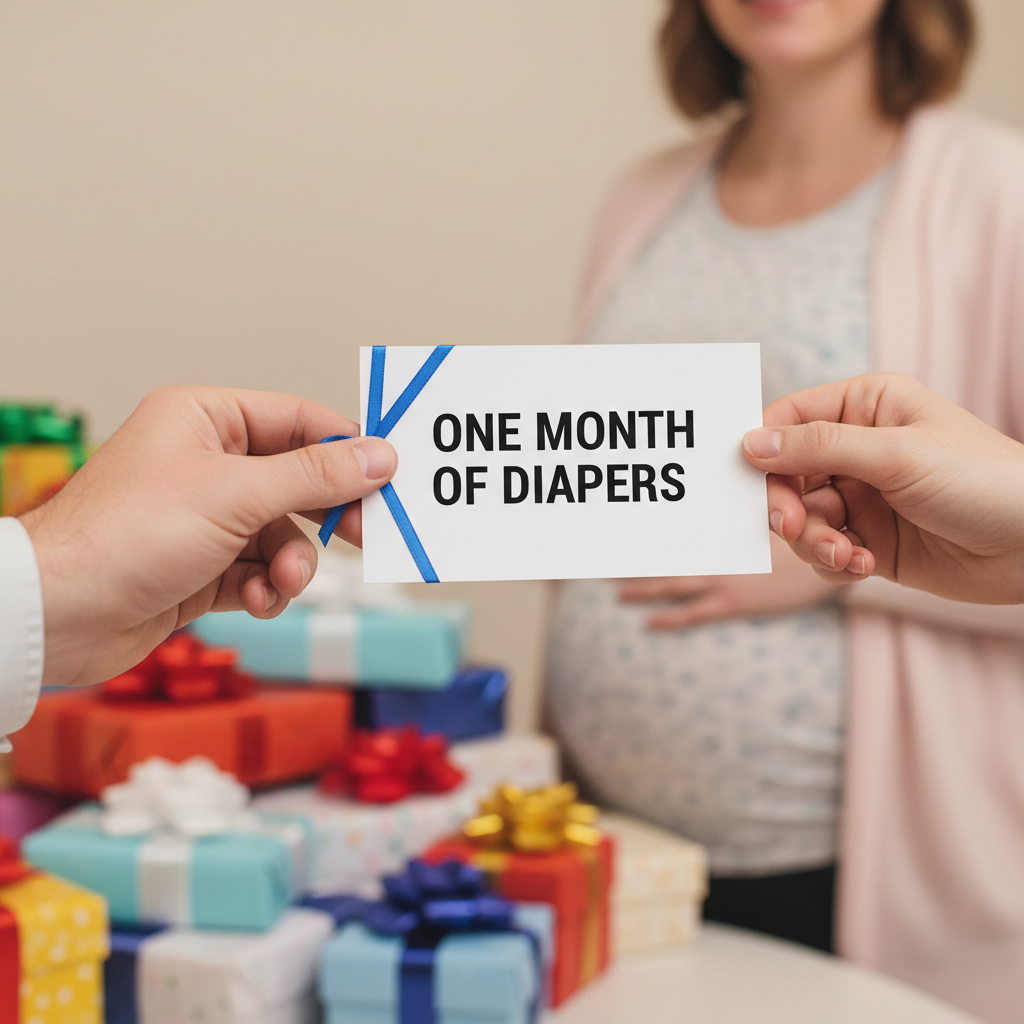
Your baby shower is a huge opportunity. Don’t let it be filled with useless clutter. Be strategic. Instead of registering for 50 tiny outfits, use a universal registry site like Babylist or MyRegistry to ask for what you really need.
- Diaper Fund: Ask guests to contribute to a fund specifically for diapers and wipes for the first year.
- Group Gifting: For big-ticket items like a car seat or stroller, enable the group gifting feature so multiple people can chip in.
- Gift Cards: Amazon or Target gift cards are as good as cash. They allow you to buy what you need, when you need it, especially as your baby’s needs change.
- Favors, Not Things: Consider asking for non-material gifts. A ‘coupon’ for a night of babysitting, a home-cooked meal, or an offer to help with house cleaning is often more valuable than another onesie.
Conclusion
Let’s be real. Preparing for a baby is a huge life change, but it doesn’t have to be a financial catastrophe. The baby industry wants you to believe that your love is measured by how much you spend. It’s not. Your baby needs your presence, not your presents. They need your time, your cuddles, and your care. By focusing on the true essentials and hacking the system, you’re not just saving money—you’re reducing stress, living more simply, and setting a powerful example for your child from day one. You’re trading financial anxiety for financial freedom. Now that’s a smart start to parenthood. You’ve got this.