

Co-Parenting & Money: How to Split Costs Without the Drama
Let’s cut the crap. The single most exhausting part of co-parenting isn’t the scheduling or the hand-offs—it’s the money. The endless texts about who owes what for cleats, the passive-aggressive Venmo requests for half of a $12 haircut, the blow-up fights over a surprise dental bill. It drains your wallet and your will to live. But it doesn’t have to be this way. This isn’t just another article telling you to ‘communicate better.’ This is your street-smart playbook. We’re talking concrete strategies, tools, and scripts to build a bulletproof system for splitting costs. It’s time to take back control, kill the financial drama, and run your co-parenting finances like a well-oiled business, so you can focus on the only thing that truly matters: raising awesome kids.
The Foundation: Forge a Bulletproof Co-Parenting Money Pact

Before you even think about downloading an app or opening a joint account, you need a plan. A vague ‘we’ll figure it out as we go’ approach is a one-way ticket to Argument City. You need to forge a Co-Parenting Money Pact. This isn’t about mistrust; it’s about clarity. A clear plan is the ultimate defense against money fights.
Think of it as the constitution for your co-parenting finances. It doesn’t need to be a 50-page legal document (though if you have a formal custody agreement, make sure this aligns). It can be a shared Google Doc that you both agree on. The goal is to eliminate ambiguity.
What to Carve in Stone
- Big-Ticket Fixed Costs: These are the predictable, recurring elephants in the room. List them out: daycare/school tuition, health insurance premiums, recurring extracurricular fees (like a year-long soccer league). Decide how these will be split upfront.
- Variable & Everyday Costs: This is where things get messy. Costs for clothes, food, school lunches, entertainment. Most parents agree that whoever has the kids pays for their day-to-day needs. Trying to split a Happy Meal receipt is a recipe for insanity. Define this clearly: ‘The parent with custody is responsible for daily food, housing, and entertainment.’
- The ‘Extra’ Categories: These are the budget-busters. Think medical co-pays, orthodontics, school trips, summer camp, electronics. These need their own section in your pact. You must define what constitutes an ‘extra’ and how it will be handled. For example: ‘Any single expense over $100 requires discussion and agreement from both parents before purchase.’
The Golden Rule: If it isn’t written down, it doesn’t exist. Your memory will fail you, especially when you’re stressed or annoyed. A written pact is your single source of truth.
Choose Your Weapon: The 3 Smartest Ways to Split Costs
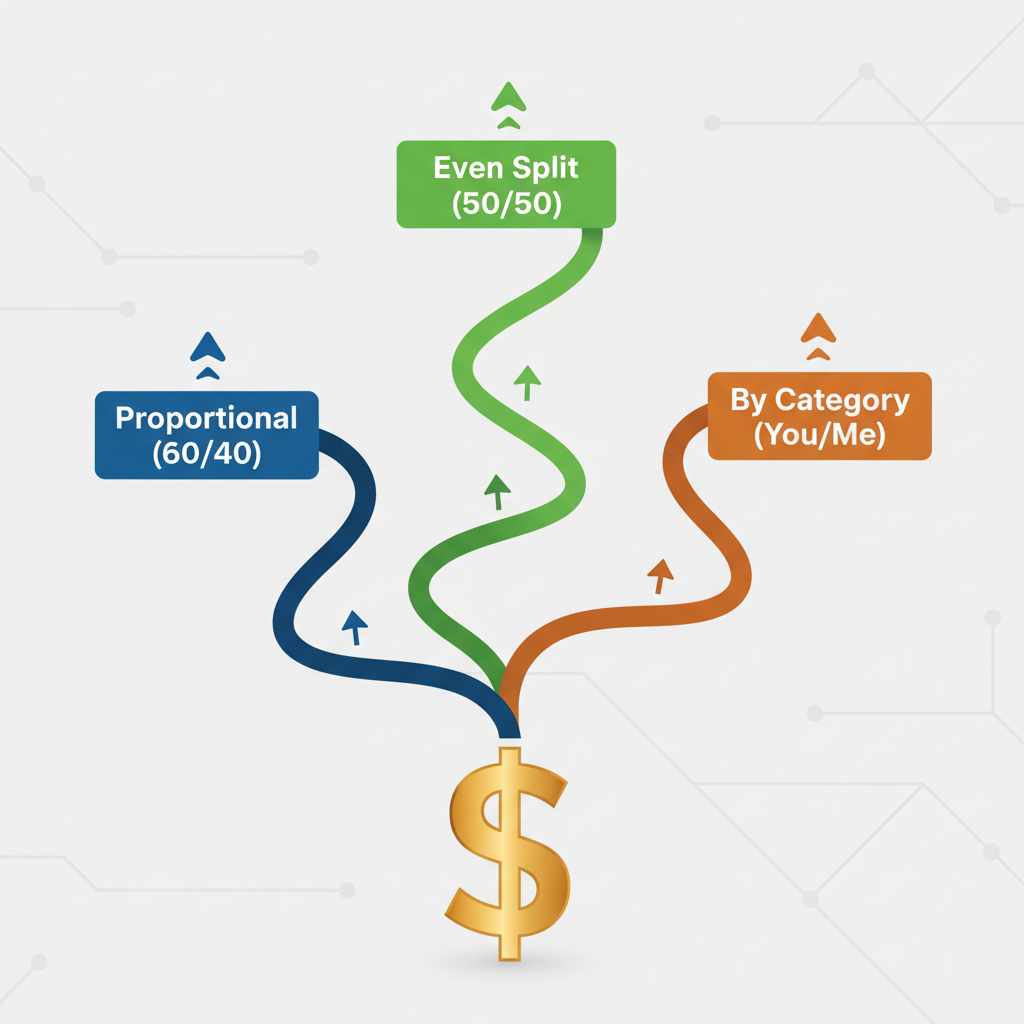
Once you know what you’re splitting, you need to decide how. There’s no single right answer, but there’s definitely a wrong one for your specific situation. Don’t just default to 50/50 because it sounds easy. Pick the method that reflects your reality.
The Proportional Split (The Fairest Play)
This is the gold standard for fairness. Costs are split based on each parent’s income. If you earn $60,000 a year and your co-parent earns $40,000, your combined income is $100,000. You earn 60% of the total, so you pay 60% of the shared costs. A $1,000 orthodontist bill? You pay $600, they pay $400. This method acknowledges financial realities and prevents the lower-earning parent from being stretched too thin.
The 50/50 Split (The Simple Play)
This is straightforward: every shared expense is split right down the middle. This works best when both parents have very similar incomes and a high level of mutual respect. The danger? If there’s a significant income gap, it can breed resentment fast. The parent earning less feels constant pressure, while the higher-earning parent might feel they’re already contributing more in other ways.
The ‘You Pay, I Pay’ Split (The Itemized Play)
In this model, you assign entire categories to each parent. For example, one parent covers all health insurance and medical costs, while the other covers all school tuition and extracurriculars. This can work well to reduce the number of transactions between you. The key is to ensure the total financial responsibility is roughly balanced according to your chosen split (proportional or 50/50). You’ll need to run the numbers annually to make sure it stays fair.
| Method | Best For | Potential Pitfall |
|---|---|---|
| Proportional Split | Parents with different incomes seeking the fairest possible arrangement. | Requires financial transparency (you have to know each other’s income). |
| 50/50 Split | Parents with very similar incomes who prefer simplicity above all else. | Can quickly become unfair and cause resentment if one person’s income changes. |
| Itemized Split | Parents who want to minimize back-and-forth payments and prefer managing whole categories. | Can become unbalanced if one category (e.g., medical) has a huge, unexpected cost. |
Your Tech Toolkit: Apps That Stop the Money Fights
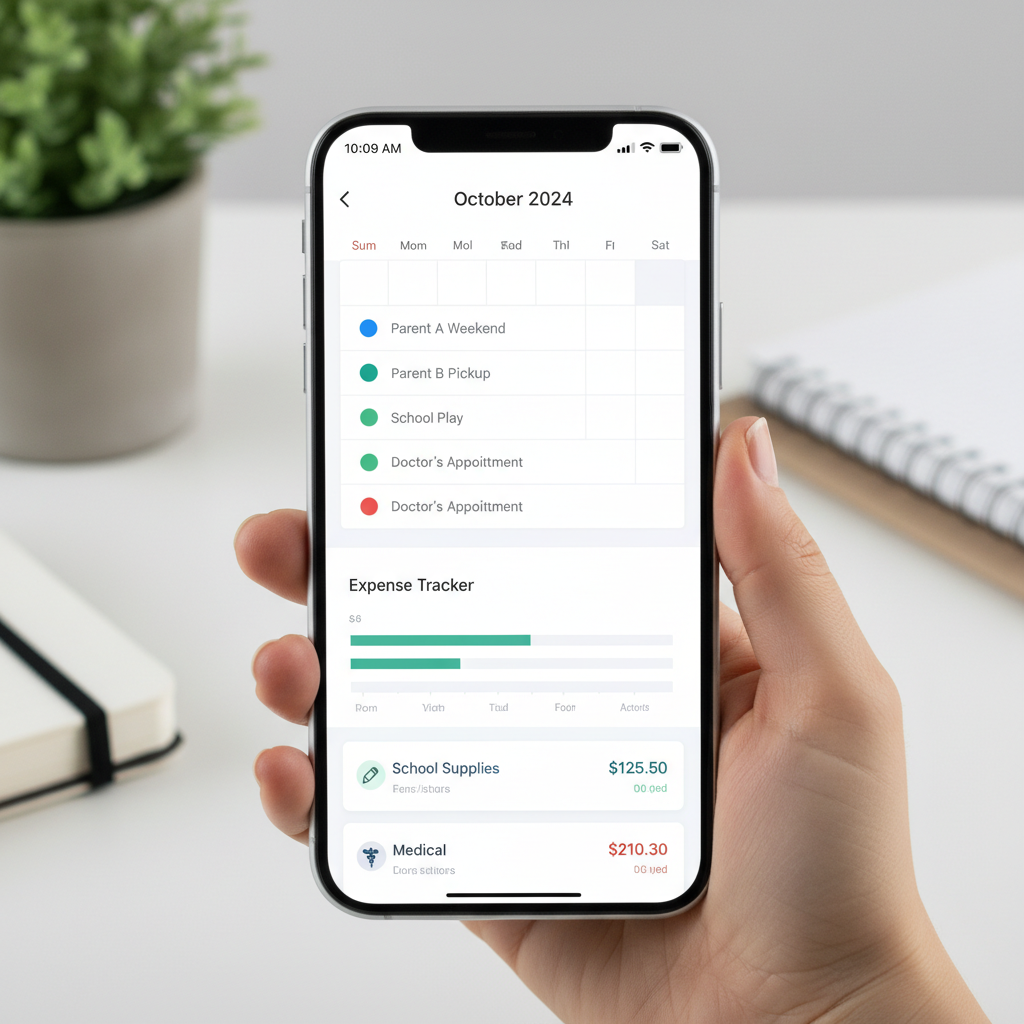
The constant ‘You owe me for…’ texts are toxic. The best way to stop them is to move your co-parenting finances to a neutral, third-party platform. Using technology creates a buffer, provides a clear record, and removes the emotional charge from financial requests. Stop using your personal Venmo and get a dedicated tool for the job.
For the All-in-One Solution: OurFamilyWizard or AppClose
These apps are the Swiss Army knives of co-parenting. They are designed specifically for this purpose and often court-ordered for a reason. They don’t just track expenses; they have shared calendars, messaging (that can’t be deleted!), and information storage. When you upload a receipt for new soccer cleats, it’s a documented, time-stamped request, not an emotional plea. It turns a potential argument into a simple business transaction. Yes, some have a subscription fee, but think of it as cheap insurance against arguments and legal fees. AppClose is a popular free alternative.
For Simple Expense Splitting: Splitwise
If your relationship is amicable and you don’t need the extra features, an app like Splitwise is a fantastic, free tool. You can create a group for ‘Kid Expenses,’ add bills as they come in, upload receipt photos, and see a running tally of who owes whom. It settles up automatically, calculating the simplest way to get everyone back to zero. It removes the awkwardness of constantly reminding someone they owe you $27.50.
The Low-Tech Powerhouse: A Shared Google Sheet
Never underestimate the power of a simple, shared spreadsheet. Create columns for Date, Item, Total Cost, Who Paid, and the amount due from the other parent. It’s transparent, free, and accessible from anywhere. This method requires a bit more manual work but is a huge step up from memory and text messages. It creates a permanent, undeniable ledger of every shared expense.
Game-Time Decisions: Handling Unexpected Costs & Big Buys

Your system is humming along, and then BAM—your kid needs braces. Or they break their school-issued laptop. Or they get invited on a once-in-a-lifetime school trip to Washington D.C. Your basic agreement might not cover these curveballs. Here’s how to handle them without a meltdown.
Establish a ‘Discussion Threshold’
In your money pact, set a dollar amount that triggers a mandatory conversation. A common number is anything over $100 or $200. This means neither parent can unilaterally decide to spend $500 on a new bike and expect the other to chip in. This simple rule prevents financial surprises and ensures you’re both on board for major purchases.
The ‘First Right of Refusal’ Rule
This is a game-changer for extracurriculars or big-ticket items. If one parent wants to sign a child up for expensive travel hockey ($3,000/season), but the other parent can’t afford it or disagrees, the enthusiastic parent has the ‘first right’ to pay for it entirely themselves. This allows the child to participate without putting an unfair financial burden on the other parent.
Use a Script for Big Asks
When you have to ask for money for a big expense, how you say it matters. Don’t be accusatory or demanding. Be direct, business-like, and reference your agreement. This removes the emotional baggage and focuses on the shared goal.
Hey, just got the notice for the 8th-grade school trip. The total cost is $850. According to our pact, we split this 60/40. My share is $510. I’ve attached the permission slip and payment info. Can you confirm you’re good with this and can cover your $340 share by the deadline next Friday? Let me know.
This script is clear, non-confrontational, and provides all the necessary information. It’s a request, not a demand.
The Annual Check-Up: Keeping Your Money Plan Relevant

Your co-parenting money pact is not a ‘set it and forget it’ document. Life changes. You get a raise, your ex loses their job, your kid quits piano and joins the swim team. What was fair last year might be totally unbalanced this year. A yearly financial check-up is non-negotiable.
Schedule It and Stick to It
Treat this like a business meeting. Put it on the calendar for the same time every year (e.g., the first week of August, before school starts). Meet in a neutral place like a coffee shop, not at one of your homes. The goal is to review the past year’s expenses and plan for the upcoming year.
What’s on the Agenda?
- Income Review: This is crucial if you use a proportional split. Have incomes changed significantly? Be honest. Hiding a big raise while your co-parent struggles is a betrayal that will poison your relationship. Adjusting the percentages to reflect reality is the definition of fairness. Not doing so can cause a massive fairness gap. For example, if one parent gets a $20,000 raise and your agreement isn’t adjusted, the other parent is effectively subsidizing their new lifestyle. A simple adjustment could shift $100-$200 a month in shared costs, saving $1,200-$2,400 a year in potential resentment.
- Expense Review: Look at what you actually spent. Did medical costs go way up? Did you spend less on childcare? Use real data from your app or spreadsheet to plan the next year’s budget.
- Look Ahead: What big costs are on the horizon for next year? Braces? A new computer for high school? Summer camp? Discussing these things 6-12 months in advance gives you both time to plan and save, eliminating the shock factor.
This annual meeting keeps your financial plan alive and breathing. It prevents small issues from festering into huge problems and reinforces the idea that you are a team, working together for your kids.
Conclusion
Look, managing money with a co-parent will probably never be ‘fun.’ But it absolutely does not have to be a constant source of drama and stress. By ditching the vague promises and building a real system, you take back control. It boils down to this: get a clear plan in writing, pick a fair method for splitting costs, use technology as your neutral referee, and review the plan regularly. This isn’t about winning an argument or getting one over on your ex. It’s about creating a stable, predictable, and peaceful financial foundation for your children. When you handle the money like a boss, you free up your time and energy to focus on the real job: being an amazing parent.