
Cancel the Tutor: 15 Free Educational Websites Every Parent Needs
Let’s be real: that weekly email from your kid’s school, the one hinting at ‘extra support,’ feels like a punch to the gut and the wallet. The immediate thought is a private tutor. The immediate cost? Astronomical. We’re talking $50, $75, even $100+ an hour. Do that twice a week, and you’re suddenly paying a second car payment for long division. It’s a hustle, and you’re the one getting hustled. But what if you could get the same, or even better, results for free? What if you could flip the script, take back control, and give your kid the academic edge they need without draining your savings account? Forget the expensive tutor. The internet is loaded with powerful, engaging, and completely free educational resources. You just need to know where to look. This isn’t about finding cheap alternatives; it’s about finding *smarter* ones. We’ve done the legwork and compiled the ultimate list of 15 powerhouse websites that will turn your living room into a learning lab and keep your money right where it belongs: in your pocket.
The Tutor Trap: A Look at the Real Numbers

Before we get to the good stuff, let’s break down the system you’re about to beat. The private tutoring industry is a multi-billion dollar machine that thrives on parental anxiety. They sell you a premium solution, but the price tag is often disconnected from the value. You’re not just paying for an hour of homework help; you’re paying for their marketing, their scheduling software, and their overhead. When you see the numbers side-by-side, the choice becomes crystal clear.
| Feature | Average Private Tutor | Free Online Resources |
|---|---|---|
| Hourly Cost | $50 – $100+ | $0 |
| Monthly Cost (2 sessions/week) | $400 – $800+ | $0 |
| Annual Cost | $4,800 – $9,600+ | $0 |
| Availability | Fixed, scheduled times | 24/7, on-demand |
| Subject Variety | Usually one subject per tutor | Unlimited subjects on one platform |
| Pacing | Tutor’s pace | Child’s own pace |
Look at that annual cost. That’s a family vacation. That’s a huge chunk of your emergency fund. That’s money you could be investing or using to pay down debt. The ‘Tutor Trap’ convinces you that spending more is the only way to care more. We’re here to tell you that’s a lie. The smart money isn’t on the most expensive option; it’s on the most effective one. And for most common learning gaps, the free resources on our list are more than just effective—they’re exceptional.
The Foundation Builders: Free Sites for Early Learners (Pre-K – 2nd Grade)
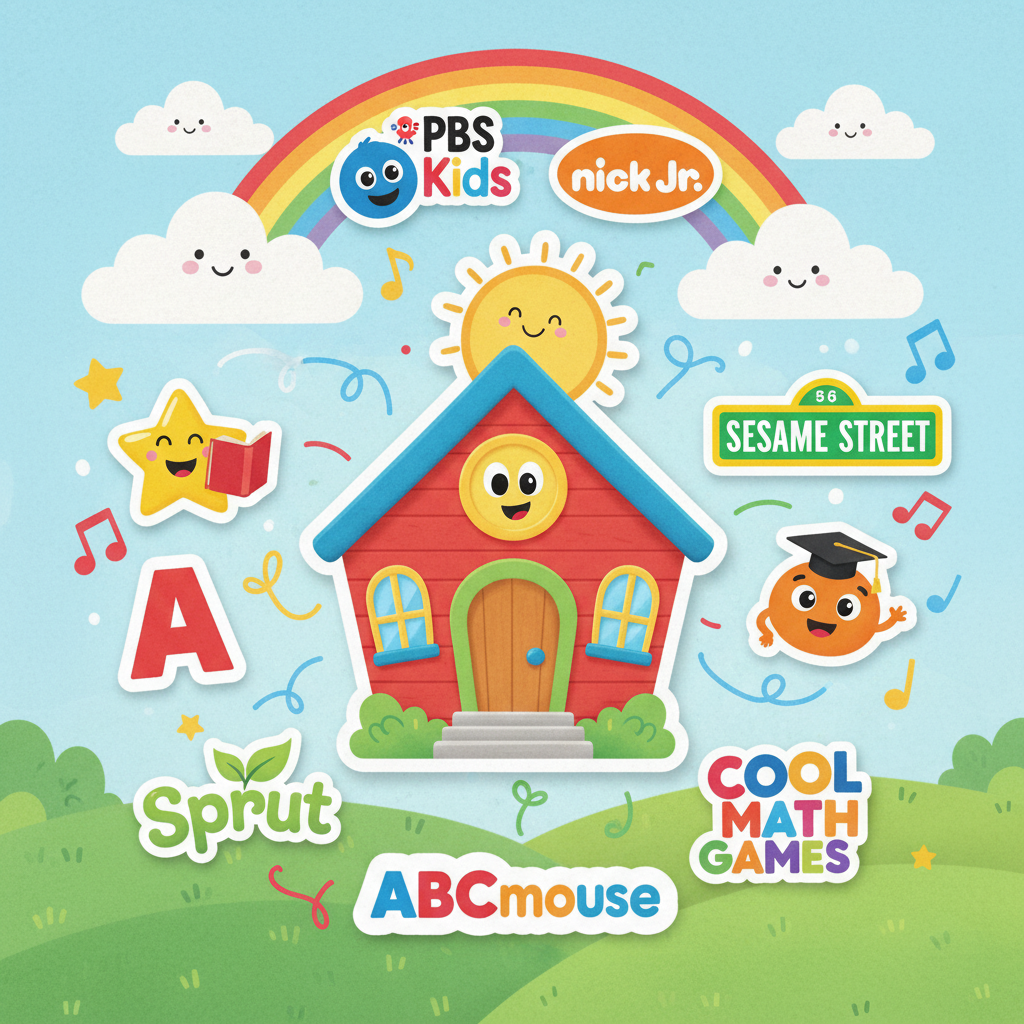
For the little ones, learning needs to feel like playing. Forget boring worksheets. These sites use games, songs, and stories to build foundational skills in reading, math, and critical thinking. They’re so fun, your kids won’t even realize they’re learning.
- PBS Kids Games: Your kid already loves the characters, now let them learn with them. This site is a goldmine of games based on shows like Daniel Tiger and Wild Kratts, covering everything from social-emotional skills to science and math. It’s safe, ad-free, and top-quality.
- Starfall: A legend in the learn-to-read space. Starfall takes kids from letter recognition (the ABCs) all the way to reading plays and comics. The phonics-based approach is incredibly effective and the progression is logical and easy to follow.
- ABCya: This is like the digital treasure chest of educational games. Organized by grade level (Pre-K to 6th), it makes finding the right activity a breeze. It covers a huge range of subjects, from keyboarding skills to multiplication practice, all through fun, arcade-style games.
- Storyline Online: Want to build a love of reading? Have famous actors read to your child. The Screen Actors Guild Foundation runs this site where celebrated actors read children’s books aloud in beautifully produced videos. It’s a fantastic way to improve listening comprehension and expose kids to new stories.
- Coolmath4Kids: Don’t let the name fool you, it’s not just about math. While it has an incredible array of fun math games, it also has science, spelling, and geography. It’s a great all-around site for making core subjects feel less like a chore and more like a challenge.
Level Up: Powerhouse Platforms for Grade School & Middle School (3rd – 8th)

As kids get older, the subjects get tougher. This is where parents often panic and call a tutor. Don’t. These platforms are designed to tackle complex topics, from pre-algebra to world history, in a way that kids can actually understand and master.
- Khan Academy: This is the undisputed champion of free learning. Founded on the principle of a ‘free, world-class education for anyone, anywhere,’ it offers comprehensive courses in math, science, history, grammar, and more. With practice exercises, instructional videos, and a personalized learning dashboard, it’s like having a master teacher on call 24/7. It’s a non-negotiable for any parent.
- Prodigy Math Game: If your kid hates math, introduce them to Prodigy. It’s a fantasy-style role-playing game where success depends on correctly answering math questions. The curriculum is adaptive, meaning it adjusts to your child’s skill level. They’ll be so busy battling monsters and collecting gear, they’ll forget they’re doing homework.
- National Geographic Kids: Fuel their curiosity about the world. This site is packed with amazing videos, weird-but-true facts, and interactive games about animals, science, and different cultures. It’s perfect for science and social studies enrichment.
- Duolingo: Looking for a language tutor? Save your money. Duolingo makes learning a new language like Spanish, French, or German feel like a mobile game. Short, bite-sized lessons and a gamified point system make it addictive and incredibly effective for building vocabulary and basic grammar.
- Code.org: In today’s world, coding is a fundamental skill. Code.org offers free courses and ‘Hour of Code’ tutorials that introduce kids to the basics of computer science using fun projects involving Minecraft or Star Wars. It’s a great way to build logic and problem-solving skills.
The Big Leagues: Free Resources for High School & Test Prep

High school means high stakes: SATs, ACTs, AP classes, and college applications. The tutoring industry makes a killing here. But you can give your teen the tools they need to ace their exams and master tough subjects without spending a dime.
- CrashCourse: Created by authors John and Hank Green, this YouTube channel is a lifesaver for high schoolers. They offer fast-paced, content-rich, and brilliantly animated courses on everything from World History and Chemistry to Psychology and Literature. It’s the perfect supplement to a dense textbook.
- Quizlet: The modern-day flashcard. Quizlet allows students to create their own study sets or use millions of sets created by others. With different study modes like flashcards, timed games, and practice tests, it’s an incredibly versatile tool for memorizing vocabulary, historical dates, or scientific formulas.
- Albert.io (Free Portion): While it has a paid version, Albert.io offers a substantial amount of free practice questions for AP, SAT, and ACT exams. The questions are high-quality and come with detailed explanations, giving students a real feel for what the tests will be like.
- edX & Coursera (Free Courses): These platforms host courses from top universities like Harvard, MIT, and Stanford. While you can pay for a certificate, auditing the courses is completely free. This gives high school students access to college-level instruction in advanced subjects, which is a massive advantage.
- HippoCampus: An open-source library of over 7,000 free videos across 13 high school subjects. It pulls content from Khan Academy and other top sites and organizes it into an easy-to-use multimedia textbook format. It’s a fantastic resource for visual learners who need to review a specific concept.
Your Game Plan: How to Be the Coach, Not Just the Parent

Having the tools is one thing; knowing how to use them is another. A tutor’s job is to provide structure. You can do that, too. You don’t need to be an expert in calculus; you just need to be the coach who sets up the plays. Here’s how you make these free resources work like a high-priced professional.
The Key Rule: Consistency over Intensity. Twenty minutes a day, four days a week is a hundred times more effective than a frantic two-hour cram session on Sunday night. Keep it short, regular, and low-stress.
-
Step 1: Diagnose the Real Problem
Before you throw a bunch of websites at your kid, figure out the *specific* weak spot. Is it multiplying fractions? Understanding verb tenses? Use a platform like Khan Academy to run a diagnostic quiz. Pinpointing the exact skill gap lets you focus your effort for maximum impact.
-
Step 2: Schedule ‘Learning Sprints’
Don’t call it ‘homework time.’ Call them ‘Learning Sprints’ or ‘Power-Up Sessions.’ Put 20-30 minute blocks on a calendar. This creates a routine and makes the task feel manageable, not overwhelming. The key is to make it a non-negotiable part of the daily schedule, just like a sports practice.
-
Step 3: Mix and Match Platforms
Use the right tool for the job. Start with a video on CrashCourse or HippoCampus to understand the concept. Then, move to Khan Academy for guided practice problems. Finally, use Quizlet or ABCya to drill the facts with fun games. This multi-pronged approach keeps things engaging and reinforces learning in different ways.
-
Step 4: Track Progress and Celebrate Wins
Most of these sites have dashboards that show progress, skills mastered, and time spent. Check in on it weekly. When your kid masters a tough concept or reaches a new level in Prodigy, celebrate it! Acknowledge the hard work. This positive reinforcement is the fuel that will keep them motivated, and it costs you absolutely nothing.
Conclusion
The pressure to spend big on your child’s education is immense, but it’s a manufactured pressure. You don’t need to burn through your savings to give them the support they need. You have the power, the tools, and the strategy to build their confidence and skills right from your own home. By trading a high-cost tutor for a high-value strategy using these free resources, you’re not just saving thousands of dollars a year—you’re teaching your child an even more important lesson: the power of resourcefulness. You’re showing them that the smartest solutions aren’t always the most expensive ones. So cancel that consultation. Log off the tutoring site. Pick one website from this list, sit down with your kid tonight, and start exploring. The best investment you can make in their education is your time and your savvy, not your money.